

STUDY : https://academic.oup.com/ejo/article/33/6/654/698272
I found a real good study on the correlation between size of the masseter muscles and craniofacial bone development. Looking at it it seems that having bigger masseter muscles is correlated with a clockwise rotation of the maxilla, but a counter-clockwise rotation of the mandible. It also is correlated with a smaller gonial angle and the volume of the mandible bone and the volume of the zygomatic bone.
What I find weird is how is it possible that the maxilla rotates clockwise, while the mandible rotates counter-clockwise if the whole point of mewing is to rotate the maxilla counter-clockwise and therefore also rotate the mandible counter-clockwise as well according to some popular members of this website.
BTW the rotation is seen on the right side of the face, so what happens is the anterior side of the maxilla goes down, while the posterior side goes up. And yes this all happens while the mandible somehow rotates counter-clockwise, it makes no sense?
IMO chewing is a better way to improve all facial parameters than mewing, just don't over-do it on volume you'll get TMJ do like 30 minutes of chewing alternating between sides every x amount of time till the muscle slightly burns.

The best is an association of both, because mewing is the "normal tongue posture". Im saying mewing not "hard mewing".
Btw nice topic, it's interresting.

Could you please share the study?
Could you please share the study?
Sorry, forgot to include it, I edited the post.
Could you please share the study?
Sorry, forgot to include it, I edited the post.

Simple. Picture a Class 3 Maloclussion. The maxilla is clockwise rotated and the mandible is counterclockwise relative to it. Expand the maxilla and now the outer edges sit outside of the inner ones, as well as the upper incisors above the lower ones. Basically the wider the maxilla is the more the lower molars go IN and the upper incisors go OUT, essentially closing the front bite in a more open fashion.
This is because expansion mostly favors the upper arch. So the same sized lower arch adjusts to the width by having the back molars go further into the bite while the lower incisors are more "open" and the bite less deep.


Ok someone correct me if I'm wrong, I just skimmed through the article. I think what it says is that by increasing the masseters (or bite force), you retract the maxilla so it moves clockwise, and since tje lower jaw follows this move counterclockwise... but isn't this the opposite of what we try to achieve here by chewing and mewing?? I'm confused aswell.

It causes this
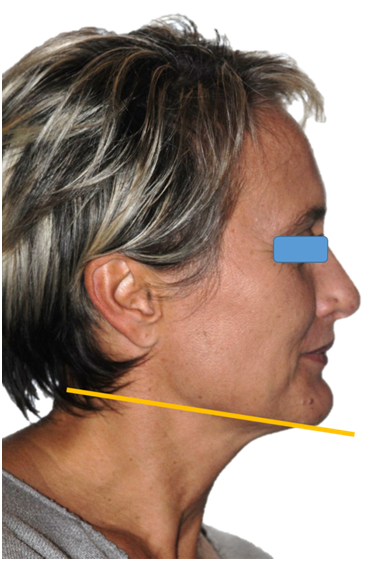
This eventually can lead to an overly deep bite due to masseters creating large bite force. This drives the molars up and brings the incisors down. This in turn deepens the bite which vertically shortens the face. It creates a hypodivergent / brachyfacial face which has weak soft tissue prominence and just looks like a square. Sure the jaw is prominent. Nothing else benefits however.
I'm really sorry Eddie. I understand the first 3 lines, but after that I am lost.
Why would the bite deepen?
Why would it vetically shorten the face? If the back molars come up, I assume the vertical maxilla height is decreased. But you said the insisors drop down.... wouldn't that increase face height?
Also, I still don't understand how the mandible rotates counter clockwise, if the top and bottom molars come up and the top and bottom insisors go down, hasn't everything just gone clockwise?
again, sorry. i appreciate your responses

What if you chew with the incisors as well?
yeah probably. i think we are suppose to chew with molars but bite into the food with our front teeth first.... creating more facial balance
now that my maxilla is atrophied after mewing for 9 months, I'm unsure of wheather I should just chew with less force, or if I should just keep it the same and add frontal chewing....
Chew with all your teeth. Clockwise and counterclockwise. This will give you healthy facial balance because the upper molars won't go too far up.