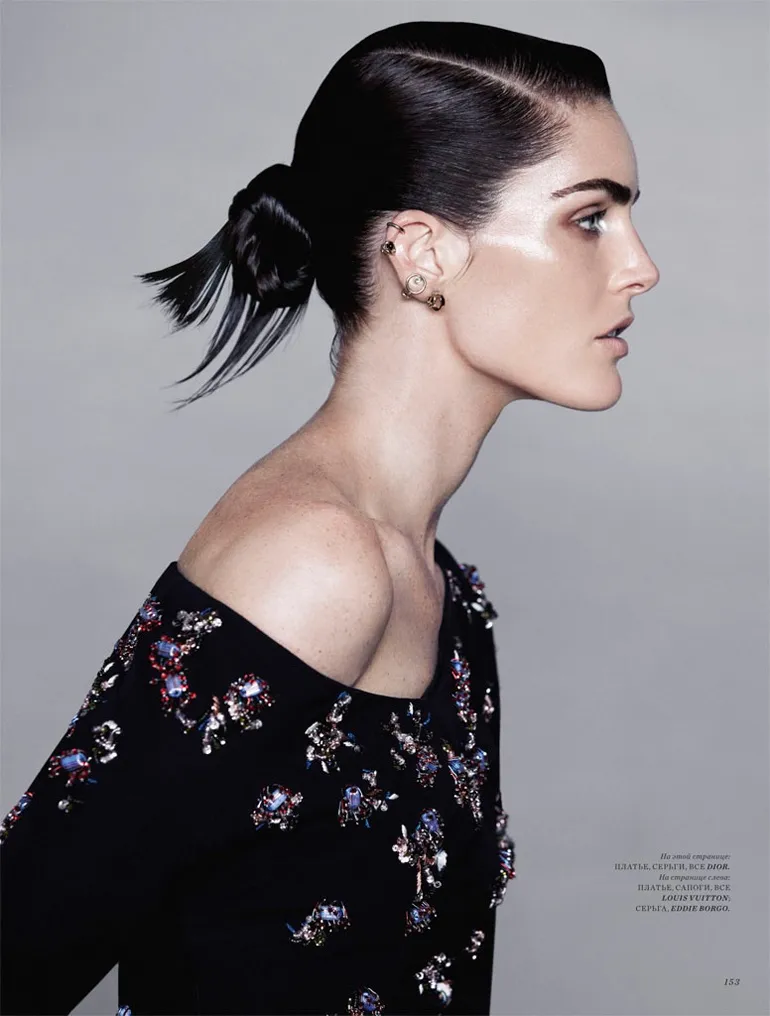
Im lost. Everybody here says that they have downward growth but I dont see that. Show me pictures of good forward growth on male/female. Not a photoshopped picture please. Thanks
I see a normal good looking face + its not full profile shot. This angle makes the jaw more angular ans sharp. I would say that he is not goodlooking because of his growth but his genetics
I see a normal good looking face + its not full profile shot. This angle makes the jaw more angular ans sharp. I would say that he is not goodlooking because of his growth but his genetics
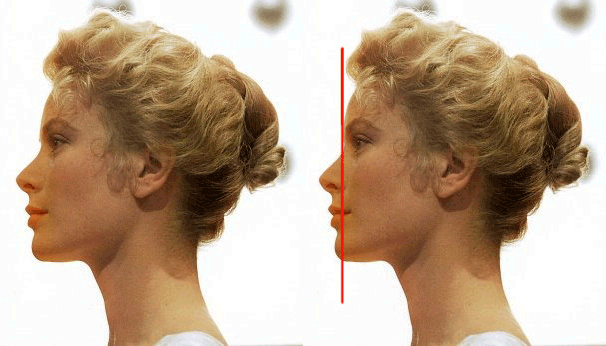
I made this gif for you to see exactly what forward growth looks like.
This is a picture of Grace Kelly. It's perfect for showing this, because its a profile and she has no forward head posture. Her head is completely level. The picture does not require any leveling.
Just drawing a straight line down from her nasion will reveal her forward growth. Notice how much her face, both upper and lower jaws, extends past the line with absolutely no alveolar prognathism or pouting lips.
On most people they barley touch that line in the upper jaw, and on the lower forget it.
I made this gif for you to see exactly what forward growth looks like.
This is a picture of Grace Kelly. It's perfect for showing this, because its a profile and she has no forward head posture. Her head is completely level. The picture does not require any leveling.
Just drawing a straight line down from her nasion will reveal her forward growth. Notice how much her face, both upper and lower jaws, extends past the line with absolutely no alveolar prognathism or pouting lips.
On most people they barley touch that line in the upper jaw, and on the lower forget it.
ehhh. That line is subjective. Her neck is shortened a bit if you look at her cervical spine. Aka not ideal posture.
That said her face looks forward grown but I don't use that necessarily as the gauge.
Ellie Goulding would likewise pass your test but she has other indicators of recession such as a long midface, and teeth far away from her nose. But she passes the test because she has a large mandible. In fact many recessed people would pass that test on account of their mandible which is genetic assuming it has grown to its full size:
Draw the line above, she passes. But she is visibly recessed.
OP, forward growth is best measured by the Mew indicator line. Not how good looking someone is.
sometimes i get confused too,but in cases with really good forward growth you cant miss it.if u look at ear to nose/mouth distance you should notice,its longer than usual
Good...but your facial thirds are a bad ratio...be it mid-face too long or lower too short. But go with lower third too short because bigger always better for men.
ehhh. That line is subjective. Her neck is shortened a bit if you look at her cervical spine. Aka not ideal posture.
That said her face looks forward grown but I don't use that necessarily as the gauge.
Ellie Goulding would likewise pass your test but she has other indicators of recession such as a long midface, and teeth far away from her nose. But she passes the test because she has a large mandible. In fact many recessed people would pass that test on account of their mandible which is genetic assuming it has grown to its full size:
Draw the line above, she passes. But she is visibly recessed.
OP, forward growth is best measured by the Mew indicator line. Not how good looking someone is.
That line is called the Facial Plane. It's used by orthodontist and cosmetic surgeons to estimate facial forward growth using soft tissue markers. It's an accurate measure provided the head level (Frankfort Plane) is correct. Only hard tissue markers such as SNA and SNB angles can provide more accurate measure.
If you correct the head level on most people and draw this line most will just touch that line in the upper jaw, and never touch it on the lower jaw.
The mew indicator line measures a combination of downward and forward growth. Also, it does not account well for some anatomical variations such as nose shapes and long philtrum. It's not widely recognized like the facial plane. For example, in Australia FAGGA practitioners use it to measure progress of treatment while in America they use SNA and SNB.
I think the vertical indicator line main benefit is that it provides an easy to take measure of growth without having to take an x-ray or trying to correct head level while using the Facial Plane. After all, most practitioners grapple with understanding forward head position and head leveling.
And what about the front? I thought thay I have a good facial harmony and balance
Do you want an honest response?
Sure
Great, I am going to focus on the balance and harmony since this is what you referenced.
You have several features that are out proportion. They are not necessarily bad, just not matching in size and shape with other features. Starting from the top, your forehead is a little bit too high, maybe this is because you raise your hair fully up.
Your eyes are nice but are slanting downward (negative canthal tilt). Your mid face is very long. Since you are young and your face is youthful its not so distracting. Your philtrum is slightly long or maybe it's your nose tip that is too short.
Your lips are nice but they are a little bit too narrow horizontally and small compared to the rest of your face especially your chin which is strong.
And what about the front? I thought thay I have a good facial harmony and balance
Do you want an honest response?
Sure
Great, I am going to focus on the balance and harmony since this is what you referenced.
You have several features that are out proportion. They are not necessarily bad, just not matching in size and shape with other features. Starting from the top, your forehead is a little bit too high, maybe this is because you raise your hair fully up.
Your eyes are nice but are slanting downward (negative canthal tilt). Your mid face is very long. Since you are young and your face is youthful its not so distracting. Your philtrum is slightly long or maybe it's your nose tip that is too short.
Your lips are nice but they are a little bit too narrow horizontally and small compared to the rest of your face especially your chin which is strong.
Thanks for the honest response. I have negative canthal tilt because my face is tilted upwards. My eyes are slightly in positive canthal tilt. Note to you that its a selfie and lens distortion is real
This looks like fairly average forward growth to me - that's quite a short mandible compared to people I've seen with really good forward growth. Plus his nasolabial angle looks a little high.
ehhh. That line is subjective. Her neck is shortened a bit if you look at her cervical spine. Aka not ideal posture.
That said her face looks forward grown but I don't use that necessarily as the gauge.
Ellie Goulding would likewise pass your test but she has other indicators of recession such as a long midface, and teeth far away from her nose. But she passes the test because she has a large mandible. In fact many recessed people would pass that test on account of their mandible which is genetic assuming it has grown to its full size:
Draw the line above, she passes. But she is visibly recessed.
OP, forward growth is best measured by the Mew indicator line. Not how good looking someone is.
That line is called the Facial Plane. It's used by orthodontist and cosmetic surgeons to estimate facial forward growth using soft tissue markers. It's an accurate measure provided the head level (Frankfort Plane) is correct. Only hard tissue markers such as SNA and SNB angles can provide more accurate measure.
If you correct the head level on most people and draw this line most will just touch that line in the upper jaw, and never touch it on the lower jaw.
The mew indicator line measures a combination of downward and forward growth. Also, it does not account well for some anatomical variations such as nose shapes and long philtrum. It's not widely recognized like the facial plane. For example, in Australia FAGGA practitioners use it to measure progress of treatment while in America they use SNA and SNB.
I think the vertical indicator line main benefit is that it provides an easy to take measure of growth without having to take an x-ray or trying to correct head level while using the Facial Plane. After all, most practitioners grapple with understanding forward head position and head leveling.
The thing is her head didn't seem aligned in the Frankfurt plane but you can prove me wrong on that.
Again, the Ellie Goulding example works here. She passes the test with flying colors but her face has visible markers of CFD . This means profile doesn't tell the whole story.
And I posted it before. Nose shapes are accounted for in Mew lines. Look at Larry Bird and Magic Johnson. Two very different noses but an equal distance from incisor to nose tip. Bird has a long nose and Johnson an upturned one. The distance is still very similar. Bird likewise would pass the test (yours) while Johnson wouldn't because Bird has a large mandible and Johnson a small one.
This doesn't make Johnson more recessed, it just means he has a different skull. You yourself a few months ago alluded to these phenotype differences. If nose shape should throw off Mew indicator lines (it does not) , then mandible growth should likewise make one person seem more recessed than another.
This is why I don't go for using the Frankfort plane for measuring forward growth. It creates an illusion if the mandible is large. Again, see Larry Bird and Ellie Goulding as examples . Their naturally large mandibles and strong pogonion length will make them seem not downward grown.
ehhh. That line is subjective. Her neck is shortened a bit if you look at her cervical spine. Aka not ideal posture.
That said her face looks forward grown but I don't use that necessarily as the gauge.
Ellie Goulding would likewise pass your test but she has other indicators of recession such as a long midface, and teeth far away from her nose. But she passes the test because she has a large mandible. In fact many recessed people would pass that test on account of their mandible which is genetic assuming it has grown to its full size:
Draw the line above, she passes. But she is visibly recessed.
OP, forward growth is best measured by the Mew indicator line. Not how good looking someone is.
That line is called the Facial Plane. It's used by orthodontist and cosmetic surgeons to estimate facial forward growth using soft tissue markers. It's an accurate measure provided the head level (Frankfort Plane) is correct. Only hard tissue markers such as SNA and SNB angles can provide more accurate measure.
If you correct the head level on most people and draw this line most will just touch that line in the upper jaw, and never touch it on the lower jaw.
The mew indicator line measures a combination of downward and forward growth. Also, it does not account well for some anatomical variations such as nose shapes and long philtrum. It's not widely recognized like the facial plane. For example, in Australia FAGGA practitioners use it to measure progress of treatment while in America they use SNA and SNB.
I think the vertical indicator line main benefit is that it provides an easy to take measure of growth without having to take an x-ray or trying to correct head level while using the Facial Plane. After all, most practitioners grapple with understanding forward head position and head leveling.
The thing is her head didn't seem aligned in the Frankfurt plane but you can prove me wrong on that.
Again, the Ellie Goulding example works here. She passes the test with flying colors but her face has visible markers of CFD . This means profile doesn't tell the whole story.
And I posted it before. Nose shapes are accounted for in Mew lines. Look at Larry Bird and Magic Johnson. Two very different noses but an equal distance from incisor to nose tip. Bird has a long nose and Johnson an upturned one. The distance is still very similar. Bird likewise would pass the test (yours) while Johnson wouldn't because Bird has a large mandible and Johnson a small one.
This doesn't make Johnson more recessed, it just means he has a different skull. You yourself a few months ago alluded to these phenotype differences. If nose shape should throw off Mew indicator lines (it does not) , then mandible growth should likewise make one person seem more recessed than another.
This is why I don't go for using the Frankfort plane for measuring forward growth. It creates an illusion if the mandible is large. Again, see Larry Bird and Ellie Goulding as examples . Their naturally large mandibles and strong pogonion length will make them seem not downward grown.
Eddie what do you say about my forward growth? Look at my profile picture. My mew line is 49 mm because from childhood I have a upturned nose. My intermolar width is around 42-45mm. My wisdom teeth are 50mm apart. What do you think how did my face developed?
ehhh. That line is subjective. Her neck is shortened a bit if you look at her cervical spine. Aka not ideal posture.
That said her face looks forward grown but I don't use that necessarily as the gauge.
Ellie Goulding would likewise pass your test but she has other indicators of recession such as a long midface, and teeth far away from her nose. But she passes the test because she has a large mandible. In fact many recessed people would pass that test on account of their mandible which is genetic assuming it has grown to its full size:
Draw the line above, she passes. But she is visibly recessed.
OP, forward growth is best measured by the Mew indicator line. Not how good looking someone is.
That line is called the Facial Plane. It's used by orthodontist and cosmetic surgeons to estimate facial forward growth using soft tissue markers. It's an accurate measure provided the head level (Frankfort Plane) is correct. Only hard tissue markers such as SNA and SNB angles can provide more accurate measure.
If you correct the head level on most people and draw this line most will just touch that line in the upper jaw, and never touch it on the lower jaw.
The mew indicator line measures a combination of downward and forward growth. Also, it does not account well for some anatomical variations such as nose shapes and long philtrum. It's not widely recognized like the facial plane. For example, in Australia FAGGA practitioners use it to measure progress of treatment while in America they use SNA and SNB.
I think the vertical indicator line main benefit is that it provides an easy to take measure of growth without having to take an x-ray or trying to correct head level while using the Facial Plane. After all, most practitioners grapple with understanding forward head position and head leveling.
The thing is her head didn't seem aligned in the Frankfurt plane but you can prove me wrong on that.
Again, the Ellie Goulding example works here. She passes the test with flying colors but her face has visible markers of CFD . This means profile doesn't tell the whole story.
And I posted it before. Nose shapes are accounted for in Mew lines. Look at Larry Bird and Magic Johnson. Two very different noses but an equal distance from incisor to nose tip. Bird has a long nose and Johnson an upturned one. The distance is still very similar. Bird likewise would pass the test (yours) while Johnson wouldn't because Bird has a large mandible and Johnson a small one.
This doesn't make Johnson more recessed, it just means he has a different skull. You yourself a few months ago alluded to these phenotype differences. If nose shape should throw off Mew indicator lines (it does not) , then mandible growth should likewise make one person seem more recessed than another.
This is why I don't go for using the Frankfort plane for measuring forward growth. It creates an illusion if the mandible is large. Again, see Larry Bird and Ellie Goulding as examples . Their naturally large mandibles and strong pogonion length will make them seem not downward grown.
Eddie what do you say about my forward growth? Look at my profile picture. My mew line is 49 mm because from childhood I have a upturned nose. My intermolar width is around 42-45mm. My wisdom teeth are 50mm apart. What do you think how did my face developed?
My nose is downward facing slightly and my mew line is 50mm last I measured. One aspect of a nose will cancel out another aspect of a different one. Upturned nose lengthens a mew line because it goes away from the teeth but a downturned nose likewise goes away from the entire face. It evens out in the end.
Now. Your case. Your facial thirds are proportioned. But males (especially Caucasian) tend to longer lower thirds. So that shows a level of recession as it is. Your lips are narrow for a male.
Moving your maxilla forward would improve these ratios since your midface would shorten with upward movement. Then your ramus would essentially drop to maintain occlusion. Maybe your lips will grow wider with imw increase as well but no documented cases of that thus far.
The thing is her head didn't seem aligned in the Frankfurt plane but you can prove me wrong on that.
Again, the Ellie Goulding example works here. She passes the test with flying colors but her face has visible markers of CFD . This means profile doesn't tell the whole story.
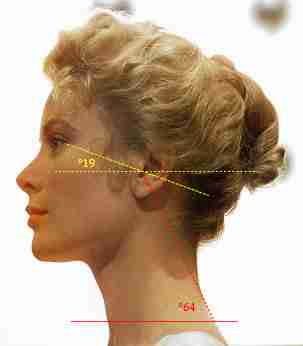
She has no forward head posture and her head is inline, at least visibly speaking, but since her AC joint is not showing the next best way to confirm this is to measure her head and cervical angles.
Her figures show she has no forward head posture but is tilting her head up a little bit. If the tilting was corrected (3°) the facial plane would still cross her upper jaw at the same spot but her lower jaw would be a little behind it's current position.
Posted by: EddieMoney
And I posted it before. Nose shapes are accounted for in Mew lines. Look at Larry Bird and Magic Johnson. Two very different noses but an equal distance from incisor to nose tip. Bird has a long nose and Johnson an upturned one. The distance is still very similar. Bird likewise would pass the test (yours) while Johnson wouldn't because Bird has a large mandible and Johnson a small one.
This doesn't make Johnson more recessed, it just means he has a different skull. You yourself a few months ago alluded to these phenotype differences. If nose shape should throw off Mew indicator lines (it does not) , then mandible growth should likewise make one person seem more recessed than another.
I completely disagree with this. How can a longer nose (in the sagitall plane) not influence the measurement more than a short one?
Long noses are not a product of bone only. Some people have larger and longer cartilage that can increase their measurement. The same thing goes with nose angulation. Also, some people have naturally long philtrums. Their upper jaw is naturally longer in the space between the nose and alveolar ridge.
That's why, and in addition to other reasons I mention previously, the vertical growth indicator is good for measuring treatment progress more than overall forward growth.
The thing is her head didn't seem aligned in the Frankfurt plane but you can prove me wrong on that.
Again, the Ellie Goulding example works here. She passes the test with flying colors but her face has visible markers of CFD . This means profile doesn't tell the whole story.
She has no forward head posture and her head is inline, at least visibly speaking, but since her AC joint is not showing the next best way to confirm this is to measure her head and cervical angles.
Her figures show she has no forward head posture but is tilting her head up a little bit. If the tilting was corrected (3°) the facial plane would still cross her upper jaw at the same spot but her lower jaw would be a little behind it's current position.
Posted by: EddieMoney
And I posted it before. Nose shapes are accounted for in Mew lines. Look at Larry Bird and Magic Johnson. Two very different noses but an equal distance from incisor to nose tip. Bird has a long nose and Johnson an upturned one. The distance is still very similar. Bird likewise would pass the test (yours) while Johnson wouldn't because Bird has a large mandible and Johnson a small one.
This doesn't make Johnson more recessed, it just means he has a different skull. You yourself a few months ago alluded to these phenotype differences. If nose shape should throw off Mew indicator lines (it does not) , then mandible growth should likewise make one person seem more recessed than another.
I completely disagree with this. How can a longer nose (in the sagitall plane) not influence the measurement more than a short one?
Long noses are not a product of bone only. Some people have larger and longer cartilage that can increase their measurement. The same thing goes with nose angulation. Also, some people have naturally long philtrums. Their upper jaw is naturally longer in the space between the nose and alveolar ridge.
That's why, and in addition to other reasons I mention previously, the vertical growth indicator is good for measuring treatment progress more than overall forward growth.
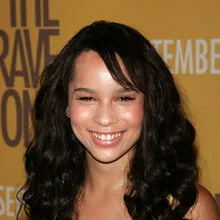
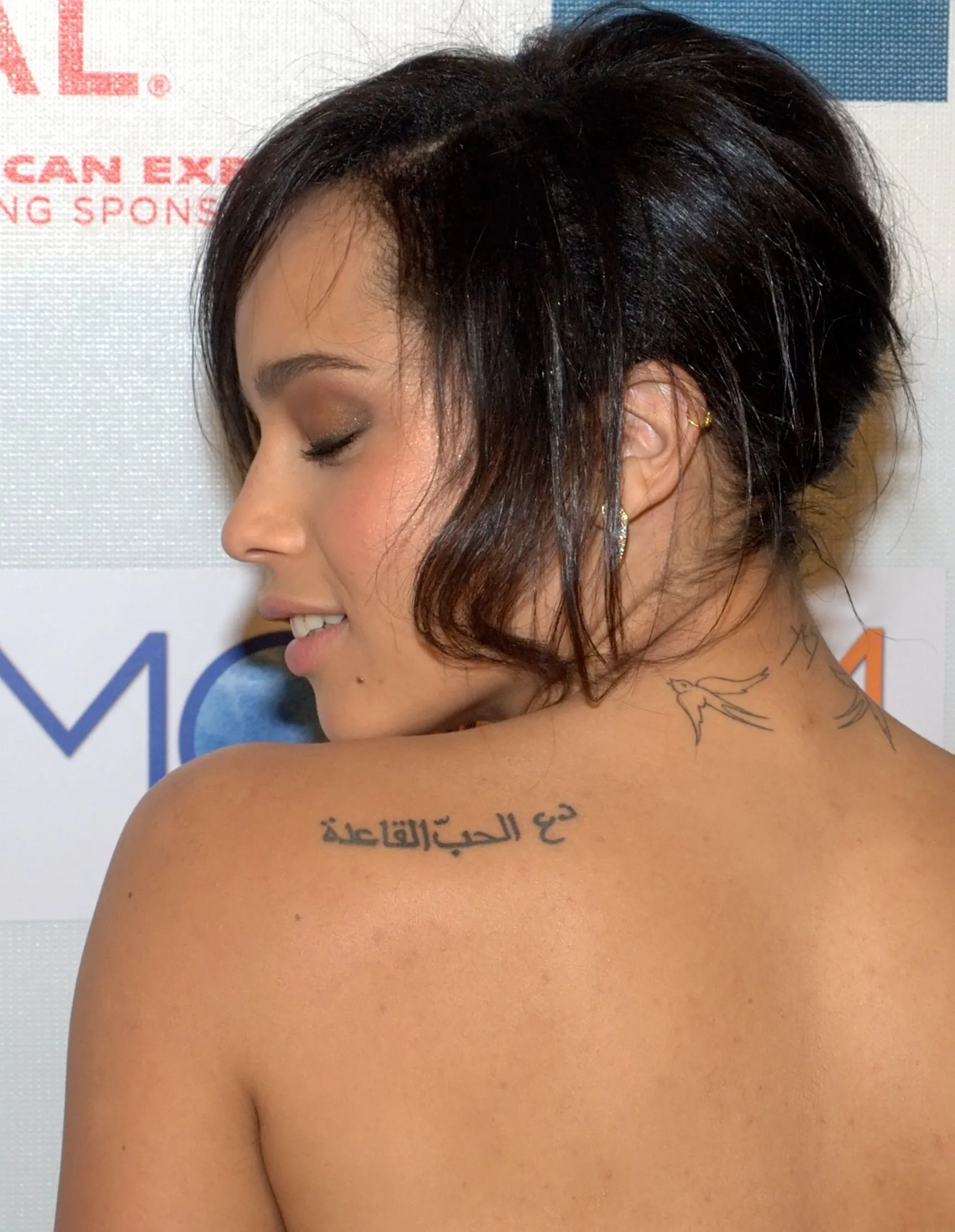
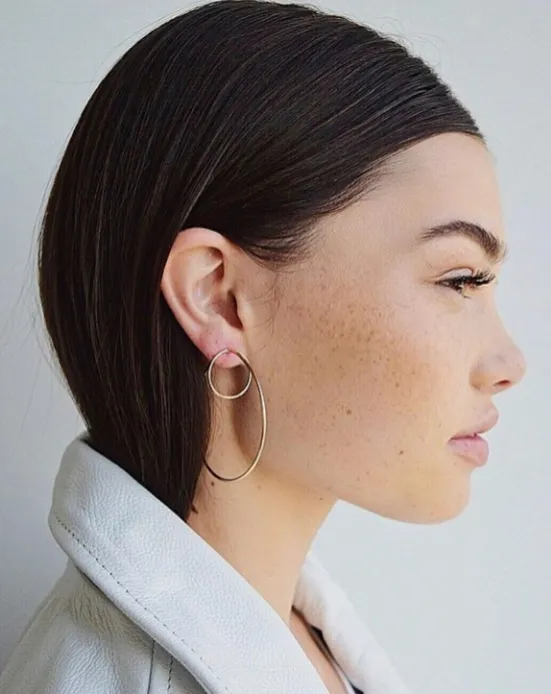
Still disagree. Why? Because people with horrible facial development pass your test with flying colors. See: women below. Better development than Hepburn?
Still disagree. Why? Because people with horrible facial development pass your test with flying colors. See: women below. Better development than Hepburn?
It's not "my" test, it's one of the industry's standards for soft tissue analysis. If you do not like it you can always use other measures such as the facial convexity angle. Dr. Mew has a video series on those measurements and angles including the frankfort plane.
Speaking of that, most of those pictures are not useful for doing analysis because they clearly show head tilting. It's hard to determine the frankfort plane without additional information. Neither is the facial plane used alone for analysis. Additional measures such as the esthetic plane and naisolabe angle are used to complete the picture.
That being said the facial plane is the single best measure I know of for measuring and more so for visualizing forward growth. Tell me how do you use the vertical indicator line on a picture to illustrate forward growth? I would like to know your thoughts on this plus the previous comments:
Posted by: Abdulrahman
I completely disagree with this. How can a longer nose (in the sagitall plane) not influence the measurement more than a short one?
Long noses are not a product of bone only. Some people have larger and longer cartilage that can increase their measurement. The same thing goes with nose angulation. Also, some people have naturally long philtrums. Their upper jaw is naturally longer in the space between the nose and alveolar ridge.
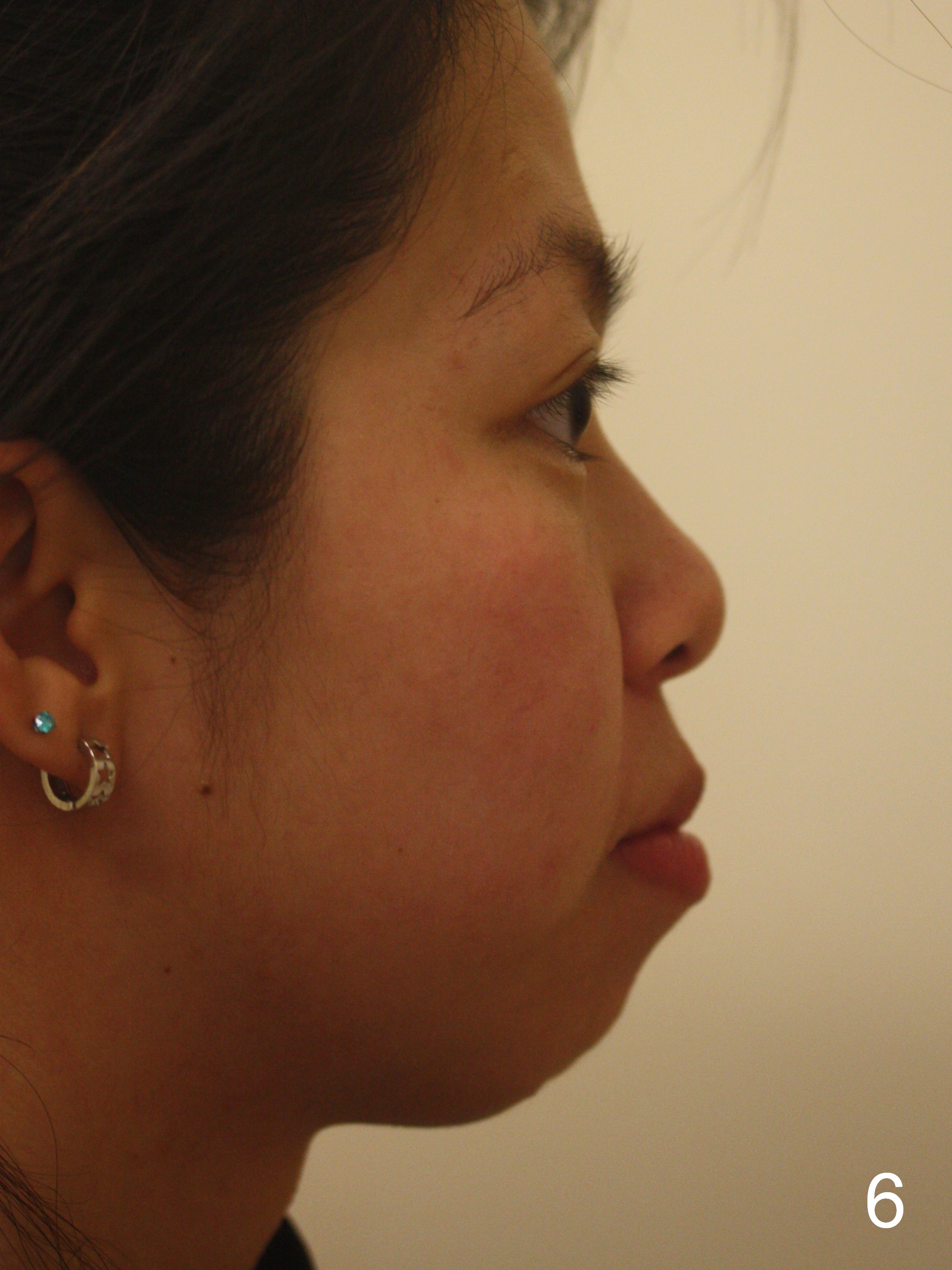
To illustrate the point above I applied the facial plane to this picture.
In the original picture her head is tilting but it's not clear by how much. My estimate is 5.5°.
Based on that I tilt picture so the frankfort plane is level and redraw the facial plane. Notice how both line are perpendicular now which is required for a correct measurement.
Now her face is clearly not forward grown, if anything it's looks more downward grown than backward grown. Additional measures will confirm this.
Another great example of why that particular test is terrible for measuring forward growth:
Re: Noses.
Yes I understand soft tissue is to blame. But do oh also understand that whether a nose turns upward or downward that it still moves away from the incisors ? Also, when Mew accounted for different nose types he found like a 1-2mm difference between Scandinavians and East Asians (two groups with differing nose shapes). So it is not like nose shape affects how much the Mew score goes up.
Now that you have my thoughts on the nose shape effects, what are your thoughts on people with large mandibles having the ability to pass this test, despite the fact their faces are clearly downward grown?
Measuring "forward" growth in and of itself isn't accurate. The maxilla develops either upward or downward. People with prognathism will likely be deemed as "forward" grown by people who don't understand the difference. The best way IMO to see the upward development of the maxilla is to see how close the teeth are to the nose. This can be seen through direct measurement of Mew lines but also through occlusal planes and general rotation of the maxilla if the mouth if open.
Ideal facial development is of course more than Mew lines. But for just measuring upward growth, IMO the Mew line is king. Otherwise you can see a pic of someone smiling and see how high up their teeth are and how short their philtrum is/gum exposure. Hugh Laurie for example may not have a lot of gum exposure but you can tell his Mew line is long because of how far they look from his nose when he smiles. Opposite of that is Sean William Scott.
Another great example of why that particular test is terrible for measuring forward growth:
Re: Noses.
Yes I understand soft tissue is to blame. But do oh also understand that whether a nose turns upward or downward that it still moves away from the incisors ? Also, when Mew accounted for different nose types he found like a 1-2mm difference between Scandinavians and East Asians (two groups with differing nose shapes). So it is not like nose shape affects how much the Mew score goes up.
Now that you have my thoughts on the nose shape effects, what are your thoughts on people with large mandibles having the ability to pass this test, despite the fact their faces are clearly downward grown?
Measuring "forward" growth in and of itself isn't accurate. The maxilla develops either upward or downward. People with prognathism will likely be deemed as "forward" grown by people who don't understand the difference. The best way IMO to see the upward development of the maxilla is to see how close the teeth are to the nose. This can be seen through direct measurement of Mew lines but also through occlusal planes and general rotation of the maxilla if the mouth if open.
Ideal facial development is of course more than Mew lines. But for just measuring upward growth, IMO the Mew line is king. Otherwise you can see a pic of someone smiling and see how high up their teeth are and how short their philtrum is/gum exposure. Hugh Laurie for example may not have a lot of gum exposure but you can tell his Mew line is long because of how far they look from his nose when he smiles. Opposite of that is Sean William Scott.
Mew line in my opinion is not a good way to measure forward growth. There are so many different skull and nose types. Some males like me have strong browridge sloped forhead and heavy nose because we have more neanderthal dna in us (muscular type faces). So ofcourse our mew line will be much bigger than other males. Examples including me:
So the mew line says every male whose face is more feminine has better maxilla than muscular facetype male? Thats why I think mew line is not a good way to meausre forward growth....
Another great example of why that particular test is terrible for measuring forward growth:
Why is it a terrible example? Look at the picture below. I tilt it a conservative 2.5° to compensate for his forward head posture. His mid face clearly does not cross the facial plane. Ideally it should be around the yellow line. Anyone looking at this simple illustration will know the mid face on this person has not grown forward enough even if the lower jaw/chin goes past the line.
Posted by: EddieMoney
Re: Noses.
Yes I understand soft tissue is to blame. But do oh also understand that whether a nose turns upward or downward that it still moves away from the incisors ? Also, when Mew accounted for different nose types he found like a 1-2mm difference between Scandinavians and East Asians (two groups with differing nose shapes). So it is not like nose shape affects how much the Mew score goes up.
Now that you have my thoughts on the nose shape effects, what are your thoughts on people with large mandibles having the ability to pass this test, despite the fact their faces are clearly downward grown?
Of course the point of measurement on the nose is always the furthest point from the ear's tragus. An upward nose tip will increase this measurement so will a longer tip. I don't know how Dr. Mew accounted for this but I know when you add different nose lengths and tips, different philtrum lengths, and different incisor angulation you are bound to get quite a discrepancy. Nonetheless, it's good for measuring progress without subjecting people to xrays.
And what about the front? I thought thay I have a good facial harmony and balance
Do you want an honest response?
Sure
Great, I am going to focus on the balance and harmony since this is what you referenced.
You have several features that are out proportion. They are not necessarily bad, just not matching in size and shape with other features. Starting from the top, your forehead is a little bit too high, maybe this is because you raise your hair fully up.
Your eyes are nice but are slanting downward (negative canthal tilt). Your mid face is very long. Since you are young and your face is youthful its not so distracting. Your philtrum is slightly long or maybe it's your nose tip that is too short.
Your lips are nice but they are a little bit too narrow horizontally and small compared to the rest of your face especially your chin which is strong.
His hairline is perfectly normal and proportionate for a male. Where did you find that his forehead is too high?
Another great example of why that particular test is terrible for measuring forward growth:
Re: Noses.
Yes I understand soft tissue is to blame. But do oh also understand that whether a nose turns upward or downward that it still moves away from the incisors ? Also, when Mew accounted for different nose types he found like a 1-2mm difference between Scandinavians and East Asians (two groups with differing nose shapes). So it is not like nose shape affects how much the Mew score goes up.
Now that you have my thoughts on the nose shape effects, what are your thoughts on people with large mandibles having the ability to pass this test, despite the fact their faces are clearly downward grown?
Measuring "forward" growth in and of itself isn't accurate. The maxilla develops either upward or downward. People with prognathism will likely be deemed as "forward" grown by people who don't understand the difference. The best way IMO to see the upward development of the maxilla is to see how close the teeth are to the nose. This can be seen through direct measurement of Mew lines but also through occlusal planes and general rotation of the maxilla if the mouth if open.
Ideal facial development is of course more than Mew lines. But for just measuring upward growth, IMO the Mew line is king. Otherwise you can see a pic of someone smiling and see how high up their teeth are and how short their philtrum is/gum exposure. Hugh Laurie for example may not have a lot of gum exposure but you can tell his Mew line is long because of how far they look from his nose when he smiles. Opposite of that is Sean William Scott.
Mew line in my opinion is not a good way to measure forward growth. There are so many different skull and nose types. Some males like me have strong browridge sloped forhead and heavy nose because we have more neanderthal dna in us (muscular type faces). So ofcourse our mew line will be much bigger than other males. Examples including me:
So the mew line says every male whose face is more feminine has better maxilla than muscular facetype male? Thats why I think mew line is not a good way to meausre forward growth....
Women have shorter faces than men, so their maxilla is actually physically shorter
Could someone analyze rami malek’s face, he got a pretty strong jaw but I dont know exactly about his forward growth, also it seems that he doesn’t have a perfect body posture
I know I shouldn't bump old threads but I had to post this guy (Mike Gioia). Textbook example of optimal forward growth: low gonial angle, good maxilla, from the front good undereye support, wide lips, wide face, good midface lenght, no recessed zygos.
I know I shouldn't bump old threads but I had to post this guy (Mike Gioia). Textbook example of optimal forward growth: low gonial angle, good maxilla, from the front good undereye support, wide lips, wide face, good midface lenght, no recessed zygos.
I think it's decent. He's still tilting his head up slightly.
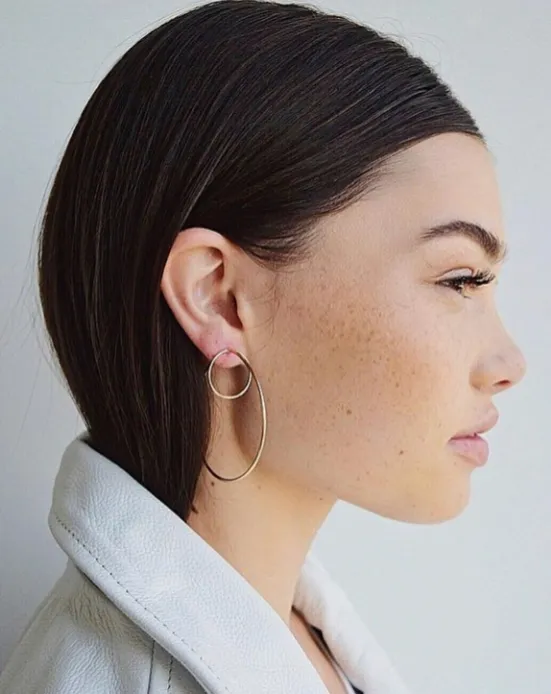
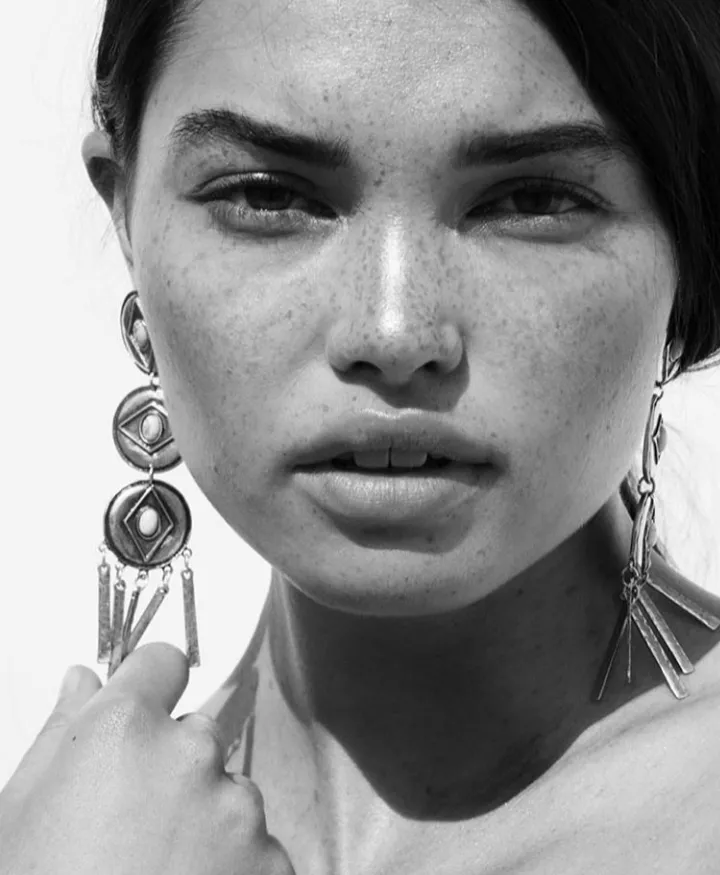
I doubt that zero-CFD exists much in the first world—Mike Mew has said in lectures that ancient man had intermolar widths that defy imagination and universally had all wisdom teeth come in straight with room for more teeth behind them—but I believe this model Bri Chen has as low CFD as I have ever seen. This is the best picture I could find of her from the side:
If that's only "decent" then I must be deformed lol. Obviously I'm comparing to modern standard and not to the prehistoric ideal. Also that model Bri Chen looks like a pretty girl from the Stone Age that time travelled to the present. That jaw is out of the norm, can't be only genetic. EDIT: I found a good profile shot of her:
If that's only "decent" then I must be deformed lol. Obviously I'm comparing to modern standard and not to the prehistoric ideal. Also that model Bri Chen looks like a pretty girl from the Stone Age that time travelled to the present. That jaw is out of the norm, can't be only genetic. EDIT: I found a good profile shot of her:
^^Proof that women need about 2/3 the bone growth of men to look outstanding. If a guy had her level of bone growth he would be classed as very deficient. Long story short, approaching bone development ideals is irrelevant for women's beauty. Soft tissue and facial balance matters way more for females. Take away her full lips and she would be way less attractive (and you don't need bone for lip support as much as believed).
A woman actually needs her facial bones to barely develop, all while her soft tissue needs to be supple and full. This keeps her skull narrow and vertically short, as well as making her facial features stand out (eyes and lips look bigger on a smaller skull with a small jaw). Her forehead also stays vertical, making the eyes look more prominent. When the forehead stays flat, jaw stays small, and soft tissue stands out is when the skull looks more cherub-like. The "angel skull" many know and love. Angels have stereotypically weak bone development, giving them a more childlike and innocent look.
Among other things, the above is where female models have standout beauty. Your average woman's face probably grows more bone than a female model, all while having weaker soft tissue. In fact, female models in their prime always have less facial bone growth than in their later years. Brooke Shields for example has a much larger jaw now than she did when she was in her 20s. Her forehead also slopes back unlike when it was flat and vertical.
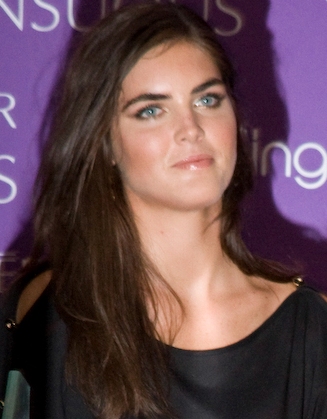
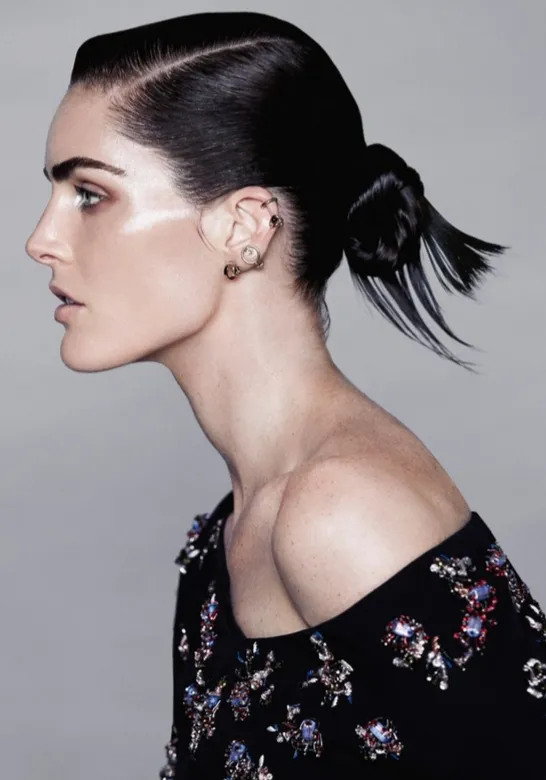
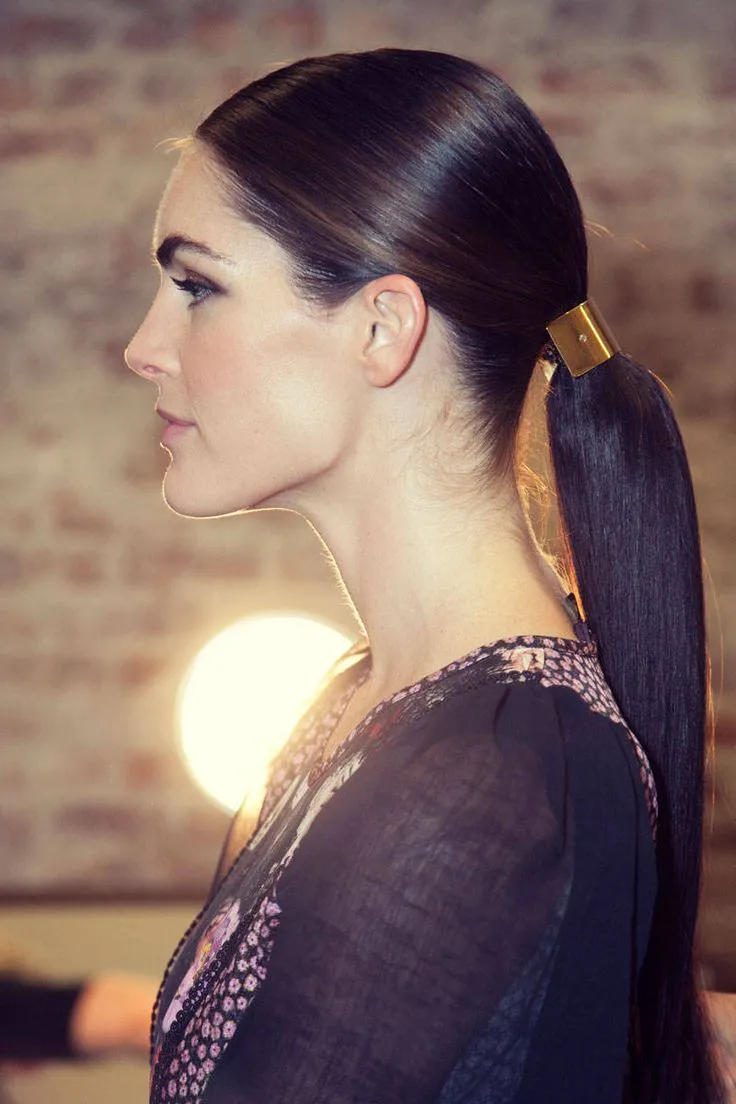
I absolutely agree that women don't need as much bone mass as men to look good but they still need some. Look up Hilary Rhonda. She has probably a bigger chin than even a good part of men , yet she is a successful model. Honestly, I don't buy it. Both men and women need good bones to look noticeably above average. Bri Chen has insane mandible, ramus and cheekbones, her bones are already more developed than the vast majority of women. But the correct idea is not having bone mass per se but to have good craniofacial development, that's key.
^^Proof that women need about 2/3 the bone growth of men to look outstanding. If a guy had her level of bone growth he would be classed as very deficient. Long story short, approaching bone development ideals is irrelevant for women's beauty. Soft tissue and facial balance matters way more for females. Take away her full lips and she would be way less attractive (and you don't need bone for lip support as much as believed).
A woman actually needs her facial bones to barely develop, all while her soft tissue needs to be supple and full. This keeps her skull narrow and vertically short, as well as making her facial features stand out (eyes and lips look bigger on a smaller skull with a small jaw). Her forehead also stays vertical, making the eyes look more prominent. When the forehead stays flat, jaw stays small, and soft tissue stands out is when the skull looks more cherub-like. The "angel skull" many know and love. Angels have stereotypically weak bone development, giving them a more childlike and innocent look.
Among other things, the above is where female models have standout beauty. Your average woman's face probably grows more bone than a female model, all while having weaker soft tissue. In fact, female models in their prime always have less facial bone growth than in their later years. Brooke Shields for example has a much larger jaw now than she did when she was in her 20s. Her forehead also slopes back unlike when it was flat and vertical.
I don't mean to be rude, but lower CFD almost always looks better than higher—male or female. What you're discussing, neoteny, is enhanced and preserved through aging by a low CFD bone structure. Women who look worse as they age, like Brooke Shields, are just downswinging. It's CFD, and it gets worse if your face isn't supported by your tongue like it should be. The reason girls look good in their prime is because that's right after when puberty has finished developing a child's face (CFD or no) into a woman's, which means that the soft tissue is more or less where it should be. As the maxilla swings down (the hinge point is at the zygomatic buttress), the soft tissue necessarily bunches up on itself and eventually sags and slides down.
The soft tissue change isn't the problem—it's a symptom of your face recessing.
I absolutely agree that women don't need as much bone mass as men to look good but they still need some. Look up Hilary Rhonda. She has probably a bigger chin than even a good part of men , yet she is a successful model. Honestly, I don't buy it. Both men and women need good bones to look noticeably above average. Bri Chen has insane mandible, ramus and cheekbones, her bones are already more developed than the vast majority of women. But the correct idea is not having bone mass per se but to have good craniofacial development, that's key.
Thanks, it kind of proves my original assertion. Hilary Rhoda would be cuter with a smaller mandible, as women like Barbra Palvin and Bri Chen's appearance would attest. Chen doesn't have an insane mandible whatsoever. She has great definition but her mandible isn't large at all. Rhoda has more of an insane mandible than Chen, and Chen looks prettier.
Visible facial bones =/= strong bone development. It just means the person has decent posture. But I do agree optimal development is key. My point is that women don't need a ton of forward growth to be good looking. I think Chen's bone development is nowhere near Rhoda's, but this keeps her more neotenous and harmonious. Most good looking women posted in this thread have much smaller jawbones than Rhoda. Rhoda's good looks aren't attributed to her tall ramus or prominent mandible. No woman (or man) is made attractive by a large mandible, anyway.
To be honest the large mandible takes away from her face. Makes her lips look less full and philtrum longer. If she had brown eyes I wonder if she would have been discovered? Her eyes are beautiful but her facial development looks like that of your average woman.
My opinion is a bit different. My conception of good bone developments consists of the three dimensions: broadness, lenght and definition. Bri Chen hits two of these, lenght and definition. The average woman only one, broadness. So Bri Chen has above average bone development because it's 2 vs 1.
To be honest the large mandible takes away from her face. Makes her lips look less full and philtrum longer. If she had brown eyes I wonder if she would have been discovered? Her eyes are beautiful but her facial development looks like that of your average woman.
Her development is exceptional, I don't know how you could even consider her having average development. Also if she hadn't good development she wouldn't have those eyes to begin with.
Her development is exceptional, I don't know how you could even consider her having average development. Also if she hadn't good development she wouldn't have those eyes to begin with.
I dont think her development is that outstanding, she has excellent outer U but her inner U seems shorter than her mandible implies. To me her upper lip looks a bit weird. with a more forward developed maxilla lining up with her mandible/chin she'd be fucking gorgeous. I have a resting theory in my mind that peoplewith lip biases tend to bias toward the better developed side bonewise, she looks like an example of bottom bias.
This is very nitpicky and I don't mean to say she isn't beautiful already, her features are lovely by today's standard. But her maxilla/lip deficiency (they go hand in hand) is noticeable, albeit slight.
If you got a side profile of her smiling it'd probably confirm what I'm saying.
^^Proof that women need about 2/3 the bone growth of men to look outstanding. If a guy had her level of bone growth he would be classed as very deficient. Long story short, approaching bone development ideals is irrelevant for women's beauty. Soft tissue and facial balance matters way more for females. Take away her full lips and she would be way less attractive (and you don't need bone for lip support as much as believed).
A woman actually needs her facial bones to barely develop, all while her soft tissue needs to be supple and full. This keeps her skull narrow and vertically short, as well as making her facial features stand out (eyes and lips look bigger on a smaller skull with a small jaw). Her forehead also stays vertical, making the eyes look more prominent. When the forehead stays flat, jaw stays small, and soft tissue stands out is when the skull looks more cherub-like. The "angel skull" many know and love. Angels have stereotypically weak bone development, giving them a more childlike and innocent look.
Among other things, the above is where female models have standout beauty. Your average woman's face probably grows more bone than a female model, all while having weaker soft tissue. In fact, female models in their prime always have less facial bone growth than in their later years. Brooke Shields for example has a much larger jaw now than she did when she was in her 20s. Her forehead also slopes back unlike when it was flat and vertical.
I don't mean to be rude, but lower CFD almost always looks better than higher—male or female. What you're discussing, neoteny, is enhanced and preserved through aging by a low CFD bone structure. Women who look worse as they age, like Brooke Shields, are just downswinging. It's CFD, and it gets worse if your face isn't supported by your tongue like it should be. The reason girls look good in their prime is because that's right after when puberty has finished developing a child's face (CFD or no) into a woman's, which means that the soft tissue is more or less where it should be. As the maxilla swings down (the hinge point is at the zygomatic buttress), the soft tissue necessarily bunches up on itself and eventually sags and slides down.
The soft tissue change isn't the problem—it's a symptom of your face recessing.
Except Brooke's face didn't recess at all. Her bones have developed the way all humans do; they grow down and away from the face. This isn't recession, it's natural growth that even those who Mee have seen.
Recession is where the soft tissue support like under the eyes goes away. But Brooke doesn't have that. Her mandible grew larger. How is that recession?
Rhoda's good looks aren't attributed to her tall ramus or prominent mandible. No woman (or man) is made attractive by a large mandible, anyway.
To me it seems that the harmony of her whole face is very much dependent on her having a large mandible. With a smaller mandible she would lose that geometrical equilibrium that keeps the eyes fixed on the face. I agree that she could be 'cute' in the sense the local grocery store girl is cute, but there is no doubt how much her large mandible defines her beauty:
To be honest the large mandible takes away from her face. Makes her lips look less full and philtrum longer. If she had brown eyes I wonder if she would have been discovered? Her eyes are beautiful but her facial development looks like that of your average woman.
Her development is exceptional, I don't know how you could even consider her having average development. Also if she hadn't good development she wouldn't have those eyes to begin with.
if you notice my post, I said her eye COLOR is what is beautiful. Her eye shape looks common and generic.
And is her bone development exceptional for a woman? I guess if you mean that most women don't have as tall of a ramus or large of a mandible at her age then I guess maybe you're right? Not that this is a good thing. She definitely has a BONY face in terms of how much prominence it has. But again, I see it as too much for a woman. Keep in mind I already said she would look cuter with a smaller, "more angelic" mandible.
I feel like I see more often women with STRONG bony features than I see women with good facial harmony. In aesthetics, harmony beats bony prominence any day. I agree that optimal development is ideal, and for women optimal can mean that less is more sometimes.
Now this is getting laughable. Her eye shape is top tier, maybe not super rare or cat like but still top tier. Eye color is absolutely not enough to make someone a model and it's NEVER as important as eye shape. I think you are seriously downplaying her because she doesn't fit into your theory. Now I'm not gonna contest the importance of the angelic skull for women but what you probably forgot is the fact that angelic skulls look good precisely because of the good forward growth they display. And no, the average woman doesn't have the forward growth or facial development of Hilary Rhoda, I mean this should be obvious, she is a model for a reason.
Except Brooke's face didn't recess at all. Her bones have developed the way all humans do; they grow down and away from the face. This isn't recession, it's natural growth that even those who Mee have seen.
Recession is where the soft tissue support like under the eyes goes away. But Brooke doesn't have that. Her mandible grew larger. How is that recession?
Actually, recession enhances orbital support because, again, the hinge point is at the zygomatic buttress, and the bottom of the maxilla swings in, so the mandible elongates to match and the person must tilt their head up to compensate, giving the illusion of better eyes and a stronger chin. The orbital support looks better because the top of the maxilla, at its hinge point, slightly moves out along almost the same vector that actual beneficial growth would cause.
This image of Rhoda was literally the first result in DuckDuckGo Images when I searched "hilary rhoda side profile".
On what planet is that less CFD than Bri Chen?
The difference is so stark that to point out how would entail an introduction to craniofacial dystrophy.
Visible facial bones =/= strong bone development. It just means the person has decent posture.
No one said that, and posture is literally a natural function of one's CFD. I'm not sure you understand orthotropics.
This reinventing the wheel thing is getting really old. Every other day someone posts a new write-up on some poorly fleshed-out theory of mewing technique, CFD, or beauty that's either incoherent or demonstrates an ELI5 understanding of what we're trying to study here.* "It can't be that simple! There has to be something else you're missing! Guys, I figured out how to mew even more efficiently!" No, it literally is that simple.
*Obviously, there are rare exceptions. But you can tell who's thought their idea through before posting, and who hasn't.
Now this is getting laughable. Her eye shape is top tier, maybe not super rare or cat like but still top tier. Eye color is absolutely not enough to make someone a model and it's NEVER as important as eye shape. I think you are seriously downplaying her because she doesn't fit into your theory. Now I'm not gonna contest the importance of the angelic skull for women but what you probably forgot is the fact that angelic skulls look good precisely because of the good forward growth they display. And no, the average woman doesn't have the forward growth or facial development of Hilary Rhoda, I mean this should be obvious, she is a model for a reason.
So if her robust bones are the reason she is a model, why do so few female models have a large ramus and mandible like her? The other ladies posted here don't have that type of face.
Rhoda's good looks aren't attributed to her tall ramus or prominent mandible. No woman (or man) is made attractive by a large mandible, anyway.
To me it seems that the harmony of her whole face is very much dependent on her having a large mandible. With a smaller mandible she would lose that geometrical equilibrium that keeps the eyes fixed on the face. I agree that she could be 'cute' in the sense the local grocery store girl is cute, but there is no doubt how much her large mandible defines her beauty:
She looks way better with a shorter face. Left: androgenic and athletic. Right: estrogenic and angelic
Not even sure where the personal attacks came from. Nor the idea that I think any of these models have CFD.
I'm sorry you took it that way.
CFD is just a way of describing imperfect facial development. Everyone has CFD—it's an inclusive spectrum. These models have CFD because they don't have perfect facial development, but no one does. I understand what you mean, but using CFD as a term to refer to particularly bad cases of relative dysfunction is confusing and misleading.
Now this is getting laughable. Her eye shape is top tier, maybe not super rare or cat like but still top tier. Eye color is absolutely not enough to make someone a model and it's NEVER as important as eye shape. I think you are seriously downplaying her because she doesn't fit into your theory. Now I'm not gonna contest the importance of the angelic skull for women but what you probably forgot is the fact that angelic skulls look good precisely because of the good forward growth they display. And no, the average woman doesn't have the forward growth or facial development of Hilary Rhoda, I mean this should be obvious, she is a model for a reason.
So if her robust bones are the reason she is a model, why do so few female models have a large ramus and mandible like her? The other ladies posted here don't have that type of face.
I don't think the premise of the question is sensical in light of the theory of CFD. The only "feature" that makes sense to scrutinize in isolation is the position and shape of the maxilla, because it's the keystone bone. The maxilla determines all the other bones' position and shape. Mew has said as much.
The reason few models seem to have such a prominent ramus/mandible is two-fold: the level of CFD (and androgenic hormone profile, to a lesser extent) that would result in such a face usually results in a face that isn't as attractive as when there's less CFD.
The other reason is that models, and female models in particular, and especially female high fashion models are not really selected for the same qualities that straight men find attractive (a.k.a. conventional beauty). Fashion designers are overwhelmingly gay men, and speaking purely empirically, they prefer female models who look like pubescent boys. See: http://femininebeauty.info/becoming-a-supermodel I think leading Hollywood actresses are a better pool to draw examples from, but even there, as Mike Mew says, their development is "okay."
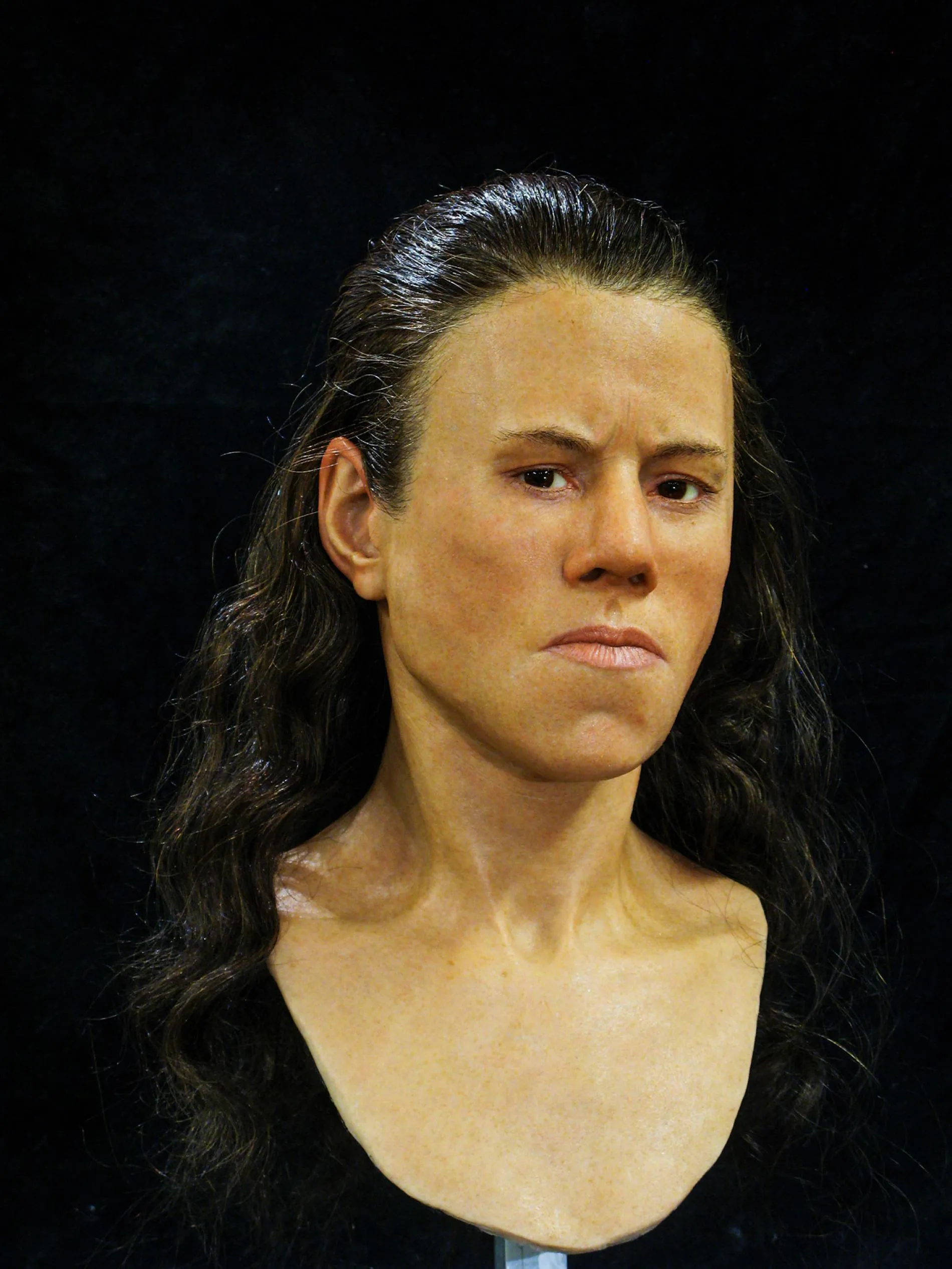
Just to tack on to what @EddieMoney was saying, consider this picture of a reconstruction of a paleolithic, female teenager:
Clearly, her face is very well-developed, and the jaw is exceptionally prominent. Does her development look healthy? Absolutely. Would the average, modern man find her attractive? Some would, but I think that most would consider her a little too masculine. If her jaw were less developed, she would likely look more feminine. On the flip side, many modern men would become more attractive if they could exchange their jaws for hers.
I don't want to take a side in the argument between Eddie and Silver, but I do see Eddie's point: women can sometimes benefit from less facial development because it could make them appear more feminine (sometimes), whereas this is less likely to be the case for men, who are interested in looking masculine.
Just to tack on to what @EddieMoney was saying, consider this picture of a reconstruction of a paleolithic, female teenager:
Clearly, her face is very well-developed, and the jaw is exceptionally prominent. Does her development look healthy? Absolutely. Would the average, modern man find her attractive? Some would, but I think that most would consider her a little too masculine. If her jaw were less developed, she would likely look more feminine. On the flip side, many modern men would become more attractive if they could exchange their jaws for hers.
I don't want to take a side in the argument between Eddie and Silver, but I do see Eddie's point: women can sometimes benefit from less facial development because it could make them appear more feminine (sometimes), whereas this is less likely to be the case for men, who are interested in looking masculine.
I don't know how accurate that scientist/artist's interpretation of a Paleolithic teen is, considering they only had the skull to base the soft tissue off of. At the very least, I don't know how representative of the average Paleolithic teen that interpretation is. I'd expect the midfacial protrusion of anyone from the Paleolithic Era to be absolutely staggering (simply look at skulls from the era and the prominence of the zygomatic arch, there's a widespread scientific consensus that skulls of that era had extremely prominent midfaces), and this picture doesn't show that. I'd also expect a much more compact face with a lower gonial angle, considering the large amount of mastication the individual likely engaged in on a daily basis (lower gonial angle offers more mechanical efficiency in chewing, which is one reason why we see uniformly low gonial angles in ancient populations -- I'm not saying that a low gonial angle is necessary for attractiveness, simply that they were very much commonplace at the time).
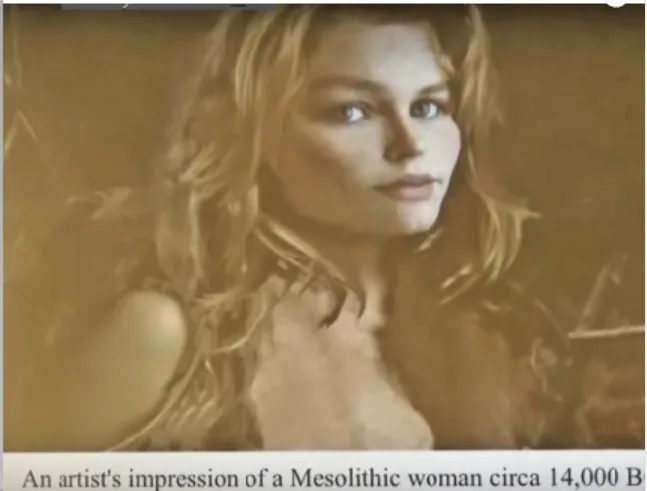
I think increased bone development is not mutually exclusive from a proportional lower third for women. For instance, look at this interpretation of a Mesolithic woman:
Her maxillary growth/development is much greater than most modern people (look at the ogee curve and midfacial protrusion), and yet her lower third is not "masculine". Now, I know it's an artist's interpretation, but I've seen people with similar development before in real life. Further bone development in women does not always lead to masculinity/an increased lower third proportion.
Honestly, I think a female can have a large ramus/mandibular length and still have a proportional lower third, we just don't see a lot of that in society today because of what @silver was getting at -- that almost everyone has some degree of CFD, as they don't do the extended chewing of our ancestors, nor do they have the masticatory muscle strength, nor the midfacial protrusion/cheekbones. The women who don't have as much bone development retain their angelic look with increased soft tissue prominence, and the women who do have more bone development don't grow in the way our ancestors did and thus sometimes have masculine lower thirds, greater facial height than is optimal, etc.
Rhoda's good looks aren't attributed to her tall ramus or prominent mandible. No woman (or man) is made attractive by a large mandible, anyway.
To me it seems that the harmony of her whole face is very much dependent on her having a large mandible. With a smaller mandible she would lose that geometrical equilibrium that keeps the eyes fixed on the face. I agree that she could be 'cute' in the sense the local grocery store girl is cute, but there is no doubt how much her large mandible defines her beauty:
I also want to point out that she looks worse in the after picture because her chin looks recessed, her jaw weak and her maxilla looks vertically grown . In other words, in the after picture she looks like the ''high CFD'' version of her. And this is what I was trying to say all along. You need bones to have a good craniofacial development for both men and women. Someone like Barbara Palvin has a small chin but her mandible is already more developed and protruding than 99% of women. Angelic skulls have more bone growth than the average woman because you need good bone growth to have good forward growth and you need good forward growth to have an angelic skull.
That's exactly what I'm getting at. I would also add that that artist's recreation of a Paleolithic girl is very unlikely just because her palate is nowhere near as wide as we know people from that time had. I would be curious to see the skull(s) that was based on.
Rhoda's good looks aren't attributed to her tall ramus or prominent mandible. No woman (or man) is made attractive by a large mandible, anyway.
To me it seems that the harmony of her whole face is very much dependent on her having a large mandible. With a smaller mandible she would lose that geometrical equilibrium that keeps the eyes fixed on the face. I agree that she could be 'cute' in the sense the local grocery store girl is cute, but there is no doubt how much her large mandible defines her beauty:
I also want to point out that she looks worse in the after picture because her chin looks recessed, her jaw weak and her maxilla looks vertically grown . In other words, in the after picture she looks like the ''high CFD'' version of her. And this is what I was trying to say all along. You need bones to have a good craniofacial development for both men and women. Someone like Barbara Palvin has a small chin but her mandible is already more developed and protruding than 99% of women. Angelic skulls have more bone growth than the average woman because you need good bone growth to have good forward growth and you need good forward growth to have an angelic skull.
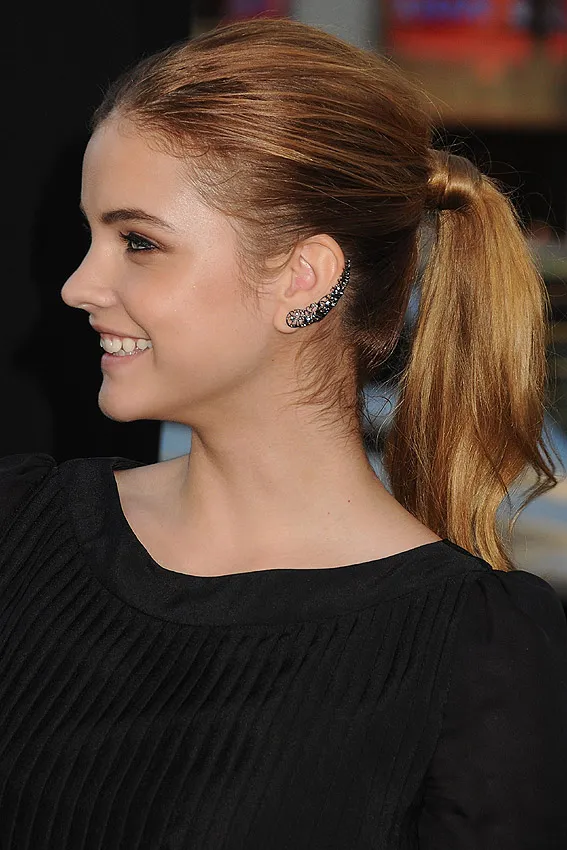
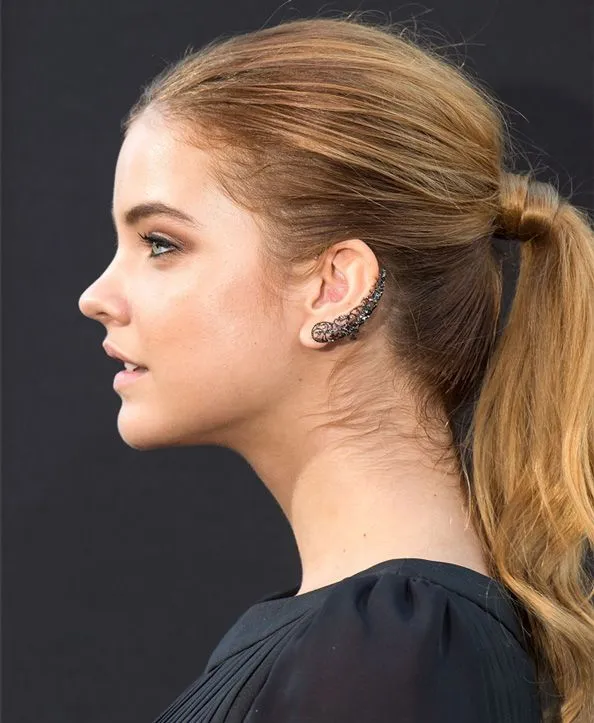
I don't think Barbara Palvin has a jaw that is more developed and protruding than 99% of women. From this view she has a Class 2 Div 2 dentition, which is very common in lots of people. In fact, you can see her retroclined upper incisors here.
The high incidence of Class 2 Div 2 faces would show that her jaw doesn't have any sort of magical prominence unseen in other women. In fact, she has a very short maxillary height which means her jaw lacks downward growth, as is the case in Class 2 Div 2.
Now let's compare that with Rhoda
There is no debate about who has more bony prominence. Rhoda clearly does. Rhoda has a longer ramus, longer middle third, and more prominent chin. But, Palvin is the one who has the more angelic look. So I still disagree that forward growth produces an angelic skull because Rhoda has clearly more forward (and downward) growth than Palvin, yet Palvin who has less bone on her face looks angelic. And Palvin also has a Class 2 Div 2, meaning there was some lack of growth happening anyway.
Finally, I do agree the short faced morph of Rhoda could look better. Partially because women with short faces don't have long philtrums or wide mouths, yet the morph posted kept her long philtrum and wide mouth. Palvin has a shorter face than Rhoda and doesn't maintain a wide mouth and long philtrum. And again, Palvin has the more angelic/neotenous/feminine look and has a way less developed jaw.
I still posit that less bone looks better on feminine faces on most cases. Not less to the point of looking like she has a developmental delay, but less vertical growth in the middle third, upper lip (Rhoda has a vertically longer midface than Palvin), and less growth in the ramus. Am I saying Rhoda is ugly? That's not even the discussion. My point is I have visual displays that show the advantage of less bone growth on a female face. Hilary Rhoda = athlete face, Barbara Palvin = angel face.