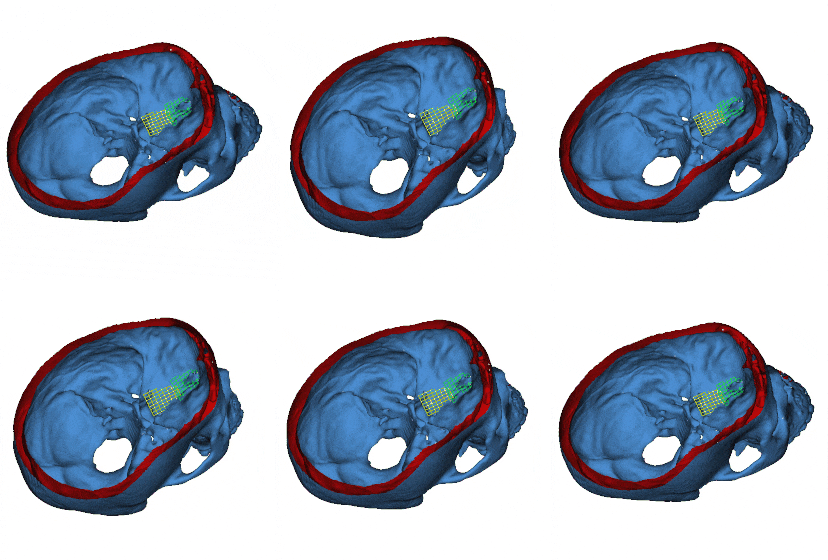

Interestingly, they believe this ancestor is more closely related to modern humans than Neanderthals because they have a bigger neurocranium and a smaller viscerocranium. So these evolutionary changes might be prehistoric and perhaps accelerated by the agricultural and industrial revolutions but not necessarily triggered by them.
The Harbin cranium is huge, showing either the largest or second largest values for many measurements in our comparative fossil database, and its brain volume at ~1420 ml matches that of modern humans. It also shows other features resembling our species. It has flat and low cheekbones with a shallow canine fossa, and the face looks reduced and tucked under the braincase.
This again reminded me of the animation from this study ( https://www.sciencedirect.com/science/article/abs/pii/S0047248415002675?via%3Dihub ) illustrating the evolution from prehistoric to modern humans: