

I have been looking at the work of Progress and how he is repairing the function of the body's posture as a whole. I heard that it makes tongue posture easier, more natural, and less forced. How can I have excellent full body posture?
I have forward head posture, anterior pelvic tilt, and am currently living a sedentary lifestyle.

You can have excellent body posture by starting to posture correctly.
https://www.youtube.com/watch?v=DThVuJ2qlXU&t=87s
Do yourself a favor and watch more of this guys videos, he really addresses everything in terms of posture. As a brief run down, for proper posture stick your butt out and up, raise your head up and back, and open your chest up. I find that if you get your head up and back the chest will open up naturally. But if it doesn't basically what you want to do is retract/externally rotate the scapula slightly and elevate your shoulders. Do not retract your scapula back and down, this will cause impingement.
https://www.youtube.com/watch?v=OSTqlujE9sw
Why retracting the scapula back and down will cause impingement.
Also, anterior pelvic tilt is a misnomer, virtually all disc protrusions occur posteriorly and posterlaterally, indicating spinal flexion of the lumbar is the cause of back pain.
More on that here:
http://www.apicareonline.com/common-low-back-pain-is-it-really-a-mystery/
https://trainingandrehabilitation.com/true-solution-lower-back-pain/
Articles that go into further depth about scapular movement and proper scapular alignment/movement
https://trainingandrehabilitation.com/shoulder-pain-scapular-stability/ https://trainingandrehabilitation.com/how-truly-treat-thoracic-outlet-syndrome/
https://trainingandrehabilitation.com/shoulder-pain-scapular-stability/
Also just to further prove anterior pelvic tilt is really a misnomer




Now let's look at someone who supposedly has "anterior pelvic tilt"
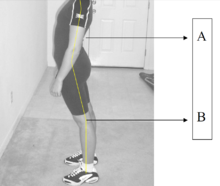
Why does this person's back arch so excessively compared to the images above? It's because of the thoracic spine, ie mid back. There's two ways to make this excessive arch go away, you posteriorly tilt your pelvis or instead you keep your pelvis tilted the same and you just extend the hips. In a deadlift or squat people will tell you to "sit back" to initiate a hip hinge, that's hip extension, that is what this person needs to do and they'll fix their hyperlordosis (of the mid back, not the lumbar, lumbar has a natural curvature). If you posteriorly tilt the person in the image above who may be going to you for back pain it's a band-aid solution, they'll start eventually getting pain in the lumbar like in the L4-L5 or L5-S1 (these account 95% of disc herniations, those herniations are directed backwards) due to their new flexed posture.

Two things that have helped me tremendously - yoga (specifically backbends) and walking. The more you walk, the more your body will gradually adjust itself. Aim for 2 miles a day.
The whole thing, like anything else, is a process. Be prepared to put in *a lot* of work. But it's worth it in the end.

@sinned My own experience agrees with this. Lordosis/ATP is not as much about excessuve pelvic tilt, as it is about the backward position of the pelvis in relation to the torso. Two years ago I did the mistake of attacking my lordosis by over-correcting ATP, which eventually resulted in the opposite problem, the swayback posture(?). Eventually I understood that contrary to what many believe, in lordosis, the hips are already in optimal tilt. The actual issue is that the abs are allowing the rest of the spine to contour this tilt, instead of dynamically opposing it. Ideally you will tilt the pelvis anteriorly as much as you comfortably can, while simultaneously engaging abs in a way that brings the hips forward. Of course, tongue posture and chin tuck/occipital drive are also important in allowing this motion to play out correctly.

I love Kjetil Larsen's blog, it's an absolute a breath of fresh air compared to most of the physical therapy stuff which has propagated on the web.
One thing he doesn't give much attention to though, is the importance of breathing and states of relaxation & tension.
If you aren't breathing properly, then your body cannot relax. If you cannot relax, then you're more likely to hold chronic tension, which in turn will exacerbate postural problems.
It's kind of a vicious circle, so any attempts to fix posture should be supplemented with training of respiratory mechanics.

I love Kjetil Larsen's blog, it's an absolute a breath of fresh air compared to most of the physical therapy stuff which has propagated on the web.
One thing he doesn't give much attention to though, is the importance of breathing and states of relaxation & tension.
If you aren't breathing properly, then your body cannot relax. If you cannot relax, then you're more likely to hold chronic tension, which in turn will exacerbate postural problems.
It's kind of a vicious circle, so any attempts to fix posture should be supplemented with training of respiratory mechanics.
True.
I can't breathe well at all if i force good posture, and if I don't stand with good posture my back and hips go nuts. So I tried breathing exercises and so far so good - it kinda works for me. Think how your body feels when you are tense, angry, scared or stressed - It constricts. Your muscles get tight and your breathing becomes shallow. When your breathing is shallow you are not getting the amount of oxygen that your body needs. So practice breathing while letting your body lose it's tension completely. If your breathing is shallow in your daily life - that's a problem. Allow your breath to come into your body and nourish and relax every part of your body, and that's how you relax your spine in the result.

My PT guy said that correcting the musuclar imbalance in one's rhomboids (specifically for me- I don't know your deal) will help with upper back posture, also stretching the neck by tilting the head back will help with foreward head. So strengthen your rhomboids? Im sure your glutes and core too. Also look into hyperarch extension of the foot.