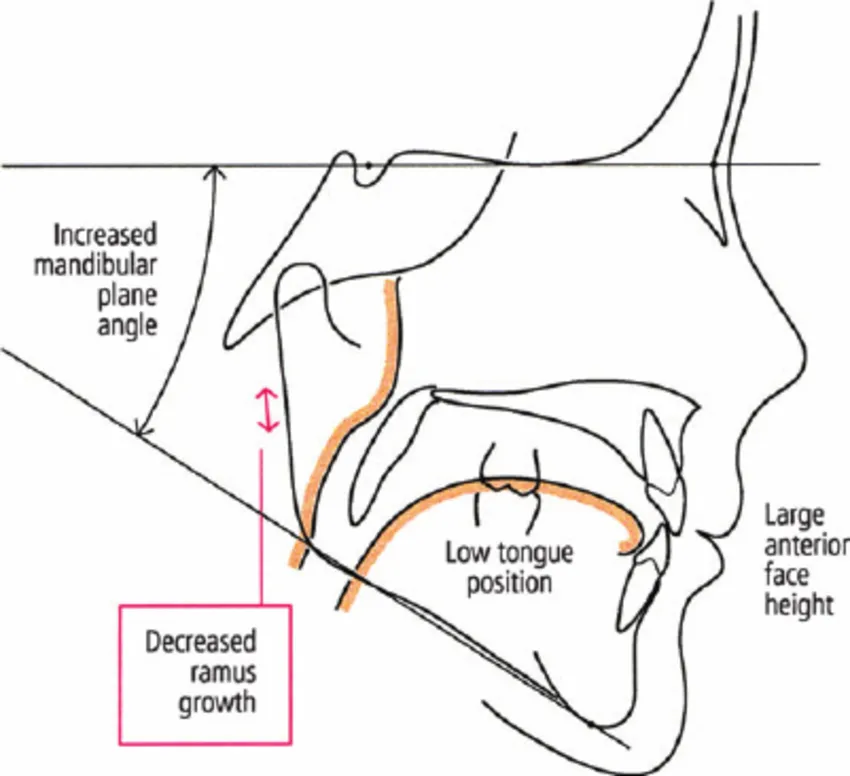
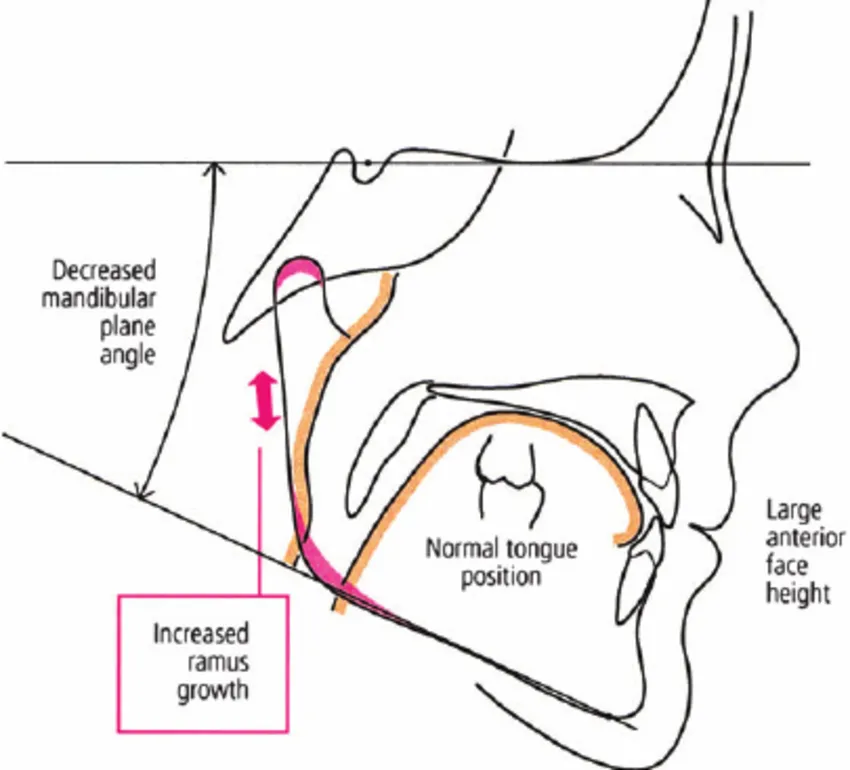
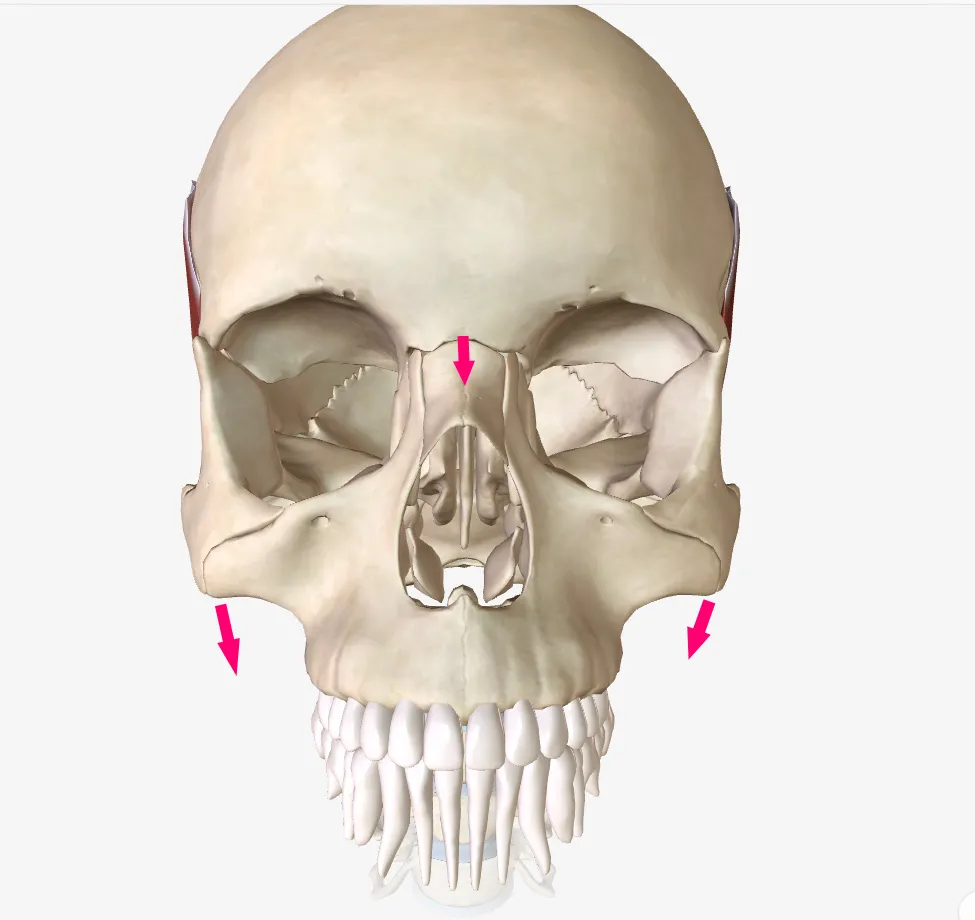
If you think about it, the tongue moves by extrinsic tongue muscles attached to the chin(forward movement) and the palate(upward movement). the mandible is loose and connected by muscles to the zygos, the maxilla and the sphenoid to provide forward movement or the temporalis to provide backward movement. No matter which muscle you use here for forward movement, it's a closed loop. It's like trying to pull your own feet up, it just won't work.
It's been shown that only 1000g-1500g of gravitational force is needed to influence the maxilla/face shape in some studies.
The diaphragm however is a huge muscle capable of exerting force much bigger than that. Not only that but the biggest function of the face is to breath.
So I was thinking perhaps breathing with rhythmic movement of the back of the tongue is the most important part of facial development.
The idea is the back of the tongue provides counter-pressure to breathing.
Interesting idea. Proper oral posture and proper breathing are definitely connected in one way or another. At face value, there should be three possibilities: a) lack of oral posture leads to poor breathing b) poor breathing leads to lack of oral posture c) poor breathing and lack of oral posture are separate results of a shared cause, such as overall postural dysfunction.
If you think about it, the tongue moves by extrinsic tongue muscles attached to the chin(forward movement) and the palate(upward movement). the mandible is loose and connected by muscles to the zygos, the maxilla and the sphenoid to provide forward movement or the temporalis to provide backward movement. No matter which muscle you use here for forward movement, it's a closed loop. It's like trying to pull your own feet up, it just won't work.
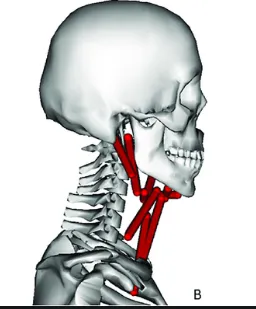
How do you see the hyoid interacting with this closed loop? Would it not solve the problem of the loop? Since the tongue and the mandible are indirectly connected to the clavicles and the upper ribcage by the hyoid, couldn't the pull provided by the hyoidal muscles be what allows the cranial base to descend down so that ramus length is increased and the jaw swung forward? Considering how far away from the skull the diaphragm is, would this not be a more likely explanation?
The diaphragm however is a huge muscle capable of exerting force much bigger than that. Not only that but the biggest function of the face is to breath.
So I was thinking perhaps breathing with rhythmic movement of the back of the tongue is the most important part of facial development.
The idea is the back of the tongue provides counter-pressure to breathing.
Could you expound on how you see diaphragm exerting forces to the cranial bones, and interact with the tongue? In what fashion would this rhythmic movement of the posterior tongue be synchronized with breathing, i.e. would you for example be pushing on exhale and suctioning on inhale or something else? I have also been trying to understand the potential connection between the tongue and the diaphragm, but I have not gotten very far with it yet.
So I was thinking perhaps breathing with rhythmic movement of the back of the tongue is the most important part of facial development.
This is part of the VoiceGym emphasis on rhythmic singing and speech. The video I posted in the VoiceGym Muscle Groups thread mentions the diaphragm as one of the body's "six springs". The VoiceGym articles I've read also emphasize the position of the hyoid and larynx and their suspension between the mandible and shoulder girdle. It's good to consider the role of the diaphragm and breathing patterns in facial form, but it's one piece in a complicated puzzle.
Interesting idea. Proper oral posture and proper breathing are definitely connected in one way or another. At face value, there should be three possibilities: a) lack of oral posture leads to poor breathing b) poor breathing leads to lack of oral posture c) poor breathing and lack of oral posture are separate results of a shared cause, such as overall postural dysfunction.
If you think about it, the tongue moves by extrinsic tongue muscles attached to the chin(forward movement) and the palate(upward movement). the mandible is loose and connected by muscles to the zygos, the maxilla and the sphenoid to provide forward movement or the temporalis to provide backward movement. No matter which muscle you use here for forward movement, it's a closed loop. It's like trying to pull your own feet up, it just won't work.
How do you see the hyoid interacting with this closed loop? Would it not solve the problem of the loop? Since the tongue and the mandible are indirectly connected to the clavicles and the upper ribcage by the hyoid, couldn't the pull provided by the hyoidal muscles be what allows the cranial base to descend down so that ramus length is increased and the jaw swung forward? Considering how far away from the skull the diaphragm is, would this not be a more likely explanation?
The diaphragm however is a huge muscle capable of exerting force much bigger than that. Not only that but the biggest function of the face is to breath.
So I was thinking perhaps breathing with rhythmic movement of the back of the tongue is the most important part of facial development.
The idea is the back of the tongue provides counter-pressure to breathing.
Could you expound on how you see diaphragm exerting forces to the cranial bones, and interact with the tongue? In what fashion would this rhythmic movement of the posterior tongue be synchronized with breathing, i.e. would you for example be pushing on exhale and suctioning on inhale or something else? I have also been trying to understand the potential connection between the tongue and the diaphragm, but I have not gotten very far with it yet.
I think there are some light limitations :
1) Muscles that are antagonistic usually don't work together, especially deep muscles. So I think whenever you tense the palatoglossus muscle, the lower hyoid muscles and the hyoglossus automatically get relaxed and stretched out, not creating any counter-force.
2) The palatoglossus muscle doesn't connect to the hard palate, but to the soft palate. The soft palate is made of flexible soft tissue, one could argue that with the small range of motion that the hyoid has it would take extra effort to pull the soft palate down hard enough to put force on the hard palate. Though it does seem to connect to the soft palate very close to the hard palate, so this effect may be small.
But I do think it's a good idea worth exploring, the issues I raise are weak, I think training the to contract the antagonist/agonist at the same time is feasible and I don't think the soft palate is that flexible, especially since it has muscle in it.
In theory I think tensing the lower hyoid muscle, the hyoglossus and the palatoglossus at the same time should be able to produce force on the back palate, however the palate itself is part of the maxilla and there's a very thick bone from the palate to the maxilla, to pull the palate downwards would require to pull the whole maxilla downwards, which is strongly connected to so many bones in the face such as ethmoid, zygo, frontal, lacrimal.
Suppose we are able to pull the palate downwards and suppose there will be new bone formed at the sutures, wouldn't that lead to a long face?
Something similar to don draper perhaps :
He has a long-face, but a good gonial angle, ramus length and ramus width. He's lucky his mandible is very broad, I think if a normal person was to have his long-face they'd look quite worse without a broad mandible. Tt's hard to find examples of long faces with good gonial angles though. His fWHR is like 1,6 - 1,65.
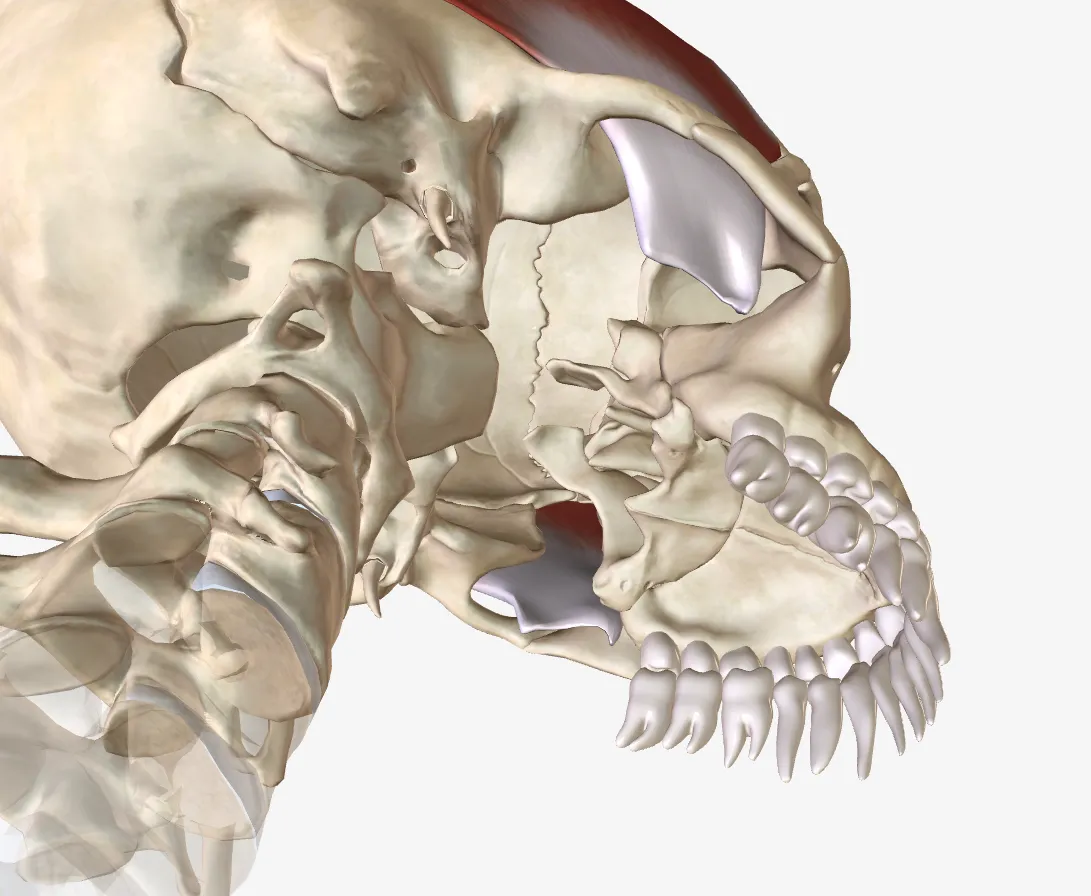
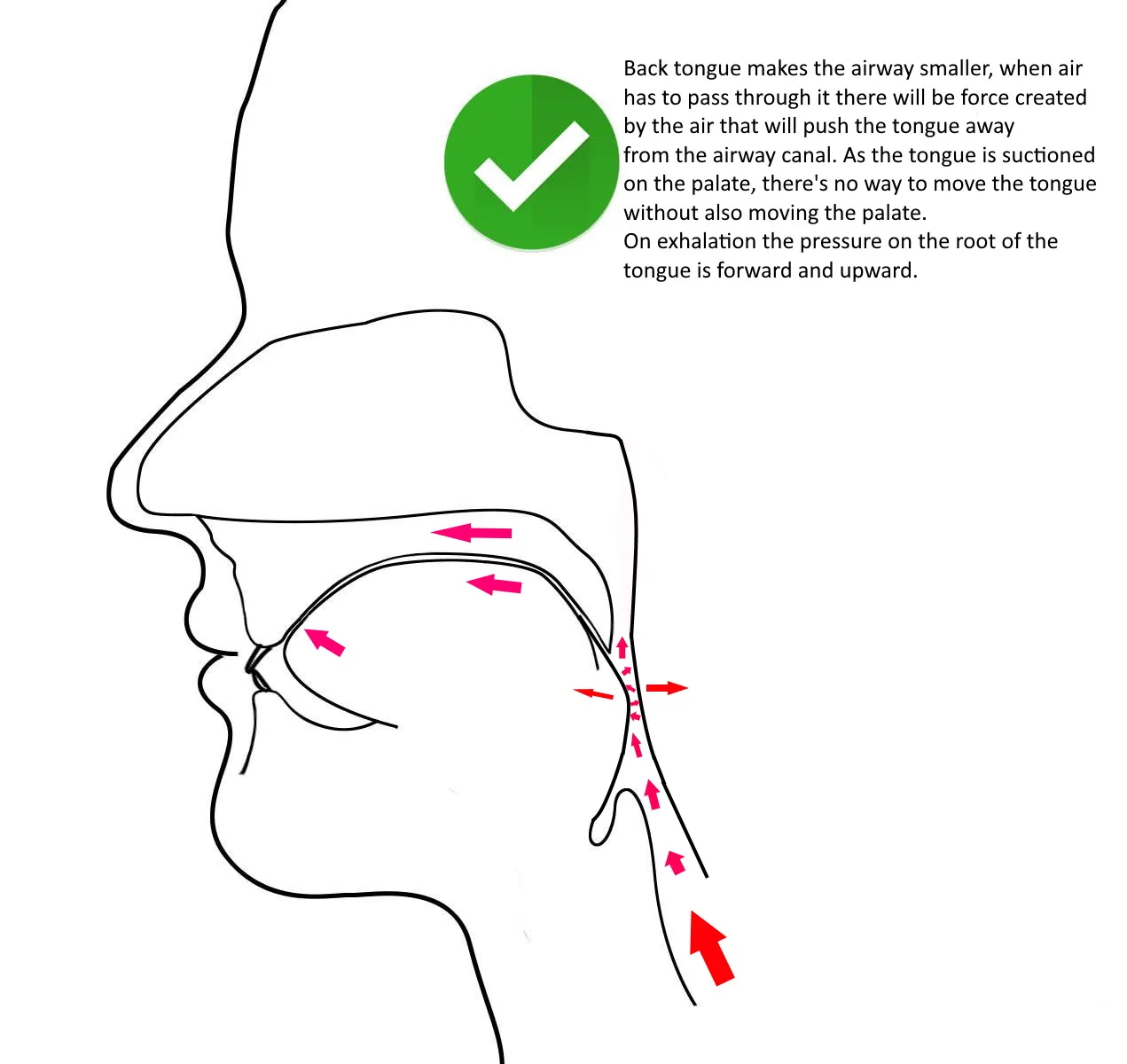
As for the diaphragm, the reason it can work even though it's so far is because it's capable of exerting air pressure on the face, I imagine something like this with proper tongue posture :
I tried to replicate a small airway in the picture, so it's not anatomically very correct as the original was of a healthy person with a large airway.
I would imagine the rhythmic movement would be to lower the back of the tongue on inhalation to lower airway resistance and the raise the back of the tongue on the soft palate on the exhalation to increase the airway resistance. The rest of the tongue would be always suctioned on the hard palate though.
I'm trying it out right now, I'll post if I get any changes, it feels somewhat natural and I've already felt pressure/movement in the bones behind my ears.
So I was thinking perhaps breathing with rhythmic movement of the back of the tongue is the most important part of facial development.
This is part of the VoiceGym emphasis on rhythmic singing and speech. The video I posted in the VoiceGym Muscle Groups thread mentions the diaphragm as one of the body's "six springs". The VoiceGym articles I've read also emphasize the position of the hyoid and larynx and their suspension between the mandible and shoulder girdle. It's good to consider the role of the diaphragm and breathing patterns in facial form, but it's one piece in a complicated puzzle.
True, it's a complicated puzzle.
Posted : 03/05/2020 6:21 pm
Leave a reply
Skull and Jaw Correction
Free Classes
Join hundreds who are Tensegrity Mewing, enhancing the good results of mewing and reversing damage. Free Newsletter and Classes