

An article I found interesting regarding how bite connects to posture and the feet.

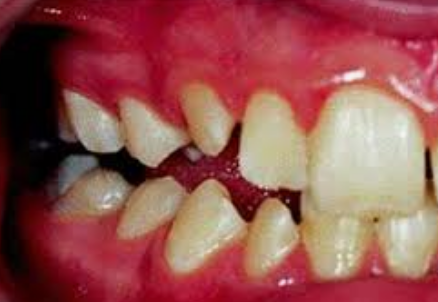

According to Ron Hruska, founder of the Postural Restoration Institute (PRI), sensing contact of the back molars is the equivalent of sensing your heels on the ground. The head uses the neurological input from the back teeth like a “floor” to sense stability and proper position. If the back molars do not touch on one or both sides, the brain only senses the front canine contact. The head and neck will have to compensate for that instability of the bite.
If you have scoliosis, you may have an associated imbalance in your bite. Sometimes we find molar contact only on one side of your bite, sometimes we see a “crossbite” as depicted here. 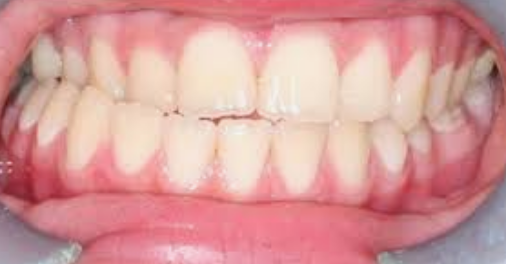 The curvature and rotational nature of the spine does not stop at the neck but may continue to impact your cranial bones and jaw position asymmetrically. In adolescents with scoliosis who are still growing, it may be important to discuss the effect of spinal and cranial asymmetry on occlusion with their dentist or orthodontist.

Oftentimes, dental intervention is required and recommended alongside physical therapy. We work primarily with our wonderful, local dentist, Dr. Angela Ellis, DDS of Ellis Family Dentistry in Chapel Hill. Dr. Ellis creates impressions of the teeth in a neutral head and neck position and then creates a mouthguard-like splint to wear mostly at night and while doing PRI exercises. There are different kinds of splints, but their main purpose is to improve a sense of stability through the molars to retrain and relax compensatory muscles of the head and neck

Neal Hallinan has some videos on youtube about using oral splints in PRI therapy.
