

Well, we had some reports about results from thumbpulling on maxilla, and recently I am seeing some information about sphenoid bone, it's effect on skull and pituitary gland etc.
I don't really know about sphenoid's anatomy, but clearly hypothetical: could gentle pulling outwards on this sphenoid wings in your mouth have any positive or negative effects on anything?
Any thoughts?

Any demonstration on how to even do this?
Never even knew what a sphenoid wing was prior to seeing your post. LOL
** The face pulling "bag method" -- /community/community/main-forum/face-pulling/#post-3902 **
** Keengo Chin Tuck method w/force (WIP)-- /community/community/main-forum/chin-tuck-with-added-force-chin-tuck-2-0-new-theory-inside/ **
If you'll put your thumbs on palate slightly above molars, and then slide a bit deeper you will feel this a little sticking out bones, that are part of sphenoid
Some people say, they can even see this sticking out parts, covered by soft tissue right behind palate, and somehow I think, earlier I could too, but now they are hidden.
Maybe its related to wisdom teeth removing, or I am just overthinking, and it actually never was visible
Upd:
https://images.app.goo.gl/tL9AgoseVGkcHj2F6
This lowest part right behind molars must be touchable
May be calling it "wing" isn't correct, I am not sure

@androvas
An equally important question, if not more so, would be how the sphenoid bone ideally should sit within the craniofacial complex. How is a faulty positioned sphenoid bone even properly assed?

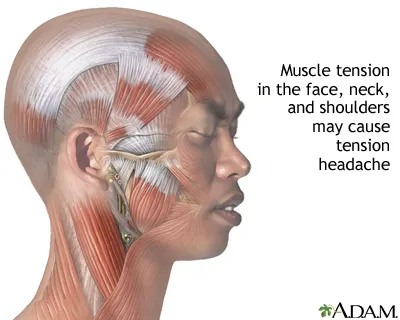
Have an external look as well, at the temporal muscles (which pull the mandible) among others. Just because there isn't a super explicit muscle attachment doesn't mean that the muscles flowing over an area don't interact with and attach to it.
Muscles from the neck/hyoid attach in there, as well as muscles of the tongue (which are all in the same complex, the neck and nasomaxillary, and develop together both evolutionarily and in the embryo). These interact directly with your diaphragm/breathing as well. Anything that interacts with the occiput is a good bet as well, their SJB interaction is core to the discussion.
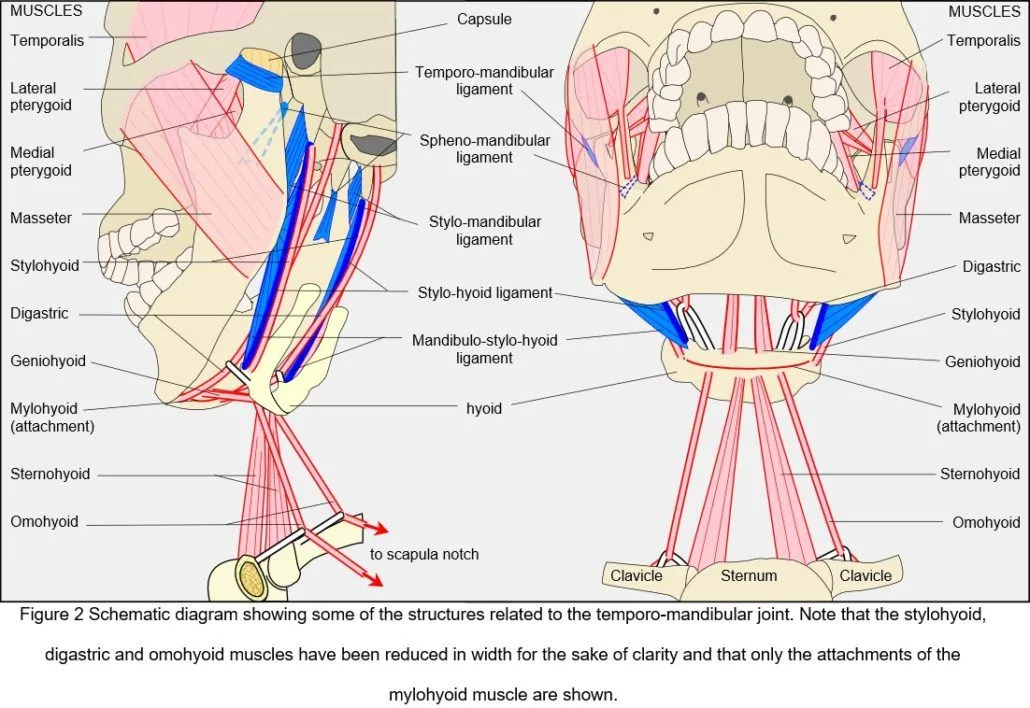
It is an interesting discussion and method to pull and push things around with thumbs or devices, especially to "unjam" a region. I would also look at the muscle interactions - you may not be aware of how much control you have over these neck and skull muscles, but they all change tone with breathing and that is a good place to start gaining that awareness.

This lowest part right behind molars must be touchable
May be calling it "wing" isn't correct, I am not sure
It's the pterygoid processes of the sphenoid you're palpating at the back of the hard palate. The wings of the sphenoid are up behind the eyes.
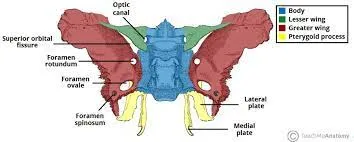

What if we're supposed to expand the sphenoid through the pterygoid process directly instead of trying to expand the palate?
I can already verify right now that applying pressure on the pterygoid hamulus sideways works very well and seems to radiate a lot of force on the front upper incisors and canines.
If the tongue is able to directly expand the sphenoid sideways and push it slightly forward, this could have massive effects on the whole craniofacial complex.
I've also experimented with the tongue where I found that expansive forces are smallest at the front and highest at the rear. In fact the tongue was extremely weak at the front where my fingers can easily hold it in a narrow state, however the back is so strong in expanding I can't prevent it from expanding with my fingers. I've got pretty strong hands too.
Well, we had some reports about results from thumbpulling on maxilla, and recently I am seeing some information about sphenoid bone, it's effect on skull and pituitary gland etc.
I don't really know about sphenoid's anatomy, but clearly hypothetical: could gentle pulling outwards on this sphenoid wings in your mouth have any positive or negative effects on anything?
Any thoughts?
"Some pituitary adenomas can extend inferiorly, growing downward and invading the sphenoid bone and cavernous sinus.[2] Large adenomas can cause remodeling of the underlying sphenoid bone altering the shape of the sella turcica."
"Skull remodeling occurring in association with intracranial hypotension after ventriculoperitoneal shunting is not limited to the orbits. In this study we have demonstrated expansion of the sphenoid sinus. This finding adds to our knowledge and understanding of the scope of the sunken eyes, sagging brain syndrome and elucidates a clinically useful radiographic sign."
The sphenoid seems to be a highly malleable bone.
The sphenoid itself may not even need to be put under constant pressure. Just swallowing properly may stimulate growth in it, which will affect all bones around it accordingly.
Even if the bone itself isn't stimulated to grow, there's some evidence that the surrounding organs can get "stimulated" by pressure through the sphenoid. Since humans swallow about 1 to 2 times per minute, this swallowing can stimulate the pituatary gland through the sphenoid.
"A method and apparatus are provided for the stimulation through the sphenoid sinus, the pituitary gland and the adjoining brain structures. The apparatus consists of an inflatable balloon and which is inserted into the sphenoid sinus and inflated. The balloon will stimulate by pressure, heat, cold or electricity, the structures surrounding the sphenoid sinus. The balloon is controlled via connecting tubes and control wires. This method and apparatus has application in the treatment of pain and a number of other maladies of the nervous system."
Thoughts on this? You seem to have talked before about the pituitary gland. Bones are made of collagen which is a piezoelectric material. Applying pressure to them generates voltage potentials and moves current.
What if we're supposed to expand the sphenoid through the pterygoid process directly instead of trying to expand the palate?
I can already verify right now that applying pressure on the pterygoid hamulus sideways works very well and seems to radiate a lot of force on the front upper incisors and canines.
If the tongue is able to directly expand the sphenoid sideways and push it slightly forward, this could have massive effects on the whole craniofacial complex.
I've also experimented with the tongue where I found that expansive forces are smallest at the front and highest at the rear. In fact the tongue was extremely weak at the front where my fingers can easily hold it in a narrow state, however the back is so strong in expanding I can't prevent it from expanding with my fingers. I've got pretty strong hands too.
I've typically thought about the conformation of the sphenoid with regard to the sagittal dimension of the face. I'm not sure that we're trying to "expand" the sphenoid in the transverse dimension per se. Although the adult MSE+FM case I keep referencing does show the pterygoid processes of the sphenoid to be proportionately wider in the "after" layer of the superimposition. I suppose applying transverse force to the pterygoid processes might help mobilize or "unjam" them like NCR/endonasal balloon therapy purports to do. There's an old thread with a couple other exercises that claim to adjust the sphenoid without nasopharyngeal manipulation. I'll look for that if I have time.
There's an old thread with a couple other exercises that claim to adjust the sphenoid without nasopharyngeal manipulation. I'll look for that if I have time.
This is the thread I was remembering:
/community/community/main-forum/another-way-to-adjust-the-sphenoid/
Here's a couple other relevant old threads I came across while searching:
/community/community/main-forum/lower-wings-of-sphenoid-bone-now-visible-on-the-roof-of-my-mouth/
/community/community/main-forum/rotating-the-sphenoid-bone/
Interesting observation:
My right of this medial plate of pterygoid process is sticking out inside mouth slightly more, than left, and my whole left side of face is way better, from front it has more eye support, cheekbone definition etc, and more forward growth in side profile

I am starting to think more and more that sphenoid is very important. Btw can you give a bit more elaboration on how exactly to pull on them?
Well, it is more like pushing rather than pulling.
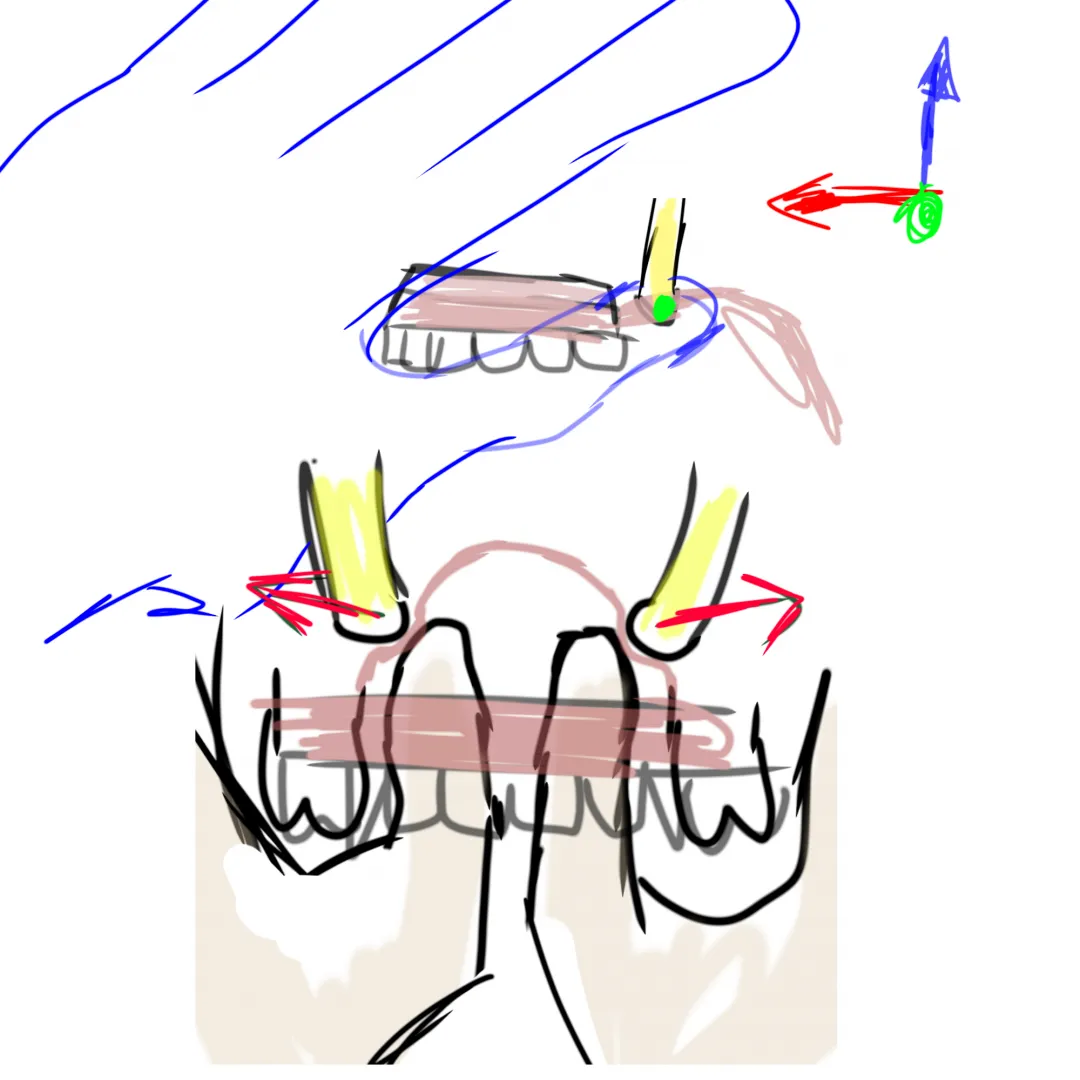
I tried to draw it, but looks not very good lol. I just put thumbs on this bumps right behind hard palate.
They are covered by soft palate, but placed close to your teeth, so it does not make you feel like you want to vomit. (or at least it does not make you to really vomit lol)
Then i just push outwards, gentle at start, and then slightly harder.
I do it for 1-2 minutes, because my thumbs cant handle more, then a pause, and then again pushing for 1-2 minutes.
10-15 minutes total, i want to reach 30 minutes a day, but cant discipline myself enough lol

Id suggest being very GENTLE if you were to attempt anything like this. The sphenoid is manipulated by the back of the tongue and I knew someone who broke off a sphenoid wing-tip just mewing. So be careful, dont push too hard. Seriously be nice to your body, and take care :)
I knew it can be dangerous, but how is it even possible to break it with just tongue? Does this person still alive?
As far as I know they're okay, it was just a small notch/fragment, right on the end of the pointy bit from memory. my best guess is that bones can weaken or become brittle from dis-use so suddenly starting to apply pressure and not allowing good time for bone to strengthen and adapt could be disastrous. Pure conjecture tho
I had a mate who'd recently taken to hitting the gym, going 3+ times a week. He'd gotten noticeably stronger, But one drunken night he took to arm wrestling his companion and ended up snapping his fore-arm, ended up taking a trip to the hospital and he's still in a cast to-this-day. He said he wasn't even going that hard with his friend when it happened, it just kinda snapped. I have an inkling he was working out his arms too much and not letting them recover properly, but I can't say for sure. It was really odd and my friend had no idea how 'easy' it was to break.
Anyway not trying to spread fear just encouraging to be careful and gentle with fragile bones especially if they're already mispositioned you know