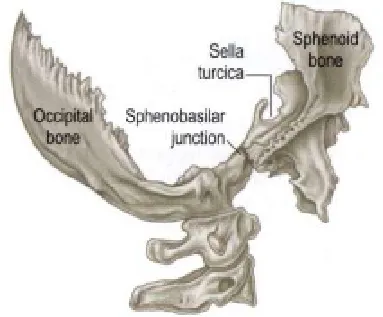
A video going over the cranial base, how it is the foundation for the cranium and nasomaxillary (facial) complex, and why it may deserve more attention for correction than the surface level bone structures like the jaws. The cranial base in general may be what is actually corrected when we talk about fixing growth, and most definitely the palate cannot be expanded without the involvement and adjustment of the palatine bones, the sphenoid locked into them, and then all of the bones connecting to the sphenoid (essentially the whole skull).
This bone also houses the pituitary gland, and its development may directly have effect on the hormones being produced for skull and bony growth, among other functions.
The Occiput and Sphenoid are joined by the SBJ, sphenobasilar junction, which essentially forms the roof of the airway column and is close to being directly under the pituitary gland.
The Occuput/Sphenoid relationship is also central to understanding neck and skull posture, changing the way your head sits on your spine is predicated on changing how the sphenoid sits on top of the atlas, which will directly impact the sphenoid, which will directly impact the rest of the skull
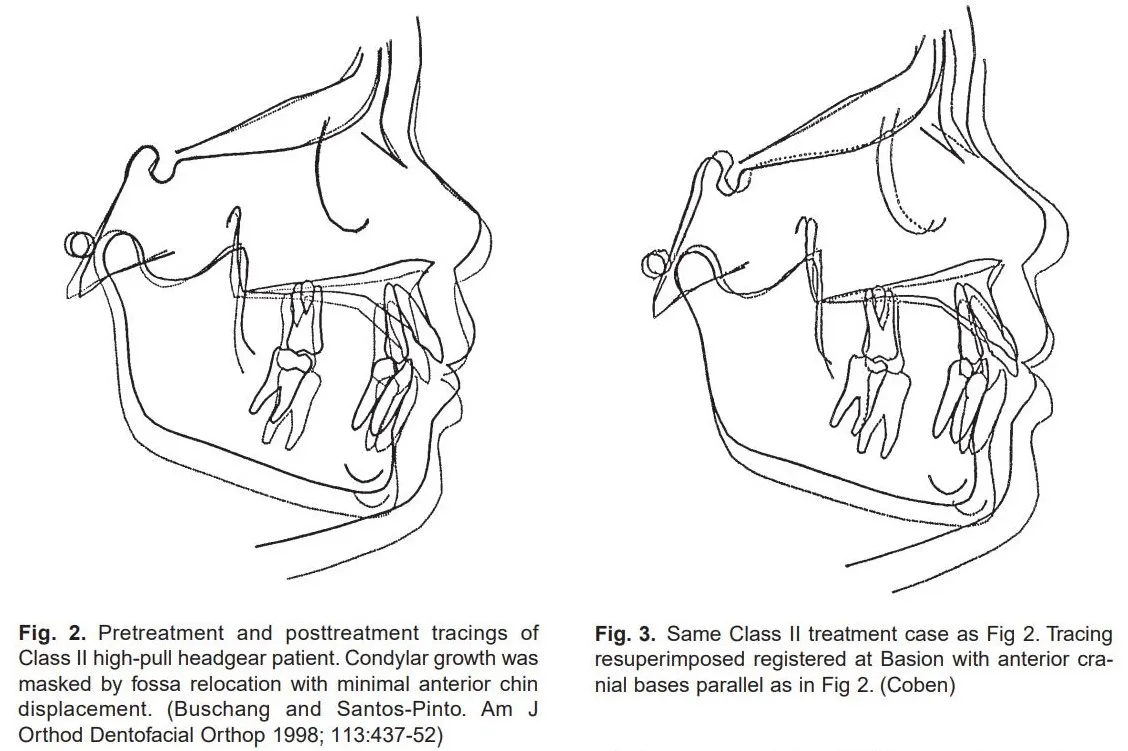
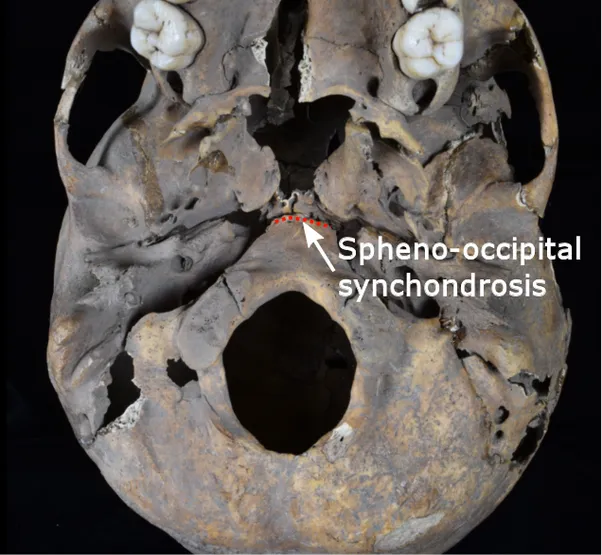
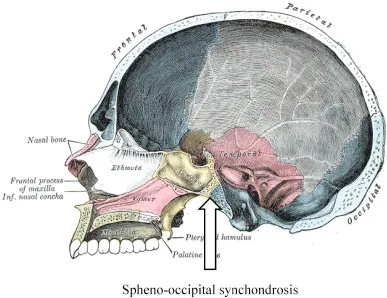
The role of the speno-occipital synchondrosis in craniofacial growth as it affects the spatial position of the upper face and maxillary dentition has been masked by the traditional method of superimposing cephalometric tracings on the anterior cranial base. Furthermore, the erroneous assumption that the overall direction of growth of the face is demonstrated by superimosing stable areas of the anterior cranial base has led to gross misinterpretation of treatment results throughout our literature.(Am J Orthod Dentofacial Orthop 1998;114:709-12)
The occiput, sphenoid, cervical posture relationship os the first step to correct imbalances.
If you want to achieve any type of progress with facial aesthetics you must quit the old habits that got you where you are now.
Focus on being a healthy breathing machine and the changes will come.
My recommendations, as someone that corrected a severe latherognatism case that needed surgery with an SN11 orthopedic appliance:
1. BREATHE and RELAX. Yoga and pranayama daily before sleep.
2. PHYSICAL EXERCISE. Light Nose running if possible but , only if youre symmetrical. I did 30km a week. Morning. Better cardiivascular system, boosts nasal breathing and oxygenation, decompresses your spine.
3. HIDRATION. Drink a minimum of 3 litres of water per day. Helps to relax the diaphgram and makes your nasal breathing better. Pee should be clear.
Chug down 1.5lts of water in one go and ull see your posture Change within 5 minutes.
4. FRUIT AND DIET. Tongue chewing. Eat plenty of healthy, natural carbohidrates. Fruit, especially, relaxes your jaws. Eat half a watermelon and, if youre on Touch with your body, you Will know what i mean.
5. STOP FOCUSING ON MEWING. If you cant posture the tongue and breathe at the same time, than dont. Let your tongue touch the teeth if it has to.
Pressing the tongue to the palate unnaturally Will only develop more problems.
It becomes a pathology and doesnt let you breathe. Literally its stress inducive.
6. LIP SEAL. A gentle lip seal with relaxed shoulders and eye area.
A healthy body will produce an aesthetically pleasing face.
"Mewing" itself only comes last and unconciouslly, usually in a state of relaxation
Sure, you may be able to cheat the system by pressing your tongue on the palate but, at the end of the day, you re fixing one problem but will find two others.
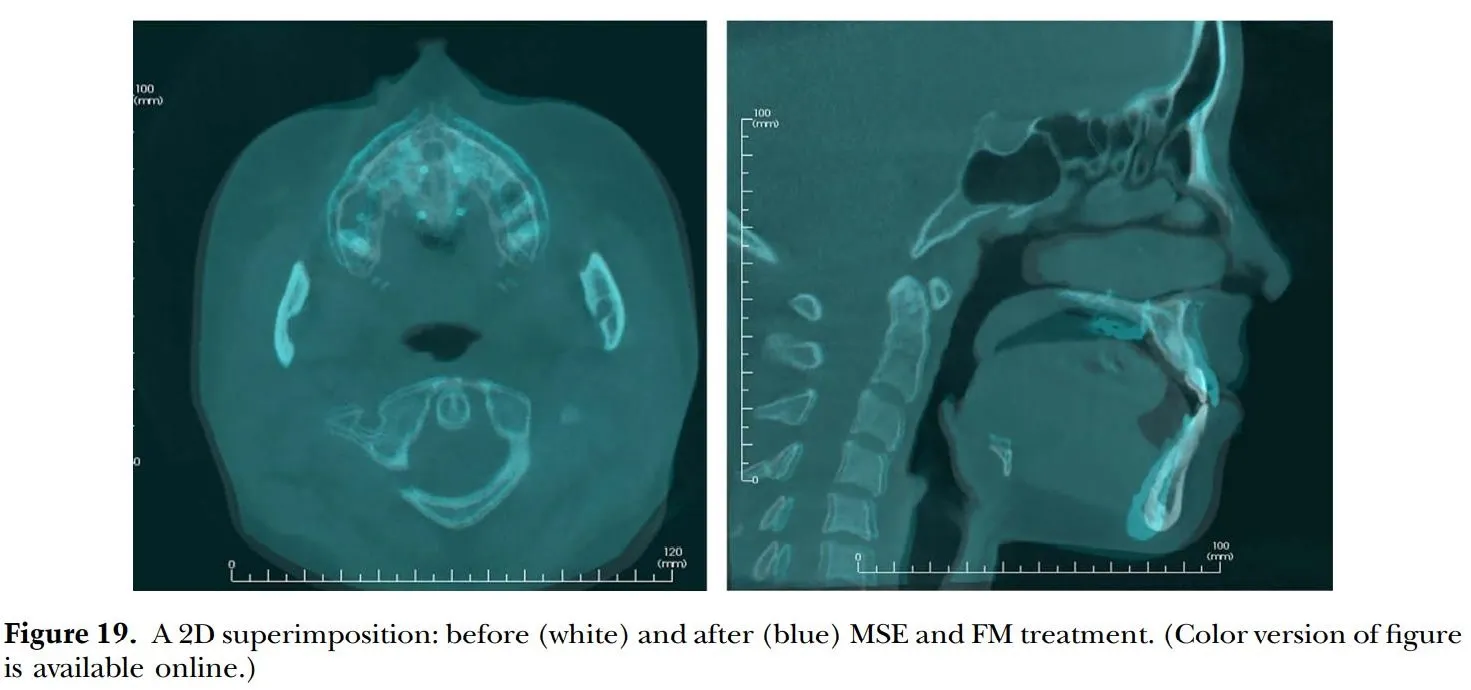
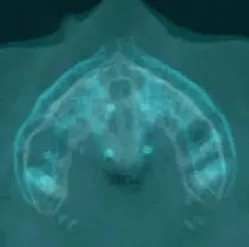
What do you think of this adult MSE+FM case that I've been discussing the sphenoid conformation change in the "MSE assymetry and protraction" thread ( /community/community/postid/38474/ ). The sagittal section of the CT scan shows they have aligned the sella turcica in the superimposed before and after layers, but the pterygoid processes appear to have moved forward with the maxillary segment in the axial section:
If rapid procedures like a LeFort surgery or the MSE separate the pterygoid process of the sphenoid from the maxilla and leave the sphenoid behind as they advance the maxilla forward, are these gaps eventually filled in with new bone like the midpalatal suture separation, or does the sphenoid change shape and eventually bring the pterygoid processes forward to meet up with the new position of the maxilla? Maybe a little bit of both.
The MSE+FM case of the 24 year old with class iii from the Dr. Won Moon article shows a cross section that doesn't go through the pterygomaxillary junction. So both the before and after layer in this superimposition show a gap between the pterygoid process and the maxillary tuberosity. What's interesting however, is that visible portion of the pterygoid plate has moved forward in the after layer along with the maxillary segment. In other words, there doesn't appear to be significantly more pterygomaxillary separation in the after layer. The pterygoid process of the sphenoid bone appears to be dragging forward with the maxilla in this case, while the Sella Tucica landmark of the sphenoid is aligned in the before and after of the Sagittal CT. Does this mean that the sphenoid is remodeling or repositioning, perhaps realigning at the sphenobasilar synchondrosis?
The gif I posted earlier showing the narrowing of the cranial base angle from the basion to the sella to the nasion makes me think there might be a cascade of realignments that result from pulling the maxilla forward, allowing me to posture my mandible farther forward, and posturing my mandible farther forward allows me to correct my forward head posture, and elongating my occiput shifts the basion, and potentially brings the pterygoid process of the sphenoid back closer to the maxillary tuberosity. My forward head posture has already improved, but maybe I should be more mindful of my head posture and practicing more chin tucks.
A video going over the cranial base, how it is the foundation for the cranium and nasomaxillary (facial) complex, and why it may deserve more attention for correction than the surface level bone structures like the jaws. The cranial base in general may be what is actually corrected when we talk about fixing growth, and most definitely the palate cannot be expanded without the involvement and adjustment of the palatine bones, the sphenoid locked into them, and then all of the bones connecting to the sphenoid (essentially the whole skull).
This bone also houses the pituitary gland, and its development may directly have effect on the hormones being produced for skull and bony growth, among other functions.
The Occiput and Sphenoid are joined by the SBJ, sphenobasilar junction, which essentially forms the roof of the airway column and is close to being directly under the pituitary gland.
The Occuput/Sphenoid relationship is also central to understanding neck and skull posture, changing the way your head sits on your spine is predicated on changing how the sphenoid sits on top of the atlas, which will directly impact the sphenoid, which will directly impact the rest of the skull
can it be that an underdeveloped sphenoid also has an effect on your hormones because to me that would be nonsense?
I think rather than underdevelopment of sphenoid bone, it’s more about underdevelopment of the synchrondrosis. This is the suture that connects the sphenoid to the Occipital bone. If underdeveloped, the sphenoid bone can be mispositioned or “kinked.”
Fundamentally, the occiput and sphenoid are the key bones in the whole head. The occipital sphere of influence includes the temporal and parietal bones, the temporomandibular fossae, and so the mandible. This relationship is such that the position of the occiput, in lesion, can be determined by merely looking at the chin in front.
As opposed to this, the facial bones hang from the sphenoid and its close associate, the frontal. The best criterion of sphenoidal position, from observation, comes from perusal of the palatine processes of the maxillae in the roof of the mouth. It all makes up a mobile complex, the regulation and control of which rest with the balance maintained by the intracranial membranes. Normally there is very slight physiologic movement with respiration, as in all the bony structures and most evidently in the thoracic cage. It seemingly is the interference with this fundamental function that causes trouble.
What seems astonishing to many people is the facility with which the cranial structures can be moved, even though the amount of movement is minimal. The pressure of the tongue against the upper dental arch will produce sufficient rotation of the maxilla to be palpated by the astute observer with fingers properly placed upon the frontal process of that bone.
To quote the article:
Growth of the synchondrosis translates the anterior cranial base and its attached upper face upward and forward, away from the foramen magnum and the vertebral column.
The mandible, maintaining a constant sagittal relationship with foramen magnum, grows downward and forward away from the cranial base. Between these two general vectors space is created for vertical development of the face and the eruption of the dentition. As the upper face is translated upward, the palate tends to maintain its general relationship with the foramen magnum to provide for velopharyngeal closure. It does this by resorption on the floor of the nose and apposition on the oral aspect of the palate.
The horizontal spatial change seen at the pituitary fossa is the reflection of the direction of growth of the spheno-occipital synchondrosis. In this case, growth of the synchondrosis translated the upper face and the maxillary complex almost totally forward to increase the depth of the upper face with little change in height.
In another person, growth of the synchondrosis may be expressed completely vertically to contribute primarily to upper facial height. Not only does the direction of growth vary between persons, but also it varies within the individual craniofacial pattern. At one stage growth may be more vertical, then more horizontal, and change again after a prepubertal plateau. What is significant is that whatever the direction of growth of the synchondrosis, this growth translates the upper face and the maxillary dentition away from the foramen magnum.
Growth of the synchondrosis varies in rate and maturation as well. It can accelerate, decelerate, again accelerate after a prepubertal plateau, completing growth at the end of the pubertal cycle.
Since the pituitary rests on the sphenoid bone, it’s misposition can alter the pituitary function. The pituitary rests away from the brain because it requires a different temperature in order to function. Any structure in the body if compressed can not function at its optimum.
If your pituitary gland doesn’t function properly, it affects vital parts like your brain, skin, energy, mood, reproductive organs, vision, growth and more. It’s the “master” gland because it tells other glands to release hormones.
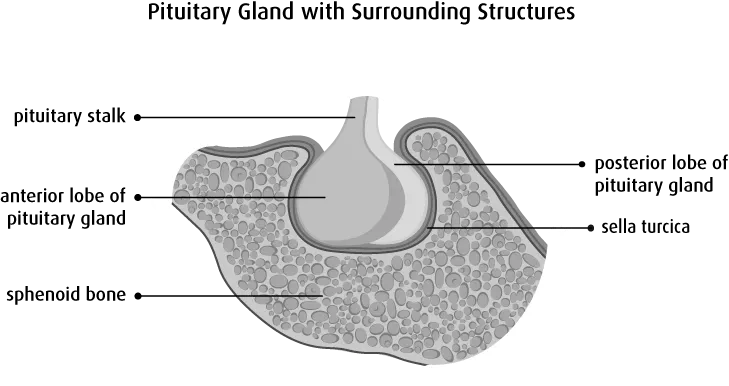
The pituitary is a pea-sized endocrine gland at the base of your brain, behind the bridge of your nose and directly below your hypothalamus. It sits in an indent in the sphenoid bone called the sella turcica.
Connecting the hypothalamus and pituitary gland is a stalk of blood vessels and nerves. Through that stalk, the hypothalamus communicates with the anterior lobe via hormones and the posterior through nerve impulses.
I think underdevelopment at the synchrondrosis can compress the sphenoid bone, thereby compressing the stalk that connects to the hypothalamus , which can then impact nerve impulses for optimum functioning / regulation of body processes.
Since the pituitary rests on the sphenoid bone, it’s misposition can alter the pituitary function. The pituitary rests away from the brain because it requires a different temperature in order to function. Any structure in the body if compressed can not function at its optimum.
If your pituitary gland doesn’t function properly, it affects vital parts like your brain, skin, energy, mood, reproductive organs, vision, growth and more. It’s the “master” gland because it tells other glands to release hormones.
The pituitary is a pea-sized endocrine gland at the base of your brain, behind the bridge of your nose and directly below your hypothalamus. It sits in an indent in the sphenoid bone called the sella turcica.
Connecting the hypothalamus and pituitary gland is a stalk of blood vessels and nerves. Through that stalk, the hypothalamus communicates with the anterior lobe via hormones and the posterior through nerve impulses.
I think underdevelopment at the synchrondrosis can compress the sphenoid bone, thereby compressing the stalk that connects to the hypothalamus , which can then impact nerve impulses for optimum functioning / regulation of body processes.
do you maybe have a study of this?
I must say I have CFD to some degree but I think my hormones are in a good range because if not I wouldn't gain that much muscle from fitness
but I could check it with a blood test but I know that some people have/can have tumours close to the pituitary gland and those people are mostly also hypogonadism but that's in the worst case ofcourse
A video going over the cranial base, how it is the foundation for the cranium and nasomaxillary (facial) complex, and why it may deserve more attention for correction than the surface level bone structures like the jaws. The cranial base in general may be what is actually corrected when we talk about fixing growth, and most definitely the palate cannot be expanded without the involvement and adjustment of the palatine bones, the sphenoid locked into them, and then all of the bones connecting to the sphenoid (essentially the whole skull).
This bone also houses the pituitary gland, and its development may directly have effect on the hormones being produced for skull and bony growth, among other functions.
The Occiput and Sphenoid are joined by the SBJ, sphenobasilar junction, which essentially forms the roof of the airway column and is close to being directly under the pituitary gland.
The Occuput/Sphenoid relationship is also central to understanding neck and skull posture, changing the way your head sits on your spine is predicated on changing how the sphenoid sits on top of the atlas, which will directly impact the sphenoid, which will directly impact the rest of the skull
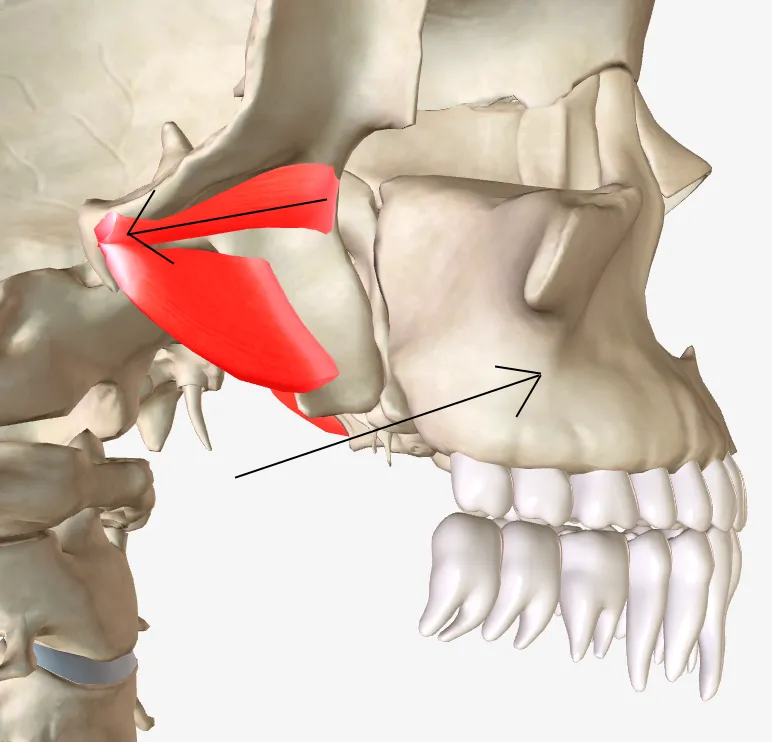
Hello, TGW, great post. One potential way the sphenoid and the maxilla are perhaps able to grow is via the superior lateral pterygoids. These pterygoids pull on the sphenoid to push the maxilla away from the sphenoid, essential pulling those two bones apart. When the suture becomes stretched out, eventually new bone is formed at the far sides of the suture, one of that side becomes new bone material for the sphenoid and the other for the maxilla.
Another cool thing that may happen is that the lower teeth get pushed into the ramus, which causes the ramus bone at the front to retreat and the ramus bone at the back to grow, essentially growing the mandible to keep up with the growing maxilla length while still maintaining proper occlusion.
I think rather than underdevelopment of sphenoid bone, it’s more about underdevelopment of the synchrondrosis. This is the suture that connects the sphenoid to the Occipital bone. If underdeveloped, the sphenoid bone can be mispositioned or “kinked.”
I've seen quotes from Dr. John Mew saying that attempts to superimpose lateral cephalograms before and after treatment don't tell the whole story. The article you shared includes a juvenile class ii headgear treatment case that had been aligned at the sella by its original authors and they "resuperimposed" the layers aligned at the basion instead. Their reorientation seems to emphasize the retractive nature of this class ii headgear treatment:
I wonder what effect registering at the basion landmark would have on superimpositions of class iii "reverse-pull" headgear cases, especially Dr. Won Moon's adult MSE+FM case ( https://www.sciencedirect.com/science/article/abs/pii/S1073874618300094 ). Both the sella and basion appear pretty aligned here, but the pterygoid plates appear to move forward with the maxilla:
I speculated that this reflected a rotation at the spheno-basilar junction, like this (click gif to see motion):
Maybe it actually reflects a separation/growth at the sb junction and both the sella and the pterygoid plates are moving forward with the maxilla. Or there could be both forward separation and rotation, with release of any asymmetric strains. I tried (somewhat unsuccessfully) to recreate the craniofacial structure gif that I posted in the "MSE asymmetry and protraction" thread using the basion as the registration landmark rather than the sella:
You can see with this orientation, the protrusion of the face is emphasized (like the retrusion in the class ii treatment superimposition). Also, the sella seems to move a little up and back as the cranial base (basion-sella-nasion) angle become more acute. I'm not sure if this reflects the reality of class iii reverse-pull headgear (i.e. facepulling) treatment.
* The cranial base has definite influence on the maxilla. As the cranial base angle reduces, the maxilla tends to protrude and angle SNA increases.
* The mandibular position is influenced to a greater extent by the cranial base angle than maxillary position. Cranial base angle has a determinant role in influencing the mandibular position.
* The flattening of the cranial base angle causes a clockwise rotation of the mandible.
* The jaw relation tends to change from Class-III to Class-II, with progressive flattening of the cranial base and vice-versa.
Research specifically on cranial bones is limited , but this is because the prevailing western medicine does not recognize that cranial bones move, despite being proven otherwise.
However, the link provided details how dysfunctions or anomalies is f the sphenoid bone or the “turcica” that houses the pituitary can affect its functioning through compression of the stalk; through infection of sphenoid sinus being unable to drain; or excess or limited cerebrospinal fluid.
If you are interested further in the concept, a new classification of malocclusions abandons the class 1, 2, and 3.
Instead, each malocclusion is recognized as a “cranial strain” , which involves the sphenoid, occiput, and temporal bones being locked in a physiologic or un-physiologic position. Neutrality does not exist; in the healthy human, cranial bones are meant to MOVE. Hence, dysfunction is from lack of movement. A pattern is fine, as long as a person does not become locked / stuck in that pattern. Especially with temporal bones, if one is stuck in external or internal rotation, the sphenoid is also locked, but the brain 🧠 hemisphere is also locked, and the circulation of cerebrospinal fluid is altered, the flushing of toxins / metabolites is to the brain, as well as torque on the rural tube, which directly connects to the “sella turcica” and pituitary; serving as a way station between the hypothalamus and the spinal cord , and then out to the body.
Patients describe a wide range of symptoms that are alleviated after combination of osteopathic adjustment and Alf orthodontics to eliminate strain of the synchrondrosis.
Speaking from my own hunch, and science background, when bones are misaligned , or any system in the body is under stress, inflammation ensues and much energy is directed towards the source of disease/ discord/ imbalance. This can exhaust the body’s energy so that other growth is inhibited or halted.
also, why do some people get cancer from smoking and others do not? Or skin cancer? Variations exist and people”s bodies respond differently to distress. There can be underdevelopment or misalignment of the sphenoid bone, but perhaps unique anatomy has a larger bone space or still maintained good nerve connection; or proper sinus drainage / lack of allergies?
great visuals and insight. So I suppose exploring techniques / methods to induce this separation at the suture; osteopathic manipulation / cranial sacral
also if/ how head posture (flexion vs. extension), as well as posterior tongue 👅 placement on soft palate Vs. anterior tongue 👅 on incisive papilla + rugae (and stimulation of nerves there) impacts this suture.
Found this abstract fascinating; if I’m understanding correctly, appropriate hormones and the forward positioning of mandible through lateral pterygoid induces forward growth: with no mention of tongue 👅 (at least in abstract). Just hypothesizing but interesting how movement and growth of the nose plays a role as well.
Abstract
1) The growth of epiphyseal cartilages of long bones, of spheno-occipital synchondrosis of the cranial base, of the cartilage of the nasal septum, of lateral cartilaginous masses of the ethmoid, of cartilage between body and greater wings of the sphenoid (all stemming from the primary cartilaginous skeleton of the organism), is subject to general extrinsic factors and, more specifically, to the growth hormone (STH) and somatomedin.
In this case, orthopedic devices can alterate the direction but not the amount of growth. 2) The growth of condylar, coronoid and angular cartilages of the mandible, of the cartilage of the midpalatal suture, and of the cartilage in some cranial sutures (all of secondary formation during phylogenesis and ontogenesis) is subject to local extrinsic factors as well as to growth hormone and somatomedin. In this case, appropriate orthopedic devices may modulate both the direction and the amount of growth. 3) Our cybernetic models attempt to account for the mechanisms of facial growth. By intensifying the forward growth of the nasal septum cartilage, the STH and somatomedin stimulate the forward growth of the upper jaw, i.e. the forward positioning of the superior dental arch (the position of which is the "constantly changing reference input" of the servosystem).
The "operation of confrontation" between the position of the upper and lower occlusal surfaces (the position of the lower dental arch is the "controlled variable" of the servosystem) gives then rise to a "deviation signal" (originating from detectors of occlusal adjustment) whose "reduction" is made possible by a supplementary postural activity of the lateral pterygoid muscle resulting, extemporaneously, in an appropriate forward positioning of the mandible and, with time, in a supplementary growth of the condylar cartilage.
By intensifying the outward growth of lateral cartilaginous masses of the ethmoid and of the cartilage between the body and greater wings of the sphenoid, the STH and somatomedin bring about a lateralization of both the left and right sides of the upper jaw and, in this way, stimulate the growth of the secondary cartilage of the midpalatal suture.
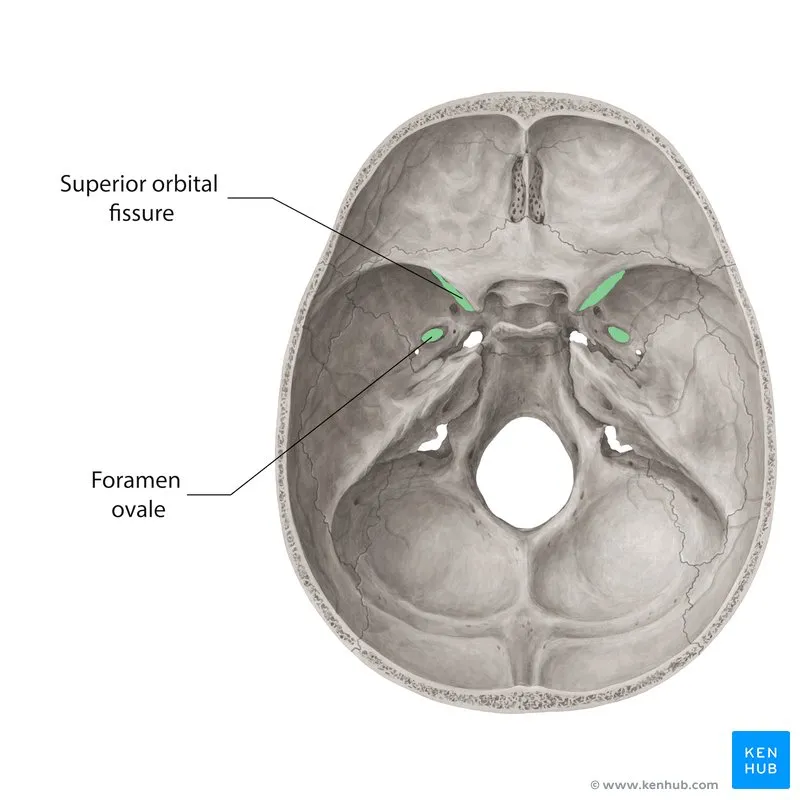
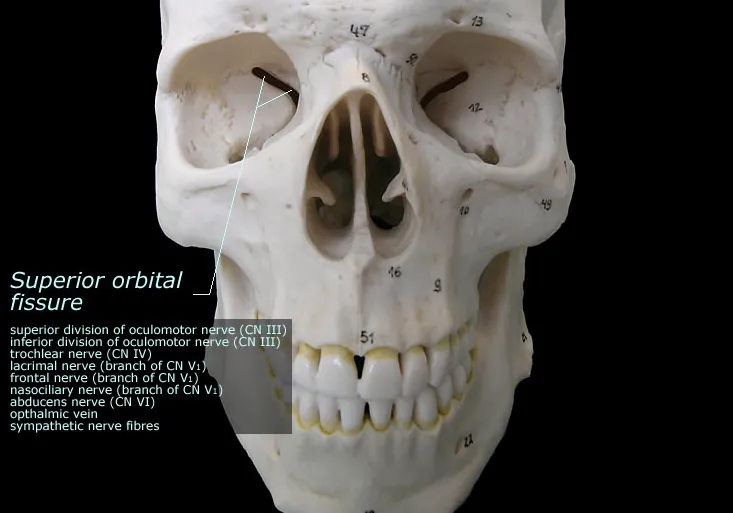
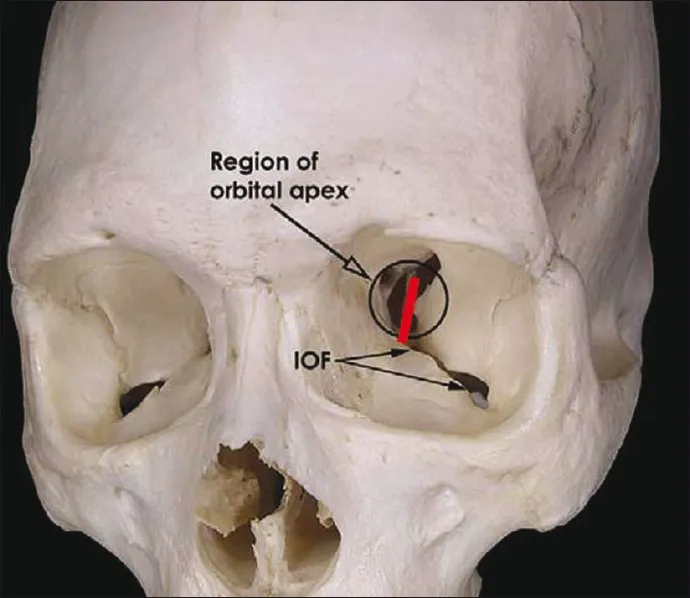
Sorry if over posting! According to this research the synchrondrosis is NOT movable, but instead, movement of sphenoid is induced through the superior orbital fissure (behind the eyes).
Sphenobasilar synchondrosis
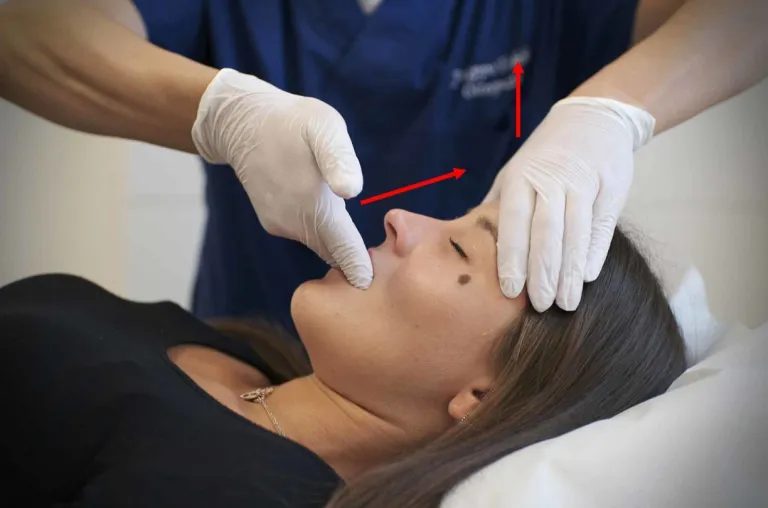
According to OCMM, the fulcrum that allows the bones to move with patterns and axesis theSBS [2]. If the joint relationship between the base of the occiput and the sphenoid body shows a dysfunction, the latter will be responsible for specific positional anomalies of the bones of the skull, detectable by osteopathic palpation. In fact, the movement patterns described in osteopathic medical texts may be the result of tactile illusions induced by the same study, as Dr Frymann wrote [4]. This reflection does not question the fact that the osteopath’s hands are trained on palpatory listening, is able to perceive very small changes in the skull [25]. We know that the SBS begins to undergo an ossification process before puberty, with an intracranial departure, to end within the pubertal cycle [1]. The adult skull has an ossified SBS and, from a scientific point of view, it is not possible to think of this joint as the principle of cranial movement or as the cause of the various dysfunctions described in OCMM [1-2]. Some manual approaches that aim to free this ossified joint must be reconsidered (Figure 2).
Figure 2: Manual decompression of the sphenobasylar joint, this technique is of no value in the light of current scientific information. The intrabuccal fingers push the upper dental arch in a cranial direction, while the other hand tries to give a traction from the pillars of the frontal bone, towards the ceiling.
The figure is owned by Prof. Bordoni Bruno, the technique is performed by Dr Tobbi Filippo with a colleague in a supine position. The technique can be found cited in Ref. [2].
The mechanics of cranial motion—the sphenobasilar synchondrosis (SBS) revisited
Building on Sutherland's approach to sutures (“form follows function and function follows form”) applied to the thicknesses—and hence flexibility—of cranial bones, a new model of cranial motion has evolved. This places the sphenobasilar synchondrosis (SBS) as a primarily compressive–decompressive joint. SBS hinging is seen as an illusory artefact created as tissue rotates around a stable SBS. This article suggests that the apparent motion of the SBS instead takes place by a change in shape of the anterior body of the sphenoid, and that this motion is accommodated by the superior orbital fissure. This new model can be used to derive cranial bone motion patterns directly from the assumption that the cranium changes its lateral diameter, and elegantly explains the well-known “four interlinked gears” description of the occiput–sphenoid–vomer/ethmoid train. The model does not require sutures to be patent or membranous, since it applies equally well to ossified suture relics.
Andrew Cook,
The mechanics of cranial motion—the sphenobasilar synchondrosis (SBS) revisited,
Medial pterygoids pull on the posterior sphenoid backwards and downwards, while pushing the maxilla forward and upward during teeth clenching.
Lateral pterygoids pull on the anterior sphenoid backwards, while pushing the maxilla forward during teeth clenching.
Zygomandibularis pulls on the anterior sphenoids backwards and downwards, while pushing the maxilla forward and upwards during teeth clenching.
There are all kinds of mechanisms of growth possible, I wonder which sutures are critical for growth?
From my own experience, a lot of growth is possible between the palate bone and the maxilla. Also at the suture between the temporal bone and the zygomatic bone.
It's also possible that breathing, tongue posture and head posture can create enough pressure to change facial growth over time. And the more recessed you are, the bigger the pressures produced.
If the form comes from function, it is possible that simply nose breathing with proper tongue posture is more than enough to create good facial growth. Intense mastication may be needed to stimulate bone growth, but not as posture or something done over a prolonged period of time.
I wonder if manipulating breathing could be a potential technique. Like mouth breathing for breathing in(suction forces) and nose breathing for breathing out(pushing forces).
Or another example would be to breath in really slowly and breath out really fast, so minimal suction forces and maximal pushing forces.
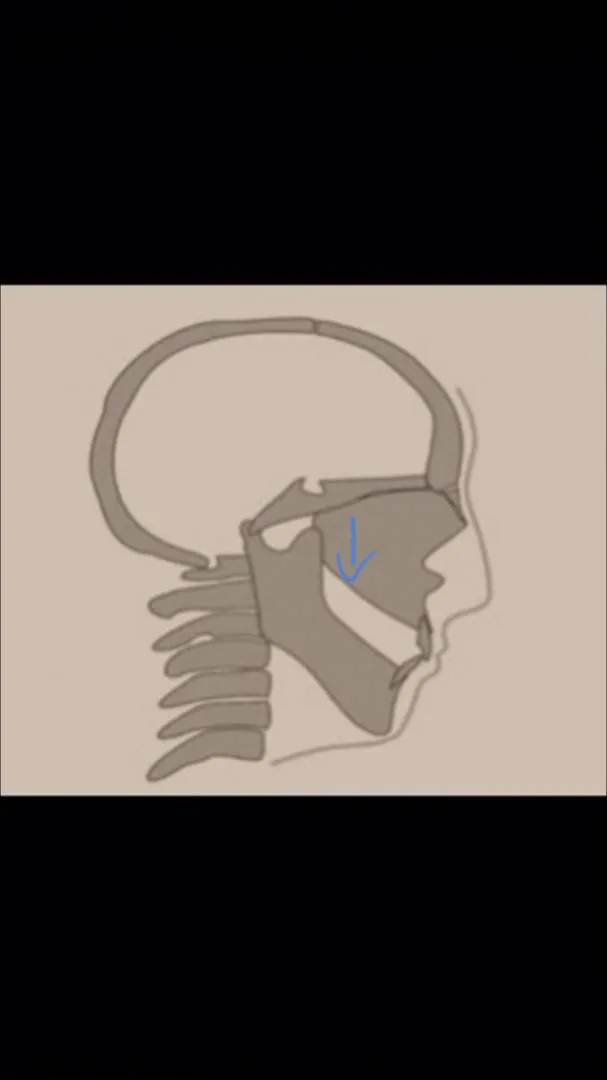
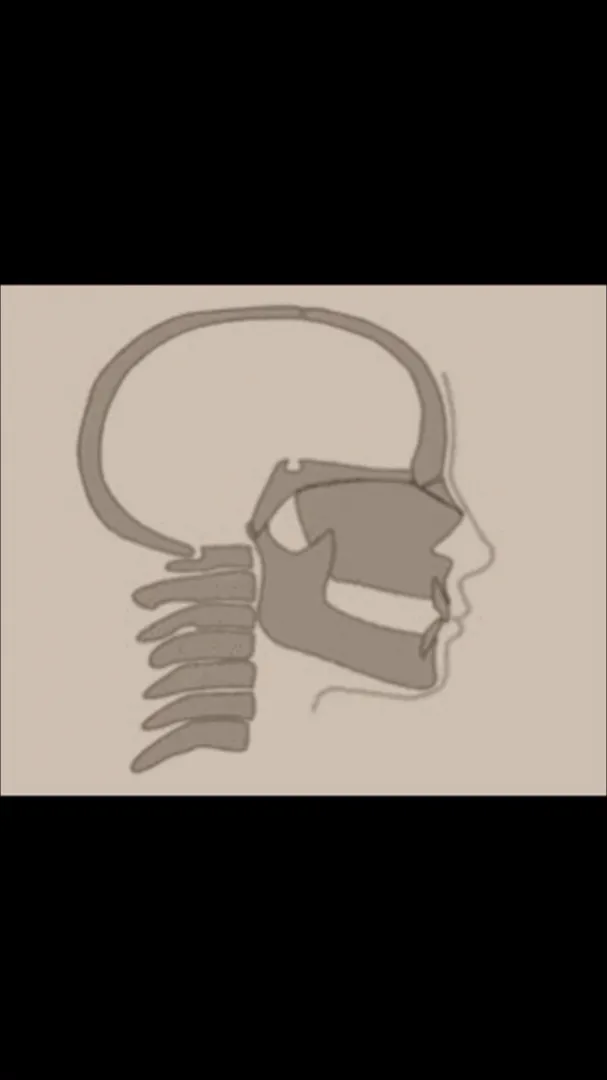
Here's an interesting old post from this thread ( /community/community/main-forum/can-mewing-reverse-an-antegonial-notch-if-done-correctly/ ) about antigonial notch, but the diagram illustrates the effect of the cranial base angle. I'm not sure of the image's original source, but it also appears on the London School of Facial Orthotropics facebook page and they cite John Mew's book "The Cause and Cure of Malocclusion."
Here is an illustration of what I am talking about
So in other words if the mandible can remodel to form a notch with vertical growth, can the reverse happen straightening the jawbone out again if you mew correctly?
@apollo but this not in every case my mandible is pretty far back but it is still almost horizontal but my maxilla did have to fall down or is that just an extreme case example?
@apollo but this not in every case my mandible is pretty far back but it is still almost horizontal but my maxilla did have to fall down or is that just an extreme case example?
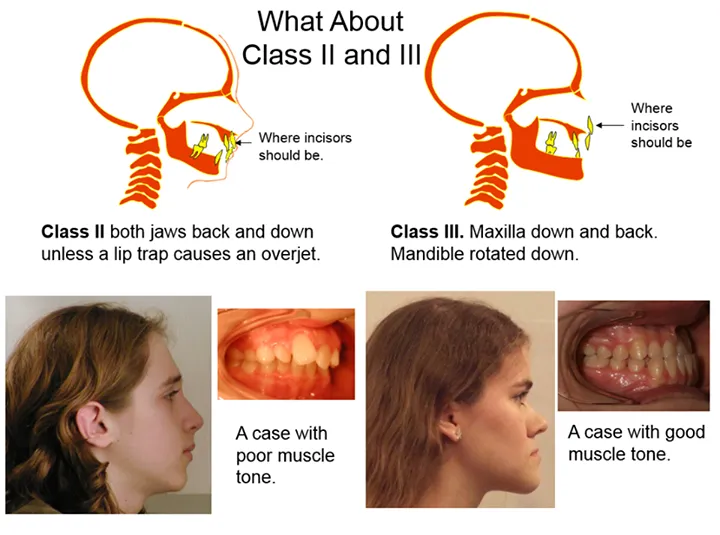
I agree. My maxilla is also too far back but not too far down. My SNA is below the lower limit of normal with my A point behind my B point, but I don't show vertical maxillary excess. It's interesting to think about how the angle of the cranial base relates to these variations in craniofacial distrophy. If I try to measure the Ba-S-N angle on my baseline lateral ceph, I get about 132.5 degrees. So this is higher than the ideal example on Dr. John Mew's figure, but lower than the vertically grown example. My lateral ceph does show an antigonial notch. There's another figure on the London School of Facial Orthotropics youtube page depicting the variation between class II and class III cases, but it says the jaws in both cases are too far down and back, and the cranial base is drawn as being identical in both. Who knows if this is realistic.
Since I have a skeletal class III relationship, I guess that I'm closer to that structure, which shows the need for more advancement of the maxilla in "where the incisors should be." In the previous image, Dr. Mew says that maxilla is 30 millimeters too far down and back. I'm putting in extreme effort to advance just a few millimeters with my reverse pull headgear and even surgery doesn't attempt to reposition the jaw that far.
@apollo but this not in every case my mandible is pretty far back but it is still almost horizontal but my maxilla did have to fall down or is that just an extreme case example?
I agree. My maxilla is also too far back but not too far down. My SNA is below the lower limit of normal with my A point behind my B point, but I don't show vertical maxillary excess. It's interesting to think about how the angle of the cranial base relates to these variations in craniofacial distrophy. If I try to measure the Ba-S-N angle on my baseline lateral ceph, I get about 132.5 degrees. So this is higher than the ideal example on Dr. John Mew's figure, but lower than the vertically grown example. My lateral ceph does show an antigonial notch. There's another figure on the London School of Facial Orthotropics youtube page depicting the variation between class II and class III cases, but it says the jaws in both cases are too far down and back, and the cranial base is drawn as being identical in both. Who knows if this is realistic.
Since I have a skeletal class III relationship, I guess that I'm closer to that structure, which shows the need for more advancement of the maxilla in "where the incisors should be." In the previous image, Dr. Mew says that maxilla is 30 millimeters too far down and back. I'm putting in extreme effort to advance just a few millimeters with my reverse pull headgear and even surgery doesn't attempt to reposition the jaw that far.
This picture doesn't check out though in terms of underlying bone tissue.
Here's an interesting old post from this thread ( /community/community/main-forum/can-mewing-reverse-an-antegonial-notch-if-done-correctly/ ) about antigonial notch, but the diagram illustrates the effect of the cranial base angle. I'm not sure of the image's original source, but it also appears on the London School of Facial Orthotropics facebook page and they cite John Mew's book "The Cause and Cure of Malocclusion."
Here is an illustration of what I am talking about
So in other words if the mandible can remodel to form a notch with vertical growth, can the reverse happen straightening the jawbone out again if you mew correctly?
This seems highly unlikely, I think the highest variability in "saddle angle" was only like 6 degrees or something in a study on average people.
I am absolutely sure that most people with CFD have a huge lack of bone growth, it's not as simple as angles etc. They typically lack forward, expansive and even downward growth.
This seems highly unlikely, I think the highest variability in "saddle angle" was only like 6 degrees or something in a study on average people.
I am absolutely sure that most people with CFD have a huge lack of bone growth, it's not as simple as angles etc. They typically lack forward, expansive and even downward growth.
I'm not sure what you're disputing exactly. I don't think anyone is saying that correcting CFD is a simple matter of manipulating/adjusting the angulation of the bones. Rather, poor development of the cranial base is part of CFD, not just poor growth of the facial bones that hang off of it. The implication is that really correcting the problem would require growth and/or remodeling of the cranial base in addition to the bones of the face, and maybe that treating just the maxilla overlooks the importance of the sphenoid. Maybe endonasal balloon therapy or cranial osteopathy could help, but those are just quick adjustments that might help mobilize/unlock any restrictions, unlike the force-over-time principle of "mewing," and the "self-ncr" I've tried hasn't given me remarkable results. This is part of the reason that I spent years practicing to achieve khechari Mudra stage 2. I can't say that it has done me much good yet either, but my tongue is still too tethered to really get into the more advanced stages with prolonged engagement of the sphenoid. Maintaining good neck posture is probably also a way to target the cranial base.
Could you find that study you mentioned? I'm curious about the normal range of this angle to see how mine compares.
@auxiliarus@apollo I agree A jaw surgeon said my maxilla was underdeveloped and because of that so was my mandible he's said that I needed 4mm forwards on the maxilla and 10mm on the mandible with counter clockwise rotation of the maxilla but I do have seen people with such a fallen face but they are rare.
The back third is getting sucked down. I’ve been sucking with the back third you’ll notice the SCM engage. Mewing is not about pressure. It’s about suction. Teeth in contact and suck really hard. You can actually feel the movement in your face you’ll feel the cheekbones coming forwards. I’ve made more progress in the past 2 days than I have made applying pressure. The suction will flatten the palate bring body to equilibrium. My ramus is getting more square.
Sucking would also pull blood to the surface of the palate, while pushing forces blood away. As far as I know blood is literally everything, it transports nutrients and is basically life. Maybe we're stunting ourselves by pushing all that life away from where it's really needed.
Interesting that you say this as it seems counter intuitive yet very interesting, I look forward to you sharing results if this works well?
I believe that a lot of mewing success is tuning into our animal intuition and avoiding the "over-thinking side" when it comes to our bodies. For instance I now cannot go more than maybe half an hour hunched over a keyboard, when in my teens I'd spend like eight hours a day barely moving. Just sitting here cross legged typing this and browsing honestly feels awful, my neck gets sore, my back too. After a while I get all crampy in my gut. My body now just seems so used to 'better' - I wont say good - posture that treating my body like shize really punishes me. And I get great satisfaction from stretching my back, neck, ribcage and shoulder/blades after a bout of this crap posture.
What I'm getting at is that the body I believe naturally signals what it wants. The process of healing and becoming fully "human" is tuning into this, and not trying to bend your body to your will. Only caveat being things like cigarettes and sugar/caffiene. Basically any drug or thing that rewards the body easily with little to no physical effort. Is kinda unnatural. (although drugs are basically cheat codes to life, doing a bump of coke lets you be confident like the CEO of earth, but you havent 'earned' it, just snorted a line) The reason I put 'human' in quotations is because while obviously we are human, many people have no idea what being truly human is. Anyone who's felt real, true love for life can attest the difference between being an average cynic grinding through each day and a free soul rockstar who somehow lives life so easily it's annoying.
This post is getting a little long and off the track of this subject but what I will say is that a LOT (lot) of people I've met - and in my own personal experience - who are dissatisfied, depressed, anxious, suicidal :( and etc. Are actually just physically unhealthy. And since the mind is made of brain and brain is made of body, an unhealthy brain cannot function correctly in the world. Nor can it intuit properly and naturally. An unhealthy body is an unhealthy brain and somehow people expect to be happy and rewarded in a body made of crap, like a psychologist or some pill will magically heal them.
Not to mention a body overburdened with mis-health is unlikely to prioritize skull adaptation when it needs to keep the kidneys and liver (example) running overtime to tolerate what it's being put through. Western life is full of things that hold back growth/health (incl. mental and spiritual) And I strongly advise modelling life to our ancestors before agriculture. In an abstract, modern day kinda way. I dont mean pissing off into nature naked with a band of brothers, I mean doing the things humans do, walk, run, play, dance, adventure, create, care and do 'stuff', anything that's fun. +1000000 if it makes you money too. Also eat the things nature offers naturally, things torn apart and segmented and broken down do not give the human what it needs to thrive and grow. Remember, you are what you consume.
This post ended up way off the mark of honed subjectivity but here you go anyway lmao please forgive my style