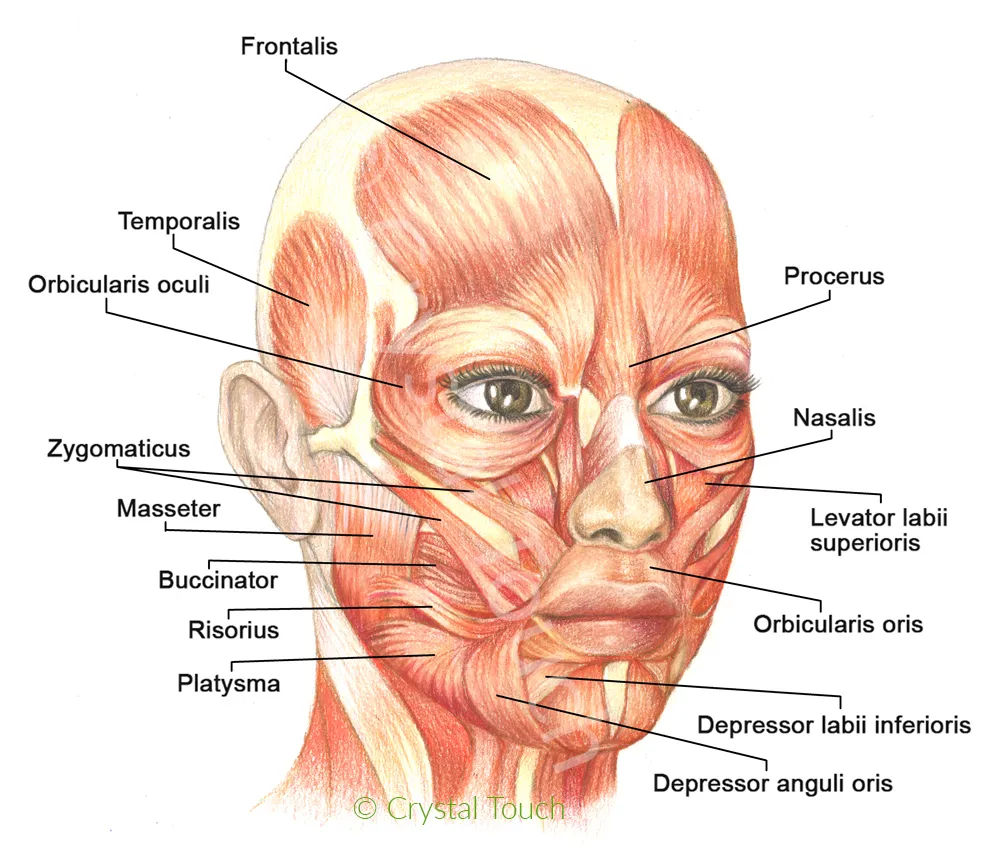
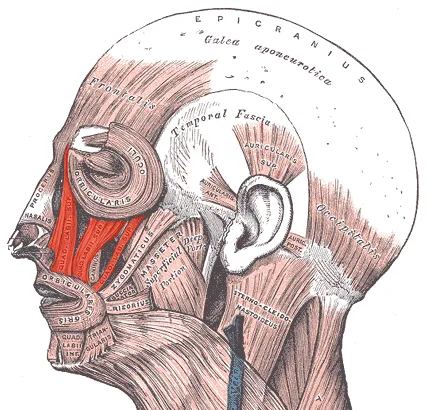
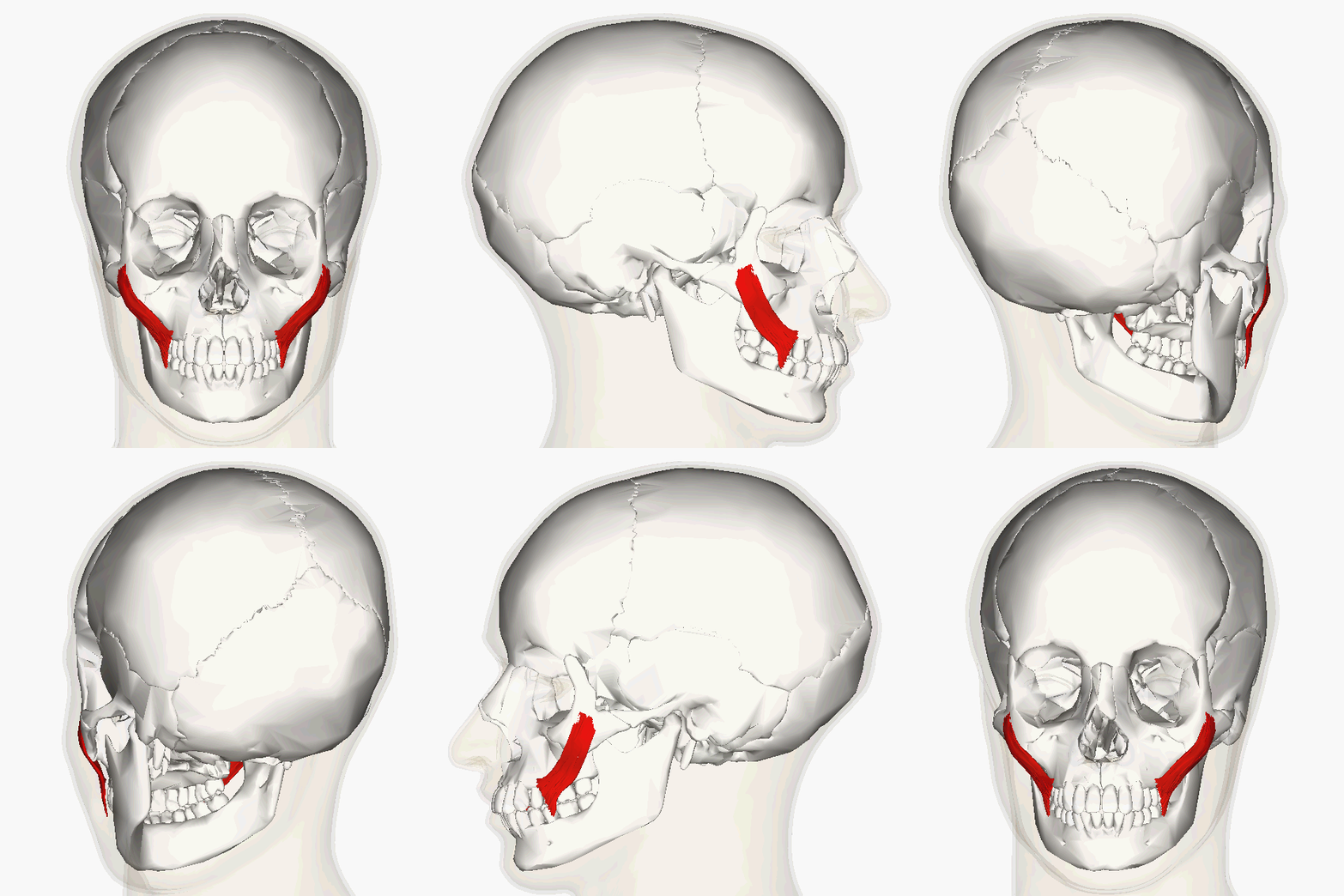
Never heard anything about facial muscles on here, yet doesn't it seem logical that the postural activation of these muscles can play a significant role not only in bone development, but also in position of fat and total appearance.
One could argue all those muscles provide more force than the palatoglossus or the genioglossus can, the dominant muscles used in mewing.
Never heard anything about facial muscles on here, yet doesn't it seem logical that the postural activation of these muscles can play a significant role not only in bone development, but also in position of fat and total appearance.
Um, we discuss facial muscles ad infinitum. Your theory supports the VoiceGym assertion that prioritizing group 1 muscles widen the face (as I posted a few days ago):
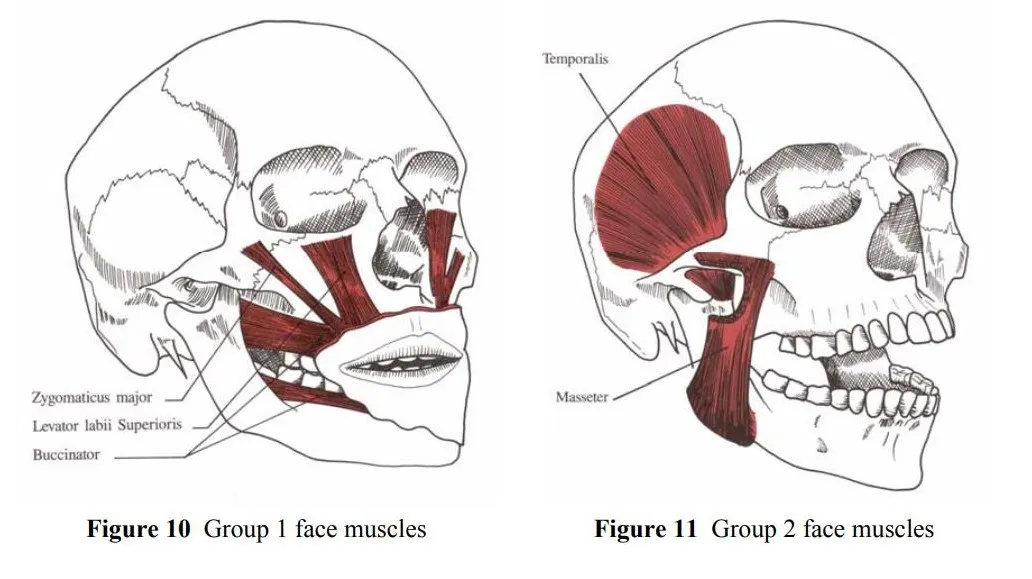
I've been reading through some VoiceGym articles like "Beyond Chewing" and "How Voice Exercises can assist in Orthodontic Treatment." The author, Angela Caine, distinguishes between what she calls group A/group 1 muscles and group B/group 2 muscles. The first group are muscles that radiate from the center of the face, originating in bone and inserting into soft tissue, which she associates with nasal breathing, speaking, singing, smiling, good tongue posture, and proper swallowing, including the zygomaticus major and minor, levator labii superioris, and buccinator. The second group are muscles that run vertically, originating and inserting into bone, and are responsible for chewing, including the temporalis and masseter, which she associates with a forward tongue position to hold food between teeth, mouth breathing, and scowling/unhappy facial expressions. Her assertion that proper development requires prioritizing the first group of muscles conflicts with some of our paradigm including the importance of chewing exercises, masseter hypertrophy, and buccinator atrophy.
Never heard anything about facial muscles on here, yet doesn't it seem logical that the postural activation of these muscles can play a significant role not only in bone development, but also in position of fat and total appearance.
Um, we discuss facial muscles ad infinitum. Your theory supports the VoiceGym assertion that prioritizing group 1 muscles widen the face (as I posted a few days ago):
I've been reading through some VoiceGym articles like "Beyond Chewing" and "How Voice Exercises can assist in Orthodontic Treatment." The author, Angela Caine, distinguishes between what she calls group A/group 1 muscles and group B/group 2 muscles. The first group are muscles that radiate from the center of the face, originating in bone and inserting into soft tissue, which she associates with nasal breathing, speaking, singing, smiling, good tongue posture, and proper swallowing, including the zygomaticus major and minor, levator labii superioris, and buccinator. The second group are muscles that run vertically, originating and inserting into bone, and are responsible for chewing, including the temporalis and masseter, which she associates with a forward tongue position to hold food between teeth, mouth breathing, and scowling/unhappy facial expressions. Her assertion that proper development requires prioritizing the first group of muscles conflicts with some of our paradigm including the importance of chewing exercises, masseter hypertrophy, and buccinator atrophy.
I mean facial muscles that doesn't include masticatory ones. What's VoiceGym by the way?
I mean facial muscles that doesn't include masticatory ones. What's VoiceGym by the way?
Right, the point of the articles I referenced was to prioritize development of the zygomaticus major and minor, levator labii superioris, and buccinator over the muscles of mastication. These are some of the same muscles you highlighted above.
"As the cranial rhythm dips the vomer bone and flares the zygomatic processes of the temporal bones, a continuous "drag" is maintained on the midline sutures of the facial bones by Zygomaticus major and minor, Quadratus Labii superior, and Buccinator. This lateral superior action encourages the cranium to widen in the facial area, flares the nostrils, thus reducing pressure and initiating inspiration of air into the maxillary sinuses. This air can then be warmed, cleaned and sterilised before the contraction of the diaphragm and the opening of the glottis of the larynx pulls it into the lungs. Smiling occurs when imagination and emotion extend this muscle action into a smile."
I mean facial muscles that doesn't include masticatory ones. What's VoiceGym by the way?
Right, the point of the articles I referenced was to prioritize development of the zygomaticus major and minor, levator labii superioris, and buccinator over the muscles of mastication. These are some of the same muscles you highlighted above.
"As the cranial rhythm dips the vomer bone and flares the zygomatic processes of the temporal bones, a continuous "drag" is maintained on the midline sutures of the facial bones by Zygomaticus major and minor, Quadratus Labii superior, and Buccinator. This lateral superior action encourages the cranium to widen in the facial area, flares the nostrils, thus reducing pressure and initiating inspiration of air into the maxillary sinuses. This air can then be warmed, cleaned and sterilised before the contraction of the diaphragm and the opening of the glottis of the larynx pulls it into the lungs. Smiling occurs when imagination and emotion extend this muscle action into a smile."
Interesting stuff, one of the before-afters is really good, much wider face, however what is VoiceGym? Do they have exercises online or is it local only?
Interesting stuff, one of the before-afters is really good, much wider face, however what is VoiceGym? Do they have exercises online or is it local only?
I've only read through their published articles ( https://www.voicegym.co.uk/publications ), but they have a whole program you can purchase with exercises that generally involve speaking or singing while doing various body movements. I guess if you're in the UK they might also have local workshops. I'm not sure about all of their theories (especially their facial muscle categorization), but I can see how the exercises might be helpful as one part of multidisciplinary treatment.
Posted : 10/05/2020 7:26 pm
Leave a reply
Skull and Jaw Correction
Free Classes
Join hundreds who are Tensegrity Mewing, enhancing the good results of mewing and reversing damage. Free Newsletter and Classes