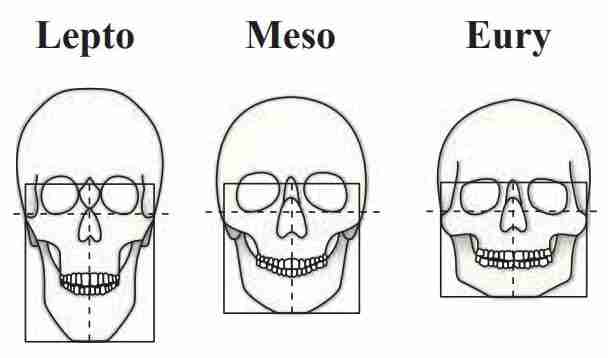

In the new year, I've decided to get serious about this. I plan to keep a record of my methods and results on this thread and would appreciate anyone's feedback. For the sake of anonymity, I will remain relatively vague about identifying characteristics. I am in my mid-thirties. I always allowed my tongue to rest on the bottom of my mouth, and I've had issues with allergies that might have contributed to occasional mouth breathing. I had traditional orthodontics and wisdom teeth extractions as a teen. After my braces were removed, my teeth were straight, but I remember having insecurities about my canted smile even then. I've had some crowding post-braces, especially my lower incisors, and my lower molars seem to be tipping inward slightly. My upper central incisors are just slightly overlapped. In recent years, my occlusal cant and midline deviation seemed to get worse, and this asymmetry inspired my research into craniofacial dystrophy. I realized that my palate is relatively narrow and vaulted and it was initially difficult to keep my tongue seated on the roof of my mouth. The bridge of my nose veers left of my midline, while the tip is pulled right of center with my dental midline. My nostrils are also different sizes.
I've been making concerted efforts to improve my oral posture and swallowing habits for over a year. During that time, I did a couple rounds of self-ncr/nasal release, every day for a week or more. I regularly chew gum with some tongue smashing motions mixed in. I've also tried to be more cognizant of my body posture and sleeping position, but not reliably. I believe I have seen some improvement. I think my dental midline was initially about 4mm right of my interpupillary midline. This seems to be down to about 2mm off. I also think my occlusal cant might be improved by a degree or two, but is still pretty obvious. The bridge of my nose remains notably skewed to the left. It has gotten easier to keep my tongue on the roof of my mouth, but I'm not engaging the posterior 1/3 as much as I would like, and I don’t trust that I am consistent while sleeping. Increasing my tongue space would help catalyze the other changes I want. I have begun putting together an extra-oral anchorage appliance. I plan to wear a palate expander as consistently as possible, but probably not in public. I will connect the expander to a rig that will pull up and forward at night and while relaxing alone. I still have a few pieces left to assemble, but hope to begin this process in the next month or so. I also want to begin some exercises to improve my forward neck posture and anterior pelvic tilt. Please let me know if you have any suggestions!

I appreciate your perspective; I appreciate your sharing.
There's plenty of this that is similar to my own situation. Plentyyy.
Even some of the things you mention...? The way I'm relating to you? The, the... canted smile you mention, for instance. I relate to that, and more.
Over the years, I would see a canted smile in the mirror and thought, "hm thats odd. I dont like that. I dont like that at all! But I guess that's just a genetic flaw of mine! Guess I gotta just...accept it! Oh Well!"
And there's something about your sharing which makes me do a sort of exhale and say' wow...' you know, 'not alone' not alone.
No, I absolutely resonate with your experience, your perspective, and your newfound dedication to REALLY working on your routine.
I appreciat that; I appreciate your sharing. (To repeat myself)
FHP and Anterior Pelvic Tilt. Kyphosis and Lordosis being under that umbrella. Main thing to do there is your stretches man. Take it seriously. Foam rolling. Myofascial release. Get a massage therapist if you have to. Get the tonic muscles to relax. And get the phasic muscles to tighten up. I'm still figuring this out myself, yet that is a framework to operate out of.
Wish you the best with this all in the meantime.
While I would like to achieve more prominent cheekbones, and cheek hollows, improving my facial symmetry is most important to me. My occlusal cant, deviated dental midline, and crooked nose were the main features that inspired my search for nonsurgical techniques to improve the structure of my face. I just took more precise baseline measurements of the deviation in my nose and my teeth to be able to track changes. My interpupillary midline aligns almost exactly with the crease between my eyebrows when I furrow my forehead. I took a piece of dental floss and tried to extrapolate that line vertically down the middle of my face. The middle of the bridge of my nose looks to be about 4mm left of that line, while my dental midline looks to be about 2mm right of that line. The overall discrepancy of 6mm between the center of my nose and the center of my teeth is most obvious. My occlusal plain is also canted about 3 degrees higher on my left side. I mentioned in my last post, that I think these figures show improvement from what I remember before I changed my oral posture. I believe my dental midline used to be about 4mm off center (an improvement of 2mm), and my cant used to be about 4 degrees (an improvement of 1 degree). I didn't measure the deviation of my nose previously, but I think it looks to be about the same.
Thanks for commiserating with me Gregory! It is reassuring to know there are others out there with similar problems who are also trying to find solutions!
The design for my extra-oral anchorage system is a hybrid of Plato's basic face pulling helmet ( http://jawpain-tmjtreatment.com/ ) and the MewVector ( https://www.youtube.com/watch?v=7dj1BGVsAhA ). Dr. Mew's more recent versions are stabilized by a neck brace rather than a head piece. I bought a neck brace and tried to make it work, but found there to be too much play between the fixation points and head motions, so I went back to a head-mounted strategy. My rig does incorporate 5 points of attachment like the Mew design (up in the front center, up in the back left, up in the back right, forward in the front left, and forward in the front right). Together, the resultant vector should distribute a protractive force across the maxilla better than Plato's standard face pulling setup with only two anterior vectors pulling up and forward. I just finished reinforcing the structure for the posterior anchorage points. I'm pleased with how it looks so far.
Planning my device around these two models brings up a few questions. To my understanding, Dr. Mew's philosophy suggests that I should maintain traction as consistently as possible, potentially throughout every night, and a few hours every day. Plato says I need only 30 minutes per day. Dr. Mew calibrates each of his elastics to about 200g of force. Plato is vague about how much force to use, but recommends starting with light tension and only increasing when you no longer see results. Dr. Mew uses orthodontic elastics connected to a facebow. Plato uses standard office supply rubber bands connected to paper clips.
So how do I reconcile these inconsistencies? I already have a facebow that I will interface with a palate expander. I plan to use orthodontic elastics stretched about 3x their small diameter rather than big rubber bands stretched to an anchorage on the top of my head, but I wasn't sure what size and strength elastics to order. I couldn't find any of the strength traditionally used for extra-oral applications, so I bought the strongest intra-oral elastics I could find. I also need to use these to hold the facebow and expander together. I'm unsure about what intensity and duration to use. I think I will start at a lower tension and less time than Dr. Mew recommends and then work my way up. Maybe about 100g on all 5 elastics for a couple hours every day/night to begin with, see how it feels, and increase from there. I intend to keep the palate expander in place for as many hours as possible (even when not connected to the extra-oral anchorage, potentially 12+ hours per day) and expand at a rate of 1mm per week as Dr. Mew recommends. Please let me know if you have any suggestions!
Re-reading your two posts.
Yup there’s similarities in our cases and mindset. To the point that, I’m - - - mmm, awed — no, motivated — by your progressing plan in building your own device.
Shortly after I thought, “(facebow?)” and looked at prices and acquiring. I was curious! Couldn’t help it
I don’t have answers on the numbers, nor design side of things.
However, did wish to offer that my last dentist visit had the man telling me that orthodontics needed to be engaging the mouth >=22 hours a day for results. I hope I heard him wrong. Related: I liked that dentist — he was the first traditional dentist that was an advocate for tongue being on the roof of the mouth, yet didn’t seem familiar with orthotropics.
your device/expander likely will be more effective but I had that to offer.
From an uneducated perspective, I agree on your decision to take it slowly with the force that these elastics will exude.
Thanks Gregory! When I say "facebow," I mean the the kind of wire attachment that interfaces with the headgear tubes on an expander, like the one Dr. Mew uses in the video I linked to. Google results for "facebow" might show a more substantial device used by prosthodontists to line up their prosthetics. It does seem hard to believe that facepulling for only 30 minutes per day could induce change as Plato claims. Maybe proper tongue posture between sessions helps prevent relapse?
I have installed a kind of metal tie plate with a grid of holes to provide options for where to anchor the posterior elastics. Now I am debating using a dremel tool to cut a channel connecting three of the holes so that a screw with a lock nut and a regular nut could be slid up and down that channel and tightened in place to precisely calibrate the desired tension.
I felt like trying a self-ncr/nasal release session last night. It has been several months since the last round when I treated myself every day for about a week. During my previous round, I struggled during the first couple sessions to inflate past the turbinates, but I didn't have that issue this time. I was able to successfully advance into the nasopharynx through all six meatuses. I try to use the thumb squeezing strategy to suppress my gag reflex, but it wasn't as effective as I remember, and I didn't really get any sensations of shifting or release that I have sometimes achieved in the past. I did feel some pressure in my right eustachian tube while inflating through the left middle meatus, but that was about the extent of what I could feel. I might try again today or sometime soon to see if I can get better expansion.
I cut the channels into the two metal tie plates on my protractive headgear so that the bolts I plan to use as my posterior anchorage points can be slid up and down freely to a desired position and then tightened down with nuts. I connected three holes in the tie plates creating a channel about 3cm long. I plan to tighten down the bolt at a position above and slightly forward from the hooks on the ends of my facebow, then measure the tension generated from an elastic stretched between those two points. If I want more or less tension, I will loosen the bolt, slide it up or down, tighten it, and then measure again. I wish that I had thought to do this before securing the tie plates in place because it was a little challenging to get the dremel tool into position to cut the plates, but I made it work, and smoothed off the edges with a file. I'll stop at the hardware store this evening to purchase the nuts and bolts I need.
While I wait for the final pieces of my DIY device to arrive, I want to ask a question about palate expansion. Is there any way to avoid or minimize opening a gap between the central incisors? I am worried that this would be the most obvious telltale to family and friends that I am doing something with my mouth, which I would rather keep private. The accounts of using a palate expander I have read here and in the breakthematrix forum differ on this point. Some say that their front teeth separated about the same amount as they expanded the appliance while others say that they had minimal separation between their front teeth but much less than the total expansion of the appliance. How might we control this outcome or correct it after the fact? My upper central incisors are just slightly overlapped, so it would be good to space them out about a mm, but I'd like to avoid much more than that if possible.

Speed of expansion is what is going to determine that gap. In every literature I have read, with a healthy amount of expansion this gap always closes within a few months. The gums end up pushing the teeth together, and if you have your wisdom teeth they will move forward and advance all of your teeth thus closing the gap.
So if you go very slowly the gap may never develop, the teeth re-aligning throughout the process. You can stop expansion when you notice a gap and wait for it to close. The gap is noted most in rapid and semi rapid expansion (upwards of 1mm per week).
I've read through the rest of your topic, I want to discuss it in length but forgive that I can only post from my phone right now and it's a pain typing out long replies.
Speed of expansion is what is going to determine that gap. In every literature I have read, with a healthy amount of expansion this gap always closes within a few months. The gums end up pushing the teeth together, and if you have your wisdom teeth they will move forward and advance all of your teeth thus closing the gap.
So if you go very slowly the gap may never develop, the teeth re-aligning throughout the process. You can stop expansion when you notice a gap and wait for it to close. The gap is noted most in rapid and semi rapid expansion (upwards of 1mm per week).
I've read through the rest of your topic, I want to discuss it in length but forgive that I can only post from my phone right now and it's a pain typing out long replies.
Thanks TGW! So I want to go slow enough to minimize the gap between my central incisors but not so slow as to cause tipping of my molars rather than separation of the midpalatal stuture. I guess I will plan to follow the 1mm per week that Dr. Mew recommends, and then take a break as you suggest if the gap between my front teeth becomes noticeable. When you have time, I would definitely appreciate any thoughts about reconciling the differences between the approaches Dr. Mew and Plato take for their protractive headgear systems that I discussed in an earlier post in terms of short vs. long duration per day and fixed tension vs gradually increasing tension over the course of treatment.
FHP and Anterior Pelvic Tilt. Kyphosis and Lordosis being under that umbrella. Main thing to do there is your stretches man. Take it seriously. Foam rolling. Myofascial release. Get a massage therapist if you have to. Get the tonic muscles to relax. And get the phasic muscles to tighten up. I'm still figuring this out myself, yet that is a framework to operate out of.
With this in mind, I think lunges, butterflys, malasana, child's pose, and pigeon stretches will help release my tight hip flexors and lower back. Planks will help strengthen my abs, and squats will help strengthen my glutes. Pullups will help strengthen my upper back and some chest stretches with my arms behind my back or against a doorway will help release my tight pecs. I will also try some myofascial release with a lacrosse ball. Further research might change my plans. Please let me know if you think I should add or remove any stretches or exercises from this list and why!

Your story has some similarities to mine.
It sounds like you are trying some very interesting things in order to bring about changes. I'll be rooting for you and looking forward to some good updates in the future. I don't have much to add since I am still figuring things out myself but my plan is to expand first and let things go from there. I think that having a wide enough palate to mew properly will be a huge game changer and a huge catalyst for other changes over time. My situation may be different from yours though.
As far as midline deviation goes, I can relate even down to the act of using a piece of floss to see which parts are out of line. Mine has gotten slightly better from mewing as well but not completely fixed. Only recently have I realized that when I push my tongue up, it's actually going off to the wrong side a bit and that I have to consciously mew off to my left to actually be mewing straight up. Maybe that idea can help you as well.
One thing I have noticed that does make changes is face pulling with just my hands. It can create temporary shifts in the midline from what I have seen, but I never did it consistently enough to see if the changes could become permanent. I want to expand first before I try anything like that. But all that I did was insert both thumbs into my mouth palms up and grab and pull my teeth towards the direction I wanted them to go while using my fingers to push my nose bridge in the opposite direction. Sort of like unwinding the face. You can also use one of your thumbs to push right behind your front teeth for more traction.
I've experimented with facepulling using bands and devices in the past as well and while it does feel good I never got the idea from doing it that the changes would be permanent. Even plato's changes seem to mainly be a result of his orthodontic treatment/better occlusion and not his facepulling. But definitely give it a shot because I never did things systematically and rigorously, I just kind of winged it.
I have gotten to the point where it is relatively comfortable for me to sleep on my back without a pillow, but I like to use a pillow when I turn on my side. Unfortunately, I often wake up to find that I have turned from my side to my back with the pillow still in place and the muscles along the back of my neck feel like they have been stretched too far. I was using a pillow about 7" thick in the past. I have now switched to a pillow I had in the closet that is about 5" thick. I am debating ordering a pillow that is just 2.5" thick.

I have now switched to a pillow I had in the closet that is about 5" thick. I am debating ordering a pillow that is just 2.5" thick.
Why not just fold a towel? Easy to wash, easy to shape to your needs. Convenience: the product.
In my case working out and stretching by itself were not necessary, or even beneficial to fixing my posture. I think focusing on specific repeated exercises/movements will at best awaken only some parts of what Gregory calls the phasic musculature. Movements like lunges or pull-ups are rarely performed with the absolute full range of motion & tension throughout the WHOLE fascia chain, but instead usually only to the point where the first muscle of the chain begins to resist. This is a huge problem, because no other than a full ROM full tension movement can affect the whole postural chain in a truly healing way. The functional imbalance itself may even be worsened, because the heavier the weight, the more prone you are to reverting back to the habitual asymmetrical movement during the lift, and you will not probably even realize it.
What I have had the best results with is self-engineered/improvised combination of yoga posing & do-it-yourself chiropracticism where the spine is stretched, rotated and twisted to any maximum direction, and where the movement-related musculature is simultaneously tensed so systematically and thoroughly that the phasic muscles are forced to wake up, spasming as they return to your conscious control and awareness. An awakened muscle will automatically gain back some of its basic muscle tone, lessening the phasic / tonic ratio of the musculature.
For example, in one movement today I was was standing, pushing my feet outwards, pelvis forward, sucked stomach in, then tried to round my whole back while trying to lift my torso and shoulders as high as posssible. Meanwhile I made sure that any muscle I could become aware of was activating equally on its opposite side too. As the shoulders neared ears a lot of little cracks happened along the upper end of the spine. Sometimes even lower verbetrae have popped loudly during similar movements.
Combining whatever muscles you can think of that can be rotated and stretched out to any direction is a good way of inventing these movements.
I second the recommendation to use a towel instead of a pillow. Pillows are mostly all too thick and too bouncy/springy. Using a towel or a folded sheet (what I use) gives the right amount of cushion with the right amount of firmness once you are settled in as well. Pillows always push back against you which never feels right. I use a sheet instead of a towel because my towels were all too firm for me.
Thanks Progress and Allixa! I tried a towel before I switched to the lower-profile pillow, but it just felt too dense. On my back, it seemed to keep my head up too much and stretch my neck muscles even though it was shorter than the pillow because it didn't let my occiput sink in. On my side it felt like it was crushing my ear. Maybe I just needed a fluffier towel, but I am more comfortable using nothing. I wish I had the same level of awareness of my body as Progress describes. I just don't have the intuition to feel the activation of individual muscles or to determine what positions would help me correct imbalances between opposing muscle groups. I will try to be more mindful of this, but for now I have more trust in the logic of stretching the muscles I know I need to relax and exercising the muscles I know I need to strengthen.
That is fine, not many modern human have a lot of innate awareness of the body. I certainly didn't. It's just easy to take it as granted now that I am so deep into the process. Perhaps it is unproductive on my behalf to make the self- sound easier than it is by not bothering to emphasize how great long-term dedication it has taken to reach this level of understanding of my anatomy. My aim has been to do so little in a week that it is sustainable, but just enough to make great leaps forward within the span of a year. That way, improving becomes more like a minor hobby than a major obsession. If you just commit to being aware of your body whenever you remember, that already will be of huge help in the long term. Eventually, you will inevitably start to notice "hey.. this does not feel right" during common daily movements, or that the weight of your clothes feels unevenly distributed along certain parts of your body.
However, you also say that you "have more trust in the logic of stretching the muscles I know I need to relax and exercising the muscles I know I need to strengthen."
How will you succeed in this with insufficient bodily awareness? Whether you do it my way, or your way, there is no way around having to develop a better sense of the physical body
However, you also say that you "have more trust in the logic of stretching the muscles I know I need to relax and exercising the muscles I know I need to strengthen."
How will you succeed in this with insufficient bodily awareness? Whether you do it my way, or your way, there is no way around having to develop a better sense of the physical body
Right, I was agreeing with you. I said "I will try to be more mindful of this, but for now I have more trust in the logic of stretching the muscles I know I need to relax and exercising the muscles I know I need to strengthen." In other words, I will have to lean on logical inferences in the interim while I am developing better body intuition. It seems to me I will only improve awareness of my body by using it in movements that I reason will help and reflecting on how they feel and if my posture improves.

Something that has helped with both my body awareness and my posture is the Feldenkrais method (a kind of yoga). I'd recommend it alongside any other postural exercises
There's some stuff on youtube, I like feldenkraiswithalfons
Hope this is helpful :)
Something that has helped with both my body awareness and my posture is the Feldenkrais method (a kind of yoga). I'd recommend it alongside any other postural exercises
There's some stuff on youtube, I like feldenkraiswithalfons
Hope this is helpful :)
Thanks @Melanie, I wasn't familiar with the Feldenkrais method but I'm intrigued after watching a couple of Alfons's youtube videos. @Progress, are you familiar with this "method of somatic education?" It seems like something you would appreciate!
It will probably be at least another month before I have all of the components of my device assembled, but I'm making progress! I was able to take a more accurate measurement of my intermolar width and confirmed that it is currently about 34mm. For the past few days I have been doing the exercises/stretches I mentioned very informally whenever I find a few moments of downtime. On the recommendation of @Melanie, I have also completed the first three videos in the "Getting Better Day by Day" introductory series on the "Feldenkrais with Alfons" youtube channel. This methodology has nothing to do with stretching or strengthening muscles but only improving the fluidity of their motions and awareness about how they function. I don't know if it has done anything for me, but Alfons is charming, and the lessons do compel you to slow down and think about how your body organizes basic movements.
Almost all of the components for my DIY extra-oral protraction headgear have arrived or are on the way, but the inexpensive orthodontic elastics I ordered from a Chinese vendor a long time ago never came. I think I will place a new order from a local vendor even though they are significantly marked up. I don't want to be waiting on rubber bands with everything else ready. I should be able to start within a couple weeks. Unfortunately, the timing of this is not ideal. My work responsibilities will be intense for the next several months. I am a little worried that any pain or distraction from the process might disrupt my sleep and productivity. In addition to overnight use, I am also considering if it will be feasible to use the expander and/or headgear while working at home alone in the evenings. It looks like my schedule won't allow me to be as holistic in my approach as I would like without time for much in the way of stretching, exercises, diet, self-ncr, etc. Maybe I can begin to add on those strategies in a few months when my workload becomes more manageable. I am still trying to settle on an exact plan. TGW's (@admin) recent progress report says that he only wore his expander about every other night and only turned the screw when the expander felt loose. I think I want to be a little more aggressive, at least initially. I plan to wear my expander every night and maybe a few hours during the day. I guess I will start with the 1mm per week of expansion recommended by Dr. Mew. I am less sure about the extra-oral protraction. Plato and @fpquestion report results from facepulling for very short sessions (in the neighborhood of 20-30 minutes). I guess I will start with a couple short sessions and see how they feel, but I am disposed to try and maintain the traction for many hours as Dr. Mew prescribes with his MewVector headgear. Maybe the difference is what tension they use. For now I plan to apply about 200grams of tension on each of my 5 elastics.

Any chance of getting instructions or DIY version of this for more to try?
Any chance of getting instructions or DIY version of this for more to try?
I've tried to describe my design in this thread as I've put the rig together. It is basically just Plato's facepulling helmet (instructions on how to make can be found here http://jawpain-tmjtreatment.com/ ) modified to be compatible with the five MewVector-style attachment points ( https://www.youtube.com/watch?v=7dj1BGVsAhA ) with a facebow connected to the headgear tubes on a palate expander. I am still waiting on a couple pieces to finish building and test it. I'll report back and write up a summary if I can get it to work.
Posted by: Apollo
The design for my extra-oral anchorage system is a hybrid of Plato's basic face pulling helmet ( http://jawpain-tmjtreatment.com/ ) and the MewVector ( https://www.youtube.com/watch?v=7dj1BGVsAhA ). Dr. Mew's more recent versions are stabilized by a neck brace rather than a head piece. I bought a neck brace and tried to make it work, but found there to be too much play between the fixation points and head motions, so I went back to a head-mounted strategy. My rig does incorporate 5 points of attachment like the Mew design (up in the front center, up in the back left, up in the back right, forward in the front left, and forward in the front right). Together, the resultant vector should distribute a protractive force across the maxilla better than Plato's standard face pulling setup with only two anterior vectors pulling up and forward. I just finished reinforcing the structure for the posterior anchorage points. I'm pleased with how it looks so far.
Posted by: Apollo
I cut the channels into the two metal tie plates on my protractive headgear so that the bolts I plan to use as my posterior anchorage points can be slid up and down freely to a desired position and then tightened down with nuts. I connected three holes in the tie plates creating a channel about 3cm long. I plan to tighten down the bolt at a position above and slightly forward from the hooks on the ends of my facebow, then measure the tension generated from an elastic stretched between those two points. If I want more or less tension, I will loosen the bolt, slide it up or down, tighten it, and then measure again. I wish that I had thought to do this before securing the tie plates in place because it was a little challenging to get the dremel tool into position to cut the plates, but I made it work, and smoothed off the edges with a file. I'll stop at the hardware store this evening to purchase the nuts and bolts I need.
Thank you, I think I’d you get it tweaked and post a picture of the device I can make one too, my husband is super crafty and good with things (I’m super visual and struggle with stuff unless there’s an object to link the description with something).
I’d be very cool if both of us and others try this together (expanders and headgear) - I’m willing to also record and document with video and with any results post them too :) think my breaking point was seeing this when putting my head back after one year of oral posture and wanting to change much sooner: https://imgur.com/a/Vk5ZI
Theres been improvements... but headgear or something is needed and I’d it can help me imagine what I can do for others with less severe cases!
Thank you, I think I’d you get it tweaked and post a picture of the device I can make one too, my husband is super crafty and good with things (I’m super visual and struggle with stuff unless there’s an object to link the description with something).
I don't think I've invented anything groundbreaking. It's really just a helmet that I have added five attachments points to in the positions of the MewVector systems so that I can use a facebow with small orthodontic elastics rather than the long rubber bands attached to the top of the helmet that Plato uses. You might be able to come up with a better design than I did. Mew has several detailed videos about making his MewVector systems on youtube. Maybe you could figure out how to use a neck brace like his newer designs. I like the idea that the reciprocal force isn't pressing on any of your other cranial bones when it is pulling on the maxilla, but I couldn't achieve enough stability between my head and the attachment points. So I went back to basics and decided to use a helmet like Plato. I'm not saying I won't post pictures, but I have a couple reservations. The first is that I am much more inhibited than you are about posting anything identifiable, but I suppose pictures of just the device without me wearing it are anonymous enough. My second reservation is that this is a potentially dangerous apparatus. I don't want to be responsible for people hurting themselves or causing their condition to deteriorate. I'm comfortable directing others to the instructions I combined to make my design which are already out there, but I'm a little uneasy about putting mine forward as a prototype, especially when I see it as a compromise of my original vision, and I haven't tested how it impacts me. So I'll have to think about it. Maybe once I have tried it out and start to get a sense if it is working I'll feel better about sharing images.
I need to decide how fast I want to expand. TGW's (@admin) recent progress report says that he only turned the screw when his expander felt loose, and other users have commented that this might be the best way to determine the rate of expansion. Unlike TGW, my expander was already pretty snug in my mouth when it arrived. In fact, I'm a little worried that it feels like the wires are keeping the acrylic from sitting totally flush with my palate (fractions of a millimeter). In other words, when I push up on the expander with my tongue or my fingers or my bottom teeth, I feel it in the wires against the upper teeth rather than the acrylic against the palate. I haven't started wearing it consistently yet. When I take it out, it feels like the pressure pushing up on the wires will cause some shifting in my upper teeth to allow the wires to fit better between the teeth. At first, I wondered if I should bend the wires down just slightly, but I think what I'm going to do is wear the expander every night for at least a week without turning the screw and I think it should become more secure. But this brings me back to the question of how fast to expand. I think once the expander feels flush against my palate, I will try to adhere to Dr. Mew's 1mm per week schedule. If each turn of the palate expander screw equals about 1/4mm, then I should be turning the screw about 4 turns per week. I've read conflicting advice about if it is better to do these turns gradually or all at once. I think I'm inclined to go the gradual route and turn about once every-other day.
I wore my expander through the night for the first time last night. I haven't turned the screw yet because it felt like the wires between the teeth were keeping the acrylic from sitting totally flush against my palate when I initially tried it on for a couple minutes at a time. By this morning, I could feel much more contact of the acrylic on my palate including the split down the middle, which I couldn't feel at first. When I took out the expander, my teeth felt like they had shifted a little. So I'm happy that it seems to be fitting better. I am going to continue wearing it for at least a couple more nights without turning the screw. I'm still waiting on one last piece for my headgear. I have to decide if I want to start both processes simultaneously, or maybe expand for about a week before adding on the extra-oral traction. I am also considering a couple modifications to my expander. We discussed in this thread ( /community/community/main-forum/you-can-easily-shave-down-a-palate-expander-to-refit-it-to-your-mouth/ ) about how to adjust the labial bow so that it doesn't pull back on your front teeth as you separate the sides. My expander's labial bow is already almost touching my central incisors, so I want to be able to bend it out once I start expanding. I am going to order some inexpensive bird-beak orthodontic pliers which should do the job. I have a basic expander, not the y-plate design. TGW removed everything from the canines forward on his expander and said "I removed the front acrylic because I think it was preventing my front arc from expanding like it wanted to." I'm curious to hear more about this decision. I have some minor crowding in my upper central incisors, so I want to separate those front teeth by about a mm. After that I might smooth off the ridges at the front of my expander to better allow the teeth to shift back to together and minimize development of a midline diastema, but I think I want to keep the acrylic in the front to spread out the force of the extra oral traction across my palate. I have also debated if there is a way to add a wire to the labial bow that would encourage the four front teeth to stay together once I expand enough to resolve the crowding. I'm glad to finally get things rolling, and I'll update here with any progress.

May I know where did u get ur exapnder from? I live in thailand and i dont think there are any
May I know where did u get ur exapnder from? I live in thailand and i dont think there are any
/community/community/main-forum/buying-a-dental-appliance-straight-from-a-lab/#post-432
I wore my expander for a few hours during the day yesterday and throughout the night again. When I first put it in my mouth it still doesn't sit as flush against my palate as it does after wearing it for a while. I suppose that's what it might feel like when I start turning the screw. I made a case to hold my expander, facebow, and elastics. The facebow won't fit inside a typical retainer case, so I bought a small plastic case for photographs and drilled a few holes in the bottom to allow air circulation for moisture to evaporate. The facebow interfaces nicely with the headgear tubes on my expander. When I put the expander in my mouth with the facebow attached, it sits at the same angle as my occlusal cant. If I set the posterior attachement points at the same level on both sides of the helmet the one on the left will be several millimeters closer to the facebow than the one on the right, meaning I would get more tension on the right side.
I just tried on my DIY headgear connected to my expander for the first time and it feels great! The traction is strong enough to know its doing something but light enough to not cause pain or be distracting. However, I still have one design flaw I'm trying to work out. I knew the orthodontic elastics are small enough that I can't stretch them directly from the expander/facebow to the metal facemask on my helmet for the three anterior attachment points. So I need something flexible to bring the attachment point from the facemask closer to my mouth but moves aside when I am taking the helmet on and off. I also want to be able to adjust the attachment point to increase or decrease the tension. Originally, I ordered some extra wide zipties that I was going to secure to the facemask, cut down to a couple inches in length, and then cut a slit down the middle where a nut and bolts could be tightened down on the plastic, to secure, or loosened to adjust. This was the final item I was waiting to arrive. Unfortunately, the zipties are too rigid and won't tighten all the way down onto the narrow metal of the facemask. So instead, I had some velcro cable ties lying around. I could get these to tighten onto the facemask, and I could attach the nuts and bolts to them, but the hardware just comes loose from the channel if you try to adjust its position. So I'll have to revise my plan. There are plenty of ways I could make this functional, but I also want to make it tidy and simple to use.
I'm still planning to wait another couple days before beginning to turn the screw, but I wore my expander again last night. I ordered some bird beak pliers to be able to adjust the labial bow. Since the labial bow is already touching my central incisors, I want to be able to bend it out once I start expanding. When I floss, I can feel that the teeth that the expander's wires go between have separated a little and I think this is what is allowing the acrylic to sit flush with my palate. Once my pliers arrive, I will start expanding. Last week I took some "before" pictures, but Mew's new video about taking interoral images, and his tip about using the flash was helpful, so I took a few more pictures yesterday.
Glad to hear that your expander came in. I don't have anything to contribute yet but I am keeping up with your progress and wish you luck.
Mine should come in soon and if I notice anything that I think might help you or might be good to know I will chime in.
Taking my baseline interoral photos with lip retractors in place helped me better understand aspects of my asymmetry that I had just started to suspect from looking in the mirror. When I took measurements more than a month ago, my dental midline was about 2mm right of my interpupillary midline, but the middle of the bridge of my nose was about 4mm left of my interpupillary midline. Looking in the photos, it's clear that a significant part of the dental deviation is because of my occlusal cant. In other words, if I was able to straighten out my occlusal plane so that the line between my central incisors was parallel to my interpupillary midline, the deviation would probably be 1mm or less. It's just that the right side of my mouth being lower than the left tilts the top of my central incisors farther to the right. Another revelation that I had suspected but looks more obvious in the images is that my maxilla appears to be slightly more recessed on the right side. I think these tilts might be the reason that my right side seems to be more of a V shape straight back as compared to the curving U of my left side. My expander looks pretty symmetrical. So my right side seems to be both lower and farther back than the left, and if there's any way to correct these tilts, it should correct my dental midline deviation.
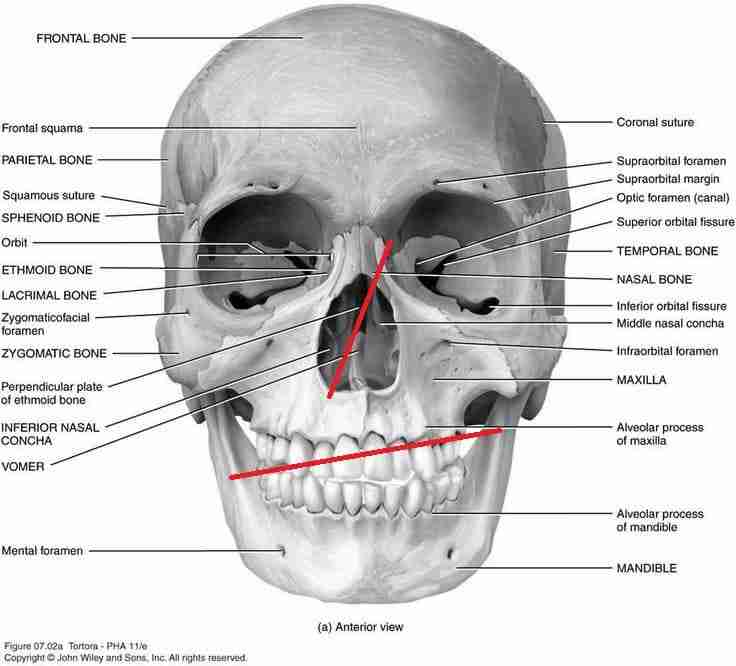
This makes me debate again if I should pull harder up and forward with my DIY headgear elastics on the right than on the left. I'm not really sure how the observation that the left side of my maxilla seems to be "better developed" relates to the bridge of my nose deviating to the left. The right frontal process of my maxilla is significantly closer to my interpupillary midline than the left frontal process. This seems counterintuitive to me because it is as though the top of my maxilla is angled in the opposite direction from the bottom of the maxilla (see image). My nasal bone also seems to be shifted to the left of center.

The bird beak pliers I ordered arrived today and I used them to loosen the labial bow on my expander.

It was pretty easy to bend it out and re-level it, but I might have adjusted the wire out a little too far. Originally it was touching my right central incisor that slightly overlaps the left. Now there is about a 2-3mm separation between the labial bow and my teeth. I don't own the three-prong pliers in the image above recommended for closing the adjustment loop, but I could probably bend the wire back in by flipping the bird beak pliers with the round side on the inside of the loop. Since the labial bow will become tighter as I open the expansion screw, I think I will leave it where it is.
My expander seems to be fitting flush against my palate after using it for 6 days, so I plan to turn the screw for the first time tonight (Thursday). For now I am going to try to stick to Mew's recommended 1mm per week by turning the screw on Tuesday, Thursday, Saturday, and Sunday evenings (about 1/4mm per turn). I want to turn the screw in the evenings rather than before the few hours I wear the expander during the day, so that the expander has the entire overnight period to take effect. I still need to work out the anterior attachment points on my headgear before I can add the extra-oral traction to my routine.
Nice find.
Here's the powerpoint presentation to go along with it, lots of cool images and info in here:
The presentation posted by Allixa of the article posted by MewingWorks has a recommended expansion protocol. They are using a fixed Haas expander rather than the removable appliance I am using, so I'm not sure how much of this is applicable, but they recommend turning the screw no faster than every other day, and every 3rd to 5th day for patients over 30 to avoid pain and tissue swelling.
I am in my mid 30s, so this protocol would suggest that I should expand slower than Mew's 1mm/week recommendation. I was planning to turn every Tuesday, Thursday, Saturday, and Sunday, with consecutive days on the weekends to keep to 1mm/week. Based on this information, I think I will switch to every other day rather than consistent calendar days, and slow down further if I experience pain or tissue swelling as the presentation describes. Dr. Mew suggests that the disadvantage of going slower is causing more dental tipping rather than skeletal separation, but given my age, maybe I should consider turning the screw once every 3 days rather than every 2. Going slower than every other day would also increase the chance of forgetting how many days ago I turned the screw.
I turned the screw on my expander for the first time last night. I think the first turn was probably a little less than 1/4mm because the key hole started in the middle and I turned it to the edge. For future turns, the hole starts at one side and will turn to the other. Still, I can definitely feel some expansion. I'm currently planning to turn the screw every other day. I think I'll post here every time I turn just to help me keep track of the days and to make notes about what I am feeling, so forgive me if the thread becomes even more cluttered.
I have decided to use the velcro cable ties for the three anterior attachment points on my headgear, but I will sew maybe 3-5 hooks from hook-and-eye closures onto each of the straps to allow me to adjust the tension by stretching to a farther or closer hook. I tried the headgear on again last night and slept for a few hours with it on. The stretch feels good, but the pressure of the padding against whatever side of my head is toward the bed becomes uncomfortable, so I kept waking up and turning over, and ultimately took it off. It's a challenge to unhook all of the little orthodontic elastics when I'm half asleep.
I've written in the past about the differences in tension and duration of sessions between Dr. Mew's MewVector headgear and Plato's facepulling helmet. While Dr. Mew seems to suggest that patients should maximize the number of hours under traction, Plato says one 30 min session per day is enough to see changes. I think the difference must be the tension applied. Dr. Mew calibrates his 5 elastics to about 200 grams of tension each. Three of his elastics pull approximately upward and two of his elastics pull approximately forward so if we simplify and say this is a total force of 600 grams up and 400 grams forward, the pythagorean theorem tells us that the resultant vector is approximately 720 grams of force. For reference, this is about 1.6 pounds. While this might seem insignificant, I can definitely feel the strain after using similar traction for a couple 1 to 3 hour sessions so far. My setup might be applying slightly more tension but roughly the same as the MewVector. Let's round up and say I'm totalling around 2 pounds of force. I think people who are facepulling with a belt or towel, and using leverage or body weight, must be applying significantly more force. Plato is vague about the amount of tension he generates with his rubber bands, but he insists that he started with light "biologically compatible" force and only increased the tension when results plateaued.
After using my headgear again last night, it is becoming clear that I won't be able to sleep through the night with it on as I had originally considered. It is the discomfort of the helmet padding's pressure against my head, and the irritation of the upward anterior elastic's pressure into my lip that are limiting the duration of my sessions rather than the dull strain of the expander pulled up against my palate. So realistically, I think I'll probably only be able to wear the headgear for a few hours each day. This makes me wonder if I should try to compensate by increasing the tension, but for now I'm going to continue with light forces and try to fit in as many hours as I can.
I turned my expander screw for the second time last night. I'm going to keep a running tally of my expansion at the bottom of these posts. This turn felt more intense than the first turn. I felt it most in the area of my molars and maybe the alveolar ridge above them, but not in the middle of my palate. I guess that is normal. I also did a session of about 2 hours in my headgear. One of the questions I submitted for the next Mew Q/A asked if shifting the maxilla up would cause more of my upper incisors to be covered by my upper lip when I smile, since I don't have any gingival exposure in the front already. I have been thinking about my post on the Curve of Spee ( /community/community/main-forum/elements-of-smile-aesthetics-and-craniofacial-dystrophy/#post-784 ) and FPQuestion's post about a downward component to extra-oral traction ( /community/community/main-forum/facepulling-downwards-direction-seems-like-what-all-the-professionals-use/#post-707 ). At the time I dismissed even a slight downward angle out of hand, but TGW commented that this might be a part of forward advancement in some people. Since I have gingival exposure in the back but not the front, and a cant that gives me more gingival exposure on the right side, I am thinking about removing the central anterior upward elastic from my headgear. This is also the elastic that presses into my upper lip and causes pain that can limit the duration of my sessions. This would leave me with an elastic pulling up in the posterior on both sides and an elastic pulling forward in the anterior on both sides. I might also consider angling my right side anterior elastic up slightly to help correct the cant.
Expansion total: 1/2mm
I've been wearing my expander for about 8 hours while sleeping every night and maybe about another 4 hours while awake. It still feels pretty tight on the second day after my second turn of the screw. I think I am going to delay turning the screw again until at least tomorrow evening. It might be that I should change from my plan to turn roughly every 2 days (close to Dr. Mew's recommended 1mm/week), to a 3-5 day schedule as recommended by the protocol for patients over age 30 that I mentioned in an earlier post. I'll also try to get in a few more hours of daytime use.
Last night I wore my headgear for a couple hours without the central anterior elastic pulling up. I mentioned in my last post my theory that I mostly need to bring my maxilla forward, and I might not need to lift the maxilla up in the front where I have no gingival exposure, but do need to lift my maxilla up in the back where I have some gingival exposure. This central elastic was also uncomfortably pressing into my upper lip. So I only used the two posterior elastics pulling up and the two anterior elastics pulling forward last night. It seemed to work better. It occurred to me after I was already strapped in that I could change the angle of the central elastic to pull forward instead of upward. This would give me three elastics pulling forward in the front and two elastics pulling up in the back. I'll try that tonight.
In my thread about using vibration to try and enhance shifting along the cranial sutures ( /community/community/main-forum/extracorporeal-shock-wave-therapy/ ), I mentioned that low intensity pulsed ultrasound devices like acceledent vibrate at a lower frequency (around 30Hz) as compared to electric toothbrushes (250-300Hz) and handheld massagers (100+Hz). I get the impression that lower frequencies might be more effective, but I've been using a handheld massager against my face while wearing my expander. I feel like it might be helping. I might be imagining, but it feels like the expander is not as tight in my mouth after holding the massager at different locations on my maxilla and along my maxillary suture lines for 10-20 minute session. I could also hear some cracking/popping in my right ear toward the end of my last vibration treatment.
Sometimes I catch myself snoring or wake up with a bad taste in my mouth, so I suspected that I occasionally mouth breath in my sleep. I tried mouth taping for the first time last night. I used 3M micropore tape place horizontally across all of my mouth. I think it made a significant difference. I woke up about an hour before my alarm and felt better rested. I definitely want to continue experimenting with this. It hurt my lips a little pulling it off, so I might put some chapstick on my lips before applying the tape tonight.
I have still only turned my expander screw twice for a total of about 1/2mm, but already my upper central incisors look less crowded. I had only a very minor overlap and this has almost completely resolved. My lower incisors are more crowded and will probably require at least 2mm of expansion before they start to straighten out. I am glad that my upper incisors have aligned, but I hope they don't continue to separate and develop a gap. I'm planning to try to turn my screw again this evening before putting on my expander and taping my mouth for the night.
Hey @apollo,
How long did it take for your expander to arrive after getting the email from them that it was shipped?
@allixa, it took a couple weeks to reach me here in the States (about the same amount of time for the impression kit to arrive after I got the notice it shipped).
Alright, guess I need to be patient then. Thanks for letting me know the potential timeframe.
I turned my expander screw again last night, for a total of 3 turns and 3/4mm of expansion. I waited 3 days between turns. Such a small distance feels surprisingly significant inside my mouth. This turn gave me more of a stretching sensation in the center of my palate than I had after the previous turns, so I guess that is a good sign. Over the past few days, I developed some minor irritation on the roof of my mouth were a small section of my oral mucosa was being pressed into the groove where the key goes to turn the screw. I decided to use a nail file to round off the edges of the acrylic where the sides of the expander separate. This feels a little less annoying to my palate and tongue. The slight overlap of my upper central incisors is gone. After my next turn of the screw I think I will smooth off the indentations in the acrylic between my front six teeth to allow more freedom to realign and hopefully minimize the development of a midline diastema. Soon I will probably also need to file off some acrylic around my torus palatinus. I used my handheld massager around my maxilla after turning the screw and again heard some cracks/pops in my right ear but not my left ear (even though I pressed the massager in the same locations on both sides of my face). I think this is really encouraging since my right side seems to be farther down and back. I taped my mouth again last night. I woke up about an hour earlier than my alarm again this morning and felt well-rested. I was more careful removing the tape this morning, and I think putting chapstick on the night before helped protect my lips. It's still a little early to cast a verdict on the efficacy of mouth taping, but so far I am really happy with the results.
Total Expansion: 3/4mm
For anyone following along, I wanted to note that I haven't been logging everything I do each day. In addition to 12+ hours wearing my expander, including 1-3 hours connected to my DIY extra-oral traction, I also try to chew gum 1-2 hours each day. Other elements of the routine include using the handheld massager, and mouth taping during sleep. I wish I had more time to work on my body posture and add in some self-ncr. Today is the second day since turning the screw, and the expander still feels pretty tight. My current plan is to turn again tomorrow, but I will see how it feels. Sorting through some childhood items, I came across the before-and-after intraoral photos from my adolescent orthodontics. The teeth certainly look straighter in the after, but my canted occlusal plane is unchanged from the before shot.
I found my old retainer from my adolescent orthodontics among some of my childhood items in storage. I measured the intermolar width on the retainer and it is approximately 37mm. So my intermolar width decreased by about 3mm after I stopped using my retainer, maybe sometime around age 18. So far, I have expanded by 3/4mm and I'm planning to turn the screw again this evening to bring my current intermolar width up to about 35mm, still about 2mm below where I was after my braces. I mentioned in yesterday's post that I found the before and after pictures from my orthodontics and that I had a consistent occlusal cant in both the before and after pictures. This suggests to me that expanding back to 37mm alone won't improve my cant, but hopefully once I get enough tongue space, my mewing and extra-oral traction might make a difference.
Had you noted your face getting worse during the time you suspect the regression happened?
Had you noted your face getting worse during the time you suspect the regression happened?
That's a change of 3mm over the course of almost 15 years, so any facial changes weren't dramatic. I think you could say that my cheekbones became slightly flatter, my undereye circles became darker, and the bridge of my nose became more asymmetric. Mostly I noticed the difference in my occlusion, biting my cheeks when chewing, increasing dental crowding, dental midline deviation etc.
Do you mind linking to the type of device you are using to vibrate your sutures? It sounds like it is working well and actually helping.
Also @progress, there was a period in my life where my palate became more narrow and my teeth fell down a bit due to an open mouth posture, and I definitely did notice some worsening in my face at that time. However since I started mewing I gained everything back and then some in terms of aesthetics, but the palate itself did not change back to where it was or get any wider than when I started.
Do you mind linking to the type of device you are using to vibrate your sutures? It sounds like it is working well and actually helping.
Like I said, the research I read suggests that a lower frequency vibration might be better, but this is the kind of handheld massager I am using because I already owned it:
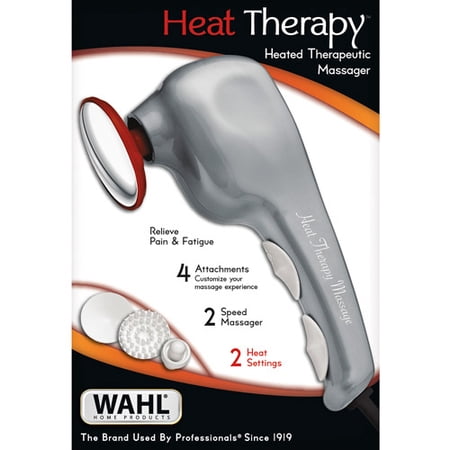
I could be imagining, but it seems to make the expander feel slightly less tight if I hold it against my maxilla and along the sutures while wearing my expander for 10-20 minutes. Occasionally I have heard a cracking/popping sound in my right ear, especially during sessions soon after I have turned the screw. That being said, my expansion has progressed slower than the 1mm per week rate Dr. Mew recommends, so it's not like this is working wonders.
Yeah, I don't expect it to work magic or anything, but the fact that it creates popping noises points to it helping at least somewhat, which is amazing considering that most people don't even believe that adults can get expansion. And for how fast you are expanding, I am pretty sure Mew got his guidelines from the same study we found earlier, so for a patient of your age he would probably recommend the more gradual rate. As long as you are making progress and aren't tipping too much then the rate shouldn't be too important.
I turned my expander screw for the fourth time yesterday to complete my first 1mm of expansion in 12 days. I mentioned previously how a small section on the roof of my mouth was getting pressed into the key channel. Now that the sides of the expander have separated, a line of mucosa all along that gap is similarly irritated. I think it is from suction created by my tongue pressing up on the expander causing swelling in the tissue not covered by the expander. It's not that much of a nuisance, but it is a little difficult to distinguish if the discomfort I am feeling on my palate is from the inflamed epithelium or from separation of the midpalatal suture. I think the suction causing the irritation won't be as intense once there is a wider gap between the two sides of the expander.
Total Expansion: 1mm

Hi,
I've been mewing for 3 months now. My mewing consists of maintaining the proper tongue posture and about two weeks ago I started doing some chin tuck series that dr. Mew showed in the video. I can't say that I see big changes like some people say in comments on youtube. What can I add to this routine? I started chewing gums regularly, but I saw that while I chew gums I 'forget' my tongue posture and I'm not expanding my palate, too.
The second question is about the posterior third. All people and Mike himself say that I should feel uncomfortable if I really get the posterior up. I myself don't feel any discomfort. I can only feel discomfort when I do a big swallow when my tongue blocks my airway, but I can't stay in that position because I cannot breathe.
Third question: How do you measure your intermolar with at home because Mike showed a method that includes a dentists appliance. I tried by putting some toothpaste on the ends of my molars and bitting a paper so it leaves on the paper. Is that good method?
And the last one. How much will it take to see some improvement? By 'some' I mean an improvement that other people can see and not only I because those changes are really subjective.
I think I have a potential for improvement because I'm immature and have still some time to grow.
Please let me know how I can improve my routine because I feel I'm just losing time if I'm doing this wrong.
Thanks.
Hi Johan, I'll try to answer your questions, but I think your last question is most important: it generally takes many months to achieve even subtle changes that you might not notice without standardized before-and-after photographs. If you are still growing, your results might be faster. I could discern only subtle improvements from over a year of concerted effort to maintain correct oral posture. With my intermolar width around 34mm, I decided that I needed an expander to gain the necessary tongue space to make better progress. So what can you add to your routine? You didn't mention swallowing technique. Have you been practicing the push swallow? I think that the position of the posterior tongue against your soft palate that obstructs your airway during a swallow is the ideal position for mewing, but is impossible because it obstructs breathing, so sometimes I swallow to put my tongue in that position and then gradually back off the tongue and feel its resistance against gas exchange between my lungs and nose. Then I back off just a little more until I'm able to breathe freely, but can still feel the soft palate against the back of my tongue. It's still hard to maintain that posture for long, but that's what I try to do. In addition to the chin tuck, you can also work on improving the rest of your body posture. In addition to gum chewing, I like to mix in some repetitions mashing the gum against my hard palate with my tongue (your goal is to increase the resting muscle tone of both the tongue and masseters in balance). Dr. Mew's video uses a caliper to measure the intermolar width. You could probably purchase an inexpensive caliper from a hardware store. I have used dental floss that I inserted between my first and second molars and then marked with a pen. I've also used a tailor's tape. Both of these methods are imperfect but give you a close approximation. When I made impressions of my teeth I was able to confirm the measurement using a ruler. Dr. Mew wrote in the comments of one of his videos: "modern adults (or anyone over the age of 9) tend to have a molar width of 29 to 34mm. Anyone with 35 to 38mm will find it much easier but still very hard to make progressive improvements without any formal therapy." If your intermolar width is below 35mm, you might consider using a palate expander to gain more tongue space. There are other optional treatment modalities that you could explore including facepulling/extra-oral traction, NCR/nasal release, craniosacral therapy, nutritional changes, buteyko breathing, mouth taping etc. It's probably more important to get the oral posture basics figured out before moving on to more advanced techniques. Good luck!
Thank You for Your reply, Apollo. I've measured my width with floss and it's ~4.1 cm. I'll buy a caliper because I'm suspicious about my result. I do the push swallow, but not as an exercise, I do it to retrieve proper tongue posture. Maybe I should do it more often and with more effort.
How much time does it take to get hollow cheeks?
Does mewing line up lips? Because my lips are similar to those in this picture:

Also, does mewing decrease this cavity between chin and lower lip?
Thank You for Your reply, Apollo. I've measured my width with floss and it's ~4.1 cm. I'll buy a caliper because I'm suspicious about my result. I do the push swallow, but not as an exercise, I do it to retrieve proper tongue posture. Maybe I should do it more often and with more effort.
How much time does it take to get hollow cheeks?
Does mewing line up lips? Because my lips are similar to those in this picture:
Also, does mewing decrease this cavity between chin and lower lip?
I have similar lips. What should ideally happen is that the mandible/lower lip expands/moves/projects forward in relation to the maxilla/upper lip. This rotates and pulls the lower lip inward into the mouth, reducing the "E" cavity you are talking about.
Thank You for Your reply, Apollo. I've measured my width with floss and it's ~4.1 cm. I'll buy a caliper because I'm suspicious about my result. I do the push swallow, but not as an exercise, I do it to retrieve proper tongue posture. Maybe I should do it more often and with more effort.
How much time does it take to get hollow cheeks?
Does mewing line up lips? Because my lips are similar to those in this picture:
Also, does mewing decrease this cavity between chin and lower lip?
I have similar lips. What should ideally happen is that the mandible/lower lip expands/moves/projects forward in relation to the maxilla/upper lip. This rotates and pulls the lower lip inward into the mouth, reducing the "E" cavity you are talking about.
Since we already swallow many times per day, once you have the technique right I don't think you need to go out of your way to exercise swallowing. I'm just saying whenever you are eating or drinking or swallowing saliva that you should try to make sure you are only using your tongue and throat muscles and not activating any of the muscles of your face. This might help with the alignment of your lips, but I would trust Progress's expertise on that topic more than my own, and what he says makes sense. I haven't had dramatic success with increasing my cheek hollows, but mastering the push swallow should help reduce the size of your buccinator muscles. More pronounced zygomatic arches and developed masseter muscles form the outward projection that allows the cheeks to appear recessed, and I've read some people suggest that the zygomaticus major muscle might also play a role. I think keeping your body fat percentage low makes cheek hollows more visible.
Over the past few days I've been making some adjustments to the acrylic around my torus palatinus on my expander. I think this issue is specific to my structure, and is kind of difficult to explain. Because my torus palatinus is asymmetrical, with the right half extending lower and slightly wider than the left half, the indentation for the torus isn't evenly divided on the expander. The problem is on the right side of the expander, which is concave to accomodate the buldge of the torus, but this gives the acrylic closer to the midline separation a higher profile than the acrylic farther to the right. Does that make sense? So as I have started to turn the screw, this thicker part of the acrylic near the midline is starting to press against the lowest point of my torus on the right side. This is beginning to cause discomfort. Hopefully my torus will become less pronounced during the course of expansion, but I think this should be a result of the palate becoming wider and less vaulted. So I've tried to file off the acrylic by the midline down to the level of the indentation next to it. I've been using a nail file, but this makes it challenging to get down into that concavity. I will keep working on it. This pressure against the torus seems to be more of a rate limiting factor than the pressure out against the alveolar ridge, so hopefully these adjustments will help me advance. I'm planning to turn the screw again tomorrow evening. I got busy last night and didn't have time to use my extra-oral traction. I'll try to fit in a longer session today.
Sense is all I have, and it is something I have a lot :D. Even though probably true, I don't want anyone to mistake easily relatable common sense for expertise. There are no experts here, only people with potentially helpful information. No need to devalue your own ideas just because someone else has ideas too. You are already perhaps the most consistent contributor in this forum.
Apologies for the irrelevance.
Sense is all I have, and it is something I have a lot :D. Even though probably true, I don't want anyone to mistake easily relatable common sense for expertise. There are no experts here, only people with potentially helpful information. No need to devalue your own ideas just because someone else has ideas too. You are already perhaps the most consistent contributor in this forum.
Apologies for the irrelevance.
Thanks Progress, I just don't have a good sense for how the position of the lips relates to the underlying bone structure and muscles.
I turned my expander screw last night after only 2 days rather than waiting for the third day. I had a long session yesterday evening with extra-oral traction for a few hours and using the handheld massager for about 10 minutes. The expander felt like it was really fitting well, so I decided to go ahead and turn the screw again. This brings my total up to 1-1/4mm of expansion in 14 days. I think the factor that was slowing down my progression before was the issue (I mentioned yesterday) of the thicker acryclic near the middle of the expander pressing against the more prominent right side of my torus palatinus. I want the force to be out against my alveolar ridge rather than against the torus. Filing down that acrylic helped alleviate the discomfort, but it's still not perfect. I'll try to refine that today.
Total Expansion: 1-1/4mm (14 days)
This morning I found an ulcer on the right side of my torus palatinus. I've mentioned how the expander acrylic was thicker toward the split in the middle on the right side and was putting pressure against the torus as I expanded. I had been trying to alleviate that pressure by filing down the acrylic between the midline and the impression where the torus is most prominent, but I had been taking all of the acrylic off of the top surface that makes contact with my palate. It seemed to help, but after finding this sore and not wanting to be sidelined by an injury, I decided to file off some acrylic from the back to make the U shape deeper. I tried to use the nail file that I have been using on the top surface, but I couldn't achieve that rounded contour, so I got up the nerve to use my dremel tool and it seemed to work very well. I was relatively conservative in how much of the acrylic I took off because I want to maintain as much of the structural integrity of the acrylic framework as possible to ensure that the force is transferred to the molars. So some of my torus is still covered in the acrylic, but I removed enough that the spot that had developed the sore is no longer covered. If this continues to be an issue I can make the U at the back of the expander even deeper. I left about 8mm of acrylic behind the screw mechanism. About 5mm of that distance remains in contact with my torus. Tonight would be two days since turning the screw. I will see how tight the expander is feeling and decide if I want to advance or wait until tomorrow.
I turned my expander screw again last night after 2 days for a total of 1-1/2mm in 16 days. This morning I decided to shave off the rest of the acrylic from the back of the expander that was still making contact with my torus palatinus. Once I had removed the acrylic from the part of the torus that was most prominent with the ulcer, the acrylic was putting more pressure on the rest of the torus that remained covered. I think it should be more comfortable now and better at pushing against the sides of my alveolar ridge rather than against the torus. Hopefully the sore will heal over in a few days. I haven't filed off the indentations in the acrylic behind my front teeth yet, but I plan to do that soon to allow the teeth to space out evenly. I will probably also have to continue removing some of the acrylic from the top of the expander as my palate becomes less vaulted. When flossing my teeth, I can feel that they are less crowded, but I still haven't developed any visible gap between my central incisors.
Total Expansion: 1-1/2mm (16 days)
In the past I've got sores heal overnight by wetting one end of a q-tip, using the dry end to absorb moisture from the ulcer, then dipping the wet end to a bunch of salt and pressing it against the ulcer for a minute or two. Uncomfortable at first, but pleasantly numbing after a while. Often when I do that the last thing in the evening, in the morning it's almost completely gone.
Tonight would be two days since turning my expander screw, but I think I will probably delay for a day to give my palate some time to adapt. I am having a little trouble distinguishing if the discomfort along the middle of my palate is from the pressure the expander was putting on my torus palatinus, or if it is from separation of my midpalatal suture. It feels a little achy but not overtly painful. When the expander is out and I press up with my tongue, it aches more on my right side than my left along both the torus and the alveolar ridge. I suppose this is a good sign since my right side is farther down and back. I've pasted a cross section of a maxilla with a torus palatinus below. I'm curious as I separate the expander, if I am opening that midpalatal suture along the entire thickness including the torus such that the torus would become wider, or if the suture begins to peel open at the top and the bone of the torus would kind of fill in the opening gap, reducing the prominence of the torus. My torus is less prominent than the one in the picture.

That picture is a great find. It shows that the mid palatal suture runs down the entire thickness of the torus which is something I never knew before. It provides a hint that true expansion is possible even with a torus present, but I could see how getting the expansion started would be harder because of how much thicker the bone is.
Do you have any guesses as to why you developed a torus palatinus? I'm pretty sure mine came from grinding my teeth at night which I used to do before I found mewing. And looking at the photo that makes sense, if you push up hard on the teeth, the two halves of the palate probably get pushed against each other such that the torus represents a way for the bone to better absorb all the force being placed on them from a person who is grinding their teeth.
By the way, did Bracesshop give you a tracking number when they shipped out your expander?
That picture is a great find. It shows that the mid palatal suture runs down the entire thickness of the torus which is something I never knew before. It provides a hint that true expansion is possible even with a torus present, but I could see how getting the expansion started would be harder because of how much thicker the bone is.
Do you have any guesses as to why you developed a torus palatinus? I'm pretty sure mine came from grinding my teeth at night which I used to do before I found mewing. And looking at the photo that makes sense, if you push up hard on the teeth, the two halves of the palate probably get pushed against each other such that the torus represents a way for the bone to better absorb all the force being placed on them from a person who is grinding their teeth.
By the way, did Bracesshop give you a tracking number when they shipped out your expander?
I remember wondering about my torus palatinus before I had braces as a teen, but I suppose clenching and/or bruxism could have contributed even at that early age. I think it might have become slightly larger as I got older. I've had waxing and waning phases of clenching and bruxism issues that probably relate to stress. I also wonder if a narrow palate itself might contribute to the formation of tori and exostoses as the alveolar process constricts down from its physiologic proportions.
I emailed to ask for a tracking number for my expander and never heard back from them, but mine seemed to arrive within a reasonable time after the shipping notice.
I've had a couple different sensations today that I haven't noticed earlier in my expansion process. I have more of a feeling of tension under the orbit of my eyes around the junction of the maxilla and zygomatic bones. I also noticed a persistent feeling that I couldn't equalize the pressure in my ears for a few minutes after dinner. These sensations are subtle enough that I might not have noticed if I wasn't paying attention, and maybe I'm just imagining, but I thought I would document them for the record. As I mentioned earlier, I have decided to wait at least another day before turning my expansion screw again to relieve any inflammation on my torus palatinus.
I remember wondering about my torus palatinus before I had braces as a teen, but I suppose clenching and/or bruxism could have contributed even at that early age. I think it might have become slightly larger as I got older. I've had waxing and waning phases of clenching and bruxism issues that probably relate to stress. I also wonder if a narrow palate itself might contribute to the formation of tori and exostoses as the alveolar process constricts down from its physiologic proportions.
I emailed to ask for a tracking number for my expander and never heard back from them, but mine seemed to arrive within a reasonable time after the shipping notice.
Interesting that yours developed at such a young age. That might rule out my theory as to why it develops. Maybe you are right in saying that a narrow palate itself is enough of a reason for one to show up in some people. I'll look into it more later.
And as for bracesshop, yeah they don't seem to respond to emails. I bet they probably have hundreds of unread mails of people just asking the most basic questions or even asking medical related questions, so they just stopped checking. I'm going to try and get a hold of them via phone or something because it's coming up on a month since my expander was shipped and there's still no sign of it. Pretty unprofessional of them to ship things across the globe without providing tracking info. I'll let you guys know if I can get any information from them, might help some people in the future.
And as for bracesshop, yeah they don't seem to respond to emails. I bet they probably have hundreds of unread mails of people just asking the most basic questions or even asking medical related questions, so they just stopped checking. I'm going to try and get a hold of them via phone or something because it's coming up on a month since my expander was shipped and there's still no sign of it. Pretty unprofessional of them to ship things across the globe without providing tracking info. I'll let you guys know if I can get any information from them, might help some people in the future.
I hear there has been a lot of delay for shipments coming through the East Coast of the United States recently because of the severe weather from several nor'easters.
Interesting that yours developed at such a young age. That might rule out my theory as to why it develops. Maybe you are right in saying that a narrow palate itself is enough of a reason for one to show up in some people. I'll look into it more later.
As I mentioned in my smile aesthetics thread, there doesn't seem to be any consensus about the etiology of tori or exostoses. They can occur on the maxilla or mandible, and I guess the mandibular variety seem to be more closely correlated with clenching and bruxism. Buccal exostoses and mandibular tori make more sense to me as an adaptation to stabilize teeth roots in response to excessive jaw forces, but I can imagine how they could also put pressure at the midpalatal suture. There are also different shapes including very nodular varieties. Mine is pretty smooth, but the right half is more pronounced than the left. Some research suggests a genetic inheritance, but this could also be due to similar environmental factors between parents and their offspring. I don't think the shape of my torus palatinus has changed much from the first 1-1/2mm of expansion, but I'm curious to see what happens as I advance.
As I mentioned in my smile aesthetics thread, there doesn't seem to be any consensus about the etiology of tori or exostoses. They can occur on the maxilla or mandible, and I guess the mandibular variety seem to be more closely correlated with clenching and bruxism. Buccal exostoses and mandibular tori make more sense to me as an adaptation to stabilize teeth roots in response to excessive jaw forces, but I can imagine how they could also put pressure at the midpalatal suture. There are also different shapes including very nodular varieties. Mine is pretty smooth, but the right half is more pronounced than the left. Some research suggests a genetic inheritance, but this could also be due to similar environmental factors between parents and their offspring. I don't think the shape of my torus palatinus has changed much from the first 1-1/2mm of expansion, but I'm curious to see what happens as I advance.
Mine is quite smooth as well. Yeah it will be very interesting to see what happens to it as you continue expanding. I wonder if a gap will develop in the center of it, or if it will flatten and smooth out somehow. I can't find any mention of this type of knowledge online, so it seems like you are breaking some ground here.
After 3 days, I turned my expander screw again last night. In the past 19 days, I have turned the screw 7 times for a total of 1-3/4mm. My upper central incisors started out slightly overlapped. The one on the left is still a hair farther back than the one on the right, but they no longer superimpose. I think this alone has improved the midline deviation to some extent, and there's now an attractive slight separation between the teeth toward the incisal edges, but they are still touching for most of the height of the teeth. I hope to avoid creating a bigger gap. I wonder if there is anything else I should do besides smoothing off the indentations in the acrylic between the front six teeth. I guess I will also slow down the rate of expansion if the gap gets bigger. I've been thinking about how the canine teeth sit at the corners of the arch with the molars and bicuspids on the sides and the incisors in the front. Do I want the canines to move as far laterally as the molars and bicuspids, or do I want more of a rounded shape? I haven't been able to reach any conclusions looking at broad smiles like Julia Roberts' to assess if the canines are more turned to the front or if they still mostly face the sides. TGW removed everything from the canines forward on his expander, and maybe this would allow the midpalatal suture to stay closer together in the front of the palate while the back separates more, and any bone remodeling of the alveolar process to take on a more natural curved shape in the front? Another option besides removing all of the acrylic in the front would be to shave down just some of the acrylic behind the canines. I'll wait to hear about TGW's rationale for the adjustments he made to his expander before doing anything drastic. The sore on my torus palatinus is healing nicely.
Total Expansion: 1-3/4mm (7 turns in 19 days)
I went back and read some of the progress reports from early adopters of the palate expanders. Both Collette ( /community/community/main-forum/palate-expander-update/#post-185 ) and irmathurma ( /community/community/main-forum/review-of-active-expander/#post-15 ) reported fit issues with their expanders after they reached about the same number of turns. Collette got to about 11 turns or 2.75mm and irmathurma got to about 10 turns or 2.5mm before the steep edges of the expander were displaced by the less-vaulted palate so that the expander pushed out against the teeth rather than the alveolar ridge. We've discussed in another thread ( /community/community/main-forum/you-can-easily-shave-down-a-palate-expander-to-refit-it-to-your-mouth/#post-619 ) about the strategies to file down the acrylic of the expanders to increase their longevity. I'm currently sitting at 7 turns or 1.75mm of expansion. My palate still feels pretty vaulted, but if precedent holds, I could expect to encounter some fit issues in 3 or 4 more turns. With the other adjustments I've made to the acrylic framework of my expander, I am confident I can make it work for a while. By filing down the acrylic, TGW reached 4mm (about 16 turns) of expansion at his last progress report ( /community/community/main-forum/palate-expansion-update-1/#post-797 ). I'm beginning to wonder about the maximum possible expansion from one expander. If there is enough excess acrylic to continue making adjustments to the changing contour of the palate, how far can the screw turn? I haven't read anything definitive about this, but the screw inside looks to be more than 10mm long. If we get to the end of the screw, does it stop turning, or do the sides fall apart? I want to use the expander as a retainer to cement my progress after I finish expanding, so I am wondering if I need to worry about stopping short of the end of the screw.
I completed my first 2mm of expansion last night. This should bring my intermolar width to about 36mm. I decided to turn the screw again after only 2 days. I didn't have time to use my extra-oral traction. I practiced chewing with my couterintuative clockwise rotation ( /community/community/main-forum/rotation-of-chewing-and-possible-correlation-to-canted-smile/ ). It feels like there might really be a connection between the default direction of rotary chewing and occlusal cant. For me, this might be more important than just what side of the mouth I chew on, because I think I use both sides, but it feels very strange trying to remember to grind my food in a left to right direction. I want to experiment with this more.
Total Expansion: 2mm (8 turns in 21 days)
A question for everyone who had the expander already: Do you feel a little ridge along your gums when you take it out? The expander doesn't touch the suture of my mouth, it pushes approximately 2-3 cm above my teeth. Along this point it leaves a ridge in the gums which slowly fades away. Seems normal, but I just want to check
Does anybody else get ridges into the gums where the palate expander is pushing against it? Secondly, I'm getting deep ridges on my left side and not as much on my right, which seems to imply that the left side is getting more pressure.
I had the same issue but that's because I was expanding more on one side than the other initially (my right side is less developed). Are you doing it evenly?
Irmathurma, FPQuestion and maybe others have reported how the palate expander leaves indentations in the oral mucosa. I've also noticed that the indentations are more prominent on my right side, especially around my torus palatinus. This is my "less developed" side that seems to be farther down and back. I suspect the impressions might be more pronounced on my right side because that half of the palate is already lower so as it becomes less vaulted it is pushing into the expander more on that side. This might be a sign that I will need to file off some of the acrylic from the top of the expander soon.
After 2 days, I turned the expander screw last night. I'm now at 9 turns or 2-1/4mm in 23 days. I had a social event that prevented me from making time for extra-oral traction. The indentations in my mucosal tissue were more prominent this morning. I am trying to decide when to file down some of the acrylic from the top of the expander and which areas to reduce. I have a little bit of irritation on the right side of my anterior palate around the rugae. It feels kind of like when you burn the roof of your mouth or abrade the roof of your mouth with rough food. I'm not sure if the expander is causing it or if I traumatized it while eating. I've noticed that my lower arch doesn't seem to be expanding with my upper arch. Maybe I need more expansion on the top before the occlusion induces the bottom to expand. The crowding of my lower incisors is essentially unchanged so far.
Total Expansion: 2-1/4mm (9 turns in 23 days)
Yesterday I tried rounding off the back edges of my expander acrylic along the area that I removed from around my torus palatinus. I thought rounded edges might reduce the indentations on my oral mucosa from the pressure of the expander. It didn't really seem to make much of a difference when I took out my expander this morning. I still have that area of irritation around the rugae on the right side. I've decided that I am going to remove acrylic from the top of the expander before turning the screw again. I am at about the same number of turns as Collette and irmathurma when their expanders became displaced by the palate and began pushing out against the teeth. I want to avoid that. However, it's not as simple as removing the tallest parts on the expander. Because my mouth is canted lower on the right side, my expander is tallest on the left side, but it feels like I am getting the most pressure down on the expander from the palate on my right side. I guess the side that was already lower becomes less vaulted faster? So I think I need to file down the highest parts along the back of the right side, and maybe some from the front right where it is irritating my rugae. I think I will also file off a little from the back of the left side. I'll start with that and see how it feels in my mouth before removing more. Tonight would be two days since I turned the screw, but I think I will postpone the next turn at least one day.
Are you feeling any of the physical benefits of expansion yet like better breathing or increased energy?
Are you feeling any of the physical benefits of expansion yet like better breathing or increased energy?
To be honest, not really, at least nothing dramatic, but maybe I'm just not in tune with my body. I'm also really busy with work lately, so maybe that is just making me more tired than I would have been otherwise.
Yeah I can definitely understand how being busy/tired would keep you from feeling changes fully, but to be fair most of the stories so far where people said that they could breathe more easily came at around 5mm of expansion, so perhaps it will just take time and more expansion. I just felt like asking at this early stage to see if anything happened yet. But definitely make note of it if you do feel something like that, because I'm interested to see what level of expansion has to happen for those kinds of changes to occur.
Yeah I can definitely understand how being busy/tired would keep you from feeling changes fully, but to be fair most of the stories so far where people said that they could breathe more easily came at around 5mm of expansion, so perhaps it will just take time and more expansion. I just felt like asking at this early stage to see if anything happened yet. But definitely make note of it if you do feel something like that, because I'm interested to see what level of expansion has to happen for those kinds of changes to occur.
I wish I could go back and read the thread that a contributor called asdfasdf123 wrote on the BTM forum, but he deleted his posts for privacy concerns. I remember he reported some pretty remarkable systemic and mental effects from his expansion, and that he was expanding at a very fast rate initially before slowing down, but I can't recall how many millimeters he achieved. I know @admin mentioned several of these benefits in his article. Do you remember any of the other cases that reported changes in breathing, energy, mental health, etc. from expansion?
CP from back in the day did state that expansion with the biobloc allowed him to breathe more easily. I remember that clearly.
Then there are two cases from this forum:
/community/community/main-forum/review-of-active-expander/
/community/community/main-forum/palate-expander-update/
In both of those threads, if you read the posts there are mentions of better breathing and other benefits. Looks like I was wrong about the 5mm mark. Amber12 posted a while ago that at 5mm she saw better cheekbones, not better breathing. I know that Colette still posts so it would be interesting to see if her better breathing reverted or not.
I wish I were around for the asdfasdf123 posts. I didn't read BreakTheMatrix at that time. It looks like only a couple or a few of his posts survived, but there is still some useful info in them:


Thanks Allixa! So asdfasdf123 expanded 7+mm in approximately 45 days. That's more than a millimeter a week. This BTM post from Ian Hedley (one of the examples in the success stories thread who collaborated with Dr. Mew to provide NCR therapy) describing his own effects of palate expansion + facepulling + ncr is pretty remarkable: http://breakthematrix.createaforum.com/therapies/could-you-please-give-advice-to-a-doctor-trying-to-perfect-maxillary-protraction/?message=641
Posted by: NCRintheUK
In the picture on the left was I chronically fatigued, in severe pain, had brain fog, a dished in profile, weak chin, jammed skull, facial pallor and a general stressed look on my face. In the photo on the right I was in way less pain, had more energy, was happier, felt better, had more support for my eyes, better facial symmetry, more attractive eye orbits, a wider face, stronger profile and generally look healthier. I have by no means finished my odyssey, I am continuing with NCR once a month, face pulling and expansion ortho
I decided to experiment with a self-NCR/nasal release treatment while wearing my expander this evening. I was able to inflate into the nasopharynx through all 6 meatuses. I didn't feel anything noteworthy. Maybe my expander felt a little less tight afterward, kind of similar to the difference I feel after using the handheld massager. I'm not sure if it is better to do the treatment with or without the expander in place. I'll try to mix in some more frequent sessions if I can find the time.
As planned, I filed down some of the arcylic from the top of my expander. It definitely feels better-seated in my palate, but it still left a pretty prominent impression in my mucosa this morning after I took it out. I reduced the right side, mostly along the back section beside my torus, and a little in the front corner. I didn't do much on the left side because it still seemed to be sitting up high on the teeth and I wasn't feeling the pressure on the roof of my mouth there even though the left side is taller. I did remove a bump beside the midline split on both the left and the right side in front of the screw. This is similar to the issue I was having with my torus where the expander was taller at the midline so it was encountering resistance as I expanded. For me it is easier to make these alterations using my dremel tool rather than the nail file, because it is sometimes impossible to get the flat file into the curved contours of the expander. I think I will plan to turn the screw again tonight.
Ian Hedley's results are/were really inspiring. What's more, there used to be another 'after' photo of him online as well that was taken a few years after the one posted above and in it he looked almost like a model, like a completely different person. It was clear proof to me that all of this stuff works and is important.
But it looks like NCR as a therapy never really took off and so whatever website that photo was on is now gone.
I turned the expander screw again last night, 3 days from the prior turn, reaching 2-1/2mm. It now looks like I need to file down some of the material from the left side of my expander after reducing mostly the right side a couple days ago. The labial bow is angled lower on the left side suggesting that the right side where I filed down the acrylic is now sitting up higher. I will work on that today. I mentioned in a previous post that I found the old retainer from my adolescent orthodontics, and measured an intermolar width of about 37mm on the retainer. I'm now back up to about 36-1/2mm. I held up my expander to the old retainer and confirmed that my first molars are still about 1/2mm closer together on the expander. However, the bicuspids are now about the same width apart, and the canines are about 1/2mm farther apart than they were on the old retainer. I've also noticed that the left side of my expander is more straight back in a V shape whereas the right side has a more curved U shape. This is apparent in my mouth when I smile because the buccal corridor is wider on my left side. For now, I think it is best to just focus on expanding, but at some point, I might need to figure out a way to make my arch more curved and symmetrical. Perhaps removing acrylic from behind the canines (as I have been planning) would improve the curve by separating the back teeth more than the front, but later on in my expansion, I might also try to remove a little acrylic from behind the bicuspids to fine tune their positions.
Total Expansion: 2-1/2mm (10 turns in 26 days)
When I take out my expander in the morning, the mucosa on my alveolar ridge is now a darker red color than the rest of my palate. I guess this is a good sign that the pressure of the expander is correctly targeting the bone rather than the teeth. The ulcer on my torus palatinus has almost totally healed. This morning I noticed a little irritation just anterior to the torus. This is around where the screw is located. It will be problematic if I need to file down the acrylic in that area because there is not much excess material over the screw mechanism. I will probably wait until tomorrow to turn the screw since the expander still feels pretty tight.
I have done more research into the Buteyko breathing method. I discussed the theory in more depth on this thread about breathing ( /community/community/main-forum/deep-breathing-effects-on-the-spine-and-muscles/#post-1039 ). The guiding principle is that most people are chronically hyperventilating, blowing off too much of their CO2 which is needed for blood vessel dilation and the bohr effect's desaturation of oxygen from hemoglobin in the peripheral tissue. Paradoxically, breathing too fast and too deeply deprives the brain and other parts of the body of the oxygen it needs for electron transport and ATP production, at least that's what Buteyko practitioners claim. I've tried to be mindful of practicing slow, shallow, diaphragmatic breathing, but like mewing, it is hard to avoid falling back into old habits. One of the Buteyko strategies I have implemented already is mouth taping during sleep. The first night it seemed to have a significant effect making my sleep more restorative, however, I haven't seen much improvement beyond that initial shift. Another Buteyko strategy involves the use of an appliance called a Frolov device, which kind of reminds me of a hookah or nargilah (except without the smoke), because you use the resistance from a container of water to impede breathing, and increase the respiratory dead space (resulting in rebreathing more expired CO2). For a session of about 20 minutes to a half hour you breath with this device. The program initially recommends inhaling normally and only exhaling through the water, and then transitioning to both inhaling and exhaling through the container of water after about a week of daily treatment. You can also increase the volume of water to add more resistance as you build up your endurance. It is supposed to strengthen the diaphragm and be a much more concrete way to reduce hypocapnia (reduced CO2 in the blood) than standard Buteyko exercises. Anyway, I ordered a Frolov device and it should arrive in the next day or two. I'm not sure if it will come with English instructions since it is a Russian product. Exclusive nasal breathing is one of the tenants of Buteyko, but I am a little concerned that the device has a mouthpiece that you breath through for the session. I think I will use this initially, but I've considered ordering a CPAP nasal mask to replace the mouthpiece if I get comfortable and enjoy the exercises.
I guess I am settling into a schedule of turning the screw every 3 days. The expander has been feeling pretty tight still after 2 days and I have been deciding to delay for another day. I turned the screw again last night for the 11th time, to reach 2-3/4mm in 29 days. Reaching 3mm on my next turn feels like something of a milestone, as it will mark my intermolar width returning to what it was after my braces came off in high school (based on measuring my old retainer). I have been forgetting to mention that I bought a head of celery and I have been eating a couple ribs each day for the past few days. @allixa has been advocating chewing crunchy foods, and I have to agree that it gives a good feeling of activation slightly different than gum.
Chewing tough foods like meats and gums is great for you, but I think that one of the real keys is chewing on crunchy foods. Carrots, celery, etc. All the research I have done into our evolutionary ancestors who had huge huge jaws shows that they were vegetation eaters. And so are most animals today that have jaws much bigger than ours. Think of cows, horses, etc. They don't chew gum or meat but their jaws put ours to shame.
You can just chew up half a stick of celery and leave it in your mouth for a long time, you don't even have to actually swallow it if you don't like to. Crunchy foods gives a great feeling as you chew through them and actually make contact with your teeth on each chew and they let you chew on both sides of your mouth at once which also gives a great feeling. Your tongue also gets naturally activated when chewing real food like this because it has to constantly move the food around in the mouth. I get a good burn in my tongue during these chewing sessions that mastic and falim do not give. Just give it a try.
I have been biting into the celery with my incisors and then pulling my head and arm in opposite directions to tear off a bite before using my back teeth to chew it up. I think this pulling motion is partly responsible for the different sensation. I could feel it around my cheekbones especially a couple days ago, and I'm not sure why I couldn't reproduce that feeling yesterday. Maybe because I am getting down to the smaller ribs. I'll keep experimenting.
Total Expansion: 2-3/4mm (11 turns in 29 days)
The article is also of interest because it recommends a formula (albeit rooted in conventional orthodontics) to calculate the patient's ideal target width for expansion based on the sum of the widths of the four incisors. It also factors in if you have a long, narrow face or a short, wide face into the calculation (not acknowledging how expanding the palate could change the shape of the face). It gives a goal intermolar width but uses a convention between the pits of the teeth rather than the lingual edges, so I need to do some measuring and calculations before I can determine what it recommends for my ideal arch. I'll probably write more about that in the thread logging my routine.
I mentioned this article ( https://www.smlglobal.com/sites/default/files/PBB20.pdf ) yesterday in the thread about mandibular expansion. It presents what is called the Schwarz analysis, which is used by orthodontists to calculate the ideal goal intermolar width for patients undertaking palate expansion.
The Schwarz analysis is a simple and easy-to-use formula that offers a good guideline as to how wide an arch should be for a given case. It compares the difference in millimeters between an arch’s actual measured arch width and a calculated ideal arch width for that patient. Schwarz calculated the ideal arch width by summing up the mesio-distal width of the four upper incisors and adding a fixed constant to that number. The constants used were dependent on the patient’s basic facial type. The three basic facial types are defined as follows:
Leptoprosopic. This type of individual when viewed frontally exhibits a long narrow facial outline with greater predominance
of vertical dimensions and less influence seen in the lateral dimensions. Correspondingly, the dental arches tend to be longer
anteropos teriorly and more narrow.Mesoprosopic. This is the average type of individual whose facial outline follows a generally paraboloid pattern.
The dental arches tend to develop to a nicely shaped geometric Roman arch form.Euryprosopic. This type of facial pattern is more dominant in the lateral dimensions than in the vertical dimensions and appears as a more
square and stocky facial outline. The dental arches tend to be shorter anterioposteriorly but more square or widened out laterally.
So I did this calculation for myself. The first step is to measure the total width of the four upper incisors. Mine are about 34mm. To that number you add 12, 14, or 16mm depending if your face shape is long and narrow, average, or short and wide. In truth, my face shape is probably average or "mesoprosopic," but since the formula doesn't recognize that we are trying to change the shape of the face, let's add the maximum 16mm to the width of my incisors. This gives 50mm as the ideal width between the pits of my first molars. The convention I have been using to track my progress is the intermolar width between the lingual edges of the first molars, rather than the center of the teeth. So I measured the current width between the pits of my teeth as about 48mm (about 11mm wider than the approximately 37mm between the lingual edges of the teeth). This means that I probably started out around 45mm. The formula suggests that I have already expanded to the goal width for an average "mesoprosopic" face shape, and that I should expand only 2mm more for a wide "euryprosopic" face shape. Expanding 2 more milimeters would bring me to just a 39mm intermolar width (between the lingual edges).
It should be mentioned that I used a tailor's tape to measure both the combined width of my incisors and the current width between the pits of my molars, and both of these introduce some level of error. Nevertheless, I get the feeling that this formula will underestimate our goal. For kids, Dr. Mew recommended expanding to 42mm for girls and 44mm for boys. Also, I probably want to expand a little beyond my goal to allow for a degree of relapse. So I don't plan to stop expanding when I reach 39mm (as long as my expander still fits with adjustments to the acrylic).

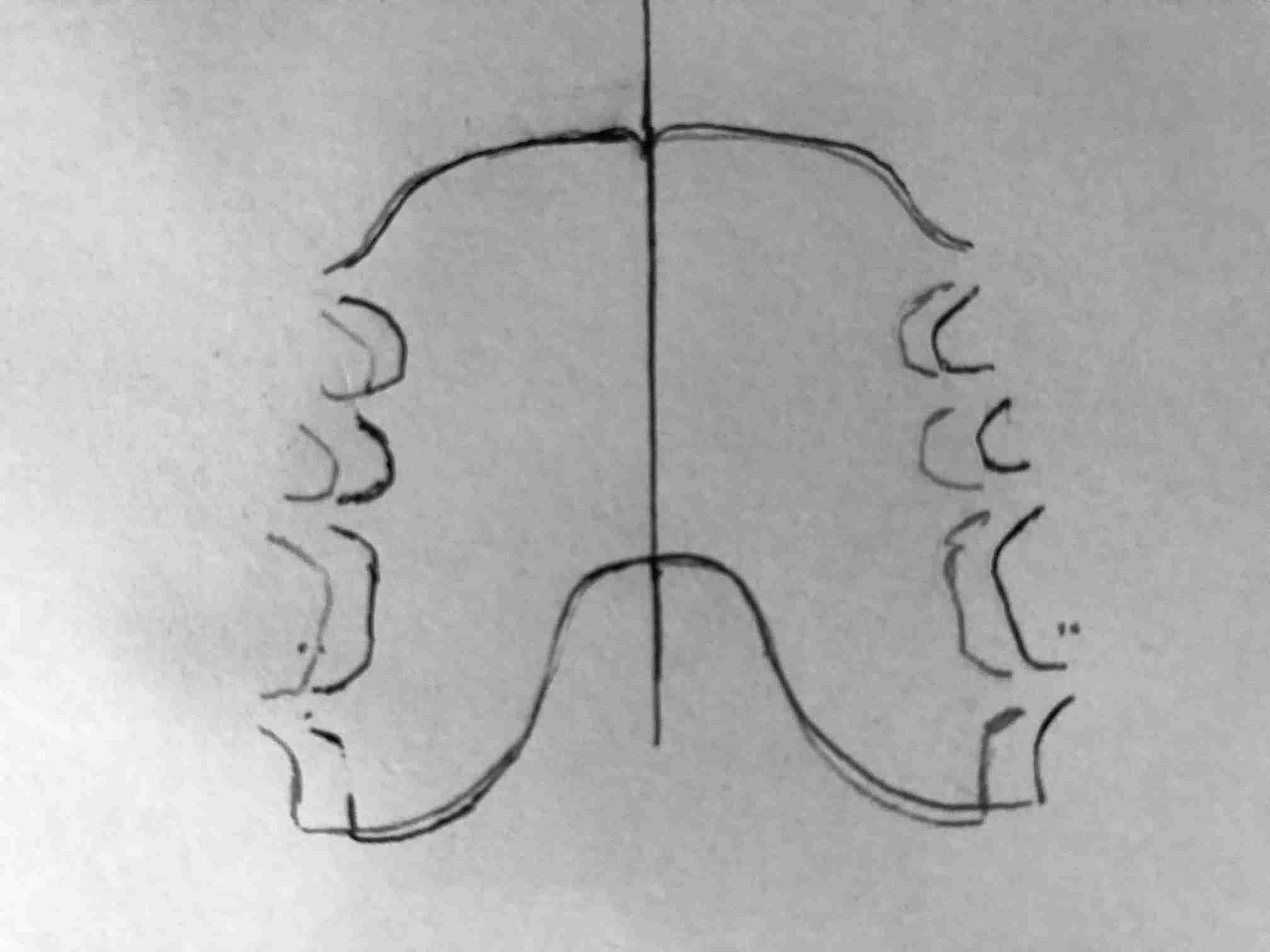
I traced my expander onto a piece of paper and then mirrored the image to show the asymmetry of my maxillary arch. I just drew a line down the middle but there is actually now a separation of almost 3mm. The darker line is the real shape and the lighter line is flipped horizontally. You can see how I filed down the back of the expander to accommodate my torus palatinus. My anterior teeth are relatively symmetrical from one upper canine to the other. However, I've mentioned before how my right side is more curved out and U or "roman arch" shaped, and my left side is more straight back and V or "gothic arch" shaped. You can see this in the outline. The lingual edge of my right first molar is about 4mm farther from the midline than the lingual edge of my right canine, whereas the lingual edge of my left first molar is only about 1mm farther from the midline than the lingual edge of my left canine. In other words, my right first molar is about 3mm farther from the midline than my left first molar. The right bicuspids are also farther from the midline than the left bicuspids by about a couple millimeters. If my total intermolar width is currently almost 37mm, about 20mm of that width is on the right half of my mouth and only about 17mm of that width is on the left half of my mouth. What you can't see in the outline, is that this results in a steeper slope on the left half of my expander than the right up into the vault of my palate.
So I am beginning to wonder if there are any adjustments I could make to the acrylic of my expander to improve the symmetry of my arch. Ideally, I would like to make the left side curve out farther from the midline like the right rather than making the right side narrower. However, I can't add acrylic; I can only take it away by filing it off. Maybe I will expand as far as I can, and then allow targeted areas to regress. Soon I will need to file down much of the acrylic behind my anterior teeth to prevent further separation of my canines and development of a midline diastema. So by the time I reach my maximum expansion, the acrylic will only remain behind the bicuspids and the first molars. From there, I could file down a little acrylic behind the left bicuspids to allow them to regress closer to the midline than the left first molar, making that side more curved. This would also require filing down some of the acrylic against the palate to make the slope less steep on the left. Then I could file down a couple milimeters of acrylic from behind the bicuspids and first molar on the right so that they would be closer to the same distance from the midline as the left. I would make these adjustments incrementally, fractions of a milimeter at a time, every few days. Unfortunately, this would cause me to lose a significant amount of my overall expansion, but it might be worth it to gain improved symmetry. I will have to see how much expansion I am able to achieve overall, but for arguments sake, let's say I reach a total of 8mm expansion. This would put my intermolar width at 42mm. If I let my right first molar regress by 2mm, I would still be netting 6mm intermolar width to finish with 40mm and improved symmetry. Anyway, it's something to consider. It's possible that some of the asymmetry will correct itself if the left side shifts more than the right on its own.
Today is 3 days since the last time I turned the expander screw. It's still feeling relatively tight, but after I have worn it for a few hours this evening, I suspect I will be ready to advance.


How did you go about making your palate expander? I'm working on a mold of my teeth with some silicone and ceramic, but making the actual expander seems like it'll be trickier. I need something to attach and sort of pulling device to though and this seems like the best bet.
Also, does anyone have that pdf for self ncr? I absolutely can't find it anywhere
How did you go about making your palate expander? I'm working on a mold of my teeth with some silicone and ceramic, but making the actual expander seems like it'll be trickier. I need something to attach and sort of pulling device to though and this seems like the best bet.
Also, does anyone have that pdf for self ncr? I absolutely can't find it anywhere
I didn't make my expander. I purchased it. The process of pouring the acrylic into the dental cast with the screw mechanism and the wires in place is beyond my level of expertise. If you join the forum, I might be able to send you a private message with the self-ncr guide attached.
I turned my expander screw for the 12th time last night, reaching a total of 3mm in 32 days. My intermolar width is now 37mm. This is the same intermolar width that I measured on my retainer from adolescent orthodontics, and it feels good to have reversed that narrowing. My teeth don't look like they have tipped outward, so I think most (if not all) of the increased width is skeletal. I have to say that there aren't any drastic changes in my appearance or breathing. I guess it makes sense that only 1-1/2mm expansion on both sides of my mouth wouldn't dramatically change my smile. I think there might be some subtle changes, including minor improvements to symmetry. A few months ago, I recorded baseline measurements of the deviation of my dental midline and the bridge of my nose from my interpupillary midline ( /community/community/main-forum/my-routine/#post-378 ). My dental midline was 2mm right of center, and the bridge of my nose was 4mm left of center. My occlusal plane was canted about 3 degrees higher on my left side. Obviously there is the potential for significant measurement error when we are dealing with increments this small. That being said, it looks like the bridge of my nose is now about 3mm left of center and my dental midline is about 1mm right of center, although the cant looks roughly unchanged and the angle of my central incisors places the top of the teeth farther from the true midline than at the incisal edge.
Total Expansion: 3mm (12 turns in 32 days)

........My teeth don't look like they have tipped outward, so I think most (if not all) of the increased width is skeletal........
By skeletal you mean expansion in the suture vs dental movement in the alveolar ridge?
my story: http://www.aljabri.com/blog/my-story/
By skeletal movement, I am referring to separation of the midpalatal suture, but potentially also limited bone remodeling (resorption and deposition) that some sources suggest can occur on the basilar bone of the alveolar process (perhaps changing the shape of the palate to be less vaulted). This is in contrast to dental movement which involves resorption and deposition of bone within the alveoli surrounding the roots of the teeth (as seen below). Since the mandible doesn't have a suture, there is only the potential for dental uprighting of lingually-tipped teeth, or the much slower process of remodeling the basal bone.

My Frolov breathing device arrived a few days ago, and I completed a ten minute session last night and the night before. To be clear, I'm not expecting this to have any direct effect on my facial form. Instead, I am hoping for better general vitality through improved tissue oxygenation. I have issues with stress/anxiety that make me receptive to the Buteyko mindset that I am chronically hyperventilated and hypocapnic. As I suspected, the instruction manual that came with the device is written entirely in Russian. I found an English language copy online ( http://www.avivahealth.com/files/pdfs/frolov-manual.pdf ). Their recommendations for the introductory period are slightly different than what I read from other sources, but I am following the manual's instructions including the duration of the sessions and the volume of water. The breathing pattern is supposed to be 2 seconds of inspiration and then 6 to 10 seconds of expiration, increasing the length of expiration, the session length, and the volume of water as you get acclimated to the exercise over weeks to months. I debated ordering a book with more details, but I think I will stick with the basic instructions for now. I'm not really sure what effect it is having after the first couple sessions. It's kind of calming. I've felt slightly lightheaded afterward. I have struggled to keep my inspiration to just 2 seconds, and this makes me suspect that I have been breathing too deeply and I'm not supposed to fully fill my lungs.
So apparently I had some relapse during the day yesterday, because I struggled to fit the expander in my mouth when I tried to put it in last night and once in place it was causing pain along the middle of my palate and at the back left corner where the edge of the acrylic presses against the alveolar ridge. I decided to back the expander off by one turn to avoid injury and help me get to sleep. It still feels pretty tight, but not as painful. This is strange because it was a couple days after I had turned the screw with no issues in the days prior. I don't know if my oral posture was particularly bad during the day yesterday, or what could have cause this relapse. I typically wear the expander for an hour here or there sometime during the course of the day before starting my overnight hours sometime in the evening. I didn't have time to get any hours during the day yesterday because of family activities, but I don't think missing one or two hours should have made such a difference, and I've missed the daytime hour(s) before without an issue. Based on my every-3-days schedule, I should be turning the screw this evening, but I don't think that will happen. I'll probably wait a couple days before turning the screw back to where it was, and I might need to change to turning every 4 or 5 days from here forward.
Note: This is not an April Fool's joke.
Do you think the breathing device caused the relapse? In another thread people were talking about how drinking through a straw might be bad for palate width and the breathing device seems somewhat similar.
Anything else you did differently?
Do you think the breathing device caused the relapse? In another thread people were talking about how drinking through a straw might be bad for palate width and the breathing device seems somewhat similar.
Anything else you did differently?
Yeah I debated if the mouthpiece of the Frolov device could have contributed to the relapse. I'm the one in the other thread who said I avoid drinking straws. Considering that I have had the expander in place when I have done the breathing sessions and that the relapse seemed to happen during the day before I put the expander in last night and before my breathing exercises that evening, I doubt that is the cause, but it is definitely possible. I think it is more likely that I could have relapse of upward and forward movement than the transverse expansion since I keep the expander in place, but I don't have my tongue pressing up against the expander during the 10 minute session like I typically do. I mentioned earlier that I want to purchase a CPAP hose with a nose attachment to use with the device rather than the mouthpiece. Maybe I will put the breathing exercises on hold until then. The only other thing that I can think of that I did differently yesterday was skipping the hour or two of daytime expander use because I was busy with family. It was a little demoralizing to turn the screw backwards. Thanks for helping me think through what could have happened!
It sounds like it isn't the Frolov device then. If you are wearing the expander during it, and especially if you noticed the relapse before you even did it, then I would say it's probably not contributing.
It might simply be because you were unable to wear the device during the day then, but perhaps with a small caveat. Did you do chewing on the day you had slight relapse? I ask because I think there is a chance that rotary chewing could push the upper teeth in the wrong direction for expansion just based on the way the lower jaw moves, and because you said you have started being diligent in rotary chewing just recently. Maybe a person that is expanding and rotary chewing needs to do more retention than normal to counterbalance inward forces generated by that chewing technique. Especially if your routine is normally to chew and then to put the expander in. Just a guess.
And yeah having to turn the screw backwards isn't ideal, but just keep at it, we're all learning and moving forward together. Most doctors don't even believe what we are doing is possible, and even the ones that do think that the expander has to be in all day and all night long. We are on the cutting edge here, so some slip ups are normal. Just have to learn and adapt.
I'm still not ruling out the Frolov device as the cause. The recession seemed to happen before I did the breathing exercises that day, but I had done a ten minute session on each of the two days prior. I was wearing my expander during all of the sessions, but I guess there's the chance that breathing through my mouth during the session, made me more prone to unconsciously breathe through my mouth during the rest of the day without the expander in place. I didn't use the Frolov device last night, and I think I am going to wait to use it consistently until I can get a nasal hose.
That being said, I think I have figured out the problem and it isn't the Frolove device. I think filing down some of the acrylic on the anterior part of the left side has concentrated the pressure from expander over the back part above the first molar where I was feeling pain. I only made a minor adjustment to an area behind my left canine that seemed to be a pressure point that day, and when I tried it on immediately after the adjustment it seemed fine, but it didn't want to fit right later that evening. If I put a hand mirror under my teeth and then look in the bathroom mirror, it is clear that the expander is now sitting slightly left of center (maybe less than 1mm). In other words, more of the gap between the two halves of the expander is behind my left central incisor than the right. I'm not sure how long it has been like that. It's a positive development because my left half is the narrower side. So I want more expansion in the back on the left side, but not if it is going to hinder my progress overall. I haven't decided if I should file down any of the acrylic above my left first molar to try and relieve that pressure, or if I should just wait a few days without expanding and hope that my mouth adjusts.
I decided to significantly file back the expander acrylic behind my front six teeth. The gaps between my front teeth are just starting to become noticeable, so I wanted to remove the direct force against my canines. I also thought that the pain I was feeling on the back left side could have been from a misalignment created by a minor adjustment I made to the acrylic in the front, so removing that area might balance out the force. Curiously the slight gaps between my central and lateral incisors are more visible than the midline gap between my central incisors (although the contacts between all of the front teeth have become less tight). If my expansion was really from separation of the midpalatal suture, I would have expected the midline diastema to be the most significant, but all of the gaps are roughly similar, and the central incisors started out with a minor overlap, so I'm not too alarmed. I wonder how the front teeth will shift without the acrylic behind them holding them in place. I didn't remove as much of the front structure of the expander as TGW did. I just filed it back far enough to remove any contact with the front teeth, so there is still a convex semicircle against the front of my palate. I left the labial bow in place for stability and to hold back some of the pressure from the lips. I will probably remove more acrylic soon, maybe even later today, so that the front of the expander curves in toward the screw mechanism. This would provide more tongue space, but I am a little worried that concentrating all of the exander pressure on the back section will cause discomfort.
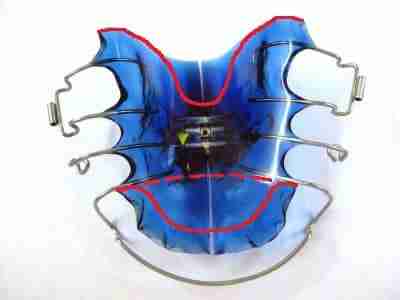
I also wanted to leave more surface area for the extra-oral traction to press against the palate, but I am beginning to feel like most of the tension is loaded onto the teeth from where the elastics attach to the wires. Originally I figured the maxilla was getting enough of the protractive force even if it was mostly conveyed through the teeth, but after seeing how the FAGGA system seems to result in almost exclusively dental movement, and the lack of a significant change in Plato's profile pictures from his facepulling, I am beginning to rethink my extra-oral traction strategy. I want to go back and read about that guy who made a DIY facepulling mouthpiece without any connection to the teeth. Here is his website ( https://www.facepulling.com/ ). I think I remember some posts about it on the BTM forum. There haven't been any recent updates or details about what material he used to make the pink framework for the mouthpiece. I'm guessing maybe it is the thermoplastic sometimes used for partial dentures and fake costume teeth.
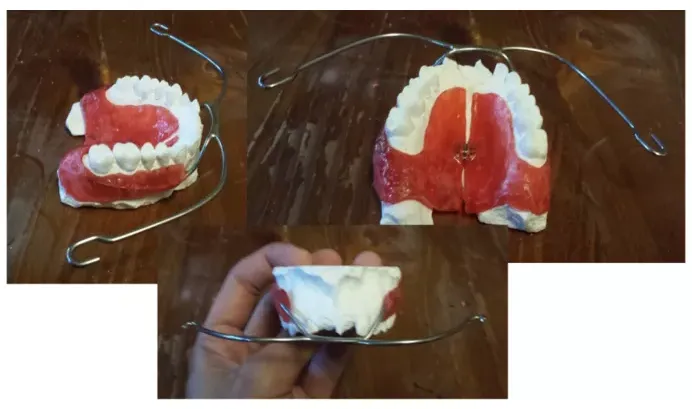

I have some sores on my alveolar ridge above my left first molar and second bicuspid, where it felt like the pressure was concentrated. I filed down a little of the acrylic in that area and it feels better now. I find after I make an adjustment that I have to leave the expander in my mouth for a few minutes before I can tell if the issue is resolved. I think I am going to have to wait to start expanding again until I know I have the acrylic adjusted correctly so that the pressure is distributed evenly.
I have decided to uncouple my extra-oral traction from my palate expansion. Originally I thought they might have a synergistic effect, but as I mentioned in the post above, the traction seems to be loaded on the teeth rather than the bone. It feels entirely different for me to put my thumbs against the expander on my palate and pull up and forward than it does to pull up and forward on the wires that have to pass between the teeth to transfer the force to the acrylic. Maybe after I complete my palate expansion, I will develop a DIY mouthpiece that engages the palate. Until then I think correct oral posture will be most effective at shifting my maxilla up and forward. This is already easier with the minimal expansion I have achieved so far. Hopefully I will be able to get some more width from my expander before it becomes unworkable.
The sore on the alveolar ridge above my upper left first molar is still visible, but it isn't painful any more. I will wait at least another couple of days before resuming my expander routine. I've put the expander in place for a few seconds over the past few days and it is clear I have had some regression, but definitely less than a millimeter. I have been trying to take advantage of my improved oral posture with my increased intermolar width to prevent relapse. I think I have done a little better with mewing during sleep, but probably don't keep my posterior 1/3 of the tongue engaged. When I resume my routine, I might phase in increasing hours per day and observe if I have any sores returning before wearing the expander continuously through the night.
I wound my expander back down to 2mm separation and have worn it for a few hours today. After three days off, the ulcer on my alveolar ridge above my left first molar is still visible but doesn't hurt even with the expander in place. The expander doesn't feel tight so I think I have regressed less than 1mm. I plan to increase the number of hours I wear the expander over the next few days and watch to make sure the ulcer is still healing. Sometime next week I'll begin wearing the expander through the night again and then I will resume advancing the screw.
I turned my expander to 2-1/4mm this morning and have been wearing it on-and-off throughout the day. It feels a little tighter, but there's still no pain at the spot where I had the ulcer. That spot still looks red but doesn't have the central white spot that it had before. I'm going to try to get in a few more hours during the day today and I might even wear it for a few hours during sleep and then set my alarm to take it out. I am thinking about it like a bed sore pressure ulcer where they try to rotate or get patients up out of bed to restore blood circulation. Once the sore looks totally healed I'll go back to wearing the expander through the night. I will see how tight it feels in 3-5 days and decided if I am ready to turn the screw again.
Just when I thought I was getting back to my routine, this morning a wire snapped on my expander. I was removing the expander by pressing down with my fingers on the wires that wrap around the first molars when the right side snapped close to where it joins the acrylic between my first molar and second bicuspid. The wire still connects to the acrylic behind the first molar so it hasn't fallen off. I had already decided that I wasn't going to use the expander for face pulling anymore, so I guess it doesn't matter that the headgear tube is now useless. If I can keep the wire lined up, it doesn't interfere with using the expander, but occasionally it will now pop out of place between the teeth. I have to press on the labial bow or the wire between the bicuspids to remove the expander. I debated emailing customer service, but they haven't been very responsive in the past.
Do you think that facepulling using the wire in the past was what caused it to eventually snap?
Do you think that facepulling using the wire in the past was what caused it to eventually snap?
I guess it's possible, but the location where it snapped, entering the acrylic on the lingual side of the tooth, doesn't seem like it would bear much of the tension from the facebow pulling forward/up. The wire snapped when I was pressing down on the headgear tube to take it out and I suspect that might have been the repeated motion that weakened the wire. The force of the mandibular teeth pressing up on the wire could also have contributed.
I slept through most of last night with my expander in place, and the sore on my alveolar ridge still seems to be healing fine. It has been 2 days since I turned the expander to 2-1/4mm and it was feeling pretty lax in my mouth so I decided to turn the screw again to 2-1/2mm. It still doesn't feel very tight, but I am going to try to be patient and wait to turn the screw again.
I've been using the expander throughout the night and a few hours during the day, and the ulcer is essentially healed. I decided to turn the screw again today to 2-3/4mm. It's been 4 days since my last turn. I will be back to the separation before my setback on the next turn.
Do you think that facepulling using the wire in the past was what caused it to eventually snap?
I guess it's possible, but the location where it snapped, entering the acrylic on the lingual side of the tooth, doesn't seem like it would bear much of the tension from the facebow pulling forward/up. The wire snapped when I was pressing down on the headgear tube to take it out and I suspect that might have been the repeated motion that weakened the wire. The force of the mandibular teeth pressing up on the wire could also have contributed.
That's interesting. Sounds like I should be careful while removing mine so that it doesn't snap on me. I don't have the headgear tubes on mine, and it looks like those might put more force onto the metal wires, but still..
It's good to hear you're getting back on track after the setback too. Have you decided yet how far you want to go? I haven't started expanding yet but I will soon.
Posted by: Apollo
Dr. Mew's note in the comments of his video on intermolar width is interesting:
"Important note; modern adults (or anyone over the age of 9) tend to have a molar width of 29 to 34mm. Anyone with 35 to 38mm will find it much easier but still very hard to make progressive improvements without any formal therapy, and as a rule of thumb when I finish therapy any one who can maintain 38mm or more without retainers tends to maintain good alignment almost indefinitely, with a minimal effort. During childrens treatment expand to 42mm for a girl and 44mm for a boy, clearly some of this is tipping of the molars. Ancient man had an inter-molar width in the high 40's to low 50's."
Based on this quote, as a minimum, I want to settle out at 38mm or above. So factoring in some regression and maybe some teeth tipping, I would like to reach at least 40mm. Anecdotes from people like EddieMoney who have expanded their palate through oral posture alone support the idea that if I can use the expander to get to that level, my tongue could take over and make progress from there.
Posted by: EddieMoney
So I just measured my first intermolar post braces and it was 38mm. That was when I was 22 and braces came off. Fast forward to now and I am 31. I started this 6 months ago. I have increased my intermolar to 44 mm.
This means that I want at least another 3mm of expansion from the appliance. In other words, I am about halfway to my goal. Is this feasible? I don't know. After my ulcer setback, I'm not sure how much farther I will be able to turn the screw while keeping the acrylic fitting my alveolar ridge. I'm also concerned that the snapped wire could become problematic. If I somehow get to 40mm and I'm not seeing side effects like teeth tipping or gum recession, I'll press ahead. I think the screw will only let me turn maybe 10mm maximum. I might stop at 8mm just to be safe. This would put me at 42mm. I'm a little worried that if I kept turning the screw the two halves of the expander might come apart, and I want to be able to keep using it as a retainer to cement my expansion for several months.
38-40mm of solidified molar width does seem like a good goal to shoot for based on what we know.
I'm not sure how much regression will actually happen in our cases based on the fact that we are mewing and using the expander as a retainer. Most of the cases I read online suggest doing overexpansion as a way to compensate for the tipping of the upper teeth, which is something that tends to reverse itself over time because of the fact that it is simply a dental change. If you are getting true expansion and minimal tipping then regression might not be a big deal as long as you keep good tongue posture and keep using the expander until the bone finishes growing in at the suture. Although your anecdote about equal spacing between all teeth and not just between the central incisors may point at something else going on.
Also I'm fairly confident that the expander we have maxes out at 8mm of expansion. I've read that this is standard in a few places, and I just measured the screw in my expander (it's clear acrylic) and it is 16mm long.. and if you take into account the fact that both sides of the expander have to travel on this same screw, you can divide the length by 2 to see how much total expansion the device can do, so 8mm.
Being halfway to your goal is a good milestone, but the fact that the acrylic is giving your skin issues is bothersome. Do you think you could put down a very thin layer of wax or something? There has to be something you can do...
Being halfway to your goal is a good milestone, but the fact that the acrylic is giving your skin issues is bothersome. Do you think you could put down a very thin layer of wax or something? There has to be something you can do...
I thought about trying denture adhesive like poligrip to act as a buffer that might even out the pressure points between the acrylic and my mucosa. However, I was able to file down the area that was causing the ulcer and I'm not currently having any issues with distribution of the force across my alveolar ridge. I'm sure I will encounter new fit issues as I continue to expand. I have noticed that the impression in my gums when I remove the expander in the morning after wearing it all night now seems to be more distinct on my right side, but it doesn't seem to be causing any irritation.
Anyone following along will remember that I purchased a Frolov breathing device, hoping that it will help enhance my parasympathetic tone. The main fault I had with the device is that it uses a mouthpiece despite the Buteyko method's mandate of exclusive nasal breathing.

After trying a couple sessions with the mouthpiece, I ordered a nasal cpap hose as a replacement.
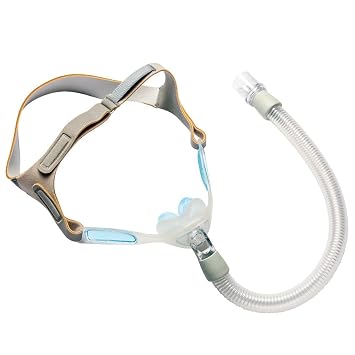
The hose is a wider diameter than the one that came with the kit, so it doesn't fit perfectly on the lid of the Frolov cylinder. I made a quick fix by wrapping a rubber band around the nozzle of the lid and sliding the end of the hose down over the rubber band. It seemed to achieve a good seal. I might purchase some o-rings or come up with some other more-permanent way to connect the hose. I also noticed that the cpap hose has several little ventilation holes on the swivel adapter that connects the hose to the nosepiece. I covered these with a piece of tape. The Frolov device is intended to increase the respiratory dead space, but breathing through the nose has more dead space than breathing through the mouth, and the bigger hose also adds to the volume of dead space. For this reason, I decided to use the minimum amount of water for introductory sessions, and I stopped my session after 8 minutes rather than 10. I used the fabric harness around my head, but I also held the nosepiece with my hand to ensure a good seal between my nostrils and the "nasal pillows." I enjoyed this session more than the two other sessions I had tried with the mouthpiece. There seemed to be more of a humidifying effect on the air I was breathing, with condensation visible in the clear tube. I could also keep my tongue pressing up against my expander throughout the session and focus on my head posture. It is more difficult to rinse out the new hose afterward to keep it clean, but I think it is going to be worth the trouble. I will try to follow the manual's instructions for daily sessions of increasing intensity, and report back if I feel any positive effects on my energy or mental clarity.
8 min, 18ml, 10s
Also I'm fairly confident that the expander we have maxes out at 8mm of expansion. I've read that this is standard in a few places, and I just measured the screw in my expander (it's clear acrylic) and it is 16mm long.. and if you take into account the fact that both sides of the expander have to travel on this same screw, you can divide the length by 2 to see how much total expansion the device can do, so 8mm.
The color of my acrylic makes it a little difficult to see through and measure the total length of the screw, but mine looks to be about 14mm long. Factoring in the width of both 2mm brackets that move along the screw (i.e. the "body" of the mechanism in the picture below), I guessed 10mm might be the maximum expansion. Now that I think of it, I should probably also subtract the 2mm width of the center keyhole piece which would bring me to the 8mm you quoted. Maybe yours is different since you have the y-plate, but I'm not really following your logic for why you would divide the length in half. I hope the guide pins on either side of the screw will stop it from expanding too far and come apart. However, for some reason I've noticed that the guide pins on my mechanism are stuck in place on the right side so they are getting close to the body/bracket on the left side. Maybe once it reaches the end on the left, it will start shifting on the right. If a maximum of 8mm expansion is accurate, then 42mm intermolar width is the most I could achieve with this appliance (from my baseline of 34mm). I still suspect that fit issues or other side effects will keep me from expanding that far. I will be happy if I can get to 40mm.

I turned my screw again today (3 days after my last turn). I am now back to 3mm total expansion. Hopefully I can continue on from here without more complications.
I did my second Frolov session with the nasal hose last night. The best time is supposed to be evening before bed (a few hours after dinner). I increased the length of the session by 30 seconds, and I added 1ml more water, but I kept the length of inhalation and exhalation the same. According to the manual, the inhalation is always supposed to remain 2-3 seconds, and the exhalation is supposed to be prolonged starting at around 8 seconds and then increasing over several months up to above 30 seconds. I'm still struggling to inhale enough air in the first couple seconds to be able to taper out the exhalation long enough. The inhalation is supposed to be calm, and I don't think I'm supposed to totally fill my lungs, so maybe I just need to get better at pacing my exhalation. I had been counting out the seconds in my head, but I bought a breathing app to help with the pacing. I could only find one app that allows me to totally customize the number of seconds for inhalation and exhalation. It uses a graphic with a circle expanding and then contracting to represent the respiratory cycle, but this is a little ambiguous, and I wish it also had a clock or some other way to count the seconds. I am considering purchasing a book that might give more details about the rationale for the short inhalation and prolonged exhalation, or might recommend ways to adjust the protocol to my own needs. The manual also mentions the optional use of essential oils and warm water. I might try warm water, and maybe add a pinch of sea salt, but I'm going to wait until I get into the basic course of training after this introductory period before I start experimenting.
8-1/2 min, 19ml, 10s
With everything else going on, my chewing exercises have been shorter during the past few days. I need to remember to prioritize chewing to avoid teeth tipping. I still use the vibrating massager for at least a short session most days and it seems to help, especially when the expander feels tight. Curiously, the cracks/pops I hear while using the massager are still always in my right ear regardless where I place the massager on my face. I increased the length of my Frolov session last night by half a minute, but kept the water volume and length of inhalation/exhalation the same. The breathing app was somewhat helpful for pacing, but I also use the timer on my phone to keep track of the length of the session. I found that if I close the breathing app to check the timer, when I go back to the breathing app it has frozen and needs to be restarted to work again. Maybe I'll have to use a separate clock to keep track of when to finish the session.
9min, 19ml, 10s
People like Plato and Dean Howell claim that cranial adjustments can only occur when the body is in a parasympathetic state. The preparatory work during NCR sessions, before the endonasial balloon inflation, is intended to get the body into this relaxed condition so that it doesn't resist the realignment of the sphenoid. I've seen quotes from Howell that are critical of palate expanders because they put the body under stress for too long. This is also Plato's rationale for short facepulling sessions to avoid kicking the body into a sympathetic mode. Obviously I am skeptical of this philosophy since I am using a palate expander for as many hours as possible every day, and I was trying to maximize my extra oral traction hours until I decided too much of that tension was loaded onto my teeth with my current setup. That being said, in my experience, it does feel easier to get my expander to fit comfortably when I am in a relaxed, parasympathetic mindset. One example is pushing the expander against my palate with my tongue during the deep nasal breathing exercises I am doing with the Frolov device. When I started thinking about my breathing exercises in the context of parasympathetic tone and vagal stimulation, I began to explore other strategies to stimulate the vagus nerve. I'm intrigued by ideas like om chanting and cold exposure, but I'm confused by one strategy. I've seen several sources suggest that fasting stimulates the vagus, but this seems to contradict the "rest and digest" mode, and fasting is supposed to raise cortisol levels and induce stress. I am not strict about intermittent fasting, but I often only eat during about 8 hours of the day with two meals. I could further restrict my hours, if fasting for 18+ hours of the day would be helpful, or maybe I should spread out my eating to avoid the stress of fasting.
9-1/2min, 19ml, 10s
I turned my expander screw again today. It has been 3 days since my last turn. I'm now at 3-1/4mm.
I've been doing some research about supplements, so I want to use this post to help me reevaluate what I am taking. I've mentioned before that I am taking a multivitamin, magnesium, D3, K2, and fish oil. I think I am going to stop taking the multivitamin. There doesn't seem to be a lot of research supporting the utility of a multivitamin, and I've read suggestions that the ratio and quality of certain components is often bad. If I do this I need to be more mindful about eating a nutrient-dense diet and consider adding specific supplements according to my needs and goals. I feel relatively confident that I want to continue taking the D3, K2, and magnesium. I was relying on the multivitamin and my diet for vitamin A. I don't think I want to add a vitamin A supplement, but I might need to be more careful about incorporating it in my diet. My understanding is that the beta-carotene in plants is poorly converted into vitamin A. Maybe I should make organ meats a more consistent part of my diet, and maybe I should take cod-liver oil (which has a good balance of vitamin A and D). Most cod-liver oil has been processed in a way that strips out the vitamins and then synthetic vitamins are added back in. There seems to be some controversy about the "fermented" options that retain their natural vitamin levels, and I guess there are also virgin cod liver oil options. Unfortunately there seems to be a lot of ambiguity on this topic and all of the options are expensive with shipping costs. I'll hold off on this for now. B-12, folate, zinc, and copper are components of the multivitamin that I might want to think about supplementing or finding consistent dietary sources. I probably get enough vitamin C from food sources, but I could easily take a supplement without worrying about excess. Iodine is another ingredient of the multivitamin that I get fairly regularly from eating kelp granules. I'm going to continue taking my fish oil, but I've been reading some sources that tell me it is often low potency, contaminated, or oxidized, and that krill oil is better. The fish oil I am taking sometimes gives me diarrhea, especially if I take it on the same day that I eat salmon or other fatty fish. Although krill oil is more expensive, I think I will try it to see if it is friendlier on my system. Curcumin is something I've considered supplementing, but I get a lot of turmeric in my diet. Some other vitamins I'm currently looking at are L-tyrosine and PQQ. I'll keep researching this topic, but I'm going to quit the multivitamin starting tomorrow.
I discontinued my multivitamin today but I am still researching if I want to replace it with any specific supplements. I am continuing to take magnesium, K2, D3, and fish oil. I discussed some of these considerations in my last post. The high-vitamin fermented cod liver oil that I mentioned as a source for vitamin A and D is produced by Green Pastures. The best price I can find (including shipping) is around $46 for a 237ml bottle. The dosing on the Weston Price Foundation website recommends 1 teaspoon per day for most adults. There are just under 5ml in a teaspoon, so each bottle would last about 48 days. That means I would be spending almost a dollar a day. Radiant Life also sells the Green Pastures fermented cod liver oil, and they recommend 1/2-1 tsp per day for adults. So I could start with 1 tsp and then reduce the dose to 1/2 except during periods of sickness or acute stress when I would increase the dosage back to 1 tsp. This is still about 50 cents per day. Because the cod liver oil also contains omega 3s, I could reduce my fish oil or krill oil dose to one softgel per day, which would recoup a little of the expense. So I'm thinking I would probably make my cod liver oil maintenance dose 1/2 tsp per day and then try to get additional dietary vitamin A from organ meats, and consider continuing my D3 vitamin daily or every other day, especially during the winter months when I get less sun exposure. I am currently taking 2000 IUs of vitamin D3 per day. The fermented cod liver oil is not standardized, but it is estimated to contain roughly 1,000-2,000 IUs vitamin D per tsp.
10min, 20ml, 10sec
I am seeing just a slight buccal tipping of my right first bicuspid. I mentioned that I've been slacking a little on my chewing exercises recently as I have been trying to fit in more daytime expander hours. For the past couple days I've done my best to bring gum with me and chew whenever I can and I will try to focus on this better going forward to prevent more tipping. I think another factor is that I removed the acrylic from behind my canines and incisors, so the bicuspid is getting more direct transverse force than the canine in front of it, and my right side is less curved than the left so the first bicuspid is almost as far from the midline as the first molar. Tomorrow will be the end of my first introductory week on the Frolov protocol. After that I will start to incrementally increase the duration of the sessions, the volume of water, and the length of exhalation.
10min, 20ml, 10sec
It's been three days since I turned the expander screw, but it still feels pretty tight, so I will probably wait another day or two before turning the screw again. I completed the first introductory week using the Frolov breathing device. I'm beginning to feel like I could prolong my exhalation longer than my current 8 seconds. Inhalation is supposed to remain constant at 2-3 seconds. It's hard to say if I feel ready to increase the duration of the session above 10 min, or add more water volume resistance. Here is what the manual says about building up the intensity of the exercises after the first week:
Usually, during the first week the organism adjusts to the new respiratory conditions and then, starting from the second week of training, the parameters of training can be gradually increased. In the process of training, the water volume in the simulator inhaler can be increased by 1 ml every 3-4 days, PRA – by 1 second every 2-3 days, and the length of the training session – by 1 minute every 2-3 days. A more gradual increasing of training factors (PRA, water volume in the simulator inhaler and the time of the training session) is possible too. For example, if respiration with 20 ml of water in the simulator inhaler causes complicated breathing or strong resistance to breathing, you should not increase the water volume. Then, if after 3-5 days of training this water volume does not cause the sensation of complicated breathing, you can increase the water volume by 1 ml. If you breathe for 20 minutes and at the end of the session there is a sense of tiredness or slight fatigue from the training that means 20 minutes are enough for you. If there is no sense of tiredness, you can make the time of training 1 minute longer in 1 or 2 days. Also, control PRA. If, for example, PRA is 15 seconds, and you can breathe with this PRA all right during the whole training session, you can increase PRA by 1 second in 2-3 days. The length of the respiratory act is gradually increased in the course of training and with the lapse of time the length of one uninterrupted exhalation can be 25-30 seconds, and for healthy trained people – 40-60 or more seconds.
So I guess tonight, I should try exhaling for 9 seconds, with 21ml of water resistance, for an 11 minute session. I'll watch to see if it feels difficult or tiring.
10min, 20ml, 10sec
Today is four days since I last turned the expander screw. It is feeling a little less snug, but I think I might wait until tomorrow to turn the screw again. I got some good achy sensations along the middle of my palate last night. Sometimes I feel it more along the alveolar ridge, but I think it's a good sign that the suture might be separating when I feel it along the midline. I noticed that the impression the expander leaves in my gums has been more pronounced on the left side for the past few days since the last turn, especially the anterior border near the middle. My left side is more vaulted, so the acrylic is thicker. I probably need to file some off of the top, but I've been hesitating out of concern that I will throw off the fit again and cause another ulcer. Before I turn the screw again, I think I need to make at least some minor adjustments. I increased the intensity of my Frolov session last night. The extra second of exhalation and the resistance from the extra 1ml of water didn't seem challenging, but I noticed the session's extra minute. If tolerable, I am supposed to increase the water volume again in 2-3 more days, and the length of exhalation and session duration in 1-2 more days. So tonight I repeat last night's levels.
11min, 21ml, 11sec
My expander felt lax enough by yesterday evening that I decided to go ahead and turn the screw (4 days after the previous turn), but I needed to file down some acrylic off the top on the left side where it was really leaving an impression in my mucosa (to be clear this is an area near the midline that is pushing up into the roof of my mouth, not an area on the sides pushing out against the alveolar ridge). I turned the screw and I am now at 3-1/2mm of expansion. I was probably too conservative in how much acrylic I took off because that same area of the mucosa is still indented several hours after removing the expander this morning. I will try to fine-tune my adjustments today. Often when my expander is tight after turning the screw, I feel the need to remove it from my mouth, restore circulation to the tissue for a minute, and then put it back in place. I can't do this when I have my mouth taped shut, so I fell asleep without mouth taping last night. For my Frolov session this evening, I think I will increase the length of exhalation by 1 second, but keep the water volume and session duration the same.
11min, 21ml, 11sec
I had a bad headache yesterday and couldn't attend to any of my routine. My sleep was disrupted and cut short the night before and I think this is what caused the headache. The thought of having the force of the expander added onto my headache was unbearable, and I just wanted to sleep it off rather than taking time for breathing exercises, chewing, etc. This morning, the expander felt a little too tight, so I turned the screw back one turn to 3-1/4mm. After a couple hours it is fitting fine now, and I might advance it again by this evening. If I get around to my breathing exercises tonight, I will keep the same intensity as a couple days ago rather than lengthening the exhalation as I had planned.
Also I'm fairly confident that the expander we have maxes out at 8mm of expansion. I've read that this is standard in a few places, and I just measured the screw in my expander (it's clear acrylic) and it is 16mm long.. and if you take into account the fact that both sides of the expander have to travel on this same screw, you can divide the length by 2 to see how much total expansion the device can do, so 8mm.
Maybe yours is different since you have the y-plate, but I'm not really following your logic for why you would divide the length in half.
You're right, my derivation method was wrong. What actually makes sense is to look at one half of the expander and try your best to measure how far it can travel on the screw before it would reach the end, and then multiply that by 2. When I do that on my device I get between 8-11mm depending on how far on the screw it can go before it stops (11mm would put it right before falling off, if it can get there).
I injured myself at work a couple weeks ago. Recovery has taken precedence over my routine. My body posture has deteriorated from the pain. I've largely neglected my chewing and breathing exercises and my mouth taping. I've continued to use my expander every night during sleep, but I've gotten fewer daytime hours, and I've only turned the screw twice. I'm currently at 3-3/4mm. I am beginning to worry that the first bicuspids are shifting and tipping too far to the side from the canines in front of them. Here's one of the results pictures from Dr. Lauson that I posted in the success stories thread, which shows prominent first bicuspids similar to mine.

I really want the second bicuspids and first molars to move farther than the first bicuspids to make my arch more curved. I've toyed with the idea of removing all of the acrylic from behind the first bicuspids so that it would only be pushing on the alveolar ridge above the second bicuspids and the first molars. The acrylic seems to be pressing hardest into the mucosa above my left first bicuspid. For now I have just been filing down the height of the acrylic behind the first bicuspids to help the expander seat correctly.
I advanced the expander screw today to 4mm. I'm not sure how many days it has been since the last turn, but I think it might be more than 5, so I decided that I should move forward, even though it still felt a little tight. I feel some orthodontic type pain in my first bicuspids when I first start to chew after removing the expander. Looking at adult palate expander cases like the one I posted above from Dr. Lauson or this one below from Dr. Mew, I think it is relatively normal for the first bicuspids to be pushed out since the expander moves all of the side teeth laterally by the same amount.

Based on the feedback I got in the thread called Expander Adjustment ( /community/community/main-forum/expander-adjustment/ ), I think I will remove the acrylic from behind the first bicuspids soon to encourage a more rounded arch, but I am going to wait for another turn or two because I am worried that concentrating the force to the alveolar ridge above the second bicuspids and first molars might make side effects like pressure ulcers, teeth tipping, or gingival recession more likely.
I've noticed when I put the expander in recently that pressing up with my thumbs against the expander elicits a shifting sound in my right ear. This is the same ear that I sometimes hear cracks or pops when I apply the handheld massager against my maxilla. This is the side that is canted lower, so I hope that some of my asymmetry is correcting itself. I suspect that isolating the force to the posterior teeth might make it easier for the asymmetries in the anterior arch to work themselves out since the relative position of those teeth won't be locked in place by the expander.
The Dr. Mew case I posted above is interesting because of the posterior open bite that the patient developed. I started with a mandibular arch that was wider than my maxillary arch but with lingual tipping of the bottom teeth that prevented a cross bite. I'm not sure if I have achieved any uprigting of the bottom teeth. My upper canines and first bicuspids are now noticeably lateral to the opposing teeth, but the second bicuspids and molars still line up pretty well with the bottom teeth. Once I remove the acrylic from the area of the first bicuspids, it will probably start to move the second bicuspids and molars laterally beyond the mandibular arch. Hopefully the bottom teeth will eventually catch up or at least upright themselves.
What I was trying to explain in the previous post is that my maxillary first bicuspids are getting close to the point where their lingual cusps are almost opposite the buccal edge of the mandibular bicuspids. However the lingual cusps of my maxillary second bicuspids and molars are still close to the center of the bottom teeth. The presentation on adult palate expansion we have been using as a resource ( https://www.aaoinfo.org/system/files/media/documents/Handleman%20--%20Point%3B%20The%20Case%20for%20Nonsurgical%20Expansion.pdf ) includes the following advice:
Continue expansion until the palatal cusps of the maxillary molars or premolars are slightly in occlusion with the buccal surfaces of the mandibular teeth.
So considering that is my target, I think it makes sense to soon remove the acrylic from behind the first bicuspids and then continue expanding until the second bicuspids and first molars reach that stage.
Since I completed 4mm (16 turns) of expansion, I decided it is time to take stock of the changes I have observed so far. I've mentioned some of these along the way ( /community/community/main-forum/my-routine/paged/5/#post-1807 ), but now is a good milestone to list them all together. I haven't experienced the kind of life-changing results that some people have reported from using a removable palate expander. I guess I also haven't advanced as far as many of those people yet, so maybe the more dramatic effects are still to come. I have noticed:
- The bridge of my nose is still significantly deviated, but seems to be closer to my interpupillary midline than it was when I started. I measured the bridge of my nose to be initially 4mm left of center. At 3mm of expansion, I measured the bridge of my nose to be about 2mm left of center. Now, it might be incrementally less than 2mm left of center, but it's hard to say. I used to trim my eyebrows so that the space between them was centered somewhere between the midline of my nose and the midline of my eyes to camouflage the deviation. Now I've started trimming my eyebrows to match the midline of my eyes, and it looks better.
- My dental midline was initially 2mm right of center, now it appears to be less than 1mm right of center, but my occlusal cant angles the top of my incisors farther from the true midline.
- My occlusal plane was initially canted about 3 degrees higher on my left side. This hasn't significantly improved, but there might be some minor change. The flaring of my right first bicuspid seems to help level the occlusal plane but I suspect this is a dental rather than a skeletal change, whereas the canine (which no longer has the pressure of the expander on it and isn't tilted) still seems to be canted by approximately the same degree as my baseline.
- Changes to intraoral photography are most obvious around the first bicuspids, and much of this seems to be dental tipping. The contacts between my upper incisors are visibly spaced out from the starting position, but there aren't any obvious diastemas. The initial minor overlap (less than 1mm) of my central incisors is gone, but the right central incisors remains a hair back from the left.
- I think my torus palatinus looks about the same, but maybe the roof of my mouth around the torus has flattened out slightly closer to its level.
- I still have dark circles under my eyes, but I think they might be slightly smaller.
- I've gained a little weight in the past few months, which makes it harder to evaluate if my zygomas or cheek hollows are more defined. Maybe?
- I recently injured my back, so my overall posture has acutely deteriorated.
- I haven't really felt any changes in energy level, breathing, mood, etc.
- It is definitely easier to practice correct oral posture with my tongue firmly seated in the roof of my mouth.
I had to take the expander out of my mouth and reinsert it several times to get comfortable last night before falling asleep, and when I woke up this morning, it still felt tight and my mucosa was a little irritated. I started wondering if I should back the screw off by one turn. Looking at the key hole, I found it had somehow advanced itself by less than a full turn. The hole was not in the position it would be from making a full turn with the key. I measured the separation with a ruler and it was clearly more than 4mm, closer to 4-1/4mm. I backed it off all the way to 3-3/4mm and it felt relatively loose, so I turned it to 4mm where it should have been. It still feels a little tight, but much less uncomfortable than where it had somehow worked itself up to. I'm going to let my mucosa rest for a few hours and see how it feels later this afternoon.
It's been 4 days since I last turned the expander screw. It feels relatively loose, like I'm ready to advance again, but I have irritation in my mucosa at the back right corner by my second molar. I filed off a little acrylic in that area and it seemed to help, but the force still seems to be relatively concentrated there and it is leaving a deeper impression in the mucosa on that side when I remove the expander. I might try advancing and see how it feels, but turn the screw back if it is too tight. I think it is harder to tolerate the discomfort at night when I am trying to sleep and can't take breaks, so I might wait until tomorrow morning.
I advanced to 4-1/4mm this morning, and I've gotten a few daytime hours. It doesn't feel especially tight skeletally, but it is still irritating my mucosa and it feels good to pop it out every so often to restore circulation before putting it back in. We'll see how well I can tolerate it tonight. I'd like to get back to mouth taping, but I've been falling asleep without it to be able to remove the expander as needed.
I'm still at 4-1/4mm. I advanced to 4-1/2mm yesterday, but I had to turn it back to 4-1/4mm to get comfortable and fall asleep last night. I'll try turning it ahead again today and see if I can get enough daytime hours to be comfortable through the night. A couple days ago, I woke up to my own snoring with my mouth open, so I know this is still an issue, and I really wish I could go back to mouth taping. Maybe I need to file down more of the acrylic from the top of the expander to allow me to fall asleep without pausing for breaks.
I've noticed when I put the expander in recently that pressing up with my thumbs against the expander elicits a shifting sound in my right ear. This is the same ear that I sometimes hear cracks or pops when I apply the handheld massager against my maxilla. This is the side that is canted lower, so I hope that some of my asymmetry is correcting itself.
I get this shifting sound just from pressing up with my tongue now. I'm also recently hearing a slight shift in my left ear along with the louder shift in my right ear that I have been hearing. I find that I can press up several times in a row and hear the shifting, but eventually it stops. Then if I take a short break, the sound will come back when I press with my tongue again. I suspect there is some play along suture lines, and I hear the sound until the bones reposition to the farthest point they can go and then I stop hearing the shift. If I take a break and reduce the tongue pressure, the bones shift back to a less protruded position and then I'm able to hear the shift as I push them out again. Anyway, at least it sounds like I'm doing something. I haven't tried an endonasal treatment since this shifting sound became frequent and bilateral, and I wonder if it would have a more significant impact with my sutures loosened up. I don't have a lot of extra time right now, but I might try to fit in a session to observe the effect.
I had a bad headache a few days ago, and I've had a slight headache every day since. My sleep schedule has been a little disrupted so I guess that could be the cause, but I am wondering if it could have anything to do with my expansion routine since I've been hearing more significant shifting in my ears recently. With the apparent increase in the mobility of my sutures, it seems like it would be a good time to integrate some extra oral traction. I have ideas for a better strategy to anchor the facepulling that I was doing before deciding that my teeth were bearing the vast majority of the traction from the headgear tubes on my expander. I just don't know when I will find time to build the new system. It could be several months before I have free time to tinker with it, and I might have completed my expansion by then and moved on to stabilization.
Last night was the first time I was able to sleep through the night with the expander screw turned to 4-1/2mm. I've tried advancing it that far on previous days but always had to turn it back to 4-1/4mm to get comfortable enough to sleep. I made some adjustments to the acrylic on the top, front portion of the expander and I think this helped spread the force farther back to the area of the molars. The wires between the teeth seem to be seating better. It still leaves a significant impression in the mucosa at the front of the expander. I still plan to eventually remove the section of acrylic behind the first bicuspids, but I want to put that off for at least a few more turns in case putting all of the force in the area of the second bicuspids and first molars ends up making side effects like pressure ulcers, gingival recession, and teeth tipping worse. My intermolar width is now approximately 38-1/2mm. I want to go at least 1-1/2mm farther, but I don't have much material left above the screw mechanism to be able to adjust the fit.
I was able to keep the expander at 4-1/2mm through the night again last night. I felt a little irritation to the mucosa above my first molars when I removed the expander this morning. For a couple days I was hearing a shifting sound in both my right and left ear when I pressed up with my tongue or thumbs. Now I'm back to only hearing it in my right ear. Before I started expanding, I estimated that my occlusal cant was about 3 degrees higher on the left side and that this might have been an improvement from 4+ degrees at my worst before I started mewing. My cant now looks to be around 2 degrees, maybe less. I'm not sure if this is real improvement or just an artifact of the teeth on my right side tipping to what is closer to vertical. The exception is my right upper canine, which still seems to tilted more lingually, closer to its original angle, and might have regressed back to that orientation after I removed the expander acrylic from behind the canines.
I advanced my expander to 4-3/4mm last night and was able to sleep through the night with it in place. Yesterday I was hearing the shifting in both ears again when I pressed up with my tongue or thumbs. It's back to mostly the right ear for now.

So can you post about the differences from when you first started to now?
So can you post about the differences from when you first started to now?
I did a few weeks ago when I reached 4mm:
/community/community/main-forum/my-routine/paged/7/#post-3406
Since then, my occlusal cant seems to have improved a little more, but I'm still not sure if this is real improvement of the maxillary roll or just an artifact of the teeth on my right side tipping closer to vertical. When I smile now, the cant is probably something you'd notice only if you were looking for it. Recently, I'm also hearing more shifting sounds in my ears when I press up on my palate with my tongue or thumbs. Something I didn't note in that post is that the crowding of my mandibular incisors hasn't improved at all. Let me know if there are any changes you're curious about that I forgot to mention.
I'm still at 4-3/4mm of expansion. I've noticed that having the expander in place seems to elicit the shifting sound in my left ear when I push up with my tongue or thumbs, but when I've had the expander out for a while I only hear it in my right ear.
I wrote about changing my supplements a few weeks ago. I stopped taking a multivitamin. I've continued taking Vitamin K2, Vitamin D3, magnesium, and fish oil. I've added a B vitamin complex and Vitamin C to fill in for some of the multivitamin, but there are components that I still think I'm getting in inadequate amounts from dietary sources (vitamin A for example, and various minerals), and I would like to stop taking the B vitamin. I mentioned the idea of adding fermented cod liver oil for vitamin A and D, but it is expensive, so I haven't ordered it yet. I also debated changing from fish oil to krill oil because the fish oil sometimes gives me diarrhea, especially if I take it on the same day that I eat fatty fish. The krill oil might have the same effect and it is significantly more expensive, so I haven't made that change yet either. Other supplements that I've debated adding include curcumin, L-tyrosine, CoQ10, and PQQ. Curcumin is an anti-inflammatory from turmeric. CoQ10 and PQQ are both supposed to support the mitochondria for ATP production improving energy, and the L-tyrosine is a precursor for catecholaimes which should improve mood, and adaptation to stress. Since I haven't had the kind of mental impact from palate expansion that I was hoping for, I would like to experiment with some of these supplements, but for now I don't have the budget. I have found a few of these supplements on Amazon's "subscribe and save" feature, but not enough of them to qualify for the 15% off. Maybe I should go back to taking the inexpensive multivitamin for now. Something which might be cost effective would be to add more organ meats to my diet. Liver would especially help with vitamin A and the B vitamins and is supposed to have a kind of feel-good anti fatigue effect. I've been reading on the Weston A. Price Foundation website and elsewhere about methods to take raw grass-fed beef liver. There's some disagreement about how safe this is, even after the recommended 2 weeks freeze to kill parasites. I don't intend to start this practice any time soon, but I am intrigued and want to do more research.
im curious about your results since you started mewing to now unless thats what this is.
im curious about your results since you started mewing to now unless thats what this is.
I noted some of the changes that I saw before starting to use the expander in my first couple post on this thread:
I've been making concerted efforts to improve my oral posture and swallowing habits for over a year. During that time, I did a couple rounds of self-ncr/nasal release, every day for a week or more. I regularly chew gum with some tongue smashing motions mixed in. I've also tried to be more cognizant of my body posture and sleeping position, but not reliably. I believe I have seen some improvement. I think my dental midline was initially about 4mm right of my interpupillary midline. This seems to be down to about 2mm off. I also think my occlusal cant might be improved by a degree or two, but is still pretty obvious. The bridge of my nose remains notably skewed to the left. It has gotten easier to keep my tongue on the roof of my mouth, but I'm not engaging the posterior 1/3 as much as I would like, and I don’t trust that I am consistent while sleeping. Increasing my tongue space would help catalyze the other changes I want.
I mentioned in my last post, that I think these figures show improvement from what I remember before I changed my oral posture. I believe my dental midline used to be about 4mm off center (an improvement of 2mm), and my cant used to be about 4 degrees (an improvement of 1 degree). I didn't measure the deviation of my nose previously, but I think it looks to be about the same.
So I believe I had already achieved some minor improvements to my asymmetry from mewing, posture, chewing etc, before starting the expander, but it seems to have accelerated my progress. I still don't think I've had much forward growth or change in my cheekbones/cheek hollows, but hopefully my improved oral posture with more tongue space will make that more feasible. I'll probably wait until I get to 6mm to write up another summary of my changes and evaluate if I want to continue expanding or switch to stabilization. I would be around 40mm intermolar width at that point.
yeah i dont know much about expansion but i would think that i woould expand it as far as it can go then focus hard on tongue posture so it doesnt regress.
I advanced my expander to 5mm (20 turns) today. It's been 4 days since my last turn. It doesn't feel too tight. I'll try to get in a few daytime hours today so that it will be comfortable enough to sleep tonight. This brings my intermolar width up to approximately 39mm. My preliminary goal has been 40mm, but I will continue on if fit issues and side effects don't stop me. Ronny Ead expanded to 6.5mm on his transverse and sagittal screws before he quit the removable palate expanders due to side effects ( /community/community/main-forum/cautionary-palate-expander-case/#post-1983 ). Since I am only expanding transversely, my side effects shouldn't be as bad, but I have some dental tipping and some minor recession of my gingiva on the lingual side of my left first molar. I'll continue to monitor these things closely. I've debated purchasing Uncle Harry's remineralization powder in the past to help strengthen my enamel ( /community/community/main-forum/alternative-dental-hygiene-and-remineralizing-teeth/#post-2317 ). I wonder if it might help with my gums since it includes marshmallow root which is supposed to sooth mucus membranes. I might go ahead and order some. I might also try oil pulling again.
I was able to sleep through the night at 5mm last night. I tried oil pulling again yesterday. It's hard to say if it reduced my gingival inflammation, but I'm going to keep it up for a while. I don't like that the swishing activates my buccinators, but I haven't had much success atrophying them anyway, so maybe it doesn't matter. I think part of the cause of my gingival inflammation is that the contacts are now looser between my teeth from expansion and from the wires of the expander separating the teeth. This makes it easier to trap food between my teeth. Maybe I need to start flossing twice a day instead of once.
I haven't resumed my breathing exercises since I injured myself at work and haven't had time for all of these extra activities. I want to get back on track with that, probably starting at the beginning of the protocol. I've also been meaning to try a self endonasal release session since my sutures have started making more frequent shifting sounds. Maybe I will get around to that tonight. I think I am going to inflate through my narrower right nostril only, reasoning that it might help align the deviation in the bridge of my nose. I've been debating if I should have the expander in or out during the inflation.
I woke up in the middle of the night and found that I had taken out my expander at some point. When I tried to put it back in it was uncomfortable, so I slept the rest of the night without it. This morning, I turned the expander back to 4-3/4mm and wore it for several minutes and then turned it ahead again to 5mm. It fit, but it felt like the left side was putting disproportionate pressure at certain points. I filed down those areas and it is more comfortable, but might require further adjustment before I try to sleep with it tonight. I have been thinking that I will remove the section of the expander behind my first bicuspids when I get to 6mm. I've mentioned before my concern that it could exacerbate my gingival recession and potentially cause more teeth tipping or ulcers to concentrate all of the force on the area of the second bicuspids and first molars. I'm also concerned that it is difficult to take the expander out by pressing only on the wires between the bicuspids. The wire around my right first molar is broken so I can't press on it, and I would be removing the labial bow. This would leave only the wire around my left first molar and the wires between the bicuspids to pry out the expander when it is tight. I am currently doing my oil pulling session for the third day in a row. I go for about 20 minutes with about a teaspoon of coconut oil. I've read that it is better to do the session first thing in the morning, but I haven't had time and have been waiting until the afternoon.
I had to remove the expander during the night again last night to sleep comfortably. Thinking about how to adjust it this morning, I realized something about the way my expander was made. The left side of my palate started higher than the right. During the course of expansion, it seems to have leveled off a little, but the left side is still a little higher. When my expander was made, they put the screw mechanism level with the roof of my mouth rather than level with the occlusal plane. This means that when I turn the screw, most of that distance goes toward separating the halves of the expander laterally, but a small component of the distance goes toward raising the left side up relative to the right. I think this is why I need to keep filing down acrylic from the top of the left side, but haven't needed to remove much material from the top of the right, except in specific locations. This could become problematic, because the screw mechanism will soon become exposed if I keep filing down the acrylic. It has been three days since I turned the screw to 5mm. I need to be able to comfortably sleep through the night with it before advancing again.
The expander was too uncomfortable to sleep with again last night, so I made some more adjustments this morning. I had to file down the acrylic so much on the left side that the wire where the labial bow is anchored in the acrylic is now exposed. It feels a little better while I am wearing it now, but if I can't sleep with it again tonight I will remove the whole section behind the first bicuspids including all of the labial bow.
Yesterday, I went to a local organic farm and purchased some pasture-raised beef liver. It was already frozen, but I plan to keep it in my freezer for at least an additional 2 weeks to kill pathogens, then partially thaw it to cut into pill-sized pieces, and refreeze them. I'll take a few every day to replace some of the vitamin A, B vitamins, and minerals that I used to take in my multivitamin. Here are a couple websites that describe the kind of method I plan to follow:
http://www.shawnmynar.com/raw-liver/
http://www.primallyinspired.com/friday-favorites-frozen-raw-liver-pills/#
I went ahead and removed the section of the expander behind my first bicuspids (cutting along the dashed line).
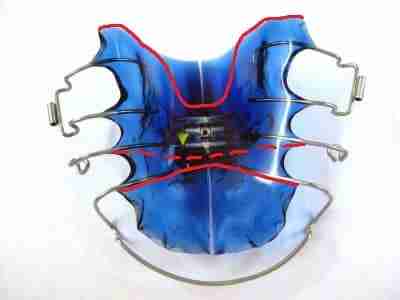
Interestingly, by removing the resistance from the area of the first bicuspids, I had to advance the screw twice for it to feel snug. This brings me to 5-1/2 mm. I had noticed some separation between the acrylic and my first molars suggesting they had moved farther laterally than the expander which was being delayed in the area of the first bicuspids. This is confirmed by the molars now sitting flush with the acrylic. I'm still concerned that the small surface area of the remaining acrylic will be more likely to cause side effects. It seems like I am feeling more pressure on my second bicuspids now, and I suspect they might start tipping like the first bicuspids did. I'm 1/2 mm away from my preliminary goal. This seems achievable, but I'm not sure how much farther I will be able to go beyond that. I think the screw would let me go another 2-1/2 mm, but that is looking less feasible since it is getting harder and harder to adjust the acrylic to fit my palate.
I had to back off the expander screw last night, but I'm up to 5-1/2 mm again today. I'm feeling some strain at the midline of my palate that I don't always feel when I advance the screw but I take it as a good sign that the suture might be separating. I'm also hearing consistent shifting in both of my ears when I press up with my tongue.
I wore the expander for a few hours last night but then took it out. Later in the night, I noticed that I was grinding my teeth. Maybe I have been too lax with my tongue exercises recently. Today, I initially turned the expander back a couple turns to comfortably fit it in my mouth and then gradually turned it forward 3 turns, so I am up to 5-3/4 mm. I'll probably turn it back at least one turn before going to bed to make it more comfortable during sleep. When I push up with my tongue, I'm feeling a concentration of pressure around the screw, but if I file any more acrylic off of that area it will start to expose the mechanism. I think I'll be able to eek out a few more turns to get past 6 mm of expansion, but I'm going to reach the limit soon. Unfortunately, it won't be a comfortable fit for stabilization after I complete the expansion phase.

whats your current imw? are you gonna get another expander?
whats your current imw? are you gonna get another expander?
I'm around 39mm now. When I max out this expander, I plan to use it as a retainer for at least 3 months and then start to phase it out. It is much more feasible now to maintain correct tongue position. I'll probably observe how I'm doing with oral posture alone for a while to see if it will reverse some of the teeth tipping and improve some of the asymmetry in my arch. If I'm failing to make progress or even regressing, I might look at getting another expander.
is teeth tipping this? 
is teeth tipping this?
Yeah, here's a more extreme example of Ronny Ead from migrainehacks.com when he was using removable expanders.

Mine isn't nearly this bad, but my first bicuspids especially seem to have angled out in relation to the other teeth. I recently removed the section of acrylic from behind the first bicuspids so they might start to upright themselves now that they don't have the direct pressure of the expander on them. I think some of the change in the angle of the teeth is from the underlying alveolar ridge becoming shallower and tilting out. This actually seems to have helped with my occlusal cant. So I'm not totally sure how much of the buccal tipping is skeletal and how much is dental.
I've been consistent with oil pulling for more than a week now, and I think it is helping reverse the minor gum recession I was observing over my left upper first molar from my palate expander. It seems to be reducing inflammation with less bleeding when I floss, and I suppose this is allowing the little nick in the gum tissue above my first molar to heal. I think it might have also had a slight whitening effect on my teeth. I might switch from every day to every other day soon.
For the first time, I tried a self endonasal release session with my expander in place. I thought that it might have a more dramatic effect since the shifting sounds in my ears have become more frequent when I press up with my tongue. I inflated into the nasopharynx through all three meatuses on my right side, which is my narrower side with the bridge deviated to the left. I didn't notice any dramatic cracks or pops, but it did seem like the fit of my expander was a little less tight afterward. I don't know that it was worth the effort.
I noticed there is now a little play in the screw mechanism of my expander. It's just a minor wiggle, but I guess it is because I am getting close to the end of the screw. The two stabilizing rods on either side of the screw have reached the bracket on one side but remain unmoved in the acrylic on the other side. Maybe this is responsible for the instability. I guess it could become problematic if I try to keep expanding much farther.
With all of the turning the screw back and forth, I have lost track of exactly how far I have advanced my expander. Measuring the gap between the two sides is imprecise. I think I am still around 5-1/2 mm to 6 mm. I really need to reduce the height in the area of the screw to improve the fit, but if I remove any more acrylic in that section it will expose the mechanism. I will need to give up on expansion soon and begin stabilization.
Two weeks ago I purchased some grass-fed beef liver and put it in my freezer. I am supposed to keep it at or below -20 degrees Celsius for 14 days to kill any parasites. I ordered a freezer thermometer to monitor the temperature, but it didn't arrive until yesterday. When I put it in my freezer it read just above the target, around -19 degrees Celsius. The thermostat was already set close to the coldest it can go, but I turned it all the way. Today it is reading right at -20 degrees Celsius. I think I will wait another 2 weeks just to be safe.
Over the past few days I haven't been as consistent with my oil pulling. The minor gum recession over my upper left first molar is still visible but doesn't seem to be getting any worse. I will try to get back to daily oil pulling. Yesterday I started swishing with Uncle Harry's remineralization powder after meals. It's too early to say if this is having any impact, but I don't mind the salty taste.
I am still regularly hearing shifting sounds in both ears when I press up with my tongue. Sometimes I put the tip of my tongue behind the back of my expander where I have cut it out to fit around my torus palatinus. Pushing forward on the expander elicits the shifting sounds and seems like it might be useful. I'm still unsure of the utility of sporadic forces like the practice described in the manual facepulling thread. I would like to see some forward growth now that I have more space to maintain correct tongue posture. I guess the mew indicator line is probably the best measurement to track forward changes. I took a picture yesterday like the one below to get a better reading.
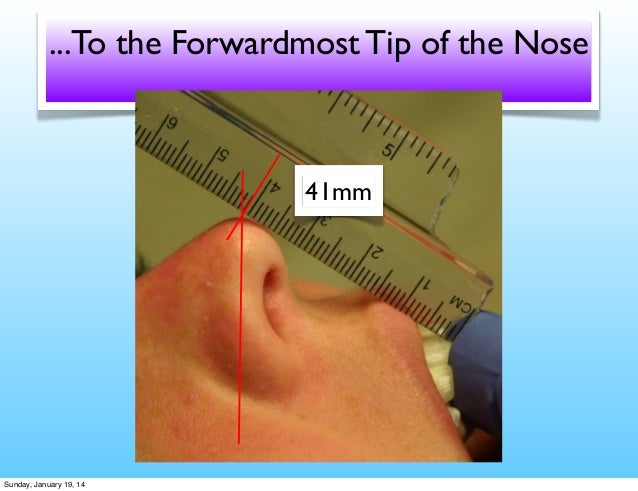
Mine looks to be about 43mm currently.
The recommendations for daily beef liver dosage are inconsistent. The Weston A. Price Foundation recommends a 100 gram serving once or twice a week, but they note that primitive diets probably included that amount daily. They also say that 100 grams daily is about 1/3 the toxic dose. The blogs I have read recommend anywhere from 3 to 8 pill-size pieces per day, with the idea of eating a bite or a few bites of liver per day, but this is pretty vague. If I follow the Weston A. Price dosage, 200 grams per week works out to just under 30 grams per day. One nutritional chart I'm reading says 30 grams would provide 5069.4IU of vitamin A, which is 166% of the recommended daily value. However, it would provide only 14.7IU of vitamin D, which is just 3% of the recommended daily value. I have been taking a supplement with 2000IU of Vitamin D per day. For comparison, green pastures recommends 1 tsp of fermented cod liver oil per day, containing roughly 10,000 IUs of vitamin A and 1,000-2,000 IUs of vitamin D. 10:1 is said to be a healthy ratio of A:D. To get that amount of vitamin A from raw beef liver, the nutritional chart I am referencing says I would need to take just under 60 grams per day or twice the amount recommended by Weston A. Price. This is still significantly below what is said to be the toxic dose for natural vitamin A. When I start taking liver in a couple weeks, I'll plan to take about 60 grams per day and continue to take my 2000IU vitamin D3 supplement every second day. If this feels like a lot to choke down, I'll cut back. I have already stopped taking my multivitamin and I plan to stop taking the B complex vitamin I have been taking in its place because the liver is a good source for B vitamins. I will continue to take my K2, magnesium, and fish oil.
is that mk4 or mk7 k2 and in what dose
is that mk4 or mk7 k2 and in what dose
I turned the expander screw forward last night. I think I'm now somewhere around 5-3/4 mm to 6-1/4 mm since I've lost track of the number of turns. I had to turn it back to fit comfortably again during the day today, but I'll try turning it forward again tonight. I had some minor achiness in the area of my upper right molars and bicuspids when chewing today and some achy pain in the alveolar ridge above that area when pressing up with my tongue. Maybe this is just a result of the expander concentrating more force around the second bicuspid since I removed the acrylic ahead of that tooth.
I took an updated intraoral picture today looking up from below at my maxillary arch. I'm very pleased with the progress; the overall shape of the arch is clearly more rounded, although the right side remains more square than the left. Some of the increased intramolar width is from dental tipping, but the majority appears to be from actual skeletal expansion of the palate. Early in the course of my expansion I posed this question:
I'm curious as I separate the expander, if I am opening that midpalatal suture along the entire thickness including the torus such that the torus would become wider, or if the suture begins to peel open at the top and the bone of the torus would kind of fill in the opening gap, reducing the prominence of the torus.
In the before and after pictures, my torus does look slightly wider. This might be an artifact of the roof of my mouth leveling out closer to my occlusal plane so that the torus looks wider because it isn't vaulted as high up away from the camera. However, most of the increased width seems to be in the space beside the torus, which is more consistent with my second theory that the midpalatal suture is peeling open from the top as the palate vault flattens out. I realize this is hard to explain in words.
As my palate has become less vaulted I've documented how I have filed down the acrylic from the top of the expander to keep it seated properly, but now that I can't file any more acrylic from above the screw without exposing the mechanism, it won't fit as well and the wires now make contact with my bottom teeth preventing me from biting together all of the way. I think this force of my lower teeth pushing up on the wires is what caused the wire around my right first molar to snap. Well, now the wire around my left first molar has also snapped, although it broke just inside where it enters the acrylic so it is easier to put it back in that hole and keep it in place. I feel a little like my race car is breaking down just before the finish line, but I'm going to try to get at least another millimeter of expansion before I transition to stabilization.
The other half of the wire on my expander that wraps around my right first molar broke off this morning, so it's now totally detached. I filed down the rough points of those wires at the level of the acrylic and it still seems to be working fine. However, if either of the wires between my bicuspids break, I'll have trouble taking the expander out and might have to stop using it.
I've had keratosis pilaris (KP) for as long as I can remember. These red, bumpy keratin plugs blocking hair follicles cover the backs of my arms and pepper the rest of my body. I think it has gotten slightly less bumpy since I cleaned up my diet in the past few years, but the red dots are still conspicuous, especially on my arms. The etiology is unknown. Some sources say that gluten intolerance causes KP. I consume foods with gluten a few times per week. Other sources say that vitamin A deficiency causes KP. This interests me since I am planning to start taking grass-fed beef liver soon as a natural source for vitamin A. I have been supplementing 2000IUs of vitamin D3 per day for years, and I don't have a lot of good sources for vitamin A. A healthy ratio of A:D is about 10:1. I used to take a multivitamin with some synthetic vitamin A, and I have ample dietary sources of beta carotene, but conversion to the bioavailable form of vitamin A is inefficient. So it seems likely that I am deficient in vitamin A. I'm anxious to see if my KP clears up when I start taking the liver.
I advanced my expander screw again today. I think I'm now at about 6-1/2mm of expansion. It looks like the screw could probably turn another 1-1/2mm. I think I might try to get another 2 turns (1/2mm) and then stop since it is becoming impossible to adjust the fit, and the screw is getting a little wobbly. I would hate to turn the screw too far and have the two halves come apart and not be able to get them back together to use for stabilization.
I tried advancing my expander two more turns just to see if it would hold together. The stabilizing rods on either side of the screw started to pull through the left bracket. This is why it has been wobbly. I've mentioned before how the rods have been stuck in the acrylic and haven't budged on the right side. I haven't had any luck pulling them over with tweezers. I was able to line the rods back up with the holes on the left side and tighten the screw back to where I had it, but it looks like I will only be able to turn the screw one more time and then have to stop at what I think is about 6-3/4mm. It is exciting to think that I have almost completed this phase of expansion and can move on to stabilization for a few months before I begin to phase out the appliance!
I advanced my expander the final turn today. If I turn any farther the stabilizing rods on either side of the screw pull through the bracket on the left side allowing the two halves to rotate around the screw. So now I plan to transition to using the expander to stabilize my progress for at least three months. That would put me through the end of September before I start to phase out the expander and monitor for any relapse. I closed the expander back all of the way and then counted the number of turns forward to get back to the position just before the stabilizing rods pull through. It turns out that I completed 28 turns for a total of 7mm of expansion. However, as I've mentioned in previous posts, the screw was not placed in my expander at the same angle as my occlusal plane so not all of that separation went toward increasing my intermolar width. I think I got close to 6mm of transverse separation, which would put me somewhere probably just under 40mm intermolar width. The expander doesn't fit well anymore because I can't remove any more acrylic from the top without exposing the screw mechanism.
How is your lower arch keeping up with the upper?
my story: http://www.aljabri.com/blog/my-story/

Apolo can you please guide me with self ncr and face pulling?
How is your lower arch keeping up with the upper?
My lower arch started out wider than my upper arch except with lingual tipping that prevented cross bite. I've always said that I would be very satisfied if I could get my maxillary arch to correspond to the width of my mandibular arch and upright the lower teeth. My upper arch is still slightly narrower than my lower arch, but it is getting closer, and I think there has been some uprighting of the lower teeth. However, I still have crowding of my lower incisors.
Apolo can you please guide me with self ncr and face pulling?
Hi Hamham,
These aren't practices I incorporate regularly in my routine anymore, but I have tried both. There are many variations of extra-oral traction that commonly get referred to as "face pulling." Allixa started a thread about manual facepulling using only your hands ( /community/community/main-forum/frequent-low-tension-facepulling-a-potentially-effective-new-technique-for-adjusting-the-skull-by-hand/ ). Keengo is a proponent of using a grocery bag ( /community/community/main-forum/face-pulling/#post-3902 ). I've read about others using a towel, and a contributor on lookism is kind of the originator of this style of biting on something and pulling using a belt ( /community/community/main-forum/belt-facepulling-dons-johns/# ). A guy called Plato put out instructions using a helmet to anchor the forces rather than just your hands ( http://jawpain-tmjtreatment.com/ ). I tried something similar to this strategy using my expander to connect to a helmet. In the end, I decided that I didn't like any of these techniques where the teeth bear the force rather than the palate, so I stopped using my rig. Some people have reported success using the manual method, which doesn't load the force onto the teeth, but I haven't been consistent enough to know if it works for me.
I have done a couple consistent rounds of self-ncr/endonasal release and then dabbled with it here and there. I'm confident that I am correctly inflating into the nasopharynx, but I can't honestly say if it has had any effect on me. Maybe I'm not in a relaxed enough state to allow the sutures to separate. Progress posted a guide in the BTM forum ( http://breakthematrix.createaforum.com/therapies/guide-to-self-ncr-and-face-pulling-anyone/15/ ), but I'm unsure if that link is still active.
Let me know if you have any specific questions. Good luck!
I completed two weeks freezing my grass-fed beef liver below -20 degrees Celsius to kill any parasites and then partially thawed it, cut it into pill-size pieces and refroze them last night. It turns out that taking the dosage that I was originally estimating will be impractical. I would need to take more than 30 pieces per day to get 60 grams and more than 15 pieces to get 30 grams. Blogs about this method recommend 3-8 pieces with the idea that you are taking a couple bites of liver per day. I think some of my pieces might be too big because I had a little trouble swallowing one. I took 3 pieces today as a test to see how I respond. I might try increasing the dose to 5 pieces tomorrow. A couple hours after taking it, I do feel a little more alert than typical, but this could be my imagination. I took the frozen liver after a meal, but it was still a little unsettling to have the frozen pieces in my stomach.
Thank you so so much for your reply. Do you think we can have some chat i can give you my email. Only if you are comfortable with that. Thank you.
Thank you so so much for your reply. Do you think we can have some chat i can give you my email. Only if you are comfortable with that. Thank you.
I would prefer to keep our conversation on the forum so that others can engage with it. For private topics, we can talk on the personal message function.
Since I have advanced my expander as far as it can go and stopped turning the screw but continue to use it to stabilize my progress, I find that it is relatively easy to fit the transverse width of the expander, but that the height of the expander is becoming harder to fit. There's even some separation between my upper left first molar and the edge of the acrylic, but it seems to be getting harder and harder to fit the height of the expander up into the vault of my palate, such that the wires interfere with occlusion, etc. I suspect that this means my tongue is continuing the process of expansion and leveling out the roof of my mouth. However it also means that the fit of my expander is getting worse and I might not be able to use it for stabilization much longer. But maybe I won't need it if my tongue is working to prevent regression.
I took a few pieces of liver after lunch for the second time today. I cut the pieces in half to make them easier to swallow and this seemed to work better. I usually eat two meals per day, so I am considering taking a few pieces of liver after both meals. Since I stopped taking most of my vitamins, the consistency of my stool seems to have improved, and so far the liver hasn't had any adverse gastrointestinal effects. So I hope this means I might have better nutrient absorption. I think it will probably be a month or more before I am ready to say if this is working for me, but so far I am happy. I am still trying to decide what dose of vitamin D3 to take to balance the vitamin A in the liver. Ideally, I should probably be taking some cod liver oil or some other source of vitamin A since I can't take as much beef liver as I originally thought. If I can take a maximum of about 20 grams of liver per day, that equates to 140 grams of liver per week, which is a pretty good average of the 100-200 grams per week recommendation from the Weston A. Price Foundation article. So I want to take about 10 grams after lunch and 10 grams after dinner every day. This would give me about 3380IU of vitamin A daily. For now I'll plan to take 2000IU vitamin D3 every other day. I'm also continuing to take magnesium, MK-7, and fish oil.
That'd be great but how do i text you in private? Can you send me a text so we can talk?
I would prefer to keep our conversation on the forum so that others can engage with it. For private topics, we can talk on the personal message function.
That'd be great but how do i text you in private? Can you send me a text so we can talk?
You sent me a personal message so I guess you figured out how that works. The question you asked is the kind of thing that others might be wondering about or have a better answer than I do. Since it isn't specific to your case or embarrassing, I'm not sure why you want to keep it private rather than open it to the forum where others can engage with the discussion. I sent you a response anyway.
I thought it would be alot easier to engage with you but you are right let's make it open so other can have their say too.
I thought it would be alot easier to engage with you but you are right let's make it open so other can have their say too.
Ok, with your permission, I'm going to move our conversation from the personal messages here.
Posted by: Hamham25
Hello Apollo its great to hear your imorovements can you tell me how did you fix your canted smile because i have a canted smile too. Thank you
Posted by: Apollo
My smile is still noticeably canted. However, I think it has improved from expanding my palate, and from practicing rotary chewing in the counter-intuitive direction ( /community/community/main-forum/rotation-of-chewing-and-possible-correlation-to-canted-smile/# ). Like any asymmetry, practicing correct oral posture should help an occlusal cant over the long term.
Posted by: Hamham25
Thank you for your reply. After mewing for about two months i guess my canted smile has got better but i wanna fix and make more and more symterical the one side of my upper jaw is sligtly upward and backward giving me a canted smile. Do you think you have the same issue? Also where can i find “guide to proper head posture” do you have any idea
I talk in this post about all three dimensions the maxilla can be tilted ( /community/community/main-forum/elements-of-smile-aesthetics-and-craniofacial-dystrophy/#post-2419 ). My right side is angled farther down and back than my left side. As I mentioned above, I've seen improvement of a degree or two from palate expansion, and balancing the direction of my rotary chewing ( /community/community/main-forum/rotation-of-chewing-and-possible-correlation-to-canted-smile/# ). Dr. Mew uses the analogy of a crumpled piece of paper which becomes more symmetrical as you stretch it back out to its proper dimensions. I've seen some improvements in the deviation of the bridge of my nose along with the improvements in my occlusal cant. However the bridge of my nose is still a couple millimeters left of center and my occlusal plane is still a few degrees off. Do you know what your current intermolar width is? If your palate is narrow, expanding it using tongue posture or a device would probably improve your occlusal cant. You asked about head posture. I suggest focusing on sustaining a Mckenzie chin tuck. This should improve the efficacy of your oral posture. Dr. Mew has several youtube videos on this topic, and it is discussed extensively here on the forum.
I found a plaster mask cast of my face that I made during an art class in middle school. I was probably around 13 years old at the time and had braces. When I put the mask up to my face today, the width of the mask still easily fits, but the vertical height of the mask is significantly shorter than my face. It's a very tangible display of how my facial growth since then has mostly been down rather than forward. If I protrude my mandible forward into a class 3 under bite position, it looks like my maxilla could come forward about 5-7mm. However, I don't know if moving the maxilla forward would allow more room for the mandible to swing even farther forward. Either way, it seems like just 5mm of forward maxillary growth would make a significant improvement to my face. This is well within the scale of typical FAGGA results, but I hope to achieve something comparable using tongue pressure. I will continue to monitor my Mew indicator measurement, but I wonder if measuring how far my mandible can protrude beyond the maxilla would be another way to track forward progress.
I've been taking liver for about 5 days now. For the first few days I just took it after lunch. Yesterday I took it after lunch and dinner (I don't eat breakfast). I've been taking three little pieces each time. My culinary scale isn't very accurate at low weights, but I believe this is about 5-8 grams of liver. If I take this twice a day it would be around 10-15 grams of liver per day. This gives me a little more than 2000IU of vitamin A per day. WAPF recommends 100-200 grams of liver per week. So I probably need to increase my dose. Maybe I should take 4 or 5 pieces after every meal. I think I have experienced a little of the anti-fatigue effect but nothing remarkable.
I've decided to order a large Myobrace A2. I hope this will help me achieve a more symmetrical, roman-shaped maxillary arch and relieve the crowding in my mandibular incisors. I'm going to start with the A2 because the A1 sounds like it is intended for people with worse crowding. I want the large size based on the research I've posted in this thread ( /community/community/main-forum/myobrace-effect-and-treatment-time/# ). Although significantly more expensive, I want the authentic Myobrace brand rather than a knock-off to be confident in the function and size. Hopefully the listings I have found are actually the real thing.
A couple weeks since my expander maxed out, it continues to get more challenging to fit in my mouth. However, I don't think this is from relapse. I think it is from continued progress since my oral posture has drastically improved and it seems like I am now able to maintain it during sleep. The intermolar width is more than wide enough to accomodate the expander, but my palate vault has continued to level out leaving less room (fractions of a millimeter) to fit the height of the expander. I think the Myobrace can help stabilize my results while being flexible enough for continued progress and improved symmetry. I'll probably use the Myobrace at night, and continue to use the expander for a few hours each day until I am sure that I won't relapse.
By all indications, I should be able to fit the large size myobrace. Anecdotes I've read from other users suggest that only those with a very narrow palate would require the regular size. The picture I found of what is supposed to be an authentic large myobrace shows an intermolar width that should fit my expanded palate. However, I am still a little concerned that the left side of my arch is more curved than the right side. I am hoping that the myobrace can help correct this asymmetry, but it is possible that my squarer right side won't fit within the arch of the channel, even if the intermolar width is wide enough. I'll just have to wait and see if it fits when it arrives.
I've increased to 4 pieces of liver after lunch and dinner for several days now. I think I will add one more piece after both meals for 10 pieces total. As a point of comparison, I looked at the dosage on Ancestral Supplements brand of desiccated grass-fed beef liver capsules. They recommend 30 grams of beef liver per day. This is in the range of what I was originally targeting based on the WAPF guidelines. However, I estimated that I would need to take 15 pieces of liver per day to get that amount (based on my culinary scale, which is imprecise at small values). That would require taking 7-8 pieces after every meal. I wouldn't mind swallowing that much each time, but I would run out much sooner and have to repeat the arduous process of preparing the frozen liver pieces more frequently. For now I'll plan to increase my dose to 5 pieces after both meals, for about 20 grams per day.
So far the most apparent effect has been the drastic improvement in the consistency of my bowel movements. In the past I have struggled with frequent diarrhea and have tried many different dietary changes and supplements with varying degrees of success. However, since I have been taking the liver my stools are consistently in the 2-4 range on the Bristol Stool Scale whereas I was usually in the 4-6 range in the past.
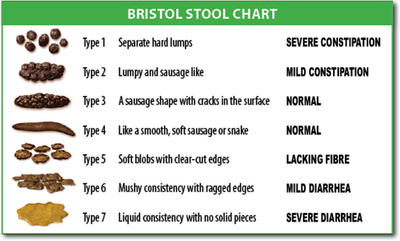
It's too early to say, but I think there might also be some improvement in my keratosis pilaris. It is hard to say if my energy levels have changed, and even harder to know if it is helping with bone remodeling.
Just to help me keep track of the 2 weeks in the freezer to kill parasites, I'm noting here that I purchased more grass-fed beef liver from a local farm today. They don't always have it in stock so I wanted to get more while I could, although I probably have more than enough left from the first batch to last me two weeks. Maybe I will increase my dose again from the 5 pieces I am currently taking twice a day to 6 pieces. I think it is good that I have been gradually increasing my dose to give my body time to adjust and eliminate any stores of synthetic vitamin A (that I used to take in a multivitamin) to avoid excess. Ultimately, I don't think I will take any more than 15 little pieces per day. This comment on the Amazon listing for Ancestral Supplements desiccated grass-fed beef liver is informative about how they determined their recommended dose: "1 serving of Grassfed Beef Liver (6 capsules) is equivalent to 1oz of raw undefatted beef liver. With that said, 4 servings (24 capsules) of Grassfed Beef Liver is equivalent to 4oz of raw beef liver. Nutrition authorities like Chris Masterjohn (of Mastering Nutrition) and the WAPF recommend 1 to 2 servings of liver per week (or) a total of 6 to 8oz per week. To achieve this amount with Grassfed Beef Liver, simply consume the recommended daily serving of 6 capsules per day." They recommend 1 ounce per day which is just under 30 grams, and I think my pieces are on average around 2 grams per piece, so I would need to take 15 pieces per day to get 30 grams.
I'm still trying to wrap my head around the role of nutrition. Here's a recent conversation from my private messages for anyone interested, posted with permission:
Hi there. I came across the thread you posted in regarding vitamin k2. I’ve recently brought some supplements (k2 and also a vitamin D supplement to balance it out with the k2) and I read that k2 can be bad for bone development when using.
I plan on taking one capsule of each vitamin a day. The k2 contains 200mcg and the vitamin D3 contains 3000 in. With the additional added onto these numbers with eating dairy foods and eggs.
Will this be bad for bone growth?
Thanks appreciate it!
P.S. Do you know any supplement which could possibly help with bone growth (height). I thought vitamin k2 would assist, but from what I read it looks unlikely. Hope your mewing journey is all well!
Posted by: Apollo
Hi Matt,
I’ve posted about my understanding of which vitamins are involved in bone remodeling in a few nutrition threads on the forum, so I’m not sure which thread you are referencing. In short: if you want to stabilize, strengthen, or build up bones, you would try to activate osteoblasts, whereas if you want to make bone more malleable you would try to activate osteoclasts. I aim for a balance. I think we want to avoid both deficiency and excess of vitamins on either side of the balance to promote bone remodeling. For example, if you’re goal is increased height or bone density, you might tip the scale more toward the osteoblast side. I think this is the case for people who start mega dosing on K2. It might make it harder to change the shape of the bones, but it could make them bigger and stronger overall. So calcium, vitamin D, vitamin K2, magnesium, all seem to be important for building bones. The only dietary counterweight I know of to break down bone is vitamin A which is a PTH cofactor activating osteoclasts. However, the type of vitamin A seems to be important because our bodies are inefficient at converting plant-based beta carotene, and synthetic forms can accumulate and cause side effects. Beef liver and natural cod liver oil are good sources of the bioavailable renitol form of vitamin A. I would start there and then try to balance the other fat soluble vitamins D and K.
Currently, I am aiming for about 5,000IU of vitamin A per day from grass-fed beef liver. I also take 2,000IU of vitamin D3 every 2 days, and just 100 mcg of the MK-7 form of vitamin K2. I think I get some of the MK-4 form of vitamin K2 from pasture-raised eggs and butter, but I have considered adding an MK-4 supplement to my regimen, which has a shorter half life than MK-7 but is the active form that our bodies convert MK-7 to, so it seems to be more potent. I also take 200mg of magnesium daily, along with fish oil.
Do you mind if I copy and paste this conversation into the thread about my routine for anyone else who is interested to read?
Posted by: Matt
Go for it thanks for the info!
Posted by: Matt
I have also ordered a supplement to help my zinc levels to improve that deficiency . This might be a bit off topic, but is it important to have enough magnesium while taking these supplements? I don’t think I will buy a magnesium supplement, but I will try and eat more magnesium foods. I’ve heard bananas are a good source?
Posted by: Apollo
I think magnesium plays an important role in bone remodeling on the osteoblast side of the balance. There are many dietary sources of magnesium, but I find it hard to be consistent enough with food sources alone, and much of today’s produce comes from mineral-depleted soil, so I supplement. In addition to the bananas you mentioned, I think of greens like spinach, broccoli, asparagus, avocado etc. Some dairy and fish contain a good amount of magnesium. I mostly avoid nuts and legumes, but I guess they are also reliable sources.
Posted by: Matt
Interesting! Because I will be taking a zinc supplement. Is it important to take another supplement to balance out the minerals in my body? Sort of like the vitamin K/D combo?
Also would it be fine to take all the supplements at the same time after an evening meal?
Thanks!
Posted by: Apollo
I’ve read that zinc and copper act as antagonists and work together in a superoxide dismutase enzyme which serves as an antioxidant. So it is important to balance their ratio. Combination zinc and copper supplements are available. I am getting more than the recommended daily intake of copper from the beef liver I consume, so maybe I should be supplementing with zinc too, especially since I don’t have a lot of dietary sources. I know zinc shouldn’t be taken at the same time as calcium or iron because they decrease absorption, but some people find that zinc causes nausea when taken on an empty stomach.
Posted by: Matt
Thanks once again for the informative reply! I can only find a combination of zinc and magnesium. Does magnesium serve the same purpose as copper? Also do any of these minerals contain iron?
Sorry for the many questions, I have no knowledge in this area and I am fascinated to find out more.
Thanks!
Posted by: Apollo
No, copper and magnesium aren’t interchangeable. Any supplements containing iron would list it separately on the label.
Posted by: Matt
Hi again. I have been doing a lot of research on the internet on what supplements are most beneficial to take for the body to help support bone growth and for supporting and maintaining the bones. I’ve heard that taking Vitamin D3 and K2 can slow down the mewing process, although I am just going to go ahead with taking the supplements anyway. Here are the bunch I have chosen:
Vitamin D3
Vitamin K2
Zinc and Copper combination
Magnesium
Glusamine and chondroitinThe reason why I have chose Vitamin D3 and K2 is to help bone growth. I hardly get any Vitamin D due to living in the UK (during the later part of the year there is hardly any sun) and I also work indoors so I get no sunlight. I am using Vitamin K2 to balance out the calcium absorption into bones and blood.
I have chose the Zinc and Copper combination supplement due to the benefits of Zinc on hair, skin and other advantages. I chose the combination due to the importance of copper being balanced out with Zinc.
Magnesium is another one I chose due to also the benefits on the bones and even the heart.
Lastly I am going to take glusamine and chondroitin due to it’s benefits on joints and will help maintain my bones.
I’ve been told it’s best to take these supplements just before/after a meal? Also would it be safe to take these supplements at the same time?
Thanks for your time and help!
(P.S. I remembered you said Zinc shouldn’t be taken at the same time as calcium or iron)
Posted by: Apollo
These sound like good choices. Of course the longer your list of supplements gets the more expensive it becomes. The rational that D3 and K2 can slow bone remodeling is that they are building up the bone, making it less malleable. Ideally, I would add a good animal-based source of vitamin A, like cod liver oil or beef liver. Vitamin A is a parathyroid hormone cofactor so it would enhance osteoclast activity, breaking down bone, and balancing the osteoblast activity from vitamins like D3 and K2. What form and dose of K2 have you decided to take? Right now I am only taking 100mcg of Mk-7, but I am considering adding a higher dose of Mk-4. For the supplements you listed, the only interaction to worry about that I know of is the one you mentioned with the absorption of zinc when taken with calcium or iron, so you might wait a few hours to take it if your meal had foods high in those vitamins. Another consideration is the half life of the supplement and potentially dosing multiple times per day. For example, the half life of Mk-4 is relatively short. If you were taking it in drop form, you could take it twice a day at a lower dose rather than once a day at a higher dose. Magnesium is supposed to have a calming effect so you could take it in the evening after dinner to help you get ready to sleep, however some forms of magnesium increase GI motility so you could divide it into a morning and evening dose to avoid side effects.
Posted by: Matt
Thanks for the info! I will let you know what form and dose I am going to be taking. I’ve read some research that Vitamin A can increase mortality, so it sort of put me off the idea of taking the supplement. But most of these researches don’t have much evidence behind it I don’t think.
Posted by: Apollo
Vitamin A excess is a real danger, and there is some dispute about the recommended daily intake. However, I’m pretty convinced that the synthetic forms found in most vitamins are more likely to accumulate in lipophylic tissues leading to toxicity. Whereas natural sources of animal-based vitamin A (like fermented cod liver oil or beef liver) have different functional groups attached which make them more bioavailable and require higher doses to build up and cause side effects. Plant-based sources like beta-carotene are inefficiently converted to the active form of vitamin A. You could check the Weston A. Price Foundation website for more details about this debate.
Posted by: Matt
Thanks! I am going to look up what foods contain a good source of Vitamin A. What type of foods do you usually eat to gain your daily Vitamin intake?
Posted by: Apollo
I take a small portion of grass-fed beef liver daily, but you could eat it for one or two meals per week and get the weekly 100-200 grams recommended by the Weston A. Price Foundation ( https://www.westonaprice.org/health-topics/food-features/the-liver-files/ ). You could also try pate or liverwurst. Many people don’t like the taste of liver, but other animal sources like dairy and eggs don’t give you as much vitamin A in a serving. Another option is desiccated liver pills from companies like Vital Proteins or Ancestral Supplements, but these can get expensive.
Posted by: Matt
I will look into further into different intakes of Vitamin A. Thanks!
The myobrace A2 I ordered should have arrived last week, and there haven't been any updates to the tracking, so I am getting impatient.
I cut the next batch of grass-fed beef liver into little pieces today after more than 2 weeks in the freezer. I still have a few days left from the first batch.
I wrote about my first impressions of the myobrace here:
/community/community/main-forum/myobrace-effect-and-treatment-time/paged/2/#post-6355
Since that post, I have adjusted the height of the upper lip bumpers so they no longer rub against my buccal exostoses. With that issue resolved, my upper teeth feel like they fit the channel easily. I don't really feel any force from the device on my upper arch, so it's not really clear to me how it could expand the arch, or improve symmetry. Maybe the forces are very subtle but will have an effect over the long term. In contrast, I can clearly feel the force realigning the minimal crowding in my mandibular incisors, and maybe some force uprighting my lingually tipped mandibular molars and premolars. The pressure on one misaligned mandibular incisor is pretty intense. I've worn the device for a few hours during the day to get used to it, but with this level of discomfort I doubt that I will be able to sleep through the night.
As expected, I couldn't get comfortable enough to sleep with the myobrace in place, so I've been trying to make up some hours during the day today. The instructions say "may fall out at night while sleeping in initial stages of treatment. If this happens increase daytime use." Once my misaligned lower incisor comes back in place, it should become much more comfortable. For now, my upper teeth seat all of the way into their channel, but I don't press the lower teeth all of the way in. This helps reduce the pain, but it is also less stable without closing my bite all of the way. I sometimes find myself engaging my lip muscles to hold in the device. I'm also still having some trouble with my tongue posture. There is a tendency to want to let the tip of the tongue extend down to the level of the lower teeth with the middle of the tongue against the tag, and the sides of my tongue rub on the edges of the plastic. I might try to smooth off the mold seams. In short, this feels like it could help realign my crowding, but I'm not sure if it is helping to maintain correct oral posture, or further expanding my intermolar width. My intermolar width is currently just below 40mm. It is good that I ordered the large, but I'm amazed that they don't offer a larger size. I don't think anyone with a wider palate than me would get much benefit from the large A2.
I couldn't sleep with the myobrace again last night, but I'm trying to get as many daytime hours as I can. It is feeling a little less painful, and I am often inserting my lower teeth all of the way into their channel now. The brace holds my mandible out a little farther than my normal resting position, and I can see how the device might help people with malocclusion. The pain is almost exclusively in my one misaligned lower incisor, but I also had a little achiness in my lower molars at lunch today.
I'm using the myobrace as much as possible during the day again today after taking it out to sleep last night. It was feeling much looser and easier to fit my lower teeth into their channel by the end of the day yesterday. I've had some orthodontic-type pain while chewing, but nothing intolerable. I find that my lips get dry when I have the myobrace in. I suspect I might be able to start using it during sleep within a few days. It probably would have been easier to sleep with right away if I started with the A1, rather than the A2, but I think it's probably worth the adjustment pains to cut the expense in half. However, for anyone with more than minimal crowding, I think I would recommend the A1. It still feels a little harder to correctly position my tongue with the myobrace in place, but interestingly, I think it feels easier to fit my tongue on my palate without the device than it did only a few days ago. When I press my tongue up on the tag, I hear the shifting sound in my right ear, and occasionally a faint sound in my left ear.
I might try a self endonasal release session soon with the myobrace in place to see if it has any impact. I also want to resume my breathing exercises. I think I will start back at the beginning and gradually increase the intensity and duration as recommended in the instructions.
I weighed a sample of the new batch of liver pieces I cut up last week. Like the last batch, they seem to be about 10 grams for every 5 pieces or about 2 grams/piece. I have been gradually increasing my dose up to 6 pieces twice a day for a total of about 24 grams per day for the past few weeks. I think there have been some modest effects on my skin, nails, hair, and maybe on my energy level. Ideally, I'd like to get my dose up to 30 grams per day. I would have to take 3 more pieces a day to reach that amount. For now I will increase my dose to 7 pieces twice a day which would give me about 28 grams.
I still haven't been able to sleep with the myobrace, but it is getting much easier to use. The left side of my misaligned lower incisor is coming into position but the right side is still behind the adjacent tooth. I'm starting to feel some achiness in other teeth, especially my lingually tipped lower molars. I've been using the myobrace for about 5 days. I hope within the first month of use that I'll be able to sleep through the night with it in place. So far, I'm glad I purchased it. I think it would have to be a little bigger to get significant expansion out of it, and I'm not sure it is doing much to promote forward changes, but I feel like it will help stabilize the intermolar width I gained with the removable expander, and improve the symmetry and alignment of my arches. It doesn't seem like it will do much to improve my flattened smile arc.
I've had fatigue and headaches of varying severity for the past few days. It's possible the achiness from the myobrace is contributing to the headaches, but I think my sleep has been disrupted and I've caught myself snoring more frequently than typical. Even though I haven't been sleeping with the myobrace, I suspect the impact from wearing it during the day has changed my oral posture during sleep. I will try to be better about remaining on my side during sleep. Maybe I will try Ronny Ead's trick of sleeping with a backpack with basketballs inside to prevent rolling onto the back. I also wonder if restarting my breathing exercises would help.
I'm feeling a little better today. When I ordered the myobrace A2, I didn't have any intention of ever getting the A3, which is made of firmer polyurethane, and designed for fine tuning the alignment of the teeth, and posture of the tongue. After the A2 arrived and I found that it isn't really any wider than my current intermolar width, I'm starting to think that the firmer plastic might ultimately help eek out a millimeter or two of expansion. I am debating ordering the A3 to have on hand for when my lower incisors are uncrowded and my lingually tipped lower molars are uprighted. I wish I could order a slightly larger Soulet Besombes trainer, but all of the sources I can find online only sell to professionals.
I've reported about the deviation in the bridge of my nose and how it has gone from around 4mm left of center to a little less than 2mm left of center during the course of my expansion. I don't think I've seen much improvement since then. Tonight I noticed in the mirror that simultaneously raising my eyebrows and scrunching my nose causes little folds of skin to stretch on either side of the bridge of my nose near the corners of my eyes. On the left side, this fold of skin is about 1mm wide. On the right side of my nose, it is about 3mm wide. This is consistent with the 2mm deviation. I'm still not sure, but these flaps of skin support my theory that I don't need to shift over the whole bridge of the nose 2mm, but instead the left side should stay where it is while the right nasal bone and the right frontal process of the maxilla shift over 2mm, making the bridge of my nose wider overall. My nose does look kind of spindly, so I like the idea of it getting thicker as it improves in symmetry. I think I'll need to achieve more expansion of my intermolar width to get more improvement in the deviation of my nose.
After 8 days of use, I was able to sleep through the night with the myobrace in place for the first time last night. I woke up several times and noticed that I wasn't biting together, but at least I never had to take it out to get comfortable. I took a more accurate measurement of the intermolar width of the myobrace (adult large) at the level where my first molars sit rather than at the back where my second molars sit. It looks like it might be closer to 37mm at that point rather than the 40mm I initially reported. This concerns me that the device might actually be narrower than my current intermolar width, especially on my lower arch. I'm really at a loss for why myobrace doesn't make an extra large size. However, it is definitely wider at the level of the intercanine width, so maybe it is worth the trade off to get some expansion in the front of my palate and make my arches more symmetric.
I bought more beef liver today. I'm just making note of this here to help me keep track of the two weeks in the freezer. I'm worried that my current batch will run out before the new liver is ready. Another nutritional supplement I keep coming across recently is collagen peptides. In the past, I've explored supplementing with beef gelatin, which isn't soluble in cold liquids. Collagen peptides, or hydrolyzed collagen have the same amino acid profile as the collagen in gelatin, but it is broken down into smaller pieces making it soluble in cold liquids. Bone growth might be facilitated by ample supply of the amino acids needed to build the collagen in its extracellular matrix. It also helps with skin, hair, nails and joints. There seems to be some evidence for the importance of the collagen being in the hydrolyzed form for better absorption and effect. So maybe the peptide powder is more beneficial than consuming bone broth or gelatin. For now, it's too expensive for my budget. I make a fair amount of bone broth (mostly for digestive health), but it sounds like I would need to take much more for systemic effects. What do you think of Collagen Peptides?
I've now slept three nights with the myobrace. It seems like my teeth are staying farther down in their channels than the first night. The left side of my misaligned lower incisor is starting to line up with the next tooth, but the right side feels like it is now sticking out farther. The myobrace encourages my mandible to sit slightly more forward. When I take it out in the morning, I generally maintain that new relative position between my upper and lower arches, but when I chew on something it brings me back closer to my old occlusion. I think my lower canines need to shift laterally if they are going to hold the new occlusion. Hopefully this will happen with time and create more space for my lower incisors. I noticed while brushing my teeth this morning that I have a purpura on my buccal mucosa near my second molars on the left side. I guess this is from the back edge of the myobrace rubbing or putting pressure there, but probably isn't anything to worry about.
While flossing this evening, I noticed that the contacts between my upper central and lateral incisors seem to be more open. The gaps are visibly noticeable only on close inspection. I had similar spacing during my expansion until I removed the acrylic from the anterior portion of the expander. The midline contact between the two central incisors is tighter but still easy to pass floss between. I assume the extra space is a result of the myobrace. I guess it is achieving some expansion of my upper intercanine width. I hope the mandibular intercanine width is also expanding, but so far I still have one lower central incisor crowded out of alignment. The shifting sounds when I press up on my palate with my tongue have been almost constant today. I take that as a good sign that the sutures are releasing and maybe I will get some adjustments.
I woke up last night from a dream where I was chewing a piece of candy to realize that I was actually chewing on my myobrace. There doesn't seem to be any damage to the plastic, but it makes me wonder how much chewing I am doing in my sleep with this device between my teeth and if that will carry over when I finish using it. I think there might be less of a tendancy to chew if I could keep my teeth firmly together in the channels, but because they don't fit well yet my bite wants to open and close. I have to admit that I have cut back on gum chewing since the myobrace arrived and I have been wearing it during the day when I might otherwise have gum in my mouth. I don't know if getting back to a consistent gum chewing routine would make my chewing on the myobrace during sleep better or worse.
I had a terrible headache yesterday, so I didn't complete any of my routine. I think the headache was caused by interrupted sleep the night before. I really believe most of my health issues would resolve if I could just get consistently restful sleep.
The myobrace has brought my misaligned lower incisor close enough to the correct position that my old lower essix retainer (which covers just the front 10 teeth) will now fit comfortably. I haven't used this retainer in more than 10 years. I am considering if it would be a good idea to use this retainer for some hours during the day while I am not using the myobrace to help speed up the realignment of that incisor. All of the other teeth seem to fit the retainer exactly, and it's just the one incisor which feels some minor pressure to shift. I guess I'll try it and see how it goes.
Several of my toenails have horizontal ridges. I guess these are Beau's Lines, which have a variety of causes but are supposed to reflect a temporary cessation of cell division in the nail matrix. They are most prominent on my first and second toes on both feet, and are now about 3mm beyond the cuticle. If my toenails have been growing at around the average rate in healthy populations of 0.05mm/day, the problem would have occurred a couple months ago. I started taking a small portion of beef liver daily on July 4 (just over 7 weeks ago). I wonder if this has any connection.
I had a dream last night that I went to brush my teeth in the morning, and saw in the mirror that my mandible had become extremely retruded. Maybe I'm getting a little too obsessive about facial form. I've actually noticed that the 1 or 2 mm forward that the myobrace holds my mandible makes it noticeably more pronounced. It's surprising how apparent such small changes can be. However, after a while, especially if I chew on something, my mandible slips back closer to it's old occlusion, but I suspect gradually over time it will stay closer and closer to the position of the brace.
I've been using the myobrace for 19 days and sleeping through the night with it for 11 days. Initially I was trying to maximize my number of daytime hours since I couldn't comfortably sleep with it, but now I mostly only wear it for a couple hours before bed and then overnight. I think I am chewing on it during sleep less than I was initially now that the teeth are better able to seat in their channels. For the past couple days, I've also been using my lower essix retainer from my adolescent braces for a couple hours each day. It's easier to go out of the house with the clear retainer on just my front 10 lower teeth than to have the whole big purple mouthpiece which prevents me from talking. When I first put it in, I feel some pressure on my one misaligned lower incisor but that passes quickly. The mesial side of the incisor is still pointing out, but it seems to be getting closer to fitting every day, and the distal side now stays in line on its own.
I am going to run out of beef liver before the next batch is ready. I have to wait five more days and only have enough left for a couple more days. I guess I will reduce my dose to make it last a little longer.
It is getting harder to bring my mandible back into it's former occlusion with the posterior teeth touching. I'm not sure if this is good or bad. It means the relation between my incisors is staying closer to where the myobrace positions them, but it leaves some separation between my back teeth. I can imagine that this would close if my lower molars and bicuspids upright from their current lingually-tipped positions. If I try to force my mandible into the old occlusion with the molars touching, it feels like it is uncomfortably compressing my TMJ. I guess I will try to get back to incorporating more gum chewing into my routine.
I've gained about 10 to 15 pounds since I injured my back at work several months ago. Now that it is feeling mostly back to normal, I want to be more active. I'm thinking mostly walking, bodyweight resistance strengthening exercises, and stretching with a focus on my posture. I used up the last of this batch of beef liver today, and I still have a couple days to wait until the next batch will be ready. I'm not worried about skipping a couple days, but I think I will also hold off on taking my vitamin D until I'm getting the vitamin A from the liver.

wanted to make sure you don't feel alone over here :)
FYI I follow primal nutrition, and take similar supplements. I'll share what I am currently taking for my teeth:
Apagard Tooth Polish Royal 135g toothpaste, Direct from Japan
Freeda Kosher Calcium Phosphate Powder 16 OZ. (for brushing)
Sensodyne Repair & Protect Whitening Toothpaste 75ml (English Packaging) (supplemental / quick brushing)
Eco-Dent Daily Rinse Ultimate Essential Mouth Care, Spicy-Cool Cinnamon, 8 fl oz (237 ml) (Pack of 2) (if I ever need to use mouth wash - aka make out sessions)
And finally:
ROSITA REAL FOODS EXTRA-VIRGIN COD LIVER OIL
https://www.nourishingworld.com/rosita-real-foods-extra-virgin-cod-liver-oil/
WALKABOUT AUSTRALIAN EMU OIL ~ LIQUID
https://www.nourishingworld.com/walkabout-australian-emu-oil-liquid/
I will likely pare these down once I figure out which ones work/work best.
I love beef liver pate, but it is a pain to make so I just use those capsules.
Thanks for stopping by and for your recommendations @shane! From your list, I think we share a lot of the same philosophies, but unfortunately, I don't have the budget to experiment with so many products right now. I might pick out a couple I wasn't familiar with to try.

Congrats for your consistent work and not giving up on it
Thanks for stopping by and for your recommendations @shane! From your list, I think we share a lot of the same philosophies, but unfortunately, I don't have the budget to experiment with so many products right now. I might pick out a couple I wasn't familiar with to try.
My recommendation would be to start with this or the cheaper version:
Apagard Tooth Polish Royal 135g toothpaste, Direct from Japan
Within a few brushings, you will notice a big difference (unless you have super white teeth). It is one of the few things I think I will every day until there is something better.
Where did you find the object you used for fix the situation where the upper lip bumpers put uncomfortable pressure on the bony exostoses pls because im having the same problem :/
Where did you find the object you used for fix the situation where the upper lip bumpers put uncomfortable pressure on the bony exostoses pls because im having the same problem :/
Sorry for the delayed response, @fioralaurent. I've been away from the forum for a few days.
I used a dremel tool to make the adjustments to my Myobrace.
Apagard Tooth Polish Royal 135g toothpaste, Direct from Japan
Within a few brushings, you will notice a big difference (unless you have super white teeth). It is one of the few things I think I will every day until there is something better.
Thanks for the recommendation! I've been looking for something to improve remineralization and strengthen my enamel. I consume a lot of acidic foods and beverages. I've debated making my own DIY tooth powder, but I might give this a try. I'm also considering taking 5mg of MK-4 daily in addition to my current 100 mcg of MK-7.
Posted by: Apollo
I've been using the myobrace for a little over one month every night with some minor improvement to the minimal crowding of my lower incisors, and it also seems to be positioning my mandible slightly more forward. I was hoping it would help upright my lingually tipped lower molars but so far I haven't seen much change in that regard. I am now debating ordering the large A3. The myobrace website says that the A2 "provides arch development" whereas the A3 "provides excellent tooth alignment and retention." I am wondering if the firmer material of the A3 would yield faster results overall if it can be tolerated, or if the A2 is actually better for reshaping the arches and it would disadvantage me to switch to the A3 too soon. In other words might the softer material of the A2 induce more skeletal changes to help with my arch curve and symmetry, and I should wait several more months before switching to the firmer A3 to focus on dental alignment?
Although I've been using the myobrace for a little longer, the end of this week will mark one month that I've been sleeping through the night with it in place. When I started, my left lower central incisor was misaligned behind the adjacent teeth. Now both of my lower central incisors sit a little ahead of the lateral incisors. I suspect after a while the lateral incisors will move out to align with the central incisors followed by the canines and hopefully my lingually tipped molars will begin to upright. As I mentioned in the post quoted above, I am considering ordering the A3 so that the firmer material might expedite this process. However, most schedules I have seen recommend using the A2 for around 6 months before moving on to the the A3. I think I could probably handle the intensity of the A3, but I wonder if the flexibility of the A2 is better for reshaping the curve of the arches since the website says it "provides arch development" whereas the A3 "provides excellent tooth alignment and retention," and bone is supposed to respond better to light sustained forces rather than hard forces. I might go ahead and order it to try out and have on hand whenever I am ready to move on.
my dentist said as long as your teeth are moving and you are seeing results, there is no need to move to the next stage. take that for what it's worth.
my dentist said as long as your teeth are moving and you are seeing results, there is no need to move to the next stage. take that for what it's worth.
Thanks Shane! I guess I will stick with the A2 for now. I don't know that I want to devote 6 months to the A2 and another 6 months to the A3. My main goals with the myobrace are to stabilize my transverse palate expansion, and align my teeth to the wider arch. However, I look at this as a transitional state, as I'd like to move forward with other strategies for more expansion in both the transverse and sagittal directions. Maybe I will try about 3 months with the A2 and 3 months with the A3 before moving on.
Some nutritional updates:
Although my new batch of liver has been ready for about 2 weeks, I haven't had time to prepare it. The last batch ran out about one week early, so in total it's been about 3 weeks that I haven't been taking any liver. I cut it up last night and started taking it again today. I need to purchase more to have in the freezer so that it is ready when this batch runs out. During that time I haven't taken any vitamin D to avoid an imbalance of fat soluble vitamins, and I've also been inconsistent about taking my other supplements.
I ordered a bottle of 5mg MK-4 and started taking that today in addition to the 100mcg MK-7 I have been taking. I've decided to take the MK-4 after my first meal of the day and to take the MK-7 after my second meal of the day, since the MK-7 has a longer half life. I also divide up my doses of fish oil and magnesium so it should be easy enough to remember to take both sets of pills.
I'm not sure if it is related, but I got a bad headache on the first day when I took both the MK-4 and the MK-7. I skipped yesterday, but I'm trying it again today. So far I don't have a headache. I remember reading an interesting review on the Amazon listing for the MK-4 I ordered which described headaches resulting from an imbalance of fat soluble vitamins (specifically taking too much vitamin D with K). I'll research this further, but I suspect my headache was actually related to sleep disturbances as most of my recent headaches seem to be. I downloaded an app called SnoreLab which is supposed to monitor for snoring sounds while you sleep. I haven't used it yet because I like to fall asleep listening to podcasts on my phone, which I can't do if this app is scanning for sounds. I'm going to try to use it for at least a couple nights to see what it finds.
I'm still wondering if my introduction of 5mg of MK-4 per day is causing headaches. I haven't had a headache as bad as the first day I took it, but I have had a mild dull headache for most of the past few days. I'll continue to experiment with this and read about side effects.
I forgot to note that I purchased more beef liver yesterday so that I can keep track of how long it has been in my freezer. It should be ready to use by 10/3/18.
don't know about k2 causing headaches. my guess is that it is a coincidence.
i am buying the garmin vivosmart 4 when it comes out. i have the fitbit blaze, and the sleep stuff is pretty cool. the garmin takes that up a few notches (plus HRV).
don't know about k2 causing headaches. my guess is that it is a coincidence.
i am buying the garmin vivosmart 4 when it comes out. i have the fitbit blaze, and the sleep stuff is pretty cool. the garmin takes that up a few notches (plus HRV).
I agree @shane that the headaches I've had recently are probably part of the same issue with sleep disturbance, airway resistance, and neck tension that seems to cause my headaches in general and not a reaction to my change in supplements. I did a little research and didn't find any sources describing headaches as a side effect of K2, which is supposed to be pretty well tolerated up to high doses. The fitbit and garmin monitor sleep based on how much you move around during the night, right? The app I am using just monitors for snoring sounds. I probably should have a real sleep study done when I have the time and money.
the new vivosmart also monitors the oxygen levels in your blood. this would be key in identifying snoring/apnea issues:
"Sleep is important to your overall health, well-being and physical performance. To give you an idea of how you’re sleeping, vívosmart 4 tracks your light, deep and REM stages of sleep, along with movement throughout the night. For added insight, turn on the Pulse Ox feature to view your blood oxygen levels during your sleep."
https://buy.garmin.com/en-US/US/p/605739
the oura ring does something similar, but i'm not keen on wearing a ring.
I ordered a large myobrace A3. I didn't expect to ever move on to the A3 after using the A2, since I still want to expand more (both sideways and forward), and I'm using the A2 mostly to help stabilize my first round of expansion before moving on. However, I'm now hoping that the firmer material of the A3 will do more to align my lower incisors and upright my lingually-tipped lower molars. It seems like I need some expansion between my lower canines to reduce the crowding of the incisors, and maybe the firmer material will help. I expect the A3 will arrive in the next couple weeks. At that point, I will have been using the A2 for a couple months. Depending how it feels in my mouth, I might still wait a while before transitioning to the A3. My goal is to use the myobrace (A2 and A3) for a total of about 6 months before I move on to other strategies.
@Apollo are any of your teeth loose? 3 of my 4 lower front teeth are loose (I could probably pop them off if I wanted).
This has been the case ever since I started with the Myobrace 5+ months ago.
@Apollo are any of your teeth loose? 3 of my 4 lower front teeth are loose (I could probably pop them off if I wanted).
This has been the case ever since I started with the Myobrace 5+ months ago.
I think this is a pretty normal sensation with orthodontic adjustments like myobrace, invisalign, etc. I guess it has something to do with stretching the periodontal ligaments. I've had dreams about my teeth falling out recently, but mine really only feel slightly "loose" for a while after I take out the myobrace in the morning. Maybe it isn't as dramatic for me since my teeth were already pretty well aligned. Mine feel like they quickly tighten back up, especially if I do any chewing soon after taking out the myobrace.
The point I was trying to make is that if A1/A2 aren't moving your teeth, I'm not sure you will get any joy from the A3, but I could be wrong.
The point I was trying to make is that if A1/A2 aren't moving your teeth, I'm not sure you will get any joy from the A3, but I could be wrong.
I've definitely gotten some dental movement with the A2, especially in my lower incisors. I've gone from having one lower central incisor tilted behind the other teeth to having both of the central incisors tilted slightly ahead of the lateral incisors. My lower molars might also be a little more upright. I just still don't have quite enough width to accommodate all of the lower anterior teeth in alignment, so maybe the firmer channels will better force them to line up and shift the canines a little to the sides. Since I'm no longer experiencing the degree of discomfort I had when I first started using the myobrace, I feel like the A3 might help fine tune the alignment. Maybe not, but it's already on the way, so I'll give it a try. I'm also curious if the hollow tongue tag will make it easier to keep better tongue posture.
While chewing during dinner tonight, I bit down uncomfortably on my two right lateral incisors. It felt kind of like when you bite down on something hard in your food. I think this happened because my occlusion hasn't totally adjusted to the protruded position that the myobrace puts my mandible in.
Because of work and travel, I've been inconsistent about taking my supplements for the past couple weeks. Today is the day that my next batch of liver should be ready to prepare, but I still have about half of the last batch left to use up first. This has also confounded my experiment with adding 5mg of Mk-4 to my 100mcg of Mk-7. Some days I have missed the Mk-4 with my first meal, other days I have missed the Mk-7 with my second meal, and other days I have missed both. There haven't been any updates to the tracking on my myobrace A3 order since it was accepted by the carrier. It will probably arrive sometime next week. I have now been using the A2 consistently for about one and a half months. Maybe I will plan on using the A2 for about 2 months and then the A3 for about 4 months to stabilize my palate expansion. Afterward, I'm not sure if I will focus only on oral posture and monitor for any expansion or relapse or if I will move on to another appliance strategy.
I've written in the past about how the roof of my mouth seemed to level off closer to the topography of my torus palatinus during the course of expansion. I think this process has continued since I finished using the expander so that the torus is now even less prominent. Maybe the myobrace is helping to keep the remodeling going. The right lobe of the torus is still a little lower than the left lobe to about the same degree as my occlusal cant. If I ever decide to use another acrylic expander, it would be nice to have the roof of my mouth flatter and less crooked so that the appliance would fit better.
For some reason, when I first wake up in the morning and take out the myobrace, I find that my teeth make contact at my left lateral incisors. After a while, the occlusion adjusts and seems to balance out with all of the incisors making contact.
I also found these instructions from the listing to be an interesting estimate for the duration of treatment:
- D1 is soft, the first stage, use 1 – 3months.
- D2 is moderate, the second stage, use 6 – 8 months.
- D3 is hard, the third stage, use 5 – 8 months.
- The correction process is divided into three stages. After using D1 for 1 month, you can gradually use D2 together.
- Use D2 on daytime and D1 at night. When you fully adapted to D2, you can be gradually use D3 together. Use D3 on daytime and D2 at night. You must wear it every day, normally, there will be noticeable improvement in 4 – 6 months.
These are instructions that I posted in one of the Myobrace threads, which I found on a listing for the knock-off Dent-Care brand trainers. Their D1, D2, and D3 levels are analogous to the rigidities of the myobrace A1, A2, and A3. I started at level 2 because I didn't have much crowding. I'm not planning to use the myobrace for as long as these instructions recommend because I want to continue expansion after I've stabilized my progress from the last round and the large myobrace isn't any larger than my current intermolar width. My plan was to complete 2 months with the A2 and then move on to the A3 and use it about 4 months for a total of 6 months of stabilization. What's interesting about these instructions is the recommendation about transitioning between stages. They say you should use the more-rigid trainer for your daytime hours and then switch back to the easier level during the night so that it is more comfortable to sleep. I think I will try this for about a month once the A3 arrives: using the A3 for a couple hours during the day and the A2 at night until I get accustomed to the higher rigidity.
I find that my right lower lateral incisor is lining up with the central incisors better than my left lower lateral incisor, which still has its mesial edge behind the centrals. I expect my A3 to arrive soon. The firmer plastic should apply more force to align the teeth. I assume that I will have to make adjustments to the lip bumpers so that they don't rub against my buccal exostoses like I did with the A2. When I look in the mirror, I feel like the asymmetries I had at the beginning of the year are significantly improved, and I've measured definite improvements. However, today I saw a photo of myself and I was struck by how apparent my occlusal cant and crooked nose still are. I guess this is because I'm not accustomed to seeing my face unmirrored, or maybe it was just a bad picture, but it made me more determined to keep moving ahead with expansion in the hopes that my asymmetry will continue to improve.

With the acrylic expander, after the 6mm expansion, Im presuming you were no longer able to remove anymore acrylic, so it no longer fit and thus had to discontinue use?
It seemed like things were going well, curious why you chose to halt your expansion and go with myobrace for 'stabilization,' rather than order another expander and continue until closer to desired IMW was achieved?
With the acrylic expander, after the 6mm expansion, Im presuming you were no longer able to remove anymore acrylic, so it no longer fit and thus had to discontinue use?
It seemed like things were going well, curious why you chose to halt your expansion and go with myobrace for 'stabilization,' rather than order another expander and continue until closer to desired IMW was achieved?
Hi DeepSquat, thanks for your question! I advanced my expander screw a total of 28 turns for a separation of 7mm. However, the screw was placed slightly crooked in the acrylic framework, so not all of that separation went toward lateral displacement. I got about 6mm of increased intermolar width. When I got to that point, the screw mechanism became wobbly and if I turned it any farther, the little posts next to the screw pulled through the brackets and the two halves of the expander could rotate freely around the screw. So I had to wind it back to just 7mm to keep the expander together. As you mentioned, it was also becoming impossible to file down any more acrylic from the top of the expander to maintain the fit as the brackets of the screw mechanism were starting to become exposed. So I wouldn't have been able to expand much farther anyway. My current intermolar width is just under 40mm. I would really like to increase my intermolar width by at least another 5mm. I have considered starting another round of expansion. I didn't get a new expander and start immediately after the last round for a few reasons. With 6mm of extra space, it is now radically easier to maintain correct tongue posture. So I am curious to see if I can make any more progress without a device. The right side of my upper arch was more rounded than the left, and I had some minor tipping of my first bicuspids from the expander. The solid framework of the acrylic expanders lock in asymmetries and I wanted to allow time to improve the shape of my arches. I decided that a myobrace would be the best way to cement my progress while allowing flexibility for continued improvements. Unfortunately the intermolar width of the large size adult myobrace is right around 40mm, so the recoil of the plastic doesn't give me any more expansion, and it might actually be a little small for my mandibular arch, but I feel like it is helping with the shape of my arches. I would also like to achieve forward changes, so I am considering other appliance options once I finish using the myobrace, if I don't see progress from tongue posture alone.
My large Myobrace A3 arrived yesterday. I used it for a few hours during the day yesterday and then switched back to the A2 overnight. I'm happy I got it! Besides being more rigid, there are a couple structural differences from the A2 that I like. The lip bumpers are shorter than the A2. Holding the new A3 next to my adjusted A2, they were almost the same height. I still had to file them down slightly to prevent rubbing on my buccal exostoses, but only in the area of my upper canines. The hollow tongue tag makes it easier to maintain correct tongue posture. Even the few hours I used it yesterday seemed to push my left lower lateral incisor closer to alignment with the central incisors. I'm still hoping that my lower intercanine width will expand a little. It's comfortable enough that I think I could probably sleep with the A3 already, but I found that it was much easier to keep my teeth all the way in the channels of the A2 while I slept after using the A3 during the day. I think I will continue to use the A2 overnight for at least another week. Next monday will mark 2 months since I've been consistently sleeping through the night with the myobrace.
For the past few days, I've been using the A3 for a few hours while awake and then switching to the A2 during sleep. The alignment of my lower incisors has seemed to accelerate, with the right lateral incisor now mostly staying in line with the centrals. The medial edge of the left lateral incisor is still behind, but not as much. I've made a couple puzzling observations. I sometimes have a strange feeling like my TMJ is slipping in and out of its socket soon after taking out the A3. Maybe this is just because it is protruding my mandible and my occlusion is not stable in this new position. I've also noticed that the cant of my maxilla might be slightly better than it was when I completed expansion, but it seems like the cant of my mandible isn't keeping up. It's like my maxilla is about 2 degrees higher on the left, but my mandible is about 3 degrees higher on the left. This leaves more of an open bite on the right side of my mouth than the left, especially when I first take out the myobrace in the morning. I've mentioned before how it feels like my teeth initially make contact on the left lateral incisors. After a while the occlusion seems to become more balanced. Hopefully this is a sign of progress in correcting my occlusal cant and the mandible will catch up with the maxilla.
The myobrace literature always says "Do not chew on your Myobrace!" I guess they make the "myo munchee" which is intended to be chewed on, but they don't recommend chewing on the myobrace activators. In contrast, I've seen instructions for other activators which recommend that you "nibble" on their mouthpieces, and one recommended an exercise of repeatedly biting down hard for about 30 seconds and then releasing. I woke up chewing on my Myobrace a couple times when I was first starting to use it and having trouble fitting my teeth down into their channels. I'm now wondering if it would be beneficial to add some variety in the amount and frequency of my bite force without actually chewing on the myobrace to the degree that it would cause damage. I think it feels good and encourages alignment, so I'm going to experiment with these exercises during my daytime hours.
I did some comparison of intraoral images tonight using photo editing software to overlay pictures of my maxillary arch before treatment, after expansion, and now. I've done this in the past comparing before and after my palate expander. Both the current picture and the post-expansion picture are definitely wider than the baseline picture. I was curious to see if there has been any relapse since I maxed out the expander. There might be some very slight narrowing, but it could also be the angle the picture was taken (which is hard to standardize) and the molars could be slightly farther from the lens making the palate width appear smaller by maybe 1mm or less. However, what's more discernible is that the shape of my arch looks more symmetrical than it did either before or after using the palate expander. In the past, my right side was more rounded and the left side went straighter back. Because the shape of the expander is fixed, it mostly maintained this discrepancy. The myobrace seems to have made the right a little less rounded and the left a little more rounded so that they are much closer to mirror images. I'm pleased with this effect. If I decide to do another round of expansion, I think it will give me a better starting point for the expander to work with.
Today marked 2 months since I've been consistently sleeping through the night with the myobrace. I'm pleased with my progress so far. I think I will continue to use the A3 during the day and the A2 at night for at least another week, maybe until the medial edge of my left lower lateral incisor comes forward. Then it should be easier to keep my teeth down in the channels of the A3 during sleep. I'll plan to continue with the myobrace through at least January or February and then reevaluate if I'm ready to move on to a new expander, another appliance, or tongue posture alone.
For the past few days, I've enjoyed brushing with the DIY remineralizing tooth powder that I made ( /community/community/main-forum/alternative-dental-hygiene-and-remineralizing-teeth/#post-9030 ). I think I will continue using it exclusively instead of my commercial toothpaste. I'm considering occasional activated charcoal to help with whitening, and I should probably resume my oil pulling.
So basically do you find any real reasons to buy the a3 after the a2 or both are pretty much the same pls?
Also how did you findthe a3 , can't find him on the net :/
Best luck on ur journey !
So basically do you find any real reasons to buy the a3 after the a2 or both are pretty much the same pls?
Also how did you findthe a3 , can't find him on the net :/
Best luck on ur journey !
I purchased the A3 from the same supplier that I got the A2 on aliexpress. I like the rigidity of the A3 and the hollow tongue tag. It seems to be accelerating the alignment of my lower incisors and facilitating better tongue posture. Unfortunately, unless you have negligible crowding you probably couldn't start with the A3. Even the A2 took me about a week to be able to sleep with it comfortably.
Can you link to reputable aliexpress merchant for these items? And how to determine which size I need from my intermolar witdth? At is 37 mm at first molars.
The sellers I have seen on aliexpress are NUODI Dental Appliace Store, ZZSMILE DENTAL Store, Orthodontic trainer Store, and Dentalsun Store. I can't vouch for their reliability, but I would just choose the best price. If your intermolar width is 37mm, I'd guess that you would want the large size, but I haven't tried the regular size so I can't say for certain. My intermolar width is around 40mm and I feel like the large size is slightly too small for me. You'll also have to decide which level of rigidity to order. I started with the A2 because I only had minimal crowding in my lower incisors. For the first week I couldn't sleep with it in through the night so I was making up hours during the day. Since then I've slept comfortably with it every night, and now I have ordered the A3 to fine tune my alignment. If you have more significant crowding, you might want to start with the A1.
there's so many apollo. can you link which one you used or think are credible, please?
my friend has 36 IMW. what would you recommend him?

Wow. I wish I were as methodical in my approach with the FAGGA as you are. Ronnie has done a great job documenting his expansion and process as well. Thanks for the plethora of info regarding your process and improvements.
there's so many apollo. can you link which one you used or think are credible, please?
my friend has 36 IMW. what would you recommend him?
I believe that I communicated with both NUODI Dental Appliance Store ( https://www.aliexpress.com/store/3473010 ) and Orthodontic trainer Store ( https://www.aliexpress.com/store/2342047 ), but ended up purchasing from NUODI because the price was slightly better at the time. They both seemed to be pretty responsive with customer service inquiries. I have no reason to doubt that the other sellers I mentioned might also be credible, but I think they were more expensive. The A2 and A3 sometimes go on sale at the different stores, and some of the sellers accept different methods of payment, so check the current prices, contact the sellers with any questions, and then choose what's best for you.
Wow. I wish I were as methodical in my approach with the FAGGA as you are. Ronnie has done a great job documenting his expansion and process as well. Thanks for the plethora of info regarding your process and improvements.
Thanks @starjammer! Accounts like yours in the FAGGA thread and Ronnie Ead's blog make me think I might try FAGGA myself after I've stabilized my transverse expansion and want to focus on forward changes. I'm not sure if I could find a competent provider in my area or if I could afford it.
After using the A3 during daytime hours and the A2 at night for more than a week, I slept through the night with the A3 for the first time last night. It looks like my left lower lateral incisor is staying slightly closer to alignment through the day today. After more than 2 months consistently using the myobrace, I might be ready to completely transition to the last stage. I've decided that there probably isn't any reason continuing with the softer level for longer would achieve better results. I'm still concerned that the cant of my lower teeth seems to be about 1 degree worse than the cant of my upper teeth. While the cant of my maxilla is clearly skeletal, the mandible itself doesn't appear to be crooked so maybe my lower teeth just need to erupt or upright to meet the improving position of my maxilla. I just hope this is a sign that my upper teeth are improving rather than my lower teeth getting worse.
I prepared a new batch of beef liver last night, after I missed my dose yesterday. I've done oil pulling for the past two mornings, and I'm continuing to use my homemade tooth powder for brushing. One factor that I don't like about the recipe is how the cinnamon discolors the bristles of my toothbrush and makes the sink messy when I spit it out. I decided to make a powder rather than mixing it with coconut oil for a paste because the oil is bad for the plumbing so you are supposed to spit it out in the trash. Since I don't like spitting the powder in the sink anyway, maybe I'll try adding the coconut oil next time I make it. It looks like it will last for a while, and I'll have eggshells ready to use again before I need more. I'm debating if I want to make some additional eggshell calcium powder to take as a supplement.
When I woke up this morning after sleeping with the A3 for the second night, I had a very minor diastema between my lower central incisors. The lower left lateral incisor was still tilted slightly behind the central. I don't know why a midline gap would open while there is still some crowding of the adjacent tooth (without a suture in the mandible), but hopefully it's a sign that I'm getting some lower intercanine expansion. This evening the diastema has mostly closed, but I'll check again tomorrow morning.
This morning, I had a slight gap on both sides of my lower left central incisor when I took out the myobrace A3. The contact between the lower left central and lateral incisors has been my last remnant of minor crowding, so it's encouraging to see extra space there. However, the medial edge of the lower left lateral incisor was still tilted slightly behind the central.
The gaps on either side of my lower left central incisor are now remaining throughout the day, and the adjacent teeth seem to be a little closer to alignment with it. This is the tooth that originally started out positioned behind the others. Now its distal edge is slightly ahead of the lower left lateral incisor. I have a theory with activators like the myobrace that its effects sequentially focus on the areas of the upper or lower arch farthest from the shape of the channels. So if my lower left anterior teeth are currently most discrepant from the activator, the force when biting down is most focused in that area. Once that part of the arch gets closer to the intended shape, another area might start to have more movement. For example, my lower left molars tilt to the lingual side. Once the impediment of the front lower left teeth is no longer holding back the activator it might start working more on the back teeth. Also, my intercanine width is narrower on the bottom, but my intermolar width is narrower on top. Since the top and bottom channels are connected, if my intercanine width expands, then I might start to see expansion or uprighting of the molars.
At a restaurant today, I saw a young woman with exceptional facial structure. Her cheekbones and jawline were remarkable. I had to stop myself from staring. She was with a young man who looked like her except with a longer face. I couldn't decipher if it was a brother or boyfriend situation. I suspected brother because he looked so much like her except if her ideal development had been corrupted, making them look both very alike and very different. I also doubted she would be dating someone so much less attractive. I thought about just how rare it is to encounter someone in person with such good development and how magnetic those features can be. I wanted to observe her chewing and swallowing practices, but they took their food to go. I did notice that her posture was impeccable.
Now a gap is also starting to open up between my lower right central and lateral incisors. So I have minor (<<1m) spaces on either side of both of my bottom front two teeth. I think this means that I am getting at least some minor increase in my lower intercanine width. Hopefully the process will continue and the distal edges of my lower canines will get closer to the medial edges of my upper canines. This was the issue that we discussed in this thread ( /community/community/main-forum/how-to-encourage-the-mandibular-arch-to-keep-up-with-expansion-of-the-maxillary-arch/# ), and it seems like the myobrace might be helping, but it's still too early to say for sure.
I made some eggshell calcium powder from four eggshells last night. It didn't produce a lot of powder, but enough to try supplementing with it for a few days. I don't currently take any kind of calcium supplement, but I eat a fair amount of dairy. I've seen recommendations to take about 1/2 to 1 teaspoon eggshell calcium per day. I'm going to start with 1/2 tsp. At that rate, the amount I made might last about a week. I eat a lot of eggs so I can easily make more soon if I like taking it, but it is kind of a hassle to prepare with the drying in the oven, the pulverizing in a spice grinder, and the cleanup. It's nice to make a larger portion at once, but then I need to start saving up the empty eggshells.
After taking my homemade eggshell calcium powder for the second day, I'm still not sure if it is something I want to use in the long term, and if so how I should take it. The first day, I dumped the 1/2 tsp directly in my mouth and then chased it with water. Since this felt chalky in my mouth, today I put the powder into the water and then tried to drink it, but I needed to refill the water several times to get the powder out of he cup and there were still some traces left behind. Sources online recommend mixing it into foods or smoothies, but warn that it can sometimes make them gritty. I would prefer something that I don't have to chew. Another source recommends dissolving the powder in apple cider vinegar overnight and then mixing it with water to drink. In essence this is the same reaction that happens with the stomach acid (CaCO3 + 2H+ --> Ca2+ + H2O + CO2), so maybe it would be just as good to take it in this form. I'll keep experimenting with it while I have powder left to use up before I decide to make another batch.
I tried creating a tincture with my eggshell calcium powder and apple cider vinegar last night. When I first added the vinegar to the powder, there was a pretty dramatic reaction with the release of CO2 bubbles, but most of the powder seemed to remain at the bottom of the jar, and agitating it didn't help after the initial fizz. I let it sit overnight, but it looked about the same this morning. I tried adding a little more vinegar but it didn't seem to do much. So I don't think this is a viable way to take my eggshell calcium. I might just go back to dumping it in my mouth and then chasing it with water.
Inspired by the thread about the Nemechek Protocol, I've done a lot more reading about SIBO. The adult protocol recommends that I should take Rifaximin, but I don't have a doctor to prescribe the medication or insurance likely to cover it, and even if I did, I don't really like the idea of using an antibiotic to improve my gut microbiome. I guess my concern is what the antibiotic is doing to the good bacteria in my large intestine while its killing off the bad bacteria in my small intestine. One alternative would be to follow the child protocol and just use inulin. I've been taking inulin for more than two years and I'm up to a dose around twice what Nemechek recommends without excess flatulence. I could change my fish oil brand and increase my olive oil consumption and see if this has any effect. Alternatively, I could try one of the herbal preparations in the article greensmoothies linked. These are still expensive, but more economical than the Rifaximin if its not covered by insurance. I've also been delving into alternative prebiotics like resistant starch (which I've never taken as a supplement), and gum arabic (which I've only sampled a few times), and I've seen recommendations to take psyllium and green powder. Nemechek recommends to stay away from probiotic capsules, but I've seen others recommend soil-based species. Maybe I should be diversifying the fermented foods that I eat. Anyway, I'm not sure if I will try any of this, but it helps me to write it down so I can come back and reference it later.
I bought more beef liver today, so it should be ready to prepare by 11/8/18. I've used up about half of the last batch. Hopefully I have enough to last a couple weeks. I didn't remember to take my eggshell calcium powder with either of my meals today.
If we're looking for prebiotic fiber to feed our gut flora, we mostly want soluble fiber that we can't metabolize but our good GI bacteria can. Insoluble fiber is relatively inert. We can't metabolize it, but neither can our bacteria. It doesn't dissolve in water and can irritate and increase inflammation of the gut lining. I suppose insoluble fiber might provide a matrix in which the bacteria can grow and also help regulate the speed and bulk of stool transit. Many dietary fiber sources have a combination of both soluble and insoluble.
Inulin is a good example of the kind of prebiotic fiber we want. It is soluble chains of fructose, sourced from various roots like chicory, agave, sunchokes, jicama, etc. I currently take about 3 to 6 teaspoons of inulin per day. I usually take one dose after lunch and then another after dinner if I remember. I plan to continue taking inulin, but I might reduce my dose and add in a range of other fiber options.
Starches are polysaccharides composed of glucose. We can digest basic starches, liberating the glucose monomers and using them for our own energy. However, some types, called “resistant starch,” pass through the small intestine undigested and these chains of glucose can feed the gut flora like the chains of fructose in inulin can. As bacteria digest the starch they convert it into short chain fatty acids including butyrate, which feeds the cells lining the colon, and has been shown to reduce the risk of colon cancer. There are several types of resistant starch. Type 1 is found in grains, seeds, and legumes, and resists digestion because it is bound within the fibrous cell walls. Type 2 is found in uncooked starchy foods like potato, green banana, plantains, etc. Type 3 is formed when certain starchy foods (e.g. potatoes and rice) are cooked and then cooled, crystalizing into indigestible chains by retrogradation. Some sources claim that type 2 resistant starch is quickly fermented in the proximal colon and doesn’t make it through to the distal colon, negating some of its utility. RS3 is slower to ferment, lowering the pH across the whole colon. There doesn’t seem to be any kind of refined version of RS3 available, so I would have to get this in my diet by eating cooked and cooled potatoes and other tubers, rice, maybe plantains, etc. RS2 can be supplemented by taking raw potato starch powder or Hi-Maize, which retains much of its resistant quality even when cooked.
Mucilage is a soluble fiber (chains of sugars with proteins attached) produced by plants (and some bacteria), especially cacti and succulents (e.g. aloe vera), seeds in their germination process (e.g. flax and chia), and certain seaweeds and roots. Studies support the prebiotic potential of aloe vera and cactus mucliage. I'll have to do more research about how to incorporate aloe vera and/or prickly pear cactus in my diet and/or supplements. Agar and alginate bearing seaweed species have also been shown to have prebiotic potential. I often take kelp granules. Perhaps I will look into purchasing some whole leaf species. Agar agar is available in powder form. Flax and chia seeds contain both insoluble and soluble mucilage fiber. They also contain both healthy omega-3 fatty acids (ALA) and phytic acid antinutrients. So it's questionable if we should take them on a regular basis. I currently consume about 2.25 to 4.5 tsp of chia seeds on most days, soaked in kefir overnight to encourage the seeds to gel and breakdown antinutrients. Chia is recommended on the Nemechek Protocol for its ALA. I think I'll continue to take it frequently. Psyllium seeds likewise contain both soluble and insolube fiber. The form commonly found in fiber supplements like Metamucil is psyllium husk powder, which gels in liquid because of its mucilage soluble fiber, but the insoluble fiber of the husks can be irritating to the gut lining, there seems to be less evidence of the prebiotic potential of psyllium's mucilage, and consuming the whole seeds doesn't provide omega-3 like flax or chia. So, in balance, I think psyllium should be avoided (even though it is recommended by people like Dr. Grace Liu in her SIBO treatment protocol). I believe that exopolysaccharides from bacteria like the viscous levan strings of natto and the gelatinous kefiran of kefir can also be classified as mucilage fiber, so consuming these probiotic fermented foods might carry its own prebiotic along with it that could feed both its own species and other gut flora.
Pectin is a chain of sugars found in plant cell walls, especially fruits. It's sold in powder form, usually extracted from citrus, and is often used as a gelling agent. I eat a fair amount of fruit which imparts some pectin on its own, but I might consider adding pectin powder to a rotation of dietary fiber supplements, as it has been shown to have a prebiotic effect. Baobab fruit fiber is predominately soluble and much of that is made up of pectin. I've never tried it because it is relatively expensive, but I'd like to occasionally add it to my rotation.
Arabinogalactan is a soluble polysacharide. It is a major component of gum arabic which is available in powdered form, sometimes called Acacia Senegal because it is produced from the sap of acacia trees. I've sampled gum arabic before, but haven't taken it consistently. Arabinogalactan is also sourced from North American larch trees and is available in powder form. Both of these could be good additions to my prebiotic rotation.
Galactooligosaccharides (GOS) are polymers synthesized through enzymatic conversion of lactose from cow's milk. It is marketed as a prebiotic soluble fiber, with research supporting its effect on gut flora and the immune system. A company called Bimuno makes it in the UK, but international shipping could be expensive. I'll want to explore other brands if I decide to try it. Xylooligosaccharides (XOS) are polymers of the sugar xylose, synthesized from xylan plant fiber. Research supports its prebiotic effect at a lower dose than inulin.
Chitin is a polysaccharide that forms the exoskeleton of arthropods and the cell walls of fungi. A number of mushrooms have additional health benefits, so supplementing with powders of such fungi might be worth considering. I'm also open to the idea of taking cricket flour, but it seems overpriced.
Polyphenols are colorful compounds found in fruits and vegetables. A fraction of polyphenols are absorbed in the small intestine, but most are digested by bacteria in the large intestine. They have been shown to have selective prebiotic effect, and their modification by the bacteria enables uptake of the polyphenol into the systemic circulation.
I'm sure I've missed many other potential prebiotic fibers, but this is the extent of my research so far. In the coming days, I'd like to make a list of those I want to experiment with. I will probably continue to always take inulin and chia, but then rotate in a few other types and find what seems to work best for my gut. Please let me know if you have any recommendations!
I think I will wait to get through the holiday season with all of its dietary irregularities, and then start a month herbal treatment for SIBO, while suspending supplementation with fermentable fibers, and avoiding carbohydrates. At the end of that treatment I will gradually reintroduce inulin, and then chia, and eventually rotate through some of the other prebiotics I discussed in the post above. I'll also change my fish oil brand and take more olive oil. I'm not sure if probiotics should be part of this process. Nemechek says no but other sources say yes.
The buccal exostoses above both of my upper canines have been a little sore today and the right side looks like it might have an ulcer developing. I suspect that the myobrace was rubbing against them last night. Maybe my teeth are fitting down farther into the channels, causing the lip bumpers to reach farther up on my gums. I think I will file down the lip bumpers in that area by about a millimeter so that the irritation doesn't get worse tonight.
Edit: I tried on the myobrace, and there's no way it is rubbing high enough to cause the irritation on my exostoses. Maybe I somehow caused trauma while eating.
Nemechek Adult Protocol Notes: not all of these components are recommended for all patients, and some of them are initiated later after the other interventions have taken effect or if symptoms persist. I've listed them here to help me understand which parts of the protocol to implement or modify and in what timeframe.
Rifaximin (potentially substituted by herbal treatment): bactericidal, reduce LPS in bloodstream, which activate microglia in brain to produce pro-inflammatory cytokines.
Inulin (optional): bacteriostatic, reduce LPS in bloodstream, which activate microglia in brain to produce pro-inflammatory cytokines.
Fish Oil: 3000 mg docosahexaenoic acid (DHA) omega-3 helps convert pro-inflammatory microglia in brain back to anti-inflammatory state.
Flax Oil (or nuts, flax, or chia seeds): 1000 mg alpha-linolenic acid (ALA) omega-3 helps reduce systemic inflammation and increase levels of DHA in the brain.
Extra Virgin Olive Oil: 2 tablespoons oleic acid omega-9 reduces tissue concentrations of pro-inflammatory omega-6 fatty acids (while restricting consumption of oils high in omega-6), reduced blood brain barrier permeability.
Vagus nerve stimulation (optional/refractory): inhibits inflammatory cytokines, regulates GI motility.
Intermittent fasting, time-restricted feeding, low-carbohydrate diet (optional/refractory): Restricting caloric intake to 500-600 calories on one or two nonconsecutive days per week (not including the calories from oil regimen), and/or limiting food consumption to 6-8 hours per day induces hormesis cell repair mechanisms. Reducing carbohydrate consumption to less than 100 grams per day decreases insulin and inflammation, and increases neuroplasticity.
Curcumin (optional/refractory): reduces systemic pro-inflammatory cytokines.
I've had a dry mouth all day today and I'm not sure why. I think sometimes when I rechew an old piece of mastic gum it has a tendency to dry out my mouth, and I've been using the same piece every day for most of this week. Maybe that's the problem? I tried oil pulling to help moisturize my mucosa, and I think it helped a little, but my tongue still feels parched. I guess I will skip the mastic chewing for a few days, or maybe just switch to a new piece.
These quotes might be helpful if I undertake a second round of expansion:
I don't believe the midpalatal suture fuses at puberty. All the circummaxillary sutures never fuse till the 7th to 8th decade, they just become more interdigitated and therefore harder to modify with age. The circummaxillary sutures probably served a "cushion" function in our ancestors, to help absorb the persistent and powerful pounding of the maxilla by the mandible during chewing and biting.
The reason the Mews advocate about 1mm a week for expansion is because any slower would probably not open the suture, and any faster would probably crush the periodontal membrane/ be very damaging for the anchoring teeth. Moreover, bone can only fill in about 1 mm per week at maximum, so this rate is recommended for stability purposes.
Rapid palatal expansion is less stable than its semi rapid counterpart, due to bone only being able to fill in at about 1mm per week at maximum. When RPE is anchored to the teeth, it crushes the periodontal membrane and risks root resorption. Because you are using a microscrew anchored expansion appliance, you don't have much to worry about.
You need large forces to overcome the resistance of the maxillary buttress, so you want rapid palatal expansion with full sutural disarticulation. Semi-rapid palatal expansion results in bone bending and increased expansion in the inferior maxilla relative to the superior maxilla, vs RPE. sRPE actually ends up being LESS stable specifically because it is not disruptive enough, and is never able to fully overcome the resistance of the surrounding structures.
The above is probably the reason why Dr Mew failed to achieve skeletal expansion of his adult patient, even when using the MSE.
Optimal rate of distraction for any osteogenetic tissue is 1mm/day. Maybe you are referring to cortical bone and not cancellous bone. In any case, you DO NOT want bone to fill in/heal completely when expanding, that is counterproductive — you want the suture to remain disarticulated/pliable.
Agree Re: root resorption risk with tooth-anchored expansion.
I suppose you may have a point with semi rapid maxillary expansion. I still do however believe that the bone fill should be maximized (though to your point it should be slightly disarticulated at all times during the expansion).
I am fairly certain that a more semi rapid rate of expansion aids with sutural disarticulation due to the "melting away" of bone salts rather than violent fractures at the suture sites.
I have started getting together some Nemechek protocol components. I have purchased the California Olive Ranch EVOO. I will be working my way up to taking 2 tablespoons per day plus whatever I use in my food. I've read some sources which suggest that there is some benefit from taking it on an empty stomach in the morning (although Nemechek says the timing doesn't matter). I think I will take 1 tablespoon in the morning and then add another tablespoon later in the day once I see how my gut responds. I plan to continue taking inulin, but I think I am going to reduce my dose closer to the amount Nemechek recommends. In the past I was taking as much as 6 teaspoons per day without much flatulence, but Nemechek recommends just 2 teaspoons. I think I will cut back to 3 teaspoons per day divided into two 1.5 teaspoon servings after meals. I might switch from inulin to a course of herbal SIBO treatment sometime after the holidays when I can have more control over my diet. Fish oil will be the most expensive part of this plan. I still have to order the Nemechek recommended brand. In the past, taking other brands of fish oil and even eating fatty fish has given me diarrhea, so I plan to taper up my dose gradually to 3 teaspoons (1 tablespoon) per day and divide it across 2 or 3 servings per day. Right now I am taking a 1000mg fish oil softgel twice a day from a cheap brand. I'm going to keep taking that until the good stuff arrives. I plan to order the Now brand flax seed oil and take one 1000mg softgel per day. I eat a fair amount of turmeric in my diet, but I am also debating ordering some to take as a supplement. Nemechek typically only recommends starting curcumin after a few months in refractory cases, but I might start with it from the outset. I would probably take a smaller capsule dose of the standardized extract than Nemechek recommends and try to increase the amount of turmeric I eat by adding it to meals.

Hi Apollo. I see you are a very prolific poster with a long thread. Do you have any before/after pictures for comparison?
For a few days, I haven't been able to access threads while logged in, but the fix admin just posted resolved the error messages for me. During my time away, I've obtained all of my Nemechek protocol components (EVOO, fish oil, inulin powder, flax oil softgels, curcumin capsules). I was worried that all of the oil would exacerbate my chronic diarrhea. Surprisingly, it seems to have had the opposite effect. I am up to the full dosage of olive oil and flax oil and I've taken two out of the three teaspoons of fish oil for the past couple days. I'm taking 3 teaspoons of inulin powder (more than the recommended 2 teaspoons), and one 665mg curcumin capsule per day (I could increase this dose later if my symptoms persist, but I get a lot of turmeric in my diet). I think I will try the full 3 teaspoons of fish oil today. I've also been experimenting with tVNS. So far, I am encouraged by the improvement in GI symptoms, and I feel like there might be some subtle improvements already in energy levels, light headedness, mood etc. It will be worth the expense if it really resolves my autonomic dysfunction. If I get good results with the inulin and oils, I'm not sure if I should still try a course of herbal SIBO treatment.
Hi Apollo. I see you are a very prolific poster with a long thread. Do you have any before/after pictures for comparison?
I don't share my progress pictures, and the changes they show are very subtle. My extra oral photos show some slight improvements in asymmetry (especially the deviated bridge of my nose and my dental midline), but I haven't achieved any discernible forward changes on profile. Intraoral photos show the expansion of my upper arch and the reduced crowding of my lower incisors.
Yesterday marked around 3 months of consistent myobrace use. As I've mentioned before, I'm aiming for at least 6 months to feel confident that I have stabilized my last round of expansion. I had some rapid improvements in the crowding of my lower incisors when I switched to the A3, but I haven't noticed much change since then. I think the distal edges of my lower canines might be slightly closer to the medial edges of the upper canines, but there's still a gap between them when I bite together. I think I will move on to another appliance next since my intermolar width is still marginal, but I haven't decided if this will be another basic transverse expander or if I want to try a more advanced appliance (like AGGA for example) to get some sagittal expansion too.
I've been exploring my pharynx based on the discussion in this thread ( /community/community/case-discussions/a-better-anchor-for-the-whole-tongue-for-mewing-imho-it-will-cut-by-half-or-less-the-time-it-takes-to-seeing-result/ ). I found some pretty significant cobblestoning at the back and sides of my throat. I suspect this is from post-nasal drip. I've always had allergies. They seem to be slightly better in the past few years since I've improved my diet and reduced overall inflammation, but I still get a runny nose pretty frequently. I occasionally use a neti pot when my allergies are especially bad. Maybe the cobblestoning would improve if I used it more regularly. I still can't get the tip of my tongue back much farther than the junction of my hard and soft palate, so I can't engage what RamonT calls the pocket. After a few days of practicing and trying some of the exercises he recommends, I feel like I've achieved slightly more purchase on the back of my hard palate and pressing forward with the tongue does elicit the shifting sounds that I suspect reflect mobility along suture lines. I'll continue to experiment with my tongue and thumbs.
I started taking the nemechek protocol supplements sometime around 11/9/18. So it has been about 16 days. For the first few days I wasn't taking the full fish oil recommendation. I've now used up my first 8oz bottle of nordic naturals and won't receive the next bottle for several more days. I think tomorrow I will go to a local shop and purchase nordic naturals unconcentrated version because they don't carry the concentrated version without the vitamin D added anywhere near me. This will mean that I will have to take twice the volume of fish oil each day to get roughly the same amount of DHA (6 teaspoons rather than 3 teaspoons). Hopefully it won't upset my system. I think it is a better option than missing a few days until the order with the concentrated formula arrives. If it seems to work just as well, it would be less expensive (around $2.50 rather than almost $4 per day). So far I can't say that I feel drastically different, but maybe a little.
I've continued to experiment with the manual naso-oropharyngeal myofascial release that @greensmoothies linked to in this thread ( /community/community/case-discussions/a-better-anchor-for-the-whole-tongue-for-mewing-imho-it-will-cut-by-half-or-less-the-time-it-takes-to-seeing-result/#post-10622 ). My gag reflex is getting accustomed to the sensation, but I still haven't reached up as far as the pharyngeal tonsil over the spheno-occipital suture. I mentioned in an early post that I noticed significant cobblestoning of the mucosa, maybe from post-nasal drip. Tonight I was able to press against a bony protuberance at the back of my throat, which I suspect is the anterior tubercle of my atlas C1 vertebra. Maybe it's the body of the axis C2 vertebra. It felt pretty satisfying to hold pressure directly against it, but if my thumb strayed to the soft areas on either side, it made me gag. I plan to continue gradually desensitizing myself, and trying to reach up higher in the nasopharyx. It's interesting that the author of the blog about this practice also wrote about endonasal balloon inflations, and it's easy to see how this manual manipulation could achieve a similar kind of adjustment. I also wonder if my reduced gag reflex from this practice could allow me to better tolerate inflating the finger cot into my nasopharynx and maybe facilitate better distribution of pressure.
I've also been practicing "nabho mudra" (or stage 1 of "khechari mudra"), curling back the tip of my tongue so that it tents up into the soft palate at the back edge of the hard palate. This allows me to push forward with the tongue on the hard palate from behind. When I do this I hear the shifting sounds in my ears that I interpret as mobility along maxillary suture lines. When I first attempted this, it felt like my frenulum was too tight to reach a good position. I could touch the soft palate with the tip of my tongue but couldn't really press up into it. After a couple weeks of practice, I'm getting a little better. I'm still unable to comfortably hold the tongue in that position for more than a few seconds. If I use my fingers to push back my tongue it is able to touch my uvula but no farther. I haven't been consistent about practicing talabya kriya, but various sources suggest it would help expedite the process.

It's hard to stay consistent during the holidays. I've had beef liver ready to process in my freezer and haven't taken any for almost 3 weeks. I'll try to get around to preparing it in the next few days. I've also been skipping my vitamin D3 during that time. Nemechek recommends avoiding supplements so maybe I should cut out the D3 anyway, but I'm not getting much sun exposure this time of year. I've managed to keep consistent with the Nemechek supplements. After finishing my first 8oz bottle of Nordic Naturals Ultimate Omega, so far I don't mind taking 2 tablespoons, twice the volume of the unconcentrated Nordic Naturals Omega 3. I am getting a higher dose of other fats and preservatives than I would with the concentrated version, but maybe it is worth the reduced cost. I'm also taking 1 tablespoon of inulin, 2 tablespoons of EVOO, one flax oil softgel, and one curcumin capsule (plus magnesium, MK7, and MK4 outside the protocol). My tVNS setup seems to be working. I typically only have time for about one hour per day, divided into two sessions. I can't say that it is helping or hurting. I'll try to increase to the recommended 2-4 hours. Overall, I feel like my fatigue and lightheadedness are marginally improved.
I tried out a new stainless steel, ayurvedic-style tongue scraper for the first time this morning. It definitely seemed to do a better job of getting the gunk off my tongue than just brushing my tongue after my teeth, which moves around the film on the tongue more than actually removing it. I did the tongue scraping first, then brushed my teeth and tongue. I can see how this would help improve oral hygiene by reducing the population of plaque-forming bacteria. I think I will make this part of my morning routine.
Today I used up the unconcentrated bottle of Nordic Naturals Omega-3, after switching from the concentrated Ultimate Omega formulation. The bottle lasted me just about exactly 2 weeks, so I'm spending about $2.80 per day. While still expensive, this is definitely more affordable than over $4 per day for the concentrated version. It hasn't seemed to bother my system, and I'm still getting the Nemechek recommended 3,000mg of DHA, so I bought another bottle and I'll start it for my second dose later today. I still haven't gotten around to preparing my beef liver. I got a new set of ear clips that I need to modify to use for my tVNS. The original set that I have been using works alright, but it sometimes wants to fall off of my tragus. I hope the new clip will be more secure. I'm still only getting in about 1 hour per day, so I need to find time to fit in at least another hour.

Hi Apollo, do you have before/after pics ?
Hi Apollo, do you have before/after pics ?
I have taken some imprecise pictures for myself, but I haven't shared them. The pictures of my face don't show much dramatic change, other than modest improvement to the asymmetry of my nose and occlusion. The intraoral pictures are a little more dramatic because they reflect my wider and more symmetrical upper arch and the reduced crowding of my lower incisors.
I've been following the Nemechek protocol recommendations for olive oil, fish oil, flax seed oil, curcumin, inulin, tVNS, etc. for about 7 weeks. The biggest change is how consistently I've had solid stools in the Bristol 1-4 range. I still occasionally have loose type 5 stool, but in the past I had 5-7 most days, and type 3 and 4 were rare. I think I've also observed a marginal improvement in my energy levels. I haven't had a headache for a while, and I feel less dependent on caffeine. I was talking about taking a course of herbal SIBO treatment or trying to get my hands on some rifaximin after the holidays, but for now I think I will stick with the inulin.
A couple weeks ago, I completed my fourth month of myobrace use. I have about six weeks left to reach my goal of stabilizing for 6 months. Thinking ahead to what I will try next, I've gotten interested in methods to mobilize sutures to facilitate transverse and sagittal expansion. The thread I posted on nasopharyngeal manipulation strategies and the thread on intraoral thumb pulling are the basis for my plan, but I have some new ideas that I want to try before sharing them. I received one of the new tools that I want to try in the mail today. If I like it I will order more.
I've mentioned before how the large adult myobrace is a little too small for my lower intermolar width. I got a new splint activator that I hoped would be slightly wider. Its intercanine width does seem to be a little wider (especially on the bottom), but its intermolar width is about the same. I guess I will start using the new one and hope that it will do a better job moving my lower canines closer to my upper canines. I have about a month and a half left to reach my goal of 6 months stabilizing my palate expansion. I might delay that a little to give the new activator time to take effect, and then slowly phase it out by reducing the number of nights per week I use it, rather than stopping all at once.
Okay, I understand !
Btw, would you say that Myobrace really fosters jaw expansion (especially forward growth) ? And if it does, is it as efficient as mewing ?
Okay, I understand !
Btw, would you say that Myobrace really fosters jaw expansion (especially forward growth) ? And if it does, is it as efficient as mewing ?
I don't believe that I have achieved any forward/sagittal expansion. I think activators like the myobrace could encourage some transverse expansion if they have channels wider than your arches. Both the large adult myobrace and my new activator are approximately the same width as my current intermolar width (after using a removable acrylic expander) so they are serving to help stabilize that expansion (and improve symmetry and crowding) but probably aren't encouraging additional intermolar expansion. However, the lower channel on the new activator does seem to be a little wider than my intercanine width, so it might give me some slight expansion in that area. I'm still trying to figure out a strategy for sagittal expansion. I was hoping that correct oral posture alone might give me some forward results once I had enough width to get my tongue into position, but so far that hasn't developed.
I was able to sleep through the night with my new splint activator last night. The shape around my lower incisors and canines seems to be encouraging better alignment and expansion than the large adult myobrace. I didn't make any adjustments to the lip bumpers like I did with the myobrace, and this morning I found a slight ulcer on the buccal exostosis above my upper left canine. I would have to remove a lot of material to prevent contact with that spot, so I think I'm going to see if my mucosa can get accustomed to it.
I've decided that I like my new activator. My lower incisors are better aligned already. The ulcer above my left canine is healing today, but there's now a little inflamed spot above my left bicuspids. I had intended to use the myobrace A3 through the middle of February, but since I just got this new activator, I think I will phase it out through at least March. I'm currently taking both MK-4 and MK-7 to encourage osteoblasts to stabilize my expansion. I think I will stop taking both forms of K2 in March and be more consistent with my beef liver intake to help tilt the balance toward osteoclasts that might help me mobilize partially ossified sutures. At the same time I intend to implement some of the strategies in the thumb pulling and nasopharyngeal manipulation threads, and explore new appliance options.
Great dedication ! Do you think Vitamin K supplementation can foster jaw expansion ? Btw, has anyone told you that you look different, or have you noticed increased attention from girls ?
Great dedication ! Do you think Vitamin K supplementation can foster jaw expansion ? Btw, has anyone told you that you look different, or have you noticed increased attention from girls ?
No one has outright said that I look different/better. I've always gotten some attention from the opposite sex, but I don't think this has increased much over the past year. I suspect I would attract more notice if I achieved some forward expansion. The way I understand it, bone remodeling requires both building up new bone and breaking down old bone. I think of K2 as one vitamin supporting the building side of this balance. This is why I've been supplementing with MK-4 and MK-7 during my months of stabilization after my palate expansion, but I am considering stopping the K2 if/when I undertake another round of expansion and want to disrupt ossification of cranial sutures. I don't think that supplementing with it is going to automatically make your bone structure appear more robust.
Here are some examples of threads about K2 that go into more detail:
/community/community/main-forum/vitamin-k2-importance-exaggerated/#
/community/community/main-forum/nutrition/#post-4404
/community/community/main-forum/where-does-one-get-high-does-of-vitamin-k2-mk4/#
/community/community/main-forum/de-ossify-skull-sutures-or-unfuse-the-skull/#
Okay, thank you for taking time to answer me ! I was wondering what you mean exactly by "round of expansion and expansion". And do you think it is really necessary to alternate phases of expansion and recession to achieve durable jaw expansion ?
Okay, thank you for taking time to answer me ! I was wondering what you mean exactly by "round of expansion and expansion". And do you think it is really necessary to alternate phases of expansion and recession to achieve durable jaw expansion ?
I just mean that I advanced my removable acrylic expander as far as it would go and then, for the past 5 months, focused on stabilizing that increased palate width (with a myobrace/activator). I haven't had much (if any) recession, but my intermolar width is still below 40mm, so I am considering undertaking another "round" using some kind of expansion appliance, although maybe a different type of appliance that could give me some forward expansion this time (e.g. FAGGA, MSE+FM, etc.).
The gap between the mesial edges of my upper canines and the distal edges of my lower canines seems to be reduced. While I think the new activator has given me some expansion of my lower intercanine width, it is also positioning my mandible slightly farther back with a better overjet, whereas the myobrace was positioning the mandible so that the incisors met end-to-end. Both of these factors contribute to reducing that gap. I'm now noticing the gap between the mesial edges of my upper first bicuspids and the distal edges of my lower first bicuspids. I guess maybe as my canines move to the side, the activator might start to work on the bicuspids. Ideally, if my maxilla shifted forward, it would improve intercuspation with the mandibular teeth.

Hello Apollo, sorry if I missed you saying it, but how do you do those "self-ncr" things you've been talking about? I've been working on taping my mouth at night for the past week or so and want to switch over completely to nose breathing when sleeping or exercising.
Hello Apollo, sorry if I missed you saying it, but how do you do those "self-ncr" things you've been talking about? I've been working on taping my mouth at night for the past week or so and want to switch over completely to nose breathing when sleeping or exercising.
Hi adcr, here's my post about endonasal balloon inflation:
/community/community/main-forum/nasopharyngeal-manipulation-techniques/#post-12741
You can follow the "additional links" at the bottom of the post for some reports about self-treatment. It can be a little challenging to figure out, but becomes pretty easy once you get accustomed to it. At one time Progress posted a download for instructions written by bstratt25 on the BTM forum ( http://breakthematrix.createaforum.com/therapies/guide-to-self-ncr-and-face-pulling-anyone/msg2712/#msg2712 ), but he indicated that the link would expire after a month of inactivity, so it might not work anymore. I definitely believe in mouth taping to ensure nasal breathing during sleep. You might find that endonasal balloon inflation helps open up your nasal passages, but don't expect anything miraculous. I guess maybe I'm not in a relaxed enough state while treating myself to get good release of tension. I haven't practiced it consistently for several months. I'm currently experimenting with variations of a couple other techniques in that nasopharyngeal manipulation thread. Let me know if you have any questions.
I've used up my bottle of MK-7. Since I have completed over 5 months of stabilization after my palate expansion, I've been planning to stop supplementing K2 and get back to consistent intake of beef liver to help tilt my bone remodeling balance more toward osteoclasts. I still have about 1/3 of a bottle of MK-4 left, but I think I am going to stop both for now. This leaves me taking magnesium and my Nemechek supplements (inulin, fish oil, olive oil, flax oil, and curcumin). I have beef liver in my freezer, but need to prepare it. February 15th will mark 6 months of stabilization. At that point I plan to begin phasing out my activator, decreasing to every other night, then every few nights, then once a week, etc. I have been using a DIY bipolar electrode for tVNS. Last night I made a new one, identical to those used by Dr. Nemechek. It feels about the same, but has a slightly bigger surface area. I'm still waiting to receive some of the items I ordered to experiment with modified nasopharyngeal manipulation techniques.
I wrote up a post about my new nasopharyngeal manipulation method, but then thought better of sharing it at this time. After attempting it for the first time today, it is definitely more advanced than the established techniques that I wrote a thread about, and I'm still not sure if I should recommend it to others. I felt some satisfying releases, but I was only able to tolerate the discomfort for about a minute. In the few hours since then, I've felt a little "off," light headed, or unsteady, and my soft palate feels congested. This strategy might not be worth the trouble if I can't get accustomed to the process and extend the length of each session. Still, it was promising enough that I want to try again soon. If I decide it is worthwhile and isn't too risky, I will share detailed instructions, but for now I just want to document when I started to track my progress.
I attempted my modified nasopharyngeal manipulation method again today. I struggled to insert through the left nostril, but eventually made it into the nasopharynx. The deviation in the bridge of my nose makes my right nostril appear narrower, but it was easy to insert on that side today. However, my gag reflex kicked in and I vomited a little of my dinner so I quickly gave up. Going forward, I will try to wait longer after a meal before treatment and I will start with the left side.
I've noticed recently that when I clench my masseters I see a slight hollowing of the cheeks that didn't happen in the past. My cheeks still don't look hollow at rest, but maybe this is a sign of progress. I've had some pretty bad heartburn and belching, especially at night over the past few days. The consistency of my stools has also been worse over the past few weeks. I attribute both of these to stress. Sympathetic stimulation delays gastric emptying allowing acid and gas to accumulate in the stomach, and degrades intestinal villi reducing the surface area for absorption. Some of this stress could be from airway restriction during sleep. It could also be a sign of relapse in my Nemechek protocol, which should be improving my parasympathetic tone. I wish I could get my hands on some Rifaximin. I'll try to get my tVNS time consistently in the recommended 2-4 hour range over the next few days and see if it helps. I'll also try to finish eating several hours before bedtime. Last night, I finally prepared the beef liver that I had in the freezer, and I took some after lunch today. I'll take more after dinner. The beef liver seemed to help my diarrhea in the past, so it might also help with my reflux.
"Palatal growth studied on human autopsy material. A histologic microradiographic study," published in 1975 by B. Melsen, describes three stages of morphological development of the midpalatal suture:
In the first stage the suture was short, broad, and Y shaped; in the second the course was more sinuous; and in the third interdigitation was so heavy that a separation of the two halves of the maxilla would not be possible without fracturing the interdigitated processes.
With increasing age, the vast majority of adults fall in this advanced, highly-interdigitated category. My torus palatinus probably just compounds the rigidity of my midpalatal suture. I've grown increasingly convinced that Dr. Mike Mew was wrong when he said in the most recent Q&A video that it doesn't matter if expansion comes from bone remodeling or suture separation. I believe my first round of expansion occurred exclusively through bone remodeling since I didn't develop a midline diastema or increase the width of my torus palatinus. Planning ahead, I'm recognizing that it is probably very unlikely that I will achieve suture separation without some form of MARPE as @varbrah advocates. However, I want to expend all other options first given the expense of the treatment, the lack of providers in my area, and my torus palatinus complicates fitting the framework on my palate and anchoring the screws. @allixa believes that he has achieved disarticulation of his suture using manual forces reinforced with a removable expander at night. He says that he has seen a widening of the ridge between the lobes of his torus palatinus. I want to try this thumb pulling technique in combination with nasopharyngeal manipulation methods and vibration. If I start to feel mobility along the midpalatal suture I might use another removable acrylic expander. Otherwise, I'm going to start researching providers where I could travel to seek bone-anchored expansion. I attempted my new nasopharyngeal technique for the third time this evening. While still very short, this was my best session so far. I'm fine-tuning the method. I still had a little trouble inserting through my left nostril, but I found a way to work through it. I also found ways to avoid gagging, reduce discomfort, and prolong the session. Although I didn't feel any remarkable adjustments during the treatment, afterward it seems like I have slightly more mobility when I press against the palate with my tongue or do stage 1 Khechari Mudra. The shifting sound is especially amplified in my right ear after the treatment. I'll try to be consistent with sessions over the next few days.

I read an article today comparing slow and rapid palate expansion. It said slow expansion generates 2-4 pounds of force whereas rapid expansion (at a rate of 0.5mm per day) initially generates 10-20 pounds of force. It warns that failure of the midpalatal suture to separate under this force can result in side effects including not only teeth tipping but even fracture of the alveolar plates. It suggested that slow expansion is predominately dento-alveolar whereas fast expansion is predominately skeletal separation of the midpalatal suture. However, what's interesting is that they say much of the suture separation that occurs during rapid expansion will relapse, even under retention due to compensatory dento-alveolar changes. So even if you keep all the intermolar width gains, only some of the suture separation will be filled in with growth while the rest will close through remodeling. My first round of expansion was at a "semi-rapid" rate, but I believe the vast majority occurred through dento-alveolar remodeling. Perhaps this is because I'm not young, and my torus palatinus makes my midpalatal suture especially resistant to disarticulation. Bone-anchored expansion (with or without corticopuncture) might be the only way for me to get true skeletal changes, and stabilizing with bone anchorage logically should prevent the skeletal relapse and dento-alveolar compensation. However, if a strategy like the one @allixa described in the thumb pulling thread is really possible, it could achieve the best of both worlds: incremental skeletal separation with retention between each advancement long enough for growth to occur at the suture and avoid dento-alveolar compensation. The 10-20 pounds of force they say is applied in rapid expansion is well within the realm of possible manual pressure, however an expander would sustain it over a much longer duration. Perhaps applying higher forces for short bursts coupled with lower sustained forces could also achieve separation. I'm intrigued by Alt-RAMEC strategies, which alternate between expansion and contraction to improve circummaxillary suture mobility. I wonder what would happen from rapidly expanding 2mm, then contracting 1mm, then expanding 2 mm, then contracting 1mm, and so on, or maybe expanding 4mm and then contracting 3mm. Perhaps pairing this kind of schedule with manual manipulation and vibration therapy might be able to induce stable skeletal expansion. I honestly still think this is unlikely, at least in my case, but I'm going to keep experimenting with these alternative methods and would only consider using another removable expander if I start to feel mobility along my midpalatal suture. Otherwise, I might try to find a provider for a bone-anchored expander.
Yesterday I finished half of the beef liver that I started taking on January 24. I weighed the remaining half at just about 400 grams. Assuming that the first half weighed about the same, if it took me 11 days to finish that amount, I was consuming an average of just over 36 grams per day. I'm happy with this since my target has been 30 grams (5,000+ IU of Vitamin A) per day, based on WAPF guidelines. If the process of partially thawing, cutting into pieces, and refreezing the liver wasn't so laborious, I might increase my intake. I currently swallow 8 little pieces of liver twice per day. I'll consider increasing to 10 pieces twice per day for a total of 20 pieces (increasing my dose by 25%). Following the same WAPF recommendations, @varbrah reported taking about 50 grams per day ( /community/community/case-discussions/18m-deathmewing-6000-cals-day-raw-milk-raw-meat-raw-egg-diet-day-2-report-2/#post-9467 ). I purchased more beef liver from the farm today. With 2 weeks in my freezer, it won't be ready to prepare until February 18. I will probably run out before then.

Honest question, do these vitamins even do anything other than damage your liver? :D :D
Most recent research points out that most vitamins, by definition refined foods, do nothing but harm the gut biome. With the exception of D3, most vitamins hardly provide any benefits eaten in refined form.
IMHO, Quality food over these ridiculous supplementation regimes.
What do you think?
Honest question, do these vitamins even do anything other than damage your liver? :D :D
Most recent research points out that most vitamins, by definition refined foods, do nothing but harm the gut biome. With the exception of D3, most vitamins hardly provide any benefits eaten in refined form.IMHO, Quality food over these ridiculous supplementation regimes.
What do you think?
I generally agree with you. This is the reason I stopped taking a multivitamin and B-complex vitamin. I've started taking beef liver, mostly for vitamin A and B vitamins. I did take vitamin K2 while stabilizing my palate expansion, and I might take it again in the future if I am trying to encourage osteoblastic activity. I still take some supplements that aren't vitamins like magnesium, inulin, quality fish oil, etc.
So could you summarize your progress and measurements from when you started till now? maybe a picture of your pallete before and after
So could you summarize your progress and measurements from when you started till now? maybe a picture of your pallete before and after
My progress has been pretty modest. My maxillary arch is a few millimeters wider and has a more rounded shape with better symmetry. The mild crowding of my lower incisors has totally resolved. These small changes are noticeable on intraoral photos, but I've just used my phone camera and it's hard to get a standardized shot. Since they don't show anything remarkable, and to maintain anonymity I haven't shared any pictures. My airway is still restricted and my sleep hasn't improved, so I'm currently considering options for more advanced expansion methods. I just haven't been able to find a good provider in my area. When/if I start treatment, I'll start posting updates more regularly again.

Hi Apollo, how are you doing now? How are you progressing?
I tried to read as much as possible about the DIY expander approach here and still have some questions left: How do you know how much to expand? When is the end? Also how can you assure occlusion?
Here in Germany there's only one doctor doing this kind of alternative orthodontics and he is using DNA and AGGA. As far as I understand DNA is not much of a difference to a regular expander, is it? Also I read the Ronald Ead stuff about AGGA but still I find it could be useful to me. I have an underbite and maxillary wisdom teeth that stand up and tilted in the aleovar bone...So it seams they don't have enough space to come down. So with an AGGA gap I could throw them back in the dental arch (also I have strong gums). But DNA and AGGA and Ivisalign together is super super expensive and therefore I want to try out as much as I can on my own. Also I know my body well and I am ready to take full responsibility for it. (And I like the idea of people taking back their power! ;)) I want to do that for health issues by the way...I have non-occlusion on the left side a bit of jaw clicking, lots of clenching and neck muscles as tight as stone, also some nerve pain in the body.
Please tell me if I have missed any threads that would answer my questions ;)
Hi Apollo, how are you doing now? How are you progressing?
I tried to read as much as possible about the DIY expander approach here and still have some questions left: How do you know how much to expand? When is the end? Also how can you assure occlusion?
Here in Germany there's only one doctor doing this kind of alternative orthodontics and he is using DNA and AGGA. As far as I understand DNA is not much of a difference to a regular expander, is it? Also I read the Ronald Ead stuff about AGGA but still I find it could be useful to me. I have an underbite and maxillary wisdom teeth that stand up and tilted in the aleovar bone...So it seams they don't have enough space to come down. So with an AGGA gap I could throw them back in the dental arch (also I have strong gums). But DNA and AGGA and Ivisalign together is super super expensive and therefore I want to try out as much as I can on my own. Also I know my body well and I am ready to take full responsibility for it. (And I like the idea of people taking back their power! ;)) I want to do that for health issues by the way...I have non-occlusion on the left side a bit of jaw clicking, lots of clenching and neck muscles as tight as stone, also some nerve pain in the body.
Please tell me if I have missed any threads that would answer my questions ;)
Hi @airleft, I generally discourage people from self-treatment because of the high risk and low reward. See my "cautionary case" thread for examples of potential side effects. If you advance beyond about 3mm, it requires careful adjustments to the acrylic framework to maintain the fit of the appliance. Even if everything goes smoothly, I think the most adults can hope for from a removable expander is dentoalveolar remodeling. I advanced my expander until the screw mechanism started to separate. I haven't been able to take a reliable intermolar width measurement recently, but much of my increase in intermolar width, whether from teeth tipping or bone remodeling, seems to have relapsed despite concerted efforts at stabilization. So you end up paying hundreds of dollars for what ultimately amounts to a few millimeters of change. I think I have had some lasting improvement in the shape and symmetry of my arches, but this is a subtle difference not noticeable in my smile. I haven't seen any improvement in my airway or sleep quality, which is my main motivation. I'm currently exploring options for professional treatment. Good luck and be careful whatever you decide to pursue!
Okay, that's interesting it regressed...I wonder then how will a professional stop relapsing (other than prescribing a retainer). Yes; i read about the possible side effects and assumed I could be very careful and aware of any changes I don't want. Thank you for mentioning again though! Also thank you for giving an update about your current situation. For airways I've seen a lot of improvements from DNA but I don't understand if that's just a fancy version of an expander. I hope you keep us updated and good look for you, too!
Okay, that's interesting it regressed...I wonder then how will a professional stop relapsing (other than prescribing a retainer). Yes; i read about the possible side effects and assumed I could be very careful and aware of any changes I don't want. Thank you for mentioning again though! Also thank you for giving an update about your current situation. For airways I've seen a lot of improvements from DNA but I don't understand if that's just a fancy version of an expander. I hope you keep us updated and good look for you, too!
I don't think it regressed all the way. I don't have a precise current measurement to compare, but I think a good part of the increase in intermolar width was lost. Maybe this is just from uprighting of my molars if they were flared out by the expansion, but I didn't notice drastic dental tipping. I think the DNA appliance would be susceptible to similar relapse, since it relies on dentoalveolar remodeling. MARPE or MSE might be the only way to get separation and growth at the midpalatal suture, but I haven't found any providers in my area. These skeletal changes should be more durable after months of stabilization.
Hi Apollo, what is going on in your mouth? ;)
Thanks for checking in, but there's not much to report currently. I think I’ve retained about 3-4mm of the 6-7mm of increased intermolar width from my expansion. This has allowed for easier tongue posture, but hasn’t appreciably improved my airway or sleep quality, which is my main goal. I'm considering MSE treatment if I can find an experienced provider in my area. I'll update here if that happens.

Thank you for having documented your experience, did you end up get into thumbpulling or decided against it? Personally the hockey helmet facepulling device seem really interesting? For those unaware: http://jawpain-tmjtreatment.com/
Thank you for having documented your experience, did you end up get into thumbpulling or decided against it? Personally the hockey helmet facepulling device seem really interesting? For those unaware: http://jawpain-tmjtreatment.com/
I've messed around with massaging and pulling on my palate, but I haven't ever been consistent. The helmet system I put together wasn't comfortable enough to sleep in for more than a few hours. I also decided that attaching it to my removable acrylic expander loaded too much force on my teeth and felt different than pressing/pulling directly on the palate with my thumbs. So I gave up on it. If I eventually get MARPE/MSE treatment, I'm interested in trying to connect a facemask with bone anchorage.

I have read through your thread and I wonder how your lower molars and premolars lined up with your upper molars and premolars after your expansion but before you started to use the myobrace, did they become straighter instead of tilting inwards? Were you able to bite using full force at this point? since Mike Mew described that it can't be done if the bite is messed up. Maybe I have missed it reading through your thread but some clarification on this matter would be awesome.
These are the main concerns I have regarding my own process that I will go through.
I have read through your thread and I wonder how your lower molars and premolars lined up with your upper molars and premolars after your expansion but before you started to use the myobrace, did they become straighter instead of tilting inwards? Were you able to bite using full force at this point? since Mike Mew described that it can't be done if the bite is messed up. Maybe I have missed it reading through your thread but some clarification on this matter would be awesome.
These are the main concerns I have regarding my own process that I will go through.
My lower molars started out lingually inclined, and I was verging on a crossbite to the point that I frequently bit my cheek/lips because the upper teeth weren't far enough outside the lower teeth to hold the cheek curtain back from the bite surface. So the modest expansion I achieved just helped to get that upper arch out a little beyond the lower arch. I hardly ever bite my cheeks anymore, but my lower molars are still relatively titled inward.