I first came across the idea of a forward-pull face mask on this forum in the thread discussingusing face mask with MSE for adult expansion. I didn’t end up pursuing MSE, but I thought that if face mask helped MSE users get forward growth, maybe it would help me get more forward growth with Vivos too.
Dr Liao mentions using face mask with DNA appliance patients inhis talk at the Vivos Breathing Wellness conferenceand gives some case reports in his book6 Foot Tiger, 3 Foot Cage, so I had my mRNA fabricated with hooks for the elastics to support it. I really recommend his book to anyone with obstructive sleep apnea who is wondering what to do about it, by the way.
My dentist is great but he has very little experience with Vivos and his advisor is saying that I should wait until my mandible has moved forward before using the face mask, and only do so at the end of treatment. This makes no sense to me mechanically since the position of the mandible is set by the way it’s teeth mesh with those of the maxilla, and the longer I’m using the face mask, the more forward growth of the maxilla I’m likely to get.
I suspect the advisor is just following the company line that DNA is so good that face mask is unnecessary anyway, but I want to ensure I get maximum forward growth from my appliance use so I don’t need MMA surgery down the track. I’m anticipating that I will be wearing my mRNA appliance for two years, and I don’t want to get to the end of that time and think “I wish I’d started face mask sooner.”
I really relate to the case S.A. in Chapter 12 ofDr Liao’s book, a 57 year old male with obstructive sleep apnea. The timeframe suggests he started face mask immediately. I’ve emailed Dr Liao to confirm at what point he usually starts patients in their face mask, but he’s a busy guy so I’m not expecting a quick response.
If anyone here has used facemask with a DNA appliance, I’m curious if you started at the same time as you got your appliance, or if you waited?
Not sure if you've seen these interviews with Ronald Ead, but they talk about face mask in adults and how it may only accomplish 1-3mm of forward growth, but the jury is still kind of out on that. Sounds like for some people it works a bit, sometimes it doesn't. It's a lot less reliable in adult males over 30. Maybe it's worth a shot if you don't mind wearing it but it might be more trouble than it's worth.
The more I research all this stuff, the more I think it's worth the discomfort to just skip all the BS and get MMA surgery. What's worse? Being in pain and discomfort for 6-8 weeks from jaw surgery, or spending over $10K and wasting two years just to find the less invasive option didn't do much and you need jaw surgery anyway? I'm tempted to just suck it up and go right for the jugular.
I contemplated MMA. It's not quite just "6-8 weeks and you're done!" unfortunately.
First, they have to move your teeth. They can't just start cutting into your maxilla with the teeth there, they might kill a root. So they literally have to move teeth to open up spaces for the cuts. Say hello to 6-12 months of braces (oh, and probably some root resorption).
Then there's the surgery. Depending on your age, chances of adverse side effects might be higher. The oral/maxillofacial surgeon I consulted with basically said something to the effect of "at your age, it's almost certain that you'll lose feeling in your lower lip and chin for the rest of your life". I'm in my 50's. Might be different if you're only 20, your body will probably bounce back.
And yes, the recovery is awful. And you'll have a bite splint and braces and your jaw wired shut, and then braces for longer moving the teeth back to where they were before you started.
Will your insurer pay for the MMA? If not, it's not going to be cheap.
You don't have to stick out a DNA plan through all 18-24 months. Most people see enough improvements in 3-6 months that they feel it's worth continuing. But if you got nothing at all out of it ... you're not obligated to keep using it.
Mostly, what's beneficial is a DNA provider can typically give you an airway scan, and if you think you're a good case - you can be in-treatment and making change for yourself inside of 4 weeks in most cases. If you decided today you wanted MMA, odds are you wouldn't be having it until Fall or Christmas 2021.
And based on doing an airway scan, you can send the CBCT to an advisor like Dr. Zaghi from the Breath Institute an get a 3rd party opinion on whether DNA might work for you, or if MSE might be better, or if MMA will be the only thing that will fix you.
The ENT I saw said I would need my wisdom teeth removed to make space for the cuts. I was like: "More extractions? I don't think so... that's what led to this whole problem in the first place!" Perhaps he was trying to discourage me since he didn't consider me a candidate anyway due to how far forward he would have to move my upper jaw. He didn't believe it would liberate me from CPAP and wouldn't put a patient through all that without the likelihood of a good result.
Not everyone is an MMA candidate and as @toomer has pointed out, it's not as easy as you suggest. MSE is much faster than DNA, so there is much less time for bone to remodel while in the face mask. Beware of reading too much into Ronald's videos; he knows a lot about MSE but his opinions on other appliances aren't supported by the science on bone biomechanics.
The ENT I saw said I would need my wisdom teeth removed to make space for the cuts.
Yikes! I hadn't even thought about that as a possibility in terms of moving the teeth around to make space. No fucking way!
I know of at least one DNA/MRNA patient that ended up having their wisdom teeth erupt and come in (fortunately they came in ok) as a result of treatment. I'm kind of wondering if mine will. That would be very interesting/useful in terms of long-term retention of gains.
And then (I forgot to mention) the oral surgeons will all say that MMA has a "95% surgical success rate" for sleep apnea. It's very carefully phrased. When you scratch beneath the surface, for them "surgical success" means cutting your AHI by at least 50%. But in severe sleep apnea cases that might not actually cure you. My AHI was 41. 20 would be better, but 20 would still be moderate sleep apnea and a lifetime of CPAP.
Ultimately @mr-sand-man123 what I decided was that I did not find the "one perfect protocol" for me. I'm not sure it's out there. So instead, I decided to look what I would need to consider if I wanted to try multiple protocols over the next few years - and so as a result of that, I decided I needed to look into sequencing protocols so that they would have the least likelihood of precluding any other subsequent treatments. So for me, that order ended up being DNA (let's see what the body might be able to do on its own through genetics), then maybe MSE or EASE (let's get a little bit mechanical), and if that doesn't do it, only then MMA (but then hopefully the MMA procedure won't need to achieve as much).
I really think it just comes down to personal preference at this point. Everyone can make arguments to justify their chosen protocol, or to counter someone else's. And then on top of that, everyone's physical features are different so MMA/MSE/DNA might work for one person and not another.
I just feel like if you're going to go through 2 years of DNA, you might as well just spend that time doing MSE/Braces to prepare yourself for MMA (if you need it). Because MSE/Braces is probably more likely to create the expansion most people are after. I agree that at your age MSE is not as reliable, but I think with surgical assist it would still work. Granted that's more invasive, but again, I'm not really turned off by short term discomfort like that....I'm happy to endure quite a bit of discomfort if there's a good chance it will solve my problem....there is a lot of discomfort and suffering involved in not being able to sleep well for years, too...and with something like DNA, you're likely going to endure many months of no change, with the chance if it actually doing nothing. So I'm not too keen on potentially wasting a couple of years.
I know Ronald Ead is not reliable on the topic of DNA/Homeoblock, but the ideas I was referring to were discussed by the doctors in his video, Dr. Ting and Dr. Vaughn, who are very experienced with MSE and oral surgery. They both say, in their experience, that facemask in adult men usually achieves 1-3mm....more likely 1 or 2.
And in this video with Dr. Bockow, she says that the procedure she hears the most positive feedback about is actually MMA, and says she hasn't had a single patient that has regretted it.
I think there's just a lot of scary info out there about MMA, much like all the scary hype about Empty Nose Syndrome....but from the doctors I've spoken to neither are as bad as the rumours. I think a lot of those stories are from more outdated methods and/or bad surgeons.
@toomer, I understand your reasoning for your plan, and it's definitely not a bad plan, I just worry about someone with an AHI of 40 seeing much of a result from something as mild as DNA. If you're okay with potentially wasting the time and money then I don't think it will hurt to try it. It will probably get you some kind of expansion, even if it isn't significant bone remodelling. I'm a bit younger and don't really want to waste some of my 'prime' years as a young single guy feeling tired and miserable so I'm a bit less patient to wait for results, which is why I'm feeling the pull towards some more aggressive options.
I've come to pretty much exactly the same conclusion @toomer. All I would add is that at MMA works better when preceded by DOME/MSE (I wish I could find the reference for this), and for MSE to work for 50+ y.o. males like us requires EASE/surgical assist/corticopuncture. Then we can defer the decision to proceed with MMA until after we know what impact DOME/MSE has had.
And yes, obviously removing wisdom teeth in order to do the MMA surgery is going to increase the likelihood of relapse because the jaw will shrink to accomodate the loss of the teeth. The fact that this isn't obvious to the surgeon doing the procedure speaks volumes about the need to do our own research and get second opinions. This isn't the first time that I've come across a doctor who didn't understand even the basics of the very condition and treatment they were supposed to be leading experts in. Other examples include:
The ENT surgeon (who my GP said was the "best nose guy in Sydney") telling me that I needed a turbinate reduction to fix my nasal airway resistance because palate expansion wouldn't improve it; even after I sent him masses of research showing that it does.
Another ENT surgeon who said I didn't have nasal airway resistance and that the exercises I had been doing would be of no benefit, despite what the research says.
The sleep specialist who said the cause of my obstructive sleep apnea was "genetics", that my case was "too complex for him", knew nothing about oral expansion treatments aimed at treating the root cause of the condition he is supposed to be an expert in, and never even asked about other the risk factors I had, like orthodontic extractions, retractive braces, and a diet that didn't encourage jaw development.
The sleep specialist from Australia's leading sleep disorder research organisation who also wasn't familiar with oral expansion treatments, and whose former colleague has just been sentenced to 6 years jail for sexually assaulting patients at the facility.
The many, many GPs I saw over ten years of debilitating chronic fatigue who didn't spot the obvious signs of craniofacial underdevelopment I now know how to recognise which are plainly visible on my face, nor even ask about obstructive sleep apnea risk factors that conventional medicine doesn't yet recognise.
No wonder I'm pissed off about this. These people are supposed to be the experts, but they don't even know the basics of what they are doing every single day. As patients, we come across these conditions once in a lifetime yet we've learned things these doctors don't even know thanks to the research available online. We've just got to be careful separating science from personal opinions on forums like this, which is why I'm grateful for people like @toomer who do their own background research by reading real science before hitting the "Reply" button.
But back to my original question, I saw my dentist yesterday and his objection to starting facemask earlier was that some facemasks push backwards on the lower jaw, which is the opposite of what we want. This is the reason I want to use The Bow. He wanted me to wait a couple of months to see what forward growth I get with mRNA alone but I don't want to be a science experiment so I'm going to start as soon as I can get my hands on it.
... with something like DNA, you're likely going to endure many months of no change, with the chance if it actually doing nothing. So I'm not too keen on potentially wasting a couple of years.
I know Ronald Ead is not reliable on the topic of DNA/Homeoblock, but the ideas I was referring to were discussed by the doctors in his video, Dr. Ting and Dr. Vaughn, who are very experienced with MSE and oral surgery. They both say, in their experience, that facemask in adult men usually achieves 1-3mm....more likely 1 or 2.
And in this video with Dr. Bockow, she says that the procedure she hears the most positive feedback about is actually MMA, and says she hasn't had a single patient that has regretted it.
You're assuming that DNA is going to fail. Obviously if that's your starting point, it's not going to look very appealing to you. I do agree though that since you're relatively young, you have a different risk profile that makes MMA much more attractive.
I would be wary of listening to doctors when they are speaking about treatments that have no experience with; in fact, I'd still be a little wary even when they do, as per my pervious post. I'm sure Drs Ting, Vaugh and Bockow are excellent at MSE and oral surgery but as far as I'm aware they have no experience with DNA/Homeoblock and their opinions on it are as speculative as those in the comments under Ronald's YouTube interviews.
I really think it just comes down to personal preference at this point. Everyone can make arguments to justify their chosen protocol, or to counter someone else's. And then on top of that, everyone's physical features are different so MMA/MSE/DNA might work for one person and not another.
I just feel like if you're going to go through 2 years of DNA, you might as well just spend that time doing MSE/Braces to prepare yourself for MMA (if you need it). Because MSE/Braces is probably more likely to create the expansion most people are after. I agree that at your age MSE is not as reliable, but I think with surgical assist it would still work. Granted that's more invasive, but again, I'm not really turned off by short term discomfort like that....I'm happy to endure quite a bit of discomfort if there's a good chance it will solve my problem....there is a lot of discomfort and suffering involved in not being able to sleep well for years, too...and with something like DNA, you're likely going to endure many months of no change, with the chance if it actually doing nothing. So I'm not too keen on potentially wasting a couple of years.
I know Ronald Ead is not reliable on the topic of DNA/Homeoblock, but the ideas I was referring to were discussed by the doctors in his video, Dr. Ting and Dr. Vaughn, who are very experienced with MSE and oral surgery. They both say, in their experience, that facemask in adult men usually achieves 1-3mm....more likely 1 or 2.
And in this video with Dr. Bockow, she says that the procedure she hears the most positive feedback about is actually MMA, and says she hasn't had a single patient that has regretted it.
I think there's just a lot of scary info out there about MMA, much like all the scary hype about Empty Nose Syndrome....but from the doctors I've spoken to neither are as bad as the rumours. I think a lot of those stories are from more outdated methods and/or bad surgeons.
@toomer, I understand your reasoning for your plan, and it's definitely not a bad plan, I just worry about someone with an AHI of 40 seeing much of a result from something as mild as DNA. If you're okay with potentially wasting the time and money then I don't think it will hurt to try it. It will probably get you some kind of expansion, even if it isn't significant bone remodelling. I'm a bit younger and don't really want to waste some of my 'prime' years as a young single guy feeling tired and miserable so I'm a bit less patient to wait for results, which is why I'm feeling the pull towards some more aggressive options.
You mentioned Ron's interview with Dr. Bockow: I have to say I was quite disappointed with her viewpoints. She equated acrylic expanders with a Hyrax that was mounted ONLY on the molars (no acrylic coverage) and no other teeth and tried to push the conclusion that you get more dental tipping in the molars. Moreover, in the figure where she was comparing the splitting of the suture with a Hyrax on an young adult, she was downplaying the split that obviously occurred. Recall that you may not get a perfectly parallel expansion like with MSE due to the missing bicortical engagement, but to be honest, some patients only need expansion in the lower maxilla and do not have any problems breathing through the nose to begin with. In such cases, it could even be beneficial to not get an expansion of the nose, which can be rather dramatic (see a video by Marianna Evans where she expanded a female whose nose got wider by a lot).
Then, she recommended surgical assist with every MSE adult case, which is obviously much more invasive than trying it without first or just using corticopuncture. In general, she did not seem very imaginative and even logic in her arguments.
I understand your reasoning for your plan, and it's definitely not a bad plan, I just worry about someone with an AHI of 40 seeing much of a result from something as mild as DNA. If you're okay with potentially wasting the time and money then I don't think it will hurt to try it. It will probably get you some kind of expansion, even if it isn't significant bone remodelling. I'm a bit younger and don't really want to waste some of my 'prime' years as a young single guy feeling tired and miserable so I'm a bit less patient to wait for results, which is why I'm feeling the pull towards some more aggressive options.
Yep. Everyone has to pick the path that seems right to them. For me, I've been encouraged by sleep apnea results that Dr. Singh has published on many different occasions. In a pair of recent studies, for mild and moderate cases (so AHI under 30) they achieved about a 72% "cure" rate (AHI below 5) ... and for severe cases the cure rate was definitely lower at 20% (including some patients at AHI 40 like me), but 73% saw their AHI at least cut by 50% or more.
So all in all, it does seem like it has some efficacy. But this is why Vivos has only filed with the FDA to market DNA as a potential cure at mild-to-moderate levels.
She equated acrylic expanders with a Hyrax that was mounted ONLY on the molars (no acrylic coverage) and no other teeth and tried to push the conclusion that you get more dental tipping in the molars.
Wait, seriously? I didn't watch the video, because I already knew what the conclusion was going to be ... but, wow. That's just negligent. I mean, I thought she would have at least used something like a Schwartz for comparison...
This makes me doubt whether she has any grasp of the differences between a "mechanical" appliance, vs. a more "functional" one.
Check out the segment starting at 3:30, as well as the segment starting at 8:57.
Regarding the stimulation of the suture, in the segment starting at 8:57, she is furthermore using the illustrations in a very misleading way. For example, she is downplaying the case B, which is similar to a normal acrylic expander. If you look at the precise color coding, in B you may have 0.008 GPa, while in the case B (the MSE), you have 0.010 GPa.
I wouldn't recommend anyone who knows something about these things to be treated by her. Very rigid, and frankly low IQ doctor.
I wouldn't recommend anyone who knows something about these things to be treated by her. Very rigid, and frankly low IQ doctor.
lol. She's probably one of the most reputable orthodontists, but okay. Maybe we should be consulting you instead?
The reason a lot of these MSE orthodontists don't have experience with DNA isn't from a lack of understanding, it's because they know the science is questionable and therefore have chosen not to adopt it. You can talk about 'functional appliances' and 'biomemetics' all day but the fact remains there is very little proof of any of their claims. The best examples we have are a few anecdotal cases online of people claiming they feel better, which could be attributed to other factors as well. Where are all the side by side scans? There are thousands of Vivos cases out there but no solid before and after examples of new bone or expanded nasal airway. All we have are Dr. Singh's presentations from several years ago that are just as sketchy and one-sided as any MSE doctor talking about their side of the debate.
Excellent catch. Yeah, I'm not an expert on that ... but I was thinking to myself "wait, I'm seeing action at the suture ... in something you just described as an acrylic appliance - which Ronald says won't work".
And then she later said she thought the cases were adults (she didn't seem 100% sure - which is also a problem if she doesn't even know her data well enough that she's presenting).
What's GPa, do you happen to know?
IMO, her analysis there is actually somewhat positive for DNA. And this type of study method that she mentions - "Finite Element Analysis" - I've heard Dr. Singh make references to doing the same in some of his studies and research. I might see if I can try to track down the original research paper on that one.
Think what you will. I have no stake in DNA or Vivos (I actually find it shady as hell as well).
I am treating myself by fabricating my own clear aligners and my own acrylic expanders and have expanded maxilla by 4 mm in 1 month. I am in my 30s and immediately got a central diastema with evidence that this was bone-borne expansion in the lower maxilla where the expansion tapers towards the nose. I did not want parallel expansion as I already have very good nasal breathing now and did not want a wider nose.
Also, regarding her strong support of surgery: Have you seen the case that she used in the video? The motivation was that the female patient was not able to bring her lips together. The after photos of the patient showed that same patient failing at just that: her lips are wide apart, i.e., the exact opposite of the treatment goal. Within a few minutes, Dr. Bockow obviously completely forgot what the starting point and the objecte was. I don't know what else to call this but low IQ.
I have seen so many cases where low IQ doctors would have immediately said surgery would be the only solution and where it obviously is not the case. You can't trust most of them and that is why I am taking it into my own hand. If you want your case to be solved properly, you have to do it yourself.
Check out the segment starting at 3:30, as well as the segment starting at 8:57.
Regarding the stimulation of the suture, in the segment starting at 8:57, she is furthermore using the illustrations in a very misleading way. For example, she is downplaying the case B, which is similar to a normal acrylic expander. If you look at the precise color coding, in B you may have 0.008 GPa, while in the case B (the MSE), you have 0.010 GPa.
I wouldn't recommend anyone who knows something about these things to be treated by her. Very rigid, and frankly low IQ doctor.
GPa = Giga Pascal, a unit for pressure
0.008 GPa is just 20% shy of 0.010 GPa. I don't think that 20% matter at all clinically speaking... What distinguishes the MSE is the parallel expansion through the guidance provided by the bicortical engagement of the expansion screw.
0.008 GPa is just 20% shy of 0.010 GPa. I don't think that 20% matter at all clinically speaking... What distinguishes the MSE is the parallel expansion through the guidance provided by the bicortical engagement of the expansion screw.
I assumed it was some sort of pressure/force measurement.
And what's interesting, is that in B it seems like the force is very nicely focused directly into the suture and almost nowhere else. It makes me want to know exactly what that appliance was! Maybe I need to hunt down this "Lee, et. al. 2002" study.
In A and C, there's a lot of spill over in force where the anchor screws would be. Seems a bit sloppier to me. I'll take 80% of very-well-directed force over 100% force that is less well controlled.
(I just went and trolled Ronald on this on his video, I wonder if he will respond)
When I looked into it, I noticed that the TADs have the sole purpose of anchoring the acrylic. You can achieve the same effect by a basic acrylic expander where you remove the acrylic touching teeth and use whatever type of clasps (e.g., triangular clasps) to have something to grip on so that the expander does not fall out (which it should not anyways if you activate the screw and have it exert pressure on your palate).
When I looked into it, I noticed that the TADs have the sole purpose of anchoring the acrylic. You can achieve the same effect by a basic acrylic expander where you remove the acrylic touching teeth and use whatever type of clasps (e.g., triangular clasps) to have something to grip on so that the expander does not fall out (which it should not anyways if you activate the screw and have it exert pressure on your palate).
It sounds like it actually follows with the DNA and Homeoblock strategy then. It's in the initial patent that Drs. Belfor and Singh created - the point was to shave down the acrylic to achieve the right contact - which I would assume making sure it's not imparting force directly into the teeth, and instead into the palate.
Actually, just went and watched the video, and those looked like permanently mounted rapid expanders. Not removable acrylic expanders. I guess the anchorage is the key question. Interesting.
@toomer I did not say that the TAD-mounted expander is removable though :-) I made my own removable version with the same effect. No need to drill screws in my palate if it is not absolutely necessary.
So pondering through it - aside from the anchorage, it seems like a question of how forces are directed. With MSE it seems like the force is directed inwards directly at the suture to pull it open. With the acrylic TAD device that she showed (which seemed like it was 80% as effective as generating force at the suture line, per the GPa scale shown) the force seems to be more pushing the walls of the palate outward ... which then also creates pressure in the suture to expand.
So yes, I can see her point that the MSE is perhaps more effective at imparting mechanical force directly into the suture. That's fine. But even she was rather measured in her phrasing when she described appliance B, she just said it was "less" ... which is technically true, but not necessarily to a meaningful degree if it's only 20%.
I guess that only leaves anchorage as they key, and as long as you can solve that and not impart any forces into the teeth in a harmful way ... one might expect/hope to get a moderate amount of expansion with the acrylic appliance with no forces directed into the teeth.
@greyham Interesting. I've heard Mike and John Mew saying that the Biobloc has worked on adults as well, in conjunction with mewing. Keep us posted on your treatment. I'm hoping you make a break through with that DNA + FM combo.
Questions:
What are the main differences between the DNA and mRNA?
What ultimately led you to use the appliance you are using, since I know there is variation within the Vivos appliances.
Did you ever consider the Homeoblock, and if you're knowledgeable, are they any different? (look pretty similar to me)
What will you be doing post mRNA? (Braces, Inivisalign, Retainers, Myofunctional Therapy, etc) I've always been intrigued to know if DNA and Homeoblock users are able to maintain their gains with tongue posture.
Has your doc told you the expectations of your treatment, i.e. 1mm forward growth, 4mm lateral expansion, airway expansion, etc
I'd also like to know your opinion on MSE. I believe MSE is in vogue right now, however, I feel like in several years there may be stories coming out of the side effects of MSE, due to the super aggressive expansion that it is. It absolutely manhandles the upper palate, and I don't think you need to necessarily split the suture for growth. I believe MSE has the potential to be traumatic and affect the body in a negative way. I think I heard John Mew say this somewhere as well.
I can't see any reason why Biobloc couldn't work on adults, but it's a more basic device than the DNA appliance(s) and I haven't seen any published studies where it has been used to cure obstructive sleep apnea in adults, whereas I have for DNA.
I am doing Myofunctional Therapy exercises daily. I will evaluate whether I need further orthodontic treatment after mRNA is finished. My long-term plan is to get my extraction spaces replaced with implant to prevent the jaws shrinking, maintain my health and make my appearance what nature intended. I expect to need to wear the appliance for life to maintain the gains.
My dentist said that I'm an ideal obstructive sleep apnea candidate for Vivos. I didn't ask about dimensions because I know he has no experience and would be making the answer up. I suppose I could ask him what his advisor said. I don't care about dimensions so long as I can sleep properly. I expect that I will stop needing to use CPAP sometime during the treatment, but I'm not sure exactly when.
MSE is much more aggressive and rapid than DNA, and I'm in my 50s so my risk tolerance is low. If Vivos fails for me, my next step is likely to be MSE or DOME, then MMA. I did a lot of research into MSE, and the science on bone remodelling implies that you don't need to split the suture in order to expand the maxilla. I will write a more detailed article about why I chose mRNA over MSE when I have time.
@greyham Your website is great, I can tell you put in a load of work and research. For the wearing the appliance for the rest of your life part, do you think if a youngster used something like a DNA or Homeoblock they could get away with mewing to help stabilize the results and get further gains? I'd also probably avoid getting any orthodontic work done after your treatment as there is always risk with retraction from any type of orthodontics. Read your blog, best wishes on your treatment mate, finally get rid of that cpap haha! I will be cheering for you.
@greyham Your website is great, I can tell you put in a load of work and research. For the wearing the appliance for the rest of your life part, do you think if a youngster used something like a DNA or Homeoblock they could get away with mewing to help stabilize the results and get further gains? I'd also probably avoid getting any orthodontic work done after your treatment as there is always risk with retraction from any type of orthodontics. Read your blog, best wishes on your treatment mate, finally get rid of that cpap haha! I will be cheering for you.
Thank you, I'm glad you enjoyed it and appreciate the cheers; I can hear them from here.
I expect that a youngster who is properly treated with any expansive appliance will not need any further treatment to stabilise the result once they mature, but they may still need to adopt a paleo-style diet such as Dr Steven Lin's Dental Diet since the typical western diet, which probably caused their problem in the first place, is too soft. I stopped using my custom-fitted mandibular advancement device shortly after starting CPAP because I thought its tight fit would counteract any gains I got from mewing. After 9 months of mewing the MAD didn't fit any more.
Orthodontics is fine if it's not used to mask an orthopedic problem. For instance, using expansive orthodontics in a growing youngster to generate orthopedic expansion is likely to be the safest and most effective way to correct underdeveloped jaws, which is an orthopedic problem.
Using retractive orthodontics to mask an orthopedic problem, on the other hand, (which is what happened to me) is likely to lead to a disaster. I've heard that this is still standard practice by many orthodontists but I have no first-hand experience with that since my treatment was 39 years ago.
As an example: I have heard of an orthodontist using Invisalign to generate orthopedic expansion, but by default Invisalign is retractive. They even have a marketing video which demonstrates retraction as if they think it's a good thing.
I will only go to an orthodontist who understands airway and will ensure that whatever is done is expansive, rather than retractive.
Adding on to what @greyham said ... in regards to wearing the appliance for the rest of one's life, it's a bit unclear ... and certainly, we don't have enough long-term data to be sure as Dr. Singh only started building DNA appliances for people like a decade ago, so it's hard to know for certain. But they do state in some of their marketing material that they believe that many patients may not need any future use of the appliance. But they are cautious in their phrasing. I would assume that this assumes that ideal myofunctional/oral posture is achieved (and maintained) by the patient.
Having said that, for sleep apnea patients like @greyham and me -- we're already sentenced to a lifetime of CPAP anyway at this point, so a lifetime of nighttime retainer use (and no CPAP) is a welcome tradeoff.
Personally, I have spoken to some DNA patients post-treatment who kept wearing it, and others that stopped. Of the one that stopped, she still felt like she had retained "about 85%" of the gains she achieved by going through treatment in her own words. It's a subjective number and not scientific ... but she got wrapped up in 2016 or 2017 so this is multiple years post-treatment.
Some of the leading treating dentists in the Vivos ecosystem that treated themselves still wear their appliances - folks like Dr. Bennett and Dr. Liao. Dr. Liao has also published a case study of a patient of his 5-years post-treatment, and their airway gains were still there - but there was no clarity on whether the patient was instructed to keep wearing the device after all expansion had been completed. My assumption would be that the patient did keep wearing it nightly. Or at least once every few nights. A single night missed probably isn't going to cause any significant risk relapse ... but months or years of non-wearing might, especially if you don't have ideal oral posture and the cheeks are placing pressure against the upper arch that isn't countered by the tongue being in the right place.
This topic of potential relapse is where folks who are keen on MSE will come in and say that lifetime use of the retainer is clearly indicating that DNA is just "dental" expansion, not "skeletal". But those same advocates of MSE either ignore (or are unaware of) the fact that I think Dr. Moon himself said that MSE is only about 70% skeletal, so some relapse could happen there too. Dr. Singh clearly doesn't believe DNA is only dental, and he has presented evidence which he thinks disproves that. But some people will believe that unless their treatment is "absolutely manhandling the upper palate" (love that description!) that it can't possibly work.
The other problem in the discussion, is that people are forcing the discussion to take place on the MSE "playing field" if you will ... as if the way MSE measures is the only correct way to measure. But Dr. Singh not only believes that light stretching forces over time can increase the midplatal suture, but he also believes that the periodontal ligaments around your teeth also behave like sutures and create bone. So he believes there's a little bit of bone growth happening in a lot of different places ... all of which add up to more airway volume. He doesn't believe in just measuring mm's of split at the suture.
Critics of DNA will use this to claim his product is a fraud or just pushing teeth, but Dr. Singh has spent most of his professional career studying the behavior of cranial sutures and craniofacial development, and treating craniofacial deficiencies. Personally, I think he may be onto something much more so than someone like Galella who invented AGGA. At a bare minimum, at least Dr. Singh has attempted to (and succeeded at) getting some of his research into peer-reviewed journals. I don't think I have ever seen anything about AGGA in any peer-reviewed journal ever ... not from Galella, not from FBI, nor from LVI.
In terms of curing sleep apnea, though ... DNA absolutely seems effective, and Vivos has submitted data to the FDA to gain approval to say just that, that they are an effective "potential" cure for mild to moderate cases of sleep apnea. The FDA won't grant them license to do that, unless they are convinced by the data. So we could have some interesting developments in the next 3-6 months on that.
What's disappointing to see, is that as easy as it is to do sleep tests - Dr. Moon has never seen fit to see if his technique helps cure sleep apnea. He just says "well our patients say they breathe better through their noses" ... well, guess what? Nearly every DNA patient ends up saying the exact same thing. So when it comes to sleep apnea use cases, it seems like DNA is probably the best positioned in the market right now.
And the other thing that bothers me about MSE is the "manhandling" of the upper palate in such a short time, when absolutely nothing is being done to the mandible. Sure, there's chewing, and Dr. Moon says you use braces ... but you're trying to get 3, 4, 5mm of lateral width in like 4-6 weeks and expecting the lower to keep up? To me, that seems more risky. So I like the fact that DNA typically advocates appliances in upper and lower, so that growth and coordination of the arches can hopefully occur together over a slow period of time.
Has any of you people who swear by Vivos thought about the fact that this so-called "mRNA appliance" is directly pulling back your maxillae if you sleep on your backs?
Has any of you people who swear by Vivos thought about the fact that this so-called "mRNA appliance" is directly pulling back your maxillae if you sleep on your backs?
I don’t “swear by Vivos” but I did choose a “so-called” mRNA to treat my OSA after doing a lot of research to decide what option was best for me. Yes, like all mandibular advancement devices, my mandible can pull backwards on my maxilla, especially if I lie on my back. Unlike conventional MADs though, I hopefully don’t have to wear the mRNA for life; at least, not with the MAD function in place. I have a T-shirt with a tennis ball sown in the back I can wear to prevent me sleeping on my back.
Has any of you people who swear by Vivos thought about the fact that this so-called "mRNA appliance" is directly pulling back your maxillae if you sleep on your backs?
So ... sleep on your side during your treatment period, and then it's not really a big deal?
I mean seriously - we're talking about major craniofacial problems, which would probably otherwise require complete double jaw surgery to treat ... and you're complaining that someone might not be able to sleep on their back for a year or so while they're going through treatment?
This doesn't seem like all that significant of a problem to me?
@toomer If sleeping on your side completely prevents the backwards pull on the maxilla (as a reaction to the forwards pull of the mandible), why do you have the mandibular advancement mechanism in the first place? Think about it.
These can be deployed a lot of different ways, depending on any individual patient's needs. For example, the provider I am working with does not use the MRNA at all. Many patients are treated with only DNA. The indexed occlusal pads over the molars seem to help decompress the TMJs and I think this action kind of "kicks" the mandible along in front of the maxilla as the maxilla is doing it's remodeling. That's one of the things that needs to be adjusted by the treating dentists every month (as well as shaving any of the other acrylic down so that you're not making contact in an area you don't want to - kind of like what you have been doing with your approach).
@toomer Well in that case we are back at a perfectly standard acrylic expander. This brings me to my point that Vivos is simply selling a standard acrylic expander (with fancy patented outer-space looking springs) and this and that to the OSA-suffering community. The rest is hot air and a bunch of phony marketing with the genetic programming crap and so many people fall for it and attribute all sorts of pseudo-scientific, magic processes to it.
Any appliance exerting pressure on teeth to move them is leveraging bone resorption and deposition (which at the cellular level involves the genome, like, basically, any other process in the body...?). To highlight this trivial aspect and make it the main selling point to desperate patients suffering from OSA in some kind of a marketing campaign is just disgusting to me.
Anyways, I won't comment any further on this Vivos DNA, mRNA topic but felt I had to say something as I see people obviously falling prey to these marketing shenanigans and attributing all sorts of magic properties to it.
There's a hundred other acrylic oral appliances on the market. If they're all just the same, then why wasn't sleep apnea getting cured a couple decades ago that way? No one "likes" their CPAP.
I dunno ... maybe Dr. Singh just faked all that data in the peer-reviewed journals? Yeah, that could be. But the only problem with that theory is, I actually know someone personally who had their moderate-to-severe (AHI 26) sleep apnea clinically cured. I've seen their reports myself. It's what got me started looking.
And if you actually spend some time to look ... it's actually not all that hard to find good evidence of efficacy in treating OSA. Heck, you can even even find random YouTubers talking about it and sharing their WatchPAT-1 reports. Here you go, see the reports for yourself - AHI of 10.1 to 1.8 in less than 12 months: https://www.youtube.com/watch?v=I0lwhTcVJLM&t=1m30s (and pRDI which is likely indicating some UARS was cut in half as well).
But, hey ... you can just continue to believe that "they are all the same". That's your right. Obviously, some of us that have dug into the details think a bit differently.
And hey, who knows - maybe in 3-6 months you'll be able to come back and gloat about your messages here? Because Vivos filed with the FDA to market their appliance as a potential cure for mild and moderate sleep apnea (what is known has "class II" premarket authorization for a medical device). And with that type of class-II application is a requirement for submitting a whole lot of proof of efficacy for the FDA to review. So if Dr. Singh's data is all fake and what not ... I'm sure the FDA will turn down their application and you can come back here and tell everyone how right you were.
(or ... maybe it will turn out that you were wrong.)
@greyham how's DNA working out for you so far? I remember you posted about a blog somewhere - have you updated it recently, and what was the link?
I'm about 4 weeks in. It's early days yet, but it's going OK, thanks for asking. My next step is getting a facemask going. I'll post an update when I have something to report.
@toomer If sleeping on your side completely prevents the backwards pull on the maxilla (as a reaction to the forwards pull of the mandible), why do you have the mandibular advancement mechanism in the first place? Think about it.
So that when the muscles of the jaw relax completely during sleep, the resting position of the lower jaw is far enough forwards to keep the airway open.
Ronald Ead describes it as "amazing" in the comments, yet he still went on to ridicule James Nestor's success with the appliance on his channel.
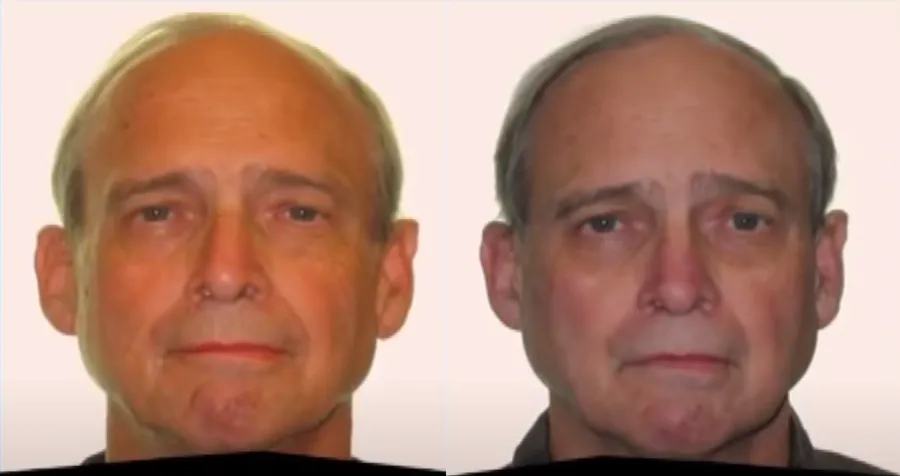
That's interesting, I had not come across that one before. That's pretty cool that as a dentist he was very conscious about photos and scans and made sure they were always done with the same lighting, with the same technician/camera, etc. ... and then he time-lapsed them really well!
This is actually the first example where it clearly looks like "counterclockwise rotation" of the maxilla is taking place?
What's also really interesting is that if he's being honest - it was the exact same camera and lighting for all photos ... his skin gets way better. In the initial photo of the time lapse, he has more of an overall "grayish" hue to his skin, which certainly isn't unusual for a man his age. But in the later photos his skin has a much healthier pinkish hint to it. Again, immediately I would think "lighting" - but if he was being honest about the capture of the photos, then lighting doesn't account for it.
It's also interesting because if you look at his pre-treatment time lapses where he uses his professional headshots over time ... you can actually see he's going through a bit of a "face melt" ... face is getting longer/narrower, as presumably his maxillary arch is slowly collapsing inward.
@toomer If sleeping on your side completely prevents the backwards pull on the maxilla (as a reaction to the forwards pull of the mandible), why do you have the mandibular advancement mechanism in the first place? Think about it.
So that when the muscles of the jaw relax completely during sleep, the resting position of the lower jaw is far enough forwards to keep the airway open.
I am not sure you are understanding. Either your natural mandible position is forward or something has to push the mandible forward. Since you are anchoring on the maxilla, the push effect from the mandible comes from pulling on the maxilla. Over the long run, you are going to pull your maxilla down and back.
Ronald Ead describes it as "amazing" in the comments, yet he still went on to ridicule James Nestor's success with the appliance on his channel.
That's interesting, I had not come across that one before. That's pretty cool that as a dentist he was very conscious about photos and scans and made sure they were always done with the same lighting, with the same technician/camera, etc. ... and then he time-lapsed them really well!
This is actually the first example where it clearly looks like "counterclockwise rotation" of the maxilla is taking place?
What's also really interesting is that if he's being honest - it was the exact same camera and lighting for all photos ... his skin gets way better. In the initial photo of the time lapse, he has more of an overall "grayish" hue to his skin, which certainly isn't unusual for a man his age. But in the later photos his skin has a much healthier pinkish hint to it. Again, immediately I would think "lighting" - but if he was being honest about the capture of the photos, then lighting doesn't account for it.
It's also interesting because if you look at his pre-treatment time lapses where he uses his professional headshots over time ... you can actually see he's going through a bit of a "face melt" ... face is getting longer/narrower, as presumably his maxillary arch is slowly collapsing inward.
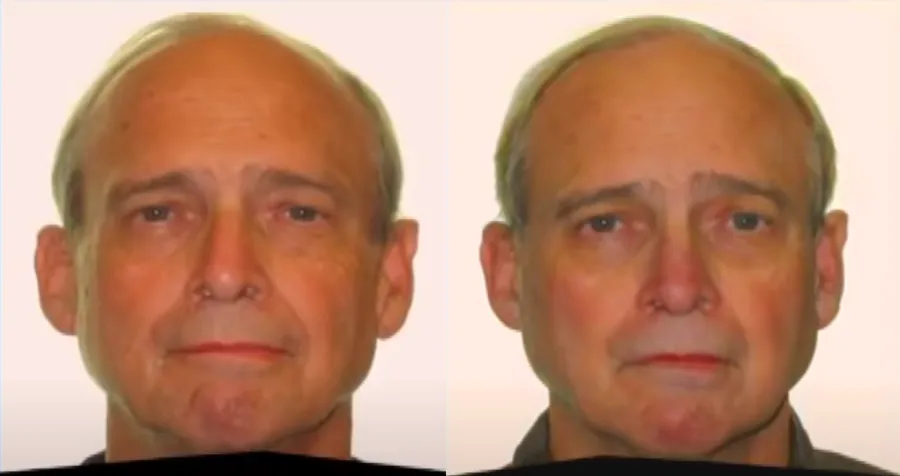
That definitely is not the same lighting, and it's also not a timelapse....it's just a morph between two images, which can be a bit misleading because it gradually blends between the two. A timelapse would consist of hundreds of different images and you would see every change along the way instead of blending between the before and after.
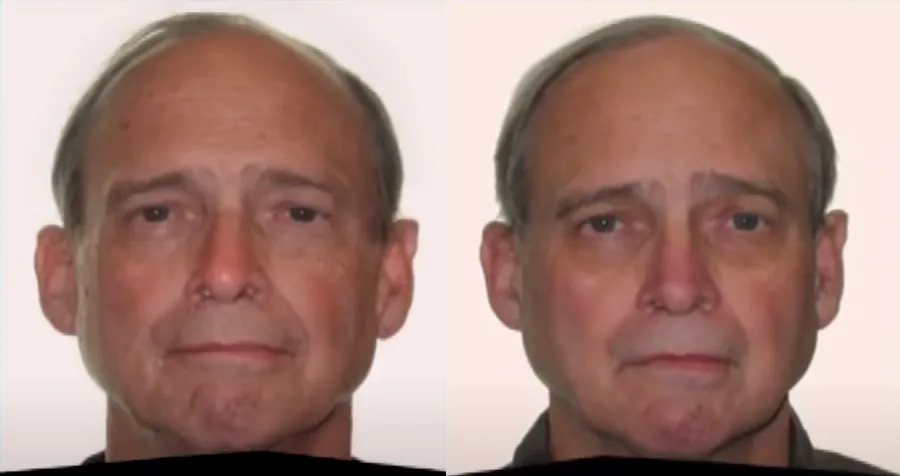
The hue of his skin is 100% lighting or color correction. I'm a photographer/videographer so I have a fair bit of knowledge about this stuff. They either color corrected the images by adding saturation to the 'after' or desaturating the 'before', or they simply had different lighting because the orange hue in the 'before' image is from a tungsten light source (which is 3200 kelvin), and the other image is most definitely not 3200 kelvin, it looks to be closer to daylight (5200k), or some kind of white fluorescent light. This is particularly noticeable if you look at his hair and the light on the edge of his face. The 'after' image has a greenish/yellow tone in the hair, which clearly shows it's a difference in lighting/color. The color of his orange skin, and the yellow hue in his hair, particularly in the profile angle, looks to me like it had the saturation boosted. His skin tone and yellow in his hair looks unnaturally saturated. And if it didn't, then it had different lighting and/or different white balance settings on the camera. You can change an image from having that orange tone, to a more neutral gray tone simple by changing the white balance settings on the camera. Whoever took these photos could have done that without even knowing.
Apart from that I don't really see a whole lot of significant change in his facial features....he just has a slightly different head position and expression on his face, which will create the illusion of some kind of change when they're morphed together.
Either way it's a bit of a red flag that there was some manipulation or misleading going on in this presentation.
I color corrected the images so you can see what they look like with the same lighting/white balance.
So that when the muscles of the jaw relax completely during sleep, the resting position of the lower jaw is far enough forwards to keep the airway open.
I am not sure you are understanding. Either your natural mandible position is forward or something has to push the mandible forward. Since you are anchoring on the maxilla, the push effect from the mandible comes from pulling on the maxilla. Over the long run, you are going to pull your maxilla down and back.
Thanks for your question and the opportunity to clarify my understanding with you. I get that you are worried about this, but I'm not. Here's why:
The jaw muscles relax completely when asleep. We never experience this when we are awake, so it's not obvious what it feels like. If I'm asleep on my side, once the mandible is pushed forwards it doesn't require any force from the maxilla to keep it resting there. The temporomandibular joint has an extremely wide degree of freedom so the range in which the mandible can rest without any muscle tension on it is very wide, but some resting positions compromise the airway more than others. A mandibular advancement device ensures that its resting position is restricted to avoid blocking the airway. If I'm asleep lying on my back the weight of the mandible is resting on my maxilla, but on my side it's not and the lower jaw is not being pulled back because its muscles are completely relaxed.
Another reason I'm not worried about this is because force from the Facemask will be countering any downward gravity vector from the mandible if I should roll towards my back; which will be minimised anyway due to the tennis ball.
And finally, it's only an interim measure anyway. I'll remove the mandibular advancer once my airway is large enough to not need it.
I don't much care about the change in his appearance personally. For me the take-home message is that his myriad of chronic health conditions all went away after using Homeoblock.
That definitely is not the same lighting, and it's also not a timelapse....it's just a morph between two images, which can be a bit misleading because it gradually blends between the two. A timelapse would consist of hundreds of different images and you would see every change along the way instead of blending between the before and after.
The hue of his skin is 100% lighting or color correction. I'm a photographer/videographer so I have a fair bit of knowledge about this stuff. They either color corrected the images by adding saturation to the 'after' or desaturating the 'before', or they simply had different lighting because the orange hue in the 'before' image is from a tungsten light source (which is 3200 kelvin), and the other image is most definitely not 3200 kelvin, it looks to be closer to daylight (5200k), or some kind of white fluorescent light. This is particularly noticeable if you look at his hair and the light on the edge of his face. The 'after' image has a greenish/yellow tone in the hair, which clearly shows it's a difference in lighting/color. The color of his orange skin, and the yellow hue in his hair, particularly in the profile angle, looks to me like it had the saturation boosted. His skin tone and yellow in his hair looks unnaturally saturated. And if it didn't, then it had different lighting and/or different white balance settings on the camera. You can change an image from having that orange tone, to a more neutral gray tone simple by changing the white balance settings on the camera. Whoever took these photos could have done that without even knowing.
Apart from that I don't really see a whole lot of significant change in his facial features....he just has a slightly different head position and expression on his face, which will create the illusion of some kind of change when they're morphed together.
Thanks - good additional perspective. As far as the number of photos in the sequence, he notes at around 11:45 in the video that photographs were taken "every 3 months" by a colleague who is an orthodontist. He also notes a bit later that it's a year and a half of photos - so I would assume the morph is a sequence of 5 to 6 photos. But that's a good catch on the hair color change ... so it could be lighting, or it could simply be the camera they used was on PHD mode ("Push Here Dummy") and applied whatever JPEG processing it thought would make the picture look good - including where to set the white balance. I wouldn't expect a dentist and an orthodontist collaborating to necessarily understand how to shoot RAW, and have the subject hold a greyscale card too.
No comments on any other of the time lapses? The i-Cat scan where it looks like you can see the frontal sinuses getting larger (sinuses are bone, you can't make them larger without creating new bone)? Where you can see the maxilla moving around and changing? The time lapses of the arch transformation? The mandibular tori visibly shrinking during the course of treatment?
These are all interesting indicators towards bone growth, IMO.
Thanks for asking. I've just passed the two month mark using my mRNA Appliance and posted this update on my blog today. The summary is that I've received my Bow facemask about 2 weeks ago and have got used to sleeping with it. My sleep seems to be improving and I'm not quite so drowsy during the daytime, but it's a slooooooow process and I can't say I feel dramatically different yet.
I am treating myself by fabricating my own clear aligners and my own acrylic expanders and have expanded maxilla by 4 mm in 1 month. I am in my 30s and immediately got a central diastema with evidence that this was bone-borne expansion in the lower maxilla where the expansion tapers towards the nose. I did not want parallel expansion as I already have very good nasal breathing now and did not want a wider nose.
So how is your treatment going so far? It's been a few more months since you posted that.
@greyham and others please be aware of the effects of radical turbinate resection and development of "empty nose syndrome" which there is no effective treatment for
Now that MSE has expanded my maxillary arch significantly wider than my mandibular arch, my orthodontist plans to use invisalign to bring my bite back together and close my diastema. I think this might include not only buccally tilting the lower teeth but also lingually tilting the upper teeth. I want to keep as much tongue space as possible. I know Dr. Ting sometimes uses a quad helix expander on the mandible. I have an old removeable acrylic expander that still fits my lower arch. I've debated trying to use it to get any potential bone bending or remodeling on the bottom during my MSE retention phase before I start the clear aligners to minimize the requirement for dental tilting. Given your experience, I wonder if you have any advice for using this kind of expander. How slowly would you recommend advancing turns? Should I make partial turns every few days when it doesn't feel as tight, or full 1/4mm turns all at once every week or more? If I want to try intermittent cycling, I should alternate on and off every hour during the day, and then use the expander throughout the whole night? Do you have any other recommendations? Is this a bad idea? Thanks for your help!
@apollo I'm not in any expanders yet so I can't reply, perhaps @greyham can share more based on his experience. I know that the general default expansion rate targeted for DNA in the upper is one turn (1/4mm) every 5-7 days. I believe the lower schedule is generally designed to be secondary to what's going on in the upper. But the reality will vary based on one patient to the next - some can go a little faster, some need to go a little slower (Belfor suggests a half turn every 10 days for some patients in Homeoblock). I've also seen interesting cases where bodies respond differently - there's one patient in our FB group that if she turns 1 turn every 5-7 days she gets some soreness in her teeth ... but if she turns a half turn she doesn't get that, and actually gets a small diastema opening up in-between her two upper incisors (which then goes away shortly after). This could be indicative of the difference between orthodontic (i.e.: inflammatory) movement of teeth, vs. orthopedic creation of new bone.
The general rule on the DNA approach is that you learn to turn it when your body is ready. For the upper DNA this usually means that when you put it in immediately after a turn, it should feel "snug" (but not painful) and then you go to bed. Coincidentally, night time is when it is believed that your body would do any movement of your teeth it would have wanted to do anyway, so the overnight wear is taking advantage of this. When you put it in again the next evening, it should still feel a bit snug again - but perhaps not as much as the night before. And then after a couple more nights, you'll put it in and it will just feel "loose" or normal at some point. That's when you know your body is ready for an additional turn. That might be 5 days for some people, but 7-10-14 for others.
@Thomas22 might also be able to comment on how he has been advancing his lower.
I just worry about someone with an AHI of 40 seeing much of a result from something as mild as DNA.
So, interesting data point here.
My AHI of 41 was diagnosed in a sleep lab in September 2018, where I was forced to sleep supine (which I don't usually do). When they could clearly see I was in the 30's to 40's, I was immediately moved into a "split study" in the middle of the night to spend the 2nd half of my night doing CPAP titration.
What makes me an odd case, though - is that pulse oxygen logs I had done shortly before my lab test showed that the start of my evening is generally pretty bad ... but then in the 2nd half of my evening I sleep much better and am getting good oxygen. I'm still at a bit of a loss on explanations for this, but it's relatively consistent ... so I don't think it's just sleeping position. Might have something to do with the body really muting sensations from the trigeminal nerve in the 2nd half of the evening, so my body stops thinking I'm congested when I'm actually not and then I breathe ok.
In any case - I have spent the last year in a mandibular bite splint which has moved my mandible forward "at least 3mm" (according to my regular cleaning dentist) and gotten my TMJs centered again. We're about to start the first of 2 expansion appliances - 1st being a "modified Schwarz" (basically run just like a DNA) for a little bit of saggital-only and to tilt me outwards a bit (my upper incisor angle - thanks to my childhood orthodontist - is 95, when the "norm" is more like 110-113). Then we move to DNA after a few months of that.
So in preparation for this, I did a full night at-home WatchPAT test this weekend just to see how my sleep was going now.
I still have apneas, but not as many. I seem to only have them when sleeping on my back or my stomach, if I'm on either side my apneas seem to go away entirely. And the pulse oxygen drops were not as severe. My AHI was 11 all night ... which was partially because this was actually a full-night of data as opposed to my split study which was a recording of my worst part of a night. But it's dramatically different from 2.5 years ago - the advancement of the mandible has certainly helped to a degree, so hopefully I don't actually need about too much fixing of the maxilla to accomplish the rest. I need about 3-5mm of forward total, and laterally I need about 7mm. My provider says he's been able to accomplish as much as 7mm A/P in some patients, so hopefully I'm in the realm of what DNA can achieve.
I was instructed not to advance my lower for the first three weeks.
The doctor said we needed to "unravel" my lower jaw. Which makes sense to me. My teeth are crowded, and they can't expand outwards without running into each other. The mandible is also much thicker bone.
I may need to expand my lower more slowly, at least at first.
He said that one of the reasons he likes the dna appliance is because it will drop the roof of your mouth, unlike MSE.
But what happens when you remove the appliance in MSE? It makes sense to me that the palate would start to drop once you did that.
Somewhere I thought I posted an article about the potential for remodeling after MARPE expansion but I haven't been able to find it. I did find a post where @abdulrahman mentioned alternative MSE retention strategies and @varbrah discussed the potential for relapse when the skeletal anchorage is removed before the suture gap fills in.
With difficulty. Obviously it is impossible to mew correctly with it in as you cannot make contact with the entire palate, but I do my best to exert an upwards force at all times, and sometimes I’ll push forward with my posterior tongue against the expander when not wearing FM. Can’t hurt imo
Can't your doctor remove the expander and place a lingual wire or a Hawley style retainer that's easier on your tongue? I remember my doctor telling me about using such retention method in cases he treated with traditional skeletal expander. I wonder if your doctor left the expander in place because he can't risk removing the mini screws at this stage.
Neither are as stable. We are doing this by the books, even recommended by Won Moon himself for the MSE protocol. I guarantee the above methods resulted in significant skeletal relapse for your doctors patients probably somewhat mitigated by alveolar ridge remodeling.
The guy on the class3mse.medium.com blog has just switched from MSE to a hyrax expander after his suture separated and I suspect a lot of his skeletal expansion will relapse as the alveolar ridge remodels to the width held by the hyrax. He might lose the nasal breathing benefits. Even with the MSE TADs in place for retention, I suspect there is some remodeling of the contour of the palate since the rest of the framework of the MSE doesn't touch the tissue. So the vault might become less steep. My left side used to be steeper than my right side and I think it has leveled out a little. There's some amount of bending and remodeling that occurs even during the expansion. Once the MSE comes out and realignment is complete, it's up to your tongue or whatever retainer your orthodontist provides to avoid relapse.
He said that one of the reasons he likes the dna appliance is because it will drop the roof of your mouth, unlike MSE.
But what happens when you remove the appliance in MSE? It makes sense to me that the palate would start to drop once you did that.
This was one of the criticisms that Ronald Ead eventually made for AGGA. He noted that even if it was expanding things forward (which he was doubting) it wasn't doing anything to deal with the vaulting of the palate and drop it down.
But the DNA/Homeoblock inventors specifically noted that in their patent in 2004, that that was one of the reasons why other split-palate acrylic appliances hadn't delivered results - because they were up against the top of the palate entirely, and thus there was no room for it to "drop" down as expansion occurred, and thus over a period of time too much force was imparted into the teeth. That's why DNA providers grind down the top to make sure it's not making contact. And then many patients eventually feel as though it's touching again - which is an indication that the palate has dropped down.
I have no idea if MSE creates that dynamic or not. I don't think I've ever heard it mentioned, but I don't want to assume it doesn't happen.
Now that MSE has expanded my maxillary arch significantly wider than my mandibular arch, my orthodontist plans to use invisalign to bring my bite back together and close my diastema. I think this might include not only buccally tilting the lower teeth but also lingually tilting the upper teeth. I want to keep as much tongue space as possible. I know Dr. Ting sometimes uses a quad helix expander on the mandible. I have an old removeable acrylic expander that still fits my lower arch. I've debated trying to use it to get any potential bone bending or remodeling on the bottom during my MSE retention phase before I start the clear aligners to minimize the requirement for dental tilting. Given your experience, I wonder if you have any advice for using this kind of expander. How slowly would you recommend advancing turns? Should I make partial turns every few days when it doesn't feel as tight, or full 1/4mm turns all at once every week or more? If I want to try intermittent cycling, I should alternate on and off every hour during the day, and then use the expander throughout the whole night? Do you have any other recommendations? Is this a bad idea? Thanks for your help!
That's a really interesting question @apollo; I've always wondered what MSE users do about their mandible.
I turn my lower mRNA appliance one 1/4mm turn per week and cycle it hourly during the day as far as practical, plus using it throughout the night; all exactly as you describe. Sounds like a great idea to me, and I'd be keen to hear how it goes.
That's a really interesting question @apollo; I've always wondered what MSE users do about their mandible.
I turn my lower mRNA appliance one 1/4mm turn per week and cycle it hourly during the day as far as practical, plus using it throughout the night; all exactly as you describe. Sounds like a great idea to me, and I'd be keen to hear how it goes.
Thanks @greyham, I remember reading on your blog that you advanced farther with the upper while the lower was delayed for the dentist to make fit adjustments to avoid ulcerating your gums. Once those hotspots were filed down, have you been advancing the upper and the lower at the same rate, or do you sometimes subjectively feel that the lower is still tight while the upper is loose and decide to turn the upper before the lower? I guess what I'm asking is if you stick to the predetermined protocol of 1 turn per week top and bottom or if you adapt the schedule based on how it feels. One issue I've noticed with my lower schwartz-style expander is that the screw seems to wind itself backward, maybe when I pop the appliance in and out. So I'm not actually making the progress I think I am. I'll think that it is feeling less snug after about a week and decide to advance the screw, but if I wind it all the way closed and count the turns I find that it had reversed itself and advancing a turn would just put me back where I started. If I try to advance it another turn to where it should be based on the schedule, then it feels uncomfortably tight. This is probably an issue with my mechanism or how it was fabricated, so I've been trying to count the turns every day to make sure it is set where I want it to be and not gradually backtracking. I have 4 more days before I'm due to advance again if I follow the 1 turn per week schedule.
I generally stick to the one-turn-per-week schedule on both when I don't have an impingement, and my lower appliance is lagging behind the upper by 1.2 mm since I've had more lower impingements. But oddly enough I wound the lower appliance forward mid-week last week for the first time in 4 months because it was so loose. Thanks for the heads-up on the screw isn't winding itself back; I'm pretty sure that isn't happening for me because it's always at the start/end-of-turn position when I do an advance but I'll keep an eye on it to make sure it's in the end-of-turn position each day and isn't doing something sneaky behind my back; or jaw.
One issue I've noticed with my lower schwartz-style expander is that the screw seems to wind itself backward, maybe when I pop the appliance in and out. So I'm not actually making the progress I think I am. I'll think that it is feeling less snug after about a week and decide to advance the screw, but if I wind it all the way closed and count the turns I find that it had reversed itself and advancing a turn would just put me back where I started. If I try to advance it another turn to where it should be based on the schedule, then it feels uncomfortably tight. This is probably an issue with my mechanism or how it was fabricated, so I've been trying to count the turns every day to make sure it is set where I want it to be and not gradually backtracking. I have 4 more days before I'm due to advance again if I follow the 1 turn per week schedule.
Thanks for the heads-up on the screw isn't winding itself back; I'm pretty sure that isn't happening for me because it's always at the start/end-of-turn position when I do an advance but I'll keep an eye on it to make sure it's in the end-of-turn position each day and isn't doing something sneaky behind my back; or jaw.
Hi @greyham, interesting to read on your blog post for this month that you encountered this same issue with the appliance surreptitiously winding itself backward. It's reassuring to know that it's not just an issue with my generic lower schwartz. I've been winding mine all the way closed and counting the turns forward every day. Now past 28 turns, it is troublesome and I worry that I might miscount. I also noticed on my expander that each turn advances less than 1/4mm. It seems to be about 5 turns per millimeter on mine, with 28 turns giving less than 6mm separation.
One issue I've noticed with my lower schwartz-style expander is that the screw seems to wind itself backward, maybe when I pop the appliance in and out. So I'm not actually making the progress I think I am. I'll think that it is feeling less snug after about a week and decide to advance the screw, but if I wind it all the way closed and count the turns I find that it had reversed itself and advancing a turn would just put me back where I started. If I try to advance it another turn to where it should be based on the schedule, then it feels uncomfortably tight. This is probably an issue with my mechanism or how it was fabricated, so I've been trying to count the turns every day to make sure it is set where I want it to be and not gradually backtracking. I have 4 more days before I'm due to advance again if I follow the 1 turn per week schedule.
Thanks for the heads-up on the screw isn't winding itself back; I'm pretty sure that isn't happening for me because it's always at the start/end-of-turn position when I do an advance but I'll keep an eye on it to make sure it's in the end-of-turn position each day and isn't doing something sneaky behind my back; or jaw.
Hi @greyham, interesting to read on your blog post for this month that you encountered this same issue with the appliance surreptitiously winding itself backward. It's reassuring to know that it's not just an issue with my generic lower schwartz. I've been winding mine all the way closed and counting the turns forward every day. Now past 28 turns, it is troublesome and I worry that I might miscount. I also noticed on my expander that each turn advances less than 1/4mm. It seems to be about 5 turns per millimeter on mine, with 28 turns giving less than 6mm separation.
Hmmm... I don't know what's going on. I see my blog post from yesterday just contradicted my assertion from 5 months ago that my screw isn't winding itself back. And funnily enough I see I actually wrote "Thanks for the heads-up on the screw isn't winding itself back" here: I'm not making any sense there with that "isn't", and maybe I didn't pay as much attention to your observation as I should have. The idea of winding it all the way back to check is great, but the lip bar on my DNA (which I'm guessing your Schwarz doesn't have) makes that impractical. Maybe the screws in these appliances aren't 0.25 mm per quarter turn after all, or maybe it's winding itself back and I'm not noticing. All I know is I'll be keeping a closer eye on it from now on, so thanks again for your feedback @apollo.
Hmmm... I don't know what's going on. I see my blog post from yesterday just contradicted my assertion from 5 months ago that my screw isn't winding itself back. And funnily enough I see I actually wrote "Thanks for the heads-up on the screw isn't winding itself back" here: I'm not making any sense there with that "isn't", and maybe I didn't pay as much attention to your observation as I should have. The idea of winding it all the way back to check is great, but the lip bar on my DNA (which I'm guessing your Schwarz doesn't have) makes that impractical. Maybe the screws in these appliances aren't 0.25 mm per quarter turn after all, or maybe it's winding itself back and I'm not noticing. All I know is I'll be keeping a closer eye on it from now on, so thanks again for your feedback @apollo.
These things are sneaky! My expander seems to have both issues, winding itself back and each turn reaching closer to 1/5 than 1/4 millimeter. The labial bow on my expander hasn't needed to be adjusted yet, and it's flexible enough to make all 28 turns backward and forward. If I advance much farther that could become an issue. I've also noticed that I can squeeze the distal molar ends of my expander together by a couple millimeters. The acrylic framework seems to flex at the front where the screw mechanism is on these lower appliances. So it's probably expanding the intercanine width more than the intermolar width.
I had MSE w/ surgical assist 7 weeks ago with doctors Ting and Vaughan, and I really regret not going with the DNA instead. My nasal breathing has not improved, and the recovery has been worse than expected. I was very swollen for the first 3 weeks and am still noticeably swollen after 7 weeks.
I'm not clear on why my breathing didn't improve as I had a high arched narrow palate, standard for a long time mouth breather like me.
I wasn't prepared for all the aesthetic changes, which I feel are overall negative. Especially for my nose - my nose is wider, more crooked, and the front of my nose is upturned so that my nostrils are more visible. Also, one nostril is noticeably larger than the other given the expansion was asymmetric.
Also, I have not been impressed with Dr. Ting or Vaughan, and am regretful of trusting them so much.
I do still have a large diastema, which will likely not be fully closed for 4-5 months. It's more socially embarrassing than I anticipated. I'm less social now, and I feel like I need to explain all the background of the MSE to everyone I meet because the diastema looks so odd.
Also, one nostril is noticeably larger than the other given the expansion was asymmetric.
This is interesting since one of the advantages typically attributed to the surgical assist method is that it should result in symmetric expansion since it releases the resistance on both sides, whereas MSE without surgical assist can encounter more resistance from one side. I'm sorry to hear that you regret your treatment! Did you consider attempting MSE without surgery first, or did Dr. Ting discourage that because of your demographics?
@Apollo, yes Dr. Ting said I would need the surgical assist since I'm 35 years old. I also had a very narrow and high arched palate. I did consult with Dr. Zaghi at The Breathe Institute too, and he confirmed I would need surgical assist.
As far as the expansion, the impact on my nose has definitely been asymmetrical. My nose is now bent to one side and one nostril is larger than the other.
I've been feeling pretty down and out about the whole procedure. I'm in a worse spot now than when I started. My plan is to wait until I'm fully healed (I'm guessing that takes approx. 6 months?) and to then get a septorhinoplasty to hopefully improve my breathing and undo some of the cosmetic damage caused by the MSE.
@Apollo, yes Dr. Ting said I would need the surgical assist since I'm 35 years old. I also had a very narrow and high arched palate. I did consult with Dr. Zaghi at The Breathe Institute too, and he confirmed I would need surgical assist.
As far as the expansion, the impact on my nose has definitely been asymmetrical. My nose is now bent to one side and one nostril is larger than the other.
I've been feeling pretty down and out about the whole procedure. I'm in a worse spot now than when I started. My plan is to wait until I'm fully healed (I'm guessing that takes approx. 6 months?) and to then get a septorhinoplasty to hopefully improve my breathing and undo some of the cosmetic damage caused by the MSE.
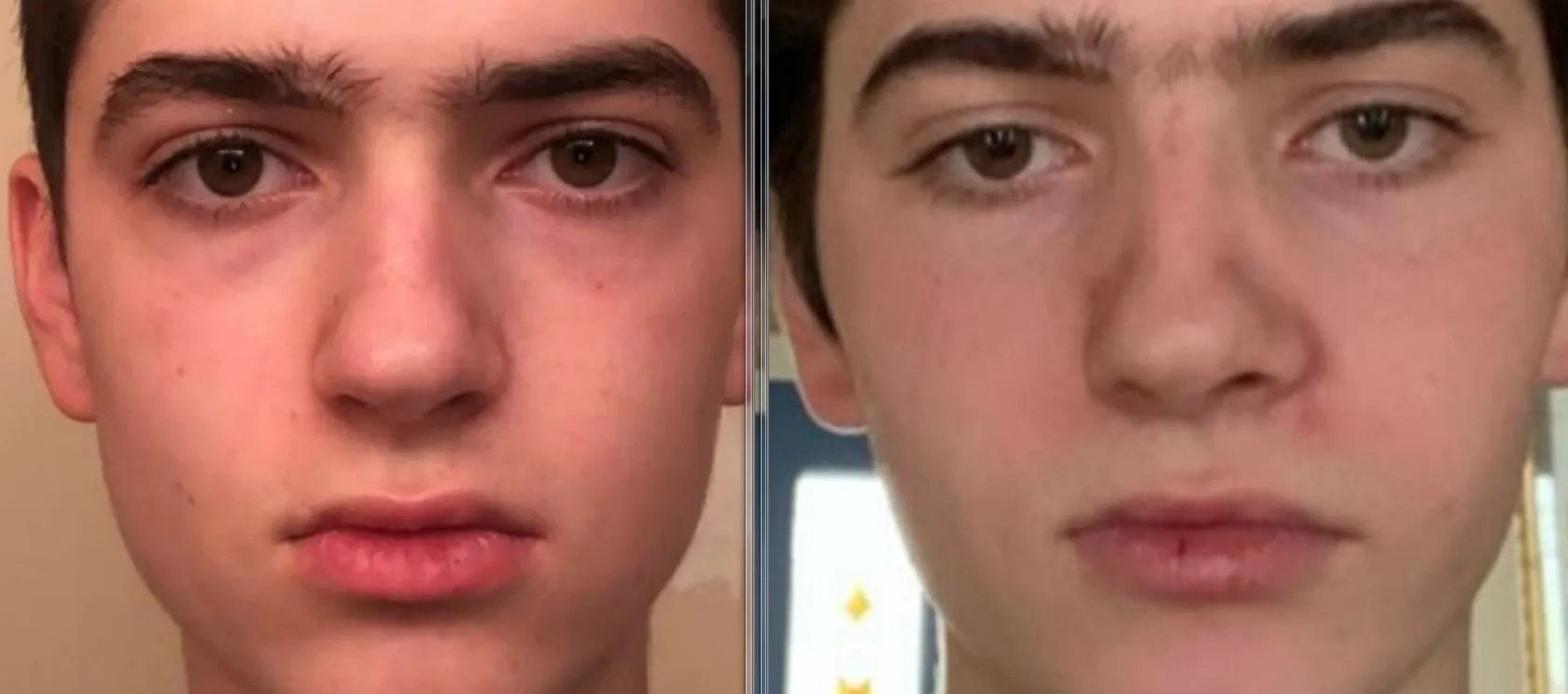
I’m a male slightly older than you and my suture split with only cortipuncture facilitation, but I understand there’s a higher risk for failure in older men. I’ve seen this case of MSE-induced nose asymmetry on Reddit:
Did your nose expand more on the side your septum deviates toward or away? In my case, if anything my nose looks a little more symmetrical after expansion, although my dental arch expanded a little more on my wider side, which is the side my septum deviates away from. Still, I seemed to get enough expansion in the constricted nostril that my septum deviates toward to now breathe freely through it.
@Apollo, my nose expanded more on the side my septum deviates away from. It's an odd, unnatural look, and I'd rather not post my photos publicly, but it's a fairly similar result as the Reddit post you linked to, including the asymmetric nasal expansion and the eyes that are set further apart. My overall result is I think worse than his.
I feel silly for not fully considering these risks beforehand. If I had known there was a good chance my appearance would be worse after the procedure, I wouldn't have done it. I have a follow up appt with Ting tomorrow, and I plan to give him a piece of my mind.
@Apollo, my nose expanded more on the side my septum deviates away from. It's an odd, unnatural look, and I'd rather not post my photos publicly, but it's a fairly similar result as the Reddit post you linked to, including the asymmetric nasal expansion and the eyes that are set further apart. My overall result is I think worse than his.
I feel silly for not fully considering these risks beforehand. If I had known there was a good chance my appearance would be worse after the procedure, I wouldn't have done it. I have a follow up appt with Ting tomorrow, and I plan to give him a piece of my mind.
I am sorry to hear about your disappointing result! How rapidly did you advance the appliance? Is it worth considering turning backward at least part way? Let us know how Dr. Ting responds to your case. If I remember right, he suggests there is generally a positive or negligible change in facial form during his JawHacks interview, and aesthetic complaints are rare.
@Apollo, thanks for the feedback, I appreciate your interest! I met with Ting today and told him that I believe the expansion has had a negative aesthetic impact, especially my nose.
We are going to back turn, like you suggested. I initially did approx. 50 turns to expand (2 per day as recommended by Ting). I plan to do approx. 12 back turns total. I'm also getting a lower quad helix installed on Friday to help expand the lower jaw/ teeth.
Tings concern with backturning is that it may not allow for enough space to complete his initial plan with the quad helix. My concern is that the expansion seems to be damaging my nose, or at least causing serious discomfort and asymmetries.
The relationship with Ting is getting uncomfortable. I'm frustrated with him, and he is frustrated with me. From my perspective, this experience has been awful, and I wish I could turn back time and have never done this. So, for any prospective patients out there, beware - this treatment is not all sunshine and roses for everyone.
I’ve seen this case of MSE-induced nose asymmetry on Reddit:
Holy crap.
And all the MSE zealots give DNA a raft of shit? Sure, we can argue whether or not DNA actually gives you more room in the nasal cavity or not ... but I've never seen it wreck a face at all.
Do you have a link to that Reddit post? I'd like to read the kid's story...
This is just negligence on the provider's part. They should be monitoring the expansion and making corrections if asymmetrical expansion is occurring. It looks like only one side of his maxilla mobilized, though photographs aren't very reliable. This doesn't make MSE look bad, it makes the provider look bad. Dr. Bockow talks about looking for this early on and aborting or correcting it.
You won't see DNA do something like this because DNA isn't expanding the maxilla.
Ahh yes, how could I have forgotten about Dr. Singh's research (about his own product), that has never been replicated by anyone else.
Actually, the work that goes into the reports comes from dentists in lots of different countries around the globe. The study on maxillary air sinuses getting larger (that has been done more than once) was done on Korean patients not being treated by Dr. Singh. They just send him the CBCTs, and he works on getting it in journals ... because your average dentist doesn't really want to spend time doing that.
It all is kind of logical ... if you don't look at it with a conspiracy frame of mind.
And then, of course, there's James Nestor's Homeoblock case which was analyzed by the Mayo Clinic. But we'll just try to pretend that doesn't exist either.
For some ... none of this might be enough of an evidentiary bar ... and that is everyone's individual choice. The Oxford Center for Evidence Based Medicine publishes level of evidence guidance for a reason - everyone can decide where they are (or aren't) comfortable hopping onboard with something.
My supine AHI has been cut by over 50% already - from 40 down to 18 - validated with in-lab PSG ... done in the same lab as my first sleep apnea test. So I'm happy with the progress so far.
The DNA appliance works. It will expand the palate and move the maxilla forward, however, for certain patients, this is only one dimension and it might not even begin to resolve serious health problems. I will say that this device is good for sleep apnea but does not help to solve postural problems and doesn't change the position of the head nor increases the height of the molars. I finished my VIVOS treatment more than a year ago and I can confirm that this treatment is good for expanding the palate and improving the maxilla but that's about it. Not all cranial distortions will be fixed with the DNA appliance. I have attached my results with the VIVOS system and there's certainly an improvement but I'm simply not much healthier than when I started.
In my opinion, there's nothing magical about DNA/Vivos in comparison to other appliances. A lot has to do with who is in charge of the treatment. In my case, I will be starting treatment soon with the Starecta method which claims to solve a lot of the things that the VIVOS treatment could not. The best thing is that this treatment is done by myself at home with an appliance that costs $79 or merely $500 for an upgraded version. I get the idea that a lot of dentists don't understand how the entire facial structure should work in relation to everything else in the body. This is evident in that even after undergoing treatment with one appliance, a lot of people keep looking to get more appliances to fix what the previous appliance couldn't do. If the lower jaw is unable to support the skull due to lack of dental height then no real healing can be achieved.
In my opinion, there's nothing magical about DNA/Vivos in comparison to other appliances. A lot has to do with who is in charge of the treatment.
It's worth noting that Dr. Liao - who was a long-time provider of Vivos, and actually was co-author on some of the earliest clinical reports Dr. Singh published - is now using his own appliance, which does not have the front springs. Likewise, Dr. Miraglia in NYC is a Vivos provider but he is also treating some patients with modified Schwarz appliances and in some cases apparently clear aligners.
So I'm not sure the "springs" are what makes Vivos do what it does. But I think Dr. Singh has done a good job of standardizing an approach/technique ... most important, the on-and-off wear time, unlike 24x7 wear which is what Ronald Ead had. Occlusal coverage and addressing the vertical domain of occlusion as well is also an important part.
Glad it worked well enough for you ... if you've got more you can share about your case, that would be great to know. Good luck on the Starecta treatment. Are you working with a good Atlas or Nucca chiro, or a osteopath, while you are doing that? I can't imagine trying something like Starecta without someone else focusing on the rest of the body.
When I first started seeing the dentist who oversaw my Vivos treatment I was referred first to a Physical Therapist for myofunctional therapy. The therapist gave me some exercises to strengthen the tongue for a tongue-tie release. The tongue tie release was successful in that my tongue mobility greatly increased. The physical therapist was perplexed with my case, he kept checking my heart rate and at one point told me that my heart was overworking. I then went to a chiropractor that performed a full-body x-ray on me and I had scoliosis. I suffer from horrendous upper back pain and an asymmetric body and face. Whenever I try to do any type of physical exercise I'm literally obliterated for 5 days following in that I even struggle to think from my exhaustion.
As for sleep apnea, I would say I never really had it. The sleep study I did for Vivos put me at 5 incidents per night and after Vivos I was at 4; the results are inconclusive and could be margins of errors. For the Vivos treatment, I had two appliances (the bottom one wasn't very impressive/interesting). I also wore the face mask religiously. Based on my research, doing the Vivos treatment before correcting the bite height through Starecta was a mistake. One needs proper body posture to maintain the results achieved by Vivos (and improve upon them). I would also add that Vivos is not the best device out there for the upper jaw simply because it doesn't facilitate proper tongue posture.
Starecta works by itself as it makes use of an orthopedic "lever" activated by the splint. It's a very natural treatment as it works based on Newtonian mechanics. If the starecta splint is used alone it can create a space between the dental arches (this depends on the severity of the assymetries), however, this space can be corrected by proper tongue posture (mewing) or devices that can mimic mewing. The starecta tailored rectifier can be used along with the ALF appliance. If you're interested in understanding how Starecta works I recommend the following blog post:
From what I have read, Mewing or Maxilla development is only one part of the equation, complete body symmetry using a method such as Starecta is also necessary to get the most optimal results for our genetic potential. Mewing does work past puberty, but if you have asymmetries that don't even allow you to rest your tongue evenly on your palate you're wasting your time and maybe even making things worse. There's more to Starecta than everything I've mentioned above so if you're interested there's a lot of information on the blog I linked as well as the Starecta website.
@ancoratuStarecta works by itself as it makes use of an orthopedic "lever" activated by the splint
That is giving me flashbacks to the old belt pulling methods. Have real people confirmed progress with this thing? It really seems to be based on pulling.
The site claims
The Starecta method has scientifically proven and documented evidence for the fixing morphological deformities of the twisted spine,
I do believe they have some documentation to prove this. You can check more about Starecta on their Facebook group however from what I've read myself this device is only a quick-fix. If you have serious cranial distortions Starecta will not fix and those distortions can be the cause of many symptoms including TMD. Those distortions can be fixed using an Alf by a real specialist. It is not just a slow expander, it can also fix cranial distortions if employed by a good professional of which there are not many in the world at the moment. I'm currently seeing such a specialist, essentially paying what most people would pay for these other devices (DNA, MSE, AGGA) except that this specialist was able to diagnose lordosis and Tmd and he told me all of these problems were connected to my malocclusion. He will also use turbo blocks to raise the height of my back teeth and get rid of the deep bite position which is causing problems for the TMJ discs.
Also, Alf != DNA appliance. I am of the opinion that DNA is actually a basic expander that has been wrapped up in bs marketing. I do not recommend this appliance to anyone for that high cost of 8.5k. You will expand but expansion is only one part of the equation. If you look at the blog above, the writer has an Instagram filled with success stories from people of all ages. Essentially cranial bones can always change and move around even well past 25 but it's a slow and gradual process. MSE is the most unintuitive thing one could potentially do given that you'll end up with a very large upper jaw that cannot be supported by the lower jaw, as a result, the same thing is trying to fix (airway) will collapse as there is no support.
Note the guy above still plans to go through double jaw surgery to correct his sleeping issues after going through MSE. This seems to be the normal approach if you go to most "specialists" in the U.S., they just keep throwing invasive procedures to the problem and this shows a lack of basic understanding.