This seems like a miracle appliance, so what is the catch?
If it moves the maxilla forward, does it mean the whole midface including the nose comes forward?
Or does it move only lower part of maxilla, since most pressure is inside the mouth? If it moves only lower part of maxilla, then won't this cause nose to change shape?
And what are the risks associated with this procedure? To me it seems it might replace Le Fort II in terms of effectiveness.
Does anyone have more experience with this? And what Mike Mew things of FAGGA aplliance?
30 yo, need to expand palate, move maxilla upward and forward, reduce gonial angle.
I'm starting this treatment this month hopefully! Will keep you guys updated.
Keep us updated, which doctor are you having this treatment done with? At what speed do they expand? 1 mm a week? Do you have initial pics and will you post after pics (blanked eyes of course)?
it does move the whole mid face. But it does NOT move the maxilla up and forwards, but only forwards.
Moving maxilla forward and expanding sideways should also reduce gonial angle, right? Still, even if it does not move upwards, it is a tremendous improvement since you can get up to 12 mm of movement without surgery.
The last picture is a morph though, the hair remains the same while face changes.
30 yo, need to expand palate, move maxilla upward and forward, reduce gonial angle.
Keep us updated, which doctor are you having this treatment done with? At what speed do they expand? 1 mm a week? Do you have initial pics and will you post after pics (blanked eyes of course)?
Will PM doctor name. I will provide you guys with properly taken pictures. 1mm a month is the rate of expansion in most cases, however there are some who can get more expansion. I actually provided a bit of wrong information on my last comment on the other thread, while the appliance let's you keep your tongue on the roof of the mouth, it does not let you keep your teeth together. They seem to put a flat splint on the lower jaw during the treatment in order to stop the lower jaw from locking into place.
Moving maxilla forward and expanding sideways should also reduce gonial angle, right? Still, even if it does not move upwards, it is a tremendous improvement since you can get up to 12 mm of movement without surgery.
The last picture is a morph though, the hair remains the same while face changes.
It should yeah. However not everyone seems to get a big change in the gonial angle like the man on the picture you posted (For some reason). I saw one other picture from a dentist in Australia and he showed me a patient with big changes in the gonial angle like the one you posted above, while the other ones seems to only have minimal changes to the point where he did not document them.
I honestly don't know what the catch is. I ask myself this as well. While it's not the ideal changes you want (Facial upswing) it seems to help tremendously with asymmetry, and also improving the side profile for people with turkey gobblers.
How does the lower arch keep up with such a massive expansion in the upper arch? Or is the appliance installed in the lower jaw also, though the pictures show the appliance installed on the upper arch only.
How does the lower arch keep up with such a massive expansion in the upper arch? Or is the appliance installed in the lower jaw also, though the pictures show the appliance installed on the upper arch only.
Yes, actually this is a legit question, how do lower teeth keep up with upper jaw expanding forward? How does lower jaw grow forward and fit the bite?
30 yo, need to expand palate, move maxilla upward and forward, reduce gonial angle.
How does the lower arch keep up with such a massive expansion in the upper arch? Or is the appliance installed in the lower jaw also, though the pictures show the appliance installed on the upper arch only.
Yes, actually this is a legit question, how do lower teeth keep up with upper jaw expanding forward? How does lower jaw grow forward and fit the bite?
Many possible mechanisms:
A)The teeth together would cause the lower arch to be pushed out from the forces of the upper jaw. This would essentially push out the mandible laterally, resulting in an increased mandible width. To demonstrate this, imagine you holding a model of a mandible and then push the teeth out. The bone movement would then follow
B)the maxillary upswing would cause the mandible to swing upwards in order for the bite to make contact .
C)The outward and forward expansion of the maxilla gives the mandible more room to just forward . Picture a smaller U vowel sitting inside a larger U vowel. This enhanced space lets the mandible just forward naturally while kkeeping a closed bite
D)Chewing would activate the masseters and in turn this increased muscle growth results in a longer ramus and wider mandible which naturally would "fit iitself " together with the maxilla through the pressures of the teeth coming together during chewing. These forces from the upper teeth against tthe lower teeth would theoretically cause pressure to be applied outwards on the lower teeth.
To be honest the last part of D seems the least likely. All of the others IMO would eexplain how the mandible is flexible to the movements of the maxilla.
How does the lower arch keep up with such a massive expansion in the upper arch? Or is the appliance installed in the lower jaw also, though the pictures show the appliance installed on the upper arch only.
Yes, actually this is a legit question, how do lower teeth keep up with upper jaw expanding forward? How does lower jaw grow forward and fit the bite?
Many possible mechanisms:
A)The teeth together would cause the lower arch to be pushed out from the forces of the upper jaw. This would essentially push out the mandible laterally, resulting in an increased mandible width. To demonstrate this, imagine you holding a model of a mandible and then push the teeth out. The bone movement would then follow
B)the maxillary upswing would cause the mandible to swing upwards in order for the bite to make contact .
C)The outward and forward expansion of the maxilla gives the mandible more room to jut forward . Picture a smaller U vowel sitting inside a larger U vowel. This enhanced space lets the mandible jut forward naturally while kkeeping a closed bite
D)Chewing would activate the masseters and in turn this increased muscle growth results in a longer ramus and wider mandible which naturally would "fit iitself " together with the maxilla through the pressures of the teeth coming together during chewing. These forces from the upper teeth against tthe lower teeth would theoretically cause pressure to be applied outwards on the lower teeth.
To be honest the last part of D seems the least likely. All of the others IMO would eexplain how the mandible is flexible to the movements of the maxilla.
How does the lower arch keep up with such a massive expansion in the upper arch? Or is the appliance installed in the lower jaw also, though the pictures show the appliance installed on the upper arch only.
Yes, actually this is a legit question, how do lower teeth keep up with upper jaw expanding forward? How does lower jaw grow forward and fit the bite?
For forward changes, the mandible is able to swing up to meet the maxilla in its more forward position. Just try protruding your mandible so that the lower incisors jut out beyond the upper incisors, and it will give you a feel for this potential. This is in contrast to the transverse expansion discussed in the other thread about the mandible keeping up with the maxilla.
For forward changes, the mandible is able to swing up to meet the maxilla in its more forward position. Just try protruding your mandible so that the lower incisors jut out beyond the upper incisors, and it will give you a feel for this potential. This is in contrast to the transverse expansion discussed in the other thread about the mandible keeping up with the maxilla.
Dr. Mew often alludes to this process in his description of Orthotropics. He explains on his website: "This initial treatment creates a temporary malocclusion where the front teeth stick out and the upper jaw appears to be too wide."
This is of course for kids who are still growing (5-6 years old), but for adults it's different. There is no more growth to compensate for this difference; just limited remolding. Without significant stimulus, I doubt the lower arch can keep up with 12mm forward expansion.
Theoretically the compensation could come from teeth shifting. Move upper jaw forwards and tilt the upper teeth to the inside and tilt the lower teeth to the outside. This would partially compensate.
30 yo, need to expand palate, move maxilla upward and forward, reduce gonial angle.
Theoretically the compensation could come from teeth shifting. Move upper jaw forwards and tilt the upper teeth to the inside and tilt the lower teeth to the outside. This would partially compensate.
Most people myself included are seeking Orthotropics not to move the teeth around but rather to expand the jaws including the lower. This will open up the airway, resolve tmj, and improve the facial profile.
Theoretically the compensation could come from teeth shifting. Move upper jaw forwards and tilt the upper teeth to the inside and tilt the lower teeth to the outside. This would partially compensate.
Most people myself included are seeking Orthotropics not to move the teeth around but rather to expand the jaws including the lower. This will open up the airway, resolve tmj, and improve the facial profile.
I know, but you still have to have a proper bite and teeth have to align properly during bite. If the bite gets messed up, what then?
30 yo, need to expand palate, move maxilla upward and forward, reduce gonial angle.
I know, but you still have to have a proper bite and teeth have to align properly during bite. If the bite gets messed up, what then?
You can use wires to torque the front teeth forward 1-2mm, but that would be closing the gap that otherwise could be closed with more proper methods such as fixing head posture and releasing tight flexor neck muscles that are holding back the lower jaw. Also when the tongue is postured correctly with backward pulling suction the lower jaw juts forward. I see none of this covered by those appliance promotional materiel. This makes me suspicious of their claims.
And this. I'm actually very very very impressed. These are both after 5mm of advancement and this looks like some legitimate forward growth of both jaws happening. I hope some more people here can give it a try, I can't afford it right now.
On the bright side, it definitely seems to be doing the same thing as mewing. Same basic premise. Just faster results because it's a device.
I've done a little more research about this device. It is also called the "controlled arch." I guess it is only "fixed" in the sense that it is bonded to the teeth, in contrast to the "removable anterior growth guidance appliance," which is used in young children. I wondered if there might be any temporary anchorage screws involved, but from what I can tell there aren't. There just seems to be orthodontic bands around the first molars and first bicuspids connected by a wire with a spring on the buccal or lingual side of the arch to an anterior wire that includes an acylic piece to distribute the force over a wider surface area.
They open up a space between the canines and first bicuspids, and then bring the rest of the teeth forward in a stepwise fashion. It's unclear to me how they insure that the direction of movement is always forward rather than the reciprocal force pushing the rear teeth farther back. This is why I thought they might use temporary anchorage devices screwed into the bone. The initial separation is posterior to the premaxillary suture, so I think this anterior growth is based on bone remodeling rather than suture separation. Dr. Mew has stated on the BTM forum that he believes the premaxillary suture fuses ( http://breakthematrix.createaforum.com/therapies/could-you-please-give-advice-to-a-doctor-trying-to-perfect-maxillary-protraction/msg568/#msg568 ), and I agree that most of the pictures of adult skulls I have seen online don't have a visible premaxillary suture (whereas the midpalatal suture and the transverse palatine suture remain visible).
Posted by: Mike Mew
The premaxilla is an interesting question, we could discuss it for days but in all the adult skulls that I've seen it is fused as it says in the text books.
I'm wondering if we can learn anything about how this device is successful to apply to mewing or self-treatment. It seems like the FAGGA first makes the arch bigger in an anterior direction and then shifts the teeth into the right position within the bigger arch. I don't think we have any way to accomplish that. Has anyone with a y-plate appliance used it to expand the front teeth forward? If so, how do you intend to close the gap that opens up? When we are pushing forward with our tongues or pulling forward with facepulling devices, it seems like we are trying to pull the whole arch forward rather than expand the size of the arch. Maybe we make the arch bigger by expanding laterally using the midpalatal suture and then the force of the tongue helps redirect some of that extra circumference forward?
One interesting note, the appliance in the picture you posted has the springs mechanism on the outside (buccal side) versus other pictures posted elsewhere where they are on the inside (lingual side). This would make a big difference with tongue posturing.
Posted by: Apollo
It's unclear to me how they insure that the direction of movement is always forward rather than the reciprocal force pushing the rear teeth farther back. This is why I thought they might use temporary anchorage devices screwed into the bone.
It could be because the 4 premolars and 2 molars root strength and bone structure is much higher than the 4 incisors and 2 canines, enabling the appliance to push the later group with no effect on the former group.
Posted by: Apollo
It seems like the FAGGA first makes the arch bigger in an anterior direction and then shifts the teeth into the right position within the bigger arch. I don't think we have any way to accomplish that. Has anyone with a y-plate appliance used it to expand the front teeth forward? If so, how do you intend to close the gap that opens up?
I don't think its an accurate comparison because the FAGGA comes with braces to pull the teeth forward after expansion.
Posted by: Apollo
When we are pushing forward with our tongues or pulling forward with facepulling devices, it seems like we are trying to pull the whole arch forward rather than expand the size of the arch. Maybe we make the arch bigger by expanding laterally using the midpalatal suture and then the force of the tongue helps redirect some of that extra circumference forward?
Something that caught my attention while I was researching this appliance that goes inline with this is the following:
And that rather the miracle worker of forward growth is this Controlled Arch appliance, which pretty consistently gives some extremely rapid and huge growth. But at the expense of overpowering cranial motion, and therefore being a bit tough on the neurological system. However he did say that since its nearly 100% bone remodeling that the results are stable.
And this. I'm actually very very very impressed. These are both after 5mm of advancement and this looks like some legitimate forward growth of both jaws happening. I hope some more people here can give it a try, I can't afford it right now.
On the bright side, it definitely seems to be doing the same thing as mewing. Same basic premise. Just faster results because it's a device.
As shown below, I did a rough measurement and yes this is pretty impressive.
This patient actually really needed this advancement as both her upper and lower jaws were behind her nasion. Note though, both of her jaws were matching before treatment. I am still not sure how the lower jaw was advanced. The only mention I find of this is:
In the meantime the lower braces will straighten the lower teeth. Once all the gaps are closed, the upper and lower teeth are coordinated to ensure optimal aesthetics and function. http://thewholedentist.com/2016/03/07/my-2nd-post/
What sort of intermolar width do you have to have to be in need of such a product because proper oral posture isn't a feasibility? It's hard to picture the average person dropping 10 grand for such a device unless they didn't have an alternative.
What sort of intermolar width do you have to have to be in need of such a product because proper oral posture isn't a feasibility? It's hard to picture the average person dropping 10 grand for such a device unless they didn't have an alternative.
Inter-molar width is a measurement used for the arch transverse (width) expansion. This appliance is mainly used for sagital expansion (moving jaws and teeth forward).
It's unclear to me how they insure that the direction of movement is always forward rather than the reciprocal force pushing the rear teeth farther back. This is why I thought they might use temporary anchorage devices screwed into the bone.
It could be because the 4 premolars and 2 molars root strength and bone structure is much higher than the 4 incisors and 2 canines, enabling the appliance to push the later group with no effect on the former group.
Yeah, I guess it could be that whatever backward movement occurs is insignificant in comparison to the forward movement because of the anchorage of more and/or bigger roots.
Oh, ok. Thanks for clearing that up. I still wonder though is; does this device does not achieve what is capable by mewing even with a shorter sagittal length?
I found this x-ray comparing the airway before and after treatment on the website for Dr. David Buck ( http://balanceepigeneticorthodontics.com/serices/growth-guidance-for-adults.html ). This is one of the three websites from the OP, and it seems like Dr. Buck regularly uses the FAGGA or "controlled arch" appliance. This image didn't note if the FAGGA appliance was used in this case, but I think its safe to assume that it was used based on the gap between the canines and bicuspids in the "after" radiograph. The arrows are directing our attention to the improved airway, I think this can be attributed to the tongue being able to sit farther forward in the palate, and the mandible being able to swing farther forward in occlusion. However, I am more interested in looking at how the shape of the maxilla has changed. First, note that the patient has an aquiline or "hooked" nose. This is unchanged in the "after" image. The zygomatic arch also appears to be in roughly the same position, although its anterior border is less distinct in the "after" image. Even the acanthion of the maxilla just below the nose doesn't appear significantly expanded forward, and it's hard to say if there is any change in the position of the bend where the palatine process of the maxilla turns down into the alveolar process. What is clear is that the roots of the incisors are both shifted forward in relation to the alveolar process and also tipped forward almost to the point of a class II malocclusion. It seems like this would cause a greater risk of root resorption than traditional braces, and there's not a significant change in the position of the rest of the maxilla, zygoma, or other facial bones. I also notice that during this in-between stage when the gap has been opened between the canines and bicuspids, but the posterior teeth haven't yet been shifted forward to fill the gap, it appears that the molars and bicuspids do move backward when the canines and incisors move forward (as I speculated earlier). Compare the position of the back teeth to the ramus. The rear second molar even looks a little tipped backward. I guess as they move the teeth forward one at a time to fill the gap this backward movement is reversed. The final occlusion should look better once they close the gap. All this is just to say that the results of this device do look promising, but I don't think it's a panacea for craniofacial dystrophy.
Bad news - and there's no way to say it gently, this device is a scam.
It pushes on the teeth only and not on the skull bones which causes bimaxillary protrusion. This means that the teeth get pushed away from the bone into a dangerous position. This is clear in the above x-ray. Look at his upper teeth. Look at how the front ones moved. Look at how the back ones moved. Look at how the maxilla itself didn't. All the proof you need is in that x-ray if you study it carefully.
Be very careful of before and after photos. It's very easy to fake results using camera angles, lighting, and head tilting. Make sure to check all supposed results photos very thoroughly. Check the nose bridge angle. Check the ear angle. Check where the camera is pointed at. 99 percent of these types of pictures are frauds. All of the ones posted in here are. And even if a person does get slight advancement using a device like this, if it happens just because of teeth movement then it's not true advancement and it doesn't matter or help at all. In fact it's bad for the teeth like apollo said.
The worst part is that by artificially moving your teeth forward with a device like this, you are taking away your potential to make real skull changes through mewing. Your tongue and jaw can only help move the skull up to their natural limit. If you artificially move the teeth forward to that limit then the tongue and jaw get taken out of the picture and can no longer help.
If you want more information on this topic feel free to go back through my old posts where I talk about orthotropics and the DNA appliance (3 separate threads).
That said, I encourage you to experiment with it if you are willing to take the risk. But make sure before you do that you really study up on just how ineffective these kinds of devices are. Pushing on teeth does not move skull bones. Least resistance - teeth always move first. The guy in the x-ray had his dentition ruined for no skull or airway gain at all. Anyone can get a larger airway by tilting their head upward and pushing their jaw forward a bit. Look at the top of his skull and the fact that his teeth aren't touching in the after photo for proof. These devices are a joke.
But like I said feel free to try it if you want, but make sure you are fully informed before you do.
I also notice that during this in-between stage when the gap has been opened between the canines and bicuspids, but the posterior teeth haven't yet been shifted forward to fill the gap, it appears that the molars and bicuspids do move backward when the canines and incisors move forward (as I speculated earlier). Compare the position of the back teeth to the ramus. The rear second molar even looks a little tipped backward. I guess as they move the teeth forward one at a time to fill the gap this backward movement is reversed.
I think that is why the effect of this appliance is referred to as rough on the teeth. Moving the back teeth further back and then pulling them forward while using the retained front teeth as anchor point is rough on all the teeth.
Bad news - and there's no way to say it gently, this device is a scam.
I would not go as far as calling it a scam, but it certainly looks over glorified by marketing. Also, allot of important details are not covered, which is a valid source of suspicion.
Shifting teeth only is why a lot of us don't support the idea of orthodontics. If maxillary upswing and expansion is the goal, merely moving teeth alone would make this a scam IMO
While I appreciate that people are agreeing with my skepticism, remember that I could only find x-rays for one case. I'm reserving judgement for now, but based on the evidence so far, it's not something I would want done on myself. Maybe we could find more evidence of skeletal movement if we examined more cases. The device does use that acrylic piece behind the incisive papilla in addition to the wire behind the incisors so I was hoping to see some anterior displacement of the alveolar process on the x-ray.
20 Weeks FAGGA. What do you guys think of this progress?
I'm getting seriously irritated by the lack of lighting consistency for every before/after for every single thing that we ever discuss here. Even professional clinics are screwing up the lighting and making direct comparisons very difficult.
One change that definitely can't be lighting is the size/shape of his lips. And in the profile view he's getting that bulging masseter -> cheekbone line that well developed faces get. His head is rotate but he says that this is his new natural posture
Yes the lighting difference is significant, soft and flat versus hard and directional. The later gives way more defined features, but I think as you pointed out there are some great improvements. Namely, the forward head posture reduction to neutral. Also, the masster muscles and the lips are much more pronounced. I think FAGGA is responsible for the lips part only. Most of the improvements are due to this man's hard work to fix his neck and strengthen his jaw muscles.
Where did you find it by the way?
edit: I forgot to add one more change, he got a "tough" look on his face ;)
In some cases lips seem to get thicker. What about in cases where they are too pouty? I hope that goes away. Lip fullness doesn't bother me but more so lip pout from the profile. I know it is possible to have a fully flat profile and full lips as I see it all too often in many men I know.
It seems like this would cause a greater risk of root resorption than traditional braces, and there's not a significant change in the position of the rest of the maxilla, zygoma, or other facial bones. I also notice that during this in-between stage when the gap has been opened between the canines and bicuspids, but the posterior teeth haven't yet been shifted forward to fill the gap, it appears that the molars and bicuspids do move backward when the canines and incisors move forward (as I speculated earlier). Compare the position of the back teeth to the ramus. The rear second molar even looks a little tipped backward. I guess as they move the teeth forward one at a time to fill the gap this backward movement is reversed. The final occlusion should look better once they close the gap. All this is just to say that the results of this device do look promising, but I don't think it's a panacea for craniofacial dystrophy.
Good observations. And interestingly it seems as if this is something that is actually part of the normal growth pattern. Here's an orthotropics picture:
Front teeth tip forwards, rear teeth seem to move back in relation to the lower jaw (but forward overall).
I dismissed the FAGGA initially but I've been researching it heavily recently. My doubts are decreasing, but the lack of X-rays, proper pictures, and other scans is discouraging. But I have found multiple practitioners claiming mid-face correction, cheekbone prominence etc from this device. I've sent out a few emails asking for before/afters and xrays, and I've booked a consultation with someone who does this near me, so that I can talk to them and understand what they think they're actually accomplishing.
As the maxilla comes forward, it also rotates in the same way that the incisors are rotated here. This scan is mid-way through treatment, so we need to see what it looks like when the back teeth are brought forward.
Something that bugs me is how long this device/technology has been on the market and how little it's used and how few before/afters are available. The ALF has the same issue.
Dr. David Schwartz said you can tell when a face is out of proportion.
The best example, he said, is comedian Jay Leno. His signature big chin actually comes from an upper jaw that never grew to its full size, Schwartz said.
On the other end of the spectrum are people who appear to have no chin because the lower jaw is trapped behind the upper jaw.
"Genetically we are all designed to grow a certain way," said Schwartz, owner of Schwartz Family Dental in Wyomissing. "But sometimes environmental factors prevent the body from reaching its potential. It happens a lot when it comes to facial growth and development."
For some people, the problems that start with the jaw may be more cosmetic, Schwartz said. But for others, those issues can lead to lingering symptoms, like chronic headaches, sleep apnea, facial pain and temporomandibular joint syndrome, or TMJ, he said. Others may have trouble speaking or eating.
For years, Schwartz has been on the lookout for a method to get the jaw to grow to the right size. For many patients, surgery has been the only option, he said.
Last year he found it in a device called an anterior growth guidance appliance, he said.
After receiving the required training, he's brought the appliance to his practice in Wyomissing, using it in about 12 patients so far.
"In four months of wearing this upper appliance, you see about 8 to 10 millimeters of new bone growth, which is about what a person needs," he said.
People can continue to grow bone in their jaw well into the life span, Schwartz said.
The tongue is supposed to stimulate a spot in the mouth that encourages the jawbone to grow. The process happens when breathing through your nose, Schwartz said.
But some environmental factors, such as poor air quality and seasonal allergies, can affect facial development over time, he said.
The creator of the device, Schwartz said, "actually was able to find a spot that, if stimulated, could get the upper jawbone to start growing again. It finishes the task it was assigned to do but for some reason couldn't."
He said that growth happens in a matter of months.
"The mid-face grows out," he said. "It's not just expansion in one area. It's three dimensions of growth."
Who it helps
Sarah Giorgio of Myerstown has always had problems with her teeth.
She's had teeth pulled and worn braces three times. One dentist wanted to do surgery that would have required her jaw to be wired shut for a stretch of time.
Those teeth problems have led to other health issues, such as debilitating migraines and jaw and neck pain.
Giorgio did not want to have an invasive surgery to fix her jaw placement. In June, she elected to have the appliance put in, and it's already showing some positive results, she said.
The appliance fits behind the front six teeth, and there's a piece applying pressure on the roof of Giorgio's mouth.
The device is moving her teeth forward, but it's also growing the bones in her jaw, she said.
There have been some adjustments that have come with having the appliance in place, but Giorgio is taking the long view.
"It's knowing this is a means to an end, that this will correct the problem that no one else could have been able to without surgery," she said.
She goes to Schwartz for monthly visits to check the progress and to make adjustments. The plan is to remove the appliance after a few more months of growth and then begin orthodontic work.
Giorgio, 38, said she hopes to have all the work behind her by her 40th birthday.
"A lot of times people have symptoms they don't realize are related at all to their mouth," she said. "All those muscles in your mouth are attached to your neck. If you pull your neck out of alignment, your whole body is out of alignment."
The right spot
Giorgio and about a dozen patients have received the appliance over the last six months or so, Schwartz said. The first crop of patients are getting ready to have them removed.
The time it takes for the jawbone to grow will vary from patient to patient, he said, but younger people tend to grow bone faster than older people.
Patients will need orthodontic work once the appliance is removed, but they are on a path to fix their underlying issue, he said. Schwartz would not say how much the appliance costs, but financing plans are available to spread the cost over a few years.
The appliance provides an alternative for some patients to avoid facial surgeries, he said.
"There's a lot of pain when your face is torn apart and put together," he said of surgery.
Schwartz said life is a lot easier when your jaw is the right size.
"When the bones are in the right spot, the smile is in the right spot, and everything is where it's supposed to be," he said.
Here's a practitioner describing what they can do:
Houston dentist Dr. Ronald Konig is pleased to offer both removable and fixed anterior growth guidance appliances for patients whose malocclusion or facial asymmetry may have previously required surgical intervention. With a growth guidance appliance, Dr. Konig can gently restructure the upper jaw and midface, helping eliminate breathing problems, severe TMJ, and irregular facial development.
Fixed (FAGGA) – the fixed anterior growth guidance appliance is best for adults who struggle with severe TMJ or sleep breathing problems (apnea). Unique among dental expanders, the FAGGA expands the upper jaw anteroposteriorly to create more tongue space, open airways, and improve TMJ issues. FAGGA treatment may also improve the appearance of the cheekbones, eyes, nose, and lower jaw
ControlledArch® Treatment System offers Orthodontic solutions for patients of all ages and all aspirations. From purely cosmetic outcomes to comprehensive Orthodontics, ControlledArch has it covered. ControlledArch Treatment options are designed to work with and not against nature, by simply assisting or reminding the body of the natural genetic intention of your facial development.
We have incredible results. I am able to grow 6 to 8 mm without any problem. I working on one to grow 24mm, so far we have grown him 12mm. This saved him from orthognathic surgery for sure. Controlled ortho is proceeded with facial growth guidance. Heng Lim,DDS
Thanks for sharing, that's a really nice blog. Going through it, especially the Q&A section, answered many questions about this appliance. I particularly liked his description of the FAGGA appliance where he compares it to traditional expanders:
Traditional palate expanders attempt to expand the maxilla by exerting forces on teeth. In this sense, they are "mechanical." They attempt to expand using brute force
....Treatment with the Anterior Growth Guidance Appliance is a physiological, not mechanical, process. It takes advantage of the body's natural ability to deposit bone in response to trauma, micro-trauma or soft tissue stimulus
......The Anterior Growth Guidance Appliance serves as an artificial tongue. It stimulates the soft tissue of the palate in the same way that an ideally functioning tongue does. Even for an adult, the body responds to this soft tissue stimulus by depositing bone throughout the face.
I also liked his answer to the question "How do you know FAGGA is creating bone and isn't just shifting teeth?" in the Q&A section:
One reason I don’t think wedging is occurring is because FAGGA hardly exerts any mechanical force. It does not have the power to shift teeth the way that, say, braces or acrylic appliances do. All it does is provide a very gentle, subtle stimulus through the oval-shaped plastic plate in the middle of my palate
The rear teeth would never shift backward if being pried against the front teeth. The rear teeth have much more robust root structure compared to the front.
He also explains how the lower jaw moves forward to match up with the upper expanded jaw in a similar way to Dr.Mew:
According to Dr. Kundel the appliance "reshapes" the mandible by depositing bone at the back of the mandible and triggering bone resorption at its bottom.
This creates a more horizontal rather than vertical lower jaw which I believe there is evidence of in the GIF above.
....As mentioned above their whole purpose is to make occlusion possible while the mandible slides forward as it repositions itself in relation to the forward-growing maxilla. They will be removed prior to the braces phase of treatment.
We have been discussing the possibilities of the FAGGA device with others looking to correct midface/maxillary issues. I was wondering if you could post/send more before/after Xrays using this device, especially ones where full treatment is completed. The main point of contention at the moment is whether the maxilla has actually moved or whether the devices are causing dental movement. The Xray posted on your website (airway space) depicts largely dental movement, but since the treatment does not seem to be complete in this Xray this may be inaccurate.
Any additional pictures and Xrays that you could post/provide would be immensely appreciated. Or, if you would like to discuss directly with the userbase, the website is here: the-great-work.org/community/main-forum
Thank you
Part of the response from Dr. Buck:
I think the quote, " If it is being done, it is probably possible" applies here. By unlocking the 3 dimensional remodeling capacity within known and accepted growth centers/sites in the jaws so clearly depicted by Dr. Enlow, we can literally, "grow a face". In response briefly to criticisms I noted on your site, no this appliance does not distalize teeth; does not flare teeth; it causes 3 dimensional bony remodeling in the entire Nasomaxillary complex, and is followed by a specialized form of orthodontics again developed by Dr. Galella called Controlled Arch orthodontics which allows for transverse final placement of the molars and protractive mechanics to bring all the teeth forward, effectively relocating the entire Maxilla as in a LeFort procedure, but better because of architectural changes in the nasal cavity and malar processes. Additionally the Mandible is fully remodeled forward by Ramus uprighting ( Dr. Enlow); Condylar remodeling and finally vertical drift ( Dr. Enlow). This stimulation is greatly enhanced by the presence of the growth appliance once activated. This effect is again much like a BSSO surgical advancement of the Mandible, again only better because the Condyles are allowed to physiologically remodel and heal not stay jammed back as in a surgical advancement procedure.
I am not pasting the communication/email chain here: it seems unorthodox to paste an entire reply directed to me as if it were intended as a response to the community.
He did praise the community:
I see it is a very educated group of members. Are they mostly dentists? Or are they other professionals who are involved in structural and body work?
But did seem disappointed by the lack of faith in the philosophy behind the appliance, and in the work of Dr. Galella and Dr. Enlow:
I see a typical pattern of criticisms which is so common in any dental professional group. If a dentist does not understand something, the first response more often than not is to criticize it, of course without fully investigating it to be able to make educated assessments.
I think that we can understand this, as his brief visit to that specific thread may have given the impression that we are not approaching the ideas with the same philosophy - of stimulating natural and non-surgical growth in adults. I take that as my own fault for not communicating that we are, in fact, the largest community dedicated to naturally growing our skull/face/spine into its proper form by returning to posture and function.
Dr. Buck says that there are now many thousands of professionals who (although they may not be publically advertising it much) are switching to the philosophy of naturally growing the jaws to their proper size. Dr. Buck actually teaches the course on "epigenetic facial development utilizing orthodontic appliances" at the Las Vegas Institute. I've gone through their curriculum and tried to understand their philosophy through the papers/articles published, and it seems that this of the same vein as Orthotropics and the work of the Mew's.
This isn't an endorsement post from me of these specific techniques/devices. The community brings up the questions, I do my best to get answers from the top professionals in the field.
---
Edit: I've received requests for updates on the Mew and Hornsby Q&As. Dr. Mew has recorded some answers and will cover others later. Upload date to be determined. He has become very busy lately, but still intends to get through the entire Q&A. Sarah Hornsby has received the questions and will post the video at some point in the future as well. I know this is vague, but I don't intend to bother them for updates when they've already communicated that they'll do it when they have time.
Dr Buck often answers questions in an LVI facebook group. Yes it's in the same vein as orthotropics but they never talk about "mewing," rather proper tongue position and posture, myofunctional exercises, atlas position, the dangers of extraction ortho, and letting the body heal itself.
ETA: the fb group is strictly for LVI physiological dentistry. They don't allow for criticism of their treatment protocols or recommendations of non-LVI treatment. It's to join patients and dentists to discuss their treatment.
Thanks for going through this effort. So far this procedure sounds great, but we just need more and better documented before and after cases. I think the team behind this appliance can do more in this regard.
By the way how is this appliance obtained, are there specific labs that make it?
I'm trying to start it asap. I know a handful of people who recently began it or have spacers in now to prep for it.
The only locator I know of is at the LVI website. There are a few dentists who just took the first AGGA course in January, they are in Germany, London and Ireland. They still have two more courses to take to be fully versed in the process from start to finish, but they can begin it now on patients if patients don't mind being guinea pigs.
I know there are more who learned it from Galella who could be anywhere in the world, but there is no locator as of yet for them.
I'm still skeptical of this device/appliance, but I am willing to have an open mind about it because I realize that it represents a potential new breakthrough for what we are trying to achieve.
I can't see how pushing on the teeth would create real skull growth, and I'd like to see some hard proof because the images in the other thread were not very convincing, especially the xray. My wish is that anyone who is looking at this device will be skeptical of the claims presented, will question things deeply, and will not trust without verification.
I wouldn't have a clean conscience unless I made this post. I promise that this is the last time I will bring this issue up, and I wish good luck to whoever moves forward with the treatment.
I'm trying to start it asap. I know a handful of people who recently began it or have spacers in now to prep for it.
The only locator I know of is at the LVI website. There are a few dentists who just took the first AGGA course in January, they are in Germany, London and Ireland. They still have two more courses to take to be fully versed in the process from start to finish, but they can begin it now on patients if patients don't mind being guinea pigs.
I know there are more who learned it from Galella who could be anywhere in the world, but there is no locator as of yet for them.
Can you share their contact details if you know them?
I guess one way to figure out who is certified is to contact Dr. Galella directly with that question or even Dr. Buck for that matter.
Best wishes with your treatment. Please keep us updated.
I'm still skeptical of this device/appliance, but I am willing to have an open mind about it because I realize that it represents a potential new breakthrough for what we are trying to achieve.
I can't see how pushing on the teeth would create real skull growth, and I'd like to see some hard proof because the images in the other thread were not very convincing, especially the xray. My wish is that anyone who is looking at this device will be skeptical of the claims presented, will question things deeply, and will not trust without verification.
I wouldn't have a clean conscience unless I made this post. I promise that this is the last time I will bring this issue up, and I wish good luck to whoever moves forward with the treatment.
It doesn't, the little acrylic pad that rests on hard palate around the incisive papilla stimulates remolding much like the tongue does but in a more pronounced extent, as it's constantly in contact. At least that is what they claim. Check my last post on the other thread if you like to know more:
I'm trying to start it asap. I know a handful of people who recently began it or have spacers in now to prep for it.
The only locator I know of is at the LVI website. There are a few dentists who just took the first AGGA course in January, they are in Germany, London and Ireland. They still have two more courses to take to be fully versed in the process from start to finish, but they can begin it now on patients if patients don't mind being guinea pigs.
I know there are more who learned it from Galella who could be anywhere in the world, but there is no locator as of yet for them.
Can you share their contact details if you know them?
I guess one way to figure out who is certified is to contact Dr. Galella directly with that question or even Dr. Buck for that matter.
Best wishes with your treatment. Please keep us updated.
Buck would just tell you to go to the LVI website. Galella could tell you if he'd ever respond and take the time to look through his records :-)
David Cook: London Holistic Dental Centre Suite 340-41 Wimpole Street London W1G 8AB t: +442074875221 www.londonholisticdental.com
Dr Charles Smith: Progressive Practice for Family and Aesthetic Dentistry Röemerstrasse 7 Heidelberg 69115 t: 011-49-6221-651-6090 www.heidelbergdentistry.com
Thanks for the contacts, I will reach out to them after I complete my current transverse expansion in few months. I like to also follow people on the forum who are undergoing the treatment. In the mean time maybe I can find someone closer to me in the ME region. I would not me surprised if someone in Dubai is already certified for this but not listed anywhere. Are you part of the privet Facebook group you were referring to earlier?
I'm still skeptical of this device/appliance, but I am willing to have an open mind about it because I realize that it represents a potential new breakthrough for what we are trying to achieve.
I can't see how pushing on the teeth would create real skull growth, and I'd like to see some hard proof because the images in the other thread were not very convincing, especially the xray. My wish is that anyone who is looking at this device will be skeptical of the claims presented, will question things deeply, and will not trust without verification.
I wouldn't have a clean conscience unless I made this post. I promise that this is the last time I will bring this issue up, and I wish good luck to whoever moves forward with the treatment.
It doesn't, the little acrylic pad that rests on hard palate around the incisive papilla stimulates remolding much like the tongue does but in a more pronounced extent, as it's constantly in contact. At least that is what they claim. Check my last post on the other thread if you like to know more:
Yeah I read that post. But the xray posted in that same thread shows a different result than what they claim would happen.
I've marked in blue what happened to the upper teeth after treatment. You can see that they have become flared both forwards and backwards, with no change in actual skull shape - in other words no skull growth at all like they claim happens.
I've marked in red proof that they took the before and after photos from different head postures for some reason.
Next is the idea that the FAGGA stimulates growth somehow. I'd need to see proof, it's a very interesting claim but really stimulating growth just seems like fancy words for 'applies pressure'.
I've marked in red where I believe the force vectors are on the left picture. I was wrong to say that it just pushes on teeth for the front. It looks like it pushes on the palate as well, especially if it uses the acrylic piece like the picture on the right. But still we have to keep basic physics in mind - for every action there is an equal and opposite reaction. Pushing forward on the palate/teeth will push backwards onto whatever is bracing the force which in this case is the back teeth. This explains the x-ray above and how the back teeth got tipped backwards.
Now on the right-hand photo I've marked in red where there is a huge area of missing potential for force. This area in red is where I feel good force/pressure when I mew with my tongue, not just on the spot where the acrylic is.
My suspicions are that this device simply flares the front teeth outwards with zero actual skull growth, and that all the talk of stimulation and genetics are just marketing. I do have an open mind about it though but really want to see some actual evidence and proof for their claims.
My greatest fear is that this is basically Maxilla Method 2.0 and that it's going to lead us down another wild goose chase.
I see all the the things you are highlighting and they make sense but do you see them in the pictures posted by Ronny Ead on his blog? I posted the pictures below for you.
Also comparing this to the maxilla method is far fetched because that was a scam by one guy who no one knew and who hardly posted any evidence. This appliance is promoted on the websites of like 10 to 20 orthodontists with locations and phone numbers.
I have been lurking here for a couple of months. I have gone on a consultation for this appliance. I am still hesitant to begin this procedure. Some of the FAGGA photos are very impressive, however, I see no photos of the finished dental product. I am curious to see how the bite and teeth look after completion. A big concern I have is root absorption and gum erosion. I am also annoyed by the photos that do not mimic lighting and position. I think that if these practitioners want to drum up business, they would plaster the good results all over the internet. I understand patient privacy concerns but there are ways to conceal identity and still show results. Some questions I have are:
How many successful cases have there been? What are the main concerns/dangers of moving teeth in this manner? (If practitioner says none, big red flag.) I would Like to know exactly why traditionally trained orthodontists/surgeons feel this does not work. What happens to the bite when the molar build ups are removed, does a posterior open bite remain? molar extrusion is not a guarantee with braces. How difficult is it to correct the malocclusion created? Is it always successful? There are many more as well.
I have another consultation with a FAGGA practitioner next week where I hope to have my concerns answered. If anyone has any questions they feel are important to this conversation, please let me know, and I will try to ask them if I feel they are pertinent. I am hoping the photos that are published are true results, but I still have some dental safety concerns. I would really like to speak with someone who has had this procedure done to completion. It seems that this is a fairly new way to use this device, and I am not sure I want to be the guinea pig.
Yeah I read that post. But the xray posted in that same thread shows a different result than what they claim would happen.
Look at the skin under his chin. His head posture doesn't seem to have moved much, but he's gone from turkeyneck to normalneck. I really wish I had some sort of photo editing/measuring ability, but I'm going to have to send out a request to the forum: Can anyone measure distances from an arbitrary point on his cranium to the tip of his chin, front of his maxilla, his back molars.. basically all over the craniofacial complex?
Because that would mean forward growth. I can't eyeball the two images properly and I don't know how to edit it myself.
Or if someone could do the overlay GIFs for this case?
EDIT: I tried it myself with an online tool. I measured from that bony spike at the back of the cranium, to the tip of the chin (bone only for both). Also from the top vertebrae to the tip of the chin. Both of these measurements are higher, the lower jaw has definitely come forward. I measured to the back molars as well, and they don't seem to have measurably gone backwards at all. Which makes it possible that they appear further back as a result of the maxilla having remodelled forward in comparison while they are stuck in place.
I couldn't get this to repeat for any other point on the maxilla/face, some are the same and some even seem less. Staring at the image for a long time, I'm basically reached the conclusion that this persons head is either tilted away/towards the X ray machine or is entirely closer or farther from the machine in both pictures. I think this is accidental, it's just very hard to get the same Xray twice (since you can't just keep taking them).
So it looks like the lower jaw has definitely come forward, and since the appliance is on the upper jaw this must mean that the upper jaw/maxilla has also remodelled forward to have caused this change in the lower jaw. Right? Maybe I'm wrong.
Measurements from the very back of the cranium to the tip of the chin would only have increased if the lower jaw came forward. The appliance only applies pressure to the upper jaw, so we must attribute this to changes in the upper jaw (?). The tilting/rotation of this persons head between X-rays makes it impossible to measure properly the changes in distance between the back of the cranium and parts of the maxilla.
If anyone has other theories I'd like to hear them. This is the best I could think of
If someone could line up the spike on the back of the cranium in both images, and the top vertebrae, and do that before/after GIF fade it would answer a lot of questions about what happened to the maxilla and jaws.
Thanks for sharing, that's a really nice blog. Going through it, especially the Q&A section, answered many questions about this appliance.
Another section of the Q/A addresses the utility of comparing before and after x-rays, with comments from Dr. John Mew:
Did you take x-rays (such as a lateral cephalogram) prior to treatment? Will you take new images upon the completion of treatment and compare the two to see if change to your underlying bone structure has occurred?
I had a cone beam x-ray done with Dr. Kundel before treatment began. Another will be taken after. I will definitely make these available later on.
But I think Dr. John Mew makes a fair point when he argues that these x-rays may not be so useful in determining whether or not bone growth has occured.
In a message to me he warned that “in my experience X-rays are misleading as the bones remodel making the 'landmarks' unreliable so they disguise what actually happens.”
He later added that “it worries me that so many clinicians consider that X-rays will give them an idea of what is happening inside the skull [throughout the process of facial redevelopment]. When the inter-cranial bones move they also remodel and so the landmarks move too. This of course means that we don't really know what happens.”
This might explain some of the lack of discernible skeletal changes in Dr. Buck's X-rays. However, I tried some image manipulation to see if we could find any sign of anterior expansion of the maxilla. I took the before and after x-rays and created their negatives so that the whites were black and the blacks were white. I then colorized the "before" image yellow and the "after" image blue, overlayed a transparency of the "after" image on top of the "before," and rotated the before image to align with the after. It doesn't really show much that we didn't already observe in the side by side. Overlap of the two colors appears green. The blue and yellow palatal and alveolar processes of the maxilla seem to totally overlap, but the blue incisors angle forward. The yellow "before" zygoma is visible farther forward than the blue "after." The blue mandible is able to sit farther forward, but I don't see much sign that anything besides the teeth moved in the maxilla.
I've been lurking but I think I'm pretty good with these so I'll jump in with a before/after GIF. I think that they're a lot better at seeing what has changed and grown than two static images on top of eachother.
I've locked the back of the cranium/occiput in place and centered everything around the middle of the skull. When you fade in/out it's almost like watching what grew and moved in real time.
The spine straightens up and decompresses, the lower jaw moves away from the cranium (like you said)
And I think it shows very clearly the entire midface developing up and forward, along with the cranium bones moving in relation to the craniofacial complex. Look at the soft tissue and bones while keeping in mind that the occiput bone (rear back of the skull) is pretty much fixed in place in this GIF.
You can see how the area under the chin goes from that turkey neck to becoming forward. The nose and lips and everything is also moved up and forward.
After doing this comparison I genuinely think that it looks like the entire craniofacial area of the skull has expanded not only outwards, but also rotated counter-clockwise.
This account consists of posts that belong to users who have either been banned or users who have requested their accounts to be deleted. This placeholder account ensures that topic threads are not lost on account deletion. If you would like to delete your account or remove your own posts, send a PM to @admin
Those doing the AGGA, through LVI anyway, are taught to work on their forward head posture at the same time, and tongue position; many also go to upper cervical chiros or get cranialsacral adjustments. One dentist told me if they aren't at least fixing their tongue posture, he won't grow out the maxilla as far. An orthotic is usually done before the AGGA to find the forward position. Then they either have an orthotic 24/7 or bite plates with the AGGA to allow the mandible to come forward. Any posterior open bite would be fixed with the braces. Or, if they were doing implants in the spaces rather than braces, they could have inlays/onlays.
Here's a case a dentist shared with me. I don't know the age of patient but he said he did not grow out too far forward on this one.
This gif is hugely misleading. It looks like forward growth but it's an optical illusion caused by the forward head posture in the after photo. You have to keep the skull in the same place when you make a gif like this. Look at how the top of the skull and the spine move as the gif progresses. Can you make another one where you keep the skull in the exact same place and in the same rotation like the image below:
Great picture, thanks for posting it. I find it very interesting that the skull is actually further forward in the BEFORE photo (the yellow area near the nose). This makes me think that the FAGGA might actually push the skull backwards in order to push the front teeth forwards (equal and opposite reactions like I said). So perhaps, and this is just a theory for now, and one case doesn't prove a point, perhaps the FAGGA can even make CFD worse.
Like I said to everyone before, be careful with this device and do research before getting into it.
To @amber12, measuring the jaw distance from the back of the skull isn't a great way to check for changes because the teeth were flared in this case which will definitely allow the jaw to come forward, but it doesn't mean that there's been true skull growth. Anyone can flare the teeth in order to let the jaw come forward. Also his mouth is open in the after which lets the jaw come forward some too.
The real way to check for skull growth is to make a picture like above and see if the actual skull itself is bigger... and in this case it is smaller for some reason which is not what I expected at all.
Great picture, thanks for posting it. I find it very interesting that the skull is actually further forward in the BEFORE photo (the yellow area near the nose). This makes me think that the FAGGA might actually push the skull backwards in order to push the front teeth forwards (equal and opposite reactions like I said). So perhaps, and this is just a theory for now, and one case doesn't prove a point, perhaps the FAGGA can even make CFD worse.
Like I said to everyone before, be careful with this device and do research before getting into it.
To @amber12, measuring the jaw distance from the back of the skull isn't a great way to check for changes because the teeth were flared in this case which will definitely allow the jaw to come forward, but it doesn't mean that there's been true skull growth. Anyone can flare the teeth in order to let the jaw come forward. Also his mouth is open in the after which lets the jaw come forward some too.
The real way to check for skull growth is to make a picture like above and see if the actual skull itself is bigger... and in this case it is smaller for some reason which is not what I expected at all.
I agree one should research carefully. But can we properly judge AGGA before the whole treatment has been finished? If we could get access to some official before and afters with the whole treatment done that would be sweet.
Second thing, many people might want this appliance just for a better side profile? I think that is a legit concern for a lot of people.
Managed to find another scan as well, but once again this one seems to be unfinished as well :/
This gif is hugely misleading. It looks like forward growth but it's an optical illusion caused by the forward head posture in the after photo. You have to keep the skull in the same place when you make a gif like this. Look at how the top of the skull and the spine move as the gif progresses. Can you make another one where you keep the skull in the exact same place and in the same rotation like the image below:
Look at the features of the occipital bone. They are locked in place. That's the one spot where I overlayed the two images and faded them in/out.
The top of the skull and everything else is moving in relation to the back/base of the skull. Look closely where this arrow is pointing (unrelated X-Ray)
On my GIF. Look at the bony patterns on the occiput. That entire bone is staying in 95% the same position while the rest of the skull is reforming around it and the spine is straightening. If it was a head posture change/rotation, the occipital bones would rotate just as much as the top of the head/maxilla/jaws. But they're barely moving, compared to everything else which is rotating up and forwards massively.
This account consists of posts that belong to users who have either been banned or users who have requested their accounts to be deleted. This placeholder account ensures that topic threads are not lost on account deletion. If you would like to delete your account or remove your own posts, send a PM to @admin
Those doing the AGGA, through LVI anyway, are taught to work on their forward head posture at the same time, and tongue position; many also go to upper cervical chiros or get cranialsacral adjustments. One dentist told me if they aren't at least fixing their tongue posture, he won't grow out the maxilla as far. An orthotic is usually done before the AGGA to find the forward position. Then they either have an orthotic 24/7 or bite plates with the AGGA to allow the mandible to come forward. Any posterior open bite would be fixed with the braces. Or, if they were doing implants in the spaces rather than braces, they could have inlays/onlays.
Here's a case a dentist shared with me. I don't know the age of patient but he said he did not grow out too far forward on this one.
Thanks @lee for sharing all this information, it was very valuable. I am glad to know they go through that whole process. This and additional information that became available better explain how the lower jaw catches up with the upper.
There is one thing that I have still not found mention of, inter-molar width. Is there a minimum required for this treatment to be successful? After all, expanding the arch forward will achieve nothing in the long run if it's not matched with sideways expansion.
Look at the features of the occipital bone. They are locked in place. That's the one spot where I overlayed the two images and faded them in/out.
The top of the skull and everything else is moving in relation to the back/base of the skull. Look closely where this arrow is pointing (unrelated X-Ray)
On my GIF. Look at the bony patterns on the occiput. That entire bone is staying in 95% the same position while the rest of the skull is reforming around it and the spine is straightening. If it was a head posture change/rotation, the occipital bones would rotate just as much as the top of the head/maxilla/jaws. But they're barely moving, compared to everything else which is rotating up and forwards massively.
On my screen the occipital bone is moving too. I can clearly see the back of the skull rotate downwards. If you want to make an accurate gif you have to keep the top and the back of the skull in the same position for the before and after.
But anyways that's irrelevant because I just noticed something huge.
Look at the front of his skull right behind the nose. Check it out. As the skull moves 'forwards' the front of his skull actually gets PUSHED BACKWARDS. Look at it closely, it's so clear I can't believe I didn't see it before. It's getting squished. His skull gets pushed backwards along with the back teeth by the FAGGA device.
After seeing this my mind is made up. The FAGGA actually makes the skull and CFD worse due to the principle of equal and opposite forces. Pushing the front teeth forwards ends up forcing the rest of the skull backwards.
Also you guys realize that this isn't the same person right? Look at the earlobes.
Also you guys realize that this isn't the same person right? Look at the earlobes.
Yeah I wanted to point this out, this picture is more of an example of good forward growth vs little forward growth...
Regarding your comment about FAGGA pushing the skull back, can we not assume this is normal procedure that happens until the back teeth gets pushed forward with the Controlled Arch Appliance?
Yeah I wanted to point this out, this picture is more of an example of good forward growth vs little forward growth...
Regarding your comment about FAGGA pushing the skull back, can we not assume this is normal procedure that happens until the back teeth gets pushed forward with the Controlled Arch Appliance?
The issue with that is when you go to pull things forward, what are you pulling against? If you're pulling against the front teeth then you're just going to end up dragging those backwards again.
This is why people invented facepulling, because they realized that if you wanted to truly move the skull forward, you had to brace the forces somewhere outside of the skull in order to not create problems like this. But we haven't found a way to make facepulling work either (afaik) so I understand the desire to experiment with devices like the FAGGA. I actually want it to work and be real, and I hope evidence comes out that proves me wrong, but for now I have to say it doesn't look good.
Also I saw your post above where you mentioned having a better side profile. To the untrained eye that girl looks better in the after photo, but after spending years looking at these types of pictures she actually looks worse to me. Her lips are artificially puffy almost like she is wearing braces, and her cheeks have lost some fullness and her eyes have lost some support. Now we know why. Flared teeth + recessed skullbones. Yes her jaw came forward some but at what cost? She looks uncomfortable.
In the success stories thread towards the bottom of page 1 there is a before/after of someone who managed to make their profile better naturally just through mewing. I hope we find a way to do better than that but I don't think this device is it.
The AGGA appliance seems to exist in many different practices and goes by many different names. I sent out a shotgun of emails across many clinics inquiring about the FAGGA, and in return uncovered a variety of appliances which look virtually identical to it - but Google searches reveal virtually no information about them. The alternative names I have heard: CD Advancer, Anterior Remodeler, Keles Slider, and the Pre-Maxillary Advancement (PMA).
Here's a picture I received of a PMA case after insertion:
These are clearly identical devices, and this one is also being used in an adult patient. From the dentist:
There is an appliance that we use call the PMA (pre-maxillary advancement) Appliance, it is a FAGGA. This appliance is newer design and very few practioners even know about it or use it. Remember the FAGGA and PMA appliances are used for specific problems. If you have that problem for the upper and/or lower jaw bones then this appliance can be used to help lengthen the upper, then the ALF family of appliances and braces help with the completion of the cases
More information on the PMA:
The P.M.A. appliance is designed to place pressure on the premaxilla advancing Point “A”, and in turn creating a skeletal overjet of the maxilla to the mandible. This orthopedic correction when compensating the skeletal Class three patient, and when treating a maxilla that is excessively retrognathic relative to the anterior cranial base (Factor #1 -4.0 degrees or greater).
The P.M.A. appliance is always used in the permanent dentition. The Reverse Pull Head Gear is the appliance of choice for advancing the maxilla in the younger patient.
The appliance is typically banded on the maxillary first bicuspids and first molars. It is bonded to the palatal surface of the four upper incisors and the cuspids. Niti open coil springs are loaded on the buccal drive bars using a lock to compress the springs. The springs are reloaded on a monthly basis until the desired skeletal over jet is obtained.
For anyone going in for a consultation, please ask about this variety of devices, and what it is the the LVI / FAGGA is doing differently to achieve midface/maxillary development. Although these other devices exist, and are being used by practitioners, they are all focused on the bite and make little mention of the general facial development/airway/midface. All of these device descriptions talk only about moving the premaxilla forward, the LVI/FAGGA are the only ones making claims about bone growth throughout the face and skull.
The only way that this makes sense to me is if they are somehow using the appliance differently than everyone else. I think we would all appreciate if someone going in for a consultation could bring up this question.
I see some small differences, mainly the wire behind the front teeth seems to be glued and the center wire running across the palate has a twist. Could this be because other labs make it with small changes and under a different name to avoid paying fees to the original appliance designer?
Those doing the AGGA, through LVI anyway, are taught to work on their forward head posture at the same time, and tongue position; many also go to upper cervical chiros or get cranialsacral adjustments. One dentist told me if they aren't at least fixing their tongue posture, he won't grow out the maxilla as far. An orthotic is usually done before the AGGA to find the forward position. Then they either have an orthotic 24/7 or bite plates with the AGGA to allow the mandible to come forward. Any posterior open bite would be fixed with the braces. Or, if they were doing implants in the spaces rather than braces, they could have inlays/onlays.
Here's a case a dentist shared with me. I don't know the age of patient but he said he did not grow out too far forward on this one.
I understand that Dr. Ann Maree Cole of Australia has helped shape this technology and is the leading practitioner. She teaches at LVI. The dentist I consulted with, showed me a before and after profile pic of one of her cases that he had on his phone. It was truly astonishing. I am not sure why she is not making her work public. This gives me pause. Would she not want to market this? If cases like these were advertised, I believe people would flock to have this done. Instead, it seems the docs hold results close to the vest. Could it be that it is unreliable in most cases and that just a few have success? Also, it seems to me by way of research, that this is a process that takes 2 to 3 years. The FAGGA practitioners I have spoken with seem excited about the process, are in the process of doing it to themselves, but have not done any cases to completion. There is no measure of success from these dentists that I consulted. Again, I have a consultation next week. Please send questions to ask.
@Lee , would you be willing to reach out to Dr. Ann Maree Cole and have her send detailed evidence of sound results from multiple cases? Even better, if she could provide a patient that would give testimony, who has had this done. It would be a great marketing service to her and her students if she could oblige.
Managed to find another scan as well, but once again this one seems to be unfinished as well :/
This is a pediatric case from Dr. Buck's website. I didn't include it because it is a growing child, and they might have used the removable anterior growth guidance appliance rather than the fixed appliance used in adults.
I find it very interesting that the skull is actually further forward in the BEFORE photo (the yellow area near the nose). This makes me think that the FAGGA might actually push the skull backwards in order to push the front teeth forwards (equal and opposite reactions like I said). So perhaps, and this is just a theory for now, and one case doesn't prove a point, perhaps the FAGGA can even make CFD worse.
I mentioned this when analyzing the black and white side-by-side "before and after" initially.
Posted by: Apollo
The zygomatic arch also appears to be in roughly the same position, although its anterior border is less distinct in the "after" image.
I was speculating that this could just be an artifact of the exposure, since I figured it couldn't have actually caused the cheekbone to move backward, but maybe I'm wrong. Either way, the zygoma's anterior edge is more hazy in the "after" image, and I think we can say that the cheekbone didn't move forward.
Those doing the AGGA, through LVI anyway, are taught to work on their forward head posture at the same time, and tongue position; many also go to upper cervical chiros or get cranialsacral adjustments. One dentist told me if they aren't at least fixing their tongue posture, he won't grow out the maxilla as far. An orthotic is usually done before the AGGA to find the forward position. Then they either have an orthotic 24/7 or bite plates with the AGGA to allow the mandible to come forward. Any posterior open bite would be fixed with the braces. Or, if they were doing implants in the spaces rather than braces, they could have inlays/onlays.
Here's a case a dentist shared with me. I don't know the age of patient but he said he did not grow out too far forward on this one.
I understand that Dr. Ann Maree Cole of Australia has helped shape this technology and is the leading practitioner. She teaches at LVI. The dentist I consulted with, showed me a before and after profile pic of one of her cases that he had on his phone. It was truly astonishing. I am not sure why she is not making her work public. This gives me pause. Would she not want to market this? If cases like these were advertised, I believe people would flock to have this done. Instead, it seems the docs hold results close to the vest. Could it be that it is unreliable in most cases and that just a few have success? Also, it seems to me by way of research, that this is a process that takes 2 to 3 years. The FAGGA practitioners I have spoken with seem excited about the process, are in the process of doing it to themselves, but have not done any cases to completion. There is no measure of success from these dentists that I consulted. Again, I have a consultation next week. Please send questions to ask.
@Lee , would you be willing to reach out to Dr. Ann Maree Cole and have her send detailed evidence of sound results from multiple cases? Even better, if she could provide a patient that would give testimony, who has had this done. It would be a great marketing service to her and her students if she could oblige.
Definitely second that request for Lee. If I had to guess: Practitioners need permission to advertise with a persons case, and someone who has had radical changes might not want their "before" pictures spread around. They can show before/afters in their clinic, they are not able to put them on the internet or spread the images around where they might be leaked. It's encouraging that you say that you have been shown an astonishing before/after.
Regarding questions: Could you please bring up what I talked about in my last post in this thread? There are multiple other appliances virtually identical to the FAGGA, but all of the people using these only talk about dental/alveolar/premaxillary movement. LVI dentists with the FAGGA are the only ones claiming full nasomaxillary remodelling - so what are they doing differently?
Those doing the AGGA, through LVI anyway, are taught to work on their forward head posture at the same time, and tongue position; many also go to upper cervical chiros or get cranialsacral adjustments. One dentist told me if they aren't at least fixing their tongue posture, he won't grow out the maxilla as far. An orthotic is usually done before the AGGA to find the forward position. Then they either have an orthotic 24/7 or bite plates with the AGGA to allow the mandible to come forward. Any posterior open bite would be fixed with the braces. Or, if they were doing implants in the spaces rather than braces, they could have inlays/onlays.
Here's a case a dentist shared with me. I don't know the age of patient but he said he did not grow out too far forward on this one.
I understand that Dr. Ann Maree Cole of Australia has helped shape this technology and is the leading practitioner. She teaches at LVI. The dentist I consulted with, showed me a before and after profile pic of one of her cases that he had on his phone. It was truly astonishing. I am not sure why she is not making her work public. This gives me pause. Would she not want to market this? If cases like these were advertised, I believe people would flock to have this done. Instead, it seems the docs hold results close to the vest. Could it be that it is unreliable in most cases and that just a few have success? Also, it seems to me by way of research, that this is a process that takes 2 to 3 years. The FAGGA practitioners I have spoken with seem excited about the process, are in the process of doing it to themselves, but have not done any cases to completion. There is no measure of success from these dentists that I consulted. Again, I have a consultation next week. Please send questions to ask.
@Lee , would you be willing to reach out to Dr. Ann Maree Cole and have her send detailed evidence of sound results from multiple cases? Even better, if she could provide a patient that would give testimony, who has had this done. It would be a great marketing service to her and her students if she could oblige.
Definitely second that request for Lee. If I had to guess: Practitioners need permission to advertise with a persons case, and someone who has had radical changes might not want their "before" pictures spread around. They can show before/afters in their clinic, they are not able to put them on the internet or spread the images around where they might be leaked. It's encouraging that you say that you have been shown an astonishing before/after.
Regarding questions: Could you please bring up what I talked about in my last post in this thread? There are multiple other appliances virtually identical to the FAGGA, but all of the people using these only talk about dental/alveolar/premaxillary movement. LVI dentists with the FAGGA are the only ones claiming full nasomaxillary remodelling - so what are they doing differently?
Thanks Sam
Will do TGW
For now, I am going to take an uneducated stab at answering that question. I believe these appliances were developed to correct class III with maxillary hypoplasia. They grew the premaxilla forward with insignificant forward movement of the mandible or maybe in combination with a chin cup. There was probably always some nasomaxillary remodeling (as can be in the case of class III Corrrection with reverse pull headgear/tongue crib) but this was not the focus and was useless without the mandible moving forward in a more significant way. At some point sleep apnea dentists discovered that molar splints to position the mandible forward, left some patients with a posterior open bite after a some time. This physiology was then turned on its head and used to move the mandible forward by utilizing molar build ups to vertically grow the mandibular joint posteriorly along with maxillary molar intrusion to allow the front of the mandible to swing upward and forward. Now this appliance can have a new use.
Here is a link showing bone remodeling in an adult not only of the maxilla but the entire anterior of her face. See figure 14. This is a complex class III case and a chin cup was employed (ugh). One thing I can’t reconcile with figure 14 is that it appears that her mandible has grown forward?? Maybe it rotated? But again a chin cup was used. Would love to discuss with an ortho or anyone who would care to venture an answer.
Hope I am not being too wonkish
If I had my druthers, I would have a tongue crib over a FAGGA appliance, but I cannot get any ortho/dentist to comply.
Could someone do some measurements on this? Side by side images really don't work for me lol
@Amber You have been mining these great pics. Where are you getting them? Here is another example of good looking results, but the skeptic in me thinks that the camera angles are different and possibly distorting results. I have no doubt that this technology works, but I am skeptical to the degree and to what cost (physiologic, time, emotional and monetary)
Anybody who represents that you can grow bone in the adult maxilla or grow the raymus with this appliance is defrauding people. This is an orthodoni appliance. Its been around since 1999 and it moves teeth and teeth only. Its also agressive, meaning that it moves teeth quickly. If you are ok with your teeth tipped out of the bone, then choose this appliance. Buyer Beware.
Anybody who represents that you can grow bone in the adult maxilla or grow the raymus with this appliance is defrauding people. This is an orthodoni appliance. Its been around since 1999 and it moves teeth and teeth only. Its also agressive, meaning that it moves teeth quickly. If you are ok with your teeth tipped out of the bone, then choose this appliance. Buyer Beware.
Can you tell us why you are taking this position with detail? Do you have experience in this field? Yes, this appliance has been around for years, but is now being used in a different way. I do agree with the aggressive part, but would like to understand more.
Anybody who represents that you can grow bone in the adult maxilla or grow the raymus with this appliance is defrauding people. This is an orthodoni appliance. Its been around since 1999 and it moves teeth and teeth only. Its also agressive, meaning that it moves teeth quickly. If you are ok with your teeth tipped out of the bone, then choose this appliance. Buyer Beware.
Can you tell us why you are taking this position with detail? Do you have experience in this field? Yes, this appliance has been around for years, but is now being used in a different way. I do agree with the aggressive part, but would like to understand more.
The two orthodontists (one is a professor) I showed this to both thought that there was no maxilla remolding to speak of just some teeth moving forward and some backward. It's a common view point in the field and I think the team behind this new method have not really supported their case sufficiently.
Those doing the AGGA, through LVI anyway, are taught to work on their forward head posture at the same time, and tongue position; many also go to upper cervical chiros or get cranialsacral adjustments. One dentist told me if they aren't at least fixing their tongue posture, he won't grow out the maxilla as far. An orthotic is usually done before the AGGA to find the forward position. Then they either have an orthotic 24/7 or bite plates with the AGGA to allow the mandible to come forward. Any posterior open bite would be fixed with the braces. Or, if they were doing implants in the spaces rather than braces, they could have inlays/onlays.
Here's a case a dentist shared with me. I don't know the age of patient but he said he did not grow out too far forward on this one.
This all looks like ortho results to me. Nothing atypical that braces can't accomplish. I don't see much arch widening or the shape of the maxilla changing
Anybody who represents that you can grow bone in the adult maxilla or grow the raymus with this appliance is defrauding people. This is an orthodoni appliance. Its been around since 1999 and it moves teeth and teeth only. Its also agressive, meaning that it moves teeth quickly. If you are ok with your teeth tipped out of the bone, then choose this appliance. Buyer Beware.
Can you tell us why you are taking this position with detail? Do you have experience in this field? Yes, this appliance has been around for years, but is now being used in a different way. I do agree with the aggressive part, but would like to understand more.
The two orthodontists (one is a professor) I showed this to both thought that there was no maxilla remolding to speak of just some teeth moving forward and some backward. It's a common view point in the field and I think the team behind this new method have not really supported their case sufficiently.
@Abdul Yes I agree, The lack of info in supporting their case is so frustrating to those of us who are interested in this. There maybe evidence, but no-one is coming forward with it. It does seem suspicious.
I also can't reconcile that moving teeth forward 5 to 12 mm can occur without some remodeling. Teeth cannot be moved that far forward without it or they would be moved out of the bone. I also believe that there is some backward movement as well, but not enough to change the fact that the front teeth have moved so far forward. The X-ray that is being shown on this thread, no doubt shows how far the front teeth moved. I am not sure how safe this is?
Have you challenged the professor further? These orthodontist also claim that braces cannot move bone, just teeth. Tell that to those of us and many others who have absolutely experienced facial and skull changes due to orthodontics in simple cases. Yet these orthos will deny this every time. Most will also tell you traditional orthodontics has nothing to do with sleep apnea.
I have spoken to someone who is in the growth phase of this treatment. He was and still is a skeptic of the safety of this treatment as a whole and is cautiously proceeding. By his own testimony, he said there is no denying the forward growth he is experiencing.
Here is a link to prove that maxillary bone remodeling is in fact possible in adults, conducted by maxillofacial surgeons:
Would it be possible to have this discussion again with that professor? It would be great if he would come on this forum and discuss!!
This is the kind of quality work and documentation he is interested in, not as he stated "bunch of commercial websites and random pictures."
I am going to visit him tomorrow for a second opinion on my current procedure. I will show him this article and bring up the topic with him again, but I think I already know his response.
Would it be possible to have this discussion again with that professor? It would be great if he would come on this forum and discuss!!
This is the kind of quality work and documentation he is interested in, not as he stated "bunch of commercial websites and random pictures."
I am going to visit him tomorrow for a second opinion on my current procedure. I will show him this article and bring up the topic with him again, but I think I already know his response.
Thanks, Abdul. That would be helpful if you could get him into a challenging discussion with details.
I am equally as frustrated with the lack of supporting evidence and scientific documentation. However, I am also impressed by what my eyes see from photographic documentation and by those whom I have spoken to who are going through this treatment. My consulting dentist has showed me nothing short of astonishing photos. I am trying hard to reconcile the two. I am always playing devils advocate, not to be arguing one side or the other. I am keeping an open mind and I have not taken a firm position yet and am trying to flush out both sides.
My biggest concerns are dental safety.
Abdul, you would be a hero to many of us interested in AGGA if you could convince the professor to join this blog and teach us more. Invite him to just take a look around!
Thanks, Abdul. That would be helpful if you could get him into a challenging discussion with details.
I am equally as frustrated with the lack of supporting evidence and scientific documentation. However, I am also impressed by what my eyes see from photographic documentation and by those whom I have spoken to who are going through this treatment. My consulting dentist has showed me nothing short of astonishing photos. I am trying hard to reconcile the two. I am always playing devils advocate, not to be arguing one side or the other. I am keeping an open mind and I have not taken a firm position yet and am trying to flush out both sides.
My biggest concerns are dental safety.
Abdul, you would be a hero to many of us interested in AGGA if you could convince the professor to join this blog and teach us more. Invite him to just take a look around!
Welcome, but I think inviting busy professionals to the forum is not the right approach, because the information is presented in a cluttered way. Instead, I think the forum's user base should draft an essay detailing the procedure, providing available evidence, and asking questions in a very concise and brief manner. Only then will professionals take interest. One has to approach them in the way they like to be approached. Impress them with the quality of presentation and surely you will capture some of their attention.
I posted this on Ronny's blog, and I'll repost it here as statement of where my ideas about the appliance are. This is the situation that's been going on trying to get proof from the LVI owners and their dentists via both their facebook group and directly contacting them so far.
I asked for pictures and received an essay in response. We're still trying to get a ceph trace analysis out of these people, and they refuse to provide one. It's very suspicious that an INSTITUTE that claims to have been practicing this technique successfully for so long cannot produce a single ceph trace for any of us to look at. It's the most basic thing that everyone looks/asks for when trying to see changes in the maxilla and mandible, it's ridiculous that not even a single one of their RESEARCH PAPERS contains one. There isn't a single example of x-rays/ceph traces at all, just profile pictures with different head angles and often different lighting.
They're only talking this way because most people on the facebook page are not educated about these topics and implicitly trust these doctors. Asking for a ceph trace before/after is literally the first question that they should anticipate when claiming that "We grow the mandible and maxilla forwards". It's like a salesman showing up to your door without the product or any good examples of the product working. Just a wink and a smile and a request for trust that they've done nothing to deserve and everything to erode.
I can't understate what I'm saying here, so I'll follow on with the analogy: A salesman shows up to your door with a vacuum. You say you're interested in buying it, but request that he plugs it in and shows you that it works. He doesn't: he shows you pictures of vacuums seeming to be in motion, talks up a storm about how incredible and revolutionary the science of the vacuum is, and his friends all tell you that it's a really good vacuum.
You ask again, "please just turn the vacuum on so that I know that it works. This is literally the most basic request I could possibly make before I would purchase this vacuum from you". He gives you an article about how vacuums work, and his fanclub congratulates him on his reply.
This is pretty much a direct translation of what the ceph trace issue is. For the claim "We moved and grew the maxilla and mandible forward", the most appropriate response is "Can I see a before/after ceph trace?".
And yet across the entire internet and all their published articles nobody seems to be able to plug the goddamn vacuum in and show us that it works. Literally all it would take to settle the entire issue is for them to produce the most basic and ubiquitous scan in the history of dentistry.
In the next month or so I'll be able to go see a doctor and see if they'll show any scans in-office. I'm going to suspend engaging with the LVI or their dentists until then, and if I can't get proper proof from the doctor I visit I'll definitely update. I'd love to be proven wrong, for the record. I'm hoping that I'm proven wrong and that this is actually an incredible leap forward in health and dentistry. Their core philosophy of the issue seems to be completely on-point regarding what the issues are.
I posted this on Ronny's blog, and I'll repost it here as statement of where my ideas about the appliance are. This is the situation that's been going on trying to get proof from the LVI owners and their dentists via both their facebook group and directly contacting them so far.
Hey TGW,
Which FB page in particular are you referring to? The LVI Global one?
I posted this on Ronny's blog, and I'll repost it here as statement of where my ideas about the appliance are. This is the situation that's been going on trying to get proof from the LVI owners and their dentists via both their facebook group and directly contacting them so far.
Hey TGW,
Which FB page in particular are you referring to? The LVI Global one?
I'm currently undergoing this treatment if anyone wants to shoot me questions. Cheers
Thank you for your previous reply. I am wondering why you changed course midtreatment and decided to expand some more when you have already achieved your health goals? (tmj/sleep apnea)
Did you have a ceph X-ray or CBCT at the start of your treatment?
Would your dentist be willing to share some before and after ceph X-rays of patients that have completed treatment, that show bone remodeling? Has he seen X-ray evidence of this from his patients or other lvi dentists? I know that is a tall order, but it would really fill a void. Skeletal evidence is what I am looking for.
Could you possibly post before and after pics altered to conceal your identity if you are not comfortable?
I'm currently undergoing this treatment if anyone wants to shoot me questions. Cheers
Thank you for your previous reply. I am wondering why you changed course midtreatment and decided to expand some more when you have already achieved your health goals? (tmj/sleep apnea)
I wouldn't say that we've changed course mid treatment per say. Towards the end of the first AGGA treatment I was offered getting a new appliance to keep the process going, but I was getting antsy and had poor self esteem and just wanted braces on. So the idea of going back into the appliance is/was not a new one. I know other patients of the practice who have had two rounds of AGGA treatment too.
But your question is a good one. It's best answered in this way I think - my lower jaw has decompressed and now sits in a much healthier position, but as the treatment has continued I've had more and more of an ability to project it forward and further than it used to be able to. And that projection forward further than it's current position has felt (and looked) more natural than it currently sits.
Over the last few months of braces treatment, I have found myself thrusting my lower jaw forward (in front of my upper jaw) to kind of test (?) what it feels like, and that place always feels really natural and comfortable. It's only three or so mm more forward than its current position. I am very happy with my results so far - that change in my jaw position and the flow on effects in my health can't be understated, but that growing suspicion that the 'perfect' few mm forward with just a few more months of AGGA and mewing is just too tempting to pass up.
Hope that makes sense?
Did you have a ceph X-ray or CBCT at the start of your treatment?
I have a CBCT yes, but not a ceph. My practitioner might, but I haven't asked them for a copy (yet).
Would your dentist be willing to share some before and after ceph X-rays of patients that have completed treatment, that show bone remodeling? Has he seen X-ray evidence of this from his patients or other lvi dentists? I know that is a tall order, but it would really fill a void. Skeletal evidence is what I am looking for.
This is the million dollar question. Have the results I've achieved actually occurred because of the following:
1. maxilla remodeling, or
2. tipping of the anterior 6, or
3. the anterior 6 are moving forward through bone that already existed but I hadn't taken advantage of (as a child) due to my premolars being removed.
To be honest, I cannot say with certainty.
Here are some things I note:
1. I'm not a dentist or medical practitioner, and as a dentist on the FB group pointed out, I and most other people in this community are not trained to interpret radiology.
2. Dr Mew has suggested (somewhere that I've read on this forum) that x-rays do not necessarily demonstrate maxilla advancement or what has been achieved.
3. I have looked at my x-rays but the slices of before and after don't exactly line up at the same position in my face so it's a flawed comparison based on what I have. I don't have all of the records from my dentist. I'm also not trained to interpret them (see 1. above).
4. I have been given an image of two x-rays front on superimposed where the software has indicated changes in bone development. This has shown new growth in the cheekbones, jaw, etc.. The growth it shows in the maxilla however is limited largely to the anterior 6 and their roots and not the entire maxilla. I am not sure if that is actually the case. I don't know. Where does mewing normally deposit bone/make changes? I don't know. Does anybody? Maybe this is all that can be achieved?
5. We need an expert from LVI to emphatically come out and say, this is what the AGGA achieves and why. This is where you can demonstrate a physiological change. This is why you can/cannot see radiological evidence for that change. This is how to prove it. This is why it is safe.
6. Until that time, I cannot explain how/why I have achieved the results I have achieved.
In truth I would be sad to learn that I hadn't grown new bone and that I had been sold a sham, i.e. that it was just straightforward orthodontic work that was being done at the risk of tipping, etc. All I can comment on though, is the results I have achieved with my treatment which is: corrected head posture, decompressed lower jaw, dramatically improved profile, more space in my arch, larger looking cheekbones, wider jaw and stronger massteurs, more space in my mouth for my tongue, easier breathing, no TMJ or clicking.
So who knows. I'm just as much waiting on the edge of my seat for radiological proof as everyone else is.
Could you possibly post before and after pics altered to conceal your identity if you are not comfortable?
I know I am asking a lot.
Thanks again for your willingness to help.
You know this is the hard part. When I started out on this treatment years ago there was a dearth of information. All of the studies, papers, summaries that various forum members here have found, I found and dissected at length. I was obsessed. I would stare at the photos on the Robina Town Dental website at length because they were the best series of photos I had to rely on and compare myself to. I found an Instagram account that documented some of the same treatment. I was crying out for someone, somewhere to share all their info.
But over the last few months the AGGA world seems to have exploded and there is all this exciting new information available to digest. Ron is super brave to share his journey so openly.
It's tough because I'm not ashamed of my results - the difference in my face has been profound! But I have also seen here, and on Facebook etc. people's faces and scans being picked at ad nauseam, and as someone who guards his privacy I don't want that happening to me. Also, there is so little by way of photographic comparisons out there, that I know if I post my face here it will end up on the first page of Google Image results. So yeah, it's tough. But I also want to share my results and see what people think so it's a conundrum!
I will say though, that my results have been so good that my LVI practitioner has shared and used my results with other practitioners - in fact I think they've been referenced on here and on FB. So I guess that's a compliment?
Would your dentist be willing to share some before and after ceph X-rays of patients that have completed treatment, that show bone remodeling? Has he seen X-ray evidence of this from his patients or other lvi dentists? I know that is a tall order, but it would really fill a void. Skeletal evidence is what I am looking for.
Here are some things I note:
1. I'm not a dentist or medical practitioner, and as a dentist on the FB group pointed out, I and most other people in this community are not trained to interpret radiology.
2. Dr Mew has suggested (somewhere that I've read on this forum) that x-rays do not necessarily demonstrate maxilla advancement or what has been achieved.
3. I have looked at my x-rays but the slices of before and after don't exactly line up at the same position in my face so it's a flawed comparison based on what I have. I don't have all of the records from my dentist. I'm also not trained to interpret them (see 1. above).
4. I have been given an image of two x-rays front on superimposed where the software has indicated changes in bone development. This has shown new growth in the cheekbones, jaw, etc.. The growth it shows in the maxilla however is limited largely to the anterior 6 and their roots and not the entire maxilla. I am not sure if that is actually the case. I don't know. Where does mewing normally deposit bone/make changes? I don't know. Does anybody? Maybe this is all that can be achieved?
5. We need an expert from LVI to emphatically come out and say, this is what the AGGA achieves and why. This is where you can demonstrate a physiological change. This is why you can/cannot see radiological evidence for that change. This is how to prove it. This is why it is safe.
6. Until that time, I cannot explain how/why I have achieved the results I have achieved.
In truth I would be sad to learn that I hadn't grown new bone and that I had been sold a sham, i.e. that it was just straightforward orthodontic work that was being done at the risk of tipping, etc. All I can comment on though, is the results I have achieved with my treatment which is: corrected head posture, decompressed lower jaw, dramatically improved profile, more space in my arch, larger looking cheekbones, wider jaw and stronger massteurs, more space in my mouth for my tongue, easier breathing, no TMJ or clicking.
So who knows. I'm just as much waiting on the edge of my seat for radiological proof as everyone else is.
Could you possibly post before and after pics altered to conceal your identity if you are not comfortable?
I know I am asking a lot.
Thanks again for your willingness to help.
You know this is the hard part. When I started out on this treatment years ago there was a dearth of information. All of the studies, papers, summaries that various forum members here have found, I found and dissected at length. I was obsessed (I'm an INTJ - knowledge addict). I would stare at the photos on the Robina Town Dental website at length because they were the best series of photos I had to rely on and compare myself to. I found an Instagram account that documented some of the same treatment. I was crying out for someone, somewhere to share all their info.
But over the last few months the AGGA world seems to have exploded and there is all this exciting new information available to digest. Ron is super brave to share his journey so openly.
It's tough because I'm not ashamed of my results - the difference in my face has been profound! But I have also seen here, and on Facebook etc. people's faces and scans being picked at ad nauseam, and as someone who guards his privacy I don't want that happening to me. Also, there is so little by way of photographic comparisons out there, that I know if I post my face here it will end up on the first page of Google Image results. So yeah, it's tough. But I also want to share my results and see what people think so it's a conundrum!
I will say though, that my results have been so good that my LVI practitioner has shared and used my results with other practitioners - in fact I think they've been reference on here and on FB. So I guess that's a compliment?
Maybe I'll share them in PMs, not sure yet.
I think I maybe in the place you were in, when you first started out, desperate for info and a bit obsessed with figuring out if this is something I could trust. The mistrust comes from a ruined face from traditional orthodontics, in which I was told was impossible by many traditionally trained orthos.
I now have testimony from 2 different people who have received this treatment and have stated they are experiencing what the FAGGA practitioners said this appliance would do. Unfortunately, you and the other person have not finished treatment, so it is incomplete testimony. I think hearing from actual experience is very powerful and I thank you.
It is satisfying to know the your dentist showed you an overlay of x-rays in which new bone was laid down. I am not clear if it was your X-rays?
1. I'm not a dentist or medical practitioner, and as a dentist on the FB group pointed out, I and most other people in this community are not trained to interpret radiology.
A CBCT scan is a great and awesome tool that I have no doubt could measure all kinds of changes in the skeletal anatomy. You nor I could not interpret radiology, but I am sure through this scan, the practitioner could interpret it for you.
This is where the mistrust comes in for me. Why does not one practitioner make this available publicly? For patients, orthodontists and dentists who are naysayers that would be a great way to start proving what the FAGGA appliance can do. Wouldn't they want to do this and give further legitimacy to what they are achieving?
I am desperately trying to reconcile personal patient testimony with any sort of provable skeletal evidence.
I have another consultation with a FAGGA practitioner coming up soon. I am going to ask him these questions. I will certainly post the info on this forum.
And, I totally understand your reluctance at posting your pics. Thanks for sharing your experience. I am rooting for your successful completion!
This is where the mistrust comes in for me. Why does not one practitioner make this available publicly? For patients, orthodontists and dentists who are naysayers that would be a great way to start proving what the FAGGA appliance can do. Wouldn't they want to do this and give further legitimacy to what they are achieving?
I am desperately trying to reconcile personal patient testimony with any sort of provable skeletal evidence.
I have another consultation with a FAGGA practitioner coming up soon. I am going to ask him these questions. I will certainly post the info on this forum.
And, I totally understand your reluctance at posting your pics. Thanks for sharing your experience. I am rooting for your successful completion!
I am sending you a pm
I don't disagree with anything you've said.
I think we need two things from appropriate experts:
1. whether this appliance actually advances the maxilla/lays down bone as sold; and
2. whether it can be demonstrated on CT/x-ray/radiology and why/why not.
I also wonder, and this is question for the broader community on this forum and something I've said in my previous posts, whether the outcomes achieved by the AGGA completely align with what this community and its individuals want to achieve.
I can't stress this enough. I didn't seek out mewing and then come across this device. I had dental/orthodontic/TMJ problems that lead me to AGGA, which seems to have some overlap with the goals of this community. I might be an interloper and there could be a genuine difference in desired outcome here.
Those doing the AGGA, through LVI anyway, are taught to work on their forward head posture at the same time, and tongue position; many also go to upper cervical chiros or get cranialsacral adjustments. One dentist told me if they aren't at least fixing their tongue posture, he won't grow out the maxilla as far. An orthotic is usually done before the AGGA to find the forward position. Then they either have an orthotic 24/7 or bite plates with the AGGA to allow the mandible to come forward. Any posterior open bite would be fixed with the braces. Or, if they were doing implants in the spaces rather than braces, they could have inlays/onlays.
Here's a case a dentist shared with me. I don't know the age of patient but he said he did not grow out too far forward on this one.
As I understand it, an orthotic is used to find the correct physiologic position in TMD/TMJ patients to eliminate their pain first. Non-TMD patients don't typically wear an orthotic. An adult without TMD pain could move into AGGA as the first mode of treatment and then finish to close the gaps with ortho. I think I'm leaning in this direction.
I am assuming bite plates are the same as flat pads from what I have read, right? They look like a flattened off filling with the tooth-colored material so the jaw has an easier time moving forward.
I also wonder, and this is question for the broader community on this forum and something I've said in my previous posts, whether the outcomes achieved by the AGGA completely align with what this community and its individuals want to achieve.
I can't stress this enough. I didn't seek out mewing and then come across this device. I had dental/orthodontic/TMJ problems that lead me to AGGA, which seems to have some overlap with the goals of this community. I might be an interloper and there could be a genuine difference in desired outcome here.
Physically: A return to correct physiology and functioning of the skeletal and muscular systems of the body. Some do it to fix TMD/Jaw pain, some do it for aesthetics, back pain, scoliosis, muscle imbalances, lordosis, kyphosis, sleep apnea, snoring, lack of energy, mental health issues, [...]: Many issues stem from improper growth of the skull and jaw - causing a cascade of problems down the spine, which in turn causes health issues across the body. Regardless of the individual wish lists, there's a laundry list of issues that can be resolved by returning the body to its proper form and function. We work and research together on how to stimulate proper growth, and/or how to correct improper growth once it has occured.
It would appear there's a few of following the same facebook group. I've been following this guy as well, and this does look very promising. But I'm unsatisfied until we see X-rays of completed treatment. Hopefully the LVI dentists/owners can produce some for us, I've requested. Ronny (whose before/afters these are) says that he'll also have some. Go ahead over to his blog if you're reading this and leave a comment of support and thanks for actually keeping everyone updated.
Although I appreciate your excitement, I'm going to merge this into the other FAGGA thread eventually
I'm going to post the response I got on my request here:
I have reviewed the site owned by (My Name) and it is a site on facial development, and there are obviously dentists who are ill informed and mistaken in their wildly speculative comments on these 2 cephalometric images taken on a patient of mine in treatment. I politely told (My Name) that any of the dentists on his site are welcome to come and learn at LVI what a growth appliance is and does. I am not going to teach it over facebook or any other internet forum... They have no understanding of what the AGGA is and what it does. There have been thousands of growth appliances used for the past 28 years with stunning success. It is one of the safest orthodontics appliances ever developed. Firstly the criticism of the teeth being "torqued out of the bone" is completely wrong. The defective path of Nasomaxillary development is almost always down and back, the so called vertical growth pattern. The stimulation from the growth appliance remodels the anterior Maxilla back in the direction of correct facial growth which is usually up and forward. The following orthodontic alignments will create final proper root torque as well as level the arch such that vertical Maxillary excess can be positively affected, thus reducing the gummy smile look. This happens because the molar teeth with function from the pads typically intrudes slightly. The net effect is to impact the entire Maxilla superiorly. This is another aspect of complete 3 dimensional remodeling that is not a linear process. Part of my teaching is to undo linear thinking that is so prevalent, and this appliance creates 3 dimensional changes following Enlow's models of facial growth. The AGGA is NOT A TOOTH BORNE APPLIANCE LIKE ALL OTHER EXPANSION DEVICES. It creates pressure on the Nasopalatine neurovascular bundle which creates a response which is to lay down bone to over the nerve to protect it from irritation from the pressure on the pad.The teeth are bonded to a wire which specifically prevents any movement of teeth They are effectively relocated passively as the bone develops. Since bone is appositionally being laid down on the palatal side of the pad, the body reacts by a complete activation of 3 dimensional remodeling as per Enlow, which is to say that bone is laid down in alternating fields of apposition and resoroption which creates a form of cortical drift of the entire Anterior Maxilla and the 6 anterior teeth along with it. The entire alveolar segment is relocated up and forwards, and the teeth achieve a more correct angulation. In this case she was treated 4 times with extraction based ortho and many subsequent attempts, and the anterior incisors are de-torqued and upright. and excessively vertical. Understand that the entire segment was relocated 12mm forward as measured from the space distal to the Canine. There is no way you could do this with a tooth borne appliance which would overwhelm the system and push the teeth out of the bone. What is also a mistake is to note the posterior teeth are being pushed back. Firstly the Mandible is also remodeling forward to couple with the anteriorly developing Maxilla and so the upper posterior teeth are behind the lower posterior teeth. Any distalization that occurs is minor tipping and is corrected in the following protractive mechanics later in treatment. The Maxillary Tuberosity is a powerful growth site that will not allow teeth to be pushed into it. In terms of comparison, if we get minor tipping of the upper posterior teeth while at the same time we get 12 mm of space developed behind the cuspid, we have achieved quite nicely the goal of face forward development in a profound manner. All subsequent mechanics protract all the teeth forward effectively relocating the entire Maxilla in a face forward direction, which is the direction of health and physiology. We have the evidence and tack record of success and since this treatment so dramatically changes the game of orthodontics, and challenges the outdated thinking so prevalent, it will be attacked, that is a certainty. If it is being done, it is probably possible is a worthwhile quote that applies here.....
Well done everyone: You're all so incredibly well informed about this topic that dentists are mistaking you for other dentists and thinking that this forum is some sort of professional gathering place where we bash the LVI. I'm literally now trying to convince Dr. Buck that none of us have any sort of medical education.
David Buck Not myself nor a single person on that website is a dentist, or practice medicine in any form. I work in finance, and before that the military. The level of education that the discussion is taking place at might give the impression that we are stuck up dentists trying to find flaws, but the entire website is made up of people with craniofacial dystrophy doing their own research and trying to look for ways to naturally correct it. We are all patients requesting help and proof that the device works. And once again we have received "thousands of cases and practitioners" and not a single scan of solid proof.
The entire point of the forum and the work of the people on it has been to find a natural cure for craniofacial dystrophy and recessed maxillas without the use of surgery. The forum has been very active and hopeful in discussing the AGGA device and people are hoping that it will solve our issues. We are literally a group of prospective patients asking for help and to see before/afters for confirmation.
I'm honestly feeling a bit silly having to defend against the allegation of myself or people on the website being medical professionals. Usually one has to defend their credentials, but here I'm doing the opposite: We have absolutely nobody on the website who has any credentials or professional medical background. Literally a quarter of the userbase is either in their late teens or early twenties! We are potential patients trying to find out if this is the right treatment for us.
Out of all those many thousands of practitioners and hundreds of successful cases could we please.... please.... please see a single X-Ray or Scan showing a before and after?
His facial asymmetry worsened too. I think the chin thing is due to teeth moving without as much maxillary advancement. I think his teeth tipped forward which is what caused this increased pout. Realistically if the maxilla and mandible come forward, the chin will look stronger and the lips will pout less. But I think that what happened here was teeth tipping instead. Sure it makes the skin look more taut everywhere else but I don't see this as an example of maxillary advancement at all. Plus where is his gonial angle change? All I see is masseter development
And finally, he had forward head posture in the first pic and then proper posture in the second. Why can't we see them position their patients the same way in the pictures? They conveniently have them change their posture only in the after pic but this won't show changes because the mode of measurement has changed
Well done everyone: You're all so incredibly well informed about this topic that dentists are mistaking you for other dentists and thinking that this forum is some sort of professional gathering place where we bash the LVI. I'm literally now trying to convince Dr. Buck that none of us have any sort of medical education.
It's exciting how consistent influx of intelligent individuals the community has seen in such a short amount of time. I have hesitated saying this, but we may truly be living in the early days of something that has the potential to become of significant value to humanity. Think for a moment of the consequences of easily accessible information that teaches you how to improve in a very fundamental way:
1. aesthetic appeal
2. fitness & function
3. wellbeing & energy
(4. possibly: awareness, empathy, focus/productivity, social confidence/opportunities/status etc )
each at the SAME TIME... by YOURSELF... in YOUR OWN HOME... for FREE. What people are already achieving within this community is greater than what the average trained medical professional views as a physical possibility. It is also more than what the vast majority of scammers, quacks and charlatans have ever dared to promise... IN FEAR OF BEING TOO OBVIOUS. What the fuck? It is hard not to laugh at the absurdity of the situation. How could such knowledge not spread like a wildfire when it finally reaches the critical point?
It creates pressure on the Nasopalatine neurovascular bundle which creates a response which is to lay down bone to over the nerve to protect it from irritation from the pressure on the pad.The teeth are bonded to a wire which specifically prevents any movement of teeth They are effectively relocated passively as the bone develops. Since bone is appositionally being laid down on the palatal side of the pad, the body reacts by a complete activation of 3 dimensional remodeling as per Enlow, which is to say that bone is laid down in alternating fields of apposition and resoroption which creates a form of cortical drift of the entire Anterior Maxilla and the 6 anterior teeth along with it. The entire alveolar segment is relocated up and forwards, and the teeth achieve a more correct angulation.
I think most of us agree that it isn't enough to just position the tip of the tongue at "the spot" but rather the entire tongue needs to engage the roof of the mouth to achieve discernible skeletal changes. So I am skeptical of the notion that the incisive papilla (located over the incisive foramen through which the nasopalatine neurovascular bundle passes) is a kind of "on" button that activates growth.
Just my two cents, but my AGGA appliance treatment was done in conjunction with my practitioner instructing me to all day, every day engage the acrylic pad with my tongue. I was also taught how to properly swallow and how to rest my tongue on the roof of my mouth.
I can understand the skepticism therefore of this being an orthodontic device that has been around for a long time, now being championed as a remodelling device. And I think that had I not been under the care of an experienced practitioner who understood the physiological theory behind the device, that the outcome could have tended towards tipping.
But I think it's the device's (and practitioner's) encouragement of constant and correct tongue engagement with the palate (which, from what I've read of this forum is called mewing?) with the gentle force encouraging the forward movement of the teeth and the maxilla that work in conjunction together to deliver the great results I have seen.
Just my two cents, but my AGGA appliance treatment was done in conjunction with my practitioner instructing me to all day, every day engage the acrylic pad with my tongue. I was also taught how to properly swallow and how to rest my tongue on the roof of my mouth.
I can understand the skepticism therefore of this being an orthodontic device that has been around for a long time, now being championed as a remodelling device. And I think that had I not been under the care of an experienced practitioner who understood the physiological theory behind the device, that the outcome could have tended towards tipping.
But I think it's the device's (and practitioner's) encouragement of constant and correct tongue engagement with the palate (which, from what I've read of this forum is called mewing?) with the gentle force encouraging the forward movement of the teeth and the maxilla that work in conjunction together to deliver the great results I have seen.
My dentist who also uses the AGGA appliance said the same thing, he also recommended me to get a tongue-tie surgery to make it easier for me to get my posterior third up as well. The dentists I've talked to in person put great emphasis on correct tongue posture.
The one dentist in Australia I met was fully aware of the Mews, and agreed on pretty much everything they say.
Just my two cents, but my AGGA appliance treatment was done in conjunction with my practitioner instructing me to all day, every day engage the acrylic pad with my tongue. I was also taught how to properly swallow and how to rest my tongue on the roof of my mouth.
I can understand the skepticism therefore of this being an orthodontic device that has been around for a long time, now being championed as a remodelling device. And I think that had I not been under the care of an experienced practitioner who understood the physiological theory behind the device, that the outcome could have tended towards tipping.
But I think it's the device's (and practitioner's) encouragement of constant and correct tongue engagement with the palate (which, from what I've read of this forum is called mewing?) with the gentle force encouraging the forward movement of the teeth and the maxilla that work in conjunction together to deliver the great results I have seen.
My dentist who also uses the AGGA appliance said the same thing, he also recommended me to get a tongue-tie surgery to make it easier for me to get my posterior third up as well. The dentists I've talked to in person put great emphasis on correct tongue posture.
I'm so happy to hear that both of your dentists are people who are really understanding of how important the tongue is.
@rogerramjet@Miandra I think I speak for a lot of us when I say that although there is skepticism we really hope that both of you have incredible results and even fix yours jaws completely 100%. I'd like nothing more than for us to have actually found a solution. It would actually prove that tongue posture/mewing works too (if just applying pressure is actually causing all this growth)
I'm so happy to hear that both of your dentists are people who are really understanding of how important the tongue is.
@rogerramjet@Miandra I think I speak for a lot of us when I say that although there is skepticism we really hope that both of you have incredible results and even fix yours jaws completely 100%. I'd like nothing more than for us to have actually found a solution. It would actually prove that tongue posture/mewing works too (if just applying pressure is actually causing all this growth)
Fix is an interesting word. I imagine from my limited reading of the forums that there are many different reasons why each individual is here and what they would like to achieve.
From my perspective, the benefits have been threefold:
1. I used to have sleep apnea and my sleep physician at the time never once looked down my throat to see the size of my tonsils and the limited space of my palate caused my unnecessary premolar extractions as a child. I was on CPAP for 3 years. Since having a tonsillectomy and the AGGA treatment, I no longer snore or have sleep apnea.
2. I used to have have bad TMJ and a lot of clicking. This has resolved since my lower jaw now rests and engages in a more appropriate position. My practitioner identified early calcification on my TMJ muscles which has since diminished as well.
3. The aesthetics. My cheekbones and profile are much improved. I can't deny that the cosmetic benefits didn't cross my mind as much as the physiological/health benefits. You would not believe the number of people who commented on how different I looked that year.
I'm about to embark on another round of AGGA treatment, as my practitioner and I agree that there is more that could be done. In the interim I had controlled arch braces on and was pulling my remaining premolars forward in the spaces I had created. This round of treatment should be significantly shorter though. As previously, engagement with my acrylic pad will be really important for remodeling and speed of change.
The front view transformation looks insanely good. But I have some questions about it. The first is that it looks touched up a bit. Especially if you look at the lips.. they almost look too smooth. I'm not sure if I'm right or not but it looks strange to my eyes.
The second is that in the front view you can clearly see the lips travel up towards the eyes, so the distance between the two should be shorter right? So why in the side view is the distance actually longer? I checked the ears and they are the same size showing that the photos are taken from the same distance.
Also the angle of his maxilla is less in the after photo too. The only way this could be true is if the fagga pushed his face bones backwards. Can anyone explain what's going on? Because I tried to in the other thread and this photo is falling in line with my prediction.
I drew the red line from his eye to the nostril to the center of the lips so head rotation wouldn't affect the measurement.
I'm interested to see if anyone has a demonstration of AGGA/FAGGA results in circumstances where the patient has had no teeth extractions that has caused an arch collapse or arch deficiency.
I say that because I guess there is a real possibility (but I'm no expert) that my anterior 6 are moving forward in bone that already existed but hadn't been used because of my extractions in childhood. As opposed to someone actually growing and depositing new bone in circumstances where their adult teeth are intact...
Anyone have any thoughts?
EDIT: Oh wait, saw this in another forum:
Posted by: EddieMoney
Posted by: Lee
Those doing the AGGA, through LVI anyway, are taught to work on their forward head posture at the same time, and tongue position; many also go to upper cervical chiros or get cranialsacral adjustments. One dentist told me if they aren't at least fixing their tongue posture, he won't grow out the maxilla as far. An orthotic is usually done before the AGGA to find the forward position. Then they either have an orthotic 24/7 or bite plates with the AGGA to allow the mandible to come forward. Any posterior open bite would be fixed with the braces. Or, if they were doing implants in the spaces rather than braces, they could have inlays/onlays.
Here's a case a dentist shared with me. I don't know the age of patient but he said he did not grow out too far forward on this one.
This all looks like ortho results to me. Nothing atypical that braces can't accomplish. I don't see much arch widening or the shape of the maxilla changing
There's obviously growth in that example - you can see how narrow the palette is prior to the FAGGA and then how much of broader arch it is at the end of treatment. The question EddieMoney raises is interesting though, can that result be achieved with conventional orthodontics? And is it maxilla growth?
The front view transformation looks insanely good. But I have some questions about it. The first is that it looks touched up a bit. Especially if you look at the lips.. they almost look too smooth. I'm not sure if I'm right or not but it looks strange to my eyes.
The second is that in the front view you can clearly see the lips travel up towards the eyes, so the distance between the two should be shorter right? So why in the side view is the distance actually longer? I checked the ears and they are the same size showing that the photos are taken from the same distance.
Also the angle of his maxilla is less in the after photo too. The only way this could be true is if the fagga pushed his face bones backwards. Can anyone explain what's going on? Because I tried to in the other thread and this photo is falling in line with my prediction.
I drew the red line from his eye to the nostril to the center of the lips so head rotation wouldn't affect the measurement.
Maybe send Ronny a message with your questions on his website, and post back here what he says? :)
It looks like someone beat us to it already. Here's the response:
It sounds like no one really knows for sure what's going on. It would be nice if we could get some clear before/after x-rays to know for sure. I did my best to try and figure out what the FAGGA actually does based on the photos and x-rays we have in the other thread. I'm pretty confident that my analysis in the other thread is correct. If you go to that thread and read all of my posts in there carefully you will see my position on the device. Everyone is saying that it provides forward movement but based on the evidence, it looks like it actually creates BACKWARDS movement while flaring the teeth. I think there might be an illusion going on, and I'm basing that on the actual images and xrays that we have so far. But I want better and clearer proofs and xrays if we can get them.
I'm about to embark on another round of AGGA treatment, as my practitioner and I agree that there is more that could be done. In the interim I had controlled arch braces on and was pulling my remaining premolars forward in the spaces I had created. This round of treatment should be significantly shorter though. As previously, engagement with my acrylic pad will be really important for remodeling and speed of change.
Glad to see that there are people on this forum that have used the AGGA successfully. I want to ask you a few questions:
1) Did you have any device for your lower dental arch or was that not needed? In other words: Did your lower arch/mandible naturally change as the maxilla changed during AGGA treatment?
2) Did you need to use any other otrhodontic device after treatment with the AGGA was completed? Did you for example have to close gaps that had formed during the AGGA expansion?
3) Did you mostly see forward growth by AGGA treatment or did you also see widening? If so, what was your intermolar width before treatment and after treatment?
4) Did you notice any changes to the length of your face? Did it increase, decrease, or remain the same?
It sounds like no one really knows for sure what's going on. It would be nice if we could get some clear before/after x-rays to know for sure. I did my best to try and figure out what the FAGGA actually does based on the photos and x-rays we have in the other thread. I'm pretty confident that my analysis in the other thread is correct. If you go to that thread and read all of my posts in there carefully you will see my position on the device. Everyone is saying that it provides forward movement but based on the evidence, it looks like it actually creates BACKWARDS movement while flaring the teeth. I think there might be an illusion going on, and I'm basing that on the actual images and xrays that we have so far. But I want better and clearer proofs and xrays if we can get them.
It certainly seems tricky to figure out what may have happened by looking at the photos in question. I suspect that it can be problematic to try to come to conclussions by looking at distances and angles between certain points in the photos. The red lines you have used to compare might for example not be of much use if the position of the eye sockets and the eyes themselves, and the position of the nose, have changed as a result of growth/remodeling and/or movement of bones in many areas of the skull (including the maxilla). I have noticed changes in myself in my 8 months of mewing/powermewing in areas such as my eye sockets, my nose and even my forehead (in addition to changes for my maxilla/mandible). I for example believe that my nose has moved to a more forwards position since I started. I have had to adjust my glasses by bending the very back part that goes above the ears. At a certain point my glasses started to tilt. I had to bend them by making them fit a longer distance. Given this it seems obvious to me that the distance from ears to nose has increased in me since I started. I started at a very collapsed/underdeveloped state which probably is a big reason as for why I have changed so much since then and in so many areas.
I do think it is a bit strange that his mandible does not seem to have come forward as much as his maxilla seems to have developed forwards (assuming this has happened, which I believe is the case). Perhaps this is a result of the mandible not catching up with his rapid maxilla growth. I wonder if he now has a distance between his lower incisors and his upper incisors. On the other hand, perhaps the mandible has come forward sufficiently but the pouting lips make it look like it has not. The pouting lips could possibly have a lot to do with his massive flaring. The pictures compared above are from 21 weeks into his treatment, he posted pictures from 20 weeks into his treatment where massive flaring can be seen. The way I see it such major flaring should alone be responsible for a significant amount of unwelcomed lip pouting.
I have asked many doctors about whether a lower device usually is needed or not when palatal expanders are used and they explain that "sometimes it is needed, sometimes it is not since the mandible and the lower dental arch for some seem to change to match the changes in the maxilla and the upper dental arch". One doctor explained that the younger the person the more likely a lower device is not needed. All in all I got the impression that it for adults was less common for the mandible to change to match the upper changes and that some intervention for the mandible/lower dental arch usually is needed. So if the case is so that Ronalds mandible/lower arch has not sufficiently developed to match the maxilla development then perhaps that could explain why his lower third of his side profile in the pictures above does not look quite right. If so then I wonder if things could have developed better had he done the process at a slower speed, or at a younger age. However, right now I do believe that the major reason as for why his lower third in the side profile looks the way it looks is because of major flaring (which can be seen in the pictures he shows from 20 weeks into treatment).
All in all I ask myself the following: Why not aim for doing the same thing in half the time to see if things develop better/in a more stable way? For example, so that teeth flaring can be avoided/controlled for during the process. Ronald clearly has changed very fast, he recently wrote on his blog that he took the device out a bit since he had changed so rapidly.
Edit: I will copy paste a message I wrote on Ronalds blog below:
"I do believe you have gotten forward growth of your maxilla but I now believe that there is a third option that may need to be examined in order for you to conclude that you have gotten true maxillary forward growth without unwelcomed side effects.
What if the gaps to a certain degree have been created by the teeth moving forwards without sufficient amounts of additional bone growth?
That would mean that the frontal teeth would see more and more flaring while the premolars/canines/incisors push each other forwards. Perhaps the constant force of the plastic oval thing communicates to the body that "more space is needed for the tongue" and as such growth/remodeling takes place to make for more space. But what happens if not enough bone can be grown/remodeled at the rate the constant stimuli by the oval thing signals is necessary? Then perhaps teeth would move even when not sufficient bone mass is being created. Could this be the cause of the teeth flaring?
Perhaps teeth flaring during the process should be avoided at all costs for this reason. Perhaps you have gone about the process at too high of a speed. After all you can only grow so much bone in a certain amount of time."
I am just brainstorming here, but I really do think that teeth flaring never is a good sign and I wonder why he has seen it during his FAGGA treatment. I do believe it is the reason as for why his lips are pouting the way they pout right now.
1) Did you have any device for your lower dental arch or was that not needed? In other words: Did your lower arch/mandible naturally change as the maxilla changed during AGGA treatment?
For most of the AGGA phase I had this controlled arch fixed on my lower arch:
Actually, now I think of it, it's still on. That is, you will note the tubes on the sides that are suitable for arch wires for braces. When in the braces phase the wires passed through these.
I only had one premolar removed on my lower arch as a child, and my wisdom has erupted on the side that it was removed, so my lower arch is intact more or less, if a little asymmetrical. As such, my practitioner didn't need to change much to have the jaws come together nicely in the braces phase.
2) Did you need to use any other otrhodontic device after treatment with the AGGA was completed? Did you for example have to close gaps that had formed during the AGGA expansion?
Yes, I am currently in the braces phase and would be continuing that until completion but for the recent decision to go back to AGGA for more growth.
During this phase, the braces have done general ortho work - straightening teeth, fixing occlusions, etc. but more importantly, I have been slowly slowly slowly dragging my premolars forward from their original position to meet with my expanded 6 front teeth (I know there's a word for these!).
These premolars only touched in the last few weeks, and during the review with my practitioner I had the choice of finishing with treatment or go back to the AGGA.
I thought a few more months to get even more forward growth would be worth it.
Had I chosen to continue with the braces phase right now I had two options - similar to Ron from MigraineHacks - I could continue to bring my existing teeth forward, two at a time or have implants in the spaces created by the AGGA. I wanted a full compliment of teeth back (and the security against relapse) so I was/am going to have implants.
3) Did you mostly see forward growth by AGGA treatment or did you also see widening? If so, what was your intermolar width before treatment and after treatment?
I didn't see any widening sorry and I don't know my pre-treatment width. I could find out my current width later tonight. That said, I had braces on as an adolescent and despite the extractions (GRRRR!) they were generally well done with a nice wide developed smile.
As for forward growth - this is the million dollar question. I've definitely seen dramatic changes in the structure of my face and profile, and resolved a number of health problems. Is that the mark of successful forward growth? It is for me. Will it be for other people on this forum? I'm not sure. I'm new to mewing, and what people want to achieve here.
4) Did you notice any changes to the length of your face? Did it increase, decrease, or remain the same?
This is an interesting question because I'm not entirely sure I can give you an answer. As Ron notes on his blog, initially the face is longer because blocks are inserted on your rear lower molars when the AGGA is installed so that your teeth can occlude forwards. These blocks are progressively ground down at each check up as the forward growth happens so that the teeth eventually meet again for the braces phase.
So yes, initially longer.
The other thing is that my chin and lower jaw came a lot more forward and my face and neck posture has improved, so I actually hold my face and the angle of it differently to how I used to. I know there's a phrase for this too. So maybe this has made my face look longer too.
My jaw definitely looks broader, as do my cheekbones (and others have said so too) but this could just be from finally having my lower jaw in the correct place, and the inadvertent mewing/muscular development taught as part of the AGGA process.
The other thing I'd say too is that a number of my lower teeth have been lifted up on one side because it was clear that my previous orthodontics gave me straight teeth for what was a slightly lopsided jaw (as the did not give a damn about my bite or neuromuscular considerations) so I've had to raise those teeth back up as part of the braces phase to straighten out my bottom teeth laterally (?). This might also make my face longer.
That said, when I look at photos of my face before and after, I wouldn't say that my face looks demonstrably longer.
Thanks a lot for all that information! Very useful for us all.
I have a few more questions I want to ask you:
1) Did you see similar expansion/growth rate as Ronald did or did it go significantly slower for you? In his blog he shows how he has created gaps between molars and canines of about 5-6 mm in just 20 weeks.
2) Did you notice any teeth flaring during the process? If so, did it go away naturally or did you use orthodontic treatment to deal with it?
1) Did you see similar expansion/growth rate as Ronald did or did it go significantly slower for you? In his blog he shows how he has created gaps between molars and canines of about 5-6 mm in just 20 weeks.
Definitely did not see the same amount of growth that quickly; the man is a machine. I'd have to get exact measurements from my dentist, but I think I got about 8-9mm and 6-7mm on left and right side respectively in 10 months, maybe more as I'm reverse measuring now after a small amount would have been lost with braces.
This was a big source of frustration for me. It can go slowly and I imagine mileage may vary. I was told 4-6 months, and ended up about double that. I'm a young adult though so maybe that counted against me.
It's also not a pretty face towards the end, there can be some tipping and when you smile all you see is metal, gum and 6 tipping teeth. You need to know this going in and have robust self esteem.
I had one photo taken of me a week before the appliance came off, and boy its an unpleasant reminder of the aesthetic price of 'breaking' your smile, to rebuild it properly. This was probably worse for me as I'd had orthodontic treatment and had a nice, albeit flawed, smile. Anyway, there's an aesthetic price during treatment.
Oh, I should say re: measurement of growth. My dentist didn't measure the gaps created as such; particularly as these gaps seem to be created unevenly (similar to Ron) and it's likely that your teeth will likely have to be slightly corrected back to midline anyway because of that uneven growth; mine certainly did. Measurements are rather taken from the base of the upper central incisors to the tip of your nose. I imagine there's some sort of golden ratio that needed to be achieved. I feel like 38mm was mentioned as being ideal, but I can't be remember with certainty?
2) Did you notice any teeth flaring during the process? If so, did it go away naturally or did you use orthodontic treatment to deal with it?
See above. Yes, towards the end of treatment there was definitely flaring. My dentist explained that this was exacerbated for me because I was in my appliance much longer than intended and it was reaching its end of life. I probably got lazy with my mewing too because at that point (8-10 months in) I was not pretty, a little down and out and just wanted to get in braces ASAP.
I cannot imagine this treatment being done without some sort of follow up orthodontics. Even if you mew properly and have the device on for an amount of time that doesn't cause flaring, you will get huge gaps between your incisors and premolars! Unless you're cool with big gaps you will have to close them somehow, whether moving premolars and molars forward, or implants.
I should also say that eating chips, sharp, hard foods around the times of the big gaps SUCKS. You will stab your gummy gaps repeatedly haha. It never gets any less painful ;)
Long story short; I can't imagine how it would go away naturally. That said, I recently heard in a video Mike Mew saying that tipped teeth in constant use tended towards correcting, so who knows?
3) Do you have any teeth flaring at all today?
Now that I've had braces on for circa 8 months, the flaring is almost entirely gone, and I have lost very little of my growth. I know this because the gaps where my implants will go are still there, and still large but the flaring is goooooooone (goodbye Dracula face!). 🧛🏼♂️
The front view transformation looks insanely good. But I have some questions about it. The first is that it looks touched up a bit. Especially if you look at the lips.. they almost look too smooth. I'm not sure if I'm right or not but it looks strange to my eyes.
The second is that in the front view you can clearly see the lips travel up towards the eyes, so the distance between the two should be shorter right? So why in the side view is the distance actually longer? I checked the ears and they are the same size showing that the photos are taken from the same distance.
Also the angle of his maxilla is less in the after photo too. The only way this could be true is if the fagga pushed his face bones backwards. Can anyone explain what's going on? Because I tried to in the other thread and this photo is falling in line with my prediction.
I drew the red line from his eye to the nostril to the center of the lips so head rotation wouldn't affect the measurement.
Maybe send Ronny a message with your questions on his website, and post back here what he says? :)
@Axilla Ronny explains in his blog that his face looks longer because of the molar build ups that will eventually be removed.
He also explains that his chin looks further back because of his new neck posture. His old neck posture compressed his vertebrae aggravating the nerves in his neck=migraines. His head posture made his head tilt back which in turn made his jaw position up and forward. Since his face has grown forward, his tongue is now in a more forward position and allows him to elongate his neck and tuck his chin somewhat, with out his tongue blocking his air passage. Most of this info is on his blog titled: Esther Gokhale's One Mistake. He has worked very hard to achieve this neck posture and was the reason for his venture into AGGA.
Keep in mind, Ronny's journey is about migraine cure.
@Axilla Ronny explains in his blog that his face looks longer because of the molar build ups that will eventually be removed.
He also explains that his chin looks further back because of his new neck posture. His old neck posture compressed his vertebrae aggravating the nerves in his neck=migraines. His head posture made his head tilt back which in turn made his jaw position up and forward. Since his face has grown forward, his tongue is now in a more forward position and allows him to elongate his neck and tuck his chin somewhat, with out his tongue blocking his air passage. Most of this info is on his blog titled: Esther Gokhale's One Mistake. He has worked very hard to achieve this neck posture and was the reason for his venture into AGGA.
Keep in mind, Ronny's journey is about migraine cure.
Just a note on forward head posture, such condition is usually accompanied with retruded lower jaw. Military neck is the condition that causes the lower jaw to just forward.
Thanks for taking questions. It is so helpful. Here are some I am hoping you can answer:
1. Do you know the amount of time (a range) you would be wearing braces if you were not doing implants?. From your previous reply, it seems like it took 8 months for 1 set of teeth to be moved forward to close spaces. Does that mean it would take more then 24 months to move all teeth forward? I think the first sets of teeth to move would be the easiest since they are the smallest.
This seems like it could be a 3 year process for those who do not need/want implants.
2. Is there a lot of discomfort from wearing the braces? Do you remember if there is more or less discomfort from your original braces?
3. You said one of the facial changes you see is broader cheekbones. Do you mean wider sideways or do you see more forward projection of your front and lower cheekbones?
I know the first question maybe unanswerable. No worries. Just happy you are willing to do this.
@Axilla Ronny explains in his blog that his face looks longer because of the molar build ups that will eventually be removed.
He also explains that his chin looks further back because of his new neck posture. His old neck posture compressed his vertebrae aggravating the nerves in his neck=migraines. His head posture made his head tilt back which in turn made his jaw position up and forward. Since his face has grown forward, his tongue is now in a more forward position and allows him to elongate his neck and tuck his chin somewhat, with out his tongue blocking his air passage. Most of this info is on his blog titled: Esther Gokhale's One Mistake. He has worked very hard to achieve this neck posture and was the reason for his venture into AGGA.
Keep in mind, Ronny's journey is about migraine cure.
Just a note on forward head posture, such condition is usually accompanied with retruded lower jaw. Military neck is the condition that causes the lower jaw to just forward.
I don't think Ronny's aim is military posture. I have invited him on this forum to help clear up speculation on many subjects around his treatment. I hope he joins us!
@Axilla Ronny explains in his blog that his face looks longer because of the molar build ups that will eventually be removed.
He also explains that his chin looks further back because of his new neck posture. His old neck posture compressed his vertebrae aggravating the nerves in his neck=migraines. His head posture made his head tilt back which in turn made his jaw position up and forward. Since his face has grown forward, his tongue is now in a more forward position and allows him to elongate his neck and tuck his chin somewhat, with out his tongue blocking his air passage. Most of this info is on his blog titled: Esther Gokhale's One Mistake. He has worked very hard to achieve this neck posture and was the reason for his venture into AGGA.
Keep in mind, Ronny's journey is about migraine cure.
Just a note on forward head posture, such condition is usually accompanied with retruded lower jaw. Military neck is the condition that causes the lower jaw to just forward.
I don't think Ronny's aim is military posture. I have invited him on this forum to help clear up speculation on many subjects around his treatment. I hope he joins us!
I didn't mean that. What I meant that since he had forward head posture in the previous picture normally his lower jaw would be retruded backward not jutted forward. When you fix forward head posture your lower moves forward. If you try the chin tuck exercise you will see how the lower front teeth move forward to push against the upper ones.
@Axilla Ronny explains in his blog that his face looks longer because of the molar build ups that will eventually be removed.
He also explains that his chin looks further back because of his new neck posture. His old neck posture compressed his vertebrae aggravating the nerves in his neck=migraines. His head posture made his head tilt back which in turn made his jaw position up and forward. Since his face has grown forward, his tongue is now in a more forward position and allows him to elongate his neck and tuck his chin somewhat, with out his tongue blocking his air passage. Most of this info is on his blog titled: Esther Gokhale's One Mistake. He has worked very hard to achieve this neck posture and was the reason for his venture into AGGA.
Keep in mind, Ronny's journey is about migraine cure.
Just a note on forward head posture, such condition is usually accompanied with retruded lower jaw. Military neck is the condition that causes the lower jaw to just forward.
I don't think Ronny's aim is military posture. I have invited him on this forum to help clear up speculation on many subjects around his treatment. I hope he joins us!
I didn't mean that. What I meant that since he had forward head posture in the previous picture normally his lower jaw would be retruded backward not jutted forward. When you fix forward head posture your lower moves forward. If you try the chin tuck exercise you will see how the lower front teeth move forward to push against the upper ones.
My bad. I did not explain it clearly. Ronny did not have forward neck posture. He had compressed neck posture. You can see the difference in his before and after photos. He is aiming for primal posture. If you go to his blog, he explains it more clearly then I did.
Quoted from his blog:
"3) Neck Elongation - The neck is elongated rather than compressed, and an imaginary line from the center of the ear to the tip of the nose is angled downward."
Oh, I should say re: measurement of growth. My dentist didn't measure the gaps created as such; particularly as these gaps seem to be created unevenly (similar to Ron) and it's likely that your teeth will likely have to be slightly corrected back to midline anyway because of that uneven growth; mine certainly did. Measurements are rather taken from the base of the upper central incisors to the tip of your nose. I imagine there's some sort of golden ratio that needed to be achieved. I feel like 38mm was mentioned as being ideal, but I can't be remember with certainty?
Thanks again for answering!
I want to ask you regarding the text I quoted above. Are you saying that your doctor chose to expand with the AGGA until the sagittal distance between a certain point of the tip of your nose and your central incisors had decreased to about 38 mm?
I want to ask some questions regarding the blocks that are inserted on your rear lower molars. In your earlier comment you wrote: "initially the face is longer because blocks are inserted on your rear lower molars when the AGGA is installed so that your teeth can occlude forwards. These blocks are progressively ground down at each check up as the forward growth happens so that the teeth eventually meet again for the braces phase."
What would happen if these blocks would not be present during the process? I am not as familiar with all the dentistry language as I should be by now (also I am not a native English speaker), so I want to ask you: What do you mean when you write "so that your teeth can occlude forwards"?
Is the job of the blocks to make it so that teeth can move forwards? Would teeth-to-teeth contact between upper and lower molars prevent such movement and do the blocks prevent such contact?
I want to ask you what happened as these blocks were taken out. Did you have an open anterior bite (meaning that you upper and lower molars did not make contact while you bite down) that needed to be addressed? Sorry if some of these questions are a bit stupid, but I simply don't know a lot about this all yet.
You mentioned earlier that you had "inadvertent mewing/muscular development taught as part of the AGGA process. " I wonder, what were you taught? Was it only things related to your tongue or did you for example also chew to develop your masseters or something of the sort?
Lastly, I want to ask regarding the "Controlled Arch" device you have used for your lower dental arch while expanding with the AGGA. What precisely was its purpose and how was it used in you? Did it push against certain teeth?
1. Do you know the amount of time (a range) you would be wearing braces if you were not doing implants?. From your previous reply, it seems like it took 8 months for 1 set of teeth to be moved forward to close spaces. Does that mean it would take more then 24 months to move all teeth forward? I think the first sets of teeth to move would be the easiest since they are the smallest.
This seems like it could be a 3 year process for those who do not need/want implants.
This is good question and not one I can answer with certainty, simply because everyone's rate of movement is different. I know other patients of my practitioner whose teeth have moved much faster than mine have.
Also keep in mind that I don't have exact records of dates; I've been looking back through my phone at pictures I took at various stages of treatment and looking at their dates to work out milestones. Once treatment is finished, I'll be bugging my practitioner for a copy of all of the professional photos taken along the way, and x-rays, cone beams, etc.
That said, I had braces applied in July 2017, and both premolars had moved forward by March 2018. Interestingly, even though my left gap was larger and the premolar required more movement (in mm), it touched in January and my right premolar even though travelling less far (in mm) was the laggard. So there is definitely asymmetry in how these things grow and move!
The decision about implants was easier for me because I wanted an entire complement of teeth again, but for those of you without extractions, yes I guess it could be a lengthy process moving each pair forward unless you've got fast moving teeth.
There are also other things you can do during treatment, like those teeth vibrator things, ozone and laser treatment to speed things up, the types of brackets used, etc. There are a lot of variables here.
But yes, could be a long slow process.
2. Is there a lot of discomfort from wearing the braces? Do you remember if there is more or less discomfort from your original braces?
I would say no more or less discomfort than any other type of braces. I've had braces on twice previously as a kid/adolescent and besides the usual post-adjustment pain there is nothing unusual about the braces phase of treatment to me.
See my previous post about those pesky gaps being a shitfight with crunchy foods though!
3. You said one of the facial changes you see is broader cheekbones. Do you mean wider sideways or do you see more forward projection of your front and lower cheekbones?
I would so more forward, and *slightly* broader.
I saw slightly broader because optically there have been changes to all of my face, particularly the lower jaw and this may be causing an optical illusion. That is, my lower jaw is now in it's correct place allowing me to engage and train my jaw muscles properly. People now say I have a square jaw, and that certainly didn't used to be the case. I had a very weak looking jaw.
Forward, I can definitely see it in profile photos.
I know the first question maybe unanswerable. No worries. Just happy you are willing to do this.
No worries, happy to answer questions. I wish this forum and this information had been available to me years ago. Trust me, I looked and looked hard! So more than happy to help others out there.
I want to ask you regarding the text I quoted above. Are you saying that your doctor chose to expand with the AGGA until the sagittal distance between a certain point of the tip of your nose and your central incisors had decreased to about 38 mm?
Don't get hung up on the 38mm, because that was said with no certainty.
But yes, there seemed to be a goal to get advancement to a certain distance between teeth and nose tip. This may have just been in my circumstances though, or it could have just been done every adjustment to track progress. I don't know with certainty.
I want to ask some questions regarding the blocks that are inserted on your rear lower molars. In your earlier comment you wrote: "initially the face is longer because blocks are inserted on your rear lower molars when the AGGA is installed so that your teeth can occlude forwards. These blocks are progressively ground down at each check up as the forward growth happens so that the teeth eventually meet again for the braces phase."
What would happen if these blocks would not be present during the process? I am not as familiar with all the dentistry language as I should be by now (also I am not a native English speaker), so I want to ask you: What do you mean when you write "so that your teeth can occlude forwards"?
Is the job of the blocks to make it so that teeth can move forwards? Would teeth-to-teeth contact between upper and lower molars prevent such movement and do the blocks prevent such contact?
The blocks were put in place to eliminate any potential contact between the anterior 6 (I knew there was a phrase for these!) and any other teeth. That way they can move forward without any interference of the lower teeth.
This was a pretty rough time because you had to learn to chew on essentially your back pads only, and when your chewing has been reduced to around a third of what you're used to, it makes eating a lot more time consuming.
It gets easier with each adjustment though. As I said, as the anterior 6 progress forward, the lower jaw naturally seems to slide forward to meet them and the blocks are gradually reduced to more chewing surface area becomes available to you.
I want to ask you what happened as these blocks were taken out. Did you have an open anterior bite (meaning that you upper and lower molars did not make contact while you bite down) that needed to be addressed? Sorry if some of these questions are a bit stupid, but I simply don't know a lot about this all yet.
I had very small stumps left of blocks at the start of the braces phase, and again these have been reduced to basically nil as the braces have progressed and teeth have been raised, corrected, etc.. My bite now meets together.
You mentioned earlier that you had "inadvertent mewing/muscular development taught as part of the AGGA process. " I wonder, what were you taught? Was it only things related to your tongue or did you for example also chew to develop your masseters or something of the sort?
Wasn't taught about chewing per say. The focus was on tongue posture, nose breathing, tapping the acrylic pad repeatedly, swallowing and opening your mouth with correct tongue posture, etc.
I was also recommended to tape my mouth shut at night and falling asleep in correct tongue posture. This has been great - I can't recommend it enough.
My masseters seem to have grown largely through my jaw finally being engaged in the correct location for a change, and also chewing and swallowing with good tongue posture. I can feel them engaged when I swallow correctly.
Lastly, I want to ask regarding the "Controlled Arch" device you have used for your lower dental arch while expanding with the AGGA. What precisely was its purpose and how was it used in you? Did it push against certain teeth?
I also had the controlled arch on top; it too formed part of my braces with the tube on the sides.
This was much more important on top than it was on the bottom - it is designed to maintain the shape of your arch and forward growth you have achieved in the AGGA during the braces phase.
There's a lot of metal in your mouth and it takes some getting used to.
It sounds like no one really knows for sure what's going on. It would be nice if we could get some clear before/after x-rays to know for sure. I did my best to try and figure out what the FAGGA actually does based on the photos and x-rays we have in the other thread. I'm pretty confident that my analysis in the other thread is correct. If you go to that thread and read all of my posts in there carefully you will see my position on the device. Everyone is saying that it provides forward movement but based on the evidence, it looks like it actually creates BACKWARDS movement while flaring the teeth. I think there might be an illusion going on, and I'm basing that on the actual images and xrays that we have so far. But I want better and clearer proofs and xrays if we can get them.
It certainly seems tricky to figure out what may have happened by looking at the photos in question. I suspect that it can be problematic to try to come to conclussions by looking at distances and angles between certain points in the photos. The red lines you have used to compare might for example not be of much use if the position of the eye sockets and the eyes themselves, and the position of the nose, have changed as a result of growth/remodeling and/or movement of bones in many areas of the skull (including the maxilla). I have noticed changes in myself in my 8 months of mewing/powermewing in areas such as my eye sockets, my nose and even my forehead (in addition to changes for my maxilla/mandible). I for example believe that my nose has moved to a more forwards position since I started. I have had to adjust my glasses by bending the very back part that goes above the ears. At a certain point my glasses started to tilt. I had to bend them by making them fit a longer distance. Given this it seems obvious to me that the distance from ears to nose has increased in me since I started. I started at a very collapsed/underdeveloped state which probably is a big reason as for why I have changed so much since then and in so many areas.
I do think it is a bit strange that his mandible does not seem to have come forward as much as his maxilla seems to have developed forwards (assuming this has happened, which I believe is the case). Perhaps this is a result of the mandible not catching up with his rapid maxilla growth. I wonder if he now has a distance between his lower incisors and his upper incisors. On the other hand, perhaps the mandible has come forward sufficiently but the pouting lips make it look like it has not. The pouting lips could possibly have a lot to do with his massive flaring. The pictures compared above are from 21 weeks into his treatment, he posted pictures from 20 weeks into his treatment where massive flaring can be seen. The way I see it such major flaring should alone be responsible for a significant amount of unwelcomed lip pouting.
I have asked many doctors about whether a lower device usually is needed or not when palatal expanders are used and they explain that "sometimes it is needed, sometimes it is not since the mandible and the lower dental arch for some seem to change to match the changes in the maxilla and the upper dental arch". One doctor explained that the younger the person the more likely a lower device is not needed. All in all I got the impression that it for adults was less common for the mandible to change to match the upper changes and that some intervention for the mandible/lower dental arch usually is needed. So if the case is so that Ronalds mandible/lower arch has not sufficiently developed to match the maxilla development then perhaps that could explain why his lower third of his side profile in the pictures above does not look quite right. If so then I wonder if things could have developed better had he done the process at a slower speed, or at a younger age. However, right now I do believe that the major reason as for why his lower third in the side profile looks the way it looks is because of major flaring (which can be seen in the pictures he shows from 20 weeks into treatment).
All in all I ask myself the following: Why not aim for doing the same thing in half the time to see if things develop better/in a more stable way? For example, so that teeth flaring can be avoided/controlled for during the process. Ronald clearly has changed very fast, he recently wrote on his blog that he took the device out a bit since he had changed so rapidly.
Edit: I will copy paste a message I wrote on Ronalds blog below:
"I do believe you have gotten forward growth of your maxilla but I now believe that there is a third option that may need to be examined in order for you to conclude that you have gotten true maxillary forward growth without unwelcomed side effects.
What if the gaps to a certain degree have been created by the teeth moving forwards without sufficient amounts of additional bone growth?
That would mean that the frontal teeth would see more and more flaring while the premolars/canines/incisors push each other forwards. Perhaps the constant force of the plastic oval thing communicates to the body that "more space is needed for the tongue" and as such growth/remodeling takes place to make for more space. But what happens if not enough bone can be grown/remodeled at the rate the constant stimuli by the oval thing signals is necessary? Then perhaps teeth would move even when not sufficient bone mass is being created. Could this be the cause of the teeth flaring?
Perhaps teeth flaring during the process should be avoided at all costs for this reason. Perhaps you have gone about the process at too high of a speed. After all you can only grow so much bone in a certain amount of time."
I am just brainstorming here, but I really do think that teeth flaring never is a good sign and I wonder why he has seen it during his FAGGA treatment. I do believe it is the reason as for why his lips are pouting the way they pout right now.
If his maxilla really grew that much the mandible wouldn't need to play catch up. Truthfully the wider maxilla can just allow the mandible to jut forward more to the new position. Ever since starting mewing my lip pout had only decreased but then again my teeth haven't tipped at all.
A maxilla that grows allowed a mandible to come forward to meet it. Even if the mandible didn't change at all. These lip pouts really make me believe this dude just had teeth tipping because it seems his mandible had no room to move forward.
When I say his chin looks worse I account for his chin tuck. I mean the lower lip pouts too much which creates a weak chin look. Almost as if the distance between lower incisors and chin decreased, which would make the chin poke out less.
Does this facebook post by John Mew not essentially establish that he thinks that the FAGGA works:
Most of you appear to concentrate on moving the teeth , maxilla or mandible mechanically. Remember these are living structures. I am not saying that this approach does not work because it obviously does but it is not natural and will relapse within a few years if the cause of the problem (oral posture) is not corrected. Of more importance to me, the faces never quite look as good, look at the lips, cheeks chin shape, eyes etc:
I introduced this concept forty years ago making clear at the time that the posture HAD to be corrected describing appliances that I designed to do this..Yes they are difficult to use but posture is hard to change and as far as I know there are no alternatives.
I see many of you getting nice results by mechanical orthodontic means, but worry that your patients will face later relapse. In my view only Orthotropics or something similar which corrects posture will ultimately succeed.
So hes saying that it works, but will relapse/not be as good without proper oral posture.
But....does this not mean that it works? So...he's agreeing that it works? I thought that they were in disagreement? Because if relapse is the only issue here I'd gladly pay for myofunctional therapy during and after in exchange for 1mm+ of forward growth per month!
I may be reading this wrong. He's very specifically discussing the FAGGA, and says that it obviously DOES restore the proper form of the skull/maxilla - just that it will relapse without tongue posture?
I found it posted 14weeks ago in their facebook group
@amber12 Can you please post the link to this specific facebook topic?
I can't figure out how do do that. But if you got to the CFAG facebook page and copy paste this in the search bar:
"I’ve been looking at various appliances for a while now"
The thread will show up. The thread is started by Timothy McLachlan and shows a FAGGA before after that we've already seen here. If someone else could link the topic for others that would be nice
John Mew's quote is the last comment in the thread
@amber12 Can you please post the link to this specific facebook topic?
I can't figure out how do do that. But if you got to the CFAG facebook page and copy paste this in the search bar:
"I’ve been looking at various appliances for a while now"
The thread will show up. The thread is started by Timothy McLachlan and shows a FAGGA before after that we've already seen here. If someone else could link the topic for others that would be nice
John Mew's quote is the last comment in the thread
What is the CFAG facebook page? I tired searching with that acronym but got nothing related.
As promised, I went to discuss this device with an LVI dentist. The doctor was kind enough to give me an entire hour for questions and to show me before/afters free of charge.
1. The dentist has only been using this method/device for a relatively short period of time, and this was reflected in the amount of material that he had available to show me. A reluctance for older patients to seek treatment which requires braces tilted the sample heavily towards children; I did see results for a ~30 year old and a ~60 year old. This was mostly profile photographs and inter-oral photographs, showing proper development of the maxillary arch in all patients. There was definite increases in jawline definition, lip support, undereye support, decrease in nasolabial angle, more angular submentals, and more prominent cheekbones.
2. For most cases that I saw, and all adult cases, the doctor said that he could have expanded much further if the patient had complied. Most patients wanted the treatment wrapped up as soon as symptoms (such as TMJ or Class I/II) went away, so the device was removed so that the smile could be aligned. He seemed to stress that very few patients were actually expanding their maxilla all the way to genetic potential. He also acknowledged that there is an epidemic of such craniofacial dystrophy, which is why people expand to "normal" instead of to their genetic blueprint.
3. I saw ceph scans, but cannot comment on them positively or negatively without seeing a ceph trace. The maxilla appears to have moved forward in the scans, but I simply do not have the ability to look at side-by-side ceph scans and be able to accurately tell whether bones have moved. In completed cases there was no indications of teeth being flared or titled.
4. Most importantly, the doctor confirmed to me that the FAGGA device stimulates bone formation both at the premaxilla as well as at the nasomaxillary sutures at the posterior of the maxilla. While this is only verbal confirmation rather than proof, it was a major concern for many here (including myself).
The doctor graciously discussed sharing some of these before/after cases with the community here, but we will have to take a rain-check on this until after a review of the local patient privacy laws. Hopefully in upcoming months.
It was a very long discussion, feel free to ask me questions because I have not covered everything that we talked about. But I should have been asleep 5+ hours earlier, so off to bed I go.
Awesome. I think it's normal that you could not see much difference without cephalometric tracing, because as the doctor stated most patients did not undergo a major change. There was a case study linked several posts ago for a patient with class 3 that was treated to class 1 and her angle changed from 80° to 83°. Her before and after cephalometric scans did not show a significant difference to notice, but the tracings and more so the pictures did.
1. The dentist has only been using this method/device for a relatively short period of time, and this was reflected in the amount of material that he had available to show me. A reluctance for older patients to seek treatment which requires braces tilted the sample heavily towards children; I did see results for a ~30 year old and a ~60 year old.
Thank you for sharing this info. You may not be able to answer some of my questions, but I am curious to know, if the adult cases the dentist showed you were his completed cases? I am also very interested in the completed dental aspect. The intraorals that you saw, did they include the front facing smile of the patient to see If the smile was widened and how the teeth looked in relation to the face?
I am also interested to know what you thought of the facial aesthetics of the completed adult cases, comparing before and after. Was there a noticeable improvement or just a different appearance, good, bad or neutral?
Did these cases have implants after expansion or teeth all brought forward to close spaces? If so do you know the amount of time the patients were in braces for the latter?
My concerns are mainly about dental safety and altered appearance.
Thoughts? It's very hard to put my finger on what changed, but it's definitely better by a considerable margin. One thing: His masseter muscles look bigger
Looking at the side view, I cannot make sense of what is going on with the bones of the skull here. Ear position, head rotation changes not reflected in the frontal view. Could this be an example of what Mew talked about with the before/after scans being unhelpful since everything moves in relationship with each other so it just looks...completely different?
His entire face got pushed down and backwards towards his ears which is why the pictures look so different. I predicted this would happen in my earlier posts. His lips puff out indicating teeth flaring. Jaw doesn't look like it came forward much if any either.
His entire face got pushed down and backwards towards his ears which is why the pictures look so different. I predicted this would happen in my earlier posts. His lips puff out indicating teeth flaring. Jaw doesn't look like it came forward much if any either.
My mind is made up about this device.
That's because he corrected his head position. Correct anyone's forward head posture and watch their face shrink down and backward and reveal its true cranial facial destrophy. The fact that this guy's face is slightly forward in the after picture proves he had allot of forward movement. Match the head rotation of the before and after and then compare the faces and you will see this. If I had the time I would have done it but I am traveling on a project.
His entire face got pushed down and backwards towards his ears which is why the pictures look so different. I predicted this would happen in my earlier posts. His lips puff out indicating teeth flaring. Jaw doesn't look like it came forward much if any either.
My mind is made up about this device.
That's because he corrected his head position. Correct anyone's forward head posture and watch their face shrink down and backward and reveal its true cranial facial destrophy. The fact that this guy's face is slightly forward in the after picture proves he had allot of forward movement. Match the head rotation of the before and after and then compare the faces and you will see this. If I had the time I would have done it but I am traveling on a project.
But correcting forward head position would cause the mandible to come forward more. But his lips pout more indicating that teeth flaring occurred. When a chin tuck is done and the neck is elongated, lips become less pouty due to the mandible coming forward
But correcting forward head position would cause the mandible to come forward more. But his lips pout more indicating that teeth flaring occurred. When a chin tuck is done and the neck is elongated, lips become less pouty due to the mandible coming forward
Yes doing that brings the mandible forward and brings the maxilla backward in relation. When I correct all of my 3cm forward head posture my lower jaw moves forward of my upper as if I changed from class 2 to class 3 malocclusion.
As for the lips I am not entirely sure about that part. I will try to make the tracing and post it in few days so you can see what I mean.
But correcting forward head position would cause the mandible to come forward more. But his lips pout more indicating that teeth flaring occurred. When a chin tuck is done and the neck is elongated, lips become less pouty due to the mandible coming forward
Yes doing that brings the mandible forward and brings the maxilla backward in relation. When I correct all of my 3cm forward head posture my lower jaw moves forward of my upper as if I changed from class 2 to class 3 malocclusion.
As for the lips I am not entirely sure about that part. I will try to make the tracing and post it in few days so you can see what I mean.
Realistically there is no reason why lips should pout MORE when forward head posture is fixed. When the chin gets stronger, lips pout less because the lower incisors coming forward make the soft tissue become more lax. Retract your mandible and see what I mean. This is also why women have fuller lips than men, because their narrower palate causes their mandible to sit further back inside their maxilla.
This is questionable. The slight change it brings doesn't seem to be worth $10,000 dollars.
I've achieved almost like 75% of what these before/afters have shown with a $0 grocery bag and face pulling for like 3 months now. Haven't seen mandible CCW rotation much, but I'm patient for some things at least.... Anyways I wouldn't consider this unless it wasn't so damn expensive for results I'm not far off from myself spending nothing on.
** The face pulling "bag method" -- /community/community/main-forum/face-pulling/#post-3902 ** ** Keengo Chin Tuck method w/force (WIP)-- /community/community/main-forum/chin-tuck-with-added-force-chin-tuck-2-0-new-theory-inside/ **
Here is the comparison I promised. Using the frankfort plane and the facial plane you can see how much forward growth Ronny achieved. In the before picture he had moderate forward head posture. That's why the frankfort plane is tilting 6° upward but its still intersects with the facial plane at 90°. In the after picture his forward head posture seems to be completely corrected so I placed the frankfort plane at 0° and intersected it with the facial plane at the same point. Note how much forward growth Ronny achieved. His entire face moved forward not just the teeth. That's an impressive improvement but if I am not mistaken Ronny had extraction before, so big part of it can be due to regains.
Those lines do prove that his jaw has come forward in relation to his forehead. Absolutely.
However, they don't prove whether the jaw came forward compared to where it used to be, or if the forehead actually went backwards, or a combination of both, or if the flaring was the only reason the jaw came forward (meaning the face didn't come forward too). The only way to do that is use actual measurements (in pixels, inches, mm, etc) to measure how much further the skull bones moved from the ears. We can try and approximate that by lining up his ears in photoshop and making sure they are the same size and same rotation, and then measuring in both photos from there.
Since you took the time to make this image, I will try and make the next one. We have to be really careful to get this right because there's a lot of false claims about devices out there.
Another photo that could help is the fading from one photo to the other, but having both photos locked in at the ears.
There still should be no reason for teeth flaring. His chin looks weaker. In most if not all cases of mewing, the chin looks stronger afterwards but that didn't happen here.
I didn't get the ears perfect but they are close enough. The ears being the same size and same rotation and in the same place makes the transformation in the photograph all about the skull bones only, and not about rotation or camera distance or whatever. Like I said it's not perfect but it's close enough for what we need.
If the before photo in the gif was actually the after photo, people would be lining up for miles to get the work done.
I didn't get the ears perfect but they are close enough. The ears being the same size and same rotation and in the same place makes the transformation in the photograph all about the skull bones only, and not about rotation or camera distance or whatever. Like I said it's not perfect but it's close enough for what we need.
If the before photo in the gif was actually the after photo, people would be lining up for miles to get the work done.
I looked at the individual layers of the gif. You basically tilted the before picture a little (1-2°) and moved it forward. This lined up the ears but placed the nose and face in the before picture ahead of the after picture. It also left the back of the head in the before picture ahead of the after picture, and there lays the problem.
The head (face) moved forward in the before picture at the expense of the back of the head. That's why it appears to you that the face receded in the after picture. You also did not tilt the picture enough; this is because you depended on ear orientation. It seems reasonable to do that except that correcting the forward head posture in the before picture requires more tilting to achieve that.
I don't think this is a reasonable comparison and I think soft tissue analysis gives a better view.
1. The dentist has only been using this method/device for a relatively short period of time, and this was reflected in the amount of material that he had available to show me. A reluctance for older patients to seek treatment which requires braces tilted the sample heavily towards children; I did see results for a ~30 year old and a ~60 year old.
Thank you for sharing this info. You may not be able to answer some of my questions, but I am curious to know, if the adult cases the dentist showed you were his completed cases? I am also very interested in the completed dental aspect. The intraorals that you saw, did they include the front facing smile of the patient to see If the smile was widened and how the teeth looked in relation to the face?
I am also interested to know what you thought of the facial aesthetics of the completed adult cases, comparing before and after. Was there a noticeable improvement or just a different appearance, good, bad or neutral?
Did these cases have implants after expansion or teeth all brought forward to close spaces? If so do you know the amount of time the patients were in braces for the latter?
My concerns are mainly about dental safety and altered appearance.
Thanks again
There was a good noticeable difference, but he repeated that for the adult cases they pulled the plug as soon as symptoms of TMJ stopped and so they were not as impressive as they should have been - only a few mm of expansion. I only saw completed cases.
The front facing photos of patients had more of the arch showing (wider smile). It was aesthetically pleasing compared to the before photos. But given the age of the patients the small changes were less noticeable due to either facial fat or looser skin. These were not the ideal candidates for before/after comparison, Ronny's case (migrainehacks) is far more informative than the adults that I saw.
The children's cases had very noticeable aesthetic improvements from all angles. Massive positive changes that were clearly a return to proper growth.
There was a mix between people getting implants and those doing controlled arch - but both took between 6 months to a year depending on how much the AGGA had separated their eye/canine teeth from the premolars.
When the maxilla normally grows (due to both displacement and active growth) it both moves forward and also seems to rotate counter-clockwise (anterior moves superiorly, posterior moves inferiorly).
As the goal of of the AGGA is 3D remodelling to proper growth, does it also cause this rotation? In cases such as that of Ronny Ead, is it a possibility that rather than incisors/front teeth tipping, the bone is actually moving into its proper superior position but tips in relation to the back molars which are fixed in place by the device? Are some posterior open bites caused by the maxilla not having fully rotated as it did not grow to its potential ?
In short: If the maxilla is deficient in growth, and counter clockwise rotation is part of that growth, then does restoring the growth include this rotation?
Doctor David Buck answered:
The face must grow out from underneath the cranium which is largely complete by around age 6 or so. The preferred path of growth of the Nasomaxillary complex would be 70% forward and 30% down. The net vector of growth is thus down, but more forward. When growth is corrupted there is some degree of excess vertical growth of the Nasomaxillary complex, and not enough forward growth. This is the norm for our society (85+%) due to a number of factors. Since the face has no direct genetic blueprint it is totally responsive to the soft tissues acting on it during breathing, swallowing, eating and resting, and so on. During stimulation from the AGGA the remodeling is 3 dimensional and may include forward and upward development that failed to develop during growth. The back molars are not fixed in place, and in fact the AGGA has no restrictive qualities about it other then to hold the front six teeth so that cortical drift can take place. The body is free to correct all kinds of distortions in the corrupted Maxilla including passive transverse molar width; yaw in the Maxilla; roll and pitch in the Maxilla; superior movements and so on. Further, while in AGGA treatment I have an osteopath/craniopath who works in my office to see patients who have cranial strain patterns which further reduces pain and symptoms I deal with in my patient population. The AGGA allows for profound cranial releases to occur. These strains impact the dura and create tension and inadequate movements of fluid around the brain and spinal cord creating a myriad of symptoms. The body knows where things are supposed to be, for example I often see impacted teeth drop into place after growth appliance treatment that creates room for them to erupt. This is unlike the results with any other type of "expansion" appliance. I say this because of the true growth/remodeling activity of the AGGA is superior. By the way,the actual terms we use are correct facial growth is counter clockwise and corrupted growth would be clockwise.
I'm a general dentist, I'm occasionally symptomatic with my TMD, I have snoring issues and also post exo orthodontics.... and my dad has major OSA. I've been discussing having treatment with one of my best mates who is also a GP but practices the Gallela method... and I'm having treatment in the near future. I started reading up more on this because as you all know, a majority (not all) of the world does practice traditional orthodontics... and very recently my mate got into trouble because mid treatment this patient started doubting her FGGA and went for a 2nd opinion with a very famous and well known orthodontist, and he pretty much said its impossible to grow bone... so and so...
Personally I have had a year experience working with a very talented but arrogant oral maxillofacial surgeon and I have seen what surgery can do... I did lots of photo editing while working there and I think I'm pretty handy with my self taught photoshop skills.
I just could not bear seeing you guys misunderstand this treatment so I've taken it to myself and spent the past hour or so trying to get this image right. I had to alter the original photo because there was clearly a difference in angulation so it isn't a completely accurate side profile, therefore I did stretch the image a little using the external ear point (porion - highest and frontmost position of the earhole) and the nasion which is the midpoint depression between the eyes as my landmarks. I also brightened up the image a little. It is by no means perfect, but it definitely shows a difference. You can clearly see the changes in the posture and the position of the top lip. The changes in the chin comes later in treatment.
I hope this helps and I hope the patient doesn't mind the editing :)
I'm a general dentist, I'm occasionally symptomatic with my TMD, I have snoring issues and also post exo orthodontics.... and my dad has major OSA. I've been discussing having treatment with one of my best mates who is also a GP but practices the Gallela method... and I'm having treatment in the near future. I started reading up more on this because as you all know, a majority (not all) of the world does practice traditional orthodontics... and very recently my mate got into trouble because mid treatment this patient started doubting her FGGA and went for a 2nd opinion with a very famous and well known orthodontist, and he pretty much said its impossible to grow bone... so and so... now my buddy is possibly facing legal actions and it's just a shitshow.
Personally I have had a year experience working with a very talented but arrogant oral maxillofacial surgeon and I have seen what surgery can do... I did lots of photo editing while working there and I think I'm pretty handy with my self taught photoshop skills.
I just could not bear seeing you guys misunderstand this treatment so I've taken it to myself and spent the past hour or so trying to get this image right. I had to alter the original photo because there was clearly a difference in angulation so it isn't a completely accurate side profile, therefore I did stretch the image a little using the external ear point (porion - highest and frontmost position of the earhole) and the nasion which is the midpoint depression between the eyes as my landmarks. I also brightened up the image a little. It is by no means perfect, but it definitely shows a difference. You can clearly see the changes in the posture and the position of the top lip. The changes in the chin comes later in treatment.
I hope this helps and I hope the patient doesn't mind the editing :)
Of course we can see the position of his top lip change. For worse.
The lower part of the lips came forward indicating teeth flaring.
At the rate he was going I wouldn't be surprised if he developed a bimax/alveolar prognathism profile. And how is that indicative of forward growth?
This pic below shows the correct way of upper lip repositioning
Yes the upper lip comes forward when the maxilla does. But all of it, not just the bottom part like in a pout. Prognathic profiles are NOT forward grown, they are what happens when the maxilla recesses and causes the teeth to flare out. Humans are not naturally prognathous. No infant is born with prognathism indicating it is a degeneration due to environment. Sorry but I am not convinced with this false "angularity" that masquerades as forward growth to the untrained eye. The maxilla isn't suspended in thin air. If it moves, everything else does so there is no reason for a forward movement of the maxilla to affect the lower face this way and increase the lip pout/make the nasolabial angle smaller. Because if the maxilla grows outwards, the mandible will naturally follow/rotate to maintain occlusion .
Thanks for sharing your input. Do you think you can share with us a sample from your friend of a completed case?
Posted by: seii
The changes in the chin comes later in treatment.
Can you explain what happens to the chin later in treatment and how?
I'm sorry I don't have completed photos as he only started doing this treatment about a year ago... lots of completed FGGAs but the pictures all just look the same like Ronalds on his blog.
I probably shouldn't have said changes to the chin. But as you grow the maxilla to its full genetic potential the mandible can then reposition forward to where it should ideally be), the condyle remodels - so you end up having a less steep mandibular angle and often times a more prominent jaw line (if i'm not mistaken, I haven't actually done the course yet).
Of course we can see the position of his top lip change. For worse.
The lower part of the lips came forward indicating teeth flaring.
At the rate he was going I wouldn't be surprised if he developed a bimax/alveolar prognathism profile. And how is that indicative of forward growth?
This pic below shows the correct way of upper lip repositioning
Yes the upper lip comes forward when the maxilla does. But all of it, not just the bottom part like in a pout. Prognathic profiles are NOT forward grown, they are what happens when the maxilla recesses and causes the teeth to flare out. Humans are not naturally prognathous. No infant is born with prognathism indicating it is a degeneration due to environment. Sorry but I am not convinced with this false "angularity" that masquerades as forward growth to the untrained eye. The maxilla isn't suspended in thin air. If it moves, everything else does so there is no reason for a forward movement of the maxilla to affect the lower face this way and increase the lip pout/make the nasolabial angle smaller. Because if the maxilla grows outwards, the mandible will naturally follow/rotate to maintain occlusion .
Hey buddy, (are you angry? you sound angry lol)
I was a little confused by some of your statements so hopefully I get it correct.
At this stage there is definitely some flaring but not created by the FGGA. The FGGA is meant to grow the A point forward, so as the maxilla grows forward his teeth have gone forward and and as the entire premaxilla moves forward obviously at this stage it props the lower part of the upper lip forward as well. You can probably see this clearer in the intraoral photos with his teeth showing on his blog. It will always look worse before it looks better. The FGGA's main aim is to grow the A point forward. And when it has grown to its full genetic potential there will be more than enough space to just tuck those teeth back easily. So I reckon you just have to be a bit more patient and when he goes into the brackets and braces the lower part of his lip should look a little better.
I truly don't understand the photos you've posted tho, they do not look like they are taken in the correct angle and I do not understand what you are trying to get across? Sorry!
But rather than focus on the lips at this stage, I want you to try to see the difference in the base of the nose where you would measure your naso-labial angle and see how much the A point has changed - usually only a few mms but it makes so much difference.
I'm sorry I don't have completed photos as he only started doing this treatment about a year ago... lots of completed FGGAs but the pictures all just look the same like Ronalds on his blog.
I probably shouldn't have said changes to the chin. But as you grow the maxilla to its full genetic potential the mandible can then reposition forward to where it should ideally be), the condyle remodels - so you end up having a less steep mandibular angle and often times a more prominent jaw line (if i'm not mistaken, I haven't actually done the course yet).
Thanks. I think I understand what you mean, as the maxilla moves up and forward the mandible follows by rotation.
I made this illustration using a cephalometric xray that I found online. I think it can illustrate what you are describing about the chin. In it's default setting the POG point is a bit behind the ID point and the angle between them is 35°. By rotating the picture 15° the angle between them decreases and so does the space. This will make the chin appear larger. Does this match what you are describing?
One more thing, you mentioned remolding taking place at the condyles, does this mean gonial angle of the mandible will decrease?
Hey guys, the discussion is lively here and I thought I might be able to contribute a bit in a significant way.
I read through all 8 pages of this thread so far and hopefully I've got my ducks in a row.
First, regarding Ronny's before and after pics and the lip flaring indicating teeth flaring. I want to point out that his before pic is, as I suspect, before his appliance was even installed. After the appliance is installed the top lips have two metal tips artificially pushing them further forward than they might otherwise be. This explains the puffiness that others have attributed to teeth flare. A more accurate comparison would be to compare a before pic when the appliance has just been installed and an after pic some time later like he has. However, the dental office he went to probably did not take a side profile picture after appliance installation. Why do I say this, because I went to the same place he did and after installation I had frontal pictures taken but no profile pics.
That leads me to the second thing I wanted to contribute. I'm JUST starting my own treatment at the same location Ronny is going to. This is....day 4.
This being day 4, I didn't feel any pressure at all after installation and I definitely don't feel the same sort of discomfort that braces gave. I've been able to eat without much discomfort. Most of the discomfort is coming from an irritation on my tongue and the top lips that rest on the hooks of the appliance.
Edit: If you go to Ronny's page and exam the picture where he is smiling, you can see that there is a metal bracket around his bicuspids and those are the ones that have the metal tips protruding into the top lips. I'm on day 4 but the tips are highly annoying as they irritate the lip tissue.
This is questionable. The slight change it brings doesn't seem to be worth $10,000 dollars.
I've achieved almost like 75% of what these before/afters have shown with a $0 grocery bag and face pulling for like 3 months now. Haven't seen mandible CCW rotation much, but I'm patient for some things at least.... Anyways I wouldn't consider this unless it wasn't so damn expensive for results I'm not far off from myself spending nothing on.
@Keengo, I've been asking the same question. I've started my own treatment, 4 days in, but am still wondering "Is it worth it?". I'm curious about what you have been doing and how you have achieved good results. I'm not sure what you mean by 75% results achieved either. Any details or reference post? I read through all the pages but didn't see any previous posts from you.
I tried to improve posture myself for some time and I definitely achieved postural changes. Not sure I achieved structural changes, however. I definitely noticed a difference in my breathing as well as my swallow posture but I attributed that to just posture changes. I probably didn't do the same things you have. My self help was just tongue/throat exercises and a persistent focus on my tongue posture.
@abdulrahman yes to your picture! :) as i replied on the other thread
When the maxilla is in its final position the mandible will rotate upwards and upright. As it slowly settles into its final position the gonial angle changes. It will decrease and get closer to a 90degree angulation due to remodelling - as all the muscles will be in a new position - especially the masseter.
I reckon it is definitely worth it. the improvement you will get from an enlarged airway will help you sleep so much better, improve your quality of life... it should reduce your risk of developing OSA and with it the decrease in the risk of getting a stroke, heart attack etcetc... so much more. I get depressed when I can tell someone has airway issues, can fix it and doesn't :(
@abdulrahman yes to your picture! :) as i replied on the other thread
When the maxilla is in its final position the mandible will rotate upwards and upright. As it slowly settles into its final position the gonial angle changes. It will decrease and get closer to a 90degree angulation due to remodelling - as all the muscles will be in a new position - especially the masseter.
I reckon it is definitely worth it. the improvement you will get from an enlarged airway will help you sleep so much better, improve your quality of life... it should reduce your risk of developing OSA and with it the decrease in the risk of getting a stroke, heart attack etcetc... so much more. I get depressed when I can tell someone has airway issues, can fix it and doesn't :(
I've just had a controlled arch phase after approx 10 months of AGGA phase. I'm about to go into my second AGGA phase.
I'll ask my dr at my next appointment for my latest ceph scan to seen what changes have come about now that tipping has been corrected in braces/CA phase.
I would like to chip in that most practitioners you see providing this treatment would have likely had it themselves, are considering to, or have done it for a family member. And these are people who work in the industry. If i was trained in it already, the first thing I would try to do is pop this appliance in my dad and my two sisters mouth! XD At this stage I'm trying for find for a practitioner that does it where they live but it hasn't gotten there yet :((
Hi all, my friend Seii has brought me here. I am her friend she mentioned in earlier posts.
Like Seii I am a dentist who has a passion for airways health mainly due to my own experience with sleep apnoea and other issues. My personal journey has shaped how I now help many adults with their smiles and airways.
I have skimmed through the posts thus far and wanted to clarify this treatment. I am a student of Steve Galella and Anne Maree cole and my clinical protocols are shaped by their work. Most Lvi dental practitioners doing this treatment would have similar treatment protocols due to Anne Maree's involvement in LVI.
When you first start this treatment you have a fixed Agga cemented in. At this stage pads or placed on your lower molars to achieve two purposes...
1. disclusion of molars to allow for freedom of movement
2. Opening anterior bite to not bite on bonded on wire. (the wire behind front upper teeth must be bonded or else to brisk severe flaring which is not what the treatment is intended to do).
When you initially start with Agga it is developing the anterior maxilla through a remodelling process. Once you have reached your ideal position you will most likely have the following presentations
1. Space between upper canine and first bicuspid
2. Significant increased overjet, as you have simply translated the position of the upper incisors forward with growth guidance
3. Maybe some forward sliding of discludes mandible (this does not always happen, especially if they do not have good lip/tongue posture and breathing habits).
If yoy were to take a side profile photo now you would notice more lip support, possibly an appearance of bimax ptotrusive, and often lower lip posture is worse if the mandible has not come forward. This illusion is due to the large over jet and the change in lip shape to achieve lip competence. It may seem the dimple of the lower lip is exaggerated.
If you take a cbct at this stage it may also look quite strange. You might not see a huge difference radiographic ally because new bone remodelling is often not visible on cbct. Cbct are extremely low dose imaging which do not have a high affinity for non mineralised bony matrix. It is important to understand that the cells for bone development are all there and if you study dental bone biology you will understand the most important driver of alveolar bone (bone supporting teeth) is driven by the periodontal ligament which is also there. In fact for a cbct to illustrate true bony changes u would likely have to wait >3 month post Agga completion to see true changes... By this stage you will often have started controlled arch orthodontic therapy.
The real magic really only starts during orthodontic therapy... That is when you will correct upper lip angle by adjusting the incisors and slowly working to bring the upper posterior teeth forward one by one. This also greatly helps with mandibular repositioning in a forward position. The occkussal pads I spoke about earlier are still present and this means only the molars are biting. This opening of the other teeth causes muscle contractions to rotate the mandible forward giving it a more horizontal growth trajectory. With my personal experience for those with deep bites to begin with, this may often be unfavourable...
I love the enthusiasm of this group, keep it going!
@SUGR wow thank you for all that information. Since I've just started I'm excited to see the details you've added.
I hope my posture is good enough to begin mandibular repositioning earlier. Any advice there? Since it just got in installed my swallow has been affected due to an ulcer on my tongue and the discomfort but I maintain my tongue up and pressing against the pad on my palate. I've been mouth tapping successfully months before the installation and since the molar pads are there I'm letting my mandible advance forward to where it feels more comfortable.
I'm glad you shed light on the x-rays too. I did some reading on bone development but didn't know that woven bone, or non-mineralized bone, won't show up well in x-rays.
Congrats starjammer on starting this exciting journey.
Any ulcers etc make sure you tell your dentist as it can often be a sharp corner etc that can be permanently covered up. Of course you can also cover with wax temporarily.
With agga the biggest factors are lip seal, tongue posture and of course nasal breathing. But you can speed up the signalling by tapping on the acrylic pad on your palate rather than just maintaining a constant pressure.
The body is very good at ignoring constant pressure after a while, where as on/off stimulus causes more signalling potential. This is why for example you will hear the benefits of bone deposition when standing on vibration plates at certain frequencies(hertz) for osteoporosis etc.
As a side, I have plenty of patients who do not do the Big 3 and too commonly after 3 months they have 1mm of agga growth only... So for me this alone shows the treatment is not simply about the appliance springs putting force on teeth.. Because if it was it would not matter the other factors...
As you attend your appointments the dentist will recontour your molar pads to adjust for your changes in mandibular position. Sometimes if the change is significant you may need new pads altogether!
But you can speed up the signalling by tapping on the acrylic pad on your palate rather than just maintaining a constant pressure.
How do you tap on the pad?
As a side, I have plenty of patients who do not do the Big 3 and too commonly after 3 months they have 1mm of agga growth only...
Are the big 3 the ones you mention below?
With agga the biggest factors are lip seal, tongue posture and of course nasal breathing.
Regarding the comment below:
So for me this alone shows the treatment is not simply about the appliance springs putting force on teeth.. Because if it was it would not matter the other factors...
I thought the appliance springs placed the pressure on the pad which rested on the Palatal Rugae?
One last question at this point the fagga appliance procedure has been covered quite nicely, but there is one subject that I have never seen covered: inter-molar width. Is there a minimum width to starting this treatment and does it actually increase the width as an added benefit? It's also important to ask how do you measure inter-molar width in the standard you use, just so we can understand your number better.
Congrats starjammer on starting this exciting journey.
Any ulcers etc make sure you tell your dentist as it can often be a sharp corner etc that can be permanently covered up. Of course you can also cover with wax temporarily.
With agga the biggest factors are lip seal, tongue posture and of course nasal breathing. But you can speed up the signalling by tapping on the acrylic pad on your palate rather than just maintaining a constant pressure.
The body is very good at ignoring constant pressure after a while, where as on/off stimulus causes more signalling potential. This is why for example you will hear the benefits of bone deposition when standing on vibration plates at certain frequencies(hertz) for osteoporosis etc.
As a side, I have plenty of patients who do not do the Big 3 and too commonly after 3 months they have 1mm of agga growth only... So for me this alone shows the treatment is not simply about the appliance springs putting force on teeth.. Because if it was it would not matter the other factors...
As you attend your appointments the dentist will recontour your molar pads to adjust for your changes in mandibular position. Sometimes if the change is significant you may need new pads altogether!
Very interesting, I'd been wondering about "pulsing" the tongue on the palate vs just applying constant pressure as is done with Mewing.
Thanks for sharing this information with us. I know skin is said to best remodel the same way as with LED light therapy, for example, so wondered if it worked likewise with bone.
You use the tip of the tongue to tap the pad, like a pulsing action. I say to patients imagine you are doing gym work. Push the tongue into the pad and increase pressure and relax and repeat. I have patients who are fanatical about this advice and at the first month review you see already 2mm of remodelling!
But those who do not or have other pre-existing myology disorder which may have been missed (Eg tongue tie) present at 4-5 month into tx with minimal gains.
Yes big three are lip seal, tongue posture and nasal breathing.
The appliance puts force you would imagine on rugae and teeth. Many skeptic say you are simply pushing the teeth through it or even out of bone... Does it happen? Yes I have definitely seen it. Do I think it's a problem- no give it time and bone will come. But for me the fact that those without the big three fail to get growth shows it is obviously not just a force issue. No one is exactly sure of the histological process but those who do the procedure would probably agree there is some sort of force on the dental alveolar complex. I alluded it to this previously by saying teeth develop bone. In the absence of teeth the alveolar bone disappears Always... just matter of time. If you care to read into it a Japanese surgeon called Mitsuhiro Tsukiboshi is a leader in a procedure called auto transplantation. He essentially takes a took such as non functional wisdom teeth and put it into a site missing teeth, often into a site with no prior teeth and deficient bone. . Months to years later the tooth is completely encased in bone. If you ask him why this happens. He will tell you it's the Periodontal Ligament Cells.
For me it's a a philosophic question of the chicken and the egg. Does the bone form continuously as you move the anterior maxilla forward or is it a bit of the teeth are being pushed forward and this result in new bone forming around it? I do not have the answer to this. There is current research being undertaken by taking bone cores in the area of the new bone formed when they place Implants.
Intermolar width is an interesting concept with respect to Agga treatment. Professor Timothy Bromage who is behind much of the science behind this approach to bone remodelling believes the body has preset ratios which are physiologically maintained... Or you might even look at it as genetic mathematical programming. And that there is a relationship between molar width and anterior posterior dimension. He believes that anterior posterior is the true driver of the size of jaw, ie correct this and the width will auto correct to a degree. I have seen this happen a few times but would not say currently in my experience it is definite. So they argue if you are doing more traditional maxillary expansion often there is high relapse because you have not changed anterior posterior dimension so the maths is off... And the body fights you..
There is no minimum or maximum Intermolar or intercanine width to do Agga. The controlled arch technique can easily control inter molar width as it has a lingual arch with strong steel wire that can easily push the molars our wider if need be.
In controlled arch mechanics we aim for 56-60mm of maxilla Intermolar width. We measure from buccal to buccal. Hence lower molar widths are 52-56mm. Other techniques use different reference points.
Included an image of a auto transplant case from his book.
Thank you very much for this detailed and through explanation. It really sheds light on the very interesting concepts behind the fagga treatment. There are few points I would like to better understand.
Posted by: SUGR
No one is exactly sure of the histological process but those who do the procedure would probably agree there is some sort of force on the dental alveolar complex. I alluded it to th is previously by saying teeth develop bone. In the absence of teeth the alveolar bone disappears Always just matter of time. If you care to read into it a Japanese surgeon called Mitsuhiro Tsukiboshi is a leader in a procedure called auto transplantation. He essentially takes a took such as non functional wisdom teeth and put it into a site missing teeth, often into a site with no prior teeth and deficient bone. . Months to years later the tooth is completely in cased in bone. If you ask him why this happens. He will tell you it's the Periodontal Ligament Cells.
I agree with your comment but have to wonder how placing a none functioning tooth in the alveeolar bone can lead to bone growth if the nerve is not connected? After all, how does the body know a tooth exist without a nerve connection?
Posted by: SUGR
Intermolar width is an interesting concept with respect to Agga treatment. Professor Timothy Bromage who is behind much of the science behind this approach to bone remodelling believes the body has preset ratios which are physiologically maintained... Or you might even look at it as genetic mathematical programming. And that there is a relationship between molar width and anterior posterior dimension.
Can you please explain what is the anterior posterior dimension?
Posted by: SUGR
He believes that anterior posterior is the true driver of the size of jaw, ie correct this and the width will auto correct to a degree. I have seen this happen a few times but would not say currently in my experience it is definite. So they argue if you are doing more traditional maxillary expansion often there is high relapse because you have not changed anterior posterior dimension so the maths is off... And the body fights you..
This is interesting. What is your thoughts on Dr John Mew Orthotrpic theory that facial muscle function and posture, primary of the tongue, determines the width and depth of the arch? And that people are growing with smaller jaws because they are not learning to use their facial muscles correctly by replacing breast feeding with bottles and replacing a hard diet with a soft one.
Posted by: SUGR
In controlled arch mechanics we aim for 56-60mm of maxilla Intermolar width. We measure from buccal to buccal. Hence lower molar widths are 52-56mm. Other techniques use different reference points.
Is this measurement done on the first molars? The measurement standard we are following here in the forum is the one developed by Dr. Mew. It's made between the lingual sides of the first upper molars, hence the ideal width is 44mm and the minimum is 38mm. Most people in developed countries have 29-34mm width according to Dr. Mew. I wounder how those figures compare to your method if they were taken from the same position.
We are really getting into deep and nittey dentistry but I'll try to explain in short.
Your teeth has a nerve which detects hot and cold and direct dental stimulus. The actual proprioception of a tooth is in fact via the periodontal ligaments. This can be proved due to different nerves pathways having different sensory functions. So a tooth without a nerve still gives the body proprioception. In embryology as your teeth is developing the different cells also talk to each other to let each other (induction) know what to do next in a very clear sequence of steps to build teeth structure and periodontium. So when you transplant a tooth with live cells to a new site the cells actually speak and signal the surrounding cells to do stuff - lay down bone, lay down blood vessels etc. Teeth have nerves and blood vessels which enter at the apex. There are plenty of teeth in people's mouth which have the nerve severed but blood supply is intact. So that is why sometimes testing a tooth to see if it dead or alive with cold tests etc do not work. If you want to be sure if there is blood vessels you need to take a Doppler imaging, much like how the pulse oximeters work. With mitsuhiro's cases many will need root canal treatment after transplantation.
I am a big fan of the Mew and orthotropic movement. It is also in my to do list of training and I want to do ALF. Steve galella is also a huge fan of Mew and has personally been tutored by him.
The concept of the big three is pretty much similar to Mews beliefs. As part of all my orthodontic consults especially with children I often spend an hour tracing all the way back to infantile diet and behaviour. I ask about breast feeding, childhood illnesses, speech problems and much more and assess tongue posture and habits and I even observe their gait because I believe it is all related. I am a strong believer that a lot of the poor myology results in underdeveloped Jaws which then causes airway compromise. This then causes adaptation which further worsens muscle, posture and habits such as mouth breathing. This is a topic that we could discuss for days and I would recommend some great work by Dr German Ramirez. Just YouTube his work especially on mouth breathing in children..
The measurements are of first molars. As galella learnt a lot from Dr Mew I would say the numbers we are referencing are essentially the same, just different reference points. Sometimes I find different professionals want their own famous references so might come up with their own numbers to reference. I use the Mew indicator line ruler for every patient I see who needs treatment to help determine where I need to treat to.
A dental cotton roll is exactly 38mm wide... I use it all the time to check the width of first upper molars if it fits loosely then its a good sign. If I have to bend it then I know we need to look more closely at the problems at hand.
Photo shows a poor paint job of a dental roll in the mouth...
There is just one part that I think you missed. I know I asked allot of questions.
Posted by: SUGR
Intermolar width is an interesting concept with respect to Agga treatment. Professor Timothy Bromage who is behind much of the science behind this approach to bone remodelling believes the body has preset ratios which are physiologically maintained... Or you might even look at it as genetic mathematical programming. And that there is a relationship between molar width and anterior posterior dimension.
Can you please explain what is the anterior posterior dimension?
The spatial dimension of the maxilla from front to back :)
@seii thanks for being a resource here on the forum. Given that you seem to have the most knowledge about how this device functions and I just started my treatment, how long before I start to see/feel some difference?
I suppose I'm anxious to see the spaces developing between incisor and bicuspids even though it's the first week. I've been "pulsing" as you suggested and when drinking liquids I'm taking small sips so I can increase the frequency of my swallows and use them to push forward on the plastic during each swallow.
The spatial dimension of the maxilla from front to back :)
@seii thanks for being a resource here on the forum. Given that you seem to have the most knowledge about how this device functions and I just started my treatment, how long before I start to see/feel some difference?
I suppose I'm anxious to see the spaces developing between incisor and bicuspids even though it's the first week. I've been "pulsing" as you suggested and when drinking liquids I'm taking small sips so I can increase the frequency of my swallows and use them to push forward on the plastic during each swallow.
The spatial dimension of the maxilla from front to back :)
@seii thanks for being a resource here on the forum. Given that you seem to have the most knowledge about how this device functions and I just started my treatment, how long before I start to see/feel some difference?
I suppose I'm anxious to see the spaces developing between incisor and bicuspids even though it's the first week. I've been "pulsing" as you suggested and when drinking liquids I'm taking small sips so I can increase the frequency of my swallows and use them to push forward on the plastic during each swallow.
I should just be patient. It's JUST week 1 right?
Haha ease up - I just went back through my progress photos and it took about a month before I could see a definite gap opening. But my progress was sloooow.
Also, hot tip, if you want to see the development more easily, take an arch photo of your open mouth; it's less obvious to see your initial progress just looking at your spaces in the mirror.
Thanks @rogerramjet hahaha, oh man. I just need to be patient.
Yeah, just anxious I suppose. It's been a "fun" week adjusting to altered speech, and metal poking into tissues, eating.
Those metal prongs in the side of your cheek are definitely the worst part. And I'm sorry to say that it only gets worse as the spaces grow larger because if you're a side sleeper, the cheek tissue moulds around the wire and you get a single line ulcer on each cheek.
Hot tip though; when that starts to happen I would put little squares of cardboard on the inside of each cheek before bed and it would go away. Have fun :)
Also, take pics and document your progress. It's really fun to look back on those pics as treatment progresses :)
Those metal prongs in the side of your cheek are definitely the worst part. And I'm sorry to say that it only gets worse as the spaces grow larger because if you're a side sleeper, the cheek tissue moulds around the wire and you get a single line ulcer on each cheek.
Hot tip though; when that starts to happen I would put little squares of cardboard on the inside of each cheek before bed and it would go away. Have fun :)
I'm wondering if the reasoning for those tips is to help reduce the amount of pressure that lips put on your teeth.
Those metal prongs in the side of your cheek are definitely the worst part. And I'm sorry to say that it only gets worse as the spaces grow larger because if you're a side sleeper, the cheek tissue moulds around the wire and you get a single line ulcer on each cheek.
Hot tip though; when that starts to happen I would put little squares of cardboard on the inside of each cheek before bed and it would go away. Have fun :)
I'm wondering if the reasoning for those tips is to help reduce the amount of pressure that lips put on your teeth.
Not sure, but it could just be that it's just one of the side effects of the way the device is designed. I guess you'd have to ask Galella.
EDIT: Actually thinking more about this, the springs applying pressure are positioned on the outside of your teeth and project forward in a straight, parallel lines. Obviously given that our teeth are arches it's unavoidable that the wires would be wider than the anterior six getting remodeled forward.
The only alternative would be to have the projecting springs on the inside of the arch, and that would be so impractical.
@starjammer i'm no expert! @sugr probably is the one to ask but apparently he can't get a new password to login ^^;;; i think you want it to be a nice gentle pulse too not a crazy stressed out pulse to simulate a new gentle growth stimulus :)
The metal tube with the spring is to push the acrylic pad onto premaxilla area where the nasopalatine nerve runs so it is constantly in intimate contact.
@rogerramjet I saw some pics of those over the weekend but they dont use it much as you want to let the tongue touch the palate and not the prongs! :))
does putting ortho wax around the ends help with the discomfort?
@sugr probably is the one to ask but apparently he can't get a new password to login ^^
I've sent sugr a message at the email that he used to sign up for his account. If he's having issues I can solve them from my end so that he can get back into his account. I'll accept PMs from your account about Sugrs account regarding this issue until he gets his login back and sets a new password.
does putting ortho wax around the ends help with the discomfort?
I didn't put ortho wax on anything. My experience in the past has been that it's better to just let the tissues adapt even if it is uncomfortable initially. With this being the second week of my treatment I've noticed that the discomfort has been greatly reduced, including my tongue ulcer and my upper lips on the hooks under them.
I still have to chew much more when eating and my lower mandible feels more comfortable when I advance it forward a bit so for now that's my new posture. I've been pulsing my tongue gently throughout the day.
does putting ortho wax around the ends help with the discomfort?
I didn't put ortho wax on anything. My experience in the past has been that it's better to just let the tissues adapt even if it is uncomfortable initially. With this being the second week of my treatment I've noticed that the discomfort has been greatly reduced, including my tongue ulcer and my upper lips on the hooks under them.
I still have to chew much more when eating and my lower mandible feels more comfortable when I advance it forward a bit so for now that's my new posture. I've been pulsing my tongue gently throughout the day.
Hey star,
How's the AGGA going this week? I just got my second one put on, and I've remembered how much I hated the back molar blocks haha.
I've been following this thread for the past couple of weeks and just made an account. I don't know if people on this site are as concerned with facial aesthetics as they are breathing/ function, but I've noticed one thing as I've been looking through Ronny's pictures. Does anyone know what causes the change in the shape of the eyes throughout treatment? It appears as though the whites of the eyes are showing above the lower lid in the most recent picture, something that is undesirable aesthetically. This is not the case in the initial pre-treatment photo. However, I am wondering if this is merely due to the change in head posture that has already been discussed. By means of explanation, if a person tilts their head up when looking towards a camera, as is presumably the case in the before photo, the iris of their eye would be more centered between the two lids, and no white would show. This is because the eyes would have to look slightly "down" to see the camera. If a person tilts their head more neutrally, their eyes would appear to be looking "up" a bit in order to see the camera, which would explain the whites of the eyes showing in the after photo. Another explanation would be that the maxilla is being impacted down and backward by the device, although this appears to not be the case. Please let me know if I am totally off the ball with this first explanation, or if the change in head posture does not in fact have any bearing on the perceived change in eye shape.
Additionally, I've been looking through Ronny's blog, and I noticed that he posted a side profile picture only two weeks after starting treatment with the device. From reading this blog and other websites, it seems as though a person would not experience much change in maxillary position during the first two weeks. In this two week photo, he presumably has the device inserted, and has consistent head posture with the 26 week photo. Perhaps these photos would offer a better comparison for the changes in maxillary position between the start of the treatment and now. This might clear up some of the debates surrounding whether or not the insertion of the device would change the height of the face, and whether or not accurate conclusions can be drawn between photos with different head posture.
How's the AGGA going this week? I just got my second one put on, and I've remembered how much I hated the back molar blocks haha.
It's going much better now in terms of the discomfort. Regarding growth, I'm seeing a now more noticeable amount of space now between the cuspids and bicuspids. I'm glad for the molar build ups actually. My bottom jaw can come forward better.
I've scheduled my first myology session for next week. It'll be over Skype or something similar and it'll be great for me because I'll be able to record the session. I was told to purchase the starter kit on https://myomadeeasy.com to start.
I was skeptical at first since I've seen all these videos on mewing and proper posture and I've felt real differences with many of the exercises on my own but I want to give this myologist a chance. This'll give me a chance to compare what my current posture is and how much I've got left to achieve "the best posture". Of course it's all subjective and based on the myologist but it's better this way.
Just a tidbit. I like the molar build ups because they make me chew more deliberately but now that I'm more comfortable with this whole thing I've sped up my chewing again. I don't always have three meals a day, just based on my hunger levels, and on the days I chew less I notice my normal resting posture becomes more lax. On those days I've tried chewing Falim gum and it has worked out well. The gym is firm and small enough that they don't stick anywhere.
Additionally, a few times I've noticed that while chewing with food in my mouth my tongue is still reaching up through the food to touch that plastic piece. It's interesting and I wonder if anyone else, either with an AGGA or without, chews with their tongue either touching or reaching up to the spot? I've got a tongue tie to some degree so if my mouth opens wide I can't do that but I chew with my mouth closed :-)
Just found this AGGA (CD advancer) with lateral expander combo from The Dental Solution in Melbourne.
This thing looks brutal!
Has anyone been referred for this treatment?
Edit: Also, looks like this treatment has been around (but under this CD advancer name) since at least circa 2014... Would be great to get a copy of their final results:
it would be real interesting to see the timeline of how these appliances have evolved :)) I know there are a few different types of these appliances that do the same thing... hmm would be an interesting research topic😆 wonder who was the 1st to figure out this mechanism!
it would be real interesting to see the timeline of how these appliances have evolved :)) I know there are a few different types of these appliances that do the same thing... hmm would be an interesting research topic😆 wonder who was the 1st to figure out this mechanism!
I read somewhere that Dr. Steve Galella was the first to introduce the fagga appliance in 1999. I just can't remember where to find this information.
bump - any updates from those who are undergoing treatment? or new revelations about AGGA?
What exactly do you want to know?
If you join the LVI TMD group on FB you'll see that AGGA treatment is going off.
I'm curious to see before/after photos after the complete treatment. Is FAGGA really that new? I've only seen photos of patients still undergoing treatment.
Please give it a watch! This should answer most of your questions.
You make an interesting theoretical point but where is the evidence to back it?
Most of the pictures and x-rays are used to illustrate the difference between downward and forward growth. The only picture I saw that clearly shows a longer face comes from Ronny and we know that is the case because of the pads on his molars.
Also, what are all the lines and measurements you are making? I never seen them in any professional presentation. Do you have reference for them that I can check? Also, it does not look you established the level of the head on any of those pictures. Without that you can't distinguish between facial growth and head tilting.
It just doesn't seem you have enough empirical evidence to come to that conclusion.
The one good thing I find in your video is that it might force the team behind this appliance to come out with more feedback.
In short, the verdict is that it does potentially cause downwards growth as well due to the orientation of the maxilla.
You make an interesting theoretical point but where is the evidence to back it?
Most of the pictures and x-rays are used to illustrate the difference between downward and forward growth. The only picture I saw that clearly shows a longer face comes from Ronny and we know that is the case because of the pads on his
In the GIF on Ronny's 21 week front facing before and after, his face is shortening.
This round of treatment seems to be much more effective than the first - I think I have about 2mm of growth on either side after about 4 weeks of treatment. I suspect it's because of the new appliance and also all the new room I have to engage with the appliance this time around.
This round of treatment seems to be much more effective than the first - I think I have about 2mm of growth on either side after about 4 weeks of treatment. I suspect it's because of the new appliance and also all the new room I have to engage with the appliance this time around.
I'm curious how your side profile has changed. Any chance we could get your before/present photo comparison (with eyes blacked out?).
I'm curious how your side profile has changed. Any chance we could get your before/present photo comparison (with eyes blacked out?).
Sorry, I'm not prepared to do that on here; I've seen pictures posted on here become the subject of YouTube videos and I value my privacy too much.
What I would say though is that, for me, there is a mix of skeletal and soft tissue improvements in my profile. e.g. having my mandible in the correct location because of maxilla changes has meant that my chewing muscles have changed and developed in different locations across my face.
So skeletal changes shouldn't be considered in isolation when considering the aesthetic benefits of AGGA - there are flow on effects.
rogerramjet sent me photos before/after his first AGGA + CA treatment. To my untrained eye, I can see a nice improvement with the mandible moved forward, midface and cheek bones more prominent, the nasolabial angle reduced, and neck posture improved. He looks at least 10 years younger and even almost like a different person.
It would be good to have more people take a look though. I'm sure I missed a lot of things. roggerramjet are you willing to share your photos with more people if they PM you?
“The spot” is the same as when you make the sound N with your tongue. There is a piece of the appliance that pushes there. Underneath and inside this spot is the nasopalantine canal which houses the nasopalantine nerve. It has been suggested that compression on this nerve canal encourages bone remodeling forward to avoid the compression. The adjustments focus on maintaining this as needed. Certainly this type of remodeling is also seen when a slow growing tumour impinges on the Mandibular Nerve Canal—it moves away from the tumour through bone remodeling.
Another comment, Dr Mew himself is skeptical of using X-rays to interpret before and after results as the remodeling remodels the landmarks, making it tricky to compare. This is why he favors set facial photos. Of course this triggers natural (and healthy) skepticism in patient and peers alike. The DNA appliance fellow and Homeoblock appliance have gone as far as using 3D cameras to try and show changes ( think Apple Face ID which uses infrared to make a 3D map of your face)
All appliances move teeth, the question is do they move teeth and bone and to what ration or degree. In lateral side expansion not all appliances are equal in this regard with some more likely to trigger more tooth movement.
Additionally, anterior teeth angles on ceph x-rays should be aiming for flared vs straight up and down. Although we think of teeth as having flat enamel surfaces your front teeth are not actually as flat as you think they curve slightly as you move from gum line to tooth biting edge. A slight angle or flare then makes the flatter portion appear “dead on” in the face to the onlooker
( Also “the spot” is what myobrace tries to train kids to position their teeth too. )
“The spot” is the same as when you make the sound N with your tongue.
...
( Also “the spot” is what myobrace tries to train kids to position their teeth too. )
This was understanding too, particularly from a number of the practitioners' explanations in the Facebook group. It makes me much less concerned about the "tipping" that seems to occur and the changes as seen in Ronnie's x-rays.
I thought I'd post a picture of my progress of my second AGGA. I've had this on now for about 6 weeks and my rate of growth this time around has been remarkable when compared to the first round.
For comparison, I had the first round on for approx. 8 months and already I'm seeing growth on my sluggish left side comparable to the first round. I attribute the speed difference to two things:
1. my tongue has SO MUCH more room to activate the pad/nerve this time around; and
2. I've figured out how to activate the pad much more effectively than when I first did it. I was originally told to "tap, tap, tap" the pad with my tongue, but I never felt like the tip had much strength and all ti did was fatigue my tongue. Now I use the little nodules on the back of my anterior six as a guide, and I use that to leverage the mid of my tongue against the pad, which has so much more strength behind it.
To understand the picture and why there is a gap now on either side of my premolars, remember I had AGGA, then CA dragging the premolars forward to touch the anterior 6, then AGGA again. Had I not had CA braces in between, then it would have just been one super giant gap.
Any q's let me know. Pls don't spread or upload this pic elsewhere.
I just had the chance to review two sets of before & after from reogerramjet and the results are impressive. The most striking improvement was his retrognathic lower jaw moving forward. I would say he had a moderate gap with his chin looking very weak and pointing downward. Now the lower jaw is lined up properly with the upper jaw and the chin is slightly ahead. Both his lips moved forward with the lower closing the gap with the upper. They are not pouting out just proper in position and relation now. With that, his nasolabial fold angle reduced to something more aesthetic.
I think this kind of improvement in such short period of time is unheard of before fagga. It's interesting to note that reogerramjet had a traditional orthodontic treatment when he was a teenager in which the doctor pulled his upper teeth back to close the gap with the lower. I suspect his first fagga treatment was so successful because it reversed the effects of that orthodontic treatment. It would be very interesting to see what the second fagga treatment will achieve.
-How would you describe the changse to your cheekbones, nose, and brow? Did they grow forward?
I can tell you that I saw positive changes in his ramus, cheeks, and neck. However, they are not as significant and clear as the improvements to his lower third. Also since the lighting is different between the pictures, it's hard to be precise.
Any q's let me know. Pls don't spread or upload this pic elsewhere.
A few questions:
-How long did your first CA take and how long will the one after your 2nd AGGA take? Are you considering implants as well?
I had CA on for about 10 months before second FAGGA, basically enough time to bring my premolars forward, etc. Worth noting that this wouldn't have been the end of treatment - I think I would have had about 6 months more doing the normal ortho type straightening/fine tuning/ etc.
I'm getting implants yes. They will speed up the treatment considerably (given that it took 10 months just to get my premolars forward!) and I also want a full compliment of teeth again after losing some of my premolars.
-There have been concerns that AGGA can make the face longer - did you find that to be the case?
Only while the molar blocks were on.
-How would you describe the changse to your cheekbones, nose, and brow? Did they grow forward?
I think people are expecting this device, and perhaps mewing in general, to deliver significant changes all over the face, from hairline to jaw.
My experience is somewhat different. As Abdulrahman, has said, the biggest changes have been in my lower third.
But to be honest, from what I'm seen around the forum from people getting improvements from mewing without the FAGGA, that's what's happening to them too. I think it's misguided to expect cheekbones or the base of noses to suddenly protrude forward by one-two cms with only additional pressure in the roof of the mouth and proper tongue posture from mewing. Maybe over a loooooong period of time.
That is, I think it's only natural that changes driven in the mouth and jaw, demonstrate results largely in the mouth and jaw. What seems to flow on from there are soft tissue changes that highlight a more anatomically aesthetic face; i.e. cheeks that flatter and "enlarge" the cheekbones, a stronger looking jaw with properly developed musculature, corrected head posture, etc.
I think people who are expecting a complete skull remodel from top to tail, from tongue posture alone in a short period of time are chasing a pipe dream. I could be wrong, but it's just my 2c from lurking around the forums for months and seeing results outside of FAGGA treatment.
Anyway, super happy with my results thus far; aesthetically and from a health perspective. Couldn't be happier and that's enough for me, and should be enough for all the FAGGA haters out there.
That is, I think it's only natural that changes driven in the mouth and jaw, demonstrate results largely in the mouth and jaw.
The theory is that since the upper jaw bone (maxilla) is connected and makes part of the cheeks, changes to it will result in changes to the cheeks. This of course can be countered by the fact that the alveolar ridge of the maxilla can remodel pretty much independently of the rest of the bone just like when people put on braces to move their teeth. In fact, this pretty much summarizes Dr. Mike Mew view of fagga treatment.
He thinks orthotropics is superior to it because it effects the whole maxilla versus the alveolar ridge only. Looking at his results with adults however, I just don't see this the case. It seems his patients are experiencing the same kind of effect with minimal change to their cheeks. I really hope I am proven wrong on this when he presents his latest results in the upcoming seminar.
That is, I think it's only natural that changes driven in the mouth and jaw, demonstrate results largely in the mouth and jaw.
The theory is that since the upper jaw bone (maxilla) is connected and makes part of the cheeks, changes to it will result in changes to the cheeks. This of course can be countered by the fact that the alveolar ridge of the maxilla can remodel pretty much independently of the rest of the bone just like when people put on braces to move their teeth. In fact, this pretty much summarizes Dr. Mike Mew view of fagga treatment.
He thinks orthotropics is superior to it because it effects the whole maxilla versus the alveolar ridge only. Looking at his results with adults however, I just don't see this the case. It seems his patients are experiencing the same kind of effect with minimal change to their cheeks. I really hope I am proven wrong on this when he presents his latest results in the upcoming seminar.
I agree. Like I said, I could be speaking from a place of ignorance, but when I see mewing/orthotropic results, they seem similarly focused on the lower third, with soft tissue improvements that develop from there.
I guess my point was that all over, dramatic facial remodelling in a short space of time from orthotropics alone seems unlikely.
Hi everyone, I've been reading all your posts and they've all been very helpful. I'm amazed at how much information you can learn from this forum!
Just wanted to share my experience with the Appliance, I've just started a few weeks ago and today is my 5th week with the appliance, I took a picture just now and looks like I have about 1mm of growth so far? This is my first time having an appliance in my mouth. I never had orthodontics done before. I know a few folks including roger is on the faster side of the growth compared to mine and I'm following all your tips so that everything goes smooth. If there are any other tips/suggestions I would be happy to know.
I have a crossbite and recessed maxilla due to poor tongue positioning (I guess?) throughout my entire past life. I also have a TMJ Disorder (occasionally I hear my jaw click/pop, my head and body posture is bad, I have a "lazy eye" as they call, I have neck/upper back pain from time to time)
Since week 4, I've started taking Vit D and K, magnesium and calcium daily. I've been tapping the acrylic pad with my tongue to promote/facilitate growth (roger posted a tip on how to maximize the tapping) I also rest my tongue to the roof of my mouth as much as I could (this is hard and sometimes frustrating as the tongue keeps falling) When sleeping I tape my mouth just to make sure I'm not mouth breathing. During the day, I keep my lips together.
So far I've noticed the following minor changes: 1. My upper lip is a little forward compared to my lower lip. 2. I feel more rested after waking up 3. I'm not as dizzy as I was before in the morning 4. My nails in my hand has grown a lot because I've haven't been biting them since the appliance were placed in my mouth. (I have a habit of nail biting since childhood and this is probably causing my lower jaw to protrude and a recessed maxilla?). 5. My neck and back pain is slowly going away not as frequent as before
I noticed that the acrylic pad in my mouth is bigger than roger's and other folk's, how does the size of the pad affect the overall performance of the appliance?
Also the pad doesn't have to touch the alveolar ridge right? mine there's a few space between (probably 1-2mm).
Does the spring on the sides have to be fully compressed before the appliance is taken off?
I believe the force on the spring not only pushes the canine but all the anterior 6 altogether at the same time.
I'm hoping to see more growth in the coming weeks and some changes to my profile.
This appliance is followed by controlled arch/ALF and orthodontics/braces.
2. I've figured out how to activate the pad much more effectively than when I first did it. I was originally told to "tap, tap, tap" the pad with my tongue, but I never felt like the tip had much strength and all ti did was fatigue my tongue. Now I use the little nodules on the back of my anterior six as a guide, and I use that to leverage the mid of my tongue against the pad, which has so much more strength behind it.
2. I've figured out how to activate the pad much more effectively than when I first did it. I was originally told to "tap, tap, tap" the pad with my tongue, but I never felt like the tip had much strength and all ti did was fatigue my tongue. Now I use the little nodules on the back of my anterior six as a guide, and I use that to leverage the mid of my tongue against the pad, which has so much more strength behind it.
I've been trying to drink a lot of water to tap the pad naturally with my tongue while swallowing and then I let my tongue rest on the pad throughout the day. Good thing, it's slowly staying up there.
Also after waking up, I noticed my lower jaw is sliding forward looks like it's trying to adjust itself to the pre-maxilla moving forward.
I've been lurking along this forum for awhile now and just wanted to say thank you guys for being so active on here :) I'm currently with Dr. Anne-Marie Cole and have had the device in for a few months now. I'm not an expert or anything but I like how things are going :) Best of luck to everyone else currently under treatment!
this time around i'm "slowly" releasing my tongue from the acrylic pad after pushing through and I can feel that my entire Pre-maxilla and my skull is kind of vibrating, like a tingling sensation as I release my tongue. Looks like this is activating the nerve endings/tissues/bone much more.
If I release my tongue real quick, there is no sensation.
So push the pad counting from 1 to 5 sec (gentle yet firm with increasing pressure) and "slowly" release counting from 1 to 2 sec (if I didn't feel that vibration, I felt like I did something wrong :D)
i.e., 6mos++ FAGGA, then controlled arch/ALF together with brackets/ortho for 2++ years (this is my very first ortho treatment and this is probably the most effective treatment(?) to for my TMJ/Sleep Apnea/bad head&body posture/crossbite/recessed maxilla/facial imbalance etc...)
There's an initial payment of about a thousand $ and then the rest will be monthly payments until full payment is made.
My insurance is helping me cover potion of the cost :D
i.e., 6mos++ FAGGA, then controlled arch/ALF together with brackets/ortho for 2++ years (this is my very first ortho treatment and this is probably the most effective treatment(?) to for my TMJ/Sleep Apnea/bad head&body posture/crossbite/recessed maxilla/facial imbalance etc...)
I am not sure it's the best for all of those condition but it certainly stands out in treating some of them. I mean the improvements I saw to airways are really impressive. I wish I could speak with some of the people who had this treatment for airway and listen to the difference they experienced in their breathing after treatment.
The cost seems reasonable given the time investment. I think a basic orthodontic treatment with braces starts at $3,000.
It's interesting that you will have alf installed along with the controlled arch. I think they chose to put it after fagga to save time, but why did they choose to include it in the first place? Did the doctor mention anything about your arch width being too narrow?
2. I've figured out how to activate the pad much more effectively than when I first did it. I was originally told to "tap, tap, tap" the pad with my tongue, but I never felt like the tip had much strength and all ti did was fatigue my tongue. Now I use the little nodules on the back of my anterior six as a guide, and I use that to leverage the mid of my tongue against the pad, which has so much more strength behind it.
I've been trying to drink a lot of water to tap the pad naturally with my tongue while swallowing and then I let my tongue rest on the pad throughout the day. Good thing, it's slowly staying up there.
Also after waking up, I noticed my lower jaw is sliding forward looks like it's trying to adjust itself to the pre-maxilla moving forward.
I've been doing the same with water. I take smaller sips and prolong the push forward, similar to how jamesread said ho slowly presses and releases.
2. I've figured out how to activate the pad much more effectively than when I first did it. I was originally told to "tap, tap, tap" the pad with my tongue, but I never felt like the tip had much strength and all ti did was fatigue my tongue. Now I use the little nodules on the back of my anterior six as a guide, and I use that to leverage the mid of my tongue against the pad, which has so much more strength behind it.
I'm not sure what this means exactly. Maybe because of my tongue tie I can't do that? I would say that I'm using the "tip" but not just the very tip. I would say that from the tip you move up the tongue 1cm - 2 cm and that is what I'm doing to press against the pad. This is different from when I first started where I was pressing directly with just the tip. I'm not sure which is better to be honest.
One other thing I've noticed is that as I work to push forward/up with the tongue on the pad, my lower jaw wants to come forward more. Either because of the tongue tie or because it has to do exert more force.
I'm not sure what this means exactly. Maybe because of my tongue tie I can't do that? I would say that I'm using the "tip" but not just the very tip. I would say that from the tip you move up the tongue 1cm - 2 cm and that is what I'm doing to press against the pad. This is different from when I first started where I was pressing directly with just the tip. I'm not sure which is better to be honest.
One other thing I've noticed is that as I work to push forward/up with the tongue on the pad, my lower jaw wants to come forward more. Either because of the tongue tie or because it has to do exert more force.
I wouldn't class about 1-2cm in as the tip. Sound like you're in about the same spot as I am.
Jamesread above is right too; longer presses seem more effective.
Just for reference to any Australians who may be reading on this board, my treatment was around 14k AUD for the appliance and 2 years of braces. It was cheaper to pay everything upfront, but you can also pay in deposits.
Just for reference to any Australians who may be reading on this board, my treatment was around 14k AUD for the appliance and 2 years of braces. It was cheaper to pay everything upfront, but you can also pay in deposits.
Just for reference to any Australians who may be reading on this board, my treatment was around 14k AUD for the appliance and 2 years of braces. It was cheaper to pay everything upfront, but you can also pay in deposits.
14,000 is equal to $10,000, that's about the same Ronny is paying if not I am not mistaken. How come you are being charged allot more than jamesread?
i.e., 6mos++ FAGGA, then controlled arch/ALF together with brackets/ortho for 2++ years (this is my very first ortho treatment and this is probably the most effective treatment(?) to for my TMJ/Sleep Apnea/bad head&body posture/crossbite/recessed maxilla/facial imbalance etc...)
I am not sure it's the best for all of those condition but it certainly stands out in treating some of them. I mean the improvements I saw to airways are really impressive. I wish I could speak with some of the people who had this treatment for airway and listen to the difference they experienced in their breathing after treatment.
The cost seems reasonable given the time investment. I think a basic orthodontic treatment with braces starts at $3,000.
It's interesting that you will have alf installed along with the controlled arch. I think they chose to put it after fagga to save time, but why did they choose to include it in the first place? Did the doctor mention anything about your arch width being too narrow?
That's right. The brackets and ALF are installed at the same time. Yes I have a narrow palate and the ALF will help expand them sidewards while the brackets help with the angulation and spacing between the teeth.
I noticed that my lower jaw is starting to move down and forward when I look at the mirror. Perhaps the upper jaw will catch up.
Just for reference to any Australians who may be reading on this board, my treatment was around 14k AUD for the appliance and 2 years of braces. It was cheaper to pay everything upfront, but you can also pay in deposits.
14,000 is equal to $10,000, that's about the same Ronny is paying if not I am not mistaken. How come you are being charged allot more than jamesread?
I think the cost of living in Australia is higher than that of US&Canada. It is even much higher in Melbourne I guess.
My practitioner is Anne Marie Cole. I think it might be the cost of living, yeah - I live in Brisbane, and she was the only dentist in my vicinity that provides this treatment (that I knew of). The next closest location was in Robina, which is like forty minutes away and I didn't end up going for a consultation there.
My practitioner is Anne Marie Cole. I think it might be the cost of living, yeah - I live in Brisbane, and she was the only dentist in my vicinity that provides this treatment (that I knew of). The next closest location was in Robina, which is like forty minutes away and I didn't end up going for a consultation there.
you're in best hands and certainly you get what you pay for. the fact that there are very few practitioners in your area makes the price on the upscale (in addition to the very high cost of living in Australia)
Does anybody know why the upload/attach tool is no longer working? I've tried unsuccessfully on two different browsers.
Anyway, I'm trying to post one of the pics from the FB group in which one of the practitioners shows an x-ray to disprove the notion that the FAGGA is causing tipping/flaring of teeth.
He says: 'Here is an image we took on a patient after AGGA when inserting ControlledArch braces. Ignore the hardware, but look at the measurements of the growth spaces. You will see they are almost identical between the top portion of the teeth and the root portion of the teeth. If it was just flaring that occurred, the length between the top portion of the teeth would be larger than the length between the root portion of the teeth. You can also see that there is bone filled into the growth space. Hope this helps!'
Someone on the craniofacial action group said Dr. Timothy Bromage of NYU has done studies on AGGA and bone remodeling. I can’t find any research or studies on the internet. It would be very interesting to find them if anyone is interested in sleuthing them out.
Someone on the craniofacial action group said Dr. Timothy Bromage of NYU has done studies on AGGA and bone remodeling. I can’t find any research or studies on the internet. It would be very interesting to find them if anyone is interested in sleuthing them out.
It looks like Bromage has presented with Gallela on growth guidance:
Would have ave been amazing to attend this. Looks like Bromage has a lot of kudos in his field, so great to hear he’s involved with Gallela’s/LVI’s work.
This is reassuring. Dr. Bromage is a professor and researcher at New York University dental school. NYU is a very notable school. The dental college is ranked 5th in the U.S.😀
My practitioner is Anne Marie Cole. I think it might be the cost of living, yeah - I live in Brisbane, and she was the only dentist in my vicinity that provides this treatment (that I knew of). The next closest location was in Robina, which is like forty minutes away and I didn't end up going for a consultation there.
you're in best hands and certainly you get what you pay for. the fact that there are very few practitioners in your area makes the price on the upscale (in addition to the very high cost of living in Australia)
I agree! :) She's been so amazing and there's already been a lot of physiological change - if anyone's in the Brisbane area, don't hesitate to go see her. I didn't understand the process so when I was quoted the price my parents had an aneurysm because they thought it was a scam haha.
Does anybody know why the upload/attach tool is no longer working? I've tried unsuccessfully on two different browsers.
Anyway, I'm trying to post one of the pics from the FB group in which one of the practitioners shows an x-ray to disprove the notion that the FAGGA is causing tipping/flaring of teeth.
He says: 'Here is an image we took on a patient after AGGA when inserting ControlledArch braces. Ignore the hardware, but look at the measurements of the growth spaces. You will see they are almost identical between the top portion of the teeth and the root portion of the teeth. If it was just flaring that occurred, the length between the top portion of the teeth would be larger than the length between the root portion of the teeth. You can also see that there is bone filled into the growth space. Hope this helps!'
Posted by: Abdulrahman
I had the same problem several time few weeks ago and just stopped using upload since then. It sounds really exciting to see that x-ray.
@admin@progress could you please fix this issue so that we can upload images again?
You can upload your image to imgur and then paste the image link to the reply window, which will then automatically convert the link to the corresponding image:
I sadly don't have the authority to fix any forum related errors.
We've rolled back the forum software back to the original (simpler) single file attachment system for now. We'll get the newer upload system working and implement it again when it's ready!
We've rolled back the forum software back to the original (simpler) single file attachment system for now. We'll get the newer upload system working and implement it again when it's ready!
I'm trying to post one of the pics from the FB group in which one of the practitioners shows an x-ray to disprove the notion that the FAGGA is causing tipping/flaring of teeth.
He says: 'Here is an image we took on a patient after AGGA when inserting ControlledArch braces. Ignore the hardware, but look at the measurements of the growth spaces. You will see they are almost identical between the top portion of the teeth and the root portion of the teeth. If it was just flaring that occurred, the length between the top portion of the teeth would be larger than the length between the root portion of the teeth. You can also see that there is bone filled into the growth space. Hope this helps!'
Thanks for sharing! Since the roots taper, it makes sense that there would be a greater distance separating the teeth at that level, but I think this is pretty convincing that there is more than just dental tipping going on.
Issue with my previous account so just using this for now. If you previously messaged me and didn't get a reply, please PM me here.
I see a lot of comments on tipping of teeth etc. The teeth CAN tip with the AGGA but the majority of the work is achieved through bone remodelling. We want to limit tip for obvious reasons. The two most common reasons I have found for teeth tipping are:
1. Debonding of the wire from the back of the upper front 6 teeth. This will certainly tip your teeth. Hence it is important to check at each review appointment the bonding.
2. Continued poor postures. I find tongue thrusts are a huge problem with AGGA (personal patient experience). Naturally tongue thrust patients have tipped front teeth which often gives them an anterior open bite appearance. With the AGGA on and extra forces etc, tongue thrust seems to overload the balance even more. I find this so serious now that I refuse to treat with AGGA until the tongue problems are managed first.
As a side, posture and nasal breathing are so important to successful AGGA treatment. If one continues to mouth breath, the mandibular remodeling will not happen and lower jaw will not grow forward with the upper jaw.
Yes, she informed me about your message. Let's connect directly. You can message me your questions and any records or photos you have. It will help me assess your situation.
With respect to the comments on studies etc I may be able to shed some light.
Timothy Bromage is part of the Facial Beauty Institute Faculty and is spearheading studies on the effect of Agga. There are no published studies because the data collection is ongoing.
He was in fact the one who first promoted the concept of remodeling of the maxilla to create forward growth in all ages and has written prices describing it.
What they are doing now to truly prove this new growth is two fold. One with long term cbct post treatment. As some have already alluded to, a Cbct or during treatment often does not show much as bone minerals and remodeling process takes years.
The second aspect they are exploring are in patients who are having the space created with Agga and choose to speed up the next phase of orthodontics by having an implant placed rather than space closure with orthodontics, they are taking bone cores as part of the implant osteotomies. Under histology studies they should be able to show that new bone is being formed etc. A lot of these bone cores are in fact being taken from patients in Melbourne Australia.
What this space, as I am sure in coming years some very eye opening research will surface. It might be sooner than most think.
The core people and brain trust behind this are holding an international symposium on this early next year (2019) in Sydney where there are claims of some big reveals.
With respect to the comments on studies etc I may be able to shed some light.
Timothy Bromage is part of the Facial Beauty Institute Faculty and is spearheading studies on the effect of Agga. There are no published studies because the data collection is ongoing.
He was in fact the one who first promoted the concept of remodeling of the maxilla to create forward growth in all ages and has written prices describing it.
What they are doing now to truly prove this new growth is two fold. One with long term cbct post treatment. As some have already alluded to, a Cbct or during treatment often does not show much as bone minerals and remodeling process takes years.
The second aspect they are exploring are in patients who are having the space created with Agga and choose to speed up the next phase of orthodontics by having an implant placed rather than space closure with orthodontics, they are taking bone cores as part of the implant osteotomies. Under histology studies they should be able to show that new bone is being formed etc. A lot of these bone cores are in fact being taken from patients in Melbourne Australia.
What this space, as I am sure in coming years some very eye opening research will surface. It might be sooner than most think.
The core people and brain trust behind this are holding an international symposium on this early next year (2019) in Sydney where there are claims of some big reveals.
I'm all about this; thanks for sharing. Please keep us updated with any inside info you have.
What's your view about implants vs. space closure with orthodontics?
With respect to the comments on studies etc I may be able to shed some light.
Timothy Bromage is part of the Facial Beauty Institute Faculty and is spearheading studies on the effect of Agga. There are no published studies because the data collection is ongoing.
He was in fact the one who first promoted the concept of remodeling of the maxilla to create forward growth in all ages and has written prices describing it.
What they are doing now to truly prove this new growth is two fold. One with long term cbct post treatment. As some have already alluded to, a Cbct or during treatment often does not show much as bone minerals and remodeling process takes years.
The second aspect they are exploring are in patients who are having the space created with Agga and choose to speed up the next phase of orthodontics by having an implant placed rather than space closure with orthodontics, they are taking bone cores as part of the implant osteotomies. Under histology studies they should be able to show that new bone is being formed etc. A lot of these bone cores are in fact being taken from patients in Melbourne Australia.
What this space, as I am sure in coming years some very eye opening research will surface. It might be sooner than most think.
The core people and brain trust behind this are holding an international symposium on this early next year (2019) in Sydney where there are claims of some big reveals.
Thanks for being such a great resource @SUGR1 . I am grateful for your expertise.
Regarding the studies by Dr Bromage, have they proven bone remodeling for the front 6 teeth to sit in? Every traditionally trained orthodontist is adamant that teeth are being pushed out of the bone. It has been pointed out on X-ray new bone growth in the new space behind canines, but can X-rays also reveal/prove new bone growth/remodeling in front of the incisors?
Yes, 3d xrays like cbct can show there is new bone in front of the front teeth. It however takes a while for the bone to mineralised to show up on a dental xray. This is because bone forms in steps, with matrix and then mineral content. Only when it is mineralised is it visible. Also dental xray including cbct are low dose so do not show accurately. A medical grade ct will probably show more details sooner but require a significant more radiation (maybe 100 fold). Also do not forget every medical CT increases your cancer risk by 1%!
Now consider this, with respect to argument of in and out of bone...
Teeth not in bone, means it's in gums?
Couple of things happen if this is the case
1. Tooth experience large recession
2. Tooth becomes mobile
3. Tooth loses blood supply and dies
4. Tooth becomes very sensitive
None of the above I have yet to experience after agga.
I do a lot of Implants in my practice and take cbct to plan the surgery. I often see in patients without orthodontic or agga treatment have what appears as teeth NOT in bone... And then when I do my surgery I can directly visualise then teeth and bone and you can clearly see a thin layer of bone on top of the teeth roots.
Put your finger on your gums just above the teeth in the front of yoyr mouth and you can feel the undulation of the tooth roots... The bone is thin and follows the root morphology very closely... But the roots are covered in bone... So you are not directly feeling your roots under your gums... I have had orthodontists claim that after agga they can feel the roots.... Well if that is their 'objective' test then in almost every person I know, I can feel their roots with or without treatment.
Now to be completely fair there are cases with agga where the teeth are pushed out of bone... I know this because colleague's have shared cases with me. This however always is caused by poor technique and management. Eg if the teeth begins to flare, you risk this. Or if the treatment was too fast etc. When managed properly i truly believe it does not happen.
As a final thought on this
You show me an orthodontist who says they never pushed teeth out of bone with traditional techniques and I will show you a lying clinician. All traditional techniques have risk of this including the clear aligner treatment like invisalign.
Ronny Ead's most recent updates on his migrainehacks blog are pretty remarkable ( https://www.migrainehacks.com/ ). He achieved significant growth between appointments when the springs on his device weren't tightened out of caution for his flared incisors, and then even faster growth once they tightened the springs again. He offers a few theories about why this happened including residual momentum, a release of his lip tie, and changing his diet to include much more tough meat. The chewing must be at least partly responsible for the appearance of his masseters in his recent images. I also wonder if the exercises he did after his lip tie surgery helped. Head over to his blog to check out the latest posts, and maybe speculate about what could be responsible for his unexpected growth spurt.
Ronny Ead's most recent updates on his migrainehacks blog are pretty remarkable ( https://www.migrainehacks.com/ ). He achieved significant growth between appointments when the springs on his device weren't tightened out of caution for his flared incisors, and then even faster growth once they tightened the springs again. He offers a few theories about why this happened including residual momentum, a release of his lip tie, and changing his diet to include much more tough meat. The chewing must be at least partly responsible for the appearance of his masseters in his recent images. I also wonder if the exercises he did after his lip tie surgery helped. Head over to his blog to check out the latest posts, and maybe speculate about what could be responsible for his unexpected growth spurt.
Not really sure if there is growth from Week 4 to Week 8, maybe 0.5-1mm? (Week 4 is when I started taking vitamins D and K, calcium and magnesium and also doing longer presses on the pad and slowly releasing my tongue from the pad. I've also been eating brocolli and carrots (less cooked) so I can chew harder.
If I am gaining at least 1mm per month, I hope I can have atleast 6mm of growth in 6 months? :D
Is my growth really slow while others are really fast? Am I missing anything that I should be doing to promote more growth?
It also helps with this ideological argument of teeth are being pushed through bone...
They have not activated springs yet it continues to develop forward.
Just like any other part of the body, say weight lifting and muscle development, the progress of muscle development is not a linear function. Sometimes you feel you hit a 'plateau' and then suddenly you are adding 20kgs to your lifts.
This also applies to bone and really any other part of the body that is in dynamic flux.
The body remodels in 'cycles' and sometimes it may be in a slower cycle, and others in a more up regulated cycle. It is possible the AGGA creates a stimulus and his ongoing myofunctional habits are further adding to the stimulus of accelerated bone remodelling in a forward trajectory. So despite there being no activation, the up regulation is enduring for a period of time.
In children between 6-9 I do a removable AGGA treatment. I always find at the end of the treatment I have achieved an 'X' amount of forward growth. but they are always told to keep wearing the plate without turning it for an additional 2-3 months as a retainer. At that review appointment I usually see significant increase in forward growth despite not turning of the appliance (in the vicinity of X+2mm).
There are theories also that the bones are remodelling in sync with the cranio rhythm. This is why often AGGA patients are referred for cranio-sacral therapy/manipulations. The cerebral spinal fluid pumping around your skull applies forces which are hypothesised by many to be critical. In fact you can feel it if you are very still and in a quite space and place your hands around your skull. With AGGA treatment we are not just applying a force but also de-entrapping the interlocked upper/lower jaw with the occlusal pads. Possibly this release of the locking mechanism is allowing the cranio rhythms to unlock the torsion and strain which pre-existed.
SOme are familiar with the ALF concept. if you are able to hold an ALF wire you will find it has such minimal force. Yet the ALF has demonstrated time and time again it can create remarkable bony changes. The subscribers of ALF call this stimulation the peizo-electric stimulation of teeth and bone.
What ever the term, it is important to understand body responds to very small forces! And often just be changing the imbalance you will see great results (eg with mewing).
In America I guess you can try looking up Dr Steve Galella and his students of the Facial Beauty Institute/LVI. Dr Anne Maree Cole is lecturing on behalf of Galella this year in Australia as well as in the LVI community... So pretty much a trained dentist you can find in your vicinity that you trust :))
But for me the major one and most interesting/significant one which relate to health (as opposed to aesthetics) is the neck angle. It is now much straighter which will have a significant knock on effect on his symptoms relating to migraines etc and more importantly general health.
I would hypothesis this change can be attributed to forward growth of the maxilla, allowing forward traction of the mandible. This opens up airway space and decompresses the TMJ. Allowing downward and backward rotation of the skull. WITHOUT forward growth of the maxilla, the simple correction of posture of the head would not be maintainable as in the absence of the mandible traction forward, simple downward and backward rotation will result in airways impingement and natural response of the body to re posture to decrease airways resistance (natural survival response).
Radiography/x-ray would show much healthier vertebrae angles especially relating to the C1-c3. The Hyoid bone would also have improved its position.
But for me the major one and most interesting/significant one which relate to health (as opposed to aesthetics) is the neck angle. It is now much straighter which will have a significant knock on effect on his symptoms relating to migraines etc and more importantly general health.
I would hypothesis this change can be attributed to forward growth of the maxilla, allowing forward traction of the mandible. This opens up airway space and decompresses the TMJ. Allowing downward and backward rotation of the skull. WITHOUT forward growth of the maxilla, the simple correction of posture of the head would not be maintainable as in the absence of the mandible traction forward, simple downward and backward rotation will result in airways impingement and natural response of the body to re posture to decrease airways resistance (natural survival response).
Radiography/x-ray would show much healthier vertebrae angles especially relating to the C1-c3. The Hyoid bone would also have improved its position.
This is probably a chicken-or-egg scenario. Reading about the exercises Ronny does to improve his head posture, I suspect this dedication has improved his tongue posture and helped facilitate the forward growth of his maxilla, and that in turn his forward growth has made it easier to practice good head posture in a virtuous cycle. In other words, I'm not convinced that just any FAGGA patient would see the same degree of improvement in head posture from the same amount of forward growth without Ronny's attention to this issue because of his migraines.
The second aspect they are exploring are in patients who are having the space created with Agga and choose to speed up the next phase of orthodontics by having an implant placed rather than space closure with orthodontics, they are taking bone cores as part of the implant osteotomies. Under histology studies they should be able to show that new bone is being formed etc. A lot of these bone cores are in fact being taken from patients in Melbourne Australia.
What this space, as I am sure in coming years some very eye opening research will surface. It might be sooner than most think.
The core people and brain trust behind this are holding an international symposium on this early next year (2019) in Sydney where there are claims of some big reveals.
Do you know which practitioner(s) is doing the meta study?
I would hypothesis this change can be attributed to forward growth of the maxilla...
WITHOUT forward growth of the maxilla...
SUGR, are you referring to the Pre-Maxilla (Point A)? I was told that the Maxilla only grows in children and stops growing in adults. The Pre-Maxilla (Point A) does continue to grow (being a soft tissue I guess) at least for what I've been told.
Others say, with AGGA, the maxilla remodels in adults, does "remodel" mean "grow bone cells"(Osteoclast/Osteoblast)?
@apollo - of course, everything is based on commitment to change and posture based.
Giving a kid a myobrace doesn't result in change unless they wear it appropriately. Same as myofunctional therapy. AGGA is no different. You need to be committed to change and possibly to seeing other health professionals to help with correction of posture etc. However, without the AGGA Ronny would not have the type of forward growth he has, and hence would not have the airways development and then would not be able to adapt to a straighter posture. Like the TV Show "Dark" the beginning is the end and vice versa, but you need to introduce something to change the game.
Insert an AGGA into a mouth breather and he/she continues to mouth breath... watch not much happen, even after 1 year.
@Rogerramjet - not sure who will be publishing the study but the centre in Melbourne is by Ari Master
@Jamesread - terminology is key here, grow vs remodelling. It depends on your definitions. Growing in the head tends to refer to sutures. Most sutures in adults are closed. Some research says maybe in some adults the pre-maxilla suture remains open hence can be manipulated. AGGA practitioners are working on remodelling. This was shown by Don Enlow who is famous in the orthodontic world but his work on remodelling tends to be ignored or misunderstood by a lot of the dental world. You can read up on Enlow's work. The maxilla and mandible are able to remodel and change their shapes due to the laying down of bone (osteoblasts) and destruction of bone (osteoclasts) by different cells. FOr a very simple introduction to this read : Guiding atypical facial growth back to normal. Part 1 Understanding facial growth; International Journal of Orthodontics; vol 22, no4. 2011. Free on google. Part 2 is also good insight.
@apollo - of course, everything is based on commitment to change and posture based.
Giving a kid a myobrace doesn't result in change unless they wear it appropriately. Same as myofunctional therapy. AGGA is no different. You need to be committed to change and possibly to seeing other health professionals to help with correction of posture etc. However, without the AGGA Ronny would not have the type of forward growth he has, and hence would not have the airways development and then would not be able to adapt to a straighter posture. Like the TV Show "Dark" the beginning is the end and vice versa, but you need to introduce something to change the game.
Insert an AGGA into a mouth breather and he/she continues to mouth breath... watch not much happen, even after 1 year.
@Rogerramjet - not sure who will be publishing the study but the centre in Melbourne is by Ari Master
@Jamesread - terminology is key here, grow vs remodelling. It depends on your definitions. Growing in the head tends to refer to sutures. Most sutures in adults are closed. Some research says maybe in some adults the pre-maxilla suture remains open hence can be manipulated. AGGA practitioners are working on remodelling. This was shown by Don Enlow who is famous in the orthodontic world but his work on remodelling tends to be ignored or misunderstood by a lot of the dental world. You can read up on Enlow's work. The maxilla and mandible are able to remodel and change their shapes due to the laying down of bone (osteoblasts) and destruction of bone (osteoclasts) by different cells. FOr a very simple introduction to this read : Guiding atypical facial growth back to normal. Part 1 Understanding facial growth; International Journal of Orthodontics; vol 22, no4. 2011. Free on google. Part 2 is also good insight.
just to check if my understanding is correct..
grow - means new bone formations (there is significant increase in length just like a leg getting longer due to new bone formations growing from leg sutures) (?)
remodel - bones are broken apart (osteoclast) and then repaired (osteoblast) creating a different shape and the change in shape can be tremendous as if the bones had grown in lenght. no growth happens from sutures as sutures are already fused [except for Pre-Maxilla and Mid-palatal sutures which is left open according to studies ](?)
Where is available the FAGGA appliance and the required treatment (in US, Europe)? I would like these kind of non-surgical treatments to be available outside that sphere and arrive to Latin America, there is potential market for many people who underwent conventional orthodontics and now have narrow facial dimensions, breath and TMJ problems.
Where is available the FAGGA appliance and the required treatment (in US, Europe)? I would like these kind of non-surgical treatments to be available outside that sphere and arrive to Latin America, there is potential market for many people who underwent conventional orthodontics and now have narrow facial dimensions, breath and TMJ problems.
Where is available the FAGGA appliance and the required treatment (in US, Europe)? I would like these kind of non-surgical treatments to be available outside that sphere and arrive to Latin America, there is potential market for many people who underwent conventional orthodontics and now have narrow facial dimensions, breath and TMJ problems.
There is one in Germany too, not sure why he isn't showing on the map.
Dr. Susan Huxtable located in Toronto. she actually had undergone the procedure herself and so has her hygienist. She makes sure that to undergo procedures you are to learn correct tongue posture and swallow patterns. I am waiting on a sleep study to come back and then I am going to see her so that she can file it for my insurance. Unfortunately, the sleep study was a waste of time since I couldn't sleep during said study but I'm still going through. She says to correct the tipping after the FAGGA is done she uses unligated braces to tip the teeth back.
Dr. Susan Huxtable located in Toronto. she actually had undergone the procedure herself and so has her hygienist. She makes sure that to undergo procedures you are to learn correct tongue posture and swallow patterns. I am waiting on a sleep study to come back and then I am going to see her so that she can file it for my insurance. Unfortunately, the sleep study was a waste of time since I couldn't sleep during said study but I'm still going through. She says to correct the tipping after the FAGGA is done she uses unligated braces to tip the teeth back.
You could try the home sleep study as well. It is not uncommon to repeat the sleep study to get a more accurate result.
Without mentioning it by name, I think Dr. Mew makes an indirect reference to the FAGGA approach in his recent video responding to TGW forum questions ( https://youtu.be/jMb5OHy2z_s?t=30m18s ). @lagi asked, "what is your opinion on reverse extraction procedures for premolars on the upper jaw and lower jaw." Dr. Mew says, "The problem is, if your jaws have downswung and collapsed, trying to extend them in this direction here is not really the answer," as he holds his hands up to demonstrate forward growth at a downward angle, reminiscent of the argument @facehacking makes in this video ( https://www.youtube.com/watch?v=dJNKOZcZwiw&t= ) where he asserts "with a downward inclined maxilla, FAGGA will only make your face become longer." Dr. Mew goes on to say "To be honest, I'm not big on opening up spaces. I want to get an upswing in craniofacial form... and then don't open spaces. Why do you want to open spaces here? I want everything to move up and forward... en masse... Remember if you're going to create any space, to push the front forwards, you're going to push the back teeth backwards, and I don't think that's necessarily helpful. It's not going to get you anywhere, to make that space, and then you have to worry about what you're going to put in that space. If you put implants in the space, well then, you're going to really restrict your ability to gain further movement, because you're restricting, you're placing something in there that's fused to the bone. So my suggestion is: don't open spaces up, just work on your posture. Get everything moving up and forwards. Clearly, I would make a caveat there that if you want more tongue space, sometimes opening spaces can assist with that." I think the utility of the FAGGA system depends on the patient's preexisting maxillary pitch. Mine is pretty level, so moving it forward wouldn't cause much downward growth. As Dr. Mew seems to imply with his final caveat, even in some cases where vertical lengthening would result, the opening of the airway from the forward expansion might be worth the trade-off, and could maybe allow for upward remodeling to follow once the tongue has adequate space to posture without airway occlusion. I tend to agree with Dr. Mew about the restrictiveness of implants, and think that the controlled arch method to close the gap by bringing the posterior teeth forward is a better approach.
I respect Dr Mew greatly but what he is saying about the downward and forward growth is not correct with the AGGA. The AGGA is all about up swing. The treatment completely changes the occlusal plane / curve of spee.
The mandible rotates completely forward and Up with the pre maxilla being pushed forward and up to compensate. The molars then erupt to balance the posterior.
With th removable AGGA I can show hundreds of cases in children where they have only one contact on the posterior molars and within 1month the mandible has rotated forward and up to allow completely occlusal adaptation. Of course in adults it is much slower but the mandible condole is a growth centre of the body and will remodel to stimulus at any age.
Since he doesn't mention it by name, I'm just inferring Dr. Mew's comments relate to the AGGA in addition to other methods like the removable sagittal expanders used by Claimingpower to open up his extraction spaces. I can understand Dr. Mew's reasoning, but it is encouraging to hear from your clinical experience that his concerns don't apply to the AGGA in practice. Maybe if Dr. Mew saw a few adult AGGA cases in person he would come around.
I can understand Dr. Mew's reasoning, but it is encouraging to hear from your clinical experience that his concerns don't apply to the AGGA in practice. Maybe if Dr. Mew saw a few adult AGGA cases in person he would come around.
I think one thing that clarified things to me so much and goes in contrary to this view is the role of the vertical growth indicator (VGI) in FAGGA treatment.
I didn't realize that it was the main measurement to determine the need for the treatment and that success was measured by how much it reduced.
It turns out FAGGA practitioners aim to reduce this number to the ideal 38mm. I just can't see the face continuing to expand forward and downward while this number reduces significantly.
I can understand Dr. Mew's reasoning, but it is encouraging to hear from your clinical experience that his concerns don't apply to the AGGA in practice. Maybe if Dr. Mew saw a few adult AGGA cases in person he would come around.
I think one thing that clarified things to me so much and goes in contrary to this view is the role of the vertical growth indicator (VGI) in FAGGA treatment.
I didn't realize that it was the main measurement to determine the need for the treatment and that success was measured by how much it reduced.
It turns out FAGGA practitioners aim to reduce this number to the ideal 38mm. I just can't see the face continuing to expand forward and downward while this number reduces significantly.
When you refer to the vertical growth indicator (VGI), is this the same as the Mew Indicator Line?
Boss pictures RE! Interesting to see your lower third developing heartily, particularly your masseurs.
I suspect some people will notice that your mid-face is not developing as quickly as the lower third is. To this I repeat a post one of the LVI practitioners made, which I can speak to, having seen my mid-face catch up post-AGGA:
'The process of remodeling of the face continues for many months even up to 2 years after a growth appliance is used. The midface has differing fields of apposition and resorption with different timelines. The nasal cavity; palate; floor of the orbits; cheek bones; bridge of the nose all undergo a long process of remodeling to rebalance the face after the Maxilla has been developed. There are multiple factors to look at when the diagnostic summary is completed. For example part of the equation is how much stimulation is needed for a retruded Mandible as the AGGA is highly stimulative to the Mandible. This anticipated response from the face thus influences the final calculations for growth. The so called static cranial reference points such as Nasion are not static but remodel with the rest of the face so much has to be taken into consideration with coming up with a recommended number to use for growth. It is not so much about a number as it is about the stimulation of the face to remodel, meaning more growth is not necessarily better. Understand that in controlled arch braces there is further remodeling stimulation by teeth stimulating the surrounding bone in the dentoalveolar complex and this is also factored into the formula. Don't fixate on the number, but trust the process and your dentist who has been trained in this.'
The other thing I would add to your discussion is about your mandible advancement. It's a question I get often from people either in, or thinking of undergoing treatment: "why hasn't/isn't my mandible keeping up?"
I suspect Ronny, you'll be like me where the advancement of the mandible isn't something that just happens in and of itself. To a large extent I find that the reason my mandible has advanced with the maxilla is that as the space opens up, I feel I actively engage with the process, and can project my mandible forwards and upwards with the new space as and when it develops. At first, this feels tight and uncomfortable in my muscles and near my ears, however, if I leave the mandible there repeatedly for some time, over time and with repetition it actually starts to want to shift to its new advanced location.
Then at my next consult I show my practitioner where my mandible readily wants to go and the molar pads are adjusted accordingly to suit.
I think this is an important observation to address about this treatment; sure, there is some passive role that the device plays, but really, the best outcomes are achieved by people engaging actively with the appliance, repeatedly and consistently in terms of posture, jaw positioning, tongue placement, etc.
Like all orthodontics and orthopaedic treatments you need to take into consideration ethnicity.
We know that bimaxillary protrusion and class 3 are more common in Asian ethnicities.
Hence depending on your treatment goals it may mean if you starting with bimax protrusive, then Agga treatment will make your profile terrible despite it might be what is needed for health benefits.
Like all orthodontics and orthopaedic treatments you need to take into consideration ethnicity.
We know that bimaxillary protrusion and class 3 are more common in Asian ethnicities.
Hence depending on your treatment goals it may mean if you starting with bimax protrusive, then Agga treatment will make your profile terrible despite it might be what is needed for health benefits.
@sugr1 Why would a person with bimax protrusion need FAGGA treatment in the first place? Isn't their forward growth excessive or is it so only in a small area that does not help the airway?
Like all orthodontics and orthopaedic treatments you need to take into consideration ethnicity.
We know that bimaxillary protrusion and class 3 are more common in Asian ethnicities.
Hence depending on your treatment goals it may mean if you starting with bimax protrusive, then Agga treatment will make your profile terrible despite it might be what is needed for health benefits.
Thanks for your reply!
I got that the ethnicities and their own profiles should be considered when making a treatment plan.
Actually what i really want to ask is the ethnicity have an effect on maxilla growing speed or remodeling a face.
Are there any studies or medical experiences on this?
How much upward and forward growth can one achieve? If you use the fagga long enough can you reach your "full genetic potential"? May you have the face of a model if you wear it long enough? Is a face like this possible if you keep wearing it? No matter how long it takes is this possible if you keep moving the maxilla up and forards via fagga?
How much upward and forward growth can one achieve? If you use the fagga long enough can you reach your "full genetic potential"? May you have the face of a model if you wear it long enough? Is a face like this possible if you keep wearing it? No matter how long it takes is this possible if you keep moving the maxilla up and forards via fagga?
I like your questions :) The short answer is no.
Now for the long answer.
Fagga is used to achieve forward (sagittal) growth in the maxilla to reach the patient's "genetic potential". This genetic potential is determine by several measurements including airway volume and the vertical indicator line to name a few. The goal is to have the patient develop enough space for all their teeth (including wisdom) and expand their airway. Also of importance is to allow for the mandible to swing forward to its optimal position.
Fagga focuses on the lower part of the maxilla to achieve this as that is where the stimulation from the device take place. Overtime other areas of the maxilla will follow until the face reaches a uniform expansion. This process takes years.
When all done the patient will look like a better versions of themselves, but won't look drastically different. For example their lower jaw shape will become more visible, but their week chin will not transform into a stronger chin like the one you see on the model.
In fact, from an aesthetics perspective not all the changes this treatment offers can be expected to be an improvement. Just look at Ronald Ead's before, intermediate, and near final pictures. He started needing an improvement. 20 weeks later he improved allot. By the 42 week the effect is becoming "over". But overall his health has improved allot and his airway has become great.
I hope you found this answer useful. I tired to answer it to my best knowledge and hope that SUGR will give his more advanced view.
Thanks for the reply. I understand that people won't look like a different person, but don't you think you'd have stellar bone structure if you do everything right? I think if you did everything right you could achieve model tier bone structure. Mike Mew made a video a while ago where he was replying to users on SH forum, some guy asked if he could achieve model teir bone structure with mewing and all that, Mike said yes. Mike also said that the chin can be modified with proper use https://www.youtube.com/watch?v=GmMKgXnyNH8
I mean, there is no genes that make you ugly. So, why wouldn't proper oral posture and muscle use (mewing/fagga) not give you great bone development equal to a models face? I don't see how it couldn't because there is no genes that code for an ugly face or body. Except for maybe height and a few other things like eye color. Here is what Mike Mew had to say https://www.youtube.com/watch?v=PqUm7EaD1zo
I think you are confusing esthetics with function. A well developed and functioning face will look better than the opposite but it won't necessarily be the most beautiful.
Some features that we find esthetic are purely cosmetic. Take for example the chin of that model, it's sticking out past the lips and looks good as a result, but it has no known function. It's mainly a cosmetic feature.
Think of it in terms of car parts. A car will need a bumper to cover internal parts and reduce drag. You can have a basic shape like the one seen on a basic Toyota that's made to function in the best way. On the other hand you can have a bumper like the one on a sporty Lexus that's made to look in the best way.
Both are bumpers that serve their main function well but one has a purely functional design while the other has some esthetic element added in.
Regarding the sh forum video, it's been a while since I seen it, but I think Dr. Mew has changed his approach since then. I don't think he is making such bold claims anymore. Besides look at all his patients that he was able to treat from an early age until adulthood, did any of them develop model features?
No, and those were treated by the master and over a good period of time in timing and length.
Again thanks for the reply. Watch this video https://www.youtube.com/watch?v=GmMKgXnyNH8 Mike Mew talks about the chin and basically says that if you use your mouth properly you can have a nice chin
I watched this video before but I just re-watched it because you asked twice.
Dr. Mew mentioned several factors influencing the protrusion of the chin including the mandible rotation and the position of the lower teeth. Both points are correct with the first being valid in many cases while the second less so often.
The biggest factor however, which Dr. Mew briefly went over, is the natural or genetically determined shape of the bone. He referenced this when talking about the nerve that runs through the mandible.
Look at the two samples below and see the difference. Both mandibles are placed level so there is no issue with rotation. Also the teeth, while not identical in position, show no angulation problem.
Notice how much the pog point on the mandible on the left sticks out past the b point versus the one on the right? That's what makes the difference between a strong protruding chin and a weak one, at least that's the biggest factor.
Both mandible, from an anatomic stand point, are perfectly fine but one produces a more esthetic appearance.
Okay I understand now, thanks. I guess once I move my maxilla in the ideal position and I still have a weak chin maybe I'll just say fk it and get a little implant lol
Im really new to this whole AGGA thing and correct oral posture in general.
I have been really focusing on my tongue posture the past week and I think I am getting the hang of it but I think I have a narrow palate as my whole tongue doesn't ideally fit comfortably in my palate.
My question is, does the AGGA/FAGGA appliances only expand the maxilla forward or does it expand both forward and sideways for a better tongue fit?
My question is, does the AGGA/FAGGA appliances only expand the maxilla forward or does it expand both forward and sideways for a better tongue fit?
thanks
-Pedro Napoleon
FAGGA is for forward expansion only. Once the expansion is complete and the appliance is removed the controlled arch phase of the treatments starts. Braces are installed and are used to:
pull the back teeth forward to fill the gap left the FAGGA forward expansion phase
correct the angulation of the front teeth
expand the width of the arch in the transverse plane (sideways)
So yes the treatment as a whole will expand the arch sideways but I doubt by allot. @sugr1 mentioned that he expands the width of the arch up to 45mm. At another point he mentioned that expanding beyond 38mm is pointless. So I am not sure how much expansion occurs but for sure it does.
I expand the upper arch to whatever is required for the case. As a baseline we want to always aim for >38mm intermolsr distance. But if the lower molars are say 43mm then we of course need to go larger to achieve a proper dental relationship. Also for me the smile also determine the width. We want to aim for a broad smile with minimal buccal corridors.
I expand the upper arch to whatever is required for the case. As a baseline we want to always aim for >38mm intermolsr distance. But if the lower molars are say 43mm then we of course need to go larger to achieve a proper dental relationship. Also for me the smile also determine the width. We want to aim for a broad smile with minimal buccal corridors.
But I thought the fagga expands the mxilla up and forwards as well? Quote "The defective path of Nasomaxillary development is almost always down and back, the so called vertical growth pattern. The stimulation from the growth appliance (fagga) remodels the anterior Maxilla back in the direction of correct facial growth which is usually up and forward"
But I thought the fagga expands the mxilla up and forwards as well? Quote "The defective path of Nasomaxillary development is almost always down and back, the so called vertical growth pattern. The stimulation from the growth appliance (fagga) remodels the anterior Maxilla back in the direction of correct facial growth which is usually up and forward"
Both occur, I just use upward and forward interchangeably.
I expand the upper arch to whatever is required for the case. As a baseline we want to always aim for >38mm intermolsr distance. But if the lower molars are say 43mm then we of course need to go larger to achieve a proper dental relationship. Also for me the smile also determine the width. We want to aim for a broad smile with minimal buccal corridors.
Hey @SUGR1, do you use the FRLA or the CA archwires themselves to drive the lateral expansion? Cheers
Generally speaking the FRLA gives the push force to create intermolar width. This then sets you up to bring the rest of the arch to meet this new dimension using braces.
CA is just a term for orthodontic banding with FRLA.
You can get good results with ALF wire inside instead if FRLA, probably better results with ALF even as light force over large periods of time if better.
Generally speaking the FRLA gives the push force to create intermolar width. This then sets you up to bring the rest of the arch to meet this new dimension using braces.
CA is just a term for orthodontic banding with FRLA.
You can get good results with ALF wire inside instead if FRLA, probably better results with ALF even as light force over large periods of time if better.
I currently have my daughter in this. I did it because she had vertical growth. I was hoping for counterclockwise growth. Iinstead the gumline and teeth moved down and she looks more toothy and a little more gummy increase in Mew measurement
It is impressive to see the gaps from the growth. However in the process she has a longer face. The Agga moves along the same downward trajectory. I am so upset. Is this something that will change in the braces phase?
Now I see it so plain and simple on her ceph that this would happen. With all the analysis by the facial beauty institute why didnt they let me know about this?
Since I see Dr Buck on here i am really hoping for an answer. Or some tip for her dr.
I currently have my daughter in this. I did it because she had vertical growth. I was hoping for counterclockwise growth. Iinstead the gumline and teeth moved down and she looks more toothy and a little more gummy increase in Mew measurement
It is impressive to see the gaps from the growth. However in the process she has a longer face. The Agga moves along the same downward trajectory. I am so upset. Is this something that will change in the braces phase?
Now I see it so plain and simple on her ceph that this would happen. With all the analysis by the facial beauty institute why didnt they let me know about this?
Since I see Dr Buck on here i am really hoping for an answer. Or some tip for her dr.
Dr. Buck does not contribute to this thread. There is another Doctor (SUGR1) that can probably help you.
By the way where are you from and how old is your daughter? Can you share the ceph x ray?
Most of the time it appears to become longer during the agga treatment due to the acrylic blocks on the lower teeth. This acrylic block is grinded down throughout the treatment and later on removed. I wouldn't be too worried until you have the whole device removed. We talked about this in this forum in the earlier pages I believe.
Well we would like to help you with any tip possible if we can, but we need more information. I hope you can answer some of the questions in my post above and share with us the before and after ceph x rays.
Generally speaking the FRLA gives the push force to create intermolar width. This then sets you up to bring the rest of the arch to meet this new dimension using braces.
CA is just a term for orthodontic banding with FRLA.
You can get good results with ALF wire inside instead if FRLA, probably better results with ALF even as light force over large periods of time if better.
What is FRLA? Is it the wire on the inside? If so, I think that partially answers my previous questions:
Yes the wire on the palate. Fixed retainer lingual attach
Are you able to expand an inter molar width from say 32 to 39 with braces only? No need for an expander to aid in the process?
Yes it is possible. I know you have Damon which typically can achieve 5mm. With FRLA you can get 7.
Once the controlled arch phase is complete, for how long do patients have to use a retainer, 6 months, 2 years, indefinitely?
Depends on the case. I like bonded lingual retainer from canine to canine on upper and lowers. Otherwise often no retention.
Do they risk losing their forward or sideways expansion afterwards? Does FAGGA expansion reverse?
After braces the teeth and bone are set. If they have good oral posture it is stable. Like all results if the underlying tongue. Lips, etc are not doing what they should it will relapse. But forward growth relapse is very difficult in maxilla. Oral posture can not really distslise all the teeth.
It's been a while. I have avoided writing mostly to prevent getting carried away with the over analysis. Regardless, here I am now to give whatever update I can.
Forward Growth
I haven't gotten measured really to see what the expansion amount that I've gotten is. I'll hopefully get measured next visit although my Dr reassures me I'm growing at a fine rate. Admittedly, when things are going well is when I have a suspicion they are not going as well as they could be.
I've definitely developed an over bite but the growth has allowed me to "slide" my mandible forward more. As I slide it forward I can definitely feel an increase in comfort in my TMJ, both left and right.
Tongue Posture and Swallow Pattern
It feels like there is more forward space for my tongue. Still the same amount of space sideways, however. At least by feel. I was already nose breathing before treatment started so that hasn't changed much.
My swallow technique has definitely changed. This has been a roller coaster ride in a way. It seems like right before each adjustment I feel like like my posture has reached a good place. Then the appliance is adjusted , I develop a slight headache immediately after the adjustment that lingers for a day or two, and my tongue posture readjusts.
I've read a thread here about whether the tongue should push or suction. It feels like I do half and half.
Lip Seal
Haven't had an issue maintaining lip seal, despite the forward growth and overbite, since my mandible has been able to slide forward. The thing that is getting annoying though is that it feels like my lower lip is everting a bit the way Mew described in this video: https://www.youtube.com/watch?v=V03Oabno1a8. If my mandible isn't postured forward a bit can feel stress in the crease between the bottom lip and the chin. I already have slightly plumper lips than others. That brings me to my next point.
Tooth movement
My bottom central incisors have tilted backward and to the left such that the left lateral incisor occludes 1/3 of the left central incisor. I'm pretty sure the only thing that prevents them from tipping back completely is the arch wire I have on the bottom.
Since my bottom incisors have tilted back and are touching the bottom arch wire it has become harder to clean the wire directly behind the incisors. I'm a bit worried that it might cause build up on the wire behind my teeth and affect my gums. My Dr said that it might be due to an overactive mentalis muscle but I think it's just because of the overbite since I've been trying desperately to NOT exercise my lips when swallowing. It's possible though that during my sleep I clench my facial muscles as I grind.
Myology sessions
$135 is not really a price I would want to pay for orofacial myology but it is what it is. I don't believe I've seen the same person that Ronny, the guy seeing doctor Kundel, is seeing. I met another patient of Dr Kundel's that has seen both the myologist I'm seeing and the one Ronny is seeing. It seems there are some disparities in what they each believe, such as whether we should be pushing with pressure or passively resting the tongue against the palate. Anyway, what I've found to be most effective is to take the exercises she gives me and incorporate them into my daily life. My logic is that after treatment finishes I'll just continue to do the exercises and prevent relapse. Here are some examples:
1. When rinsing my mouth I keep my mouth shut, lips together, teeth almost touching or touching, and my tongue whips back and down to up and forward to the spot. I have the FAGGA on so I end up hitting the pad on my palate. I do this many times a day to swish my mouth with water when I eat or brush. During a meal I probably swish like this many times.
2. I do the meal time chewing exercise Mew mentions in his videos. It leads to a longer meal because of more chewing. Instead of doing it for 2 minutes I just chew more in general when I eat and wait until the food is more liquified before swallowing. Usually I'm only halfway done with my food by the time others at work are done with their lunch.
3. When using a straw, which I do seldomly, I assume normal resting posture then slide the straw between my lips such that it would hit my incisors if I pushed it in further. Then I use the giddy up method of drawing up saliva to get liquid from the straw. It's tough because like the chewing exercise it takes longer to drink fluids but whatever. The result is that I don't use my cheek muscles to swallow and I get to practice the giddy up method more.
4. When drinking water from a cup I don't tilt the cup back. If I tilt the cup or my head back I'm doing it wrong. I leave my head level, pointing forward and my lips form a seal with the water. I use the giddy up method to draw up the water and swallow. Again, this draws up less water than taking big gulps, similar to the straw and other things but it's the only way I have found to avoid the body's automatic swallow reflex when enough food/water has gone to the back of the throat.
5. When eating I avoid letting food go to the back of the throat until I want to swallow. Similar to above, this is to avoid my body's automatic swallow kicking in and swallowing for me. I realize that before that's what I relied on. I would just shove enough food into my mouth until my body decided it couldn't handle it and needed to swallow. So oddly enough, if some good amount of food makes it to the back of my mouth I purposely bring it forward so that I can consciously initiate a swallow.
There are others that I haven't quite found a "normal" daily use for and as a result I've done them less often.
Sleep
Sleep quality initially felt REALLY good. However, my sleep schedule has never been consistent. It's been rocky this past month and a half even though before that it was going quite well. I haven't changed much by way of sleep prep or positioning. I sleep on my back, mouth tape, and have been working out my rhomboid muscles more to help with posture since I have a desk job. I think it's my diet. I started a keto diet and have been on it for 3 months now. However, I did speak with someone and they mentioned that their sleep actually got worse as their airway expanded due to a weak epiglottis falling back and obstructing the airway. I might want to get that looked at.
Snoring
I've downloaded and bought the Android app SnoreLab. I've been using it consistently for a while now. Whereas I started, wayback in April 2018 with snore scores consistently above ten and often in the 20s and 30s, I've now come down and am more consistently achieving scores 10 or below.I had an issue at one point where the mic on my headphones stopped working and so the app missed a few days while I figured that out but otherwise the app has been fine. Now that I mention that, I wonder if my headphone microphone was better at picking up noise and that's why my score was higher? Dammit. I'm gonna have to see about investigating that. Either way, my snoring has come down and it seems to be concentrated in two spikes soon, the first spike maybe 90 minutes (1 sleep cycle) into my sleep and then another a cycle or two afterward. After that I sleep much more quietly but with an occasional flutters.
Grinding
It comes and goes. Usually the most after an adjustment.
Smile Cant
I have canted smile. My left side is further down. Interesting to note is that my occlusal plane is parallel to my orbital plane. According to an analytical report I got from the Dr, I have cranial torsion occurring. The controlled arch portion of the treatment would help with this and start the "leveling" process, for lack of a better word, but it would require an evaluation from an osteopath which I haven't scheduled. Anyone have experience with this? I know a lot of folks here say they have a canted smile but besides expansion I wonder if anyone has looked into an osteopath. I'm a bit reluctant to share but here is an excerpt from the analysis.
Patient presents with a Slight Facial Asymmetry consistent with a "Right Torsion" cranial strain;(Note: The Orbital & Occlusal Planes are Parallel and Cant upward from the Patient's Left to Right); Although the “MX Fixed Osseo-restoration Appliance” Therapy along with “Controlled Arch” Orthodontic Therapy will Help Initiate Correction of the Cranial Strain, Consultation with an Osteopath is also Suggested to Initiate Correction of the Cranial Strain. (See Frontal Screen Shot for Confirmation)!
Well, I mention this only to say that as a result of my canted-ness I'm sure I ground up my top right incisor more than my left. Braces must've tilted them in such a way that their bottom edges lined up but I was always aware of the smaller right incisor. However, with the growth it is now apparent because the left incisor now definitely looks longer than the right one. Not sure if that's a good or bad thing yet.
Right, so the interesting tidbit is the fact that my orbital and occlusal planes are parallel. In the words of my dr, "your bones are messed up". He's blunt be he's right. He gave me a local, to him, osteopath I could ring up that he has worked with in the past.
Sore palate
Since I'm towards the camp of folks that believes in pushing up with the tongue, and I mentioned I try to push up 2-3 days in a row then rest for 1-2 days, I've gotten a sore palate a few times and have even felt pressure in my cheek bones when pushing sometimes. I don't think I push to excess as I've read some people do here. I DON'T push with just the tip of the tongue either; I push up the way Mew mentions, with the whole back of the tongue, while tucking my chin, and with the tip against the acrylic pad. Once I felt that I was pushing up more on my left side, the lower side since I have a canted smile, and I heard a pop or two on some days. On active days I will assume a resting posture such that I'm pushing up maybe 3 times more forcefully than I'd normally do with passive posture and I try to re-establish after each swallow. The soreness has come and gone on active days and I also follow @sugr's advice and pulsate the tongue between pushes so it's not always just constant pressure. I don't really know if that is making any differences but my dr assures me I'm doing fine so far so I can't be doing damage to myself I suppose.
Rotation while chewing
I read a thread, but not thoroughly enough, on rotation while chewing. I'm not sure I'm convinced on that but I'll be trying it.
Mouth Opening
I don't know what the measure is called where they measure how far you can open your mouth. My mouth feels like it can't open as far as before now. I suppose that's a good thing since it, ideally, means my masseter muscles are shortening?
Bottle holding exercise
I forgot to mention the bottle holding exercise. Essentially you tie a button to a string, a button big enough so you can get some purchase with your lips. You tie the other end of the string to a bottle filled with water. Filled with up to 500 ml depending on your lip strength. then you put the button between your lips and your teeth and then try to hold the water bottle up for a minute. I've gotten way better at this. I can do a minute consistently. Trying to increase it. I'm suspicious though that this exercise might be a contributor to my possibly more active mentalis muscle and thus a contributor to my lower incisors tilting. I've reached no verdict yet but this exercise really helps me push up the posterior third of the tongue up.
Aesthetics
Got a slight lisp. I'm sure most people don't notice too much. Even with posturing the mandible forward it doesn't really look weird. Most normal people I see have a short maxilla anyway and their lower mandible juts out more as well, just not as far as it should be going because of the upper maxilla imposing a limiting factor.
Although I have lost some weight, I've received a compliment on how more defined my jaw looks. I'm 200% convinced that this is because the tongue being up pulls up the "fat" and it looks better.
Subconscious posture
I'm to the point where even if I'm concentrating on something else, like trying to learn piano, my tongue is still up there. Admittedly it doesn't press as hard when I'm concentrating and it sits there more passively but it's up there without me thinking about it. I have check points for myself though. After talking I make it a point to come back to posture. Same with eating and anything else.
Random thoughts on posture
It's amazing how many things in our modern environment help achieve bad posture. For example, shaving. I have a beard. To shave that area....that is between the chin and the throat/adams apple, I HAVE to lower my tongue so the flesh comes down for me to shave it.
Desks at work are awful, even standing desks are awful since I can't stand statically for too long; I prefer walking desks now. The only thing it has helped me with at the moment is that I chin tuck to view my laptop screen instead of slouching, but only because I KNOW about the chin tuck. Everyone else around me has horrible posture.
Couches, with their soft pillows and cushions, contribute to slouching. Cell phones too, of course you all know that. Bean bags are horrible for neck posture too; similar to bean bags.
Peanut butter and other soft mushy sticky butters are horrible for swallowing technique.
Straws! They're horrible in general too. I only use them now after the exercise my myologist taught me, otherwise I had abandoned them altogether.
That's all I've got for now.
Some remaining questions I had for the community:
Questions for you
1. Anyone got experience, read about, or sought treatment for cranial torsion?
2. Anyone else with FAGGA experience also have a canted smile? How did it go with that?
Interestingly, in the comments section, he writes:
Hey everyone, I put this on the back burner for a while because there was really nothing to update. I do appreciate your comments and feedback. As I think I mentioned in my video I have indeed stopped treatment after my first month with initial practitioner. I have recently found one that I feel most comfortable with. It's going to take probably 3-6 months until I get back into treatment and start to make the progress top to bottom that I have been searching for. In time I may do updates I'm unsure at this moment. As for now we know what the future holds for dentistry, health and wellness. Keep up your own pursuits and eventually we will all get through the pain!
It makes me wonder what turned him off of his initial AGGA practitioner, and how people should assess who the best provider is in their area. He mentions in the video that his dentist "is just kinda starting out with this appliance," so maybe he wanted someone with more experience.
I use the giddy up method of drawing up saliva to get liquid from the straw. It's tough because like the chewing exercise it takes longer to drink fluids but whatever. The result is that I don't use my cheek muscles to swallow and I get to practice the giddy up method more.
Thanks for your thorough report @starjammer! Can you describe the "giddy up method" in more detail? I haven't done any myofunctional therapy so I'm not familiar with this term. You mentioned rotary chewing in the context of occlusal cant. I think I've gotten better at balancing my chewing in both directions ( /community/community/main-forum/rotation-of-chewing-and-possible-correlation-to-canted-smile/# ). However, I'm not sure this has done much to help my canted smile. I saw improvement of a degree or two while I was expanding my palate, but my occlusal plane is still a couple of degrees higher on the left and I haven't seen much progress since then. I know Ronny Ead has reported that his anterior teeth have become more canted during his AGGA treatment. If I could afford it, I would love to try some craniosacral therapy or other osteopathy sessions.
It makes me wonder what turned him off of his initial AGGA practitioner, and how people should assess who the best provider is in their area. He mentions in the video that his dentist "is just kinda starting out with this appliance," so maybe he wanted someone with more experience.
Yes, same here. TBH. I wonder what turned him off. One thing that convinced me is that the doctor himself was using it and other patient reviews, and Ronny's blog.
Like all orthodontics and orthopaedic treatments you need to take into consideration ethnicity.
We know that bimaxillary protrusion and class 3 are more common in Asian ethnicities.
Hence depending on your treatment goals it may mean if you starting with bimax protrusive, then Agga treatment will make your profile terrible despite it might be what is needed for health benefits.
@sugr1 Why would a person with bimax protrusion need FAGGA treatment in the first place? Isn't their forward growth excessive or is it so only in a small area that does not help the airway?
Bimax doesn't mean excessive forward growth. In fact, the incisor proclination creates a weak chin because of their narrow triangulated palates. So the exact opposite.
Bimax = narrow palate + downward growth + tongue thrusting causing the proclined incisors to create the illusion of forward growth
I am recessed and prior to braces had a bimax like bite
Thanks for your thorough report @starjammer! Can you describe the "giddy up method" in more detail? I haven't done any myofunctional therapy so I'm not familiar with this term. You mentioned rotary chewing in the context of occlusal cant. I think I've gotten better at balancing my chewing in both directions ( /community/community/main-forum/rotation-of-chewing-and-possible-correlation-to-canted-smile/# ). However, I'm not sure this has done much to help my canted smile. I saw improvement of a degree or two while I was expanding my palate, but my occlusal plane is still a couple of degrees higher on the left and I haven't seen much progress since then. I know Ronny Ead has reported that his anterior teeth have become more canted during his AGGA treatment. If I could afford it, I would love to try some craniosacral therapy or other osteopathy sessions.
The giddy up is a saliva management technique. The analogous Mew technique would be the tongue sweep.
The best way I can describe it is by contrasting it Dr Mew's method.
Both methods begin from the same base position - (resting position). Full tongue up against the palate, tip of the tongue on the spot, lip seal established (critical for both techniques)
No we get into the dynamic movements of each.
Sweep 1: Tip of the tongue descends down into the lower mandible where the saliva is pooling and picks up saliva and puts it onto the back of the tongue.
Giddy 1: Throat muscles squeeze with the and the bit of suction generated will bring saliva from the mandible up and onto the back of the tongue.
Sweep 2: Tongue pushes up against the spot and a swallow is initiating and that clears the saliva from the back of the tongue. Resting position is re-established.
Giddy 2: Tongue slackens a bit but tip remains on the spot. This causes the side "flaps" of the tongue descend a bit then push back up against the palate to initiate tongue swallow. Resting posture re-established.
Comparison. I've tried both but the giddy up is where I've felt more comfortable although I do have my doubts. I'll try to detail some observations below.
General "objective" observation about lip seal is that it is important for both. Tongue sweeping without good lip seal leads to you pushing out the saliva between your teeth and drooling. (derp) Giddying without good lip seal doesn't create the slight internal squeeze to get the saliva up and over.
Sweep in general:
The tongue tip leaves the spot so it feels harder to recover resting posture. The tip is the part I control most "consciously" and moving it out of position can lead me to having to wiggle it around a bit to find the spot. Especially with the FAGGA since it has to co-habitate with the tip of my tongue. So much that my tongue has developed a slight depression at the end because it presses against the acrylic pad.
Feels more difficult to do the micro-swallows Mew talks about. I don't know if this is because I gave up on this technique after discovering the giddy up and not sticking with it long enough until it felt natural.
I wasn't able to sweep up all the saliva! ARGH! Especially the saliva that had made it's way to between my cheeks and bottom teeth. I only felt I was able to sweep up the saliva immediately in the pool under the tongue and within the lower arch of teeth.
Lastly, when the tongue comes down to "sweep" there is no suction, or less suction.
Giddy:
Felt much more immediately natural than the tongue sweep. It felt almost like an old memory that I had forgotten I had. (like in the super hero movies where the guy suddenly uses a power he didn't know he had)
I was worried initially from the description I got from my myologist because the term "squeeze" muscles around the neck was used but the micro squeeze is small in comparison to the tongue pushing up and forward during swallowing.
Thanks to lip seal and the small suction all the saliva goes back including he saliva in between the teeth, in the pool under the tongue near the saliva glands.
Concerns with the giddy up still include wondering if the small suction I'm doing with the muscles at the back of my mouth will have negative effect at the front of the mouth with my lower incisors since they don't have the tongue pushing against them, but I have noticed that as my mandible postures forward more, the pressure I might feel from my lips is not present at all.
Has anyone here worked on the tongue sweep to a degree where they feel comfortable with it?
Also, @Apollo, I'm slowly convincing myself that the cant of the smile can be improved by....what else but the tongue. My hypothesis, at least for myself, is that the cant leads to the tongue force naturally being applied to the higher side of the palate, which essentially perpetuates the cant. I noticed this today while cycling back home since with exercise my tongue seems to want to "brace" against the roof more to provide support. During the short ride I noticed that my right side felt like it had more pressure being applied.
Instantly I thought "WTF, this is going to make it worse. Gotta fix it" So I experimented with it and have reversed the feeling. Since my palate is narrower than my tongue at the moment, and sideways growth won't occur until the braces phase, I'm doubtful that this will make an impact, not to mention the colossal conscious effort that goes into keeping the tongue in a certain position. Since I'm already used to keeping up on the palate I'm in a better position but I have to deal with this "uncomfortable" feeling until it becomes the new "normal".
After an hour of being in this left focused resting posture I can definitely feel differences. Nothing is moving of course but just the difference in sustained pressure is noticeable. I'm sure there is thread about pressing up on another side of the palate but it's different to actually experience this.
Ah right. One more thing on the tongue sweep/giddy up methods. You can use it when drinking water for additional practice. Both work but I still prefer the giddy up.
This is what I do when drinking water:
1. Keep head level
2. Place the cup so that the bottom lip is up lightly up against the lip of the cup. The top lip is above the surface of the water. If you haven't filled the cup fully your top lip should not be touching the water yet because the cup should still be upright.
3. Begin to tilt the cup until your top lips forms a seal with the water.
4. Now that you have established a seal with the water you can begin to either tongue sweep the water up or to use the giddy up method to draw it into the back of your mouth.
Both work fine. I've been trying both just now but I still prefer the giddy up.
I'm desperately trying to reconcile both techniques to avoid the slight suction of the giddy up since Mew says that this suctioning of the lips backward is bad and also to avoid having to take the tip off the tongue like the sweep method.
It might end up resolving itself because I notice that when I move my mandible forward my lips relax more but I'm not counting on it and want to experiment with a hybrid technique. Or maybe I just misunderstood the exercise and haven't fully learned it.....
A note on tongue pressure and expansion. My right side, the higher side of the cant and the side that I believe I press on more with my tongue, is the side that has had the most forward growth. I've determined that visually, not through measurement. But visually it seems obvious enough. I wonder if pressing up on the left from now through my next 2 adjustment appointments will see more expansion on the left.
I'm about to get the AGGA device installed also. Will be going with Ann Marie in Brisbane. I'm abit concerned after seeing this youtube video https://www.youtube.com/watch?v=dJNKOZcZwiw that it may make my face "longer". I will be bringing it up with the Dr but was wondering about peoples input and the credentials of the person on youtube lol.
I've attached a X-ray of my face and will be posting photos to show progress. I suffer from TMJ and a severe under bite. When I was a baby my mother would push on the top of my mouth everyday in attempt to stop the growth of the top of my mouth as she didn't want me to have a "monkey" mouth. Now I am wondering if what my mother did has cause my severe under bite.
Hopefully my head aches and jaw pain will be reduced from this device.
I'm about to get the AGGA device installed also. Will be going with Ann Marie in Brisbane. I'm abit concerned after seeing this youtube video https://www.youtube.com/watch?v=dJNKOZcZwiw that it may make my face "longer". I will be bringing it up with the Dr but was wondering about peoples input and the credentials of the person on youtube lol.
I've attached a X-ray of my face and will be posting photos to show progress. I suffer from TMJ and a severe under bite. When I was a baby my mother would push on the top of my mouth everyday in attempt to stop the growth of the top of my mouth as she didn't want me to have a "monkey" mouth. Now I am wondering if what my mother did has cause my severe under bite.
Hopefully my head aches and jaw pain will be reduced from this device.
I'm optimistic about the whole thing. My mindset is healing comes from within and without. If you start off with a MX slanted downward then I definitely can believe based on the video that the slope will not change on its own. However, with posture improvement and more so during the braces phase, I believe that an upswing can be achieved.
I'm optimistic because I'v got one on and the other option is being pessimistic and not even trying. I'm not in the braces phase yet. I don't know what the severity of my downward slant is.
Regarding the TMJ, whether you grow forward with an upswing or downward, it will undoubtedly help because it gives the TMJ more space to move forward so I positively know you'll see improvements with this.
Hopefully my head aches and jaw pain will be reduced from this device.
I can't read that x-ray. Good luck with the start of the treatment! Please DO share what your doctor says about the video. I'm curious to know what their reaction is. They might "brush" it aside by saying "do your myology exercises and it'll be fine".
Some questions for you @0fficerDoofy.
Does your doctor wear the device? Mine does but it's interesting because I think he might end up wearing it longer than me. He has already worn it longer than at least 1 other patient of his that I know. Anyway, he believes in it and him wearing it gave me some added oomph.
I'm abit concerned after seeing this youtube video https://www.youtube.com/watch?v=dJNKOZcZwiw that it may make my face "longer". I will be bringing it up with the Dr but was wondering about peoples input and the credentials of the person on youtube lol.
While the content of that video seems logical, and Dr. Mew has raised similar concerns, the consensus on the forum seems to be that lengthening isn't actually an issue in practice. The creator of that video, while raising some interesting questions, is just a novice student whose other sociological videos and unrealistic device proposal undercut his credibility.
I feel that his ideas added to our discussion about AGGA. In some ways, his analysis is consistent with what Dr. Mike Mew said in his TGW Q&A video #2 "The problem is, if your jaws have downswung and collapsed, trying to extend them in this direction here is not really the answer." I was relatively satisfied with the responses to this argument from SUGR1, Abdulrahman and others that the AGGA doesn't actually cause face lengthening in practice even in those with a downward pitched maxilla. However, I still suspect that the preexisting structure would have some impact on what kind of growth/remodeling is possible.
Posted by: Apollo
Without mentioning it by name, I think Dr. Mew makes an indirect reference to the FAGGA approach in his recent video responding to TGW forum questions ( https://youtu.be/jMb5OHy2z_s?t=30m18s ). @lagi asked, "what is your opinion on reverse extraction procedures for premolars on the upper jaw and lower jaw." Dr. Mew says, "The problem is, if your jaws have downswung and collapsed, trying to extend them in this direction here is not really the answer," as he holds his hands up to demonstrate forward growth at a downward angle, reminiscent of the argument @facehacking makes in this video ( https://www.youtube.com/watch?v=dJNKOZcZwiw&t= ) where he asserts "with a downward inclined maxilla, FAGGA will only make your face become longer."
Posted by: SUGR1
I respect Dr Mew greatly but what he is saying about the downward and forward growth is not correct with the AGGA. The AGGA is all about up swing. The treatment completely changes the occlusal plane / curve of spee.
The mandible rotates completely forward and Up with the pre maxilla being pushed forward and up to compensate. The molars then erupt to balance the posterior.
With th removable AGGA I can show hundreds of cases in children where they have only one contact on the posterior molars and within 1month the mandible has rotated forward and up to allow completely occlusal adaptation. Of course in adults it is much slower but the mandible condole is a growth centre of the body and will remodel to stimulus at any age.
Posted by: Abdulrahman
I think one thing that clarified things to me so much and goes in contrary to this view is the role of the vertical growth indicator (VGI) in FAGGA treatment.
I didn't realize that it was the main measurement to determine the need for the treatment and that success was measured by how much it reduced.
It turns out FAGGA practitioners aim to reduce this number to the ideal 38mm. I just can't see the face continuing to expand forward and downward while this number reduces significantly.
Regarding my tongue posture and pushing up on the left side more:
I've been pushing up on the left with my tongue. It's hard to explain how to do it. When I look in the mirror my tongue posture looks essentially the same except that I am pushing up on the left.
I'm really really wondering if this is something that others should be aware of. Maybe I'm just hoping it's some nugget of truth I'v discovered for myself.
I should create thread to take a survey of those with cants and to see what sort of posture they feel they have and if they feel themselves pushing up on the higher side as well....although I really have to admit...it was hard to notice before that bike ride. No idea why.
Anyway, I've regressed a bit in the posture department since switching to the left side. Mostly my giddy up's are less effective as my tongue adjusts a bit to this new position. I've even swallowed the "bad" way that I used to in the past a few times while chewing food. It's not bad though since I'm now actually aware of it. I did sleep better but probably because I went to sleep early. Going to sleep at an appropriate time is key IMO to allow your body to have enough subconscious energy to maintain posture.
Will try to keep this new left focused posture up for the next two months to see if I have more noticeable than usual forward growth on that side.
One last thing. My right cheek bone has felt some pressure the last two nights/days. Not sure if that means.
I should create thread to take a survey of those with cants and to see what sort of posture they feel they have and if they feel themselves pushing up on the higher side as well....
You might find this recent thread interesting where I recommend pushing up evenly with the tongue and allowing asymmetries (e.g. occlusal cant) to work themselves out, but EddieMoney recommends a more targeted approach.
I have a quick question about FAGGA if anyone can answer. I've had mine in for nearly 2 weeks and I'm wondering is the pad meant to be pressing firmly against the palate? because mine seems to be only slightly touching my palate and i'm not feeling any pressure. I don't know if this is normal or not for the first few weeks.
I have a quick question about FAGGA if anyone can answer. I've had mine in for nearly 2 weeks and I'm wondering is the pad meant to be pressing firmly against the palate? because mine seems to be only slightly touching my palate and i'm not feeling any pressure. I don't know if this is normal or not for the first few weeks.
It's supposed to be touching lightly and you press it with your tongue firmly to engage expansion. It's possible that since 2 weeks ago you expanded forward and now you need the springs to be adjusted to compensate for that.
At first it looks pretty impressive but on closer examination the comparison seems confusing.
Looking at the profile there is improvement but it's exaggerated by the back head tilt in the after picture. Also, in the before picture it seems the lady is tucking her chin. Look at her sternocleidomastoid muscle it looks contracted.
The front is most confusing as here teeth look better lined up in the after but her arch seems narrower. Also her jaw/chin looks more prominent in the before.
Started FAGGA a bit over 2 weeks ago. One concern I have is my right side has grown about 0.6mm (measured with feeler gauges) whereas my left shows no growth at all. My provider says uneven growth can be normal but I feel like no growth at all one side is concerning.. I’m curious if there is an asymmetric amount of force applied to the upper pad because I feel like there is more pressure on my right side which is where the growth is. Anyone have experience or heard of cases of uneven growth like this?
Started FAGGA a bit over 2 weeks ago. One concern I have is my right side has grown about 0.6mm (measured with feeler gauges) whereas my left shows no growth at all. My provider says uneven growth can be normal but I feel like no growth at all one side is concerning.. I’m curious if there is an asymmetric amount of force applied to the upper pad because I feel like there is more pressure on my right side which is where the growth is. Anyone have experience or heard of cases of uneven growth like this?
Never heard of this before but since you just started this might be normal. Can you try pressing the left side of the pad more for the next 2 weeks to see if this sorts out the problem?
SO! Later, after she looked it up, I got referred to Dr. Paul Peterson in Utah. They both were trained by Dr. Steve Gallela (haven't really looked too much into his work or who he is, TBQH).
Gallela developed AGGA/RAGGA 20 years ago. He runs the Facial Beauty Institute in Tennessee. Dentists can learn AGGA there or at LVI.
Started FAGGA a bit over 2 weeks ago. One concern I have is my right side has grown about 0.6mm (measured with feeler gauges) whereas my left shows no growth at all. My provider says uneven growth can be normal but I feel like no growth at all one side is concerning.. I’m curious if there is an asymmetric amount of force applied to the upper pad because I feel like there is more pressure on my right side which is where the growth is. Anyone have experience or heard of cases of uneven growth like this?
Uneven growth seems to be the norm for this kind of treatment, and I'd say it's multifactorial.
If no growth starts on that side after a few more weeks, I'd be somewhat concerned, but given that your growth is only at 0.6mm at this stage then I wouldn't be too worried.
It is meant to develop the alveolus of the maxilla forward, through advancing the incisors and therefore having new bone grow. This can create room for the teeth, and change the mouth area for the better, but this will not have any effect on the midface/paranasal/undereye areas. For that effect you will have to move the whole maxilla forward. Moreover, due to the anchorage on the molar area, I suspect there is a bit of a distalizing effect on them (molars moving further back into the mouth), which would just move the molars and incisors far apart from each other in a relative context, rather than the incisors just moving forward.
It is meant to develop the alveolus of the maxilla forward, through advancing the incisors and therefore having new bone grow. This can create room for the teeth, and change the mouth area for the better, but this will not have any effect on the midface/paranasal/undereye areas. For that effect you will have to move the whole maxilla forward. Moreover, due to the anchorage on the molar area, I suspect there is a bit of a distalizing effect on them (molars moving further back into the mouth), which would just move the molars and incisors far apart from each other in a relative context, rather than the incisors just moving forward.
FAGGA does not apply pressure on the front teeth, it applies it on the top front surface of the palate. There is no alveolar bone in that area.
Then I believe I misspoke. But the maxilla is sagittally lengthened rather than advanced, through the advancement of the premaxillary region/incisal bone. There still may be a reciprocal force on the molars
Then I believe I misspoke. But the maxilla is sagittally lengthened rather than advanced, through the advancement of the premaxillary region/incisal bone. There still may be a reciprocal force on the molars
Yes I believe that is what is happening. For people with a high nasolabial angle this could give a great result.
Hi all, I have a question. I developed an open bite (no contact except on the right side, the front teeth are also open) due to braces, and TMJ to boot. I was wondering if FAGGA closes open bites, or helps therein.
He posted photos of a younger (twelve-year-old boy) patient of his who is in the process of being treated with AGGA as well. I know that the utilization of growth modification in children makes correction a lot easier to achieve than is the case with us adults, but since there aren't too many other AGGA cases publicly available I'll include it (in case anyone's still interested):
Thanks for sharing this. This is a good example of what this treatment can do. It has taken a middle age man from a moderate underbite to normal occlusion.
This can't be overstated but this is really a big deal. Prior to this treatment the only other option was surgery. But as the doctor points out in the comments section, this work is under appreciated by many people.
So I've had fagga for 6 weeks now and my only progress is a small gap (barely 0.5 mm) opening on the left side. VERY frustrating. I'm doing everything right too ie keeping my tongue on the roof of my mouth and engaging the pad.
Just posting this as a heads up to anyone planning on getting this appliance. You'll read a lot of stuff online about people getting up to 2mm of growth a month. Don't go into it thinking that will necessarily apply to you.
Are you taking vitamin d and k2? The dentists that teach agga recommend following the vitamin D protocol which is 10,000 iu of d3, 100 mcg if k2 m7 (sports research brand) and at least 400 mg of magnesium glycinate capsule (not pill) per day. Magnesium at night. This helps the bone go where it's supposed to go.
So I've had fagga for 6 weeks now and my only progress is a small gap (barely 0.5 mm) opening on the left side. VERY frustrating. I'm doing everything right too ie keeping my tongue on the roof of my mouth and engaging the pad.
Just posting this as a heads up to anyone planning on getting this appliance. You'll read a lot of stuff online about people getting up to 2mm of growth a month. Don't go into it thinking that will necessarily apply to you.
Don't sweat it, the first month or two is usually slow from what I've heard. Are you using feeler gauges to measure the gaps? Hows the measurement for the right side?
Are you taking vitamin d and k2? The dentists that teach agga recommend following the vitamin D protocol which is 10,000 iu of d3, 100 mcg if k2 m7 (sports research brand) and at least 400 mg of magnesium glycinate capsule (not pill) per day. Magnesium at night. This helps the bone go where it's supposed to go.
Thank you for the tip, my dentist mentioned nothing to me about vitamins. If it will help the process along I'll give them a go.
I have been skimming through this forum, and I just want to share my experience, since I started the FAGGA with Dr. Kundel in June of 2017 (about 18 months ago). I have been monitoring Ronny Ead's case, since he started the appliance 6 months after me and has been producing great content, and I met with @starJammer a couple months ago - both of which see Dr. Kundel and started the appliance a little later than me. I underwent the first phase of the appliance from June 2017 - March 2018, working with a myofunctional therapist and osteopath as well, and then I underwent tongue (and lip) tie release surgery in March 2018 before transitioning to the second stage of the appliance (the controlled arch phase), which I am still doing. Dr. Kundel told me that I have about 6 months left with the controlled arch before I am finished with the treatment. I have also continued working with my myofunctional therapist, osteopath, and an ENT/sleep doctor that have been closely monitoring my case.
My experience of the appliance is that the first phase of treatment, where they move the upper front six teeth forward, was relatively easy to go through. Everything felt relatively normal until they repositioned my lower jaw forward to correct the "overjet" that was created by pushing the upper front teeth forward - this repositioning of my lower jaw was an adjustment that took time to get used to. Also, and most importantly, I was able to achieve proper oral posture in June of 2018 (1 year after starting the appliance), which was a revelation for me because as soon as I achieved it I intuitively knew that was how my tongue was supposed to be postured my entire life (this is also described by Ronny Ead in his blog post: "I Finally Figured out Proper Tongue Posture"). Despite this revelation, it was difficult to maintain this tongue posture because it was very taxing on my tongue, and I hadn't built up the muscle strength and endurance to maintain that posture for long periods of time. So basically, since I was finishing my senior year in college and overwhelmed with schoolwork, I decided to postpone using proper oral posture until I graduated (1 month later). During that time (June - July 2018), I was probably using improper oral posture, and I could feel my head/jaw anatomy changing as a result of my improper oral posture and the changes caused by the appliance. Long story short, my head/jaw anatomy changed in a way that I was no longer able to achieve proper oral posture/function, and I am still unable to today.
My main message is this: improper oral posture/function and applying the wrong forces to your head/jaw can negatively affect your anatomy and create problems. Also, if you are considering the FAGGA, make sure you correct your oral posture/function prior to or early on in the treatment, since it may become difficult to do so after the appliance has made changes to your anatomy. In Ronny Ead and @starJammer's case, I believe they were able to correct their oral posture/function earlier on in the treatment, and I think that is very important for the treatment to be successful. In my case, I waited a long time to correct my oral posture/function, and my anatomy had changed so much that it became more and more difficult to correct over time. I am still working with Dr. Kundel and my myofunctional therapist to correct my oral posture/function, and to make changes to my head/jaw anatomy if necessary to correct my oral posture. I just wanted to share my case so that people are informed. I wish I had known what I was getting myself into before starting this treatment, and any treatment that changes your anatomy should not be taken lightly at all. I will continue working to try to resolve this problem, but I hope this information is helpful to those of you who are considering the FAGGA and making changes to their oral posture/function in an attempt to improve their craniofacial structure.
Looking forward to hearing your feedback and responses :)
With regards to myologist, Dr Kundel referred me to one.
I'm curious, @garrett, about your experience with the Osteopath. I forewent the recommended Osteopath in Connecticut he recommended and instead went with a Boston based practice of Osteopaths. I had my first treatment last week.
It was so subtle, and the doctor was a bit reluctant to go into details about the treatment, that I'm skeptical and will let her know as such on the next visit.
Everything felt relatively normal until they repositioned my lower jaw forward to correct the "overjet" that was created by pushing the upper front teeth forward - this repositioning of my lower jaw was an adjustment that took time to get used to.
When you say they brought it forward? Was something other than the controlled arch braces installation done? During my checkups Dr Kundel will ask me to close and slide my jaw back and forth. I haven't reread my older post but I find that I can move it forward into a more comfortable position. Or was something more explicit done? I'm curious about this.
I got about 10mm of "growth" on both sides, and I don't think it was even, since one side had a slightly bigger gap between my teeth. And yes, Dr. Kundel usually refers his patients to Paula Fabbie or Kathy Winslow for myofunctional therapy.
Kathy Winslow (my myofunctional therapist) told me that osteopaths "enable the inherent ability of the body to heal itself" by making adjustments that improve alignment and mobility. They feel for parts of the body that have miaslignment, restricted mobility, or anything that seems "off" and perform osteopathic manipulative therapy, making adjustments based on what they feel. If your osteopath didn't find anything that seemed really off, then they most likely didn't do very much. I have only been seeing my osteopath every once in a while to check that everything is alright, and if everything seems relatively okay, I know that he won't be doing very much in terms of adjustments.
And when I said repositioning my lower jaw forward took time to get used to, I'm just talking about when they changed my bite so that my lower front teeth met my upper front teeth, since the first phase of the appliance created an overbite by moving the upper front teeth forward. Hope that makes sense.
I see mine in person. I really like Kathy Winslow, but she lives in California, and I would rather see a good MT in person than a great one over Skype.
One thing to note is if you have tmj issues and do agga through an LVI dentist, they move the jaw forward first with a lower orthtic then do agga. I'm in my orthotic now and it gave me an underbite so I can't wait for agga.
I saw one agga dentist say that if he knows the patient isn't working on myofunctional therapy and won't have proper tongue position to support the expansion, he won't as expand them as far forward in agga as he otherwise would. So I went and started myofunctional therapy and got a tongue tie release first after reading that. Now with this underbite my tongue is super squished inside my tiny maxilla. But much less back, shoulder and neck pain now after the tie release and myo therapy.
I saw one agga dentist say that if he knows the patient isn't working on myofunctional therapy and won't have proper tongue position to support the expansion, he won't as expand them as far forward in agga as he otherwise would.
@lee Is this because the dentist is afraid that without proper tongue posture, any additional expansion would simply relapse? Or that the proper tongue posture is necessary for AGGA to work correctly?
@Lee They changed my bite by telling me to keep my teeth in the new position (with my upper and lower front teeth aligned), and they adjusted my bite pads to make sure the new position was comfortable, and to make sure that I couldn't slide back to the old position with the overbite.
And yeah, I think proper tongue posture and function is a huge part of the FAGGA's success, and some dentists know and emphasize that whereas others are only concerned with their role in improving the anatomy with the appliance and let you figure out proper tongue posture with your MT.
@garrett What did correct tongue posture feel like? How spesifically are you unable to achieve proper oral posture now? Wouldnt you agree that proper tongue posture depends on a persons craniofacial complex?
At the moment i prefer to place the tip of the tongue a little further back than the incisive papilla because it lets me engage more of the back of my tongue and just feels more natural to me. More or less none of us are ideally developed so I don't see why we should apply tongue posture in a way thats meant for people who have developed ideally.
It felt exactly as Ronny Ead described in his blog post titled "I Finally Figured to Proper Tongue Posture". I haven't been able to correct my swallow due to the changes in my anatomy, but I am working with my myofunctional therapist to hopefully correct it. And yes, I think proper tongue posture depends on a person's craniofacial complex, but I do think there is a general posture and swallowing pattern that is correct.
Anyone have experience with AGGA where one side of the gap is growing much faster than the other? I'm 2 months in and the left is 0.9mm and right 2.1mm. I feel soreness mostly on my right canine especially when eating but not on the left. The monthly adjustments have also been especially painful on the right.
@garrett What did correct tongue posture feel like? How spesifically are you unable to achieve proper oral posture now? Wouldnt you agree that proper tongue posture depends on a persons craniofacial complex?
At the moment i prefer to place the tip of the tongue a little further back than the incisive papilla because it lets me engage more of the back of my tongue and just feels more natural to me. More or less none of us are ideally developed so I don't see why we should apply tongue posture in a way thats meant for people who have developed ideally.
I think we should strive for ideal posture, whatever that actually is, because otherwise how will you improve? Even if you can't get there you're always headed in that direction.
I honestly don't know what it should feel like. But I can tell you a few things that have changed as I've worked on posture.
1. During cardio exercise, and even heavy cardio, I can breathe through my nose and don't have to mouth breathe at all. If I feel like I have to mouth breathe I stop.
2. During exercise my tongue naturally presses up more to help stabilize. It just does, without me trying and it feels...good...better. Not sure what the exact word is. Maybe...natural.
3. When you engage proper posture, and if your current dentition allows, the mouth naturally wants to close and the teeth naturally come to within 1mm of each other with little or no contact.
4. Whenever you eat or drink, your mouth waits for the food instead of raeching out for it with your lips and tongue. Subtle difference that I didn't notice until I read it in a PDF of some myologist instructions @garrett sent me
If we create the gaps and elect to use braces to bring the back molars up to close them instead of using implants, isn't there a risk of relapse where the teeth would drift backwards toward the empty space and gaps would form between all teeth?
Dr Charles Smith: Progressive Practice for Family and Aesthetic Dentistry Röemerstrasse 7 Heidelberg 69115 t: 011-49-6221-651-6090 www.heidelbergdentistry.com
Can't remember if anyone posted this. Don't have time to sift through the whole thread again so apologies if it's already been seen here. I thought it was quite interesting though.
Hello I will go into "AGGA" therapy next month. In Heidelberg Germany. The dentist said I should also have my wisdom teeth pulled in the lower jaw. Is this really necessary ? Does anyone have any experience?
Hello I will go into "AGGA" therapy next month. In Heidelberg Germany. The dentist said I should also have my wisdom teeth pulled in the lower jaw. Is this really necessary ? Does anyone have any experience?
Attachments: my x-ray image
It doesn't look too bad to require pulling, but did you try asking several other doctors?
I went to four dentists. Three said I should let them pull because i can get problems later in life. One said if I don't get into trouble I should leave them inside.
I went to four dentists. Three said I should let them pull because i can get problems later in life. One said if I don't get into trouble I should leave them inside.
If they will not interfere with fagga treatment leave them.
Anyone know why the Robin town dental is so cheap for FAGGA? Ronald ead paid almost twice as much for his treatment. Surely the price of Manhattan orthodontist isn't twice as much?
Anyone know why the Robin town dental is so cheap for FAGGA? Ronald ead paid almost twice as much for his treatment. Surely the price of Manhattan orthodontist isn't twice as much?
Make sure they are going through the facial beauty institute for guidance and John's dental lab for the appliance.
Damn I feel bad for Ronald having to pay so much for this treatment just because he resides in Manhattan. I hope when I get my orthodontist examination done that the price comes close to $7500 usd as that would be be affordable for me.
Okay I just emailed the orthodontist in London regarding this treatment and he replied that the average cost is £13000 ($16000 USD) which is insane. This includes FAGGA + controlled arch and night-time appliances/retainers. I'm trying to get a quote now from Dublin's orthodontist to see if it's more reasonable.
Okay I just emailed the orthodontist in London regarding this treatment and he replied that the average cost is £13000 ($16000 USD) which is insane. This includes FAGGA + controlled arch and night-time appliances/retainers. I'm trying to get a quote now from Dublin's orthodontist to see if it's more reasonable.
That’s not necessarily as bad as it seems.
Braces are typically (in $AUD) 6-10k here, a custom dental appliance is usually 2-4k, and about the same for a custom sleep appliance. Those usually include all consults too.
Expensive yes, but that’s a lot of treatment over many years. If that price was just for one aspect of the treatment then I’d definitely baulk.
@rogerramjet braces here aren't really that expensive (about £3500 average) so I mean is the appliance really taking up £10000? I'm sure him being based in London isn't helping in regards to the price.
@rogerramjet braces here aren't really that expensive (about £3500 average) so I mean is the appliance really taking up £10000? I'm sure him being based in London isn't helping in regards to the price.
AGGA providers in Europe are limited, let alone in the UK. The price is more expensive than regular braces unfortunately, but almost expected (!)
Yeah it's nuts that this treatment doesn't seem to be any cheaper than jaw surgery in a lot of cases.
I think those in the NYC area would probably be better off looking a bit further afield into NJ. Lots of medical professionals are moving out of Manhattan into NJ because of the increasingly insane Manhattan rents. You wouldn't be paying for FAGGA here, you'd be lining the pockets of some greedy landlord.
The AGGA appliance seems to exist in many different practices and goes by many different names. I sent out a shotgun of emails across many clinics inquiring about the FAGGA, and in return uncovered a variety of appliances which look virtually identical to it - but Google searches reveal virtually no information about them. The alternative names I have heard: CD Advancer, Anterior Remodeler, Keles Slider, and the Pre-Maxillary Advancement (PMA).
Here's a picture I received of a PMA case after insertion:
These are clearly identical devices, and this one is also being used in an adult patient. From the dentist:
There is an appliance that we use call the PMA (pre-maxillary advancement) Appliance, it is a FAGGA. This appliance is newer design and very few practioners even know about it or use it. Remember the FAGGA and PMA appliances are used for specific problems. If you have that problem for the upper and/or lower jaw bones then this appliance can be used to help lengthen the upper, then the ALF family of appliances and braces help with the completion of the cases
More information on the PMA:
The P.M.A. appliance is designed to place pressure on the premaxilla advancing Point “A”, and in turn creating a skeletal overjet of the maxilla to the mandible. This orthopedic correction when compensating the skeletal Class three patient, and when treating a maxilla that is excessively retrognathic relative to the anterior cranial base (Factor #1 -4.0 degrees or greater).
The P.M.A. appliance is always used in the permanent dentition. The Reverse Pull Head Gear is the appliance of choice for advancing the maxilla in the younger patient.
The appliance is typically banded on the maxillary first bicuspids and first molars. It is bonded to the palatal surface of the four upper incisors and the cuspids. Niti open coil springs are loaded on the buccal drive bars using a lock to compress the springs. The springs are reloaded on a monthly basis until the desired skeletal over jet is obtained.
For anyone going in for a consultation, please ask about this variety of devices, and what it is the the LVI / FAGGA is doing differently to achieve midface/maxillary development. Although these other devices exist, and are being used by practitioners, they are all focused on the bite and make little mention of the general facial development/airway/midface. All of these device descriptions talk only about moving the premaxilla forward, the LVI/FAGGA are the only ones making claims about bone growth throughout the face and skull.
The only way that this makes sense to me is if they are somehow using the appliance differently than everyone else. I think we would all appreciate if someone going in for a consultation could bring up this question.
New to the forum here so apologies for the somewhat late reply
The PMA variant perhaps seems more appropriate for me as in my case I actually need a forward and also a DOWNWARD growth of my maxilla.
Trouble is finding a PMA provider in the UK!
I have been advised my mandible/lower jaw is actually "normal" by both maxillofacial surgeons and orthodontists and ideally should be left alone if possible. A surgical correction may still require lower jaw surgery which is what I want to avoid.
I am wondering (and hoping)... if AGGA is able to promote growth of my maxilla only...
Want to raise this at my follow up appointment re: AGGA ..
The PMA variant perhaps seems more appropriate for me as in my case I actually need a forward and also a DOWNWARD growth of my maxilla.
Why downward?
I am wondering (and hoping)... if AGGA is able to promote growth of my maxilla only...
The way AGGA treatment is done also encourages remodelling of the mandible to keep up with the maxilla's changes.
Thanks for replying RR
During my initial consultation with the clinician, I believe some downward movement was advised due to the recessed nature of my maxilla. On smiling for example, perhaps "not enough tooth" is visible from my upper jaw.
I understand the remodelling effect of AGGA and this was also described in my written report with "the lower jaw following the upper during growth". However, it does make me wonder how AGGA can be used to correct a class III underbite in general, considering far more growth of the maxilla is needed compared to the mandible.
In my case, the dimensions of my lower jaw/mandible are considered normal and I agree that ideally this should stay as it is.
I'm basically after developmemt of the maxilla and midface only.
If AGGA only promotes remodelling with the lower jaw following the upper, then is it really a suitable appliance for a class III case?
Most online case studies (including Ronald Ead) show the effects of AGGA on patients who are already class 1.
Molar pads are used with agga. If the mandible doesn't need to come forward they could be flat pads. For those who need the mandible to come forward, the pads are "indexed" to help that happen.
Molar pads are used with agga. If the mandible doesn't need to come forward they could be flat pads. For those who need the mandible to come forward, the pads are "indexed" to help that happen.
I'm basically after developmemt of the maxilla and midface only.
If AGGA only promotes remodelling with the lower jaw following the upper, then is it really a suitable appliance for a class III case?
Most online case studies (including Ronald Ead) show the effects of AGGA on patients who are already class 1.
You might want to consult with Dr Mahony. He uses a variant of the FAGGA called CDA and in the video below he discusses using it to treat a class 3 malocclusion:
@Class-iii I think your gonna have a lot of issues trying to find a PMA provider in the UK with your best bet being London. The UK and Europe in general seems to be a few years behind when it comes to orthodontic treatment.
I'm basically after developmemt of the maxilla and midface only.
If AGGA only promotes remodelling with the lower jaw following the upper, then is it really a suitable appliance for a class III case?
Most online case studies (including Ronald Ead) show the effects of AGGA on patients who are already class 1.
You might want to consult with Dr Mahony. He uses a variant of the FAGGA called CDA and in the video below he discusses using it to treat a class 3 malocclusion:
@Class-iii I think your gonna have a lot of issues trying to find a PMA provider in the UK with your best bet being London. The UK and Europe in general seems to be a few years behind when it comes to orthodontic treatment.
Tbh I'm not expecting to find many options here other than the AGGA or orthognathic surgery.
Out of the two, AGGA is more favourable because it's significantly less invasive
Regarding UK being behind in providing orthodontic treatment, I absolutely agree.
The dental/orthodontic profession seems quite divisive when it comes to providing treatment other than surgery.
In the UK especially, there appears to be a strong resistance to change by the dental profession.
@Class-iii I think your gonna have a lot of issues trying to find a PMA provider in the UK with your best bet being London. The UK and Europe in general seems to be a few years behind when it comes to orthodontic treatment.
Tbh I'm not expecting to find many options here other than the AGGA or orthognathic surgery.
Out of the two, AGGA is more favourable because it's significantly less invasive
Regarding UK being behind in providing orthodontic treatment, I absolutely agree.
The dental/orthodontic profession seems quite divisive when it comes to providing treatment other than surgery.
In the UK especially, there appears to be a strong resistance to change by the dental profession.
I think that in the UK there is less emphasis on aesthetics in dentistry than in the US.
@Class-iii I think your gonna have a lot of issues trying to find a PMA provider in the UK with your best bet being London. The UK and Europe in general seems to be a few years behind when it comes to orthodontic treatment.
Tbh I'm not expecting to find many options here other than the AGGA or orthognathic surgery.
Out of the two, AGGA is more favourable because it's significantly less invasive
Regarding UK being behind in providing orthodontic treatment, I absolutely agree.
The dental/orthodontic profession seems quite divisive when it comes to providing treatment other than surgery.
In the UK especially, there appears to be a strong resistance to change by the dental profession.
I think that in the UK there is less emphasis on aesthetics in dentistry than in the US.
This is true, which is probably why the US has those stereotypical views of UK teeth (!)
But generally speaking aesthetics aside, in the UK, currently orthognathic surgery is the preferred option of choice especially for class iii maloclussions and "alternative" treatments will be dismissed by professionals due to a lack of clinical evidence... the general consensus is that once the skeletal plates have fused in adults, surgery is the only option in conjunction with orthodontics...
Sorry I was asking the AU guy. Anyone know how much Dr Anne Maree Cole charges ?
Prices have increased since I started treatment with her some time ago, and I know she charges depending on what treatment you need (sleep appliance, orthotic, implants, etc.), but I'd say you'd be looking at somewhere between 12-20k AUD.
I got around 3k back from my private insurer so far though, and most AGGA providers offer payment plans.
Are you going to have the controlled arch brace after agga ?. and have you noticed any lengthening of the face ?
Is the controlled arch not mandatory to make sure it doesn't relapse?
As Lee stated closure of gaps is needed.. and also widening of the maxilla may be advised in the second phase of treatment (second phase = controlled arch)
For anyone interested in AGGA in Ireland I managed to get a few pieces of information from the orthodontist. It's €150 for an agga consultation and the initial agga phase is €1500 (this seems pretty cheap compared to others?). They wouldn't give me anymore information as it would be specific at that point. I'll update when I eventually get an appointment booked later in the year if I remember.
€1500 for initial phase does not sound right to me. I'm assuming this is for the forward growth of the maxilla?
For lvi dentists, phase 1 is usually an orthotic if there are tmj issues. Agga is phase 2. Some people go straight to agga especially with non lvi dentists
For lvi dentists, phase 1 is usually an orthotic if there are tmj issues. Agga is phase 2. Some people go straight to agga especially with non lvi dentists
Oh my bad I was under the impression phase 1 was the agga treatment, I don't actually suffer from any TMJ problems thank god.
For lvi dentists, phase 1 is usually an orthotic if there are tmj issues. Agga is phase 2. Some people go straight to agga especially with non lvi dentists
Ok so it's down to individual needs. In my case no TMJ issues identified so I was recommended AGGA followed by controlled arches
The PMA variant perhaps seems more appropriate for me as in my case I actually need a forward and also a DOWNWARD growth of my maxilla.
Why downward?
I am wondering (and hoping)... if AGGA is able to promote growth of my maxilla only...
The way AGGA treatment is done also encourages remodelling of the mandible to keep up with the maxilla's changes.
Thanks for replying RR
During my initial consultation with the clinician, I believe some downward movement was advised due to the recessed nature of my maxilla. On smiling for example, perhaps "not enough tooth" is visible from my upper jaw.
I understand the remodelling effect of AGGA and this was also described in my written report with "the lower jaw following the upper during growth". However, it does make me wonder how AGGA can be used to correct a class III underbite in general, considering far more growth of the maxilla is needed compared to the mandible.
In my case, the dimensions of my lower jaw/mandible are considered normal and I agree that ideally this should stay as it is.
I'm basically after developmemt of the maxilla and midface only.
If AGGA only promotes remodelling with the lower jaw following the upper, then is it really a suitable appliance for a class III case?
Most online case studies (including Ronald Ead) show the effects of AGGA on patients who are already class 1.
Thought I'd just update, found answers to my own questions from a US provider's website.
"But what about my underbite? My lower jaw is already too big!
In the case of an underbite the lower jaw is usually the correct size, but it’s the upper jaw that is underdeveloped (too far back or too small). The lower jaw is already ahead of the upper jaw, AGGA stimulates the midface and upper jaw to develop, but the mandible has already fully developed so it does not develop beyond the genetic potential it has already reached. AGGA corrects the underdeveloped upper jaw beautifully to catch up with the lower jaw in the case of an underbite, creating a beautiful, physiologic balance of the face"
Essentially AGGA works differently on individuals depending upon the deficiency and whatever it is that needs "correcting"..
So in class iii malocclusions, if you accept the above information, AGGA should not affect the mandible if it is normal or has reached it's genetic potential
Having said that, I still want this discussion with my provider.
Makes sense to me. I had tmj and was given an orthotic first, which gave me an underbite and stopped my jaw popping. (I had an overbite before.) Now I just need to grow out the underdeveloped maxilla.
The PMA variant perhaps seems more appropriate for me as in my case I actually need a forward and also a DOWNWARD growth of my maxilla.
Why downward?
I am wondering (and hoping)... if AGGA is able to promote growth of my maxilla only...
The way AGGA treatment is done also encourages remodelling of the mandible to keep up with the maxilla's changes.
Thanks for replying RR
During my initial consultation with the clinician, I believe some downward movement was advised due to the recessed nature of my maxilla. On smiling for example, perhaps "not enough tooth" is visible from my upper jaw.
I understand the remodelling effect of AGGA and this was also described in my written report with "the lower jaw following the upper during growth". However, it does make me wonder how AGGA can be used to correct a class III underbite in general, considering far more growth of the maxilla is needed compared to the mandible.
In my case, the dimensions of my lower jaw/mandible are considered normal and I agree that ideally this should stay as it is.
I'm basically after developmemt of the maxilla and midface only.
If AGGA only promotes remodelling with the lower jaw following the upper, then is it really a suitable appliance for a class III case?
Most online case studies (including Ronald Ead) show the effects of AGGA on patients who are already class 1.
Thought I'd just update, found answers to my own questions from a US provider's website.
"But what about my underbite? My lower jaw is already too big!
In the case of an underbite the lower jaw is usually the correct size, but it’s the upper jaw that is underdeveloped (too far back or too small). The lower jaw is already ahead of the upper jaw, AGGA stimulates the midface and upper jaw to develop, but the mandible has already fully developed so it does not develop beyond the genetic potential it has already reached. AGGA corrects the underdeveloped upper jaw beautifully to catch up with the lower jaw in the case of an underbite, creating a beautiful, physiologic balance of the face"
Essentially AGGA works differently on individuals depending upon the deficiency and whatever it is that needs "correcting"..
So in class iii malocclusions, if you accept the above information, AGGA should not affect the mandible if it is normal or has reached it's genetic potential
Having said that, I still want this discussion with my provider.
On that page it claims that research shows that 85% of people have an underdeveloped/recessed maxilla. In all my reading on the subject, I've never heard that claim made before and it seems strange that nobody else in the business makes it. I wonder where he gets that figure from. I hope it isn't made up for marketing purposes, because that would severely compromise any trust I had in them.
@alphaminus doesn't Mike Mew essentially say the same thing about the population? I don't think he has ever given a specific % but he still claims most of the population have underdeveloped maxilla growth
@alphaminus doesn't Mike Mew essentially say the same thing about the population? I don't think he has ever given a specific % but he still claims most of the population have underdeveloped maxilla growth
Yeah but that's like one of those things you read like "75% of the population are selenium deficient" - they never seem to be backed up with actual research. Half the time I get the feeling some of these figures are just rough estimates from someone's mind.
Beware! Forums like this are what caused me to get Agga for my daughter. And now I really regret it. The doctors who practice this are not real orthodontistS. They just took a course at LVI They don’t really know who will benefit neither does the bogus team who sends the prescription
Now her profile looks worse than before. Her face got longer. And now we have this problem with spaces and bite Because the teeth were pushed back We stopped after a month of braces because of they were making her smile gummy and overall bad progress. Struggling now to find out orthodontist take this messy case
The PMA variant perhaps seems more appropriate for me as in my case I actually need a forward and also a DOWNWARD growth of my maxilla.
Why downward?
I am wondering (and hoping)... if AGGA is able to promote growth of my maxilla only...
The way AGGA treatment is done also encourages remodelling of the mandible to keep up with the maxilla's changes.
Thanks for replying RR
During my initial consultation with the clinician, I believe some downward movement was advised due to the recessed nature of my maxilla. On smiling for example, perhaps "not enough tooth" is visible from my upper jaw.
I understand the remodelling effect of AGGA and this was also described in my written report with "the lower jaw following the upper during growth". However, it does make me wonder how AGGA can be used to correct a class III underbite in general, considering far more growth of the maxilla is needed compared to the mandible.
In my case, the dimensions of my lower jaw/mandible are considered normal and I agree that ideally this should stay as it is.
I'm basically after developmemt of the maxilla and midface only.
If AGGA only promotes remodelling with the lower jaw following the upper, then is it really a suitable appliance for a class III case?
Most online case studies (including Ronald Ead) show the effects of AGGA on patients who are already class 1.
Thought I'd just update, found answers to my own questions from a US provider's website.
"But what about my underbite? My lower jaw is already too big!
In the case of an underbite the lower jaw is usually the correct size, but it’s the upper jaw that is underdeveloped (too far back or too small). The lower jaw is already ahead of the upper jaw, AGGA stimulates the midface and upper jaw to develop, but the mandible has already fully developed so it does not develop beyond the genetic potential it has already reached. AGGA corrects the underdeveloped upper jaw beautifully to catch up with the lower jaw in the case of an underbite, creating a beautiful, physiologic balance of the face"
Essentially AGGA works differently on individuals depending upon the deficiency and whatever it is that needs "correcting"..
So in class iii malocclusions, if you accept the above information, AGGA should not affect the mandible if it is normal or has reached it's genetic potential
Having said that, I still want this discussion with my provider.
On that page it claims that research shows that 85% of people have an underdeveloped/recessed maxilla. In all my reading on the subject, I've never heard that claim made before and it seems strange that nobody else in the business makes it. I wonder where he gets that figure from. I hope it isn't made up for marketing purposes, because that would severely compromise any trust I had in them.
You're right to question such claims. I would not blindly accept every claim made on websites anyway which is why I would still want a discussion with a professional before making an informed decision.
Having said that, my assumption on that "85%" figure pretty much encompasses anyone who simply does not have the "ideal" maxilla dimensions... whatever that may be...
Beware! Forums like this are what caused me to get Agga for my daughter. And now I really regret it. The doctors who practice this are not real orthodontistS. They just took a course at LVI They don’t really know who will benefit neither does the bogus team who sends the prescription
Now her profile looks worse than before. Her face got longer. And now we have this problem with spaces and bite Because the teeth were pushed back We stopped after a month of braces because of they were making her smile gummy and overall bad progress. Struggling now to find out orthodontist take this messy case
Are you talking about Facial Beauty Institute? And which dentist did you see?
Beware! Forums like this are what caused me to get Agga for my daughter. And now I really regret it. The doctors who practice this are not real orthodontistS. They just took a course at LVI They don’t really know who will benefit neither does the bogus team who sends the prescription
Now her profile looks worse than before. Her face got longer. And now we have this problem with spaces and bite Because the teeth were pushed back We stopped after a month of braces because of they were making her smile gummy and overall bad progress. Struggling now to find out orthodontist take this messy case
Sorry to hear of your situation... please keep in mind AGGA is being used for a variety of different issues. For many, AGGA has made a significant improvement in the quality of life (Ronald Ead is currently charting his progress).
I agree that ANY health decision should be made with careful research and due diligence - definitely not based purely on the posts of others from a forum.
Here is a graphic showing my AGGA progress at 4 months with 3.9mm gaps (updated: deleted due to being outdated). I took photos with a white background, then used Illustrator's automatic trace feature, and overlaid the results. I tried to line up the forehead and nose, but I only spent like 30 minutes on it so it may not be 100% correct.
Before anyone jumps on the "AGGA lengthens the face" train, please note that I have molar pads several mm high. This gives me a slight anterior open bite, the appearance of thicker lips, and a longer face. All of this is fully expected during treatment.
The bite pads allow my mandible to move forward and the ramus to remodel. Every adjustment, my dentist has found that the anterior open bite has closed, and has to add to the pads. This shows that my mandible is remodeling and rotating around. The silhouette doesn't show my ramus or gonial angle, but it definitely shows the mandible coming forward.
I am happy with these results so far, but I feel like I have a long way to go. My mandible is still very trapped, my nasolabial angle is still wide, and I am far from a straight profile. My upper airway resistance syndrome symptoms have not improved yet.
I am also wondering if all the nearly 4mm growth is going forward. I would expect a more dramatic profile change from 4mm, but maybe I'm wrong. If not all of my gaps are forward growth, maybe I am getting some width at the premolars.
I deleted the image due to it being outdated. I would rather post about my case when it is finished.
Here is a graphic showing my AGGA progress at 4 months with 3.9mm gaps. I took photos with a white background, then used Illustrator's automatic trace feature, and overlaid the results. I tried to line up the forehead and nose, but I only spent like 30 minutes on it so it may not be 100% correct.
Before anyone jumps on the "AGGA lengthens the face" train, please note that I have molar pads several mm high. This gives me a slight anterior open bite, the appearance of thicker lips, and a longer face. All of this is fully expected during treatment.
The bite pads allow my mandible to move forward and the ramus to remodel. Every adjustment, my dentist (Dr. Loller in CA) has found that the anterior open bite has closed, and has to add to the pads. This shows that my mandible is remodeling and rotating around. The silhouette doesn't show my ramus or gonial angle, but it definitely shows the mandible coming forward.
I am happy with these results so far, but I feel like I have a long way to go. My mandible is still very trapped, my nasolabial angle is still wide, and I am far from a straight profile. My upper airway resistance syndrome symptoms have not improved yet.
I am also wondering if all the nearly 4mm growth is going forward. I would expect a more dramatic profile change from 4mm, but maybe I'm wrong. If not all of my gaps are forward growth, maybe I am getting some width at the premolars.
Did you measure 4mm of growth using feeler gauges, or was 4mm what your provider said you have?
I used feeler gauges to measure the gaps. So the actual forward growth of the maxilla in profile may be <4mm. Haven't done another CBCT yet to check the actual sagittal growth.
Beware! Forums like this are what caused me to get Agga for my daughter. And now I really regret it. The doctors who practice this are not real orthodontistS. They just took a course at LVI They don’t really know who will benefit neither does the bogus team who sends the prescription
Now her profile looks worse than before. Her face got longer. And now we have this problem with spaces and bite Because the teeth were pushed back We stopped after a month of braces because of they were making her smile gummy and overall bad progress. Struggling now to find out orthodontist take this messy case
Are you talking about Facial Beauty Institute? And which dentist did you see?
How can teeth be pushed back?
Yes, please share which dentist you saw so we can all be aware.
Re: the pads and ramus remodeling. Does this mean that the ramus will remodel simply by virtue of the fact that the mandible is being held forward? Wondering this because I recently started jutting a couple of mm to get my TMD plagued condyles out of the socket they're jammed in. I have no problem holding my mandible here without pads to keep the molars touching, and it would be nice if some remodeling is going on in the meantime.
How are you guys determining when you have gotten enough growth to stop AGGA? Is anyone pursuing more growth than what the Facial Beauty Institute suggests?
Thank you for posting. This appliance was recommended for my 9 year old son. I have been so upset and scared over this. How old was your daughter when they started treating her. Also any other info would be so helpful. Have you gotten any consults or advice on correcting your concerns?
How are you guys determining when you have gotten enough growth to stop AGGA? Is anyone pursuing more growth than what the Facial Beauty Institute suggests?
In the States they aim for an SNA anlge of 88° and in Australia they aim for a vertical growth indicator of 38mm. I think both measures can be a little arbitrary at times, but they are a good guide nonetheless.
Did you end up beginning the treatment? How is it going? I ‘d love to hear your experience given the big inverstement! Are you seeing changes you like?
I'm considering getting this treatment but there is one problem, i live in Sweden. as far as i know there are none that offer this treatment in my backwards country. On the LVI website it says that there are only 2 in Europe but a few pages back someone posted that DR. JOHN HAUGHEY provides this treatment but he does not show up on the LVI website. is there another way to find these dentists?
Is there a way to do this treatment without flying back and forth every 4 weeks for 2 years?
Also when going in to a consultation with one of these FAGGA providers, what questions should i ask and what answers should raise "red flags" to these questions.
I mean i know that i have to travel to the dentist for him to install but is there a way to work around the fact that i have to fly back to the dentist every 4 weeks for adjustments...for 2 years Maybe if the FAGGA provider could be in contact with a dentist near me and teach him how to do it or something, take some pictures and send them to the FAGGA dentist to double check so that everything is ok.
I'm considering getting this treatment but there is one problem, i live in Sweden. as far as i know there are none that offer this treatment in my backwards country. On the LVI website it says that there are only 2 in Europe but a few pages back someone posted that DR. JOHN HAUGHEY provides this treatment but he does not show up on the LVI website. is there another way to find these dentists?
Is there a way to do this treatment without flying back and forth every 4 weeks for 2 years?
Also when going in to a consultation with one of these FAGGA providers, what questions should i ask and what answers should raise "red flags" to these questions.
Maybe you could contact the Facial Beauty Institute and ask if they know of someone closer to you. There are AGGA providers who aren't LVI, and therefore wouldn't show up on their website.
Maybe you could contact the Facial Beauty Institute
Ok, but how exactly do i get in contact with them? There doesn't seem to be an email i can find. Do I need to create an account in OrthoAssist to get in contact with them, can you even register if you are not an dentist?
Gonial angle - Does AGGA make your face more square?
Upper face - Does AGGA raise cheekbones?
What clients can do:
Gum chewing - Does chewing gum while undergoing AGGA help or hinder your progress? If you are chewing gum or "tongue-chewing", by definition, your tongue in not resting on the roof of the mouth nor tapping the pad.
Swallowing - How is your tongue posture during sleep? If you sleep with mouth open, does it reverse the previous day's progress? Are you swallowing properly at night, even if you tape your mouth shut?
Stress - I have been advised that being relaxed and stress-free is crucial. The more relaxed you are, the more your new bone will grow.
Tapping - The advice is to tap the pad "like a woodpecker". How often? How hard? Can you overdo it?
Supplements/diet - What nutrients should we be consuming? How important is it? I try to have lots of vegetables, plus Vitamin K2, magnesium and calcium - but I am far from perfect in my diet.
Posture/exercise - How crucial is improving posture? What about chin tuck exercises, etc.?
There are also questions about Controlled Arch:
Does Controlled Arch widen the upper jaw?
Does Controlled Arch give you higher cheekbones?
On a personal note, this is where I am coming from:
I have a lot of experience (years) with both devices - AGGA and Controlled Arch.
I am still undergoing treatment. And, yet, I can't answer these questions.
World-renowned practitioners have personally stated "yes" face-to-face to me to all of these questions. Furthermore, their own children (in every case) are/have undergone the procedures.
@Abdulrahman I changed some wording but not the order of the questions.
How did you come to those conclusions, because literally the world's best practitioners and teachers in this field (and again, these are people whose own children have undergone or are about to undergo this process) told me face-to-face and repeatedly -
AGGA "pushes lower face forward... a lot!"
AGGA makes "lower face more square."
Controlled Arch "widens" the upper jaw.
And "Controlled Arch gives you higher cheekbones".
If, as you state, most of the answers are no.. then why are we doing this?
And just by the way, I personally don't see how you can do prolonged chewing at the same time as having proper tongue posture resting on the roof of the mouth. My point is that tongue posture, swallowing and tapping are 3 key components of the client's own behaviour - but prolonged chewing negates proper tongue posture.
There is a sleep appliance for AGGA so that your mandible won't fall back, helps to lip tape. You can also use the Myobrace B1 as a sleep appliance with it, I have heard.
Abdulrahman, I changed some wording but not the order of the questions.
How did you come to those conclusions, because literally the world's best practitioners and teachers in this field (and again, these are people whose own children have undergone or are about to undergo this process) told me face-to-face - and on several occasions actually -
AGGA "pushes lower face forward... a lot!"
AGGA makes "lower face more square."
Controlled Arch "widens" the upper jaw.
And "Controlled Arch gives you higher cheekbones".
It's obvious my answer is not clear on some points, but did you ask them for proof of their claims? I have seen all the examples that are available online and they do not show all of those changes.
By the way, there are also extremely serious questions about regression - both "dentist-influenced" with certain methods using Controlled Arch, and also natural.
Edit: Another thing I forgot -
Lower jaw resting position - my dentist has told me it is extremely important to keep your lower jaw pushed forward (in fact, more forward than normally feels comfortable at first).
However, there have also been problems. Some of these problems were caused by the dentist - they minimized the effect of AGGA. That doesn't mean that AGGA itself is unsuccessful.
Some of the positive changes also seem to be short-lived.
Overall, there are a lot of variables with this process - it is very complex. A lot of the outcomes depend on you - your posture, your swallowing and even (importantly, according to my dentist) your stress.
I was under the impression that the main purposes of the AGGA are exactly the outcomes I said: forward maxilla and chin position, better gonial angle and cheekbone gains. I am confused about @Abdulrahman's posts because he essentially discounts most of those supposed benefits (correct me if I am wrong).
@Beeautiful If you don't mind, I don't want to go into huge detail about my case, at the moment. For now, I am more concerned about researching and discussing what people can do to maximize the effect of the appliance.
Lower jaw resting position - my dentist has told me it is extremely important to keep your lower jaw pushed forward (in fact, more forward than normally feels comfortable at first).
Why did he tell you to keep your mandible pushed forward?
I have emailed with a orthodontist/dentist and expland my case which was that i wanted more bimaxillary protrusion (grow maxilla forward so my jaw can come forth) and asked about the FAGGA. They did not have that one but they did have the DNA and ALF.
I wounder what you guys think of the DNA Appliance? He said that it grows the Maxilla 3 dimensional and in saying that i assume he meant that i will get bimaxillary protrusion, but can it really grow the jaw forward just as much as the FAGGA can?
This is apparently a before and after picture from a DNA appliance patient, this seems to be to good to be true. Is there someone here that can debunk it or is it true?
DNA does very little forward expansion. It's mainly a transverse expander. This appliance is being marketed as if it's something ground breaking but it's really just a n acrylic expander with few additional features.
That's what i figured but how would you explain the picture? Also what Info do you have on the CDA appliance, do you think it is as effective as the AGGA?
That is such a bs comparison. Look at the before picture and see how the head was tilted away from the camera and down to make it more recessed.
In the after picture her face is the complete opposite, it's turned towards the camera (her left eyebrow is visible) and her head is tilted up making the jaws look more forward projecting.
Also the before was taken with harsher lights, poor color and no make up, while the after is the opposite. That's almost as bs comparison as it gets.
The one thing that you can clearly see is that her arch widened which exactly what the DNA is made for. That probably allowed her lower jaw to move forward a little.
The DNA is really just an acrylic expander. It's main advantage is that it allows the practitioner to treat basic crowding with minimal experience.
That's why dentist use it. They send patient's pictures, x-rays, and impression casts to the lab and in return get a ready made expander with monthly instruction on how to tweak it.
It's real simple and easy compared to placing braces and in the case the patient loses it they charge him for the whole thing instead of having to argue over why the brace came off.
What do you think is the most important thing to do to get forward AGGA growth?
Swallowing properly, tongue posture, tapping the pad, bolus chewing or other chewing exercises (tongue chewing), chin tucking? And so on?
I ask this because some of those actions actually inhibit other methods of getting AGGA growth. Long-term chewing exercises (or tongue chewing) cancels out having good tongue posture and tapping the pad.
I ask this because some of those actions actually inhibit other methods of getting AGGA growth. Long-term chewing exercises (or tongue chewing) cancels out having good tongue posture and tapping the pad.
How can you do chewing exercises/"tongue chewing" ANDkeep your tongue on roof of mouth?
I see what you mean. Chewing food or gum and doing exercises with your tongue is only stopping you from posturing your tongue for a very short period of time. In return its strengthening your tongue to posture better. So chewing and exercising is a huge net positive on your tongue ability to posture correctly.
Myofunctional therapy was very important to me in figuring out people tongue position and swallowing. Also learning how to press on the Nance button evenly (initially when I would press it with my tonguet my masseters on the right fired more than in the left. Worked on that with myofunctional therapist)
I've seen people say that's not good because you have your mouth open during it. Silly. The exercises are only done a couple times a day. We still need to talk, yawn, eat, live. That leaves many hours in the day where you can keep mouth closed and tongue up.
I am in Controlled Arch Braces Now, and I have to do another round of AGGA. The Facial Beauty Institute said I need 6-7 mm of growth. We attained that. My cheek bones looked really good and I was feeling great! However, after a year in CAB, we have to retreat with AGGA again. I think I need another 4mm. Not enough tongue space at all and TMJ symptoms have returned.
What I did wrong the last time:
I did not push my jaw forward at all. MISTAKE.
I didn't do myo functional therapy and ensure my tongue was in the spot. (I thought I knew based off of enough videos.
I didn't work on my posture enough. I did work on it, but I could have done more.
I need a frenectomy for posterior tongue tie.
If I do AGGA again, I will do all those things. My dentist/ortho also says she will grow me really slowly this time. The last time was super fast and I don't think we gave the bone enough time to harden. My only other option is surgery because I now have 1MM underbite. I am kind of taking a break right now to give my gums a rest.
I am in Controlled Arch Braces Now, and I have to do another round of AGGA. The Facial Beauty Institute said I need 6-7 mm of growth. We attained that. My cheek bones looked really good and I was feeling great! However, after a year in CAB, we have to retreat with AGGA again. I think I need another 4mm. Not enough tongue space at all and TMJ symptoms have returned.
What I did wrong the last time:
I did not push my jaw forward at all. MISTAKE.
I didn't do myo functional therapy and ensure my tongue was in the spot. (I thought I knew based off of enough videos.
I didn't work on my posture enough. I did work on it, but I could have done more.
I need a frenectomy for posterior tongue tie.
If I do AGGA again, I will do all those things. My dentist/ortho also says she will grow me really slowly this time. The last time was super fast and I don't think we gave the bone enough time to harden. My only other option is surgery because I now have 1MM underbite. I am kind of taking a break right now to give my gums a rest.
Interesting, I am considering doing the AGGA treatment with a dentist from the facial beauty institute? I have a few questions if you could anwser them.
1. what did you have to pay? because i am going to have to fly out from sweden every 2-3 months i hope they are not that expensive.
2. how long did it take you to grow 6 - 7 mm and did it relapse because of the lack of myo functional therapy, bas posture and so on, or did it not relapse at all but the symptoms just came back?
I grew a lot, and the growth stayed. The process took 6-7 months, and it was around 1mm per month. It just still wasn't enough room for my tongue. I think the Facial Beauty Institute didn't give me enough expansion/growth. There was so much flaring that it gave my tongue a false sense of room. When closed the bite is when I felt my tongue flipping out and TMJ symptoms returned. The CAB won't let you relapse much anyway. I am just still in need of a ton of room. We will know more after I get my tongue tie released. I think that is playing a role! I will keep you posted.
As far as cost, I really don't remember. I started another treatment 3 years ago, and my dentist wanted me to switch to this. So, I did! I think maybe $4000-6000? I can't remember because it was a while ago, and we did it in chunks.
What do you mean you did not push your jaw forward? And didn't you have an orthotic first, didn't that bring your jaw forward? Did you have an underbite before agga, because if not doesn't that mean retraction?
Do you have worse posture now? People seem to think agga creates worse posture.
I agree tongue tie release and myofunctional therapy should be done in conjunction with agga, starting before and not after. One dentist told me if his patient isn't doing myofunctional therapy he will not grow them forward as much.
ok thanks, could you just clarify two things. Does not flaring mean that the teeth stick out or tilt? is that a good thing or a bad thing and is it something that will get reversed in fase 2? Does the 4000-6000$ cover both fases or just fase one?
Flaring is not good, the controlled arch braces fix the flaring (tilting out). Every dentist has a different price. It can range from $7,000 to $15,000 total for agga with braces. Some charge for both in one, some charge for each separately.
Since I am class 3, the people at the Facial Beauty Institute are now saying that 2 phases of AGGA is expected, or that you might have to grow more than expected. I was end to end before my orthotic. Then I had an underbite with the orthotic. Now I am back end to end after AGGA. We aren't sure what happened except I am class 3 and it is hard to predict outcomes???
Here is what FBI is now saying for class 3 -
***Special Note: Correction of Class III Skeletal patients with Neutral Growth Patterns presents certain "Special Considerations." Occasionally additional Maxillary Anterior Development is necessary to Prevent the Mandible from out growing or out remodeling the Maxilla and returning to Skeletal Class III relation.
This is exactly what happened to me. I am back to neutral growth. It sucks! I do plan to get a tongue tie release and continue with myo as I am getting my AGGA at the end of May.
Teeth flaring is a sign the treatment is not going well. Instead of the entire teeth moving forward equally from root to tip, the tip moves more.
I really do not think FAGGA is a very good solution for Class 3. It mainly works in class 2 and 4 that have a large anterior dent-alveolar recession (wide nasolabial angle). Class 3 patients often have the opposite, a narrow nasolabial angle, FAGGA will mostly push alveolar bone forward and make it more narrow.
I don't understand why you say it won't work for class 3. It does the same thing no matter what your top lip looks like.
The maxilla has two parts: skeletal and alveolar. Both can be recessed or forward or they can be in contrast. The cheek line shows the skeletal part position while the nasolabial angle shows the alveolar part. If your nasolabial angle is narrow (forward) but your cheek line is flat (recessed) you have maxillary recession in the skeletal part. FAGGA will not address the root cause of your problem it will only push your alveolar ridge more forward giving you an even narrower nasolabial angle. Just look at Ronald Ead as an example. He had a good nasolabial angle and end up with with lip protrusion while his flat cheek line did not improve.
The maxilla has two parts: skeletal and alveolar. Both can be recessed or forward or they can be in contrast. The cheek line shows the skeletal part position while the nasolabial angle shows the alveolar part. If your nasolabial angle is narrow (forward) but your cheek line is flat (recessed) you have maxillary recession in the skeletal part. FAGGA will not address the root cause of your problem it will only push your alveolar ridge more forward giving you an even narrower nasolabial angle. Just look at Ronald Ead as an example. He had a good nasolabial angle and end up with with lip protrusion while his flat cheek line did not improve.
@abdulrahman What is exactly cheek line? How do you measure it?
Since I am class 3, the people at the Facial Beauty Institute are now saying that 2 phases of AGGA is expected, or that you might have to grow more than expected. I was end to end before my orthotic. Then I had an underbite with the orthotic. Now I am back end to end after AGGA. We aren't sure what happened except I am class 3 and it is hard to predict outcomes???
Here is what FBI is now saying for class 3 -
***Special Note: Correction of Class III Skeletal patients with Neutral Growth Patterns presents certain "Special Considerations." Occasionally additional Maxillary Anterior Development is necessary to Prevent the Mandible from out growing or out remodeling the Maxilla and returning to Skeletal Class III relation.
This is exactly what happened to me. I am back to neutral growth. It sucks! I do plan to get a tongue tie release and continue with myo as I am getting my AGGA at the end of May.
This is the exact recommendation I got in my treatment plan recently (class III underbite correction) - was planning to raise some questions.
In my earlier posts, I queried whether AGGA can be used to grow the maxilla only. Ideally I'd like to leave my mandible/lower jaw alone.
I have not begun treatment yet, but am hoping to find out whether this is possible with the AGGA.
Please excuse my ignorance, what are "Neutral Growth Patterns" and may I ask what you mean by "end to end"?
I very much appreciate how conscientious and informed this community is. The computer graphics on the xrays are great as well.
A few observations:
--could it be that what seems like skull change in the "color-morphed" xray is simply a result of holding the head in a different position?
--is it possible that the lip change noted in the RE photo can be from the fact that he is currently wearing the FAGGA appliance and the wires protrude the lips?
The reason I ask is because I have been wearing braces to torque out my teeth for the last five months. I have noted the following changes.
---My lips changed immediately (and dramatically) because the braces provide lip support. So much so that I have considered keeping on the braces after the treatment is over. It's about 4 mm of extra thickness.
-- my anterior teeth have already torqued out about 1-3 mm, and I also have gained 2 mm of spaces where my premolars were. This has allowed my jaw relation to shift. Since I have more room on the palate for the top of my tongue, my mandible is more forward. I can show you before and after teeth photos, so you can see the movement before and after braces. (Teeth so far are not flaring. )
-- I can also show you two xrays I have of myself before I started the braces:. One with my mandible/maxillary in its original position. The second, taken a minute after, wearing a splint that allows the mandible to move forward and the airway to open. I would be curious if you see "skull changes" in these two xrays taken the same day similar to the ones observed in the FAGGA after xrays. If so, it would seem that FAGGA only influences the position of the head, by allowing the mandible to have more space to come forward (the anterior teeth moved forward).
I started with braces out of caution, but may try FAGGA at the end of my treatment for more forward growth. My orthodontist said she worried that FAGGA, as I described it, could push the teeth out of the bone. I am going to show her the before and after xrays from your site, to ask her opinion on what actually happened in those cases.
Another observation: according to my orthodontist, braces cause bone growth in the alvealor ridge, but much slower than FAGGA, and never 10 mm (3-4 mm maximum). Where do these 10 mm come from?
This video explains how this guy finds out about the best treatment for his misaligned jaw, TMJ and migraine and narrow palate. I think there are lots of good info to learn from this about his ALF and FAGGA experience.
Is mewing benefitial while having the Fagga? I would think all the fixed wires would prohibit any palateexpansion through the tongue or am i getting this wrong
ou think the tongue will open 13 mm of space in an adult?
I don't think anything, and I'm not even asking, my question is another. What does the device FAGGA that the tongue can't do to get that advancement? Is it just because it takes more strength or is there something else?
This is a great question. The way FAGGA works varies from website to website. A few claim that it presses on "a nerve" that stimulates growth (which apparently could be true). Others claim it presses on the palate and directly stimulates bone growth. Whether a tongue could do the same thing in either instance is still a valid question. Is FAGGA more effective than the tongue because it gives constant pressure, and the tongue--at best--gives intermittent pressure? Does the FAGGA really press this "nerve"? My orthodontist saw the xrays in this site and said it was just teeth being moved--and to a dangerous degree that could mean the teeth are moving out of the bone (symptoms of which are gum bleeding and gum weakness). If only teeth are moving, then the answer would mean the FAGGA presses on the teeth more strongly than the tongue, and makes it move far more rapidly (10 mm in a year is radically fast movement). And then the next question is: is it safe?
Or does it truly stimulate this "nerve" and bone is growing---and the tongue cannot stimulate the nerve as profoundly and constantly?
A question to all forum members: would anyone be willing to contribute to an article I am writing on the consequences of premolar extractions? The goal for this article is to get medical recognition for premolar extraction syndrome. Once medically recognized and taken seriously, it would mean that 1) reversal strategies such as FAGGA would be reimbursed by health insurance 2) medical research in appliances like FAGGA would ensue (currently no interest) 3) training upcoming orthodontists how to deal with the consequences of premolar extractions (widespead especially among those who has orthondontics in the 1970s-80s in the United States) would be part of orthodontic curricula; and hence the next generation of doctors would be in the "know", and one would not have such a hard time finding one who can do expansion treatment.
The inspiration for this article: I have done extensive research in orthodontic journals and books, and the current line of argument is that premolar extractions have NO consequences. Here below please see a clip from a handbook of orthodontics published in 2010. Only 5% of research articles on premolar extractions recognize that extractions can lead to TMJ, tongue reduction, neck pain, and airway space issues.
This denial explains why so few orthodontists and dentists take the issue seriously or have any idea what to do when faced with a patient "who goes against the handbook."
It also explains why reversal treatment is so expensive (rare) and not covered by health insurance.
What I would need for my article:
--descriptions of symptoms you have experienced due to extractions, and at what age you began noticing these symptoms (anonymous)
--photos (anonymous; eyes blinded) of profile and frontal face, to show changes to profile/lips/jaw-line.
I will be working on this article over the next six months. I am a journalist and professor, who had the extractions, and consequences.
A question to all forum members: would anyone be willing to contribute to an article I am writing on the consequences of premolar extractions? The goal for this article is to get medical recognition for premolar extraction syndrome. Once medically recognized and taken seriously, it would mean that 1) reversal strategies such as FAGGA would be reimbursed by health insurance 2) medical research in appliances like FAGGA would ensue (currently no interest) 3) training upcoming orthodontists how to deal with the consequences of premolar extractions (widespead especially among those who has orthondontics in the 1970s-80s in the United States) would be part of orthodontic curricula; and hence the next generation of doctors would be in the "know", and one would not have such a hard time finding one who can do expansion treatment.
The inspiration for this article: I have done extensive research in orthodontic journals and books, and the current line of argument is that premolar extractions have NO consequences. Here below please see a clip from a handbook of orthodontics published in 2010. Only 5% of research articles on premolar extractions recognize that extractions can lead to TMJ, tongue reduction, neck pain, and airway space issues.
This denial explains why so few orthodontists and dentists take the issue seriously or have any idea what to do when faced with a patient "who goes against the handbook."
It also explains why reversal treatment is so expensive (rare) and not covered by health insurance.
What I would need for my article:
--descriptions of symptoms you have experienced due to extractions, and at what age you began noticing these symptoms (anonymous)
--photos (anonymous; eyes blinded) of profile and frontal face, to show changes to profile/lips/jaw-line.
I will be working on this article over the next six months. I am a journalist and professor, who had the extractions, and consequences.
I underwent extraction orthodontics and I would be happy to help you. Matter of fact I'm going through FAGGA treatment right now. Feel free to contact me.
I am new to this blog and I have been particularly interested in the effectiveness of the FAGGA appliance. I have been researching about it with what I could find online for months now. My final thoughts about it is that it does create significant amounts of forward bone growth in the maxilla, which is really helpful to those who don't have enough space to even hold tongue correct tongue posture without suffocation. However, I believe it is limited as far as aesthetics go in the fact that even though it creates forward growth (creating a visible jawline), it will not affect much of your midface much because it does not give you the counter clockwise rotation of the entire maxilla that is responsible for the short, compact midface appearance with nice orbital support, high protruded cheekbones, etc. I think the appliance is can still be very helpful because it can solve many CFD issues like sleep apnea, neck pain, etc and most importantly creating room for correct tongue posture, which can later result in the rotation aka upward growth through bone remodeling that I mentioned that will create a nice midface and entire face really.
These are my thought out ideas so let me know what you guys think, if you agree or disagree. Does this describe your FAGGA experience so far? I personally started treatment recently so I will try to update my progress. In the mean time, I would like to keep this discussion rolling, there was a lot of good information on this forum and we should keep it going.
the catch is is doesn't work - at least not in adults and doesn't move the maxilla. How many intra-oral appliances do we need to see before this sinks in? If you're an adult (i.e. bones have stopped growing) and want to move the maxilla relative to the rest of the skull without surgery this technique is your best option i.e. with opposite forces against the cranium and chest
Sure there's that study on monkeys where they screwed some metal device onto their skull and upper arch and applied some feral amount of force, but who's going to do that?
I can't see any change in the maxilla, only tooth flaring, and possibly some flaring of the dental alveolar bone. Also, did he just stand up straighter in the 26week photo? Yes, he will have gained oral space, with positive benefit for his airway due to the tongue having a little more room to sit forward. I achieved the same results using removable plates:
(I also wore a Delair facemask with 4x heavy elastics onto the plates at night for two years to try and prevent the molars from moving backwards. This didn't really work - you can see in my xray the molars are tipped backwards).
All the photos in this thread show improved lip support, but like myself and Ronald, this clearly can occur through teeth flaring and without any maxillary movement.
Holy Grail? Post age 25, non-surgical, before and after xrays showing maxillary protraction. Any method.
@mscottxy, thanks for posting your results, and I agree that they look similar to what FAGGA would achieve.
It's true that FAGGA does not protract the maxilla—at least this is unproven. It remodels the alveolar process of the maxilla, and AGGA or Controlled Arch may change the inclination of the incisors. FAGGA proponents claim that it causes "3D" changes through the face, and that most of this change will occur after treatment. This may be technically true, but we don't have any long-term follow-up on finished cases showing significant changes above the dentoalveolar area.
FAGGA can still be a great option for people with poor lip support, wide nasolabial angle, retroclined incisors, and a retruded mandible. Large aesthetic and health changes are possible in the lower third of the face and the airway. Personally, 8mm from FAGGA really helped my profile and allowed my retruded mandible to come forward.
Additionally, your approach lacks the phase following FAGGA, Controlled Arch Braces. Controlled Arch moves the teeth into a rounder archform, and pulls the premolar and molars forward into the gaps. The gaps are not supposed to remain open.
the catch is is doesn't work - at least not in adults and doesn't move the maxilla. How many intra-oral appliances do we need to see before this sinks in? If you're an adult (i.e. bones have stopped growing) and want to move the maxilla relative to the rest of the skull without surgery this technique is your best option i.e. with opposite forces against the cranium and chest
Sure there's that study on monkeys where they screwed some metal device onto their skull and upper arch and applied some feral amount of force, but who's going to do that?
I can't see any change in the maxilla, only tooth flaring, and possibly some flaring of the dental alveolar bone. Also, did he just stand up straighter in the 26week photo? Yes, he will have gained oral space, with positive benefit for his airway due to the tongue having a little more room to sit forward. I achieved the same results using removable plates:
(I also wore a Delair facemask with 4x heavy elastics onto the plates at night for two years to try and prevent the molars from moving backwards. This didn't really work - you can see in my xray the molars are tipped backwards).
All the photos in this thread show improved lip support, but like myself and Ronald, this clearly can occur through teeth flaring and without any maxillary movement.
Holy Grail? Post age 25, non-surgical, before and after xrays showing maxillary protraction. Any method.
So what you’re saying is, in your opinion, is that the only treatemebt that would work to non surgically advance the maxilla, and pretty much accomplish everything else we want to do here for audits, is to undergo the treatment listed on the YouTube video you’ve cited on here? I’ve never heard of it before. Mind shedding some light for us about it??
FAGGA is a great device - they probably all are for certain purposes. It's the vagueness of the claims and lack of hard supporting evidence, combined with the desperation and hope of people wanting treatment which makes this space such a minefield.
How do CABraces pull the molars forward? What do they pull against without retracting the front set?
@mscottxy, thanks for posting your results, and I agree that they look similar to what FAGGA would achieve.
It's true that FAGGA does not protract the maxilla—at least this is unproven. It remodels the alveolar process of the maxilla, and AGGA or Controlled Arch may change the inclination of the incisors. FAGGA proponents claim that it causes "3D" changes through the face, and that most of this change will occur after treatment. This may be technically true, but we don't have any long-term follow-up on finished cases showing significant changes above the dentoalveolar area.
FAGGA can still be a great option for people with poor lip support, wide nasolabial angle, retroclined incisors, and a retruded mandible. Large aesthetic and health changes are possible in the lower third of the face and the airway. Personally, 8mm from FAGGA really helped my profile and allowed my retruded mandible to come forward.
Additionally, your approach lacks the phase following FAGGA, Controlled Arch Braces. Controlled Arch moves the teeth into a rounder archform, and pulls the premolar and molars forward into the gaps. The gaps are not supposed to remain open.
Thank you so much for your input, it has really helped me a ton. I now think I have a potential plan. I need to get in touch with a guy on here named Varbrah about this treatment protocol called MSE+FP. I was supposed to speak with him about it via PM long ago, however life got a bit crazy for me since then. Finally it’s calming down some! Anyways, MSE+FP is for maxilla advancement and expansion. It works great and you can catch the info on it on this forum, if you haven’t already.
So anyways, after reading your post on here, I’ve thought of something. Wouldn’t it be good to utilize both techniques for people like us with a retruded maxilla AND mandible?? Like for instance, we can undergo MSE+FM, go through that, the maxilla will expand and come forward, the mandible will auto rotate to an extent or whatnot in attempts to meet it, and then you can address the bottom palate via aleveolar ridge expansion with a Trombone or DNA device to widen the lower palate to match the top, and finally you can advance the mandible with a FAGGA appliance up until it meets the maxilla. Doing this seems like the best plan for class 2 patients while avoiding invanse surgery. For both airway and aesthetics.
FAGGA is a great device - they probably all are for certain purposes. It's the vagueness of the claims and lack of hard supporting evidence, combined with the desperation and hope of people wanting treatment which makes this space such a minefield.
How do CABraces pull the molars forward? What do they pull against without retracting the front set?
Wait, im confused. You sent a video of some sort of treatment being done on a young female. Wasn’t that the device or treatment that you claimed is our best bet as adults in your opinion? Or did I read your post wrong?
yes and sorry, my point was unclear. The child in the video is irrelevant - I was just showing the type of device that in my opinion is the best design for any age (i.e. that can create the most protractive forces). This doesn't mean it will actually move anything in adults. Again, facepuller.com set up his device using forehead and chest anchor points, but didn't come through with any results when I asked him.
(I also wore a Delair facemask with 4x heavy elastics onto the plates at night for two years to try and prevent the molars from moving backwards. This didn't really work - you can see in my xray the molars are tipped backwards).
All the photos in this thread show improved lip support, but like myself and Ronald, this clearly can occur through teeth flaring and without any maxillary movement.
Holy Grail? Post age 25, non-surgical, before and after xrays showing maxillary protraction. Any method.
Your device pushed your back teeth backward more than it pushed your front teeth forward. With FAGGA that would be considered a total failure of the treatment.
FAGGA is a great device - they probably all are for certain purposes. It's the vagueness of the claims and lack of hard supporting evidence, combined with the desperation and hope of people wanting treatment which makes this space such a minefield.
How do CABraces pull the molars forward? What do they pull against without retracting the front set?
There is a lot of discussion of FAGGA in the thread, but less discussion of Controlled Arch Braces, the phase following FAGGA in treatment. Controlled Arch Braces pull the premolars and molars forward by using a buccal wire, which normal braces don't have. This allows protraction of those teeth, since they are moved one-by-one. Here is an article showing photos of the sequence of FAGGA followed by Controlled Arch. The incisors may be tipped forward if they are retroclined (mine are), which can create even more tongue-space. Controlled Arch also includes a FRLA appliance for transverse expansion. Some providers use an ALF or other transverse appliance instead of the FRLA.
(I also wore a Delair facemask with 4x heavy elastics onto the plates at night for two years to try and prevent the molars from moving backwards. This didn't really work - you can see in my xray the molars are tipped backwards).
All the photos in this thread show improved lip support, but like myself and Ronald, this clearly can occur through teeth flaring and without any maxillary movement.
Holy Grail? Post age 25, non-surgical, before and after xrays showing maxillary protraction. Any method.
Your device pushed your back teeth backward more than it pushed your front teeth forward. With FAGGA that would be considered a total failure of the treatment.
What makes you say this? His nasolabial angle has improved which implies some forward movement.
What makes you say this? His nasolabial angle has improved which implies some forward movement.
Yes I am just saying he had more backward movement than forward. Look at the pictures of his dental arch especially the last one. Notice how much his first molars are tipping back? That is a sign that he was applying allot of backward pressure on them and as result they moved back.
I have been mewing for 3-weeks now and would like for my tongue to fit in my palate.
My reason for mewing and the question is for a better aesthetic, I have TMJ and I think I have sleep apnea.
Should I widen the palate first and later do the FAGGA or would it be better to undergo FAGGA and widen the palate later?
You're not mewing if your tongue doesn't fit in the palate. Don't widen first. Go FAGGA then widen... less phases this way.
Humm..
Honestly I'd make room for the tongue first and FAgga after if necessary.
Its a physiological appliance that works mainly using tongue force. Think it makes more sense this way and actually will probably help FAgga work better and faster. Not necessarily an MSE but something that would allow more room for the tongue at the molar level.
Especially in young people I'd go with mostly transverse expansion first no doubt, it probably even gets rid of having to use fagga at all.
I think the backwards expansion we see in a lot of people that did fagga is a result of transverse deficiency. Improper swallowing puts backwards and inwards pressure on the back teeth.
I have been mewing for 3-weeks now and would like for my tongue to fit in my palate.
My reason for mewing and the question is for a better aesthetic, I have TMJ and I think I have sleep apnea.
Should I widen the palate first and later do the FAGGA or would it be better to undergo FAGGA and widen the palate later?
You're not mewing if your tongue doesn't fit in the palate. Don't widen first. Go FAGGA then widen... less phases this way.
Humm..
Honestly I'd make room for the tongue first and FAgga after if necessary.
Its a physiological appliance that works mainly using tongue force. Think it makes more sense this way and actually will probably help FAgga work better and faster. Not necessarily an MSE but something that would allow more room for the tongue at the molar level.
Especially in young people I'd go with mostly transverse expansion first no doubt, it probably even gets rid of having to use fagga at all.
I think the backwards expansion we see in a lot of people that did fagga is a result of transverse deficiency. Improper swallowing puts backwards and inwards pressure on the back teeth.
@davewheeler871 It fits somewhat I guess. When I put the back of my tongue in my palate I can't breathe. Over the 3 weeks I have made my tongue strong enough to relax just enough to breath in n out.
@Roflcopters
What exactly is an "MSE" and if you know any, what appliance would you recommend for the transverse expansion?
I have been mewing for 3-weeks now and would like for my tongue to fit in my palate.
My reason for mewing and the question is for a better aesthetic, I have TMJ and I think I have sleep apnea.
Should I widen the palate first and later do the FAGGA or would it be better to undergo FAGGA and widen the palate later?
You're not mewing if your tongue doesn't fit in the palate. Don't widen first. Go FAGGA then widen... less phases this way.
Humm..
Honestly I'd make room for the tongue first and FAgga after if necessary.
Its a physiological appliance that works mainly using tongue force. Think it makes more sense this way and actually will probably help FAgga work better and faster. Not necessarily an MSE but something that would allow more room for the tongue at the molar level.
Especially in young people I'd go with mostly transverse expansion first no doubt, it probably even gets rid of having to use fagga at all.
I think the backwards expansion we see in a lot of people that did fagga is a result of transverse deficiency. Improper swallowing puts backwards and inwards pressure on the back teeth.
@davewheeler871 It fits somewhat I guess. When I put the back of my tongue in my palate I can't breathe. Over the 3 weeks I have made my tongue strong enough to relax just enough to breath in n out.
@Roflcopters
What exactly is an "MSE" and if you know any, what appliance would you recommend for the transverse expansion?
Listen, FAGGA fixes people who are mid face deficient. Being mid face deficient and having a narrow palate go and in hand. If when your tongue is up in the palate and it is choking you, that means you need forward growth which FAGGA does, very well. MSE does not promote and forward growth, so if you are choking on ur tongue now it will be after MSE. If you only widen that makes no different as you will still be choking on your tongue. If you decide to widen first then FAGGA that just doesn't make sense because if u widen Using MSE lets say, you are going to develop a gap that will need to be closed, then you close the gap then and go into FAGGA, well guess what, more gaps that will need to be closed. What I am doing is FAGGA, then controlled arch closes the fagga gaps and widens the arch at the same time. Also people forget about the bottom jaw .... MSE does zero for the bottom jaw. Fagga brings the bottom jaw forward to its natural position. I am in FAGGA now and the progress has been amazing.
Listen, FAGGA fixes people who are mid face deficient. Being mid face deficient and having a narrow palate go and in hand. If when your tongue is up in the palate and it is choking you, that means you need forward growth which FAGGA does, very well. MSE does not promote and forward growth, so if you are choking on ur tongue now it will be after MSE. If you only widen that makes no different as you will still be choking on your tongue. If you decide to widen first then FAGGA that just doesn't make sense because if u widen Using MSE lets say, you are going to develop a gap that will need to be closed, then you close the gap then and go into FAGGA, well guess what, more gaps that will need to be closed. What I am doing is FAGGA, then controlled arch closes the fagga gaps and widens the arch at the same time. Also people forget about the bottom jaw .... MSE does zero for the bottom jaw. Fagga brings the bottom jaw forward to its natural position. I am in FAGGA now and the progress has been amazing.
Are you in the US and if so do you have to travel for your FAGGA checkups or do you do so locally? I understand what you are saying about the forward growth, on my own research there have been people who said that widening their palate helped with putting the tongue on the palate which is why I thought any of the 2 would help.
I have been mewing for 3-weeks now and would like for my tongue to fit in my palate.
My reason for mewing and the question is for a better aesthetic, I have TMJ and I think I have sleep apnea.
Should I widen the palate first and later do the FAGGA or would it be better to undergo FAGGA and widen the palate later?
You're not mewing if your tongue doesn't fit in the palate. Don't widen first. Go FAGGA then widen... less phases this way.
Humm..
Honestly I'd make room for the tongue first and FAgga after if necessary.
Its a physiological appliance that works mainly using tongue force. Think it makes more sense this way and actually will probably help FAgga work better and faster. Not necessarily an MSE but something that would allow more room for the tongue at the molar level.
Especially in young people I'd go with mostly transverse expansion first no doubt, it probably even gets rid of having to use fagga at all.
I think the backwards expansion we see in a lot of people that did fagga is a result of transverse deficiency. Improper swallowing puts backwards and inwards pressure on the back teeth.
@davewheeler871 It fits somewhat I guess. When I put the back of my tongue in my palate I can't breathe. Over the 3 weeks I have made my tongue strong enough to relax just enough to breath in n out.
@Roflcopters
What exactly is an "MSE" and if you know any, what appliance would you recommend for the transverse expansion?
Listen, FAGGA fixes people who are mid face deficient. Being mid face deficient and having a narrow palate go and in hand. If when your tongue is up in the palate and it is choking you, that means you need forward growth which FAGGA does, very well. MSE does not promote and forward growth, so if you are choking on ur tongue now it will be after MSE. If you only widen that makes no different as you will still be choking on your tongue. If you decide to widen first then FAGGA that just doesn't make sense because if u widen Using MSE lets say, you are going to develop a gap that will need to be closed, then you close the gap then and go into FAGGA, well guess what, more gaps that will need to be closed. What I am doing is FAGGA, then controlled arch closes the fagga gaps and widens the arch at the same time. Also people forget about the bottom jaw .... MSE does zero for the bottom jaw. Fagga brings the bottom jaw forward to its natural position. I am in FAGGA now and the progress has been amazing.
Actually I see FAGGA as more of a lower third treatment then a midface treatment. Tho it's all hand in hand. Again it depends on what his problem is.
I kinda projected myself and what I need in him.
Anyways, think what I said remains logicalt. The MSE example as for the transverse expansion probably wasn't the right example but I didn't bother edit the comment, I get that.
Everyone would benefit from a few mm of transverse expansion before FAGGA. Your tongue isn't a piece of wood, transverse expansion would help you a lot with oral posture, probably more than sagittal expansion if you have a high vaulted palate.
Its an appliance that works with tongue engagement, most likely you'll get better results later on with FAGGA if say you go for Alf first.
I'd even say that if it's an easy case and if he's young, Alf could probably make him skip FAgga and be enough to treat it.
"Its an appliance that works with tongue engagement, most likely you'll get better results later on with FAGGA if say you go for Alf first."
Where is this information coming from? who has done alf then fagga?. There are countless people who are having tremendous success with fagga 1st then expansion.In all of this you're forgetting about the bite. Anyways, do what u will but please do extensive research before you make a decision. And remember, this place is basically un-qualified people giving their opinions .... me included.
"Its an appliance that works with tongue engagement, most likely you'll get better results later on with FAGGA if say you go for Alf first."
Where is this information coming from? who has done alf then fagga?. There are countless people who are having tremendous success with fagga 1st then expansion.In all of this you're forgetting about the bite. Anyways, do what u will but please do extensive research before you make a decision. And remember, this place is basically un-qualified people giving their opinions .... me included.
thanks for the honesty, I really appreciate that!
I just figured out I have a crossbite in my left side where my mandible is a little bigger than my maxilla. Funny enough the left side of my face looks better than my right side meaning my lower and upper jaw are definitely under-developed.
But my TMJ is on both sides of my face which means maybe the TMJ root cause is a mandible compression and only forward growth would deal with the TMJ.
I am going to schedule an appointment with my nearest FAGGA orthodontist dentist which is about 3 hours away from where I live.
My question is, is there an appliance that gives both forward and wide expansion at the same time? *note* wide regarding the maxilla and mandible.
My question is, is there an appliance that gives both forward and wide expansion at the same time? *note* wide regarding the maxilla and mandible.
Sadly no, and note that all appliances such as Fagga, Alf, and DNA are mainly expanding your alveolar bone. Regarding your idea of expanding transverse then sagittal, normally its done the other way around with Fagga to stream line the process but you could still do it. It just that it would make your treatment time longer. I can see benefit to it in some situation though.
My question is, is there an appliance that gives both forward and wide expansion at the same time? *note* wide regarding the maxilla and mandible.
Sadly no, and note that all appliances such as Fagga, Alf, and DNA are mainly expanding your alveolar bone. Regarding your idea of expanding transverse then sagittal, normally its done the other way around with Fagga to stream line the process but you could still do it. It just that it would make your treatment time longer. I can see benefit to it in some situation though.
How about that appliance that was used and documented on a Brazilian journal that expanded the mandible, zygomatic arch, nasal bone and even improved nasal height? What is your opinion on that? Wouldn't something like that cause some sort of upswing around the lower third after enough expansion?
How about that appliance that was used and documented on a Brazilian journal that expanded the mandible, zygomatic arch, nasal bone and even improved nasal height? What is your opinion on that? Wouldn't something like that cause some sort of upswing around the lower third after enough expansion?
Which one was that? I don't remember reading about any appliance that did all of that. Are you referring to the one that widened the upper arch by 2mm and the zygomatic arches by 1.5 mm? If so that did nothing in the sagittal direction, only transverse.
How about that appliance that was used and documented on a Brazilian journal that expanded the mandible, zygomatic arch, nasal bone and even improved nasal height? What is your opinion on that? Wouldn't something like that cause some sort of upswing around the lower third after enough expansion?
Which one was that? I don't remember reading about any appliance that did all of that. Are you referring to the one that widened the upper arch by 2mm and the zygomatic arches by 1.5 mm? If so that did nothing in the sagittal direction, only transverse.
Yes. Sorry for not clarifying... I was just wondering if you thought it would eventually cause some sort of forward action? I used to read about how the DNA appliance could cause the lower jaw to slide forward a bit after a sufficient amount of expansion. Is this not the case for really slow expansion in adults?
Also, maybe I misinterpreted the study, but didn’t the device also induce some sort of mandibular expansion? I did read that on the paper. Maybe they were referring to the arch or something? I’m not sure
Yes. Sorry for not clarifying... I was just wondering if you thought it would eventually cause some sort of forward action? I used to read about how the DNA appliance could cause the lower jaw to slide forward a bit after a sufficient amount of expansion. Is this not the case for really slow expansion in adults?
sorry for butting in but, doesnt the fagga in creating forward growth, the mandible comes forward because of decompression and because the mandible teeth likes to touch with the maxilla teeth so it follows it by also going forwarth ?!
if so, then i would assume that any appliance the cause forward growth in the maxilla would also cause the lower jaw to slide forth until good airway is achieved or maxilla stops growing.
If so, then FAGGA would be the best appliance thus far to achive forward growth and in consequence slide the mandible forwards. So then, what would be the best appliance to widen the palate for both upper and lower jaw after the FAGGA process?
Yes. Sorry for not clarifying... I was just wondering if you thought it would eventually cause some sort of forward action? I used to read about how the DNA appliance could cause the lower jaw to slide forward a bit after a sufficient amount of expansion. Is this not the case for really slow expansion in adults?
Also, maybe I misinterpreted the study, but didn’t the device also induce some sort of mandibular expansion? I did read that on the paper. Maybe they were referring to the arch or something? I’m not sure
No it would not, what the DNA is referring to is something different. When the lower arch is trapped under a narrow upper arch and you expand the later the former gets the chance to slide forward. I had this effect early in my treatment with braces.
The report mentions that they were tracking any changes to those areas but only reported changes in the maxilla.
sorry for butting in but, doesnt the fagga in creating forward growth, the mandible comes forward because of decompression and because the mandible teeth likes to touch with the maxilla teeth so it follows it by also going forwarth ?!
if so, then i would assume that any appliance the cause forward growth in the maxilla would also cause the lower jaw to slide forth until good airway is achieved or maxilla stops growing.
If so, then FAGGA would be the best appliance thus far to achive forward growth and in consequence slide the mandible forwards. So then, what would be the best appliance to widen the palate for both upper and lower jaw after the FAGGA process?
It doesn't follow on its own. Molar pads are used to cause the mandible to auto rotation forward and upward. My previous post answers the second part of your question.
The best appliance for transverse expansion is debatable, because each has it's pluses and minuses. Combining two however might be the best. For example you can use self-ligating braces and an acrylic expander to achieve better results than either can acehive on its own.
Yes. Sorry for not clarifying... I was just wondering if you thought it would eventually cause some sort of forward action? I used to read about how the DNA appliance could cause the lower jaw to slide forward a bit after a sufficient amount of expansion. Is this not the case for really slow expansion in adults?
Also, maybe I misinterpreted the study, but didn’t the device also induce some sort of mandibular expansion? I did read that on the paper. Maybe they were referring to the arch or something? I’m not sure
No it would not, what the DNA is referring to is something different. When the lower arch is trapped under a narrow upper arch and you expand the later the former gets the chance to slide forward. I had this effect early in my treatment with braces.
The report mentions that they were tracking any changes to those areas but only reported changes in the maxilla.
Thanks for clarifying. So what do you think about this study as a whole so far? I have to say, I am most impressed with the increased nasal with & height. I haven’t really seen anything like that before . I’d really appreciate your input
Thanks for clarifying. So what do you think about this study as a whole so far? I have to say, I am most impressed with the increased nasal with & height. I haven’t really seen anything like that before . I’d really appreciate your input
Very promising, and seems consistent with the experience I had from expanding my dental arches.
Thanks for clarifying. So what do you think about this study as a whole so far? I have to say, I am most impressed with the increased nasal with & height. I haven’t really seen anything like that before . I’d really appreciate your input
Very promising, and seems consistent with the experience I had from expanding my dental arches.
I also have tmj on both sides, and I think the conclusion that I got after a long time is that I can solve the tmj of the condyle only when the upper jaw space comes out.
Do you think you need any body preparation for treatment with FAGGA? For example, spine, pelvic symmetry and flexible muscle?
And I have a serious tmj, so the disk is broken a lot, so is the FAGGA safer than the surgery?
I just want to know your experience and personal thoughts.I am an asian living in South Korea.
Since Ronald Ead has recently come out with new opinions on AGGA, it would be great to hear the progress or thoughts and opinions from people that have had AGGA treatment or are undergoing AGGA treatment. I'm scheduled for AGGA at the beginning of August, but I'm starting to have second thoughts. I've scheduled another appointment with a different ortho, but I'm sure they are just going to recommend surgery. Some encouraging words from people undergoing or having undergone AGGA would be great. Thanks.
Hello Flashcam---why would surgery be your only other alternative? It seems people have had success with other appliances that do not flare out the teeth, and yet achieve expansion. Have you checked out the MARPE procedure or the DNA? The MARPE at least has some research studies behind it that have proven it opened sutures in the palate in adults.
Hello Flashcam---why would surgery be your only other alternative? It seems people have had success with other appliances that do not flare out the teeth, and yet achieve expansion. Have you checked out the MARPE procedure or the DNA? The MARPE at least has some research studies behind it that have proven it opened sutures in the palate in adults.
I don't think surgery is my only option, but I'm sure that's what the ortho is going to recommend. I've been reading about MSE and DNA and I think I'd rather do MSE, but I can't find any practitioners for either to even get a consult. Trying to find practitioners for some of this stuff has been like looking for unicorns.
Since Ronald Ead has recently come out with new opinions on AGGA, it would be great to hear the progress or thoughts and opinions from people that have had AGGA treatment or are undergoing AGGA treatment. I'm scheduled for AGGA at the beginning of August, but I'm starting to have second thoughts. I've scheduled another appointment with a different ortho, but I'm sure they are just going to recommend surgery. Some encouraging words from people undergoing or having undergone AGGA would be great. Thanks.
I'm also scheduled at the beginning of August to get the AGGA installed. Ronald said that it works for forward growth but to be careful to not overgrow. I'm only looking for forward growth so it will work fine on me (probably) i just need to take some regular x-rays to see that my teeth are not about to stick out of the bone and not to overgrow to the point where my lower jaw can not adapt.
I don't care much for widening, (just a little bit) but from what i understand AGGA does not give the amount of widening growth as it does forward growth so if that is your problem then maybe see if that same dentist does something else like DNA.
MSE seems to be better than DNA but i don't know of any dentists that does MSE and AGGA so i guess you would need to find out which is better to do fist.
I don't know if anyone ever talked about this obvious midface improvement here in this thread. What do you think about this?
Honestly, after carefully following Ronalds agga journey and reading his last post about agga not being a holy grail, this picture is the only thing that makes me want to get agga.
I don't know much about facial structure and ways of correcting malocclusion, but I've been mewing for almost 2 years now (since I was 19) and I've seen nice improvements on my face. Right now I'm 20, just about to hit 21 soon and I can finally get agga for myself. The only reason I want it because of lack of tongue space I have, obviously since I'm class 3, and for some midface improvement which I lack the most. If someone more knowledgable can give me his opinion on the above picture and if I should pursue agga since my midface is similar, if not worse than one in the above picture.
Hi, haven't been too active in this forum for a while but back after exploring the world of orthotropics and orthopaedics a lil.
There are so many appliances that work and obviously the Agga is not the answer for everyone because everyone is different.
It's great that Ronald figured that out too!
In regards to your tmd ghrb6464, find yourself someone that can decompress and treat your tmd - stabilise and heal your tmj and disc before changing your bite otherwise you will never know what your stable is if you keep moving things around.
At least that's the treatment that I myself am having after all this study :)
Wow this looks to good to be true almost, i know about the first two pictures but where did you find the last one (without the makeup)?
Is it just me or has her eyes moved further back in to her skull or maybe it's her nose and forhead that have moved forward, or is it the lack of makeup in her later picture that confuses me.
I've tried matching the before and after picture up by positioning the eyes in the same position but no matter how much i scale up or down the picture, it's like her entire face has moved forward.
Wow this looks to good to be true almost, i know about the first two pictures but where did you find the last one (without the makeup)?
Is it just me or has her eyes moved further back in to her skull or maybe it's her nose and forhead that have moved forward, or is it the lack of makeup in her later picture that confuses me.
I've tried matching the before and after picture up by positioning the eyes in the same position but no matter how much i scale up or down the picture, it's like her entire face has moved forward.
Someone please do a before and after fade.
These results look intriguing, however, her lower jaw seems to have recessed to me... or maybe the mid face grew out a ridiculous amount? I was under the impression that that type of stuff does not typically happen with this appliance? Or maybe this is one of those atypical cases where the person had good posture to begin with (imperative for optimal growth) and managed to achieve what the device was made essentially created for
Edit- damn, lmao... I thought that this was one of those "before and after" shots that are backwards with the "after" flick being on the left and opposed to the right. With that said though, these results do warrant some further analysis from knowledgeable members of this group
She's a patient of dr Kundel i think (the same person who did AGGA on Ronald Ead) Under her picture (which was only the first two where she has makeup) on the Dr's website i think it said that she was on AGGA for 5 or 7 months. On this last picture (without makeup) she must have either completed or been on the Controlled arch phase for a quite some time. I'm planning on doing some facial surgery but before doing that I need to fix my biggest issue which is my deficient midface. The dentist that will be doing the AGGA on me said that i should wait with the surgery 6 month after the entire treatment (AGGA + Controlled arch) because of the facial muscles that should take their final position after 6 months. That would imply that the Controlled arch does more for the facial aesthetics than what we first thought ( i would assume)
I dont think her jaw looks recessed at all, not sure how you see that?
I think you are right in that the AGGA appliance works differently on people and in this case she was the perfect candidate. Hopefully it will have the same result on me :)
Edit: it says that she was 8 months on AGGA, does not say what her age is but she is under the "Adult" title.
She's a patient of dr Kundel i think (the same person who did AGGA on Ronald Ead) Under her picture (which was only the first two where she has makeup) on the Dr's website i think it said that she was on AGGA for 5 or 7 months. On this last picture (without makeup) she must have either completed or been on the Controlled arch phase for a quite some time. I'm planning on doing some facial surgery but before doing that I need to fix my biggest issue which is my deficient midface. The dentist that will be doing the AGGA on me said that i should wait with the surgery 6 month after the entire treatment (AGGA + Controlled arch) because of the facial muscles that should take their final position after 6 months. That would imply that the Controlled arch does more for the facial aesthetics than what we first thought ( i would assume)
I dont think her jaw looks recessed at all, not sure how you see that?
I think you are right in that the AGGA appliance works differently on people and in this case she was the perfect candidate. Hopefully it will have the same result on me :)
Edit: it says that she was 8 months on AGGA, does not say what her age is but she is under the "Adult" title.
I was actually referring to her first picture when I stated that her lower third looked like it was pushed back. Now I know which picture is which. Sorry for that. & yes, facial muscles dictate facial aesthetics a lot, even more then bone does imo but they work hand in hand and simultaneously compliment each other as muscle mass leads to bone deposition. For example sake, take forward head posture for instance... if you have forward head posture, your neck muscles etc. will literally change the position of the lower jaw and pull it back causing it to retrude. That's how important muscle function is
You should search up some before and after of people who undergo slow palatal expansion from things like the dna appliance (DNA Smiles Blog is a good reference)
I am currently on another device and can't cite Christie's blog article (who was in her mid 30's) but if you want to, you can link it on her to share with others. She looks a lot different from just the undergoing palette expansion and I honestly think the dna appliance was (I may be wrong about this) not optimized at the time that she underwent her treatment
Also, that's pretty tough. Facial surgery? I would love to know why you are going for that option? Which surgery specifically, if you don't mind me asking??
I actually had facial surgery already with custom facial implants (jawline and cheeks) but my deficient mid-face would not allow for the changes that I wanted. That's the reason I'm trying AGGA. What AGGA needs to do at a bare minimum is to push my jaw forward and lips as well to eliminate my sunken mouth and pointy face look. I pretty much have the same problem as the woman had in her first picture. I will be getting AGGA installed in about 2 weeks.
I actually had facial surgery already with custom facial implants (jawline and cheeks) but my deficient mid-face would not allow for the changes that I wanted. That's the reason I'm trying AGGA. What AGGA needs to do at a bare minimum is to push my jaw forward and lips as well to eliminate my sunken mouth and pointy face look. I pretty much have the same problem as the woman had in her first picture. I will be getting AGGA installed in about 2 weeks.
I can see agga helping your case for sure. if the agga is good for anything at all it is for mandibular advancement, so you are in luck there my friend. I am hesitant to get the agga until I fix my my posture, which I am currently working on. But I am also looking into it as well, for my case! I wish you good luck and please keep us updated. Also, if you have any postural issues, look into optimizing your posture with something like bowen therapy or a really good chrio/pt and you will love your results even more.
Hello! I'm interested in doing the same procedure in Heidelberg. Did you go through with in in the end? If yes, are you satisfied with the doctor and progress? And finally, how much did it cost? Thank you in advance!
I actually had facial surgery already with custom facial implants (jawline and cheeks) but my deficient mid-face would not allow for the changes that I wanted. That's the reason I'm trying AGGA. What AGGA needs to do at a bare minimum is to push my jaw forward and lips as well to eliminate my sunken mouth and pointy face look. I pretty much have the same problem as the woman had in her first picture. I will be getting AGGA installed in about 2 weeks.
In setting your expectations, note that AGGA is a treatment for the lower third of the face, and it has never been proven to change the skeletal maxilla (none of the public cases show change to skeletal maxilla, only to the alveolar process and premaxilla).
In my case, 9 months in AGGA and 8mm gaps did not change my skeletal maxilla (the A-point moved by maybe 0.2mm at most). It tilted my top teeth out 9°, bringing the tips of my upper incisors forward 5mm, and my chin forward 5mm. So my lower third looks much better, my lip support is better, and my nasolabial angle is better, but my midface above the A-point is still flat. Maybe my skeletal maxilla will change over time as the AGGA proponents say, but I'm going to be waiting a while for this.
So if you have poor lip support, a retruded chin, a wide nasolabial angle, and retroclined incisors, then AGGA will help you even without altering your skeletal maxilla. Just don't expect your skeletal maxilla to change from AGGA, at least not in the near future, which means that your paranasal area and cheeklines are going to stay the same.
This is the alveolar ridge (the thing that AGGA changes):
This would be the best case of what AGGA an achieve (source: Abdulrahman's blog):
Wow this looks to good to be true almost, i know about the first two pictures but where did you find the last one (without the makeup)?
Is it just me or has her eyes moved further back in to her skull or maybe it's her nose and forhead that have moved forward, or is it the lack of makeup in her later picture that confuses me.
I've tried matching the before and after picture up by positioning the eyes in the same position but no matter how much i scale up or down the picture, it's like her entire face has moved forward.
Someone please do a before and after fade.
These results look intriguing, however, her lower jaw seems to have recessed to me... or maybe the mid face grew out a ridiculous amount? I was under the impression that that type of stuff does not typically happen with this appliance? Or maybe this is one of those atypical cases where the person had good posture to begin with (imperative for optimal growth) and managed to achieve what the device was made essentially created for
Edit- damn, lmao... I thought that this was one of those "before and after" shots that are backwards with the "after" flick being on the left and opposed to the right. With that said though, these results do warrant some further analysis from knowledgeable members of this group
How old was she/is she on the pics?
Also, thanks for sharing!
Allow me to explain what is going on in this before/after comparison. First, this is a shamefully bad before/after comparison because the angle isn't the sample. In the after picture, she is turned my towards the camera, making her entire face including brow look more forward-grown. This is an illusion. The only real changes are the in the lower third. As for the appearance of a recessed chin, what is actually happening is that she is in Controlled Arch. The braces give extra lip support. So her lower lip is pushed forward, making the chin look backwards (even though I'm sure the chin is actually further forwards than her before picture).
I have the same issue. My chin came forward 5mm from AGGA (measured on CBCT), but my lower lip got pushed forward a couple mm by the braces wire. Therefore my chin is now an additional 2mm behind my lower lip even though both came forward a lot.
Remember folks, both AGGA and Controlled Arch give illusory lip support, giving mid-treatment patients the appearance of extra prognathism.
James! What a clear and precise overview of what Fagga does: exactly what I thought.
Here is a tricky question: how and why does Fagga do this better than archwire? I ask because I am in six months of archwire braces, and have gotten already some of the effects you described: alvealor ridge growth and incisor movement. It is just a couple mm but makes a huge difference. Allows mandible to come forward as well.
But apparently Fagga gets far MORE movement: 5 to 10 mm. How and why? What is actually happening that braces (which work on the same principle) does not do?
I chose to start with braces because my ortho said it was slower and less risk of root absorption.
one other question: as I love your precision. Even more than matching lips, I am concerned with how the upper and lower arches of teeth will match.
As my mandible comes forward, the back teeth do not match the top at all. They only meet when I eat (and retrude my mandible to do so).
What will happen when the treatment is finished and the bottom teeth are one "tooth" forward from before? Fiddle with closing spaces forward on the top?
Yeah i eventually figured out that she had her head turned to the camera a bit but the result are still amazing. Also in the last picture she has apparently 13mm growth.
I'm not so certain that a lot of the lip movement is made by the braces. The before and after pictures of Ronald Ead after letting the gaps relapse to 5mm, he had pretty much the same amount of lip "fullness/angle" as when on controlled arch braces (assuming he was not on arch braces for that last picture that was going to show the final result of AGGA)
Anyways as long as i get the same type of change as the woman above i will be happy. If it turns out i need my skeletal maxilla to move forward i can just get paranasal implants (which i already got to balance my jaw and cheek augmentation)
So basically a combination of AGGA and plastic surgery will change your entire midface. This works for me because I'm only after the look and don't have any health issues. If you need your skeletal maxilla to move forward (the A point) for health purposes, then maybe whait and see how it turns out for Ronald Ead with MSE and facemask.
Also it could be that the A point does move but takes a lot of time because it's not as soft as the alverior bone, thoughts on that?
@entelechy, I don't know much about the capabilities of archwire vs AGGA. Archwire sounds like it would be fine to procline maxillary incisors. This also happens during Controlled Arch Braces after AGGA. I would guess that the main difference with AGGA is that it has the tongue-pad (technical term: "Nance button") and that the front six teeth are bonded together and move as a unit. This allows new alveolar bone to growth in the gaps, and then Controlled Arch protracts the premolars into this new bone. But since AGGA does not develop the maxilla in the short-term, a patient who just needs a few mm outward tilting of the incisors would probably be fine with just archwire.
As for the occlusion, I also have the same issue where in AGGA, my mandibular molars ended up moving forward until they were under my maxillary premolars. But now in Controlled Arch, the maxillary premolars and molars are being protracted, so the occlusion will eventually line up. As the archform changes from a V-shape to a U-shape, the back teeth are moved up.
Yeah i eventually figured out that she had her head turned to the camera a bit but the result are still amazing. Also in the last picture she has apparently 13mm growth.
I'm not so certain that a lot of the lip movement is made by the braces. The before and after pictures of Ronald Ead after letting the gaps relapse to 5mm, he had pretty much the same amount of lip "fullness/angle" as when on controlled arch braces (assuming he was not on arch braces for that last picture that was going to show the final result of AGGA)
Anyways as long as i get the same type of change as the woman above i will be happy. If it turns out i need my skeletal maxilla to move forward i can just get paranasal implants (which i already got to balance my jaw and cheek augmentation)
So basically a combination of AGGA and plastic surgery will change your entire midface. This works for me because I'm only after the look and don't have any health issues. If you need your skeletal maxilla to move forward (the A point) for health purposes, then maybe whait and see how it turns out for Ronald Ead with MSE and facemask.
Also it could be that the A point does move but takes a lot of time because it's not as soft as the alverior bone, thoughts on that?
Sure, from an aesthetic standpoint you can get paranasal implants.
I am following Ronald Ead's MSE/facemask case with interest.
It's possible that the A-point of the maxilla might move more slowly than the alveolar bone, and I will get a CBCT at 1 or 2 years to check. My dentist says that my maxilla may have grown like 0.2mm. But this was in 9 months, and I was Mewing the entire time. So where is my A-point going to be at the 2-year mark, maybe +0.4mm, or 0.5mm? (Keep in mind that there is no public proof of any dentoalveolar appliance like AGGA moving the A-point by any amount.) Even 1mm forward growth of the A-point of the maxilla in 2 years is not really very much. Any patient doing AGGA to grow their skeletal maxilla is going to be disappointed by a lack of results.
Right now, there is a lot of confusion among AGGA patients due to marketing claims of "3D growth" of the entire face, combined with the impression that Mewing can change the maxilla in adults. These patients need to lower their expectations and understand that their changes are going to be dentoalveolar. Of course, for the right patient, dentoalveolar changes can still be a big deal for both health and aesthetics.
yeah, i wonder whether the mis advertisement of AGGA has turned away more patients than gaining them? I think that if they advertised AGGA as being a forward growth appliance that grows and or pushes the alverior bone resulting in lower third face improvement with some lateral expansion which helps with breathing and TMJ/TDM would have been a much better advertisement.
you said that you have been on AGGA for 9 months, have you notices any changes in the nasal breathing? The only health issue i have is annoying nasal cognitions that i hope will get resolved but I'm not counting in it.
yeah, i wonder whether the mis advertisement of AGGA has turned away more patients than gaining them? I think that if they advertised AGGA as being a forward growth appliance that grows and or pushes the alverior bone resulting in lower third face improvement with some lateral expansion which helps with breathing and TMJ/TDM would have been a much better advertisement.
you said that you have been on AGGA for 9 months, have you notices any changes in the nasal breathing? The only health issue i have is annoying nasal cognitions that i hope will get resolved but I'm not counting in it.
Yes, AGGA is misadvertised, and especially people coming from a Mewing background will have excessive expectations about possible change to the maxilla in adults.
I have had zero changes to my nasal breathing or sleep from AGGA, which is frustrating because sleep (UARS) is my main issue. The CBCT scan showed that AGGA improved my pharyngeal airway, especially behind the tongue. This helps a lot of people with sleep, but not me. It's possible that Controlled Arch with transverse expansion might help my nasal breathing, but it is unclear whether the FRLA appliance used for transverse growth is able to create a true palatal change to the floor of the nose, or just more dentoalveolar changes.
I got tired of waiting for sleep improvement, and consulted with an ENT, who thinks that my nose is the main problem behind my sleep. This would explain why AGGA hasn't helped my sleep. I just did Vivaer nasal remodeling a few days ago, and I will feel the full results over the next 2-4 weeks. I am also considering septoplasty and turbinate reduction.
Getting a true palate expander after Controlled Arch like a MSE or even a Hyrax is another possibility to improve my nasal airway.
Yes, my Dr took the usual x-rays one of them being cbct and said that i was 7mm behind (minimum) and that my airway (behind the tongue) was narrow. I cant remember if he mentioned anything wrong with my nose based on the x-rays but he did say that the nasal airways were a bit narrow when he blocked one of my nostrils and listened how i was breathing from my other nostril.
Also something showed up in the x-ray which i guess was bone that was "sticking" out a bit next to my nose close to my eye, he later felt it with his finger. Cant remember what he said about it but it was only on one of my side and it might have been a sign of undeveloped upper jaw because of using headgear as a kid to fix my overbite.
yeah, i wonder whether the mis advertisement of AGGA has turned away more patients than gaining them? I think that if they advertised AGGA as being a forward growth appliance that grows and or pushes the alverior bone resulting in lower third face improvement with some lateral expansion which helps with breathing and TMJ/TDM would have been a much better advertisement.
you said that you have been on AGGA for 9 months, have you notices any changes in the nasal breathing? The only health issue i have is annoying nasal cognitions that i hope will get resolved but I'm not counting in it.
Yes, AGGA is misadvertised, and especially people coming from a Mewing background will have excessive expectations about possible change to the maxilla in adults.
I have had zero changes to my nasal breathing or sleep from AGGA, which is frustrating because sleep (UARS) is my main issue. The CBCT scan showed that AGGA improved my pharyngeal airway, especially behind the tongue. This helps a lot of people with sleep, but not me. It's possible that Controlled Arch with transverse expansion might help my nasal breathing, but it is unclear whether the FRLA appliance used for transverse growth is able to create a true palatal change to the floor of the nose, or just more dentoalveolar changes.
I got tired of waiting for sleep improvement, and consulted with an ENT, who thinks that my nose is the main problem behind my sleep. This would explain why AGGA hasn't helped my sleep. I just did Vivaer nasal remodeling a few days ago, and I will feel the full results over the next 2-4 weeks. I am also considering septoplasty and turbinate reduction.
Getting a true palate expander after Controlled Arch like a MSE or even a Hyrax is another possibility to improve my nasal airway.
Palate expansion done right (slowly) can widen the nasal bone and airway, too. Even the mandible can grow a bit as a result of true palate expansion.
After going through some previous posts i came across your picture that said you had 3.9 mm of growth. I have to say, it looks like you barely had 1 mm of growth there.
How come it did not give you more facial change (compard to others) and how do you look now?
After going through some previous posts i came across your picture that said you had 3.9 mm of growth. I have to say, it looks like you barely had 1 mm of growth there.
How come it did not give you more facial change (compard to others) and how do you look now?
In that picture you see, I had around 4mm gaps. What I have learned from treatment is that the AGGA gaps and forward growth are not the same thing, due to distalization. I have my CBCT scans post-AGGA, I have the files, so I have been looking through them with the InVivo free viewer. I am not going to post my scans until I am done with Controlled Arch, because my impression of certain parts of my treatment may change depending on how the results turn out. But I will summarize some of the changes for you:
I had around 8mm gaps intraorally after 8 months of treatment and 1 month resting in AGGA
My maxillary incisors tilted outwards 9°
The tips of my maxillary incisors moved forward 5.5mm, either from the tilting or from translation forward
My premolars and molars distalized, by 2mm at the crown and 1mm at the root (will be fixed in Controlled Arch)
My mandible moved forward 5mm
TMJs decompressed
My maxillary incisors extruded 1mm (will be fixed in Controlled Arch)
The A-point at the bottom of the maxilla didn't move
My bottom IMW increased 3mm from the FRLA appliance
My top IMW increased 3mm in AGGA, which was surprising because AGGA doesn't exert transverse force (I was practicing tongue posture the entire time)
No changes to palatal width or nasal cavity width
I got 2mm gum recession on my maxillary canines, maybe 0.5mm on my incisors. The front six are pushed forward in the alveolar bone.
Out of 8mm gaps, only 5.5mm turned out to be real forward growth, and the rest was distalization or tipping backwards / sideways. This is definitely part of the story of why my results don't change my profile as much as you would expect. My profile improved a bit more by the end of AGGA, and I do look better, especially the nasolabial angle and submental area. It's subtle, though. My changes are nowhere near as pronounced as Ronald Ead or rogerramjet, though they were opening up premolar extraction sites (which might allow more forward growth) where I was not. Later during Controlled Arch, my mandibular incisors will be retracted, which will allow my retruded chin to come forward even more, changing my profile.
There were only dentoalveolar changes, no significant skeletal changes. AGGA proponents claim that it causes 3D modeling of the entire face for years after treatment. This has never been documented. Whether it's true or not, there is no skeletal remodeling as of 9 months. There is definitely growth of alveolar bone in the gaps, which will make it possible to give me a much wider smile without retraction. The dentoalveolar changes also allowed decompressing of the TMJ, which could be a big deal for someone with TMD as their main problem.
There is increased airway behind the mandible, but no changes to sleep or UARS, my main complaint. I am seeing an ENT who thinks that the problem is in my nose, so I'm going to do nasal procedures and not expect AGGA to fix my breathing.
A positive surprise was the +3mm upper IMW, which was not expected. This must have been from tongue posture. AGGA gave me a lot of tongue space and allowed me to swallow properly.
At this point, I really can't tell whether the treatment is going to have a satisfying result. I like the improvements to my face, but it's a bit tough to go through the trauma of a large expansion (e.g. recession to gum, teeth pushed forward in bone) when I don't get to keep all of that movement as forward growth, with some of it being distalization. The distalization, recession, extrusion of maxillary incisors, and intrusion of molars were all undesirable and unexpected effects, though all of them except the recession should be fixed in Controlled Arch. AGGA is definitely not a perfect treatment, but it has still given me more changes to my profile than any other documented treatment would have. I'm going to have to wait to see the final result before I can know how to feel about it.
Hi there! Gosh sorry it’s been a whole year, but I figured better late than never!
I’ve had my braces for over a year now and I’m loving the progress. My philtrum is a lot shorter with all the palatial expansion (I had a retroclined scalloped upper lip because of my small palate) and now I finally have space to leave my tongue touching the roof of my mouth as it should be. Most recent changes have been that my top and bottom teeth are closing in and everything’s kind of locking in so to speak. My mouth used to always be open and now it feels a lot more natural to keep it closed, although I’m not consistent all the time.
My jaw is a lot better when it’s adhering to the correct position, although I think it still falls back when I sleep. But I’m very very happy with the progress and with Dr. Cole. I did this treatment mostly out of vanity to be honest and I’m already ecstatic about the improvements in my lower face.
This discussion of saggital/FAGGA or MSE first is of great use.
I interviewed Dr. William Hang (on Saggital) and Dr.Won Moon (on MSE) and am still conflicted on which should come first.
If the tongue has more forward space, but is still trapped on the sides, this will not allow for correct swallowing.
If it has more lateral space, and yet does not have enough room to lay flat as compromised by the front teeth, this will not allow for correct swallowing.
My intuition is that the lateral expansion will be a great relief, and I want it first. The tongue not being able to reach the palate as blocked by the teeth means that speaking is a problem as is sleeping because the mandible naturally slides back to allow the tongue to go up on the palate. With the expansion laterally, the the tongue will not feel so compromised.
The issue with MSE that I notice is that many doctors do not know how to use it effectively. I've noted quite a few failed cases. Any other opinions on this?
Hello, i have a question for the more advanced in the Agga treatment. How is your experience with mewing during the Controlled Arch phase? Is the any scratching etc. which may prohibit proper mewing? Thanks for your help!
After going through some previous posts i came across your picture that said you had 3.9 mm of growth. I have to say, it looks like you barely had 1 mm of growth there.
How come it did not give you more facial change (compard to others) and how do you look now?
In that picture you see, I had around 4mm gaps. What I have learned from treatment is that the AGGA gaps and forward growth are not the same thing, due to distalization. I have my CBCT scans post-AGGA, I have the files, so I have been looking through them with the InVivo free viewer. I am not going to post my scans until I am done with Controlled Arch, because my impression of certain parts of my treatment may change depending on how the results turn out. But I will summarize some of the changes for you:
I had around 8mm gaps intraorally after 8 months of treatment and 1 month resting in AGGA
My maxillary incisors tilted outwards 9°
The tips of my maxillary incisors moved forward 5.5mm, either from the tilting or from translation forward
My premolars and molars distalized, by 2mm at the crown and 1mm at the root (will be fixed in Controlled Arch)
My mandible moved forward 5mm
TMJs decompressed
My maxillary incisors extruded 1mm (will be fixed in Controlled Arch)
The A-point at the bottom of the maxilla didn't move
My bottom IMW increased 3mm from the FRLA appliance
My top IMW increased 3mm in AGGA, which was surprising because AGGA doesn't exert transverse force (I was practicing tongue posture the entire time)
No changes to palatal width or nasal cavity width
I got 2mm gum recession on my maxillary canines, maybe 0.5mm on my incisors. The front six are pushed forward in the alveolar bone.
Out of 8mm gaps, only 5.5mm turned out to be real forward growth, and the rest was distalization or tipping backwards / sideways. This is definitely part of the story of why my results don't change my profile as much as you would expect. My profile improved a bit more by the end of AGGA, and I do look better, especially the nasolabial angle and submental area. It's subtle, though. My changes are nowhere near as pronounced as Ronald Ead or rogerramjet, though they were opening up premolar extraction sites (which might allow more forward growth) where I was not. Later during Controlled Arch, my mandibular incisors will be retracted, which will allow my retruded chin to come forward even more, changing my profile.
There were only dentoalveolar changes, no significant skeletal changes. AGGA proponents claim that it causes 3D modeling of the entire face for years after treatment. This has never been documented. Whether it's true or not, there is no skeletal remodeling as of 9 months. There is definitely growth of alveolar bone in the gaps, which will make it possible to give me a much wider smile without retraction. The dentoalveolar changes also allowed decompressing of the TMJ, which could be a big deal for someone with TMD as their main problem.
There is increased airway behind the mandible, but no changes to sleep or UARS, my main complaint. I am seeing an ENT who thinks that the problem is in my nose, so I'm going to do nasal procedures and not expect AGGA to fix my breathing.
A positive surprise was the +3mm upper IMW, which was not expected. This must have been from tongue posture. AGGA gave me a lot of tongue space and allowed me to swallow properly.
At this point, I really can't tell whether the treatment is going to have a satisfying result. I like the improvements to my face, but it's a bit tough to go through the trauma of a large expansion (e.g. recession to gum, teeth pushed forward in bone) when I don't get to keep all of that movement as forward growth, with some of it being distalization. The distalization, recession, extrusion of maxillary incisors, and intrusion of molars were all undesirable and unexpected effects, though all of them except the recession should be fixed in Controlled Arch. AGGA is definitely not a perfect treatment, but it has still given me more changes to my profile than any other documented treatment would have. I'm going to have to wait to see the final result before I can know how to feel about it.
I have some UARS but no pain, sleep is main issue.
I was hoping AGGA would bring my mandible/maxilla forward at least 10-15 mm (mew indicator line 55mm), but youre telling me yours didn't change ? do you know if your mew line decreased ?
i would like to see a picture if possible since on your 4 months agga i barely see a difference
I have some UARS but no pain, sleep is main issue.
I was hoping AGGA would bring my mandible/maxilla forward at least 10-15 mm (mew indicator line 55mm), but youre telling me yours didn't change ? do you know if your mew line decreased ?
My Mew Indicator Line definitely changed, but I'm not sure how much because I need to find what my pre-AGGA Mew Indicator Line was. It must have been at least 2-3mm less post-AGGA.
The thing which didn't change was my skeletal maxilla and A-point.
My mandible came forward 5mm, but I still look like I have a weak chin because my mandibular incisors are proclined (tipped forward, aka lower dental protrusion). They will be retracted in Controlled Arch, which will allow my mandible to come another couple mm forward and hopefully give me a stronger chin. If this all goes smoothly, then my mandible will have moved forward 7mm relative to pre-treatment (5mm AGGA + 2mm retraction of mandibular incisors).
Moving the mandible forward is definitely realistic. Moving the maxilla is harder. AGGA can remodel the alveolar ridge of the maxilla forward, but it's unproven that it can change the skeletal maxilla. And if it does, the skeletal maxilla is only going to change by like 0-2mm I'm guess; expecting the skeletal maxilla to grow forward 10mm in an adult is not realistic.
Your nasolabial angle is wide, and it looks like your maxillary incisors are retroclined. This means that there is room for AGGA to develop your alveolar ridge, and make the nasolabial angle narrower. This would bring your whole mandible forward, and 5mm is definitely realistic because that's what I achieved. But your chin would still have the same "shape" and look weak. Retracting your lower incisors might be able to help get your chin a little further forward and change your profile. When you get a consult, ask if your mandibular incisors are proclined and whether they can be retracted a bit.
i would like to see a picture if possible since on your 4 months agga i barely see a difference
I already discussed my 4-month profile above. The reason it doesn't looks like 4mm is probably due to distalization, along with small changes being hard to see in soft tissue.
I have some UARS but no pain, sleep is main issue.
I was hoping AGGA would bring my mandible/maxilla forward at least 10-15 mm (mew indicator line 55mm), but youre telling me yours didn't change ? do you know if your mew line decreased ?
My Mew Indicator Line definitely changed, but I'm not sure how much because I need to find what my pre-AGGA Mew Indicator Line was. It must have been at least 2-3mm less post-AGGA.
The thing which didn't change was my skeletal maxilla and A-point.
My mandible came forward 5mm, but I still look like I have a weak chin because my mandibular incisors are proclined (tipped forward, aka lower dental protrusion). They will be retracted in Controlled Arch, which will allow my mandible to come another couple mm forward and hopefully give me a stronger chin. If this all goes smoothly, then my mandible will have moved forward 7mm relative to pre-treatment (5mm AGGA + 2mm retraction of mandibular incisors).
Moving the mandible forward is definitely realistic. Moving the maxilla is harder. AGGA can remodel the alveolar ridge of the maxilla forward, but it's unproven that it can change the skeletal maxilla. And if it does, the skeletal maxilla is only going to change by like 0-2mm I'm guess; expecting the skeletal maxilla to grow forward 10mm in an adult is not realistic.
Your nasolabial angle is wide, and it looks like your maxillary incisors are retroclined. This means that there is room for AGGA to develop your alveolar ridge, and make the nasolabial angle narrower. This would bring your whole mandible forward, and 5mm is definitely realistic because that's what I achieved. But your chin would still have the same "shape" and look weak. Retracting your lower incisors might be able to help get your chin a little further forward and change your profile. When you get a consult, ask if your mandibular incisors are proclined and whether they can be retracted a bit.
i would like to see a picture if possible since on your 4 months agga i barely see a difference
I already discussed my 4-month profile above. The reason it doesn't looks like 4mm is probably due to distalization, along with small changes being hard to see in soft tissue.
Hi James, thanks for your input.
For your progress picture i meant a picture of now, since in the 4 months theres not much to see because of distalization as you mentioned. I would like to know the profile change possible.
My maxillary incisors seem retroclined and mandibular proclined.
How would retracting the mandibular incisors bring the mandible forward and change the chin ? Is the goal to have both incisors perfectly level to have a square chin ?
For your progress picture i meant a picture of now, since in the 4 months theres not much to see because of distalization as you mentioned. I would like to know the profile change possible.
My maxillary incisors seem retroclined and mandibular proclined.
How would retracting the mandibular incisors bring the mandible forward and change the chin ? Is the goal to have both incisors perfectly level to have a square chin ?
I'm holding off on releasing photos until my case is finished. My profile is going to look weak-chinned until my mandibular incisors are retracted, which will hopefully improve it.
The maxillary and mandibular incisors aren't supposed to be "square," but in cephalometrics there are norms for their inclination (relative to each other, or to the maxillary/mandibular plane).
Why would retracting the mandibular incisors bring the mandible forward? Think about it this way: what is stopping you from bringing your mandible more forward right now? Because your lower incisors hit the upper. If your lower incisors were tilted less forward, then you would be able to move your mandible forward further prior to hitting your top incisors. Why does the inclination of the incisors influence the position of the chin? Look at cases of bidental protrusion (aka bimaxillary protrusion) to visualize this: all such patients have weak chins. Another example:
Thank you for your detailed overview of your treatment results. Very helpful.
Does the 2 mm gum recession bother you? Is it a cause for concern? Similarly with the teeth being pushed out to the alvealor bone?
The 5 mm expansion of alvealor ridge sounds great. Is there anyway you can see on your CT scan that it is alvealor ridge and not teeth?
I ask because my concern is tongue space. If it is just the teeth moving forward, this--I would guess-- does not do much for the tongue space (unless one presses teeth on the tongue).
For your progress picture i meant a picture of now, since in the 4 months theres not much to see because of distalization as you mentioned. I would like to know the profile change possible.
My maxillary incisors seem retroclined and mandibular proclined.
How would retracting the mandibular incisors bring the mandible forward and change the chin ? Is the goal to have both incisors perfectly level to have a square chin ?
I'm holding off on releasing photos until my case is finished. My profile is going to look weak-chinned until my mandibular incisors are retracted, which will hopefully improve it.
The maxillary and mandibular incisors aren't supposed to be "square," but in cephalometrics there are norms for their inclination (relative to each other, or to the maxillary/mandibular plane).
Why would retracting the mandibular incisors bring the mandible forward? Think about it this way: what is stopping you from bringing your mandible more forward right now? Because your lower incisors hit the upper. If your lower incisors were tilted less forward, then you would be able to move your mandible forward further prior to hitting your top incisors. Why does the inclination of the incisors influence the position of the chin? Look at cases of bidental protrusion (aka bimaxillary protrusion) to visualize this: all such patients have weak chins. Another example:
well i can bring my mandible forward because i have an open bite ahah, so the incisors arent blocking eachother, but yeah i see how i understand how it could affect the chin, since when i contract my lower lip my chin is more prominent, and my lip looks bigger at the moment probably because of the proclined lower incisors.
and regarding the mew indicator line, if mine is 55mm do you know if that translates to the agga growth needed ? like if i want 40mm i need 15 mm of growth from agga ?
When i push my mandible forward 5 to 10 mm chin looks great ahah, wonder if i can attain that position with this
Thank you for your detailed overview of your treatment results. Very helpful.
Does the 2 mm gum recession bother you? Is it a cause for concern? Similarly with the teeth being pushed out to the alvealor bone?
The 5 mm expansion of alvealor ridge sounds great. Is there anyway you can see on your CT scan that it is alvealor ridge and not teeth?
I ask because my concern is tongue space. If it is just the teeth moving forward, this--I would guess-- does not do much for the tongue space (unless one presses teeth on the tongue).
thanks for your feedback
The 2mm gum recession does bother me, but I am waiting to see if it improves once my premolars are pulled up during Controlled Arch. The biggest recession is next to the gaps.
The 5mm forward expansion is measured from the tip of the incisors. I can't tell how much of this is due to alveolar expansion, vs how much of it is my teeth getting pushed forward the edge of the bone; probably both. It's hard to tell from a CBCT scan whether teeth are pushed out of the bone. My dentist says that they are not.
I did get a lot more tongue-space. As the teeth travel forward in the alveolar, the bone reabsorbs on the backside.
and regarding the mew indicator line, if mine is 55mm do you know if that translates to the agga growth needed ? like if i want 40mm i need 15 mm of growth from agga ?
When i push my mandible forward 5 to 10 mm chin looks great ahah, wonder if i can attain that position with this
Thanks for your help
AGGA has its limitations. So it's not realistic to plan treatment by deciding the Mew Indicator Line you want, or the amount of the growth you want, and then expect AGGA to deliver that. Remember that AGGA mostly grows out the alveolar ridge and the moves the teeth, and does not expand the skeletal maxilla (at least not that's documented, and if it does, is not likely to be by a large amount). The problem is that the alveolar ridge doesn't want to be pushed too far ahead of the rest of the maxilla, which means that the prospects of growth are limited to people with underdeveloped alveolar ridges.
Pushing out the alveolar ridge too far while leaving the skeletal maxilla behind would result in the body resisting, posing a risk for the various AGGA side effects people complain of, like pushing the incisors/canines through the alveolar bone causing sensitivity and gum recession, or distalizing the molars/premolars, or dislocation of the TMJ which Ronald Ead complained of.
The more you expand with AGGA, the more risks of your body fighting you and causing complications. I've heard other AGGA patients suggest that only 5-6mm is safe on a single appliance. It is possible to do AGGA, then go into Controlled Arch and close the gaps, then go into a 2nd AGGA. This would be a safer way to do a large amount of expansion.
If you start AGGA, be aware of the potential complications, and consider slowing treatment or going into Controlled Arch early if complications emerge (you could do a 2nd AGGA phase after Controlled Arch if necessary). The safe amount of growth that your body can handle from AGGA may not be as much as you want. Unfortunately there is no appliance that can provide a full fix to the entire maxilla for a highly retruded person.
In my case, by the end of treatment, I expect to have my mandible move forward around 7mm. This is not as much as I want, but I'm hoping it will be enough to improve my health and to look better than I did before.
I very much appreciate how thoughtfully you outline all the consequences of the Fagga experience.
Might I ask why you did not consider doing MSE first---and what you think about the prospect of doing it now?
I interviewed Dr. Won Moon in his office for a few hours a month ago, and he and his laboratory showed me many CT scans of patients treated with MSE whose nasal airways had been improved.
This is not my issue, but it seems to be a main issue for his patients.
I also saw a fantastic ENT---Dr. Zaghi in California, expert on tongue issues--who confirmed that I (like you) have UARS.
Mine is caused not by airway but by the fact that the tongue does not go up on the soft palate. The CT revealed it to rest low, which is because the mouth cavity does not allow it to extend. Anyway who had headgear, retraction or maxillary deficiency might have the same issue. If the tongue is pushed back and rests slow, it can block the trachea each time you swallow. At night while sleeping, it can do the same. An exam with a laser to check swallowing revealed that this is indeed my case.
So whether breathing issues are caused by airway OR tongue (or both) in cases of retruded maxilla is an interesting question.
On cramped tongue issues: the reason an expanded palate with MSE would help breathing in my case, is that it would allow the tongue to be up on the palate and forward. Right now my tongue instinctually flinches from the prospect of being up because it knows it's going to be sliced by teeth (narrow arch).
Curious about your thoughts on these issues.
And why is it not better to do the MSE before the FAGGA?
I was not aware of MSE when I started FAGGA, or I would have considered it. I am currently doing ENT procedures try to resolve my nasal obstruction and UARS. I am still considering MSE or EASE if the nasal procedures are not enough, but it has higher risks due to being more invasive. I'm also not thrilled about needing to do another round of braces if I did MSE. I want to give Controlled Arch a chance and see if it improves my nasal airway.
I am not taking any position on whether it is better to do FAGGA or MSE first. I wanted to do FAGGA because I am very retruded, and it has helped with this. My starting intermolar width was 34mm, and lack of forward space was my biggest constraint, not lack of width. AGGA allowed me to have better tongue posture, which expanded my upper intermolar width to 37mm before Controlled Arch.
There is a non-LVI dentist I've talked to in another country who does FAGGA and then follows up with a Hyrax expander, either after Controlled Arch or before. He says that this gives better transverse expansion than the usual FRLA appliance. He says that MSE could be used in place of the Hyrax for even better palatal expansion. This sequence is similar to what Ronald Ead ended up doing, except he had to allow partial relapse of his AGGA gaps.
Thanks for taking the time to give such a precise response. A couple questions--
--what are the risks of MSE? I have asked several doctors and they said "none" except that it does not work. And yet I can't help thinking that playing around with breaking sutures in the skull might have its risk (especially as one cannot control which sutures split). I checked online in research articles and could find no consequences. Could I ask what you think they may be?
--with the greater tongue space with FAGGA. I also needed that because I have a very retruded maxilla as well: and accomplished 3 mm with arch-braces. These 3 mm made for a great improvement (although still not enough). Can I ask if you what I do? Now that my tongue has space to actually be more on the palate, I use it minute-by-minute to press against the first molars to do my own expansion. It seems to work as day by day I feel more comfortable (of course the flexible titannium arch wires help). But it is certainly not palate but teeth I am trying to move. My imw is only 28.5 so any push is helpful.
--can I ask how uncomfortable FAGGA is and whether it takes up tongue space or makes it difficult to talk? I see your concern is braces, which is not mine as I don't find braces so uncomfortable (albeit yes will be nicer without). But these palate expanders frighten me. Doesn't it feel like your mouth is cramped with some bulky object that makes the lack of mouth space even worse?
--can you please tell me who the doctor in another country is? I ask because I am in Europe and it is very hard to find anyone doing palate expanders here, and my most feasible option is to move to California and do it with Won Moon's students at UCLA.
Hey James and Entelechy, so is it normal with retruded maxilla/mandible to not feel like being able to mew ?
If i do the mew swallow hold i cant breathe, and have difficulty getting the tongue up the whole palate since i have a steep hard palate, and soft palate i cant really feel the tongue
Impossible to Mew, in my opinion, with tongue not having enough space to lay flat on palate--- since retruded maxilla/mandible crams back the tongue.
Mike Mew also mentions that some cannot Mew due to lack of tongue space on some video.
An ENT looked at my CT scan recently and saw my tongue laying low in the back where it should be on the soft palate. It literally cannot reach the soft palate. Only the middle of the palate.
You might want to try this an experiment. relax your mouth and close it, and let your tongue go forward about 5-7 millimeters between your front teeth: so it is literally sticking out (but keep mouth closed).
Now swallow. If you are like me, it should be easy to swallow, and you can even raise your tongue (with a tiny bit of practice) up on the soft palate and Mew.
If this is the case, it means your tongue to be able to act normally needs further forward space. This is my whole interest in doing Fagga or some other anterior epansion device.
Or if I don't, I will need to get used to keeping my tongue a little outside my teeth (can't tell with mouth closed and it is not uncomfortable) and curling up against the back of the front teeth. Makes breathing much better too, as the tongue is no longer so back that it is blocking the trachea (a major cause of sleep apnea/snoring)
Does that make sense? It could be however that I am different because I am a case of premolar extraction/retraction: which artificially retruded the maxilla and mandila, and my tongue just doesn't fit this abnormal "mutilation."
This is fascinating James. Right now as my mandible is more forward than before (due to the top anterior teeth having moved a few mm), nothing touches in my occlusion. I am baffled how it will all come together. I love your point about how when it goes from V to U, it will all line up. Question: why is this? and how long does it take for that V to become a U? I think this is one of my main goals.
Can I ask what you did with the spaces that FAGGA produced? Wouldn't that have given you more tongue space? Did you close them with arch wire---could this too have contributed to getting the TMJ back, the fact that the archwires retracted the occlusion to close spaces?
Impossible to Mew, in my opinion, with tongue not having enough space to lay flat on palate--- since retruded maxilla/mandible crams back the tongue.
Mike Mew also mentions that some cannot Mew due to lack of tongue space on some video.
An ENT looked at my CT scan recently and saw my tongue laying low in the back where it should be on the soft palate. It literally cannot reach the soft palate. Only the middle of the palate.
You might want to try this an experiment. relax your mouth and close it, and let your tongue go forward about 5-7 millimeters between your front teeth: so it is literally sticking out (but keep mouth closed).
Now swallow. If you are like me, it should be easy to swallow, and you can even raise your tongue (with a tiny bit of practice) up on the soft palate and Mew.
If this is the case, it means your tongue to be able to act normally needs further forward space. This is my whole interest in doing Fagga or some other anterior epansion device.
Or if I don't, I will need to get used to keeping my tongue a little outside my teeth (can't tell with mouth closed and it is not uncomfortable) and curling up against the back of the front teeth. Makes breathing much better too, as the tongue is no longer so back that it is blocking the trachea (a major cause of sleep apnea/snoring)
Does that make sense? It could be however that I am different because I am a case of premolar extraction/retraction: which artificially retruded the maxilla and mandila, and my tongue just doesn't fit this abnormal "mutilation."
I don't know, i don't feel anything different when i swallow like that, i don't know what it feels to mew i think lol.
Like when i say singggg like people suggest to mew and open my mouth i can see the tongue going up but don't feel it touching the palate at all if that makes sense.
if you cannot feel your tongue going up it is because it doesn't have space to go up in the right place of the palate. Imagine a 6 foot man lying cramped on the ground in a 4 X 4 foot space. When he tries to stands up, he will be able to touch his head on the ceiling (the tip of the palate) but he will not be able to both touch his head on the ceiling and press the length of his back up to the butt on the the ceiling (the rest of the palate) because there literally is no space to do so. Trying to the best of his ability, he will press his head on the ceilng and curl up his neck and upper back to it, with the butt hanging down unable to touch that last part of the ceiling (the soft palate). This is a visual image of what a x mm long tongue can do in an x minus 10 mm length space.
This description might be hard to imagine. The best would be to see and ENT and ask them to look at a CT scan to see if your tongue is hanging low at the back of your mouth. This would mean it is cramped for space and is doing the best you can. You would need to expand the maxilla the extra millimeters to get more space for the tongue in order to allow it the space to rest comfortably and rise up with no problem to the palate.
A sign of the tongue not being able to be up on the soft palate is OAS, UARS or snoring. It can also mean neck tension and shoulder tension, as if the tongue is not able to rest on the palate, and give muscular support, the skull is less supported, and this compromises the skull-neck relationship, which strains the neck muscles. Moreover, if the tongue is back low in the throat, blocking the airway, then the tendency is for people to tilt their chins up and keep head forward to open the airway to be able to breathe. This 'forward head posture' is typical, for example, of people with premolar extractions, whose maxilla and mandila and very retruded. It will in the longrun cause neck strain and bad spinal posture overall, as the head is very heavy and must be supported by the tongue and the neck muscles, to keep alignment.
I may not be explaining this all correctly---I am not a doctor. This is a compilation of what I learned from the 60 plus doctors I consulted for my own condition (ENTs and physical therapists specialized in swallowing were the best in explaining this to me).
I did a year of rehabilitation of physical therapy for "swallowing", which terminated with the therapist saying there is no use in going further until I get the expansion as there is no way I could swallow any better than I was.
A real swallow means the tongue rises all the way back to the soft palate and THEN you swallow. Rather than pressing up to the top of the roof, and then using your throat muscles (which is what I do).
Have you consulted with an ENT or had a laser exam to check the position of your tongue when you swallow? Easy exam: laser goes down the nose and you see on the screen exactly where your tongue is. Where I live, this exam is available in the ENT office, and costs an additonal $30 to the consult.
Thanks for taking the time to give such a precise response. A couple questions--
--what are the risks of MSE? I have asked several doctors and they said "none" except that it does not work. And yet I can't help thinking that playing around with breaking sutures in the skull might have its risk (especially as one cannot control which sutures split). I checked online in research articles and could find no consequences. Could I ask what you think they may be?
I don't know because I am not an expert, but I've heard of multiple other people refer to risks, including my osteopath. She has seen a MARPE case where the patient ended up with neurological problems and 70lbs weight gain. I asked her what had gone wrong, but she didn't know because it happened prior to the patient starting with her. Of course, this is likely not a representative, because osteopaths are more likely to see failed cases.
--with the greater tongue space with FAGGA. I also needed that because I have a very retruded maxilla as well: and accomplished 3 mm with arch-braces. These 3 mm made for a great improvement (although still not enough). Can I ask if you what I do? Now that my tongue has space to actually be more on the palate, I use it minute-by-minute to press against the first molars to do my own expansion. It seems to work as day by day I feel more comfortable (of course the flexible titannium arch wires help). But it is certainly not palate but teeth I am trying to move. My imw is only 28.5 so any push is helpful.
28.5mm is very small. I definitely would not be able to do good tongue-posture at that width.
--can I ask how uncomfortable FAGGA is and whether it takes up tongue space or makes it difficult to talk? I see your concern is braces, which is not mine as I don't find braces so uncomfortable (albeit yes will be nicer without). But these palate expanders frighten me. Doesn't it feel like your mouth is cramped with some bulky object that makes the lack of mouth space even worse?
FAGGA does not take up a lot of space, but the tongue pad does cause a mild lisp. The discomfort is very minor.
My concern is not with having braces, my concern is having braces twice. I am currently in braces for Controlled Arch. It's uncomfortable, but I can see the results developing. What I am not excited about would be needing a second round of braces if I did MSE, because that would be a long treatment time in braces. Aesthetically, my upper arch will look good enough after Controlled Arch, because my starting width wasn't awful and I had very little upper crowding pre-treatment. So it would be annoying to have to do MSE for nasal breathing, which is why I'm doing septoplasty and turbinate reduction to try and fix my nose another way.
However, everyone's situation is different. For a patient with large sagittal and transverse deficiency, it might not be resolved in a single appliance, and doing multiple treatments might be necessary depending on the patient's goals. This is what Ronald Ead is doing, and this is what the other dentist I mentioned does by using AGGA followed by a Hyrax expander (he is in Australia).
Hi! So great to hear that you are happy with your progress! Would you mind sharing a little bit more? How long was your treatment? What were the changes you noticed in your function and aesthetics? Any undesirable changes? Thank you so much!
However, everyone's situation is different. For a patient with large sagittal and transverse deficiency, it might not be resolved in a single appliance, and doing multiple treatments might be necessary depending on the patient's goals. This is what Ronald Ead is doing, and this is what the other orthodontist I mentioned does by using AGGA followed by a Hyrax expander (he is in Australia).
Hi James,
Are you able to tell me the name of the Aus orthodontist?
I'm a premolar extraction case. I'm seeing AMC in about a month's time for a consult, but would like to know of other orthos too. Thanks.
Hello April, I met with Dr. Derek Mahony (in Sydney Australia) who is an orthodontist who does reversal for premolar extractions with FAGGA. Very kind man. You might want to contact him.
I too am a victim of premolar extractions, and am now working on advocacy to get help for victims. Might I please ask you to take this survey on extraction consequences and pass it on to anyone you know who has had them? It is important to get data on how many people have suffered from this standard orthodontic procedure, in order to make it "public", rather than a "secret" in the dental world. I believe all our costs for reversal procedures must be reimbursed, and the orthodontic community be held to task to research treatment that effectively restores people's health and aesthetics, without jaw surger
Here is the survey. Please do pass on -- Facebook and anywhere.
I will note that I was lucky enough to be unaware of any of the symptoms when I was young. However, the face 'collapses' for many premolar victims in their forties, and then the physical health consequences can become unbearable. If you happen to be young and have any concerns now, I most urge you to do reversal now, no matter what it costs, or how much time it takes, to be saved from future horrific consequences (as happened in my case, and others I have spoken to).
Hello April, I met with Dr. Derek Mahony (in Sydney Australia) who is an orthodontist who does reversal for premolar extractions with FAGGA. Very kind man. You might want to contact him.
I too am a victim of premolar extractions, and am now working on advocacy to get help for victims. Might I please ask you to take this survey on extraction consequences and pass it on to anyone you know who has had them? It is important to get data on how many people have suffered from this standard orthodontic procedure, in order to make it "public", rather than a "secret" in the dental world. I believe all our costs for reversal procedures must be reimbursed, and the orthodontic community be held to task to research treatment that effectively restores people's health and aesthetics, without jaw surger
Here is the survey. Please do pass on -- Facebook and anywhere.
I will note that I was lucky enough to be unaware of any of the symptoms when I was young. However, the face 'collapses' for many premolar victims in their forties, and then the physical health consequences can become unbearable. If you happen to be young and have any concerns now, I most urge you to do reversal now, no matter what it costs, or how much time it takes, to be saved from future horrific consequences (as happened in my case, and others I have spoken to).
@entelechy, thank you for sharing. Interesting that Dr. Mahony also uses FAGGA. Does he do anything to reverse the extractions at the lower jaw as well? Also, does he use implants to close the FAGGA gaps, or use Controlled Arch to bring the back molars forward?
He told me he believes the spaces should be replaced by implants: he did not think pulling forward from the molars was a good idea as one loses space and we need all the space we can get in our reduced palates. However perhaps each case is different. I would be curious to learn more about the debate between whether implants or moving forward from the molars: I have heard plus and minus for both methods. Might anyone be up on this debate?
As for lower jaw: my impression is that you always have to try to open the 2 spaces on the bottom, to have the jaws match. However it is more difficult as the bone is more solid in the lower jaw. I myself have been expanding top and bottom just with braces. In 8 months, I have gained about 5 mm expansion on the top and 3 on the bottom. So it is true that the top moves easier than the bottom (this also because of the tongue) but it seems possible to open the bottom teeth as well. I believe it depends on the person
What did he mean that pulling molars forward would lose space? In theory the Controlled Arch should keep the front teeth in place while the back teeth are pulled forward?
yes, I see your objection. I really didn't quite understand what he meant; it was something about gaining all this space with expansion, only to close it which he seemed to suggest would necessarily narrow the arch again. I am not sure. I think this is a question that needs to be answered by someone more knowledgeable. I would really like to know the answer.
32 yr old male. I have a 5 mm deep bite and I am starting AGGA in 20 days. Anybody on here have experience with treating a deep bite using this appliance. Ortho said they will move my maxilla 5 to 8 mm forward resulting in 10 to 16 mm in lower mandible advancement. My mandible is compressed but I have no pain. Also to note my neck posture has drastically changed for the worse over the course of a year due to an injury making me less active which definitely made the mandible compress further imo.
I got a frenectomy, am working with a myofunctional therapist and an osteopath.
No premolar extractions, teeth are straight, bottom front 6 have spaces. Deep bite is the only problem
I see a wealth of knowledge on here and look forward to following this forum. I wasn't sure if I should start a thread with my questions or revived this one.
p.s Has anyone seen any skin benefits post AGGA treatment of any other appliance or even just mewing? Since my neck and jaw position has changed my skin has become ultra sensitive and dull over the course of one year. Any facial muscular changes? My myofunctional therapist has me doing some cheek lip and jaw exercises ( I am using the same one Ronny Ead used, she's in my area)
Update ..... I am out of AGGA I got 7 mms of forward growth. Everything went great. Mandible came forward.... Breathing and swallowing is better. I have a nice jaw line.... Its hard to say if it has improved my sleeping because there is so much shit in my mouth its hard to tell. The molar pads are easily the worst part of all of this. I hate them they are so uncomfortable and they make me clench at night. I haven't been in CAB long but I can already notice massive changes.... I also think my nasal breathing has improved since being in CAB.. 10-12 months to go and I will finally be finished with this process for good!!! I look forward to posting before and afters in here so y'all can judge lol.
i had a consult with an LVI dentist for AGGA, but she says i will only know the type of chin i can get after the cone beam scan to see the chin shape.
i dont want this result (see below), i know its from a non-LVI dentist (dr Kundel) so probably not optimal but still looks like he has no chin, what do you guys think ?
why would you think FAGGA would affect the chin --if it work on the maxilla? Sure the mandible will come forward, but an extremely recessed chin as in the photo, no matter how much the mandible came forward, is still going to be recessed.
well cause my mandible is trapped by the recessed maxilla, and when i advance my mandible forward i have a "chin", i think its also related to my mandibular incisors which are proclined so chin is more absent too.
i just hope i'll have more chin than the guy in the after pic, seems like his incisors are proclined based on the lower lip also
would need to see a photo to even guess. My mandible is also trapped by my maxilla but the chin is not so drooping as this man in the photo. I think it depends on how your chin is now. If when you advance your mandible, it looks fine, this would be indicative. Yiou might also consider genioplasticity if you really are concerned with the aesthetics, although that has a huge risk of nerve loss (in chin sensation). For me, the health issues are most important. Did you have extractions?
oh--that is you in the photo? your chin is certainly not as bad as the man with the beard. Hard to say what will happen once you advance your maxilla, but could be fine enough. And then just focus on health issues. Most impt!
oh--that is you in the photo? your chin is certainly not as bad as the man with the beard. Hard to say what will happen once you advance your maxilla, but could be fine enough. And then just focus on health issues. Most impt!
i'm the one with the beard lol i said see my profile for reference, the before/after are pictures are from a patient of Dr, Kundel who is not LVI, they are on his website
oh--that is you in the photo? your chin is certainly not as bad as the man with the beard. Hard to say what will happen once you advance your maxilla, but could be fine enough. And then just focus on health issues. Most impt!
i'm the one with the beard lol i said see my profile for reference, the before/after are pictures are from a patient of Dr, Kundel who is not LVI, they are on his website
like the before after is a before / after of AGGA, so that's what i mean by i hope i'll have a better result than that, i dont see much difference in his chin.
oh--that is you in the photo? your chin is certainly not as bad as the man with the beard. Hard to say what will happen once you advance your maxilla, but could be fine enough. And then just focus on health issues. Most impt!
lol like i mentioned, i'm the one with the beard, the other guy in the after has already done AGGA, i took it on Dr Kundel's website. I was hoping to get a better result than him since his chin didn't advance much.
I think his chin did advance---not so much, but substantially. What are your structural issues? no extractions? reduced maxilla for what reason?
i had wisdom teeth extracted only, had braces as a teenager.
Mouthbreathing from youth, nose was blocked due to allergies most of the time, low tongue posture.
I have a class II, steep palate and lack of anterior tongue space which means i can't mew, IMW is decent at around 38mm.
My main issue is sleep, i want to be able to nose breathe at night and avoid having sleep apnea in the future, thats the main reason i want to do AGGA and also reduce clenching and overuse of teeth.
Neck posture is not forward but tilted up so my shoulders/thoracic spine have a lot of tightness, i can't fully flex or internally rotate my shoulders.
I can answer this because I had this exact question... I need upper and lower expansion as I have a narrow palate. You cannot expand the upper without expanding the lower so the devices you get to keep your bite aligned are upper and lower expanders. The FAGGA is fixed and only gives lateral growth, it will not drop palate. A DNA like device does both horizontal (widening) and lateral (frontal face forward growth). Because I need frontal and horizontal growth I am getting the dna like device. I will share pictures once I get them.
I can answer this because I had this exact question... I need upper and lower expansion as I have a narrow palate. You cannot expand the upper without expanding the lower so the devices you get to keep your bite aligned are upper and lower expanders. The FAGGA is fixed and only gives lateral growth, it will not drop palate. A DNA like device does both horizontal (widening) and lateral (frontal face forward growth). Because I need frontal and horizontal growth I am getting the dna like device. I will share pictures once I get them.
Controlled arch braces after AGGA give widening of the arch up to 5 mm and will help with vaulted palate from what my dentist told me
I would also consider the DNA appliance. The DNA is much easier to tolerate since it is removable. Also the DNA is much better at lateral growth as well as anterior growth. Most people who have facial development issues have height of the bite issues (aka vertical dimension) and TMJ issues. The DNA has a plastic bite plane like a night guard where these bite issues can be worked out. The DNA is also a "functional device" or a device that can assist in bringing the lower jaw forward. The AGGA does not have a bite plane. Here are a few links that are helpful: https://marylandholisticdentist.com/agga-appliance-vs-dna/
I would also consider the DNA appliance. The DNA is much easier to tolerate since it is removable. Also the DNA is much better at lateral growth as well as anterior growth. Most people who have facial development issues have height of the bite issues (aka vertical dimension) and TMJ issues. The DNA has a plastic bite plane like a night guard where these bite issues can be worked out. The DNA is also a "functional device" or a device that can assist in bringing the lower jaw forward. The AGGA does not have a bite plane. Here are a few links that are helpful: https://marylandholisticdentist.com/agga-appliance-vs-dna/
Hey, I would be really grateful if someone could give me some advice/point me in the right direction. I've read so much about maxillas and teeth and surgery in the past few weeks, but I just keep getting more confused.
I'm 21 and have a mild underbite. I went to see a dentist recently and he said he would be able to move my lower teeth back 2 - 3 mm to correct it. However, it's not quite that mild so my lower lip would still be noticeably in front of my upper lip. He also pointed out that my upper dental arch was too narrow, so he would widen it using a palatal expander. The other option was jaw surgery, which he thought would be overkill but was still willing to refer me for.
After reading about all these expanding appliances like FAGGA, I was thinking that expanding my maxilla and largely leaving my lower teeth alone could be the ideal solution ? Would using FAGGA and then a lateral expanding device fix my underbite? I'm confused because people's mandibles also seem to move forward in the before/after photos. Obviously I don't want to expand my mandible ... right? If it's relevant, I also have a mildly recessed chin. It's almost good because it balances out the underbite and so I look normal at first glance.
(also, could people recommend some sort of beginner thing? there are so many acronyms and everyone disagrees with each other...)
Hi everyone, Fagga patient here. I had it on from April of 2019 - October 2019. Saw a dentist out in LA (FBI-trained I believe) 8mm of growth on both sides. I decided to use it for my sleep apnea and hoped it would help with my narrow/recessed jaw. I started with a slight overbite (upper teeth ahead of my lower), but it was nothing crazy or noticeable unless you were looking. Only orthodontists point this out my overbite. Also, I never had an orthodontist as a kid, only thing I had on my teeth were cavity fillings lol. I've just always had poor oral posture, mouth breathing, etc.
Starting Anatomy: Skinny/Athletic build, restricted/narrow airway with not recessed mandible so not much of a side profile, forward head posture, mouth breather, obstructed
Here are my thoughts -
Perceived Positives:
-As soon as the bite pads were put on and my lower jaw could slide forward I noticed a release in debilitating neck strain and back strain
-Correct posture is much easier to hold
- Mandible sliding forward brings my lower jaw/masseters (I guess) further out and so my face does look a little wider just from that
-Profile has improved
Perceived Negatives:
- Overbite is now very apparent
-Face looks longer...but now I have more of a chin so there's a trade off. I already had a long/narrow face and I'm not too self conscious about it but I know people aren't happy to see that.
-I don't understand how the mandible stays forward and can naturally rest forward and do all its function while in a forward. I can hold forward but it wants to slowly fall back as soon as I lose conscious effort. Perhaps a lot of retraining needs to be done to get rid of 26 years of bad posture. My sense is unlikely. When I sleep, my jaw 100% falls back.
I think something like this is better for someone with an underbet (mandible is ahead of the maxilla). Any thoughts? Anyone with a starting overbite, recessed mandible, forward neck posture, mouth breather, high vauled/narrow palate that thinks the AGGA helped them?
Hi everyone, Fagga patient here. I had it on from April of 2019 - October 2019. Saw a dentist out in LA (FBI-trained I believe) 8mm of growth on both sides. I decided to use it for my sleep apnea and hoped it would help with my narrow/recessed jaw. I started with a slight overbite (upper teeth ahead of my lower), but it was nothing crazy or noticeable unless you were looking. Only orthodontists point this out my overbite. Also, I never had an orthodontist as a kid, only thing I had on my teeth were cavity fillings lol. I've just always had poor oral posture, mouth breathing, etc.
Starting Anatomy: Skinny/Athletic build, restricted/narrow airway with not recessed mandible so not much of a side profile, forward head posture, mouth breather, obstructed
Here are my thoughts -
Perceived Positives:
-As soon as the bite pads were put on and my lower jaw could slide forward I noticed a release in debilitating neck strain and back strain
-Correct posture is much easier to hold
- Mandible sliding forward brings my lower jaw/masseters (I guess) further out and so my face does look a little wider just from that
-Profile has improved
Perceived Negatives:
- Overbite is now very apparent
-Face looks longer...but now I have more of a chin so there's a trade off. I already had a long/narrow face and I'm not too self conscious about it but I know people aren't happy to see that.
-I don't understand how the mandible stays forward and can naturally rest forward and do all its function while in a forward. I can hold forward but it wants to slowly fall back as soon as I lose conscious effort. Perhaps a lot of retraining needs to be done to get rid of 26 years of bad posture. My sense is unlikely. When I sleep, my jaw 100% falls back.
I think something like this is better for someone with an underbet (mandible is ahead of the maxilla). Any thoughts? Anyone with a starting overbite, recessed mandible, forward neck posture, mouth breather, high vauled/narrow palate that thinks the AGGA helped them?
If you're still in the bite pads its normal that face looks longer, are you in CAB now ?
With CAB your bite will be perfected and mandible will stay with maxilla, but at night you will need the micro2 appliance to keep the mandible from falling down.
Are you able to mew or you lack tongue space ? Myself due to my vaulted palate i cant really mew or suction hold, i think i also lack forward space.
I had a consult for AGGA (you can see my side profile on this page) and will probably start next year, seems to be the best option for recessed maxilla/mandible so far with the most detailed protocol and testing
Timothy Bromage is part of the Facial Beauty Institute Faculty and is spearheading studies on the effect of Agga. There are no published studies because the data collection is ongoing.
...
The core people and brain trust behind this are holding an international symposium on this early next year (2019) in Sydney where there are claims of some big reveals.
I'm all about this; thanks for sharing. Please keep us updated with any inside info you have.
...
Just swinging by here to see if anyone has managed to get their hands on this meta study that was supposed to be spearheaded by Bromage?
i have heard multiple stories from patients as well confirming it to be a joke. I have recently been diagnosed with OSA and visited two surgeons, one being quite famous in sleep surgery for the jaw and both have said along the lines of “I wouldn’t do that if I were you” in regards to AGGA.
i have heard multiple stories from patients as well confirming it to be a joke. I have recently been diagnosed with OSA and visited two surgeons, one being quite famous in sleep surgery for the jaw and both have said along the lines of “I wouldn’t do that if I were you” in regards to AGGA.
A warning: take with a grain of salt advice from doctors in different medical disciplines: i.e. what a surgeon says about an orthodontic procedure. The field of medicine is highly compartamentalized. Surgeons told me I could only fix my problem wiht surgery---and said MSE was crazy. MSE people told me that FAGGA was crazy. FAGGA people told me that surgery, mse and arch wires are crazy.
And my osteopath thinks ALL of the above is crazy---and people should just try to maniupulate their bones to grow in the right way....
Surgeons to me are the worst though: chop and that's it.
However, among surgeons, a sleep expert surgeon is prob the best, as knows soft tissue issues.
Oh I agree with you wholeheartedly. That’s why I still don’t have anything in my mouth lol. So many opinions can’t decide, I’ve also consulted about MSE and EASE.
But I gotta lean towards this particular sleep surgeons opinion in regards to AGGA curing OSA at least in my case. It was more like “that appliance won’t help you”
What road have you ended up going down if you don’t mind me asking?
Oh I agree with you wholeheartedly. That’s why I still don’t have anything in my mouth lol. So many opinions can’t decide, I’ve also consulted about MSE and EASE.
But I gotta lean towards this particular sleep surgeons opinion in regards to AGGA curing OSA at least in my case. It was more like “that appliance won’t help you”
What road have you ended up going down if you don’t mind me asking?
Hi--I have had MSE in for one month. The suture split, the width of my top arch has expanded so far a couple mm. One worry is that it expands ALL your face. Your cheekbones, etc. Aesthetically, it's wonderful--I look younger, and my face is fuller.
BUT it is also terrifying because I wonder if the zigmats will expand into my tmj. Plus now there is no occlusion: first the top teeth overlap the bottom slightly, and the facemask HAS expanded out my top jaw a millimeter. All promising, best thing I could have done, but still a nightmare occluson issue.
I do not know what EASE is. What is it?
The next challenge is the "length". Some say FAGGA can do it. I am also looking into SFOT: bone transplant and corticotomy, so I can expand 3 mm further than I could otherwise (total of 6 maybe?)
MSE for me is a good replacement for surgical SARPE, if it doesn't screw up my TMJ!
I would also consider the DNA appliance. The DNA is much easier to tolerate since it is removable. Also the DNA is much better at lateral growth as well as anterior growth. Most people who have facial development issues have height of the bite issues (aka vertical dimension) and TMJ issues. The DNA has a plastic bite plane like a night guard where these bite issues can be worked out. The DNA is also a "functional device" or a device that can assist in bringing the lower jaw forward. The AGGA does not have a bite plane. Here are a few links that are helpful: https://marylandholisticdentist.com/agga-appliance-vs-dna/
But with AGGA and LVI everything is tested to ensure optimal physiologic bite, which is not the case with all DNA practitioners
I have a DNA Appliance.
I do a monthly take home sleep test. If I continue to show signs of apnea, I advance the device 1mm. The doctor also spoke about using speech patterns to determine the correct jaw position. I don't know what that means, he did note that I had trouble with S sounds due the position of my jaw.
One thing to note is if you have tmj issues and do agga through an LVI dentist, they move the jaw forward first with a lower orthtic then do agga. I'm in my orthotic now and it gave me an underbite so I can't wait for agga.
Hey @Lee - I'm just digging through all the pages of this AGGA thread here ... and came across your post from a while back.
I just started with a TMJ doc and I've got an orthotic bite-splint I need to wear for the next 3-5 months in order to "let my jaw come to its natural resting place".
Unfortunately, 1 month in ... I can already see that this is going to be an underbite. My lower jaw seems to be sliding forward, and my lower and upper teeth now touch directly on the tips when I close. Not fun. But the TMD symptoms were killing me.
So this is so frustrating to me to try to figure out how it's all going to end ... but it seems like you may have gone through this as well? Lower orthotic leading to an underbite, and then AGGA to get you the maxilla growth needed to overcome that?
I'm also considering a DNA Appliance (the TMJ doc I'm seeing is actually a DNA provider) but obviously one can't come to this forum without worrying about "tipping/pushing teeth" from any appliance ...
i have heard multiple stories from patients as well confirming it to be a joke. I have recently been diagnosed with OSA and visited two surgeons, one being quite famous in sleep surgery for the jaw and both have said along the lines of “I wouldn’t do that if I were you” in regards to AGGA.
What did you end up going with?
I have severe OSA, and now TMJ issues ... so I am seriously pondering that I should just go and get the complete jaw surgery, get everything right ... and then just deal with weeks of liquid diet/soft foods.
One thing to note is if you have tmj issues and do agga through an LVI dentist, they move the jaw forward first with a lower orthtic then do agga. I'm in my orthotic now and it gave me an underbite so I can't wait for agga.
Hey @Lee - I'm just digging through all the pages of this AGGA thread here ... and came across your post from a while back.
I just started with a TMJ doc and I've got an orthotic bite-splint I need to wear for the next 3-5 months in order to "let my jaw come to its natural resting place".
Unfortunately, 1 month in ... I can already see that this is going to be an underbite. My lower jaw seems to be sliding forward, and my lower and upper teeth now touch directly on the tips when I close. Not fun. But the TMD symptoms were killing me.
So this is so frustrating to me to try to figure out how it's all going to end ... but it seems like you may have gone through this as well? Lower orthotic leading to an underbite, and then AGGA to get you the maxilla growth needed to overcome that?
I'm also considering a DNA Appliance (the TMJ doc I'm seeing is actually a DNA provider) but obviously one can't come to this forum without worrying about "tipping/pushing teeth" from any appliance ...
Yes, I did. I'm in cab now. My mandible is very comfortable and my front teeth are is overjet now, still have plenty far to go.
I didn't have osa. I hear DNA is good for that. Does your dentist think dna will take care of the underbite ok?
I do a monthly take home sleep test. If I continue to show signs of apnea, I advance the device 1mm. The doctor also spoke about using speech patterns to determine the correct jaw position. I don't know what that means, he did note that I had trouble with S sounds due the position of my jaw.
I am working with a TMJ/sleep specialist that is a DNA provider. Would love to know more about your process so far - how long have you had it, have you had any measurable decrease in AHI, do you think your breathing is better, did you have any TMJ before you started, etc.?
I have severe OSA with an in-lab measured AHI of 41, been on CPAP about 18 months ... thought that was going to be the rest of my life unless I wanted MMA surgery, until I started learning about all of this stuff a little while back.
Yes, I did. I'm in cab now. My mandible is very comfortable and my front teeth are is overjet now, still have plenty far to go.
I didn't have osa. I hear DNA is good for that. Does your dentist think dna will take care of the underbite ok?
Glad it sounds like it's working for you.
I'm working with a specialist in my area that has been focusing on TMJ for many years, and it seems like he was one of the early adopters of the DNA program because I can find archive.org versions of his webpage going back to 2014 when it was being marketed under BioModeling Solutions (apparently Dr. Singh's company before he presumably sold to Vivos). So I'm hoping that once he's happy with where my mandible finally comes to rest with the bite splint ... that we can start to consider the DNA more seriously.
Unfortunately, he takes a very conservative approach to everything (which is actually not bad) which means he doesn't really want to speculate too far into the future, I guess so I don't get my hopes up. So I have to come here to try to find answers :) And of course, what I find here is all the comments about pushing/tilting teeth through bone for pretty much any appliance ... so it's all a bit scary.
I haven’t decided yet. I was planning on doing AGGA but changed my mind I just don’t think it will help with my breathing given my maxilla has rotated CW, it can’t fix that to my knowledge. I’ve heard from others that it didn’t help theirs but who knows everyone’s different. My TMJ is compressed so it could help with that, but I have an overbite and I worry it could make it worse. I’ve also heard of it moving teeth out of the bone from members of this forum.
I am considering ALF with Dr. Bronson. He’s quite busy and I am still trying to get a consultation. He usually puts on lower molar build ups which allow the mandible to slide forward thus decompressing the TMJ. It also claims to relieve neck pain and improve posture when used alongside an osteopath which I really need.
And I gotta say I’m going to give mewing a shot alongside with it. I had a pretty bad face melt happen within the past couple years that’s when my sleep quality declined. I had good skeletal development and posture a few years ago and have some hope that I can reverse it to a degree. I’ve increased my IMW 2mm and my Mew indicator line 1mm since October. I’m confident I got it down. I did myofunctional therapy which helped me reverse my bad habits.
If those don’t pan out then I would go the surgical route myself (last resort). It would definitely increase airway and most likely aesthetics, but has risks. Not breathing well and crappy sleep definitely suck and I’ll do whatever I can to fix it. I’m scheduled for a sleep study in a week.
I live near Stanford and plan on getting a consult with Dr. Stanley Liu as well. He does DOME and and MMA.
I recommend as many different consultations as you’re able to do.
Sounds like we are on similar journeys. I hope you find the best treatment!
The TMJ doc I'm working with right now is a DNA provider, so I assume that will be his default recommendation once we finish the TMJ bite splint part of this process and my mandible has dropped down to its ideal resting position. What's a bit unsettling so far is that I had a class I malocclusion (according to him) on my first exam, so we've put the bite splint in ... and now 1 month in my upper and lower incisors are practically touching tip-to-tip, so I think my malocclusion class is now actually worse. So yes, my jaw does seem to be moving ... but not in the way I expected. That's why I'm back on here studying up.
Interesting that you call it a "face melt" because I kind of think that's what has happened to me - but slowly, over many many years (perhaps decades) ... putting me in the position I'm in today. It's not like I look in the mirror and am annoyed by my face/jaw ... I still think I'm a handsome chap :) ... but my lower face definitely seems a bit different than it was many years ago. And if that is creating/contributing to my OSA ... then it's even more frustrating, and something I will do almost anything to fix.
DOME seems interesting, and certainly seems to avoid a lot of the "it's pushing teeth!" concerns. And to be honest, I would do it in a heartbeat - even though the 10mm diastema between your front incisors would be annoying to live with for the 9-12 months it takes to close back up via braces. I think the best part of DOME is that you're basically done with the expansion in about 30-45 days, so you should accrue all of the benefits (increased airway) in a really short amount of time. That seems really appealing, the thought of potentially being off of my CPAP in less than 2 months.
However, DOME seems targeted at lateral width deficiencies ... and given how my bite now seems to be lining up, I may have more of a front-to-back kind of issue going on (hence, reading through this entire AGGA thread).
I posted another thread here a couple days ago on the DOME timeline. One of the most recent reports from Stanford, they documented about 75 patients that had DOME - you should read the link before you go meet with them (if you haven't already). They alluded to the fact that a handful had MMA after DOME ... but didn't provide any additional details about them, which was disappointing. I was really curious to see if a DOME+MMA combo over a 2-year period would effectively cure the patient's AHI (mine was 41 in my sleep lab test).
You said "If those don’t pan out then I would go the surgical route myself (last resort). It would definitely increase airway and most likely aesthetics, but has risks." -- what are the risks? I mean, it's a hugely disruptive procedure ... weeks (if not months) of blended food ... yeah, it's extreme. But I wouldn't have necessarily used the word "risk" to describe that ... which makes me wonder if there are other things I've missed? I'll admit, I've not studied MMA a ton yet, but my assumption is that it's been getting done for decades (people end up with broken faces for lots of reasons) so I would have assumed it has relatively known and predictable long-term outcomes (unlike something like a Vivos DNA).
Curious to get your thoughts ... I have to admit, the thought of having 3 months of my life absolutely positively suck ... but then to have the rest of my life be potentially OSA and TMJ free ... it's tempting.
The recovery of surgery is brutal and the liquid diet would suck, but thats something that just comes with it. As far as risks go I have just read about permanent nerve damage and possible botched surgeries, but if it goes well than ya it'll be life changing. Just depends on how bad your condition is. Main thing is find the best surgeon you can find and make sure they do the surgery quite often. If you have your pre X-rays you can post them here. Theres a lot of knowledge on this forum and people can add some info since it also sounds like you were not sure what your bite looked liked as far as what class occlusion you were. Im definitely not an expert but the more research you do you come to learn, that was my case.
Stick around this forum and keep researching, this place helped me a lot in finding out what was going on with me.
In the initial report with my TMJ doc, he noted it as a "class I" malocclusion in his report. What I had noticed at the time of that appointment, was that the tips of my lower incisors would make contact at about the middle-back of my upper incisors as I closed my bite.
My bite wasn't always like that, I know at one point in my life it was more or less perfect. But I don't know at what point things changed.
I have a TMJ bite splint in now, and will have that for the next 3-5 months according to my doc. We adjust it every couple weeks by shaving a bit down on one side or the other to make sure my molars are all making contact on both sides. This is supposed to let my lower jaw come to its "natural resting place" over time. And hopefully that will clear up a good portion of my TMJ issues at that point.
Unfortunately, what this seems to be leading to is that when I take the splint out to eat my lower and upper incisors are now almost completely touching tip-to-tip. So if I have studied things correctly, I believe that means I have now gone from a class I malocclusion, to a class III. And that seems to be one of the harder ones to fix, hence why I spend so much time here. Simply put, it sounds like my maxilla has shrunk over the years (probably due to mouth-breathing while sleeping for the past 20 years, due to nasal congestion).
Despite being a brutal process to go through, I may just have to consider MMA in order to make sure I get fixed.
As for the nerve damage, yeah that seems to be the #1 thing they list as a possible negative outcome but overall, it seems like most surgeries are relatively un-eventful. I did find some interesting NIH documentation on the topic of negative outcomes seen over a sampling of MMA procedures: https://www.ncbi.nlm.nih.gov/pmc/articles/PMC5039051/
Maybe once you are done with splint therapy he will push your top teeth forward with orthodontics or another device to achieve proper occlusion?
Mouth breathing at night will have that effect on the face, jaws as well as TMJ maybe. I never mouth breathed at night but I did through 2019 and it seemed to serious cause some recession to my face or at least speed up what was already slowly developing. I also have had a deep bite which can reek havoc on facial structure over time as well. I strengthened my tongue and face muscles via myofunctional therapy and I no longer mouth breath. Keep your tongue up and and breath through your nose the best you can, that’s a basic principle on these forums and ortho tropics. Is your posture bad?
Ive been told I need surgery, but I’m still considering less invasive options.
Yeah, I noted with my provider during my last visit that clearly things were moving ... but that the current status actually seemed a bit worse. I had gone from my lower incisors sorta touching my uppers during the bite, to now almost tip-to-tip. I told the doc that I was of course going to just trust that it's "part of the process" ... but that I really wanted to know what - if anything - would be our approach if we reach the end and I still have teeth touching tip-to-tip (or worse, a full underbite).
I like my doc so far ... in that he takes a very conservative approach. Unfortunately, that also seems to translate into him being conservative about speculating what the next steps in our process will be. He doesn't have the best "bedside manner" in that department. He did say that a DNA Appliance would be one strategy we'd look at, or potentially traditional orthodontics ... but that we couldn't really build a plan until we got to that point and had some final data and images to work with.
And then, of course, he had to close it up with "...and sometimes, there isn't anything that can be done" which of course sent my anxiety through the roof, and me back onto the boards here.
Fortunately, the bite splint is helping significantly with proper tongue posture. With this giant piece of acrylic across my entire lower arch, there's nowhere else for my tongue to really go but up and to the roof of my mouth! So hopefully 4-6 months of this will train my brain. I have also switched my CPAP from a full face-mask, to a nasal mask ... and I tape my mouth shut in the evening. So I am pretty much fully nasal breathing all day long these days ... and hoping that 6 straight months of that will wire my brain to stay that way. But if my maxilla has truly shrunk over a couple decades due to nightly mouth breathing, that doesn't seem like something that will readily reverse itself if I'm now breathing properly.
We'll see how it goes. Good luck with the Stanford folks!
There’s conservative dentists and explorative ones too. Both good in their own ways. I think there’s always something that can be done.
The tongue up and mouth breathing might not reverse it but it should stop it from getting worse at least. Mouth breathing and bad posture over a period of one year change me for the worse so it’s good you stopped.
I currently have my daughter in this. I did it because she had vertical growth. I was hoping for counterclockwise growth. Iinstead the gumline and teeth moved down and she looks more toothy and a little more gummy increase in Mew measurement
It is impressive to see the gaps from the growth. However in the process she has a longer face. The Agga moves along the same downward trajectory. I am so upset. Is this something that will change in the braces phase?
Now I see it so plain and simple on her ceph that this would happen. With all the analysis by the facial beauty institute why didnt they let me know about this?
Since I see Dr Buck on here i am really hoping for an answer. Or some tip for her dr.
So you have her ceph, can you please consider posting it? It's kind of weird how you mention all of this downward growth when now we know that the fagga does not encourage forward growth anywhere else but the lower third and premaxilla. I noticed that you mentioned that her mew measurements increased. How is this possible when almost every single case that I have seen have experienced a decrease in this, including Ronald?
With all of that being said, I'd love to see her ceph. Maybe she was affected differently since she's still growing... Who knows. Just please post something lol. Not to be rude, but come on. By making these claims, please understand that you are driving away some people that may need and qualify for this treatment. Like for exa mple, class 2 or 3 individuals
Hi everyone, Fagga patient here. I had it on from April of 2019 - October 2019. Saw a dentist out in LA (FBI-trained I believe) 8mm of growth on both sides. I decided to use it for my sleep apnea and hoped it would help with my narrow/recessed jaw. I started with a slight overbite (upper teeth ahead of my lower), but it was nothing crazy or noticeable unless you were looking. Only orthodontists point this out my overbite. Also, I never had an orthodontist as a kid, only thing I had on my teeth were cavity fillings lol. I've just always had poor oral posture, mouth breathing, etc.
Starting Anatomy: Skinny/Athletic build, restricted/narrow airway with not recessed mandible so not much of a side profile, forward head posture, mouth breather, obstructed
Here are my thoughts -
Perceived Positives:
-As soon as the bite pads were put on and my lower jaw could slide forward I noticed a release in debilitating neck strain and back strain
-Correct posture is much easier to hold
- Mandible sliding forward brings my lower jaw/masseters (I guess) further out and so my face does look a little wider just from that
-Profile has improved
Perceived Negatives:
- Overbite is now very apparent
-Face looks longer...but now I have more of a chin so there's a trade off. I already had a long/narrow face and I'm not too self conscious about it but I know people aren't happy to see that.
-I don't understand how the mandible stays forward and can naturally rest forward and do all its function while in a forward. I can hold forward but it wants to slowly fall back as soon as I lose conscious effort. Perhaps a lot of retraining needs to be done to get rid of 26 years of bad posture. My sense is unlikely. When I sleep, my jaw 100% falls back.
I think something like this is better for someone with an underbet (mandible is ahead of the maxilla). Any thoughts? Anyone with a starting overbite, recessed mandible, forward neck posture, mouth breather, high vauled/narrow palate that thinks the AGGA helped them?
The FAGGA usually isn't allowed to be used unless your atlas is taken care of. With you having forward neck posture, your atlas is out of place. This should have been mitigated beforehand.
Oh I agree with you wholeheartedly. That’s why I still don’t have anything in my mouth lol. So many opinions can’t decide, I’ve also consulted about MSE and EASE.
But I gotta lean towards this particular sleep surgeons opinion in regards to AGGA curing OSA at least in my case. It was more like “that appliance won’t help you”
What road have you ended up going down if you don’t mind me asking?
It's not meant for sleep apnea, I agree with that. However, your osa could improve if it caused by a set back mandible
--permanent slight loss of sensitivity in facial skin
--nasal sinus issues (and need for subsequent nasal surgery)
--may need physical therapy to learn how to talk again
--may exacerbate tinnitus or TMD
--relapse
--intolerance to the metal plates: will feel cold and hot weather severely. Will need plates taken out if so: second major surgery to take them out.
risks of lower jaw surgery:
-- loss of sensation in lower or both lips (chances of it being permanent are 80% if over 40)
- loss of sensation in chin (80% chance if you have genioplasticity)
--permanent burning nerve damage: lips feel like they are burning, or teeth "send shooting nerve pain" when you close. If this happens: nothing you can do about it. Permament.
this summarizes the 20 odd medical articles I read about consequences
There is a 20% chance of "some" consequence happening. Double that if you are over 40.
Full recovery for double jaw surgery is about a year. Upper jaw surgery much less. Upper jaw surgery is much better (in my opinion) than lower. Less risk of nerve damage and you can keep your lip sensation (which people HATE losing).
a friend of mines mother had lower jaw advancement surgery to correct an overbite and all her feeling came back. She was in her early 50s too so she was a lucky one, but ya all those are legit risks I’ve read as well.
--permanent slight loss of sensitivity in facial skin
--nasal sinus issues (and need for subsequent nasal surgery)
--may need physical therapy to learn how to talk again
--may exacerbate tinnitus or TMD
--relapse
--intolerance to the metal plates: will feel cold and hot weather severely. Will need plates taken out if so: second major surgery to take them out.
risks of lower jaw surgery:
-- loss of sensation in lower or both lips (chances of it being permanent are 80% if over 40)
- loss of sensation in chin (80% chance if you have genioplasticity)
--permanent burning nerve damage: lips feel like they are burning, or teeth "send shooting nerve pain" when you close. If this happens: nothing you can do about it. Permament.
this summarizes the 20 odd medical articles I read about consequences
There is a 20% chance of "some" consequence happening. Double that if you are over 40.
Full recovery for double jaw surgery is about a year. Upper jaw surgery much less. Upper jaw surgery is much better (in my opinion) than lower. Less risk of nerve damage and you can keep your lip sensation (which people HATE losing).
Agreed, in general. But big overbite treatment is surgical. Camouflage orthodontics doesn't work. Postural and bad habits correction and all that stuff is important and works at early ages as long as there is not a small mandible.
Has anyone seen Ronald Ead's recent videos where he talked about how AGGA caused severe damage to his upper front teeth? He mentions visiting a doctor in Arkansas for SFOT and the doctor didn't want anything to do with his case because of how thin his gums were: https://youtu.be/dsP6mfjtK18?t=69
@theadonisking His upper jaw or teeth haven't appeared to move at all, I suspect the flat bite pads simply allowed him to position his lower jaw in that more forward position. Unless this isn't a before/after and simply demonstrating the mandible moving forward?
@entelechy That's frightening. Thank you for making people on this thread aware of the very risky side effects of this treatment. Ronny's case isn't some type of individual fluke.
People need to get x-rays taken periodically through this treatment and have them looked at by a radiologist (or maybe just skip the entire thing!) Though I'm sure the AGGA practitioners would say things need to "remodel" regardless of what the x-rays show. I'm curious as to what potentially caused the damage in CAB. I could see there being potential issues using the front teeth as anchorage to pull the back teeth up in the situation where the front teeth are already compromised with little alveolar bone surrounding them, which is crazy too because CAB is supposed to resolve teeth flaring issues (though the teeth flaring could be potentially from the teeth being pushed through the bone to begin with)
@theadonisking His upper jaw or teeth haven't appeared to move at all, I suspect the flat bite pads simply allowed him to position his lower jaw in that more forward position. Unless this isn't a before/after and simply demonstrating the mandible moving forward?
he gained 6mm, here is the post from his dentist on the facebook group, as you mention the bite pads allowed the mandible to come forward
"If so then the amount of space developed behind the cuspid was only around 6mm. The amazing effect is how much stimulation the AGGA provides to the lower jaw which came forward remarkably. The presence of the pads and AGGA with proper control over the soft tissues produces a tremendous physical change in the Mandible itself and in this case there was 11mm of overjet to start which is the space between the upper and lower front teeth horizontally speaking. No other treatment philosophy imo can accomplish what we can with the AGGA/CA methods."
My AGGA case has failed due to relapse, lack of maxillary growth of any sort, and complications. My outcome was similar to the failed cases in this video on AGGA by an orthodontist.
Thank you so much for bringing this up. Ronald Ead from the youtube channel Jaw Hacks has a lot of helpful information on his channel about the dangers of AGGA. I've linked one such video below. Beware, AGGA IS a scam and can have serious complications!
"I would only add yet another couple observations: 1. The acrylic pad on the anterior palate increases anchorage in that area, tilting the tooth-movement scale toward distalizing the molars. Too much of the space opened up is going to result from molar distalization, which is generally not wanted. 2. Then, when the space is closed up, which it often is in AGGA treatment, by "bringing the back teeth forward," it's silly to think that the anterior teeth aren't going to come backward in a large way. Reciprocal anchorage (pulling front against back) will lead to equal and opposite forces that win big with smaller teeth (anteriors) and not so much with larger teeth (molars). The observations of mandibular "growth" really being postural repositioning, and the disclaimer that there may be good things that result from opening up the spaces between teeth (unlocking the TMJs, increasing tongue space, etc.) are well stated. There's nothing here to disagree with. Brian Hockel, DDS"
You need an external anchorage to pull the maxilla forwards, it's not the same as lateral expansion where you are pushing two halves of the maxilla apart whereby each half acts on the other as anchorage to expand both directions laterally, for forward growth you are just pulling forward, requiring an external force, the mechanics of AGGA was faulty to begin with. The claims were it creates forward growth but really it's just an overpriced molar distilazation appliance. Creating space for teeth is something valid done in orthodontics but not with a scam appliance that claims to create forward growth to justify it's huge markup. Try to find the difference between the appliances here https://orthodonticproductsonline.com/clinical-tips/maxillary-distalization-tads/ and AGGA, they are the same thing but for some reason creators of AGGA decided to claim it would create forward growth lol
So I just found a lab that is willing to send me an AGGA appliance based on my dental impression for less than 200$ is anyone here willing to tell me how the appliance is supposed to be adjusted. I wonder if I could make it work by myself with the necessary knowledge
@ope I strongly recommend you not to do AGGA, especially not if they will send you the appliance for you to adjust it.
I did AGGA around a year ago, it did not improve my appearance, it ruined my bite and it hurts when I bite and I threw away a lot of money. I now got new braces to fix the damage AGGA has done.
@bplease I understand, the thing is I am not going to over do it and stops whenever I feel pain. Most patients with bad outcome did overdo the expansion in my opinion
@bplease Could I ask you how old were you when during the treatment ? Also I need forward growth to cure my apnea and my face thats why im looking for Agga
@ope I will be 24 in two months so maybe 22 or 23 during treatment.
I was so desperate that I flew from Sweden to Germany once every month for 9 months before I quit.
I wish I had just done the bimax surgery, now I have to put my teeth back together before doing surgery and I'm very lucky that my roots are well enough for yet another orthodontic treatment.
Something I forgot to mention was that I also got a lot of headaches because I constantly needed to push my lower jaw forward, it did not reposition naturally as I was told, every time I went to bed my jaw fell back.
@bplease Okay you may now have convinced me I’m also planning to do a bimax soon I’m just trying to get the best ortho plan possible before it to undo some damage and maybe ease the surgery. I have already ordered a biobloc stage 1 for myself do you think it could damage me as well or mess up something for the future treatment with surgery ? Best regards I’m almost 22 btw
I'm happy you have reconsidered. i would not use the biobloc before having spoken to the surgeon that will do the surgery. There might be a chance that the surgeon can incorporate the bioblock but i think the surgeon would like to do it their way so probably not. not sure how much the biobloc cost but you will be throwing away waaaay more money to fix your teeth later if you start using it now without any supervision from the orthodontist and surgeon.
im my case, my bite was more or less perfect before agga, i could have had surgery only...but now i need to close my gaps with braces.
if you need to have braces before or after surgery the surgeon and orthodontist will make up a complete plan for you.
where do you live? i live in sweden and the jawsurgeons here are only doing surgery for functioning reasons and not for aesthetics, so i will do the surgery in italy or spain instead since they prioritise aesthetics...looks like it will be italy tho.
I'm happy you have reconsidered. i would not use the biobloc before having spoken to the surgeon that will do the surgery. There might be a chance that the surgeon can incorporate the bioblock but i think the surgeon would like to do it their way so probably not. not sure how much the biobloc cost but you will be throwing away waaaay more money to fix your teeth later if you start using it now without any supervision from the orthodontist and surgeon.
im my case, my bite was more or less perfect before agga, i could have had surgery only...but now i need to close my gaps with braces.
if you need to have braces before or after surgery the surgeon and orthodontist will make up a complete plan for you.
where do you live? i live in sweden and the jawsurgeons here are only doing surgery for functioning reasons and not for aesthetics, so i will do the surgery in italy or spain instead since they prioritise aesthetics...looks like it will be italy tho.
I live in France I’m still trying to find the best surgeon right now to really understand the big picture and move the maxilla and mandible as much as possible and not only the mandible and slightly the maxilla like in some results I saw or doing genioplasty which for me is dumb.
About the biobloc I think if I get treated with biobloc anyway I’ll need some sort of « braces » or anything else to make the bite normal afterwards. I may go for Mike Mew he told me he could work hand with hand with a surgeon if the surgeon accepted to work w him. The only problem is the cost of undergoing orthodontics especially in another country
i think france have good bimax surgeons for very affordable prices if i'm not mistaken. Are there not any surgeons and orthodontists in france that can give you the results you want?
the reason it is bad to do the biobloc before getting aproved by the surgeon that will do your surgery is becuse the more you move your teeth the more damage you do to the root, so if you later need to move the teeth again you can kill your teeth (which I'm sure you know already since I mentioned it before...hehe 😅)
My orthontotis told me that this will be the last time i move my teeth and that i can forget getting braces again in the future if i dont want my teeth to fall off.
of course if your surgeon agrees with the biobloc and will colaborate with mike mew then its fine...but the surgen can widen your upper jaw during the bimax surgery by spliting the jaw in two anyway, its a lot faster and a lot cheaper. I think it's called "lefort 1 segmental osteotomy" it's better than doing the biobloc I think.
I to want a bigger advancement, I spoke to the surgeon in Italy and told him I would like a 10 mm forward maxillary advancement (bimax with counterclockwise rotation). He said that it's to risky with such a big advancement because of my AGGA gaps and that I would needed to close them and maybe then he can do a 10 mm advancement.
@bplease Yes we got plenty of talented surgeon here especially in the south and my bimax should get 70 to 85% paid by social security so I’m pretty good. Im highly leading toward a « Chirurgie bimaxillaire de propulsion » I don’t know if there is an equivalent in English but I saw some of the best results from it. About lefort I don’t think I’d want it it looks really invasive and just to split the palate laterally I’d rather go with MSE at this point even if it cost extra money since how damaging two surgery can be to the nerves and just the pain from the recovery in general. Here’s some pic from the surgery im talking about.
Posted : 08/05/2021 3:35 am
Leave a reply
Skull and Jaw Correction
Free Classes
Join hundreds who are Tensegrity Mewing, enhancing the good results of mewing and reversing damage. Free Newsletter and Classes






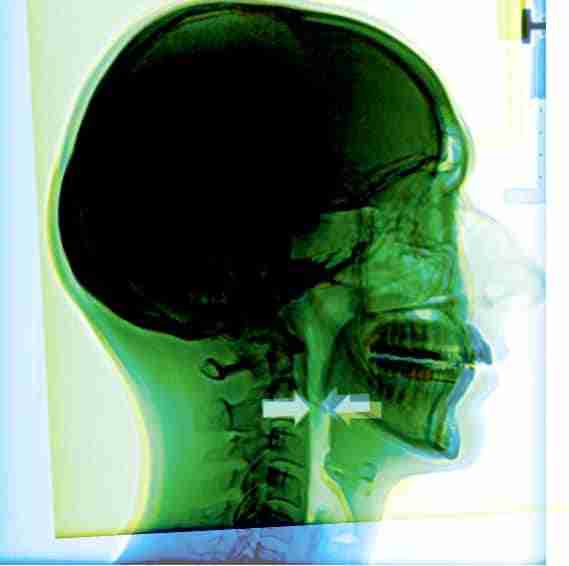

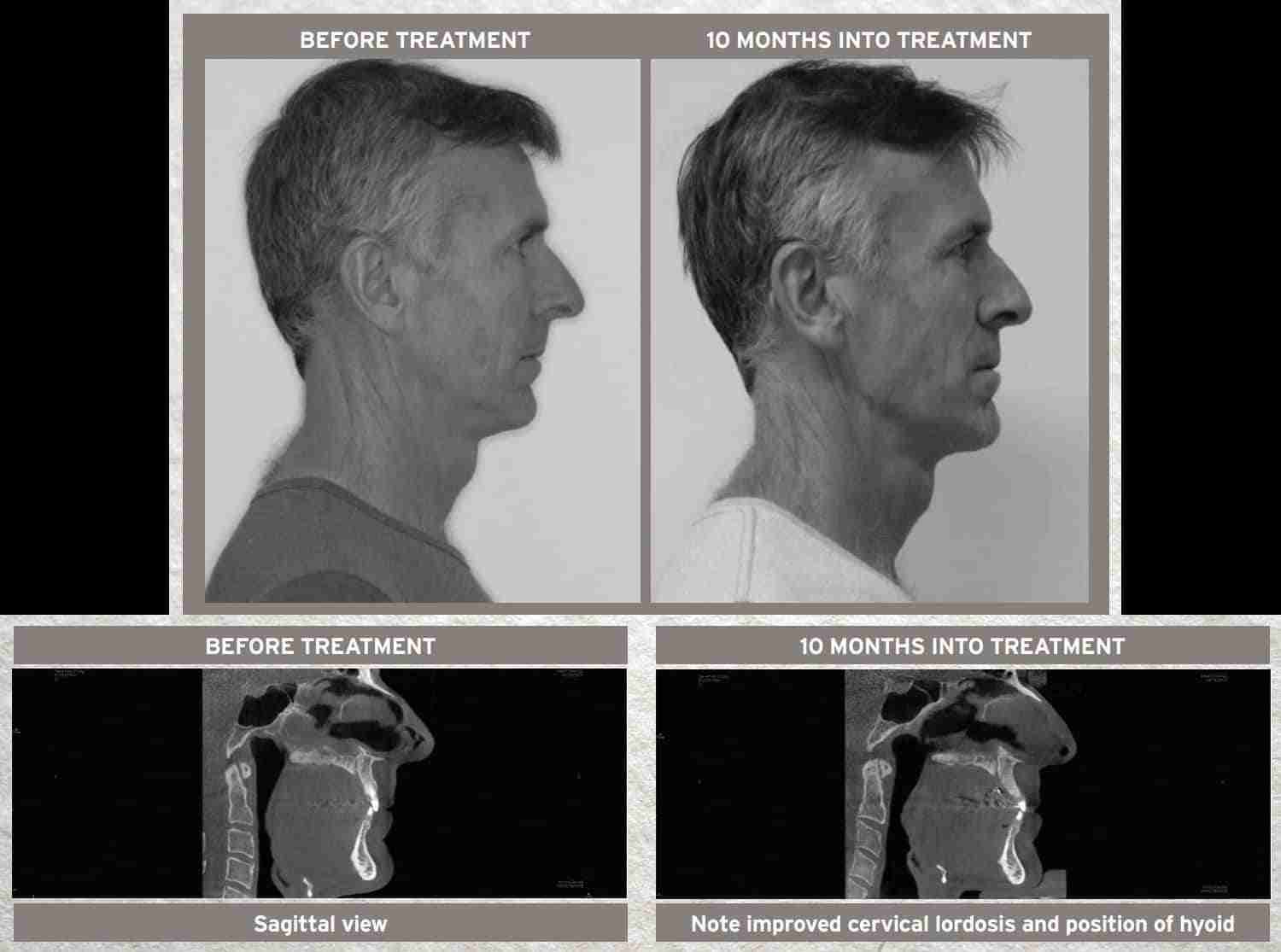


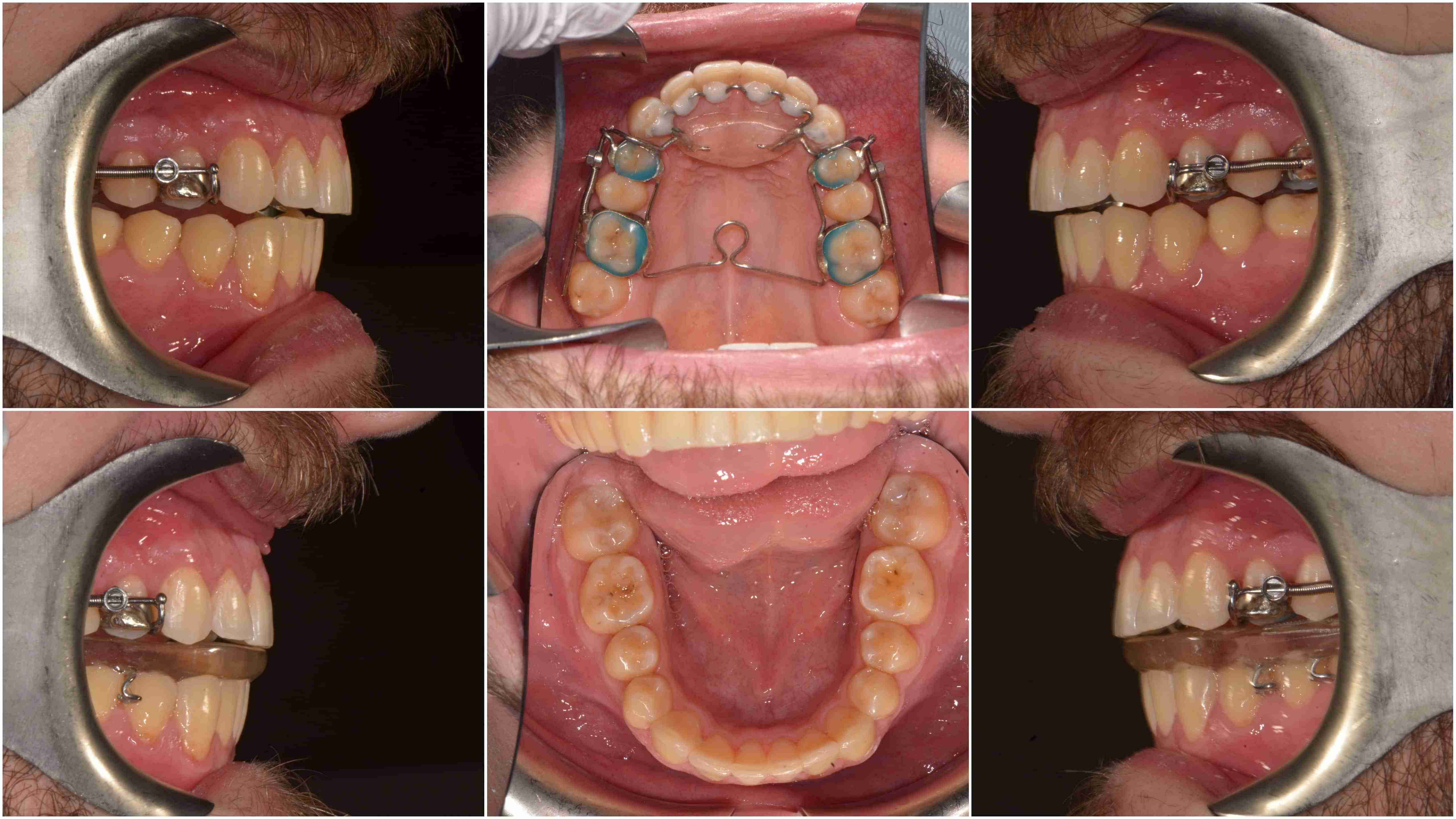


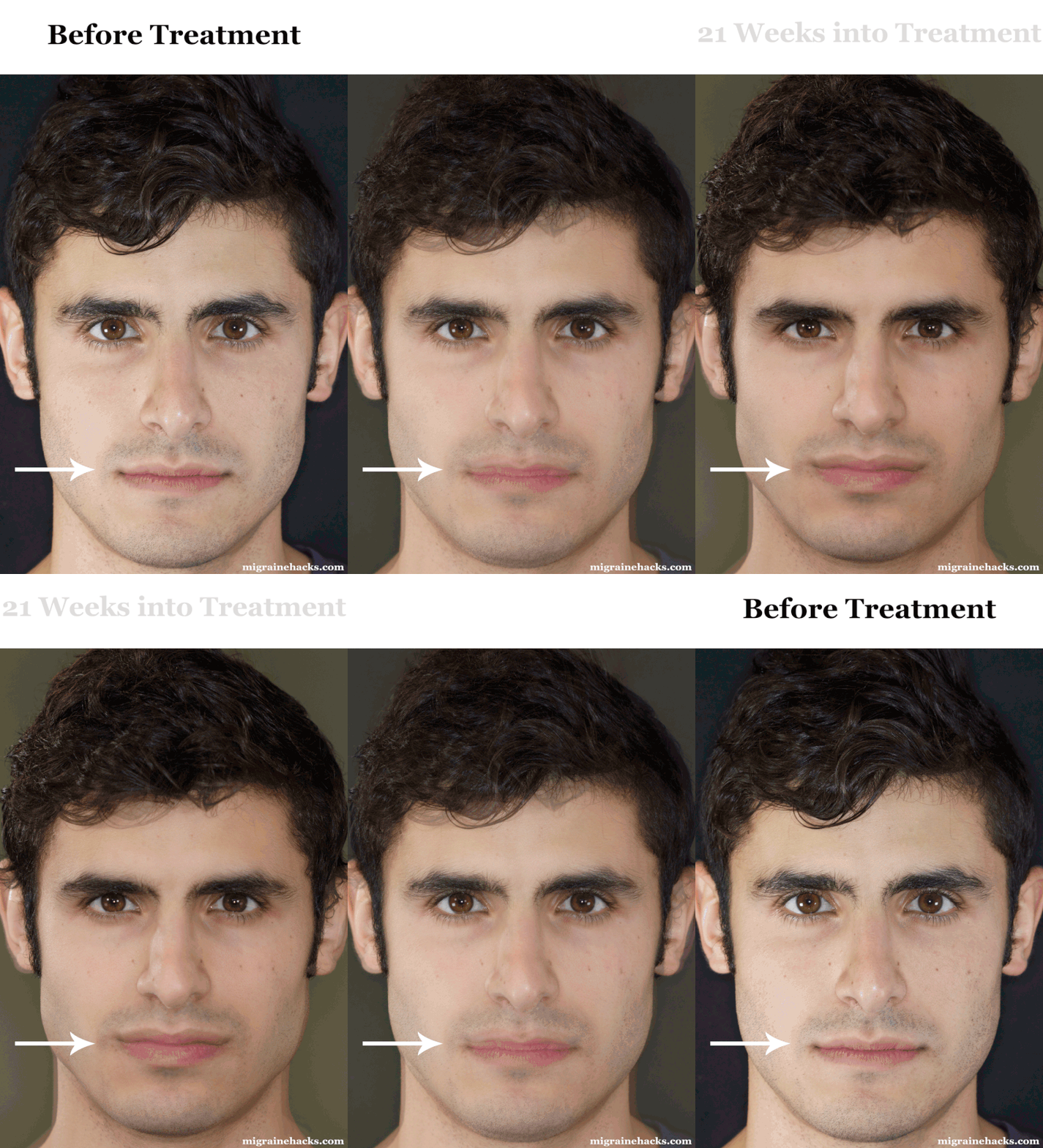
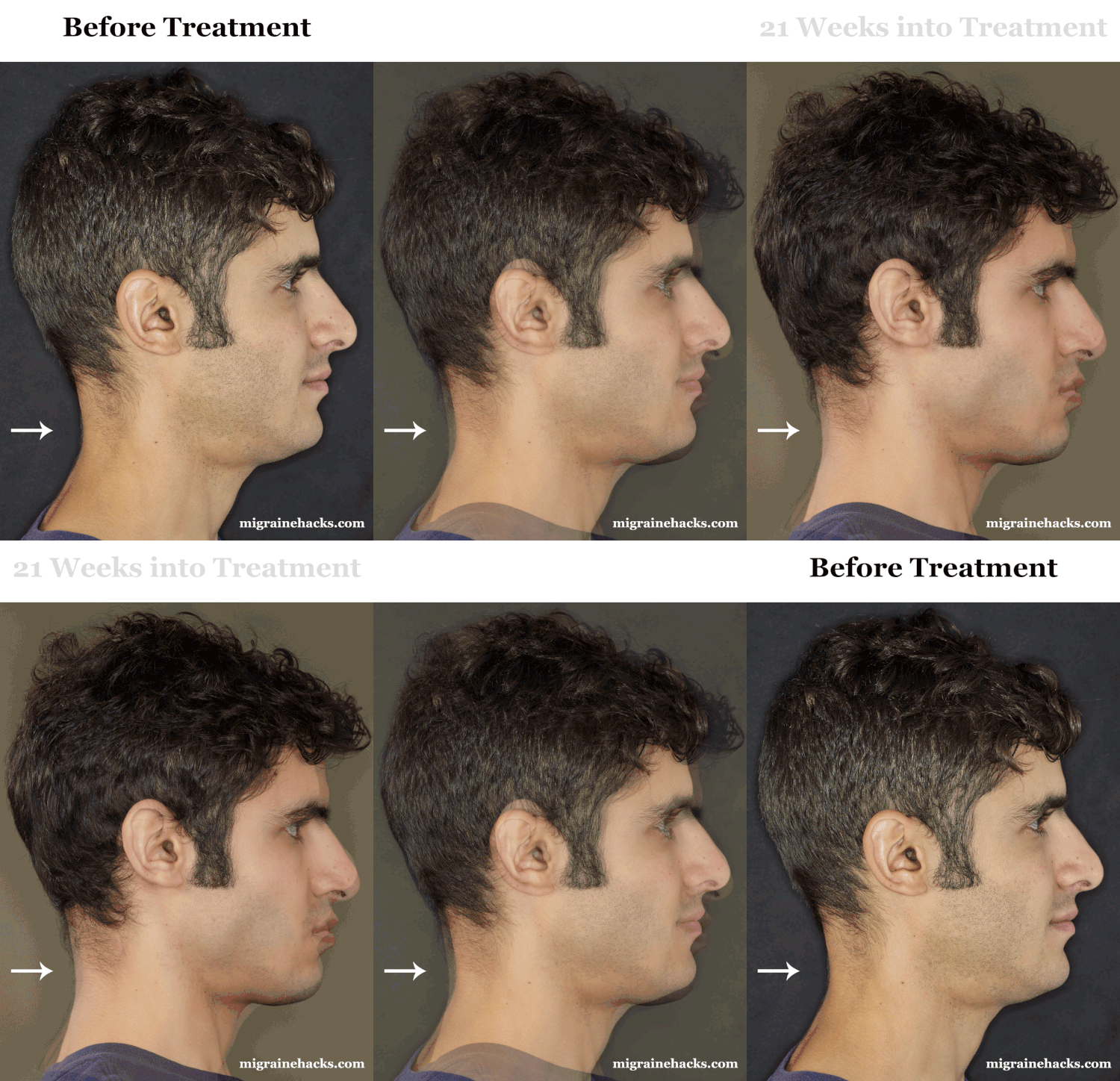



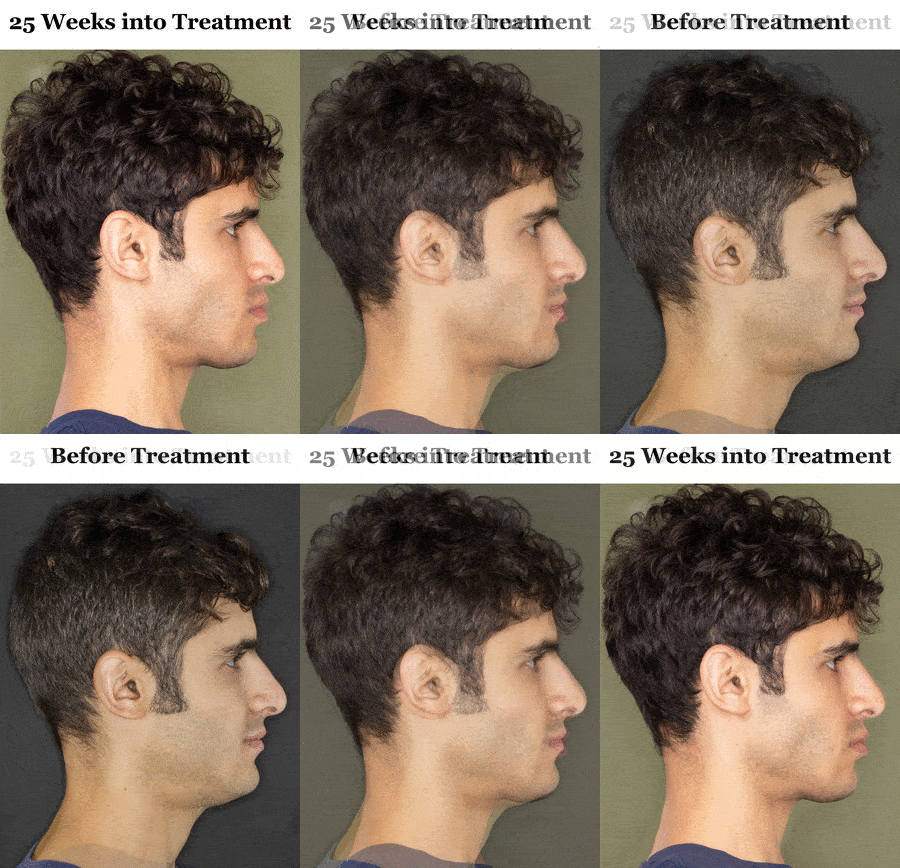


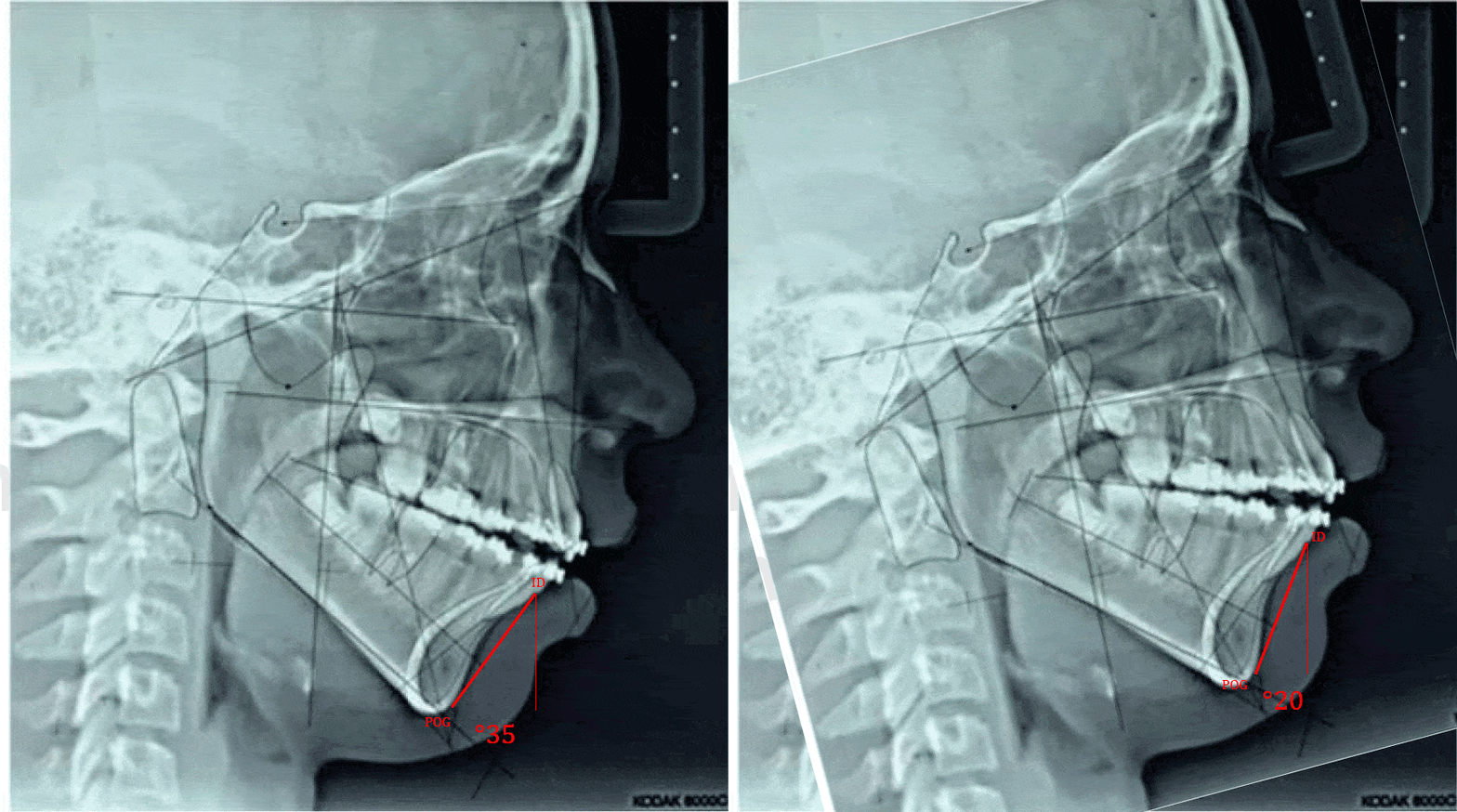


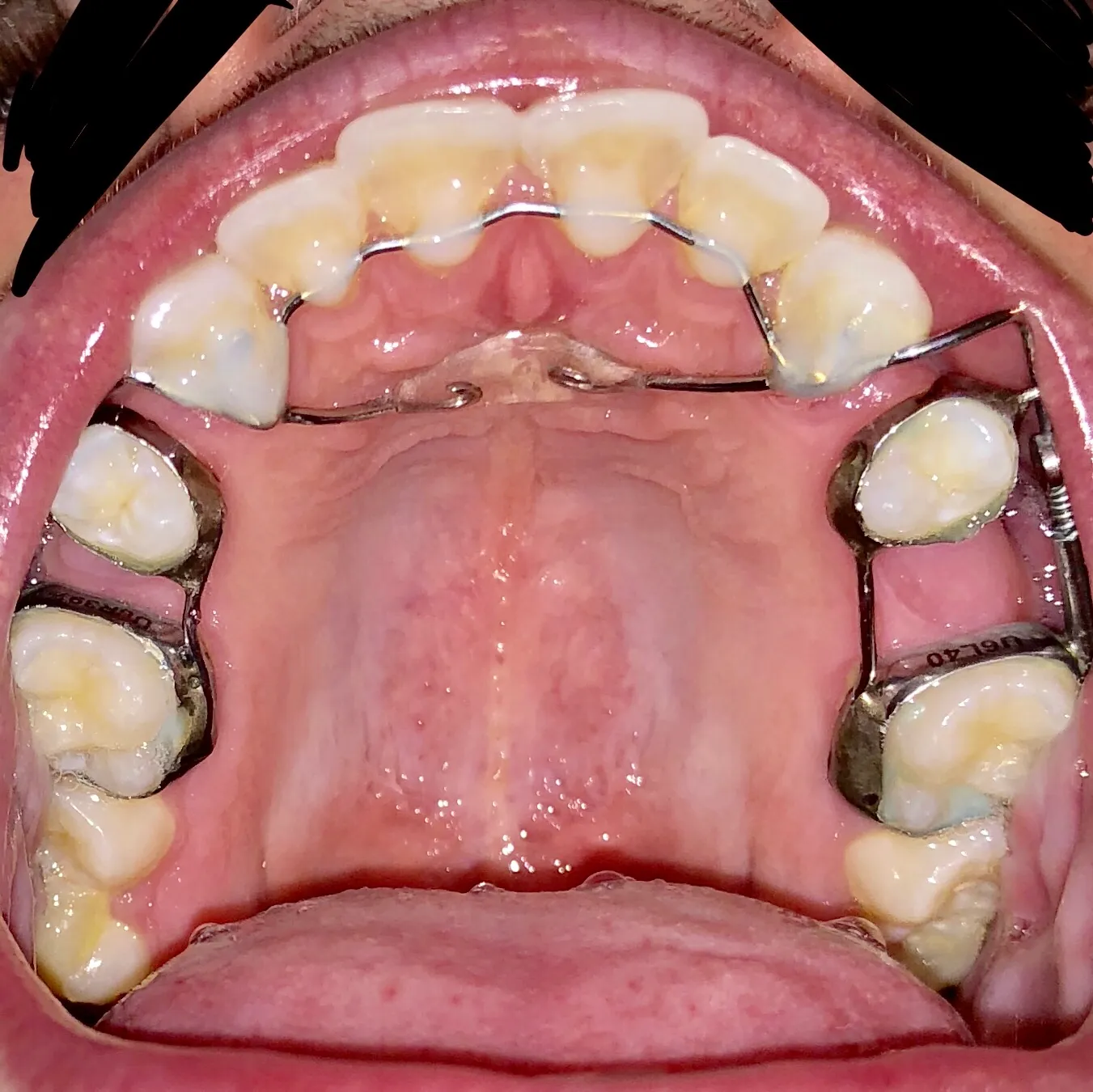

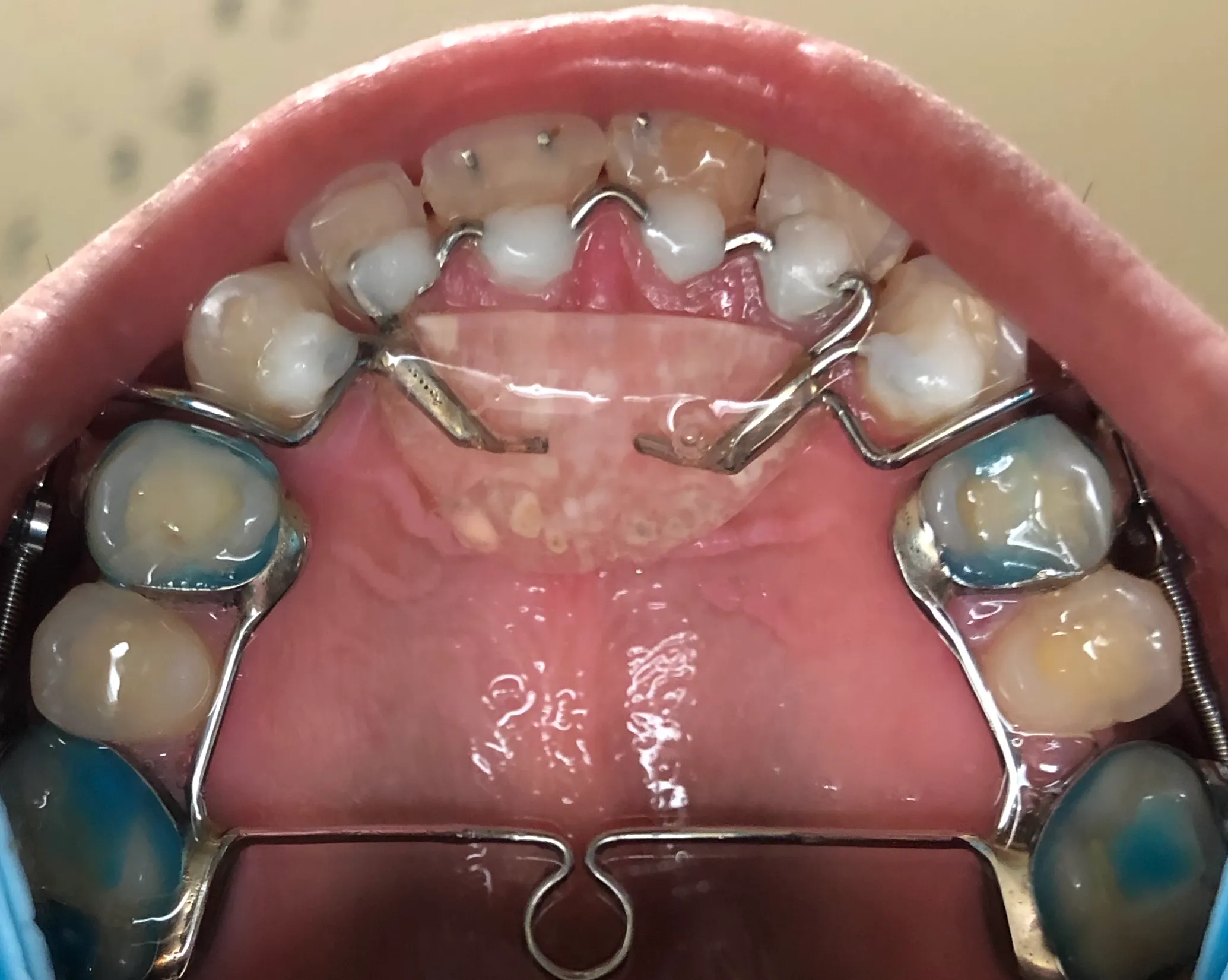


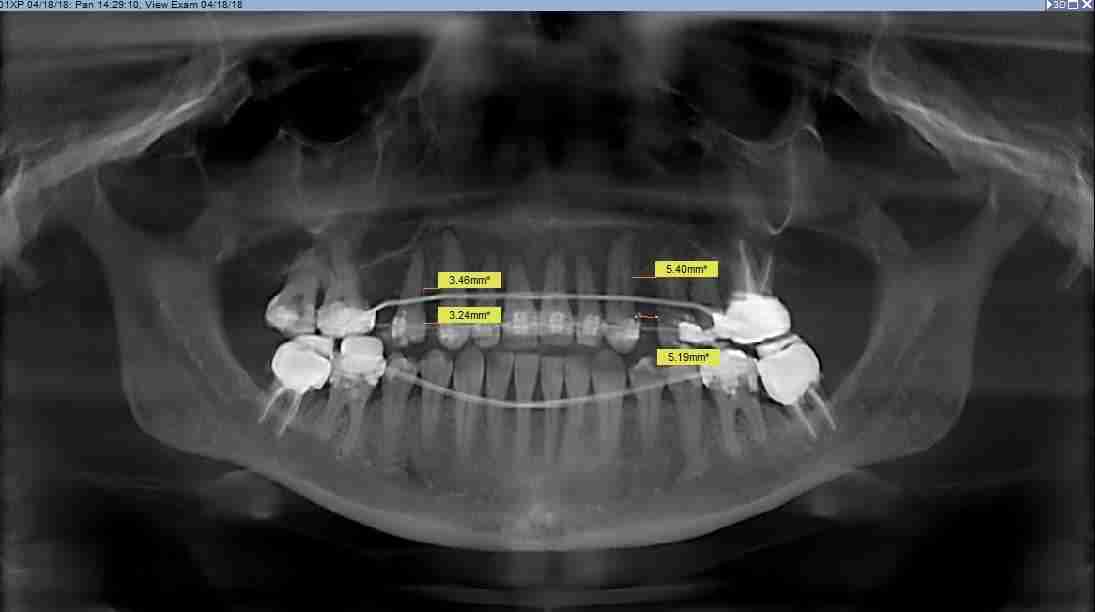


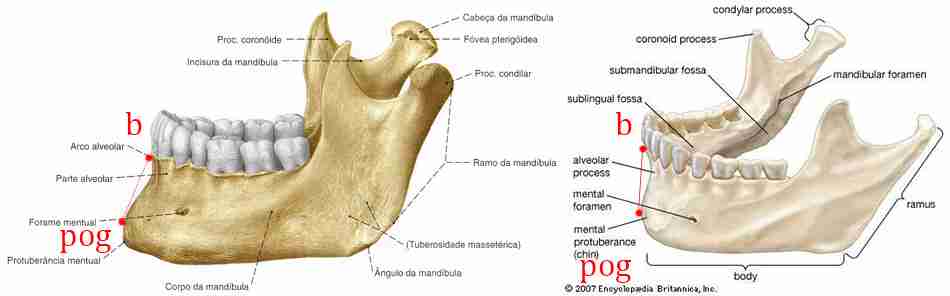


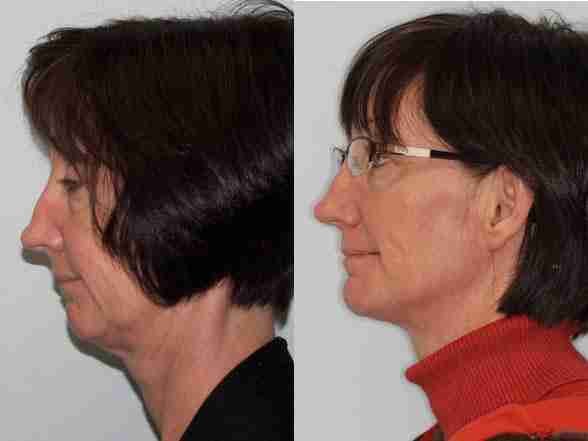
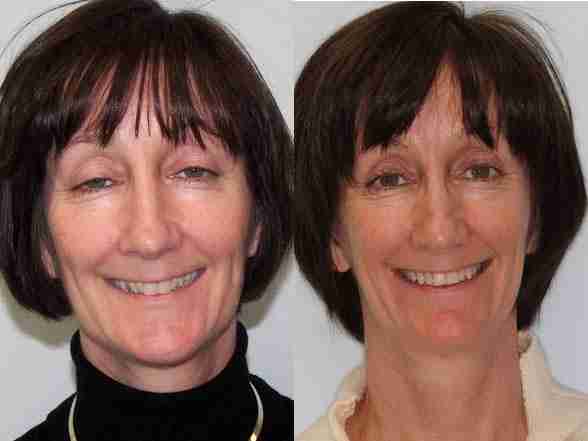


 ?format=500w

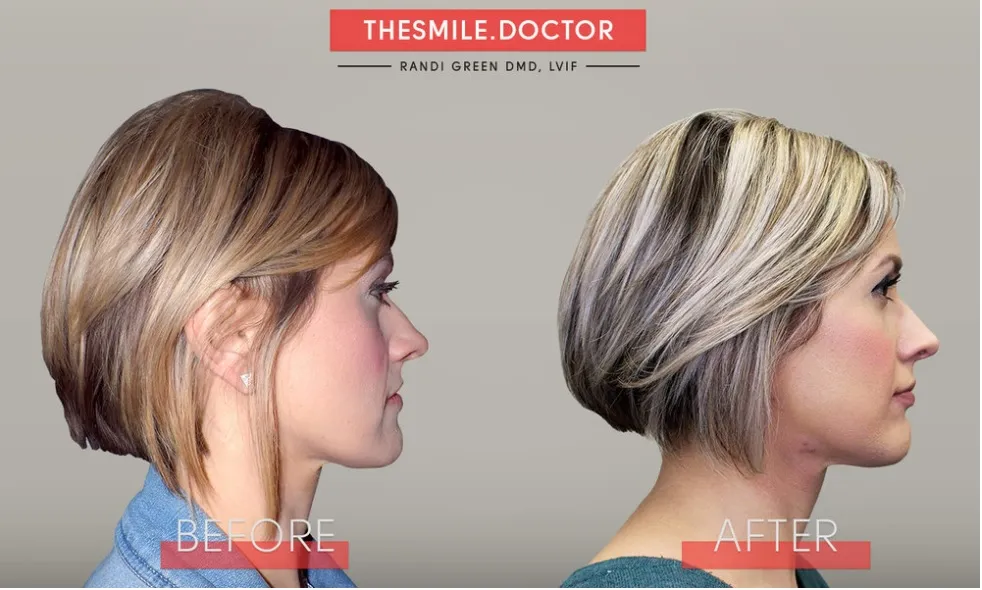


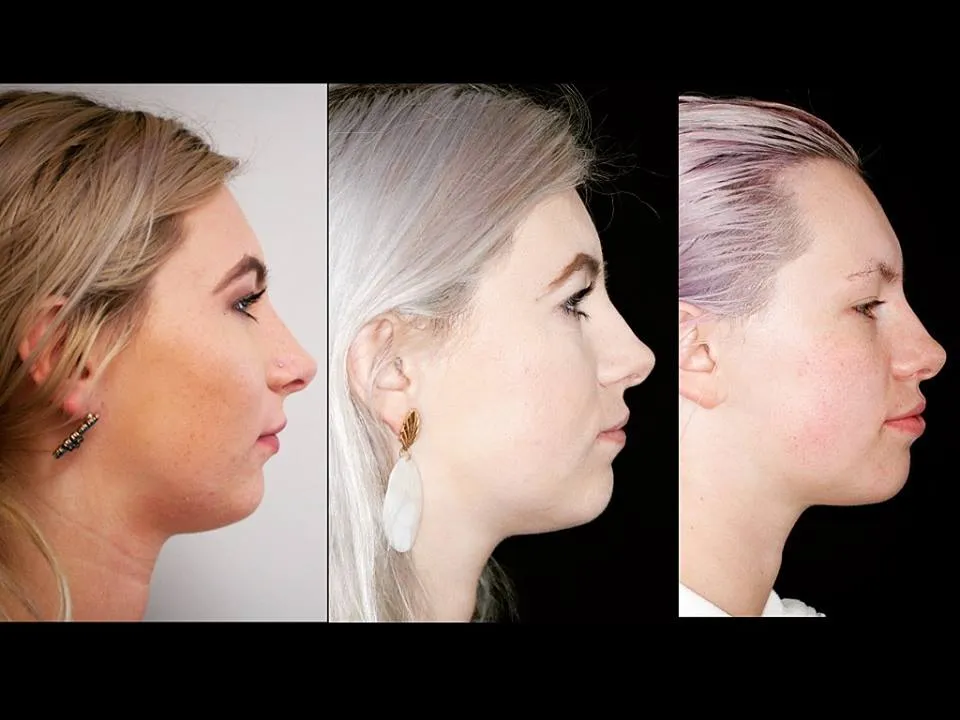
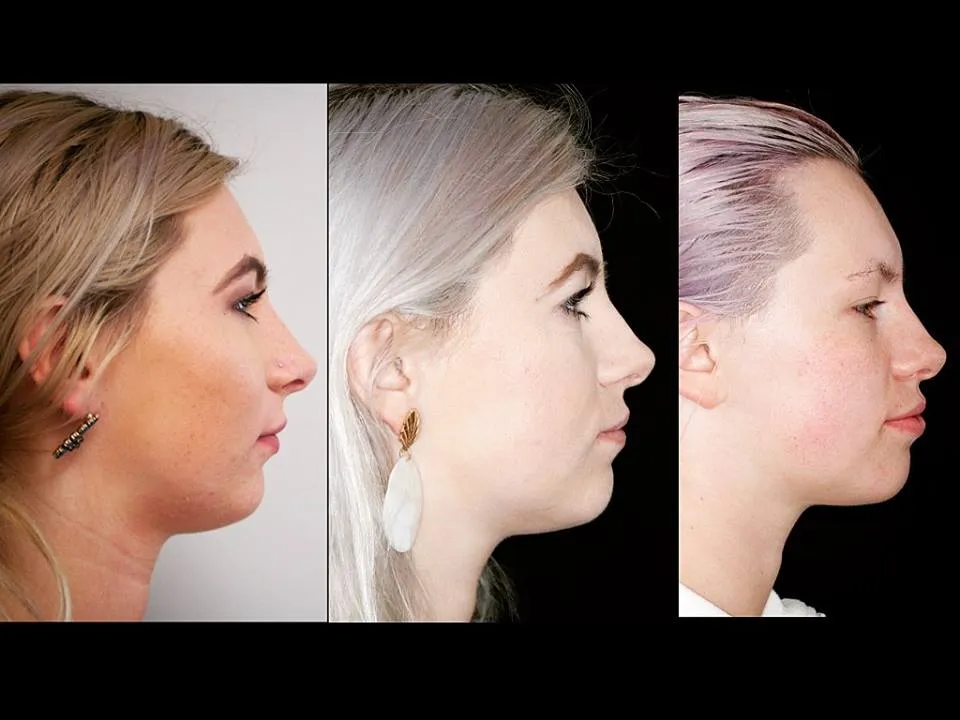


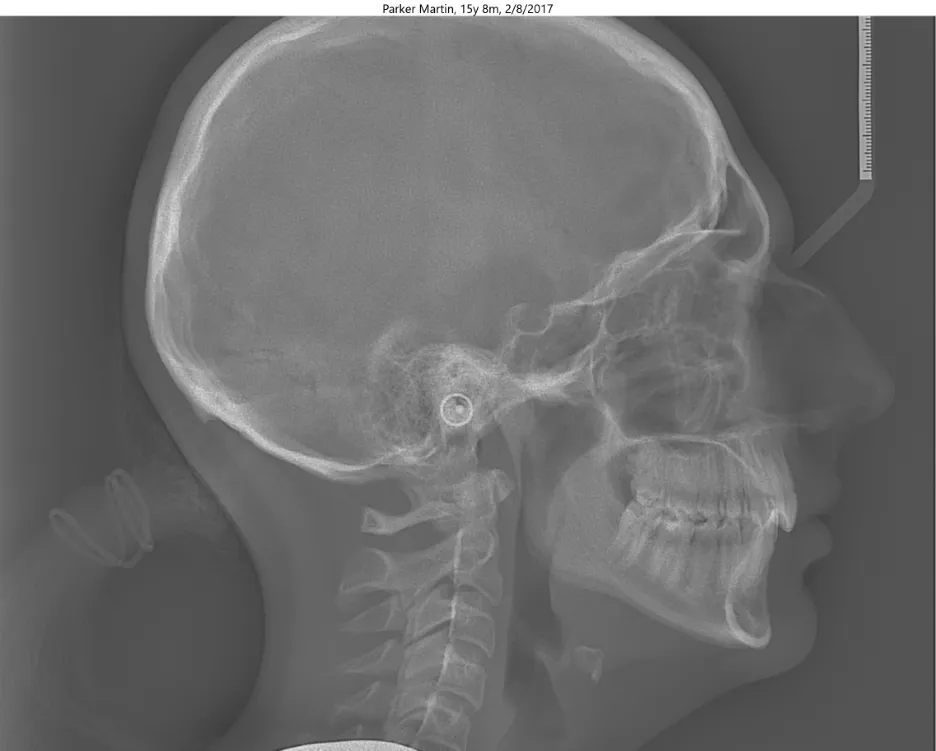
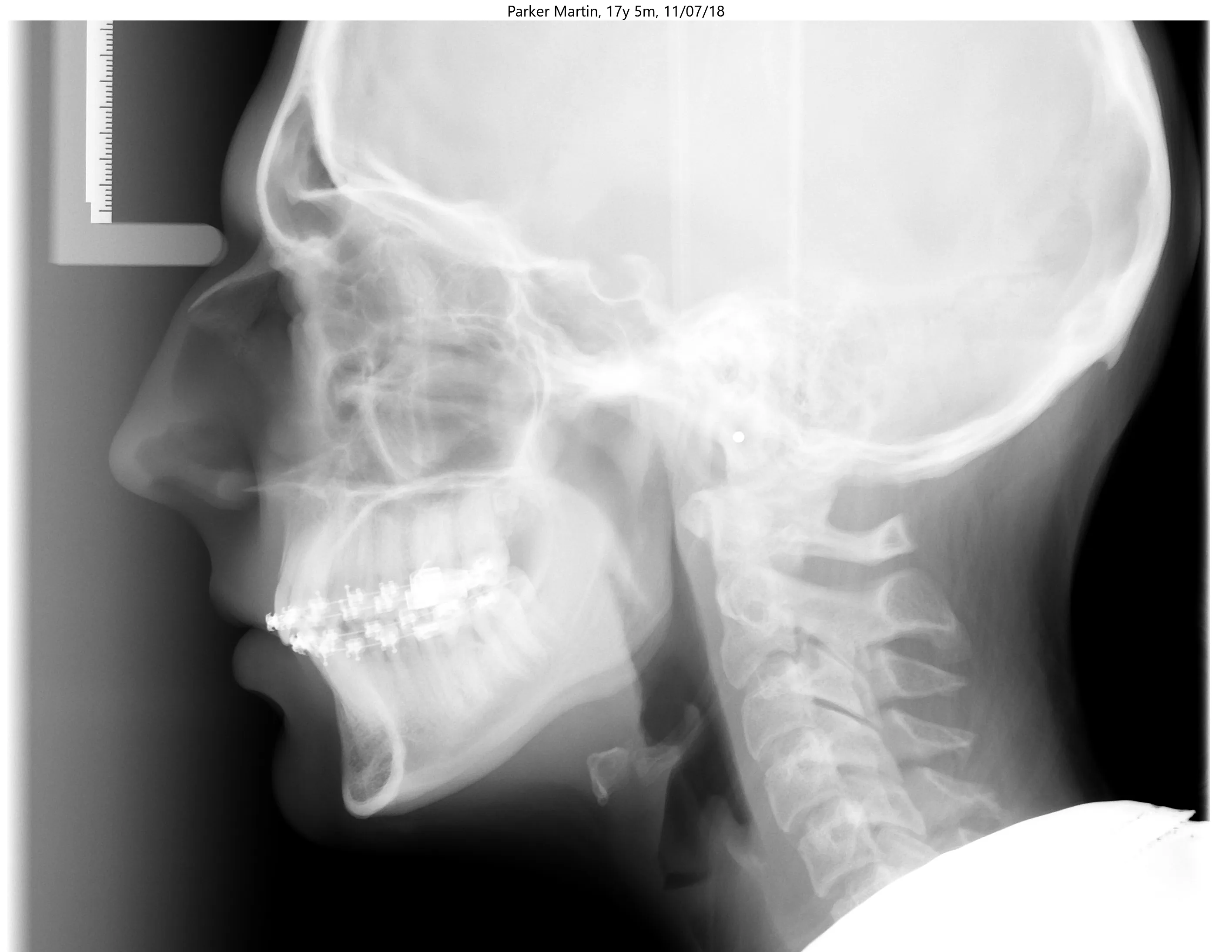
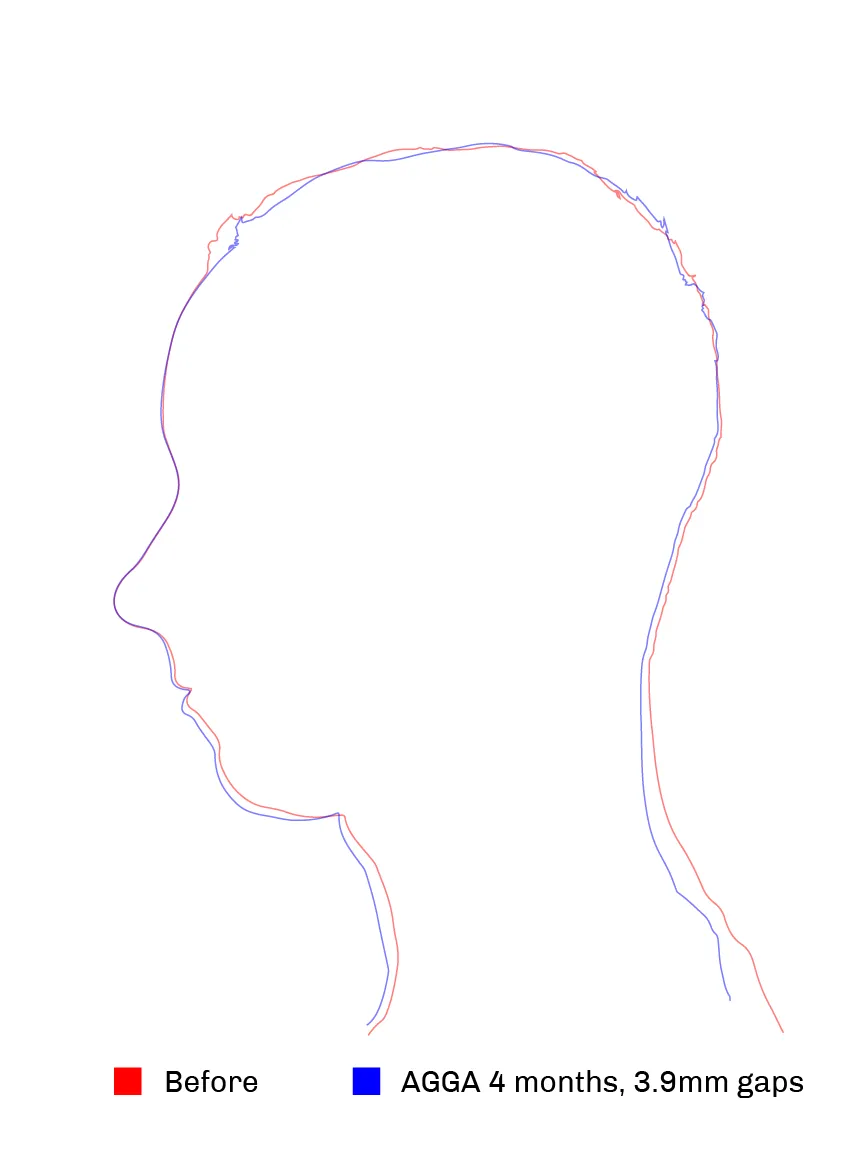


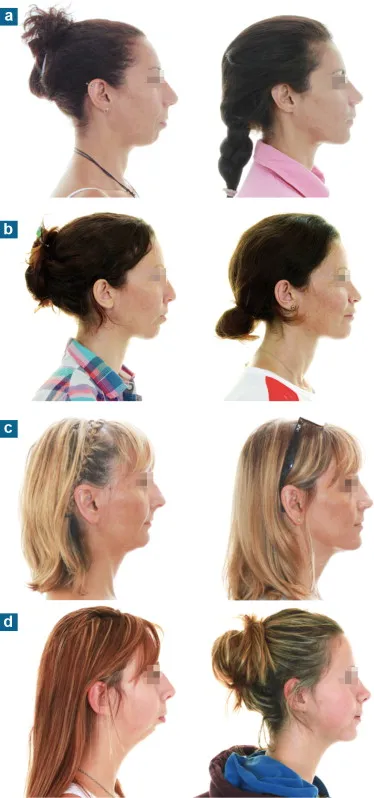
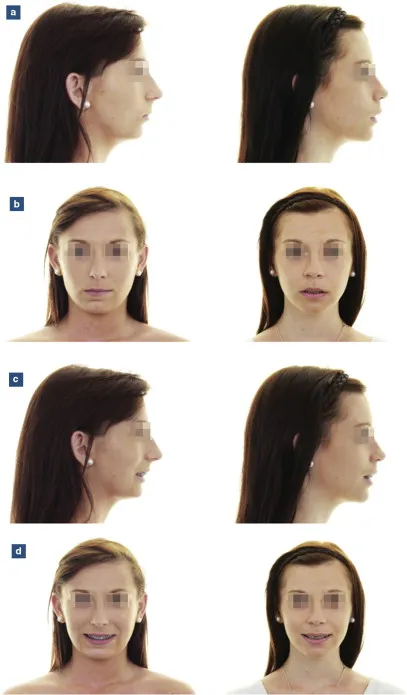
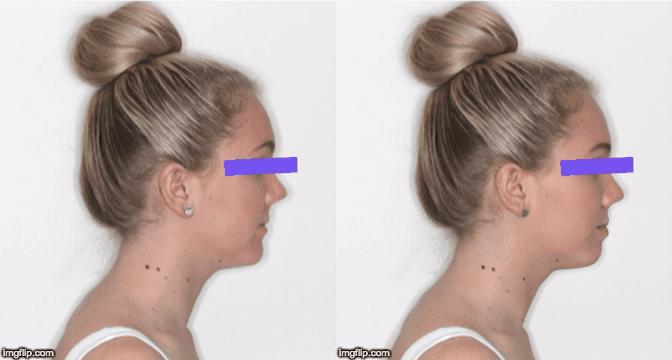


 Before_SideProfile.gif


